









Introduction
Diversity and Inclusion Statistics: Diversity and inclusion have become key focal points for organizations aiming to foster equitable work environments. Companies with higher racial and ethnic diversity are more likely to outperform their peers in financial returns. Women represent 47% of the global workforce, yet they hold only 24% of senior leadership positions.
Additionally, many employees believe that a diverse and inclusive culture drives innovation. With a significant percentage of job seekers considering workplace diversity as an important factor when evaluating job offers, it’s clear that diversity and inclusion are not just ethical imperatives but critical business strategies.
Editor’s Choice
- Companies with racial diversity are 35% more likely to exceed their industry’s financial median.
- Women make up 47% of the global workforce but hold only 24% of senior leadership roles.
- 60% of workers prioritize diversity and inclusion when choosing an employer.
- Gender-diverse companies are 15% more likely to outperform competitors in profitability.
- 72% of employees believe diversity drives innovation and creativity within the workplace.
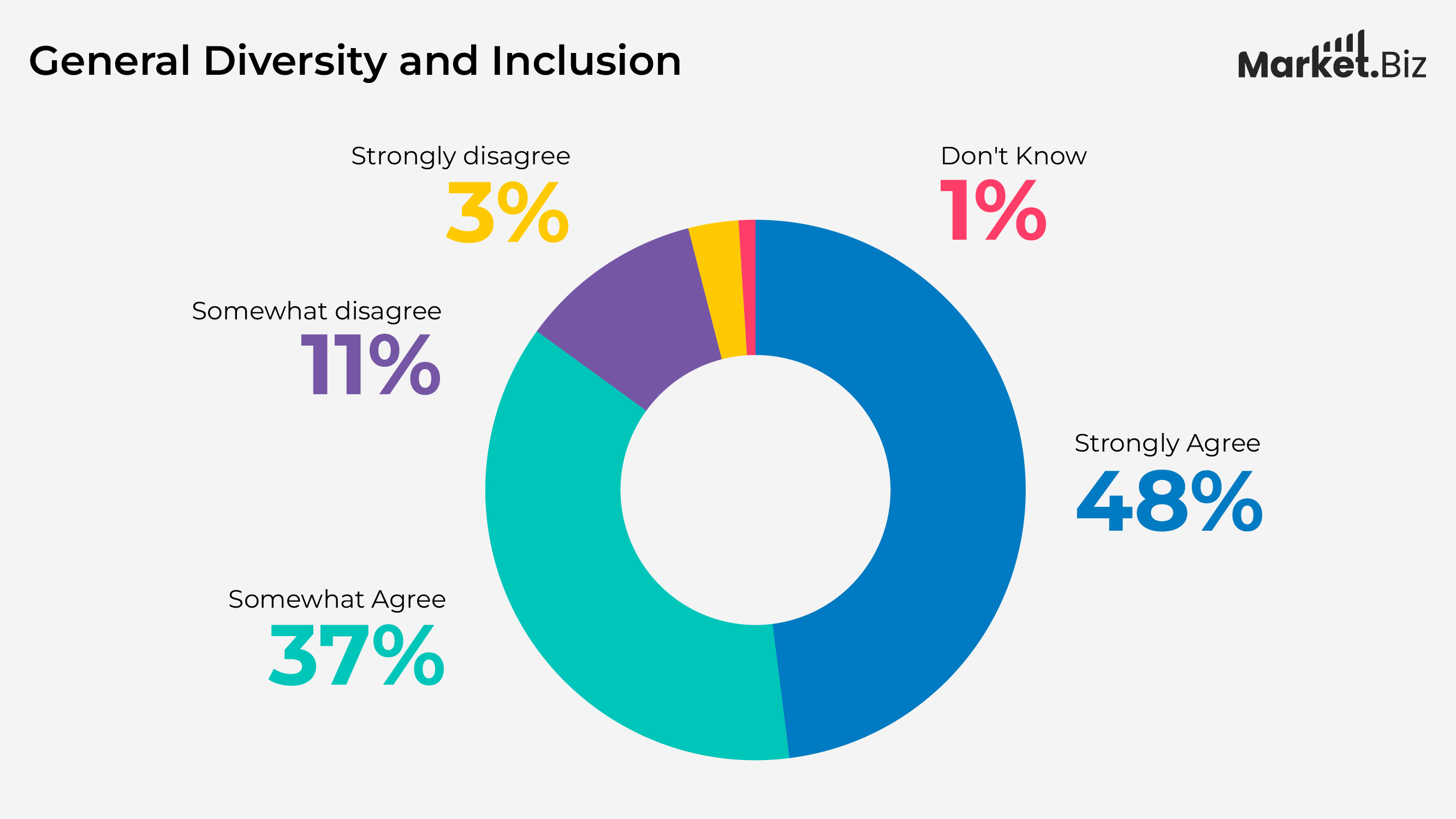
- 48% of employees feel their organization has room to improve on diversity and inclusion.
- 39% of global workers say diversity and inclusion affect their job satisfaction.
- Diverse leadership teams are 25% more likely to have above-average profitability.
- 70% of millennials are more likely to work for companies prioritizing diversity and inclusion.
- Racially diverse teams make decisions 60% faster than less-diverse teams.
- 82% of organizations believe inclusive leadership will improve employee engagement and retention.
- By 2030, racial and ethnic minorities are expected to comprise 46% of the U.S. workforce.
General Diversity and Inclusion Statistics
- Companies with racial diversity are 35% more likely to have financial returns above their industry median.
- 47% of the global workforce is comprised of women, yet only 24% hold senior leadership positions.
- 60% of workers consider diversity and inclusion as key factors when choosing an employer.
- Gender-diverse companies are 15% more likely to outperform their competitors in profitability.
- Only 22% of C-suite executives are women globally, despite women making up nearly half of the workforce.
- In the U.S., Black employees make up 12.3% of the workforce but hold just 8.4% of executive roles.
- Companies in the top quartile for ethnic diversity are 33% more likely to have industry-leading profitability.
- 72% of employees say that workplace diversity encourages innovation and creativity.
- 56% of employees feel that their company is committed to diversity and inclusion, but only 27% believe it’s truly inclusive.
- 71% of job seekers would consider a company’s diversity policies before applying for a position.
- 48% of employees believe that their organization has room for improvement when it comes to diversity and inclusion.
- In tech, women represent only 28% of the workforce, with women of colour making up 9%.
- LGBTQ+ employees report experiencing discrimination at a rate of 46% in the workplace.
- Over 40% of global employees say their workplace is not diverse or inclusive enough to support people with disabilities.
- Racially diverse teams make decisions 60% faster than their less-diverse counterparts.
- Businesses with inclusive policies see a 30% higher likelihood of improved employee performance and job satisfaction.
- 63% of U.S. millennials actively seek employers with strong diversity and inclusion policies.
- 45% of women in the workforce believe that diversity initiatives have made a positive impact on their career advancement.
(Source: Selectsoftwarereviews)
Global Workplace Diversity
- Global companies with diverse teams are 35% more likely to outperform their competitors financially.
- In 2020, women represented 47% of the global workforce, but only 24% held senior leadership roles.
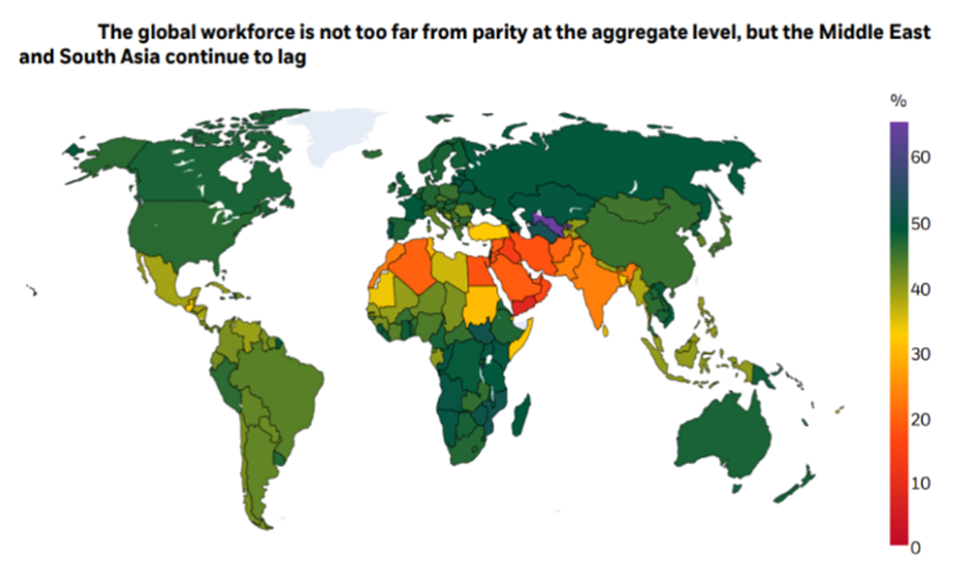
- Asia has the highest percentage of women in the workforce, with countries like the Philippines seeing over 50% female employment.
- In North America, racial minorities make up 38% of the workforce, but they hold just 20% of management roles.
- 80% of employees globally believe that a diverse workplace drives innovation and creativity.
- Diverse teams are 60% more likely to make better decisions faster than their less-diverse counterparts.
- 61% of global employees say their company has diversity and inclusion policies in place, but only 26% believe those policies are effective.
- In Europe, ethnic minorities represent 14% of the workforce, but only 7% occupy executive positions.
- 68% of job seekers globally consider diversity and inclusion as a top factor when evaluating potential employers.
- 70% of millennials globally are more likely to work for companies that prioritize diversity and inclusion initiatives.
- 39% of global workers say that their company’s commitment to diversity and inclusion influences their job satisfaction.
- In Australia, one in four workers reported experiencing discrimination at work, particularly regarding race and gender.
- Latin America has made significant progress, with 30% of women in the workforce holding managerial roles, compared to just 18% in 2000.
- Only 21% of global companies have fully implemented inclusive policies that address racial, gender, and disability diversity.
- The global LGBTQ+ workforce represents 10% of the labor market, yet 46% report discrimination at work.
(Source: Prod)
Leadership Diversity and Inclusion
- Companies with gender-diverse leadership teams are 25% more likely to have above-average profitability.
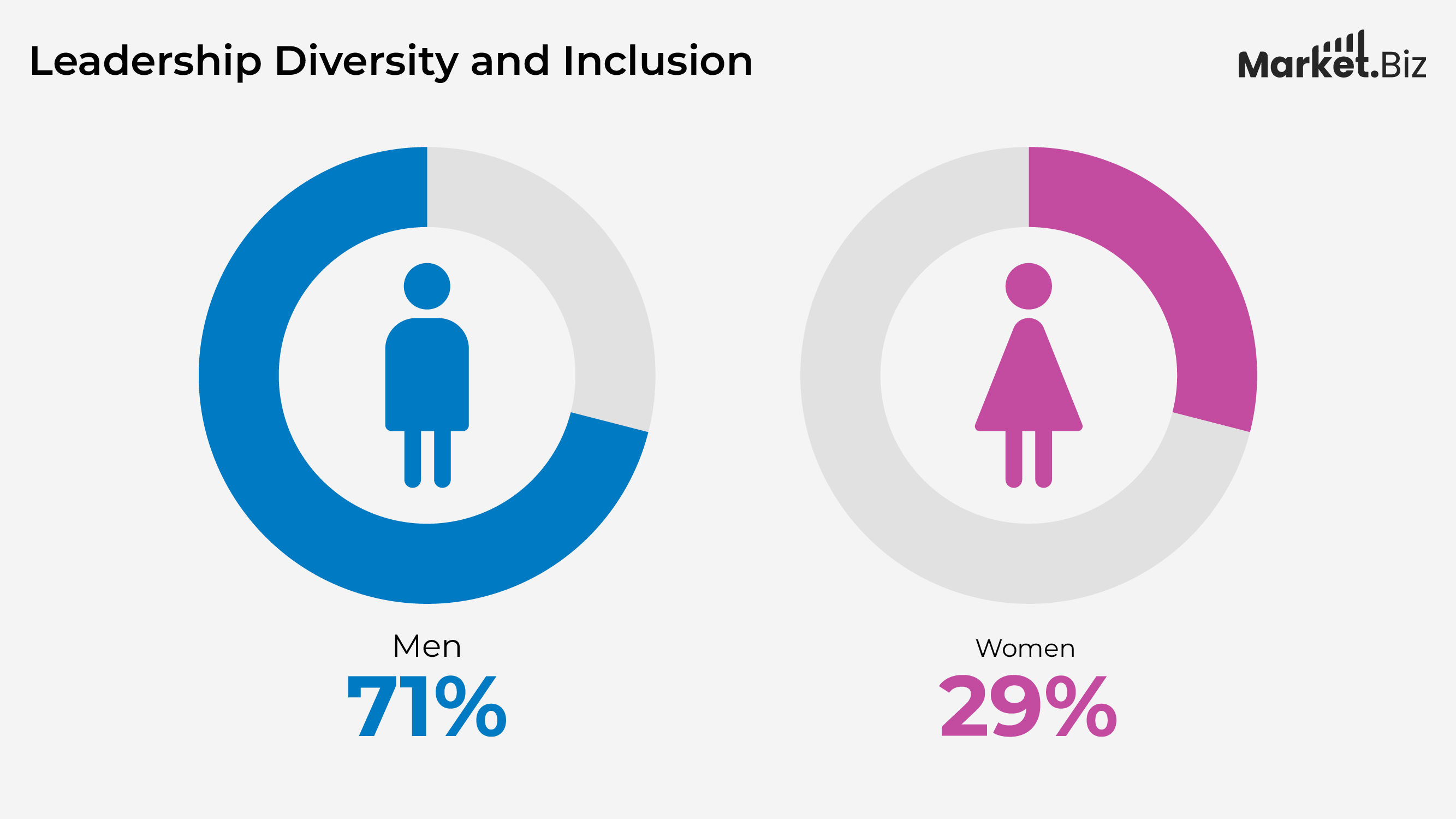
- Women hold only 29% of senior leadership roles globally, despite making up nearly half of the workforce.
- Racially diverse leadership teams are 33% more likely to achieve industry-leading profitability.
- Only 4.1% of Fortune 500 CEOs are women, highlighting the gender and racial disparity in leadership.
- Organizations with inclusive leadership practices see a 30% improvement in employee performance and job satisfaction.
- 56% of companies with diverse leadership teams report better decision-making and problem-solving capabilities.
- Men hold 80% of executive roles in technology, while women make up just 20% of leadership in the sector.
- Companies with higher diversity in leadership experience 19% higher revenue due to innovation.
- 51% of employees say that having diverse leadership inspires greater trust in their company’s direction.
- The representation of women in leadership has grown by just 1% annually in the last decade, showing slow progress.
- 70% of global leaders believe diversity in leadership enhances creativity and innovation in decision-making.
- Only 22% of women in leadership are found in the top 20% of global companies in terms of revenue.
- 59% of employees in companies with diverse leadership say that they feel valued and empowered in their roles.
- Diverse leadership teams are 43% more likely to be seen as effective communicators within their organizations.
- Leadership diversity improves talent retention rates, with 41% of employees more likely to stay at inclusive companies.
- Companies in the top quartile for diversity in leadership are 36% more likely to have better financial returns.
Diversity Demographics Statistics
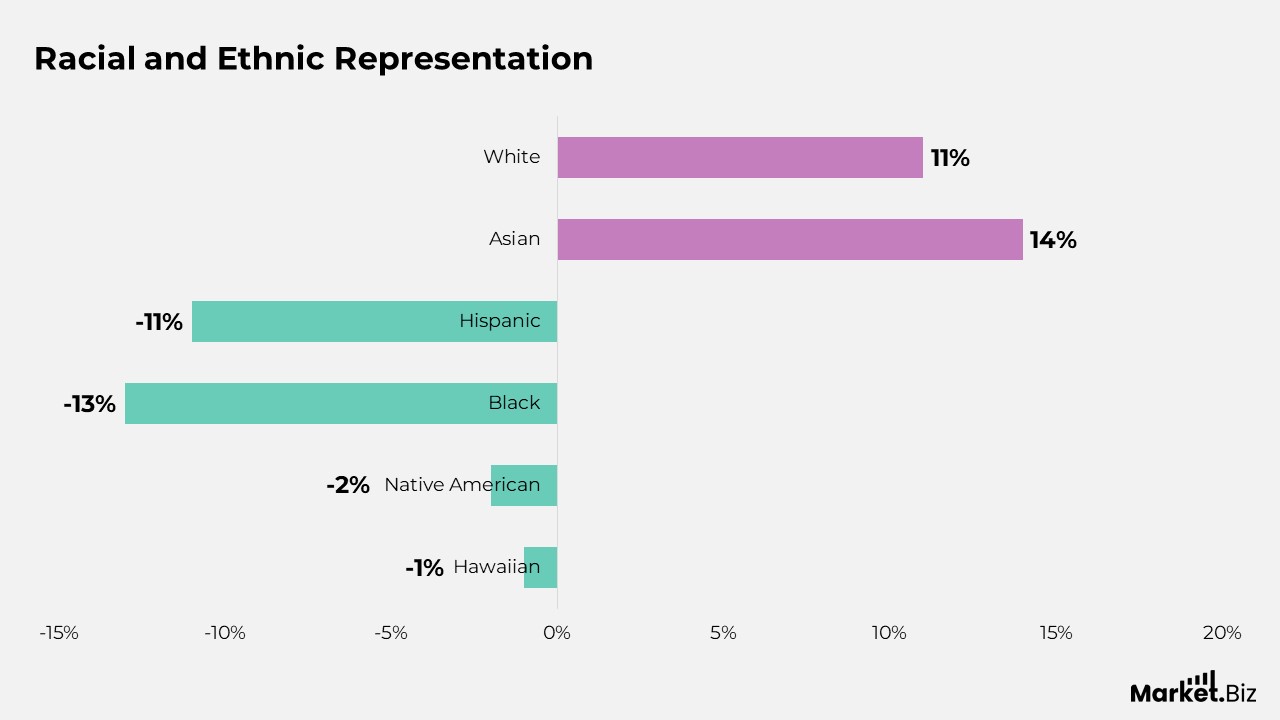
- In 2023, 41% of the U.S. workforce was made up of racial and ethnic minorities, with Asian Americans representing 5.9%.
- Women account for 18% of leadership positions in the U.S., despite representing 27% of the workforce.
- In Australia, the number of women in the workforce has increased by 5% over the past decade, and they now comprise 47% of the labour force.
- 47% of the UK’s workforce is female, yet women account for only 34% of senior management roles.
- The global workforce includes approximately 5% individuals with disabilities, although many face barriers to employment and career advancement.
- In India, women make up 30% of the corporate workforce but only 18% of senior leadership roles, showing a significant gender gap.
- Latin workers represent 17% of the U.S. workforce, with a larger share working in essential industries like healthcare and agriculture.
- Black professionals make up 12.5% of the U.S. workforce, but only 3.2% of them hold executive leadership positions.
- Generation Z (born 1997–2012) will represent 30% of the global workforce by 2030, bringing new expectations for workplace diversity and inclusion.
- In Canada, visible minorities make up 22% of the total population, with more than half working in managerial and professional roles.
Moreover
- Nearly 60% of millennial workers (born 1981–1996) report that diversity and inclusion policies are an important factor when considering an employer.
- In Europe, women hold 40% of board seats in publicly traded companies, an increase from just 11% in 2003.
- 8.6% of the U.S. workforce is foreign-born, with immigrants accounting for a significant portion of workers in fields like construction, healthcare, and technology.
- In Japan, 4.5% of the workforce identifies as part of the LGBTQ+ community, a growing demographic in an otherwise traditionally homogenous society.
- 25% of the U.S. workforce is expected to be aged 55 or older by 2030, signalling an increasing need for inclusive policies for older workers.
- Compared to 41% of males, 58% of women place a high emphasis on workplace accessibility.
- The majority of workers (61%) believe that their companies have fair hiring, compensation, and promotion practices, and more than half (52%) have attended meetings or received training on DEI.
- In the past year, 38% of employees have taken part in DEI training.
- Merely 6% of employees belong to employee resource groups (ERGs) or affinity groups.
- According to Workplace Diversity Statistics, 36% of employees think that being a guy makes it simpler to succeed at work.
(Source: Flair)
By LGBTQ+ Diversity
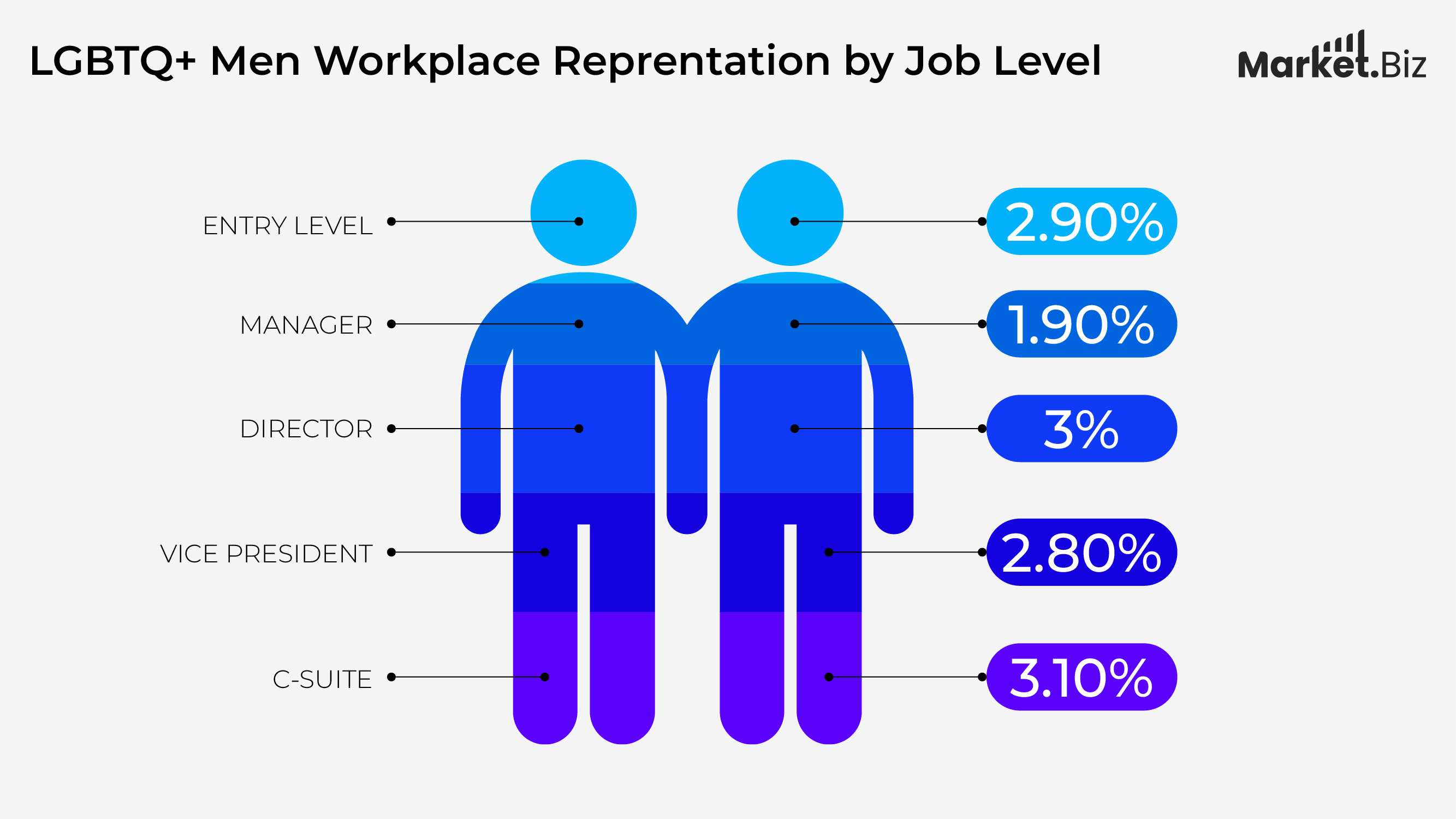
- 46% of LGBTQ+ workers in the US report having experienced workplace discrimination.
- Nearly one in five LGBTQ+ workers in the UK reported that, in the previous year, they had encountered unfavorable remarks or treatment from colleagues due to their LGBTQ+ identification.
- Because they fear discrimination, more than one-third of people have concealed their LGBTQ+ identity at work.
- Two out of five bisexual workers keep their sexual orientation a secret at work.
(Source: Zippia)
- If their supervisors and co-workers accept them, LGBTQ+ employees are more likely to be happy in their employment and lives in general.
- This promotes openness about identification among LGBTQ+ employees and fosters a more positive work environment.
- Performance and productivity can be enhanced by implementing LGBTQ+ policies, including as anti-discrimination guidelines and rewards for same-sex partners.

(Source: Zippia)
Benefits of Diversity
- Diverse teams are 35% more likely to outperform their competitors in terms of financial returns.
- Companies with a more diverse workforce are 70% more likely to capture new markets and expand their customer base.
- 72% of employees say that diversity enhances creativity, bringing fresh perspectives to problem-solving.
- Organizations with higher gender diversity are 15% more likely to experience better profitability and productivity.
- Companies with racially and ethnically diverse teams are 33% more likely to outperform their peers in profitability.
- 78% of job seekers say that diversity and inclusion policies are an important factor in choosing an employer.
- Diverse teams make decisions 60% faster than their less-diverse counterparts, leading to improved efficiency.
- Organizations with inclusive cultures have 30% better employee retention rates, reducing turnover costs.
- Diverse leadership is associated with higher levels of employee engagement and job satisfaction, boosting morale.
- 62% of employees believe that workplace diversity promotes innovation, which can lead to new product developments.
- Firms in the top quartile for gender diversity are 21% more likely to have above-average profitability.
- Companies with a diverse workforce are 20% more likely to attract top talent from a wider range of backgrounds.
- 41% of employees at organizations with strong diversity practices say they feel more valued and empowered.
- Companies that emphasize diversity are 1.7 times more likely to be innovation leaders in their industries.
- Diverse teams tend to have higher employee satisfaction, with 61% of employees in such organizations reporting a positive work environment.
Diversity Statistics by Industry
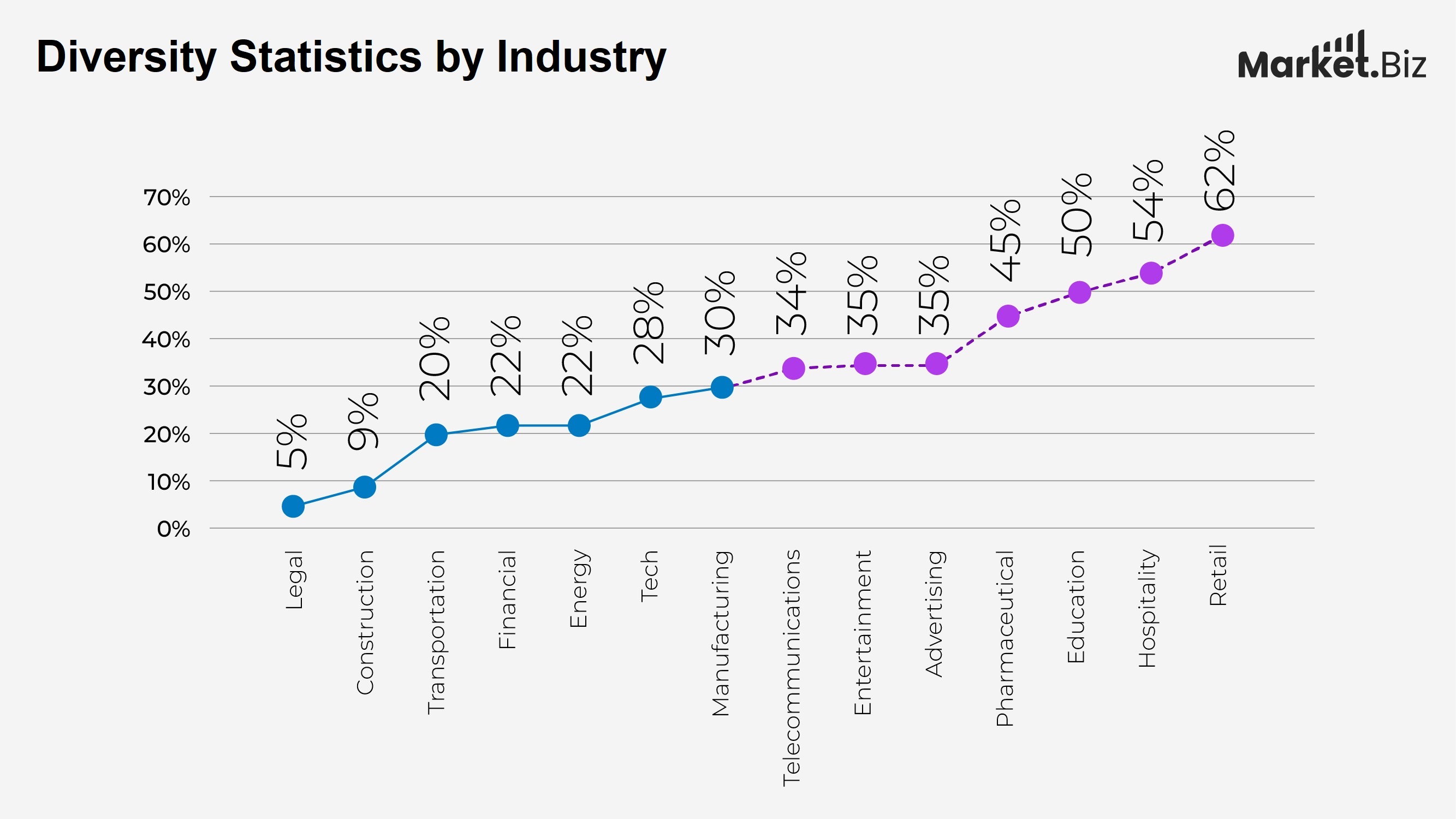
- In the tech industry, women make up 28% of the workforce, while women represent just 9%.
- In financial services, 22% of senior leadership roles are held by women, but ethnic minorities represent only 12% of the executive ranks.
- The manufacturing industry in the U.S. has 30% female representation in the workforce, but women hold only 16% of managerial positions.
- The legal industry is one of the least diverse, with only 5% of partners in law firms being people, despite minorities making up 40% of law school graduates.
- In the entertainment industry, women account for 35% of on-screen talent, but only 15% of the directors and producers are women.
- The education sector is highly diverse, with 50% of teachers in the U.S. being people, reflecting the student demographic.
- The hospitality industry boasts a 54% female workforce, with women making up 30% of leadership roles in hotel management.
- The retail industry is 62% female, with 40% of leadership roles held by women, though racial and ethnic diversity remains a challenge in top management.
- The energy sector has one of the lowest diversity rates, with women representing only 22% of the workforce, and ethnic minorities making up just 15%.
- The advertising industry is increasingly diverse, with 35% of senior leaders being women and 23% of leadership roles held by people.
- In the telecommunications industry, women represent 34% of the workforce, but only 18% occupy executive positions.
- The construction industry has 9% female representation, and women in leadership roles make up just 3% of the sector.
- The transportation sector has a 20% female workforce, with women holding 15% of senior management positions in companies like airlines and logistics.
- The pharmaceutical industry is 45% female, with 30% of leadership positions held by women, and ethnic minorities represent 18% of the workforce.
Diversity in Healthcare
- Women represent 60% of the healthcare workforce globally, yet they hold only 25% of executive positions in healthcare organizations.
- In the U.S., 12% of physicians are from racial and ethnic minority backgrounds, with Black and Hispanic doctors making up 5% and 6%, respectively.
- The healthcare industry employs 20% of U.S. workers from racial and ethnic minorities, with the highest percentage in direct patient care roles.
- 23% of U.S. nurses are people, with racial minorities underrepresented in leadership positions and higher education roles in nursing.
- Black and Hispanic patients report feeling more comfortable with healthcare providers of similar racial backgrounds, indicating a need for more diverse medical professionals.
- 15% of U.S. healthcare CEOs are women, reflecting the ongoing gender disparity in leadership roles within healthcare organizations.
- Asian Americans make up 4.6% of the healthcare workforce in the U.S., with a significant portion of them working in technical and support roles.
Further
- Healthcare organizations with diverse leadership are 30% more likely to improve patient outcomes and satisfaction, according to industry studies.
- 38% of medical students in the U.S. are women, but women account for only 9% of medical school graduates.
- LGBTQ+ healthcare professionals are underrepresented in leadership roles, with only 6% of healthcare leaders identifying as LGBTQ+.
- 70% of hospital employees in the U.S. are women, with a significant portion employed in nursing, administrative, and support roles.
- 15% of U.S. healthcare workers report experiencing workplace discrimination, with racial minorities facing the highest levels of bias.
- The representation of Hispanic doctors in the U.S. is at 6%, even though Hispanic patients make up 18% of the U.S. population.
- Only 3% of U.S. physicians identify as Black or African American, compared to 13% of the general population, highlighting racial disparities in the medical field.
- Diverse healthcare teams are 25% more likely to achieve better clinical outcomes, showcasing the impact of inclusive decision-making on patient care.
The Future of Workplace Diversity
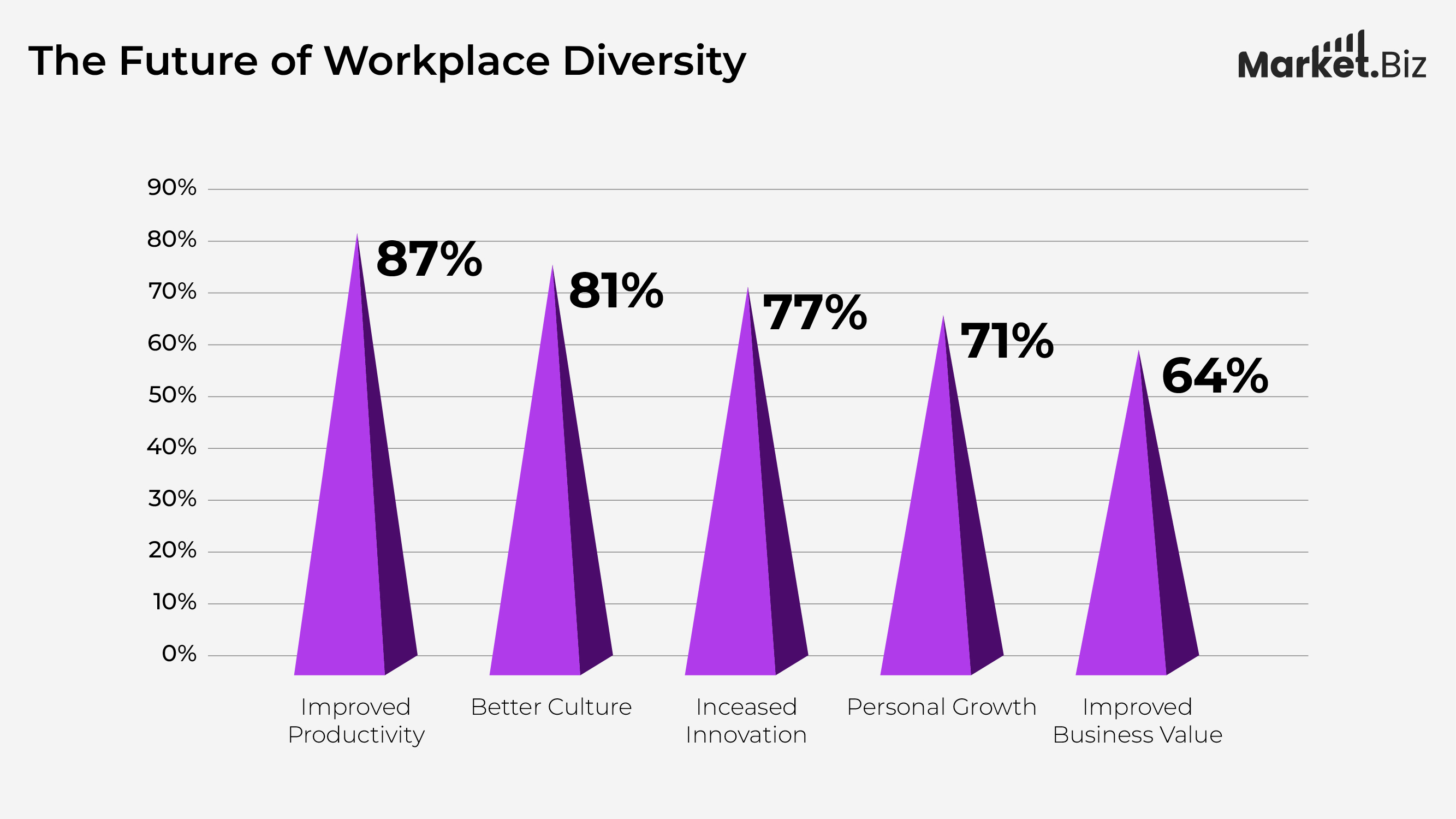
- By 2030, racial and ethnic minorities are expected to make up 46% of the U.S. workforce, signalling a significant demographic shift.
- Over 75% of millennials and Gen Z workers prioritize diversity and inclusion in their job searches, pushing companies to focus on inclusive practices.
- The demand for diverse leadership is rising, with 47% of companies setting diversity and inclusion goals to improve representation in senior roles by 2026.
- Gender parity in the workplace is anticipated by 2050, with women expected to make up 50% of global leadership roles, up from 24% today.
- 64% of companies are increasing their investment in diversity and inclusion initiatives, predicting a continued focus on training and inclusive recruitment practices.
- The rise of remote work is diversifying the workforce, as companies can now hire talent from a broader range of geographic and cultural backgrounds.
- 82% of organizations believe that inclusive leadership will be a key factor in employee engagement and retention in the next decade.
- Companies focusing on diversity are predicted to experience a 36% higher likelihood of financial returns, making diversity a strategic business advantage.
- The next decade will see an increase in neurodiversity in the workplace, with companies recognizing the value of hiring individuals on the autism spectrum or with other cognitive differences.
- By 2030, it is estimated that 30% of Fortune 500 companies will have women as CEOs, as gender equality initiatives gain traction.
- More than 50% of organizations plan to implement AI-driven diversity recruitment tools to combat bias and improve hiring practices.
- As of 2025, 80% of global companies are expected to adopt a diversity and inclusion policy that specifically addresses mental health and well-being in the workplace.
Conclusion
Diversity and inclusion are not just ethical imperatives but strategic business drivers. Companies with diverse workforces are more likely to outperform their peers in financial returns, and gender-diverse teams tend to have higher profitability. However, disparities remain, as women hold a disproportionate share of senior leadership roles despite comprising a significant portion of the global workforce.
As job seekers increasingly prioritize diversity, organizations are ramping up investments in diversity and inclusion initiatives. The growing representation of racial and ethnic minorities in the workforce signals a transformative shift. Ultimately, embracing diversity leads to better decision-making, innovation, and employee satisfaction, positioning companies for sustained success.
FAQ’s
Diverse teams are more likely to outperform their competitors, with companies having racial and gender diversity being significantly more profitable. Additionally, diversity drives innovation and improves decision-making speed and efficiency.
Companies with diverse leadership teams are more likely to experience above-average profitability and enhanced decision-making capabilities. However, women still hold a limited percentage of leadership roles globally, highlighting the need for further progress.
A significant percentage of job seekers prioritize diversity and inclusion when evaluating potential employers. Organizations with strong diversity practices tend to attract top talent from a broader range of backgrounds, leading to improved employee engagement and retention.
Racial and ethnic minorities make up a considerable portion of the global workforce, yet they are underrepresented in leadership roles. Companies with higher ethnic diversity are more likely to achieve industry-leading profitability.
By 2030, racial and ethnic minorities are expected to make up a larger portion of the workforce, signalling a significant demographic shift. The continued focus on diversity and inclusion initiatives is expected to enhance employee performance, job satisfaction, and organizational success.