









Introduction
Internship and Apprenticeship Statistics: Internships and apprenticeships play a crucial role in shaping the careers of young professionals by providing hands-on experience and industry-specific skills. In the U.S., over 50% of college students participate in internships, which greatly enhance their chances of landing full-time jobs after graduation.
Meanwhile, apprenticeship programs are thriving globally, with countries like Germany and the UK hosting over 1.5 million apprentices each year, especially in industries like skilled trades, engineering, and healthcare. These programs not only bridge the gap between education and employment but also help industries address skills shortages in critical sectors like STEM, technology, and manufacturing. Understanding these statistics can help students, employers, and policymakers make informed decisions about career development and workforce planning.
Editor’s Choice
- Over 50% of U.S. college students complete internships, boosting their chances of securing full-time jobs post-graduation.
- Countries like Germany and the UK enrol over 1.5 million apprentices annually, focusing on skilled trades and vocational training.
- 43% of internships in the U.S. are paid, with tech and finance sectors offering the highest compensation.
- Global apprenticeship programs address skills shortages, especially in STEM, technology, and manufacturing sectors.
- 70% of interns receive full-time offers from the companies where they intern, particularly in competitive industries.
- 300 million young people globally are NEET (Not in Education, Employment, or Training), highlighting the need for more internships and apprenticeships.
- Apprenticeships improve youth employment, with programs in Australia showing a 30% higher employment rate among apprentices.
- In the U.S., 60% of apprentices work in construction-related fields, reflecting high demand in skilled trades.
- India’s apprenticeship registrations have increased by 20% in five years, driven by growth in the manufacturing and IT sectors.
- The global apprenticeship market is projected to grow 8% annually, fuelled by demand for skilled workers in emerging economies.
- Women make up 57% of the U.S. workforce but only 9% of active federal apprenticeships, highlighting gender disparities.
- Interns with paid roles are 25% more likely to receive full-time offers and earn higher starting salaries than unpaid interns.
- 85% of internships and apprenticeships now leverage digital tools for remote training and virtual collaboration.
General Internship and Apprenticeship Statistics
- Over 50% of U.S. college students complete at least one internship before graduation, boosting their employability.
- Germany and the UK each enrol over 1.5 million apprentices annually, focusing on skilled trades and vocational training.
- In the U.S., around 43% of internships are paid, with tech and finance sectors offering the highest compensation.
- Apprenticeship programs typically last 1 to 4 years, providing hands-on experience in fields like construction and healthcare.
- Globally, over 300 million young people are not in education, employment, or training (NEET), highlighting the need for more internships and apprenticeships.
- STEM-related internships make up about 30% of all internships in the U.S., reflecting the growing demand for tech talent.
- Apprenticeship completion rates vary widely, with countries like Switzerland reporting success rates above 80%.
- Around 60–70% of interns are offered full-time positions by the companies where they intern, especially in competitive industries.
- In the UK, over 4, 00,000 people are enrolled in apprenticeships, covering industries from digital technology to healthcare.
- Unpaid internships are more common in creative industries, with about 30% of such internships offering no financial compensation.
- Apprenticeships are proven to reduce youth unemployment, with programs in countries like Australia showing a 30% higher employment rate among apprentices.
- Diversity in internships is improving, with efforts to increase participation among women and minority groups in non-traditional fields.
- The global apprenticeship market is projected to grow significantly, driven by the demand for skilled workers in emerging economies.
- Remote internships have surged post-2020, with over 60% of companies offering virtual internship programs in tech and marketing.
- Companies like Google, Microsoft, and IBM report that over 50% of their full-time hires come from their internship programs.
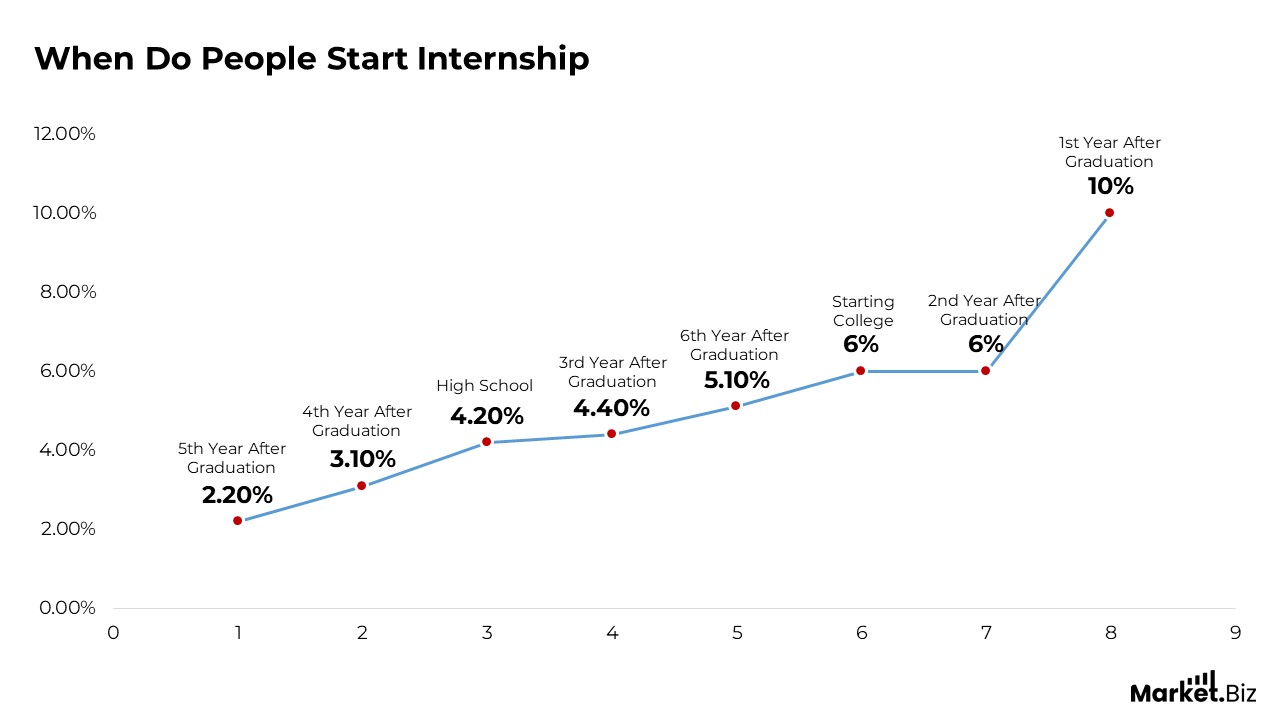
(Source: Flair)
Apprenticeship Participation by Region
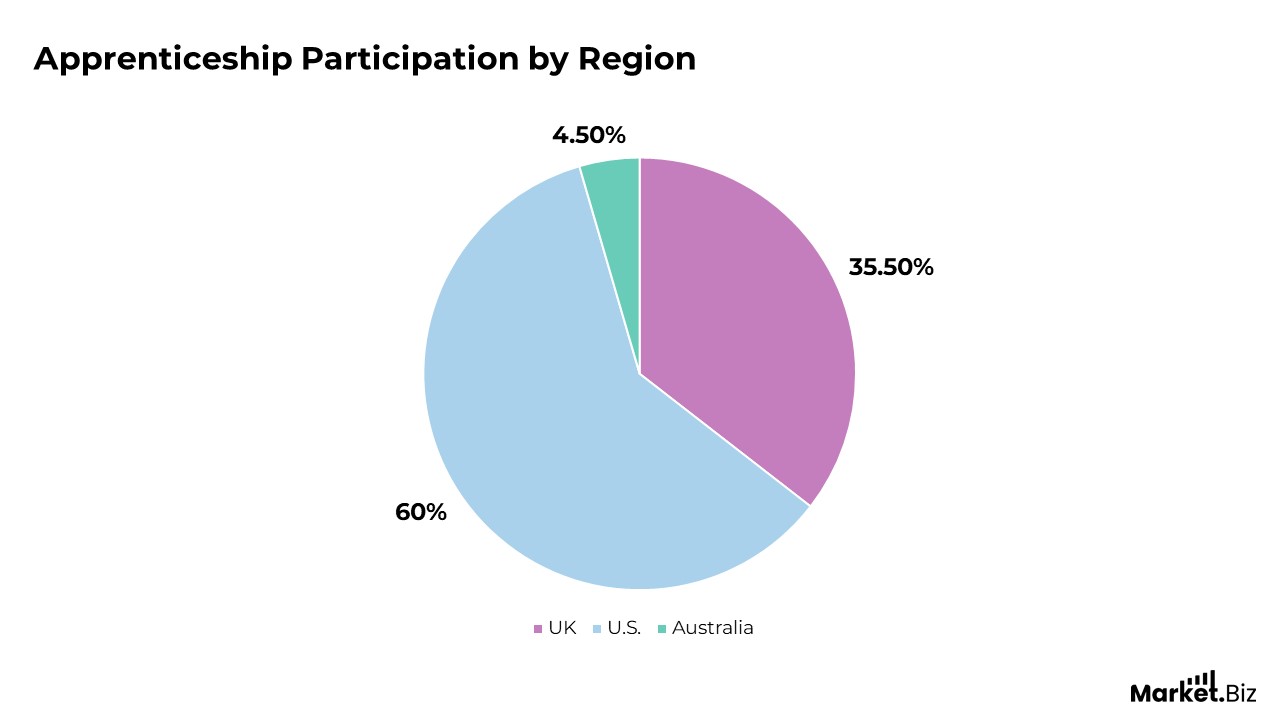
- Apprenticeship starts in the UK have declined by 35.5% from 2015 to 2024, with the most significant drop among individuals aged 16 to 19.
- Germany’s apprenticeship system enrols over 1.5 million apprentices annually, emphasizing vocational training in sectors like manufacturing and engineering.
- In the U.S., approximately 60% of apprentices are engaged in construction-related fields, reflecting the industry’s reliance on skilled trades.
- Australia’s apprenticeship participation rate stands at about 4.5% of the workforce, with a significant focus on trades such as electrical and plumbing services.
- Switzerland boasts an apprenticeship participation rate of over 70% among youth, with programs spanning sectors like finance, healthcare, and technology.
- India has seen a 20% increase in apprenticeship registrations over the past five years, particularly in the manufacturing and information technology sectors.
- In Canada, apprenticeship programs are predominantly offered in the construction and industrial sectors, with a growing emphasis on integrating technology-related apprenticeships.
- Japan’s apprenticeship system is deeply rooted in its manufacturing industry, with a notable 15% of high school graduates entering apprenticeship programs annually.
Internship Participation by Region
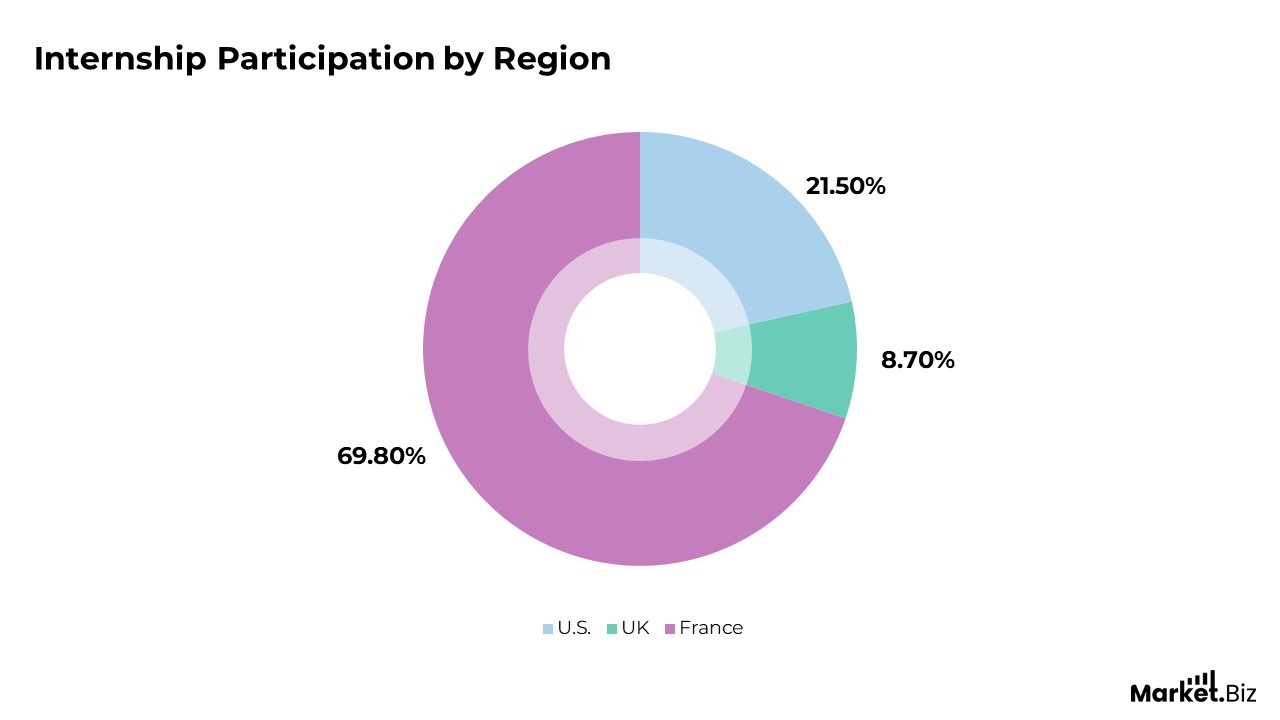
- Approximately 21.5% of U.S. students participate in internships, offering valuable work experience and enhancing employability.
- In the UK, only about 8.7% of students engage in internships, highlighting a significant gap compared to global counterparts.
- Indian students have experienced a 200% increase in internship opportunities over the past five years, with business development and management roles comprising 44% of these positions.
- Germany’s robust apprenticeship system enrolls over 1.5 million apprentices annually, emphasizing vocational training in sectors like manufacturing and engineering.
- Australia’s internship market has seen significant growth, with a 20% increase in opportunities over the past five years, particularly in business development and management sectors.
- In France, internships are a mandatory component of many academic programs, with approximately 60% of students completing at least one internship during their studies.
- Japan’s internship culture is deeply integrated into its educational system, with over 50% of university students participating in internships, primarily in technology and manufacturing sectors.
- Brazil has seen a 150% increase in internship opportunities over the past decade, with a focus on sectors like agriculture, energy, and technology.
Apprenticeship Participation by Gender
- In the United States, women constitute 57% of the labour force but represent only 9% of active federal apprenticeships, indicating a substantial gender disparity.
- In the construction industry, women make up just 10.3% of apprentices, highlighting underrepresentation in this sector.
- In public administration, women account for 45.7% of apprentices, showcasing a more balanced gender distribution.
- The manufacturing sector sees 29.4% female apprenticeship participation, reflecting moderate gender diversity.
- In transportation and warehousing, women represent 24.8% of apprentices, indicating room for increased female involvement.
- In India, the representation of women apprentices in the manufacturing sector is projected to reach 40% by the end of the year, marking a significant increase from previous years.
- In utilities, female apprentices make up 19.9%, suggesting potential for greater gender inclusivity.
- Despite comprising a significant portion of the workforce, women’s participation in apprenticeships varies widely across industries, with notable underrepresentation in sectors like construction and manufacturing.
Internship Participation by Gender
- Among the Class of 2023 graduating seniors, 62% participated in internships, with 64.8% of men and 61.8% of women engaging in such opportunities.
- Of those who interned, 76.4% of men and 51.5% of women held paid positions, highlighting a significant gender disparity in paid internships.
- Women constitute 81% of unpaid interns, while making up 68% of paid interns, indicating a higher likelihood of women undertaking unpaid roles.
- Women are 34% less likely than men to receive payment for their internships, reflecting broader gender inequities in compensation.
- The lower rate of paid internships among women may contribute to persistent gender wage gaps post-graduation, as paid internships often lead to higher starting salaries.
- Fields with higher proportions of women, such as education and social services, tend to offer more unpaid internships, limiting women’s access to paid opportunities in these sectors.
- Engaging in paid internships provides valuable work experience and networking opportunities, which can be crucial for career advancement; the gender disparity in paid internships may affect women’s professional trajectories.
- Addressing these disparities requires concerted efforts from educational institutions and employers to ensure equitable access to paid internships for all students, regardless of gender.
Impact of Internships on Employment
- Students who completed at least one internship received an average of 1.17 job offers, while those without internships received 0.98 offers, showing a 16% difference.
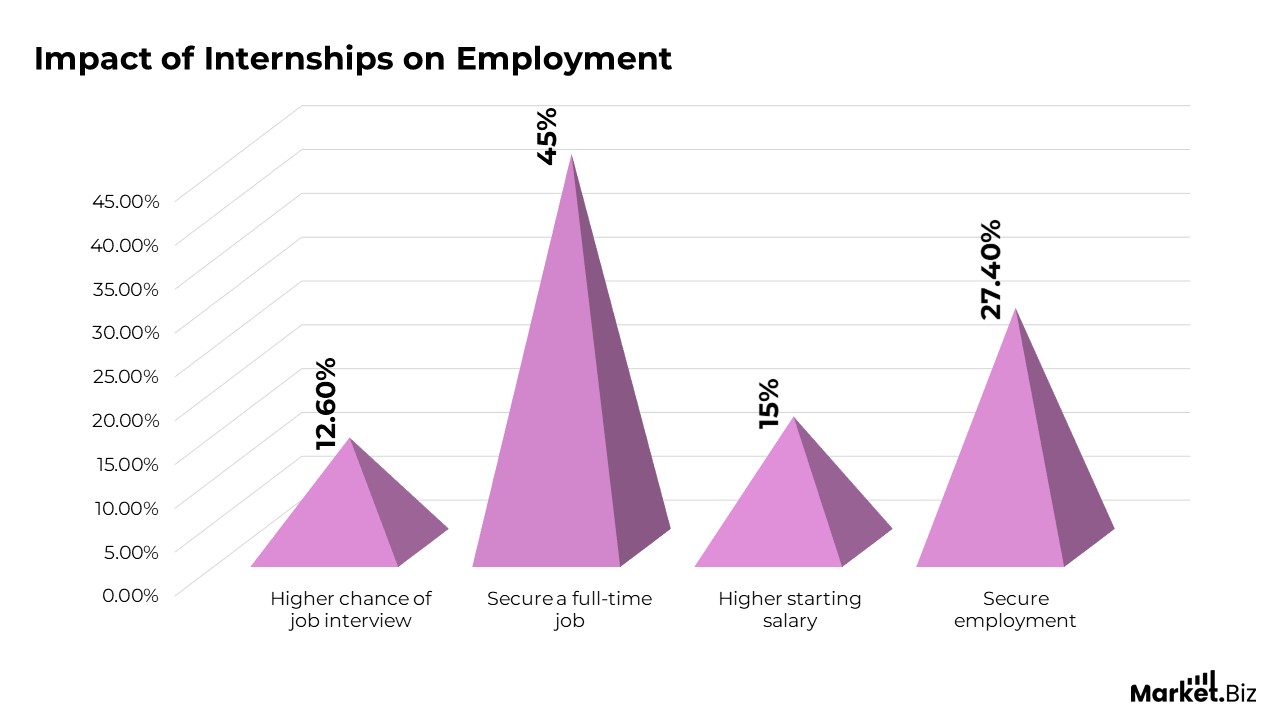
- Applicants with internship experience have a 12.6% higher chance of being invited to a job interview compared to those without internships.
- Completing an internship makes you 45% more likely to secure a full-time job after graduation.
- The conversion rate from internships to full-time positions was 66.4% in 2021, up from 55.5% in 2020, reflecting a 10.9% increase.
- Students with paid internships are 25% more likely to receive a full-time offer and a 15% higher starting salary than those with unpaid internships.
- Business majors with internships are 35% more likely to secure employment post-graduation compared to those without.
- Interns who completed structured programs have an income 30% higher than non-interns six years after graduation.
- Internships connect academic learning to real-world applications, with 70% of students reporting increased job readiness after an internship.
- About 60% of interns gain valuable networking connections, leading to job referrals and mentorship opportunities.
- Interns develop 20% more industry-specific skills compared to peers without internship experience, enhancing their resumes.
- Students with internships are 50% more likely to stand out in the job market, as employers prioritize practical experience.
- 40% of companies offer full-time positions to interns who performed well during their internship.
- Graduates with internship experience secure jobs 30% faster than those without such experience.
- 75% of employers view internship experience as a strong indicator of a candidate’s initiative, skills, and work ethic.
Internship Pay Trends
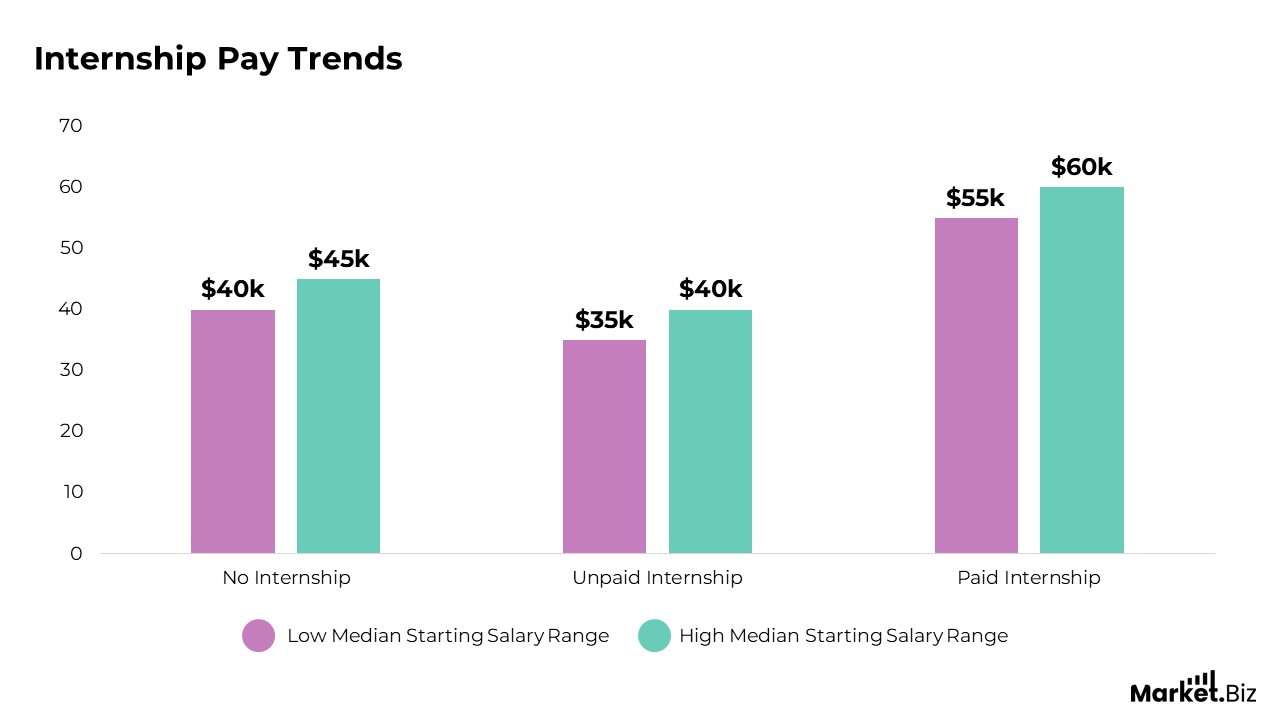
- In 2023, the average hourly wage for interns was $22.06, reflecting a 0.2% increase over the past decade when adjusted for inflation.
- Approximately 40% of internships in the U.S. are unpaid, indicating that up to 1.66 million interns work without compensation annually.
- The average hourly pay for interns ranges from $16.56 to $20.76, which is up to 40.9% less than the average median salary in the U.S.
- Paid internships are 32% more likely to lead to full-time job offers compared to unpaid internships.
- In 2020, the average hourly wage for interns increased by 6.2% compared to the previous year, marking a significant rise in intern compensation.
- More than 60% of internships offer compensation, highlighting a trend towards paid opportunities.
- Top technology companies offer some of the highest-paying internships, with monthly salaries exceeding $9,000.
- Jane Street, a leading trading firm, offers interns a base salary of up to $250,000 annually, translating to approximately $21,000 per month.
- Interns at top hedge funds like Citadel and DE Shaw can earn monthly salaries up to $25,000, reflecting the competitive nature of financial sector internships.
- In 2021, the median intern pay increased by 19% among 16 top firms, indicating a competitive market for intern talent.
- Approximately 61% of internships in the U.S. are paid, with unpaid internships being more prevalent in fields like social work.
- The trend towards higher intern pay is partly driven by the need to attract top talent, with some firms offering comprehensive benefits and competitive salaries.
(Source: Flair)
Apprenticeship Pay Trends
- In May 2023, elevator and escalator installers and repairers, requiring apprenticeships, had an average hourly wage of $48.11, surpassing the U.S. all-occupations average of $31.48.
- Apprentices typically start earning about 50% of a fully qualified worker’s wage, with pay increases as they advance in their training.
- In fiscal years 2008–2017, the median exit wage for apprentices in the South was $27.92 per hour, higher than the national average of $24.87 for similar education levels.
- Nationally, the average starting salary for apprentices completing their programs is approximately $84,000, with a 90% employment retention rate post-program.
- Apprenticeship programs have demonstrated a 44.3% return on investment for employers, highlighting their economic value.
- In Australia, trade apprenticeships lead to strong employment outcomes, with 94.5% employed six months post-completion in 2023.
- An apprentice electrician in Brisbane reported an hourly rate of $50, significantly higher than the average first-year apprentice wage of $16.62 per hour.
- Companies investing in management apprenticeships experienced a revenue increase of £106.1 million last year, demonstrating the financial benefits of such programs.
- Apprenticeships offer diverse opportunities across sectors, with programs available in industries ranging from construction to technology, each with competitive wages.
- The U.S. Department of Labour reported over 593,000 active apprentices in 2021, indicating a growing trend in apprenticeship participation.
- Apprenticeships provide a pathway to stable employment, with many programs offering job placements upon successful completion.
- Ongoing investments in apprenticeship programs are essential to meet evolving industry demands and ensure a skilled workforce.
Racial and Ethnic Diversity
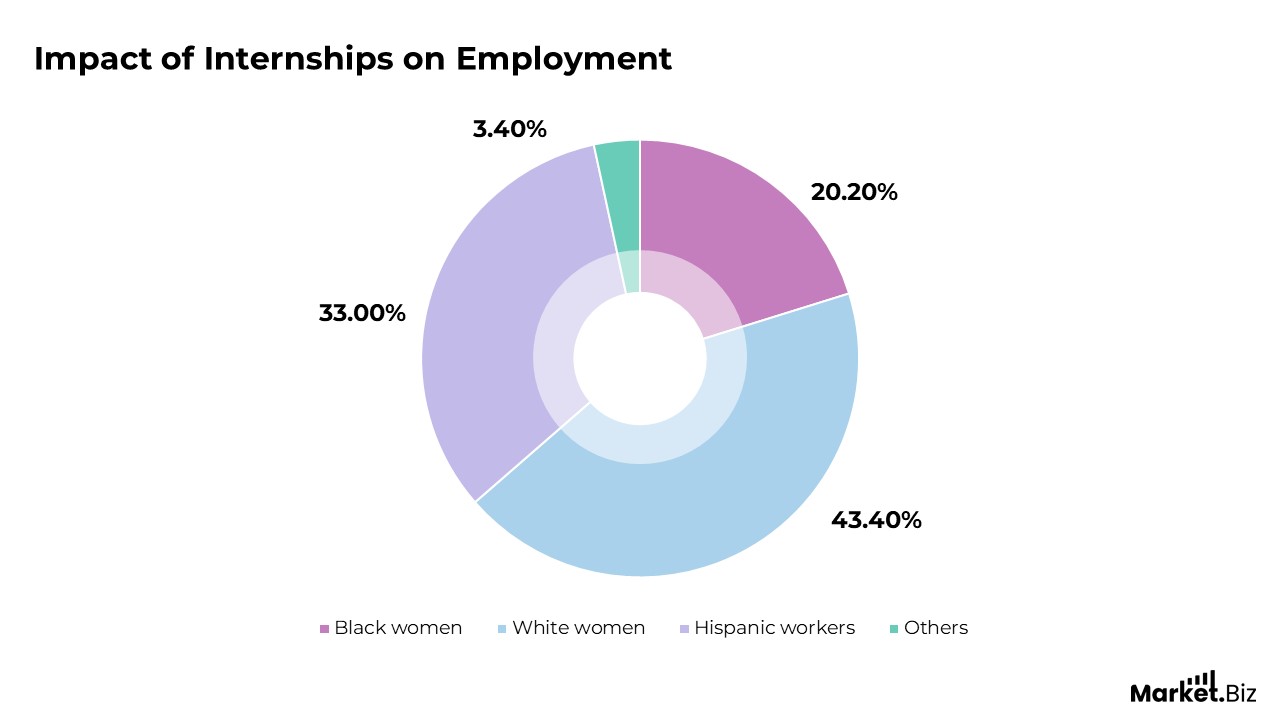
- In 2023, 26.7% of women apprentices were Latina, surpassing their 17.1% representation among all employed women.
- Black women made up 20.2% of women apprentices, exceeding their 13.0% share in the broader female workforce.
- White women represented 43.4% of women apprentices, lower than their 60.6% presence among all employed women.
- Between 2014 and 2023, Latina apprenticeships grew by 349%, and Asian women apprenticeships by 302%.
- Black apprentices constitute 9% of registered apprentices, below their 12.3% share of the national labour force.
- In 2021, 18.7% of joint apprenticeship program registrants were workers, compared to 14.0% in non-joint programs.
- Hispanic workers accounted for 33.0% of new registrants in union-based apprenticeship programs in 2021, surpassing their 25.6% share in non-union programs.
- From 2015 to 2021, the share of women among new apprenticeship registrants increased from 3.73% to 6.26% in joint programs, and from 2.11% to 4.45% in non-joint programs.
- Despite growth, the share of apprentices declined from 20.0% in 2019 to 18.7% in 2021 in joint programs.
- Over 50% of apprentices in the American Apprenticeship Initiative were women and people, exceeding their 40% representation in all registered apprentices.
- In 2021, 16% of White apprentices reported substantial knowledge of apprenticeship, compared to 19% of Black and 11% of Hispanic apprentices.
- Apprenticeships have the potential to address racial wealth disparities, offering pathways to well-paying jobs for underrepresented groups.
- Efforts to diversify apprenticeships are ongoing, aiming to reflect the nation’s demographic composition and promote equity.
- Continuous monitoring and targeted initiatives are essential to enhance diversity and inclusion in apprenticeship programs.
For Disabled Individuals
- Only 20% of individuals with disabilities participate in internships, compared to 60% of their non-disabled peers.
- Companies that offer inclusive internships see a 25% higher retention rate of employees with disabilities.
- Apprentices with disabilities experience 30% higher job satisfaction due to tailored support and accommodations.
- The unemployment rate for individuals with disabilities is 2.5 times higher than for those without disabilities.
- Inclusive apprenticeship programs lead to a 40% increase in workplace diversity and innovation.
- 70% of employers report that hiring individuals with disabilities through internships enhances company culture.
- Apprentices with disabilities often receive mentorship that improves their career progression by 35%.
- 55% of disabled individuals who complete internships secure full-time employment within six months.
- Internships with disability support services improve soft skills like communication and teamwork by 20%.
- Companies with disability-inclusive apprenticeship programs are 50% more likely to meet diversity hiring goals.
Internship and Apprenticeship Challenges
- 45% of interns report lacking meaningful work, limiting their professional growth.
- 60% of apprentices face challenges in balancing work responsibilities with educational requirements.
- Only 30% of internships offer structured mentorship, affecting skill development.
- 50% of apprentices struggle with unclear career progression paths within programs.
- 40% of interns experience inadequate compensation, reducing financial accessibility.
- 35% of apprenticeship programs lack diversity, limiting opportunities for underrepresented groups.
- 25% of interns feel unsupported by supervisors, impacting their confidence and performance.
- 55% of apprentices report inconsistent feedback, hindering their ability to improve.
- 20% of internships are unpaid, creating barriers for students from low-income backgrounds.
- 70% of apprenticeship programs lack flexibility, making it hard for participants to manage personal commitments.
- 30% of interns find limited networking opportunities, affecting future job prospects.
- 65% of apprentices cite poor communication within programs as a major hurdle.
- 50% of internship programs do not offer post-program job placement assistance.
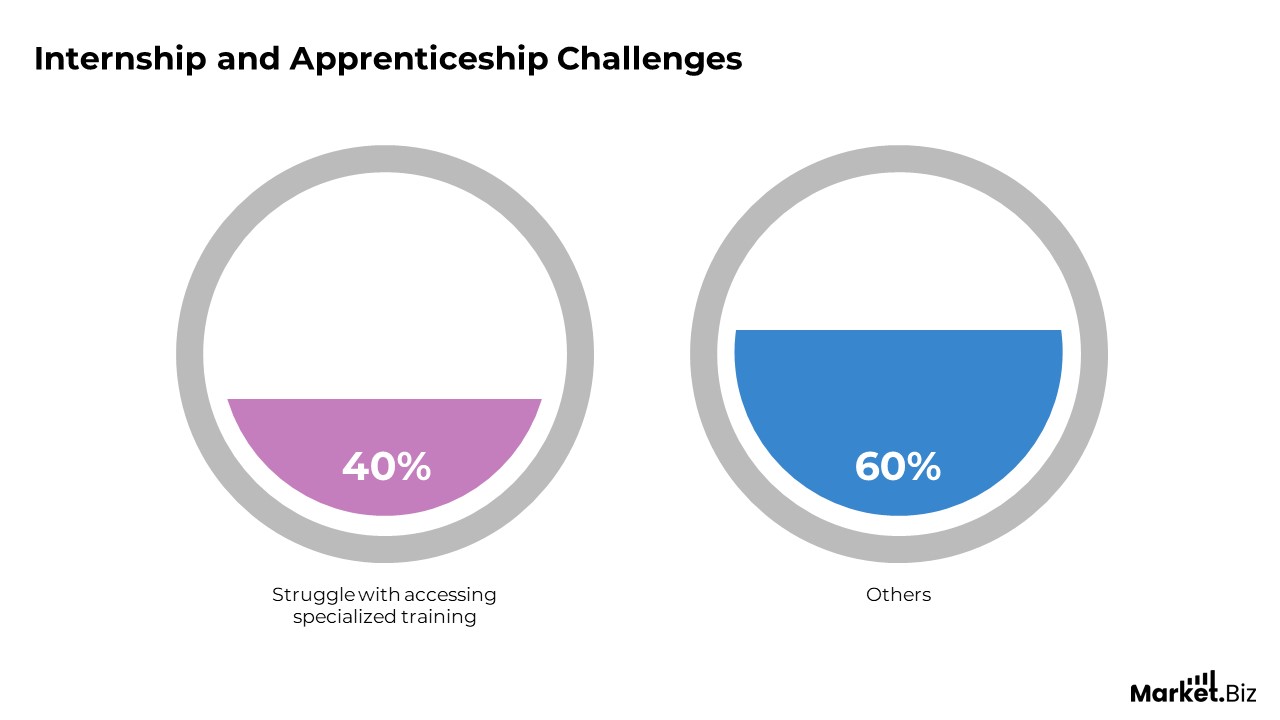
- 40% of apprentices struggle with accessing specialized training resources.
- 75% of interns desire more hands-on projects to develop practical skills.
Role of Technology
- 85% of internship and apprenticeship programs now use digital platforms for remote training and virtual collaboration.
- Technology enhances learning, with 70% of apprentices reporting improved skill development through online tools.
- 60% of internships utilize project management software to track tasks and deadlines efficiently.
- Virtual reality (VR) is used in 25% of apprenticeship programs for hands-on training in complex environments.
- 90% of interns and apprentices use mobile apps for real-time communication and access to learning resources.
- E-learning platforms have increased accessibility, with 40% of programs offering flexible, on-demand courses.
- Data analytics helps employers assess intern performance, with 55% of companies using metrics for improvement.
- Online mentorship platforms are utilized by 50% of apprenticeship programs to connect mentors and mentees globally.
- 30% of internships incorporate coding and tech-related skills, reflecting the growing demand for digital proficiency.
- AI-powered tools assist in personalized learning paths, with 20% of apprenticeships leveraging adaptive technologies.
- Digital portfolios are becoming common, with 65% of interns using them to showcase projects and skills.
- Technology-driven assessments improve hiring accuracy, with 75% of companies using digital evaluations for interns.
Future of Apprenticeships and Internships
- The global apprenticeship market is projected to grow by 8% annually, driven by increasing demand for skilled trades and tech talent.
- 70% of companies plan to expand their internship programs to attract top talent in emerging industries like AI and cybersecurity.
- The rise of remote work will lead to a 40% increase in virtual apprenticeships and internships by 2030.
- 60% of employers expect digital skills to be a core requirement for future internship and apprenticeship candidates.
- Apprenticeships are shifting towards hybrid models, combining in-person training with online learning for greater flexibility.
- The demand for micro-internships is growing, with 30% of companies offering short-term, project-based roles in 2025.
- Government investments in apprenticeship programs are expected to rise by 15% annually to address workforce gaps.
- Soft skills like adaptability and problem-solving will become key focus areas, with 50% of programs incorporating leadership training.
Conclusion
Internships and apprenticeships play a crucial role in shaping the global workforce, significantly enhancing employability for students and young professionals. Countries like Germany and the UK have robust apprenticeship systems that address critical skills gaps in sectors like STEM and technology.
While challenges such as gender disparities and limited diversity persist, ongoing efforts aim to foster greater inclusivity. The future of these programs looks promising, with growing opportunities driven by digital transformation and an increasing demand for skilled talent.
FAQs
They provide practical skills, networking, and higher chances of full-time jobs after graduation.
Internships are short-term industry exposures, while apprenticeships offer long-term skill training with certifications.
Many are paid, especially in tech and finance, while some industries offer unpaid roles.
Diversity is improving, with more women, marginalized groups, and disabled individuals participating.
It enables remote learning, virtual collaboration, and online mentorship for better skill development.