








Introduction
Workplace Chat and Messaging Statistics: In 2025, workplace chat and messaging platforms have already become a part of the organisational communication mix, spurred on by the transition to either remote or hybrid work models.
As per Pumble, people who feel included as a result of detailed workplace communication are almost five times more likely to declare their productivity as being improved, which is a very strong statement regarding the efficacy of messaging tools in supporting employee engagement and performance.
Also, Microsoft 365 benchmarking data indicates that people see a minimum of 32 daily chat message notifications, which illustrates that in speaking to the communication utility, instant messaging is definitely integrated within our daily workflow.
As organizations continue to adopt and integrate these platforms their daily workplace activity, understanding their impact will necessitate some degree of workplace chat and messaging stat catastrophe to enhance communicational protocols that ultimately encourage a net positive outcome for a productive, engaged, motivated and high performer workforce.
Editor’s Choice
- Slack has 12 million daily users, who spend roughly a 90 mins a day on it.
- Poor communication costs U.S. businesses $1.2 trillion in one year ($12,506 per employee).
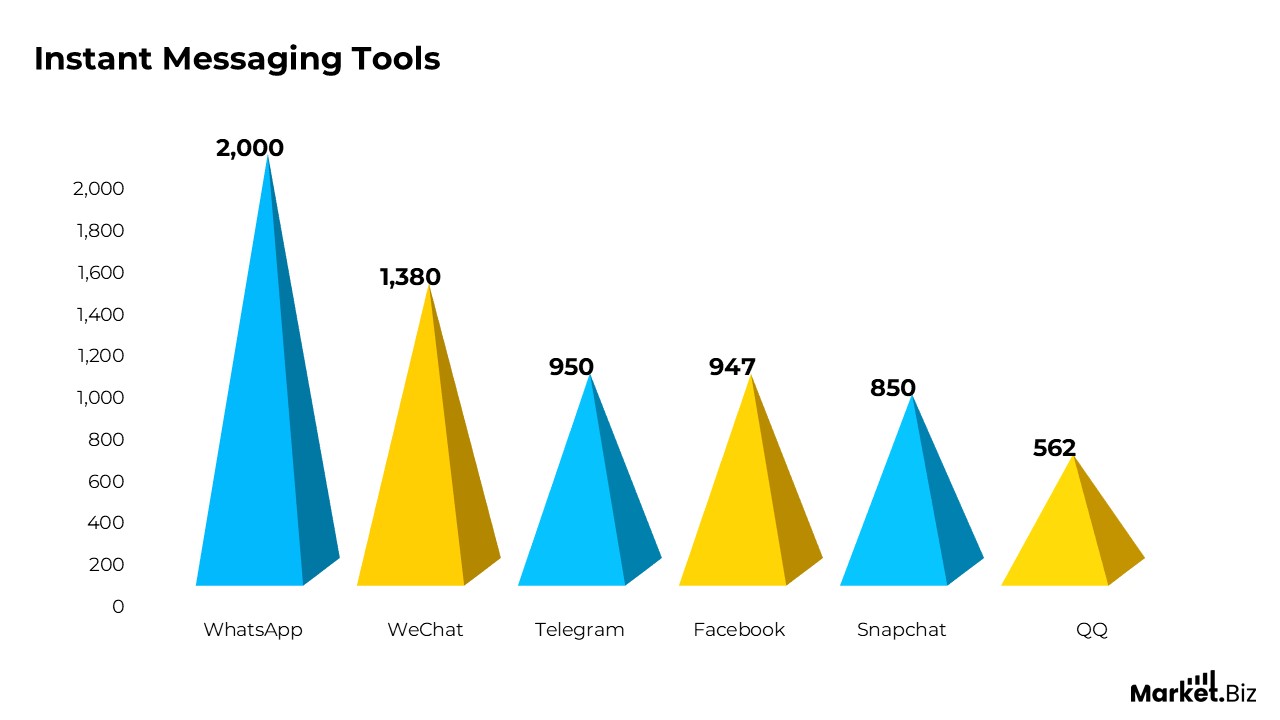
- WeChat has 1.1 billion active users each month and it is also used in China as an instant messenger.
- 50% of U.S. WhatsApp users open the messaging app every single day of the week, showing a high level of engagement.
- Good communications result in a 25% increase in productivity for teams so think clear messaging tools!
- The user base for Microsoft Teams grew from 20 million in 2019 to 270 million in 2022.
- 50% of WhatsApp users in America use it daily.
- Approximately 56.5% of hybrid or fully remote workers want better chat tools to help them do their job.
General Workplace Chat and Messaging Statistics
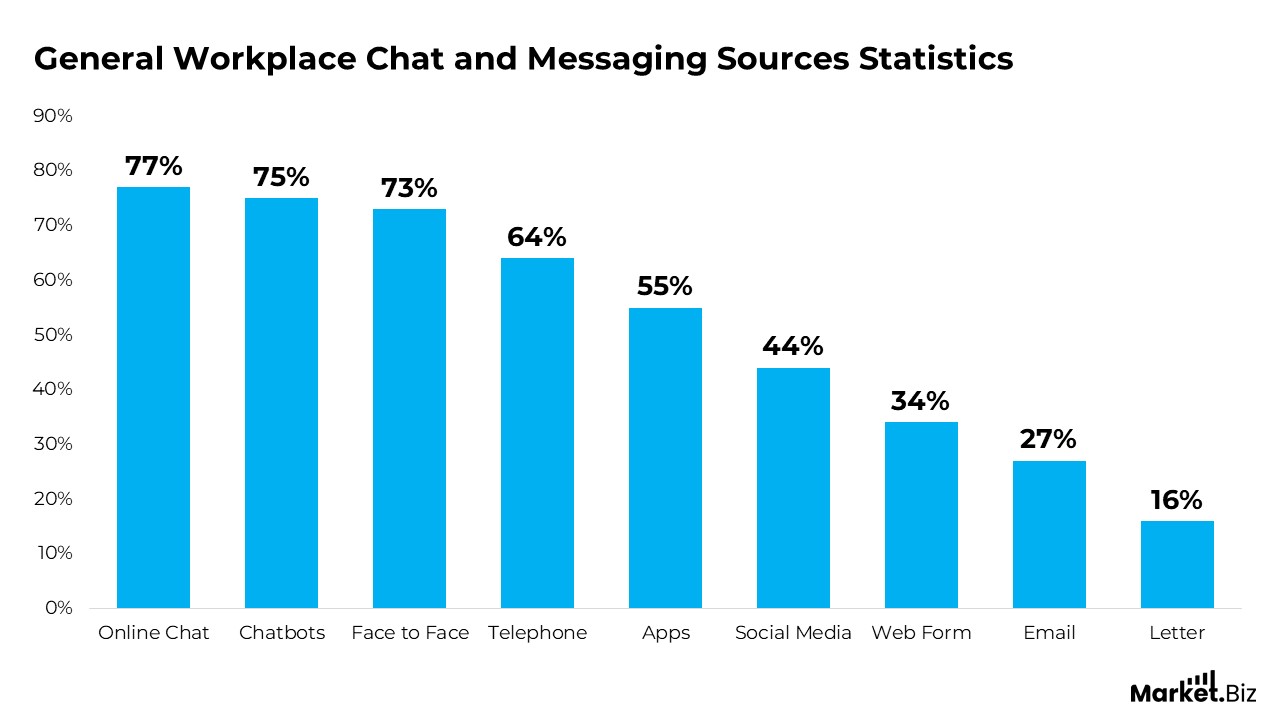
- Email is still number 1 for communicating with clients, with 55% of people using email to communicate with clients.
- Chat apps like Slack are used by 11% of all respondents for communicating with clients.
- Slack has 12 million daily users, who spend roughly a 90 mins a day on it.
- Project management tools for communicating with clients are used by the other 11%.
- 31% of employees are using email to communicate with co-workers in their own company.
- 73% of organizations use or plan to use AI chatbots as an effective way to get answers quickly.
- 61% of organisations are using AI as a better way to work faster, writing emails and communicating.
- 42% of employees say poor communication harms teamwork between departments.
- Effective communication could increase productivity by 72%, as participants in another research project found productivity increases when communicating.
Moreover
- Non-verbal communication accounts for 93% of the value carried in a message, which is why it is so important to consider body language and tone.
- Poor communication costs U.S. businesses $1.2 trillion in one year ($12,506 per employee).
- 61% of customer service workers feel more confident at work from good communication.
- 82% of knowledge workers and 90% of business leaders say that remote work has cause them to have a greater need for communication.
- 21% of employees find remote communication somewhat hard at work, while 6% find remote communication very hard.
- 62% of participants are working with teammates who are in different time zones, so better communication technology is needed.
- Good communication increased job satisfaction by 56%, also revealed by participants in the other research project on knowledge workers.
- Participants communicated with others at work 72% of the workweek, up two hours more than they did in 2022.
- 74% of organisations began using new tools to help manage projects and communications within the organisation, less than one year after the pandemic began.
(Source: CDN Prod)
Global Adoption Rate
- 60% of remote workers use IM tools such as Slack or Microsoft Teams to communicate with the team.
- 57% of employees prefer IM services for workplace communication.
- 28% of employees use IM services, but 8% rely on them as their primary method of communication.
- 45% of regular users say they are more productive with IM than without it.
- 71% 0f workers in the computer and information field use IM extensively to conduct their work.
- WeChat has 1.1 billion active users each month and it is also used in China as an instant messenger.
- Skype is the IM, one third of its respondents (29%) are using, while one fifth (19%) are using Microsoft Lync.
- 14% of respondents say IM applications are helping them to send less email and become more efficient with their communications.
- 12% like the multi-functionality of IM tools, and 10% like the ease of use.
- Only 3% of the business community checks with their communications department before selecting an instant messaging app, despite how instantly it can change communication.
- Consumers are more than willing to pay a premium for a product if that channel includes mobile messaging as a support option, 66% of the time.
- 50% of U.S. WhatsApp users open the messaging app every single day of the week, showing a high level of engagement.
- 65% of organisations do not have a bona fide bulk SMS messaging plan, and are losing out on opportunities for mobile messaging.
- 14% said instant messaging application mean less emails for the users.
- Even with the run-away numbers for mobile usage, 65% of organizations are still without a sufficient bulk SMS messaging plan, indicating a gap in communication channels.
Impact on Productivity
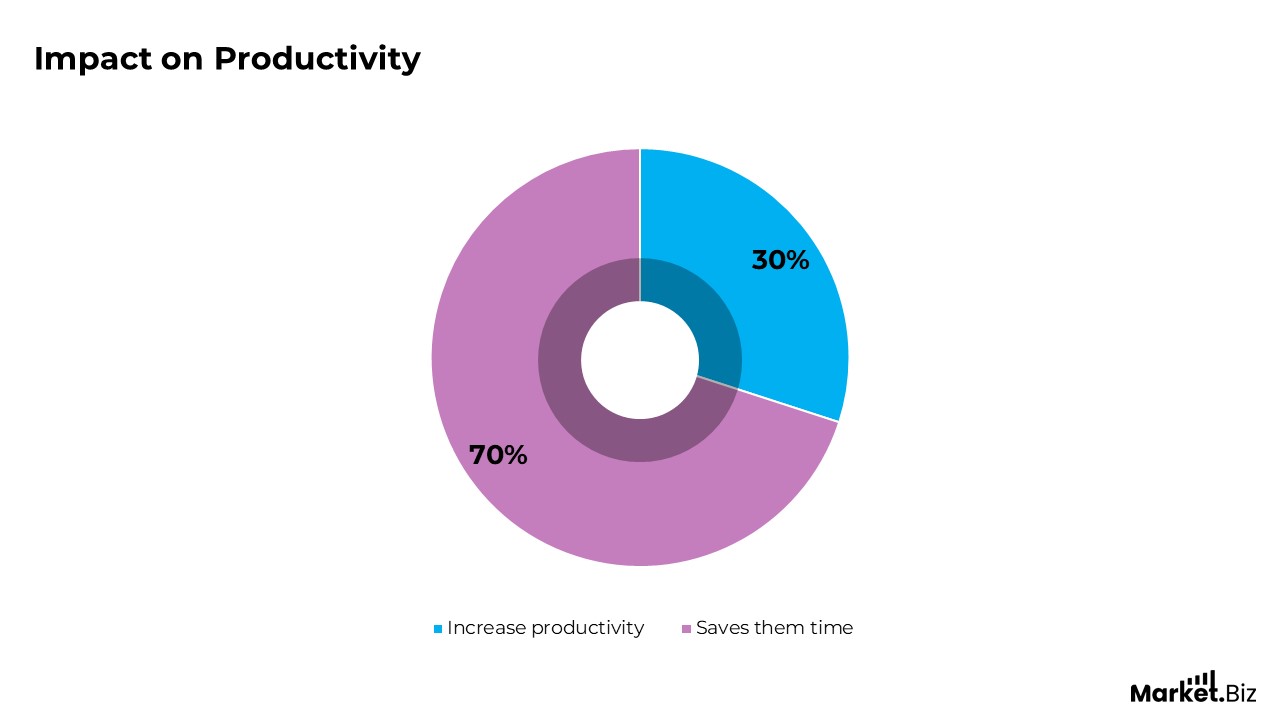
- Instant messaging has the potential to increase productivity by as much as 30% by making communications faster and decision-making quicker.
- Good communications result in a 25% increase in productivity for teams so think clear messaging tools!
- Slack’s user report a 32% increase in productivity, and 80% of Microsoft Teams users believe it increases their productivity.
- 70% of users reported instant messaging saves them time. 21% of users reported a small to a significant increase in productivity.
- The average employee loses 4 hours a week switching between apps and the aforementioned shows that all companies use some chat tools which subtract from productivity time.
- A quick note of consideration, 34% of workers said that if they were to uninstall their work chat, they would accomplish more work.
- The average worker spends 9 hours a week (or roughly 23% of their workweek) in collaboration tools email and/or chat that can both stimulate teamwork and waste their time.
- 84% of employees believe using work chat tools increases office gossip, a habit that is all too real and can distract from objectives.
Instant Messaging Tools
- Slack currently has the highest usage of any workplace messaging app, with 64% of organizations using Slack, followed by Microsoft Teams at 59%.
- 91% of businesses in total use at least two messaging apps, for an average of 3.3 chat tools per company.
- The user base for Microsoft Teams grew from 20 million in 2019 to 270 million in 2022.
- 45% of regular users say instant messaging makes them more productive.
- 28% of employees report using any instant messaging service and 8% of those users report it is their main mode of communication.
- 14% of users say that they use instant messaging for fewer emails.
- 3% of businesses have got input from their communications department before they establish an instant messaging program.
- 71% of IT sector workers report they use instant messaging quite a bit.
- WeChat is the most popular instant messenger in china with 1.1 billion active users every month.
- 29% of businesses use Skype while 19% of respondents are using Microsoft Lync.
- 50% of WhatsApp users in America use it daily.
- An astounding 66% of consumers will pay more for a product if they have a mobile messaging channel that support it.
- 65% of businesses have no formal bilk SMS messaging plan, despite having skyrocketing mobile usage figure.
- Slack’s UI receives continued high scores from their very loyal customer base, where 31% prefer it to other availability.
(Source: Statista)
Intranet Platforms Impact
Impact on Productivity and Engagement
- Intranets can increase productivity by 22% as a result of improved communications and saved time looking for information.
- 95% of companies that have developed AI-powered intranets realize a 50% boost in productivity. The evolution of the burnout has proven beneficial for organisations.
- Organisations with highly engaged employees realize 23% greater profit than companies with disengaged employees.
- Organisations with a social intranet reported a 20% increase in employee satisfaction and 87% improvement in employee retention during turbulent times.
- An effective intranet would resemble the central nervous system of an organisation. It links staff together, boosts productivity, and enhances the overall employee experience.
- Engaged employees are 87% less likely to leave the organisation. Intranet platforms can increase engagement and ultimately improve retention rates.
- 95% of organizations witnessed a 50% increase in productivity as a result of utilizing AI-powered intranets.
- Companies that score high in workplace culture can expect to see 4x increase in revenue growth that companies with lower workplace culture scores.
- Increased access to information makes things happen faster and allows employees to be more accurate and efficient.
- Intranet platforms can reduce communication by 50-80% as organizations migrate away from traditional paper to online benefits and other resources.
Impact on Business
- Some intranets get as high as 87% in monthly unique visits. When you can get unique visits at that level you can almost expect high adoption rates and engagement levels.
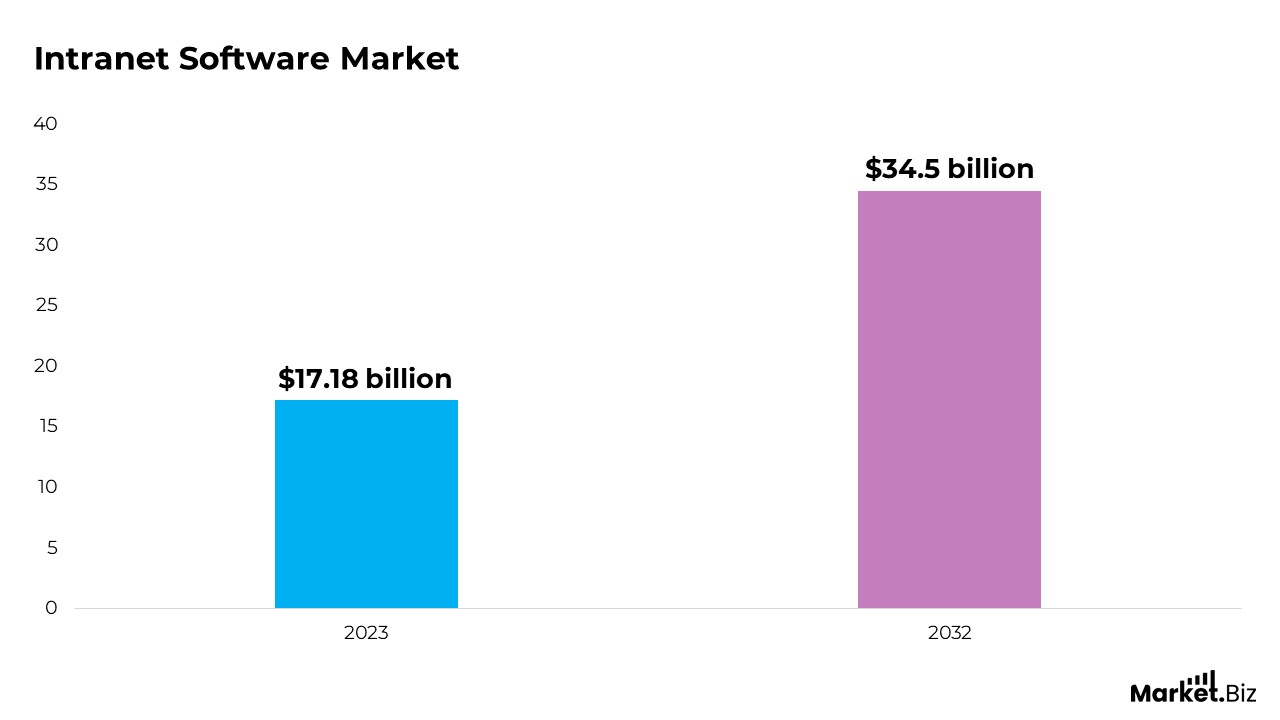
- The intranet software market is predicted to expand from $17.18 billion in 2023 to $34.5 billion by 2032, in relation the growth in demand.
- 94% of companies with next generation intranets have seen a positive revenue by a financial growth of 50% or greater.
- When intranets are enjoyable and easy to use by employees, adoption rates are high, and training costs are nearly zero. For example, Carbery on-boarded its 94% of employees on Workvivo with 0 training.
- Companies with efficient intranet solutions indicate that profitability has improved, with 50% reporting a revenue growth of 50% and above.
- Employers can save as much as 80% on the cost of benefits enrolment when they take it online instead of sticking to traditional methods.
- Companies that have solid initiatives to focus on culture using intranet platform, are indicating that they have an average turnover rate of 13.9%, compared to companies that have a low focus on culture, with a turnover rate of 48.4%.
- Intranets can keep corporate knowledge and facilitate information access, for example employee manuals, company policies and provides interactivity.
Benefits of Chat and Messaging
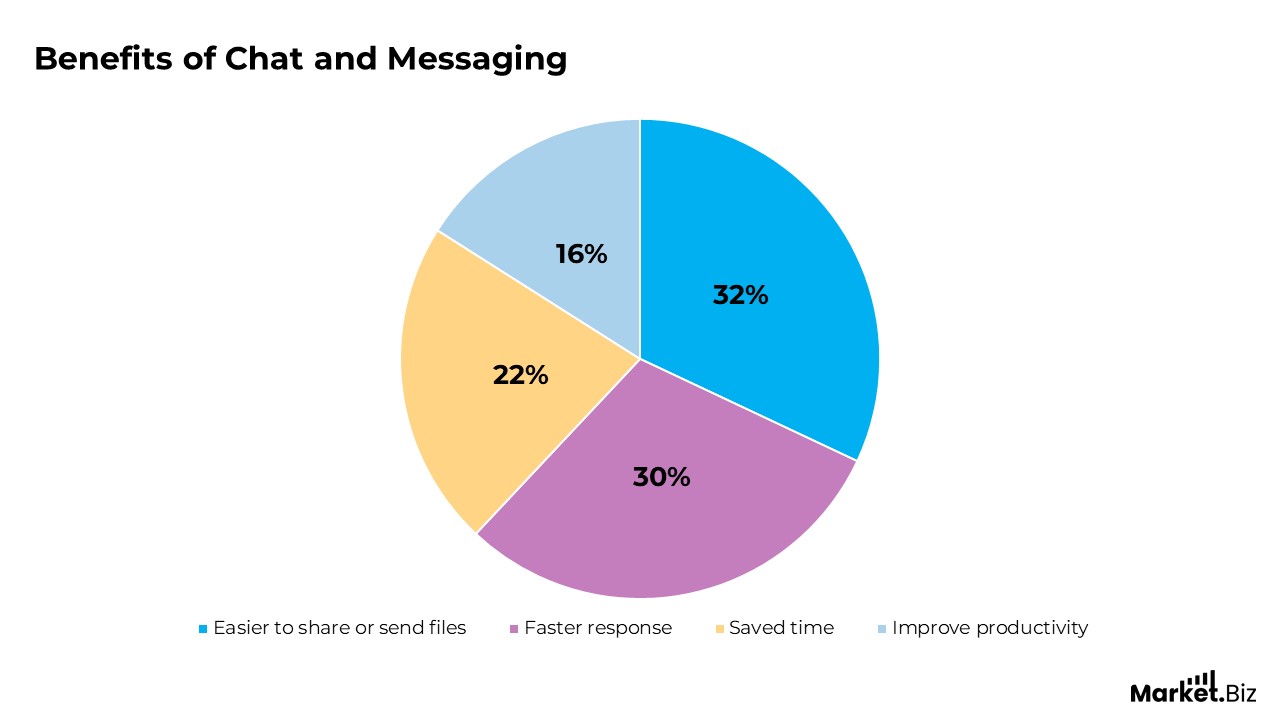
- 22% of users said that instant messaging saved time compared to voice calls or emails.
- 16% of users said instant messaging moderately to significantly improve their productivity.
- 66% of employees were able to address minor issues more quickly with enterprise-messaging apps instead of their phone.
- 43% of employees reported instant messaging made collaboration more intuitive.
- 30% of employees had faster response times when using messaging apps.
- 32% of employees also found it easier to share or send files using messaging apps.
- In addition, enhancing employee engagement can be done via instant messaging with real-time recognitions and feedback.
- Instant messaging can lessen the reliance on multi-threaded emails creating some efficiencies in communication.
- Instant messaging can facilitate smoother communications actress remote teams, supporting the flexibility of remote work environment.
Workplace Messaging in Remote Work
- Roughly 38% of employees believe that the collaborative work they do with those they work with via remote work is better, or much better, than the collaborative work when performed in the office.
- Over 52% of employees prefer a synchronous communication for remote work. Only 14% of employees believe that a synchronous communication shouldn’t be the primary way to communicate during remote work.
- Approximately 56.5% of hybrid or fully remote workers want better chat tools to help them do their job.
- A sizeable 91% of employees have had digital messages misinterpreted or misunderstood while at work.
- 62% of office workers report that digital messages that contain communication negatively impact their mental health.
- U.S. businesses collectively waste at least $128 billion dollars annually when employees try to communicate effectively but aren’t able to.
- Workers use instant messaging or online chat for communication, with 89% of workers reporting that they use it or lose their digital communication capabilities.
- Workers spend an average of 20 hours a week using digital communications tools for work purposes.
- 45% of workers are more connected to their colleagues as a result of the digital communication.
- 60% of workers reported that they increased burnout because of the digital communication.
- 42% of employees experience stress when trying to send the right tone with messages digitally.
- Doing work while using digital communication can impede productivity as 88% of employees reported they have preferences about how they want to communicate with their colleagues at work, highlighting the importance of flexible communication tools.
- 49% of employees reported that using communication methods that they prefer at work help them be more productive at work.
AI’s Impact on Workplace Messaging
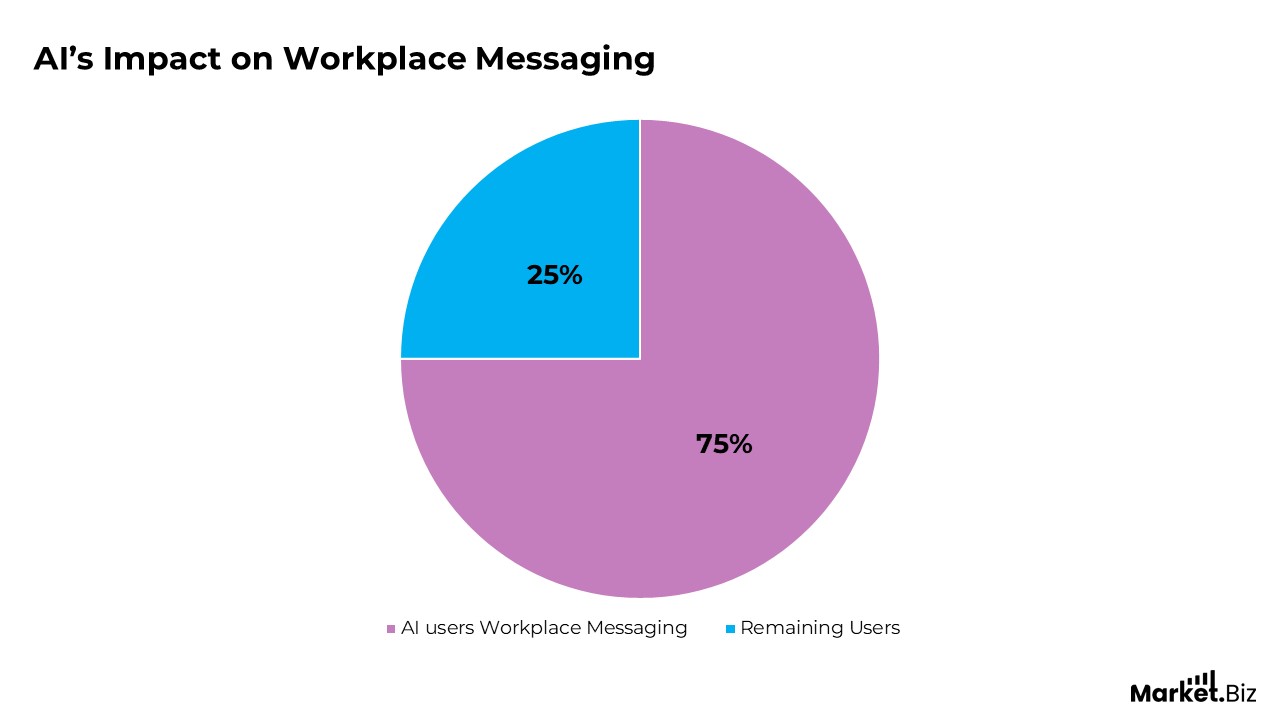
- In 2024, 75% of workers reported in surveys that they were using AI at work; almost half (46%) had begun doing so in the last 6 months.
- 73% of knowledge workers indicated that generative AI tools provided value by helping them avoid miscommunication at work.
- 80% of workers believe that AI had improved the quality of their work, with 71% even indicating that it had changed the way they communicate at work.
- Working with AI agents enabled a 60% increase in productivity per worker and a 137% increase in communication amount which freed humans to focus on generating more content given that they had better communication.
- It is significant of the change in organisational communication when we see that 89% of leaders and 52% of knowledge workers are already using generative AI tools for work.
- 46% of organizations are using AI for internal communication, plans, presentations and reports, showing that there is a movement towards using AI to improve workplace communication.
- 45% of workers were scared of AI taking their job, which shows the need for clear communication of how AI will be used at work.
- 90% of the workers surveyed said that AI helped them save time on tasks in 2024, supporting AI’s ability to increase effectiveness of workplace communication on a large scale.
Conclusion
Messages and chat tools for workplace communications have taken on an important role in the communication practices of today’s businesses. With more organisations in hybrid and remote working environments, instant or real-time messaging allows for quicker coordination, collaboration, and productivity.
Research suggests that organisations who incorporate workplace chat and messaging into their communication practices will experience more advanced team engagement, responsiveness, and decision-making. Additionally, workplace AI messaging is changing the future of workplace communication. Adoption of these tools (e.g. Slack) seems to be growing at a global rate.
Organisations that invest energy and effort into experiencing the benefits of the appropriate chat and messaging platforms will be better prepared to stay connected, productive and agile. Engaging in (or working with) digital communication is not optional; it can be the fuel for success.
FAQs
Over 80% of organisations are now using messaging applications such as Slack, Microsoft Teams, or Zoom chat to improve teamwork and communication.
Yes. Research shows that 70% of workers to be increasingly more productive with messaging as it offered employees fast turnarounds and improved collaboration.
Yes. Almost 90% of remote workers find messaging applications to be essential tools that they use daily to say connected, share updates, and collaborate in real time.