









Introduction
Hybrid work statistics: Hybrid work has become a significant trend in the modern workplace, with 73% of companies worldwide adopting some form of hybrid model. According to recent data, 58% of employees prefer a mix of in-office and remote work for better work-life balance. In fact, 70% of workers report increased productivity when working from home part-time.
As businesses continue to prioritize flexibility, 60% of employees say they would consider leaving their job if forced to return to the office full-time.This shift has reshaped how organizations approach employee engagement, collaboration, and workforce management.
Editor’s Choice
- 73% of companies worldwide have adopted a hybrid work model, and 58% of employees prefer a mix of in-office and remote work for better work-life balance.
- 70% of workers report higher productivity when working from home part-time, with 45% of hybrid workers stating fewer distractions at home.
- 60% of employees would consider leaving their job if required to return to the office full-time.
- 72% of employees prefer hybrid work, and businesses offering it see a 25% higher employee retention rate.
- 53% of hybrid team leaders face challenges maintaining team collaboration and communication.
- 45% of employers cite concerns about maintaining company culture in hybrid work models.
- 68% of employees say hybrid work improves their work-life balance, and 77% of job seekers consider hybrid options when applying.
- 62% of employers see hybrid work as crucial for attracting top talent, and 50% report increased employee retention.
- 38% of businesses report cost savings from hybrid work, with annual savings averaging $11,000 per remote worker.
- In 2025, 70% of global companies are expected to support hybrid or remote work environments.
General Hybrid Work Statistics
- 60% of U.S. workers are engaged in some form of hybrid work, combining in-office and remote work as of 2024.
- 72% of employees prefer a hybrid work model, with the flexibility to work remotely at least part-time.
- 45% of hybrid workers report higher productivity, with fewer distractions at home.
- Companies offering hybrid work options see a 25% higher employee retention rate compared to those requiring full-time office presence.
- 50% of global companies now support hybrid or fully remote work environments, with this number expected to rise to 70% in 2025.
- Businesses save an average of $11,000 per year per remote worker by reducing office space and utilities.
- 53% of hybrid team leaders report difficulties in maintaining team collaboration and communication.
- 63% of workers say that hybrid work improves their mental health by offering a better work-life balance.
- 48% of businesses are increasing their technology budgets to better support hybrid work, particularly in cloud computing and collaboration tools.
- In 2025, it is predicted that 32% of all U.S. employees will be working in a hybrid model, up from 24% in 2020.
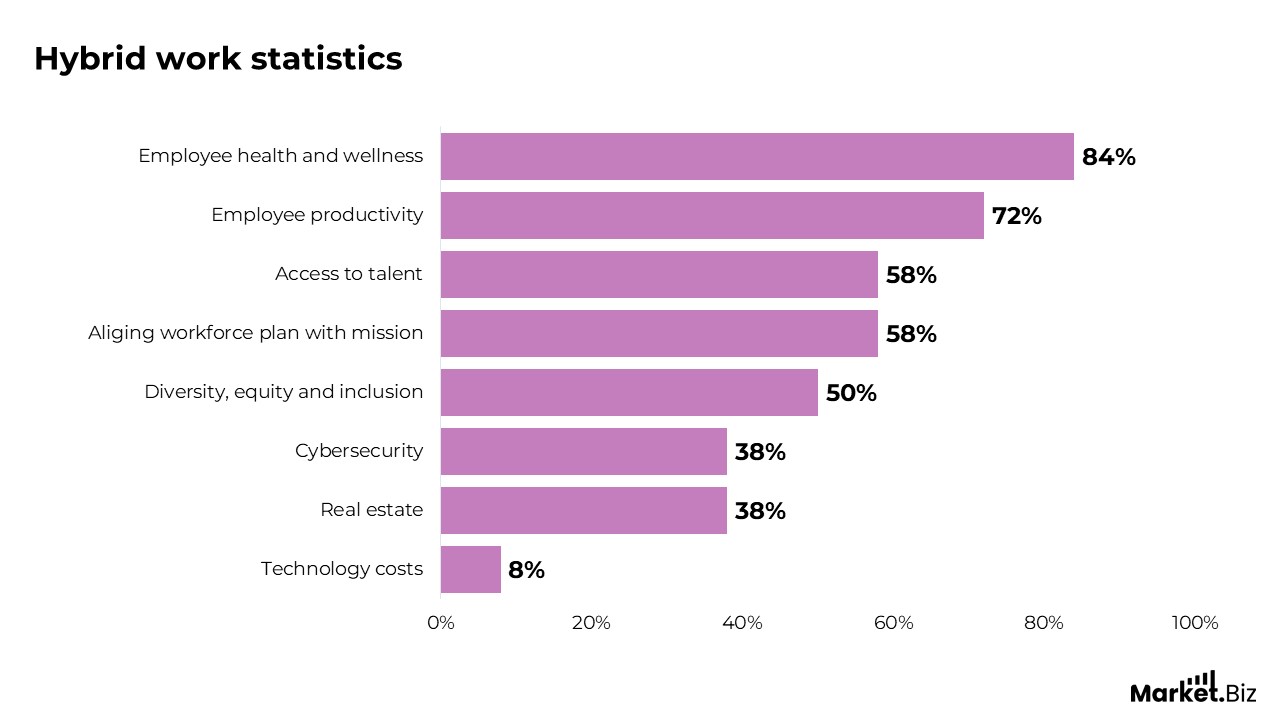
- When creating a work plan, 84% of businesses stated that employee health and wellness was a “very significant” factor.
- 72% of respondents stated that staff productivity was crucial to their decision-making process, 58% stated that talent access was equally vital, and 58% stated that a company’s goal alignment was of utmost importance.
(Source: Zippia, WP-Content)
Hybrid Work Benefits
- 68% of employees feel that hybrid work improves their work-life balance by offering more flexibility in managing personal and professional responsibilities.
- 45% of hybrid workers report higher productivity levels, with fewer distractions at home compared to working in the office full-time.
- Hybrid workers save an average of $4,000 annually by cutting costs on commuting, meals, and work attire.
- Companies offering hybrid work are 30% more likely to retain employees, as flexibility is a key factor in job satisfaction.
- 58% of employees claim that hybrid work helps reduce their stress by allowing them to work from a more comfortable environment.
- 77% of job seekers now consider hybrid work options as a deciding factor when applying for positions, giving companies a competitive edge in talent acquisition.
- Hybrid work reduces office-related energy consumption, with studies indicating that remote work cuts carbon emissions by up to 54 million metric tons annually in the U.S. alone.
- 63% of employees report better mental health while working in a hybrid environment, as it allows more time for self-care and reduces burnout.
Moreover
- Hybrid work models enable companies to hire a more diverse workforce by removing geographic constraints, allowing access to talent from different backgrounds.
- 51% of businesses increased their investment in technology to support hybrid work, leading to improved communication and collaboration tools.
- Despite working remotely, 58% of hybrid workers report that collaboration tools have improved teamwork and project management efficiency.
- Hybrid work models allow companies to scale their workforce more easily without the constraints of office space, leading to greater organizational flexibility.
- Allowing employees to work remotely reduces employee turnover by an average of 12%.
- 54% of workers say they would quit their current position for one that offers greater flexibility, particularly when it comes to working remotely.
- On average, businesses save $11,000 annually for each part-time remote worker.
- According to a Statista study, 83% of businesses think that teamwork on new projects has been on par with or better than it was prior to the COVID-19 pandemic, when everyone was in the office full-time.
Employer Opinions of Hybrid Work
- Employers believe that hybrid work improves employee satisfaction and engagement, with 70% of them noting it contributes to a more motivated workforce.
- 63% of business leaders report that hybrid work has positively impacted employee productivity, as workers find fewer distractions and more control over their environment.
- A concern for 45% of employers is maintaining company culture in a hybrid work model, fearing remote workers may feel disconnected from the organization.
- Managing hybrid teams presents challenges for 56% of employers, as balancing remote and in-office employees complicates communication and collaboration.
- 72% of employers acknowledge that offering hybrid work is crucial for attracting top talent, with candidates increasingly seeking flexibility in their job roles.
- Employee retention has increased for 50% of employers due to the adoption of hybrid work models, as workers value the flexibility it provides.
- Hybrid work has led to cost savings for 38% of employers, particularly by reducing the need for large office spaces and associated expenses.
- 62% of employers are concerned about the impact hybrid work has on team collaboration, with some feeling that remote workers are less engaged during meetings.
Moreover
- 44% of employers say hybrid work models require significant investments in technology and infrastructure to support remote collaboration effectively.
- Hybrid work has the potential to improve work-life balance for 59% of employers, which in turn enhances job satisfaction and reduces burnout.
- 47% of employers find that hybrid work makes it easier to hire from a wider, more diverse talent pool by eliminating location constraints.
- 68% of employers feel that hybrid work has increased flexibility in their organization, providing more adaptability during unforeseen situations, such as crises or urgent demands.
- Hybrid work offers an opportunity to reduce employee stress and improve mental health for 49% of employers, who see the benefits of providing autonomy and a balanced environment.
- 55% of employers recognize that hybrid work may create inequities within teams, with in-office employees potentially having an advantage in terms of visibility and career progression.
- 41% of employers remain uncertain about the long-term sustainability of hybrid work, citing challenges related to monitoring productivity, maintaining morale, and ensuring equal opportunities for all employees.
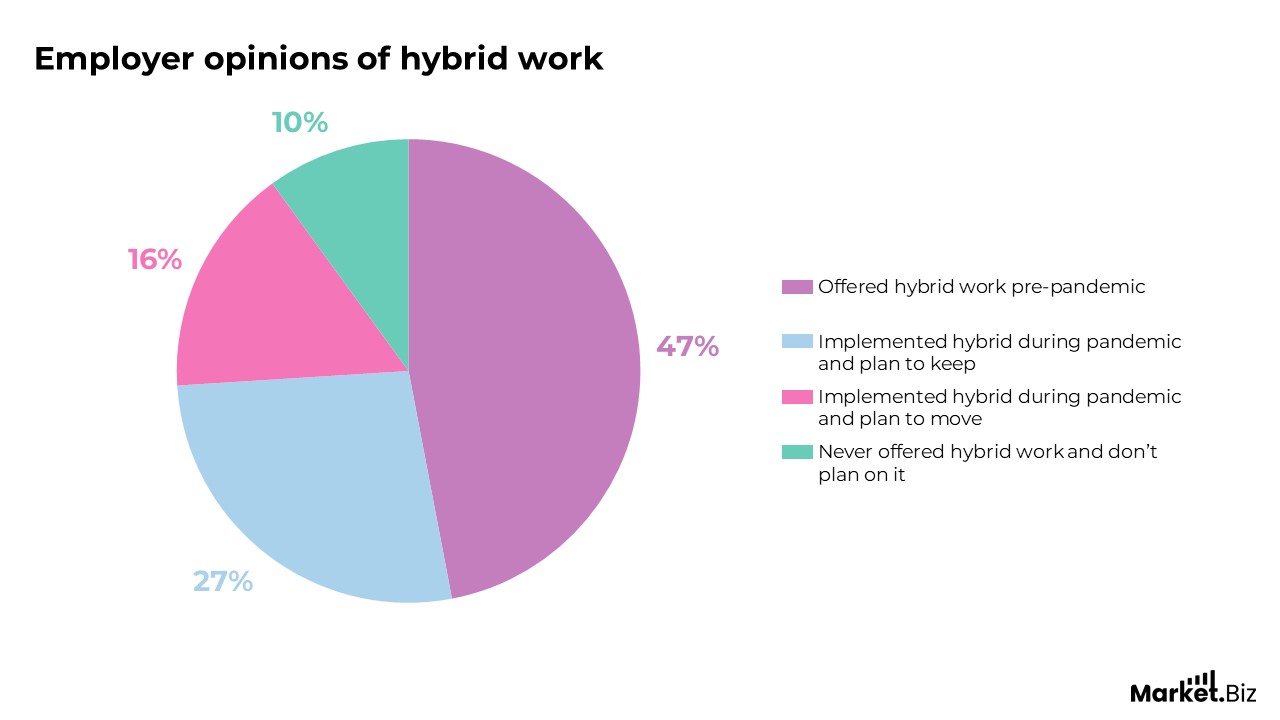
- While 27% of these organizations have a hybrid strategy in place and want to make it permanent, 47% of these companies offered one prior to the COVID-19 epidemic.
- Conversely, 10% of these businesses do not now provide a hybrid plan and do not intend to do so in the future, while 16% of these businesses have adopted one since the epidemic but intend to abandon it.
(Source: Zippia, WP-Content)
Employee Opinions of Hybrid Work
- Hybrid work helps employers attract a wider talent pool, with 67% of them saying they can now hire from regions they previously wouldn’t have considered.
- Since adopting hybrid work models, absenteeism has decreased for 49% of employers, as employees can better balance personal matters alongside work responsibilities.
- 55% of employers worry that hybrid work creates inequities in career advancement, especially for remote employees who may have fewer opportunities to network and gain visibility.
- Employers believe hybrid work fosters a better environment for introverted employees, with 62% of them noting that these workers thrive in quieter, home-based settings.
- 40% of employers find it challenging to create standardized policies for hybrid work, as different teams have varying needs and preferences for how and where they work.
- Hybrid work has helped 58% of employers reduce turnover, as employees appreciate the flexibility to manage their work schedules alongside personal commitments.
- 51% of employers report that hybrid work requires a shift in leadership strategies, with a greater focus on results and performance rather than the number of hours worked.
Moreover
- 33% of employers have increased investment in mental health support for employees, recognizing the isolation and burnout that can come with hybrid work setups.
- Hybrid work has led to greater innovation for 44% of employers, as employees benefit from working in environments that enhance their creativity and focus.
- 48% of employers say hybrid work helps reduce office-related distractions, with workers reporting higher productivity and more focused work when at home.
- 59% of employers believe hybrid work increases workforce diversity, as it allows them to hire talent from different geographical locations and cultural backgrounds.
- 64% of employers have seen improved team collaboration after investing in remote collaboration tools, which bridge the gap between in-office and remote employees.
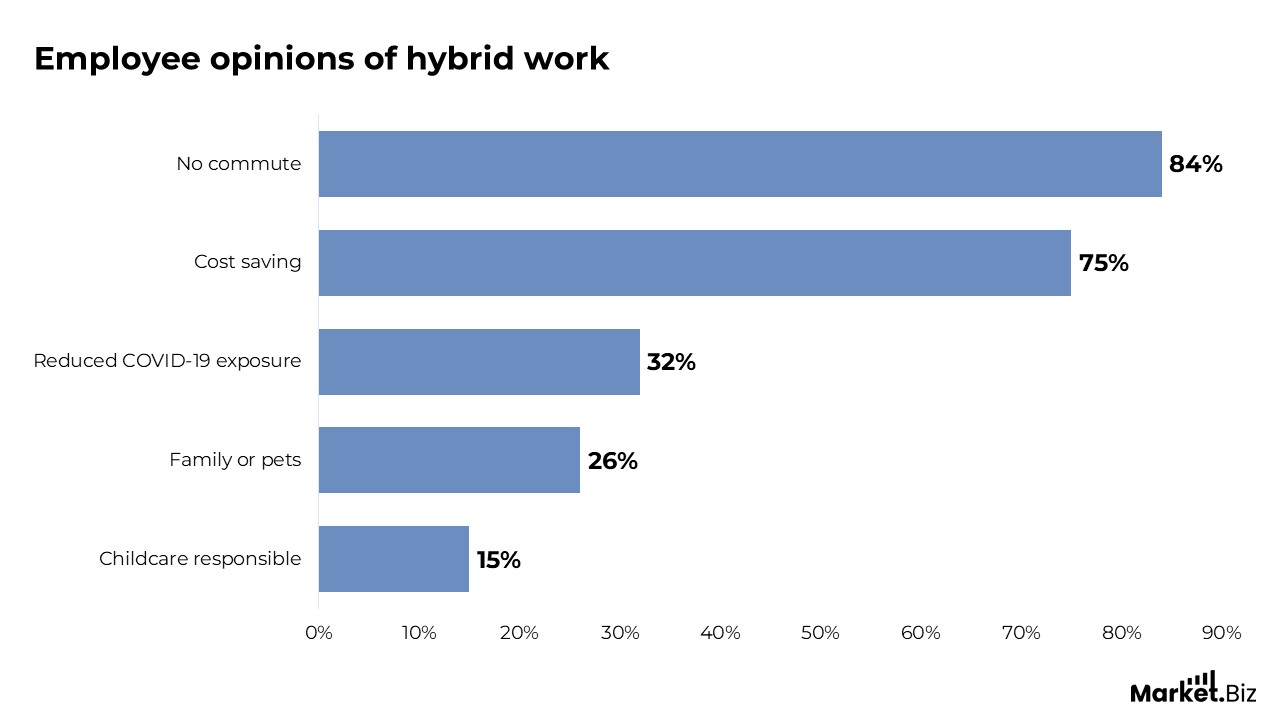
- According to a Bloomberg survey, 84% of workers rank the ability to work remotely without commuting as its greatest advantage.
- Furthermore, according to 75% of workers, one of the main advantages of working from home is cost savings.
- Additional advantages of working remotely included avoiding COVID-19 exposure (32%), avoiding being separated from loved ones or pets (26%), and requiring less childcare (15%).
(Source: Zippia, WP-Content)
Hybrid Work by Industry
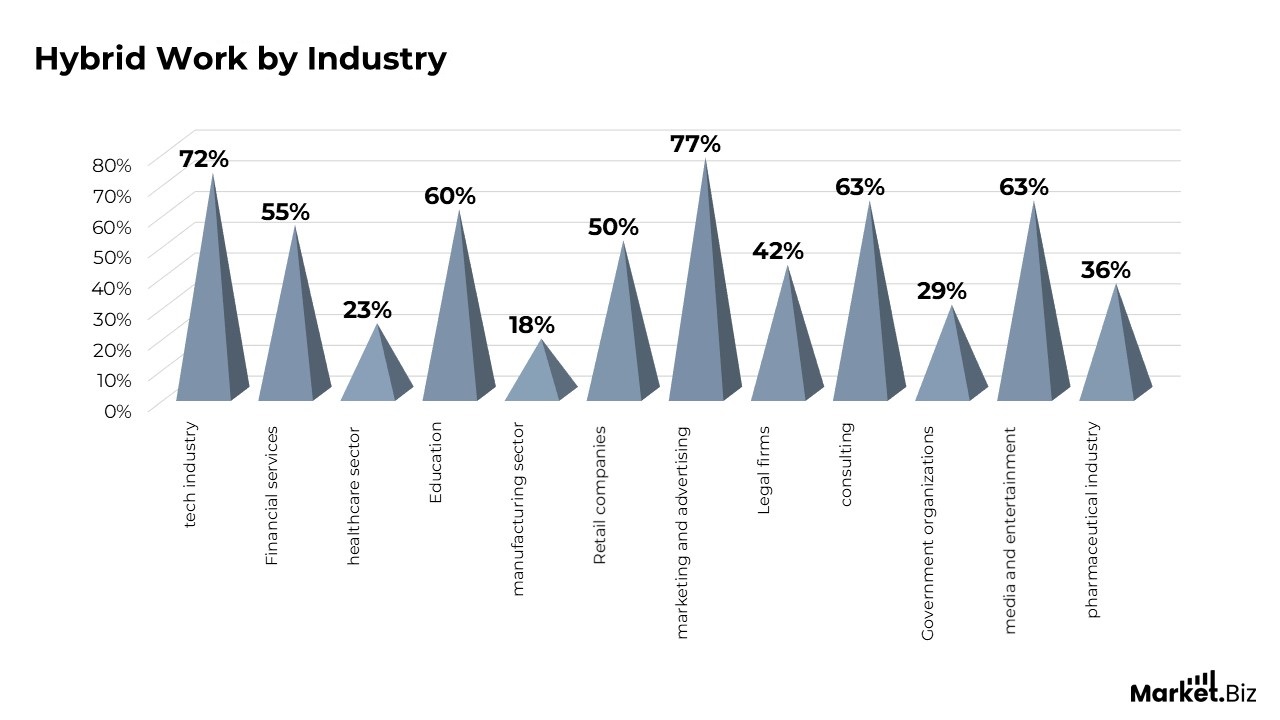
- In the tech industry, 72% of companies have adopted hybrid work models, as employee’s value flexibility and the ability to work remotely, boosting productivity.
- Financial services companies have embraced hybrid work, with 55% offering remote options, but 43% of employees still report challenges around collaboration and client interactions.
- The healthcare sector has seen 23% of administrative roles transition to hybrid, with 18% of medical professionals working remotely for administrative duties, improving work-life balance.
- Education has seen a shift, with 60% of universities offering hybrid teaching, allowing professors to combine in-person and online learning, though challenges in engagement remain for 32% of instructors.
- In the manufacturing sector, hybrid work is less common, with only 18% of administrative roles working remotely, as on-site presence is critical for production oversight and operations.
- Retail companies have explored hybrid work primarily for back-office staff, with 50% of corporate retail teams working remotely, while front-line employees continue in stores.
Moreover
- The marketing and advertising industries have embraced hybrid work, with 77% of firms offering remote options to creative teams, facilitating better collaboration and work-life balance.
- Legal firms have seen 42% of lawyers working in hybrid setups, allowing for greater flexibility, while maintaining client meetings and court appearances on-site as needed.
- In consulting, 63% of consultants now work in hybrid environments, balancing client site visits with remote planning and analysis, boosting flexibility and employee satisfaction.
- Government organizations have been slower to adopt hybrid work, with only 29% of federal employees working remotely in hybrid models, but a growing trend toward remote administrative roles.
- The media and entertainment industry has seen 55% of non-creative staff adopt hybrid work, while 63% of creative roles like writing and editing are now fully remote, enabling greater collaboration across locations.
- In the pharmaceutical industry, 36% of employees, especially in R&D and corporate functions, work in hybrid models, while on-site presence remains crucial for lab work and clinical trials.
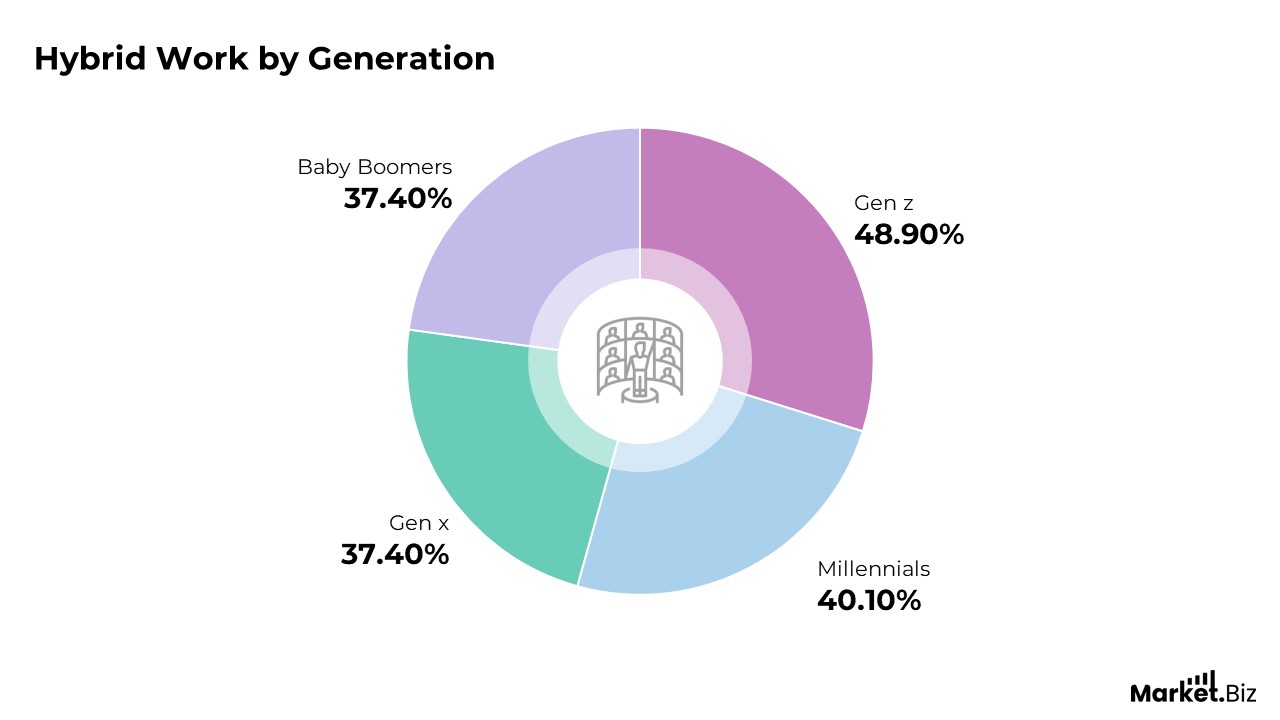
Hybrid Work by Generation
- Millennials lead the shift to hybrid work, with 37.8% preferring flexible working arrangements, valuing the ability to balance career advancement with personal life.
- Generation Z shows a strong preference for hybrid work, with 42.2% of them expressing interest in remote roles, citing autonomy and the ability to avoid long commutes as key factors.
- Generation X has adapted well to hybrid work, with 21.4% of this group enjoying the flexibility to manage both family and professional responsibilities, while still preferring some in-office presence.
- Baby Boomers are the least likely to work remotely, with only 49.2% of them participating in hybrid work, often preferring the structure and social engagement offered by in-person work environments.
- Across all generations, 65% of employees now want flexible working options, with older generations being more inclined toward part-time remote work rather than fully remote setups.
- Generation Z values hybrid work for its flexibility, with 76% of them reporting higher job satisfaction when given the option to work from home part of the time, allowing them to focus on personal growth.
- Generation X tends to prefer a balance between in-office and remote work, with 52% of this group reporting that hybrid work boosts their productivity, as it allows for both collaboration and focused work time.
- Baby Boomers are increasingly adopting hybrid work, with 45% now preferring a mix of in-office and remote work, mainly to reduce commuting time while maintaining some in-person interactions with colleagues.
(Source: Jobera, WP-Content)
Challenges of Hybrid Work
- Communication Issues remain a top challenge, with 45% of hybrid workers reporting difficulties in staying connected with colleagues and managers, leading to misunderstandings and delays.
- Technology Gaps affect hybrid work efficiency, with 38% of employers citing insufficient tools and technology infrastructure as a barrier to seamless collaboration between remote and in-office teams.
- Employee Engagement drops in hybrid settings, with 41% of remote workers feeling disconnected from company culture and missing out on team bonding and social opportunities.
- Managing Performance is more challenging for 50% of employers, as they struggle to assess remote workers’ productivity and performance without relying on traditional office-based metrics.
- Work-Life Balance issues increase in hybrid environments, with 35% of employees reporting difficulty in drawing clear boundaries between personal and professional time, leading to burnout.
- Inclusion and Equity concerns rise in hybrid work, with 44% of workers feeling that remote employees are overlooked for career development opportunities compared to their in-office counterparts.
Moreover
- Security Risks escalate in hybrid work models, with 53% of IT leaders worried about data breaches and security vulnerabilities as employee’s access corporate networks from different locations.
- Collaboration Challenges persist in hybrid environments, with 39% of employees finding it difficult to collaborate effectively due to time zone differences, lack of face-to-face interactions, and communication barriers.
- According to 62% of workers, commuting is the largest drawback of working in an office.
- According to 58% of workers, communicating with co-workers in a mixed work environment was more challenging than in-person employment.
- Compared to those who work in person, 47% of employees in hybrid work arrangements said they felt less connected to their co-workers.
- 43% of workers would consider quitting if asked to work in the office full-time.
- According to 34% of respondents, the main cause of their inability to concentrate at work is face-to-face interruptions from co-workers.
- 55% of respondents think that remote and hybrid working has led to an increase in micromanaging tendencies.
The Future of Hybrid Work
Hybrid work adoption will continue to rise, with 73% of companies planning to adopt a permanent hybrid work model, as employees increasingly demand flexible work arrangements.
Technology investments will grow, with 56% of businesses prioritizing digital tools and collaboration platforms to support hybrid teams and improve remote work efficiency.
Remote-first companies are expected to increase, with 38% of businesses exploring remote-first strategies, allowing employees to work remotely most of the time while maintaining limited in-office presence.
Employee well-being will become a greater focus, with 62% of organizations enhancing mental health programs to support hybrid workers, addressing burnout and isolation caused by remote work.
Workplace redesign will accelerate, with 47% of companies planning to redesign their office spaces to better support hybrid teams, focusing on collaborative areas and flexible seating arrangements.
Global workforce diversity will increase, as hybrid work enables businesses to tap into talent from different geographical regions, with 53% of employers prioritizing diversity and inclusion in their recruitment efforts.
Conclusion
Hybrid work is rapidly becoming a cornerstone of modern workplace strategies, with a significant number of companies adopting this model and a majority of employees preferring a balance between in-office and remote work. The flexibility offered by hybrid work not only enhances employee productivity but also significantly boosts employee retention, with companies offering hybrid options experiencing higher retention rates.
However, challenges like maintaining team collaboration and addressing security risks remain significant. Looking forward, businesses are expected to further invest in technology, prioritizing tools that facilitate remote work, while also focusing on employee well-being. As hybrid work continues to evolve, companies must adapt to new expectations surrounding flexibility, diversity, and work-life balance to stay competitive.
FAQ’s
As of 2024, 73% of companies globally have implemented some form of hybrid work model, reflecting the growing demand for flexible work arrangements.
Hybrid work has been shown to increase productivity by 45%, as employees report fewer distractions at home compared to traditional office settings.
A significant challenge is maintaining team collaboration, with 53% of hybrid team leaders struggling with communication across remote and in-office employees.
Companies offering hybrid work options see a 25% higher employee retention rate, as flexibility is a key factor in job satisfaction and employee loyalty.
To support hybrid work, 48% of businesses are increasing their technology budgets, focusing on enhancing cloud computing and collaboration tools to improve remote work efficiency.