








Introduction
Cosmetics Statistics: The estimated size of the Online Cosmetics Market is projected to be USD 16.23 billion in 2025, with expectations to grow to USD 24.37 billion by 2030, reflecting a compound annual growth rate (CAGR) of 8.47% during the forecast period from 2025 to 2030.
The cosmetics sector, which is integral to personal care, provides products designed to improve appearance and uplift self-confidence, addressing a diverse group of consumer demands through innovation and inclusivity. These offerings, ranging from skincare to makeup, deliver advantages such as skin protection and beauty enhancement.
Nevertheless, the industry has encountered criticism regarding potential health dangers associated with chemical components and the environmental impact of packaging waste. In spite of these challenges, the benefits, including heightened self-esteem and improved social perception, continue to sustain the popularity of cosmetics. This article will further explore Cosmetics Statistics.
Editor’s Choice
- The worldwide cosmetics sector is anticipated to reach a valuation of USD 438.38 billion by the year 2026.
- Men are projected to spend an average of USD 175,680 on cosmetics throughout their lifetime.
- From 2020 to 2029, the cosmetics market is generally expected to experience growth.
- By 2029, the market is projected to achieve USD132.4 billion, representing 17.5% of the global cosmetic market.
- India ranks first globally in imports, with a total of 941,007 million units shipped. This underscores its diverse export portfolio and robust presence in international trade.
- The worldwide hair care market is projected to generate USD 93.74 billion in revenue, with an annual growth rate of 2.80% anticipated from 2024 to 2028.
General Cosmetics Statistics
- The worldwide cosmetics sector is anticipated to reach a valuation of USD 438.38 billion by the year 2026.
- In light of the pandemic, it is forecasted that the beauty market will contract by 20% to 30%. In the United States, women are estimated to spend an average of USD 3,756 annually on cosmetics.
- According to Cosmetics Statistics, approximately 17% of women ceased using makeup entirely due to the coronavirus.
- The pandemic resulted in the closure of 30% of the beauty industry market.
- Sales of skincare products have experienced a significant surge, with hand masks increasing by 606.4%.
- In Australia, the beauty therapy sector is projected to grow by 20% by 2025. Forty-eight percent of Millennials indicate they would purchase skincare products that include CBD oil.
- 82% of women believe that social media plays an important role in shaping beauty trends.
- The Asia-Pacific region constitutes nearly half of the global cosmetics market.
- In 2023, online sales in the United States are expected to account for 48% of the beauty market.
- The global revenue for natural cosmetics is anticipated to surpass USD 54 billion by 2027.
- Men are projected to spend an average of USD 175,680 on cosmetics throughout their lifetime.
- Digital marketing represents 34.1% of the total marketing expenditure for cosmetics.
- 82% of cosmetic purchasers engage with Instagram on a daily basis. Approximately 48% of Millennials utilize cosmetics that contain CBD oil.
Moreover
- Sales of hand masks experienced a sixfold increase during the initial two months of the COVID-19 pandemic.
- By 2030, the men’s grooming market is expected to attain a value of USD 276.9 billion.
- The global cosmetics market has seen substantial growth in recent years, rising from USD 380.2 billion in 2019 to an anticipated USD 463.5 billion by 2027.
- Beauty influencers have gained significant popularity, with 78% of consumers indicating that social media content influences their makeup purchasing decisions.
- Celebrity endorsements play an important role for makeup brands, as 63% of consumers are more inclined to purchase a product if it is recommended by a celebrity.
- Sustainability has emerged as a major concern, with 57% of makeup users more likely to choose brands that prioritize eco-friendly practices.
- The market for artificial intelligence (AI) in the beauty sector is anticipated to expand by 21.7% each year, reaching USD 3.27 billion in 2023.
- Brands are increasingly acknowledging the importance of gender-inclusive beauty products, with 70% of consumers more likely to purchase from brands that provide these options.
- The most sought-after makeup items include mascara, followed by foundation, eye shadow, eyeliner, and lipstick.
- The market for men’s grooming products is on the rise, with projections indicating a growth rate of 5.23% annually, reaching USD 223.2 billion by 2027.
- According to Cosmetics Statistics, 80% of women and 45% of men apply makeup daily, highlighting the widespread use of cosmetics. Nevertheless, 35% of women and 20% of men choose to go makeup-free at least once a week to celebrate their natural appearance.
- The increasing demand for men’s grooming products illustrates the expansion of the male beauty market.
Global Cosmetic Market Size (2020-2029)
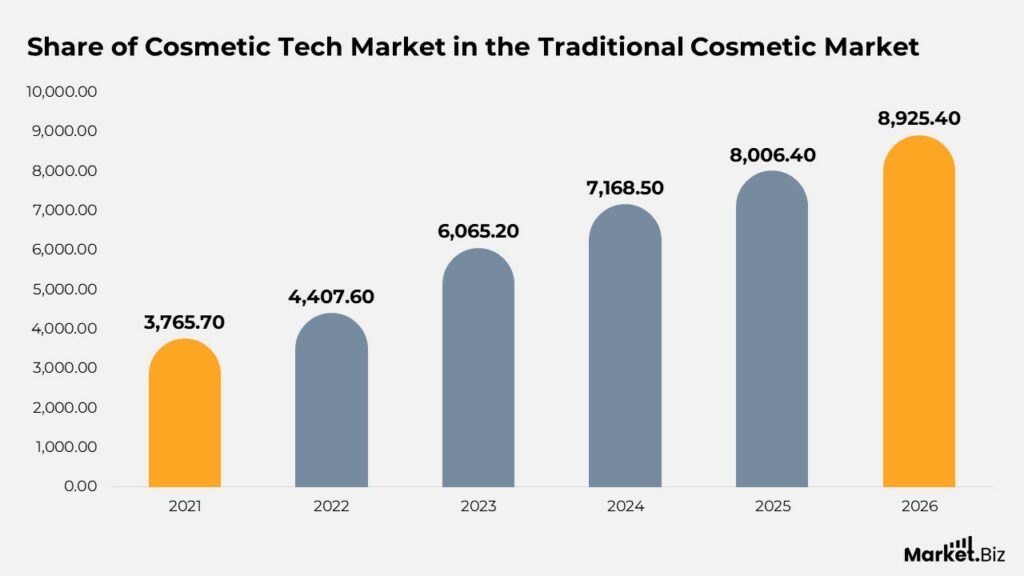
- The worldwide cosmetics market is projected to attain USD113.2 billion by the end of 2025, reflecting a growth rate of 4.4% compared to the previous year.
- It is anticipated that cosmetic products will continue to be the third-largest source of revenue within the beauty sector, accounting for 16.9% of the total revenue in 2025.
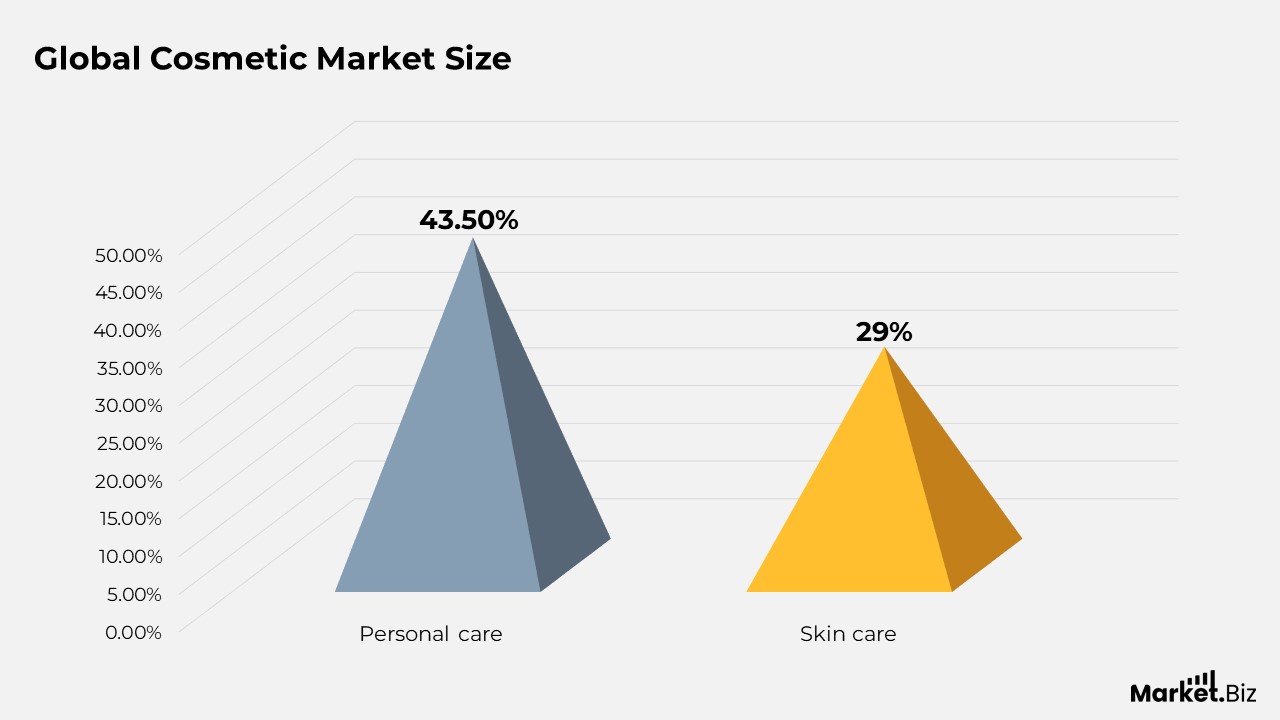
- According to Cosmetics Statistics, personal care and skin care products are forecasted to hold the largest market shares at 43.5% and 29%, respectively.
- From 2020 to 2029, the cosmetics market is generally expected to experience growth.
- The sole exception occurred in 2020, when the market experienced a decline of 19.5%, dropping from USD89.89 billion in 2019 to USD72.37 billion due to the impact of the COVID-19 pandemic.
- This represented the most significant decline and the lowest revenue recorded during this period.
- The market rebounded swiftly in the subsequent years, with an increase of 11.6% to USD80.74 billion in 2021 and a further rise of 15.3% to USD93.06 billion in 2022.
- In 2023, the market expanded by 11.5%, reaching USD103.8 billion and surpassing the USD100 billion threshold for the first time.
- Looking forward, analysts predict consistent growth, albeit at a more gradual pace. By 2026, the market is anticipated to reach USD118.6 billion, reflecting a growth of 4.8%.
- Growth is expected to accelerate again in 2027 and 2028, with increases of 5.7% and 2.8%, respectively, reaching USD125.4 billion and USD128.9 billion.
- By 2029, the market is projected to achieve USD132.4 billion, representing 17.5% of the global cosmetic market.
- From 2020 to 2029, the cosmetics market is expected to grow by USD44.81 billion, or 51.2%, with an average annual growth rate of approximately 4.2%.
Cosmetic Market by Regions
Africa
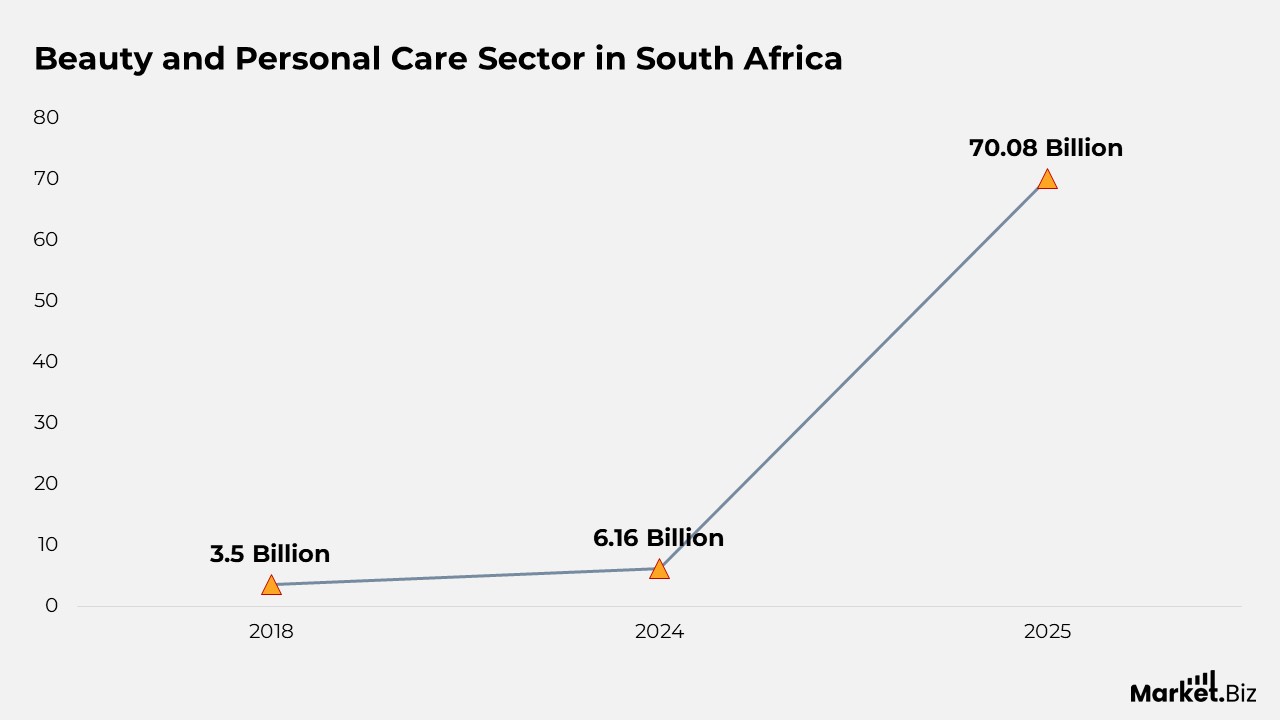
- In 2018, the beauty and personal care sector in South Africa was estimated to be worth around USD 3.5 billion. It was anticipated that the 2024, this figure would rise to approximately USD 6.16 billion.
- The Beauty & Personal Care market across Africa is projected to generate USD 70.08 billion in revenue in 2025. Furthermore, the market is expected to experience an annual growth rate of 4.99% from 2025 to 2029.
- The largest segment of this market is Personal Care, which is forecasted to attain USD 33.12 billion in 2025.
- On a global scale, the United States holds the position of the leading country in Beauty & Personal Care sales, with an estimated revenue of USD 104 billion for the year 2025.
Asia
- The Beauty & Personal Care sector in Asia is projected to reach USD264.90 billion in revenue in 2025, with an annual growth rate of 3.55% from 2025 to 2029.
- Personal care represents the largest segment of the market, expected to attain a value of USD108.60 billion in 2025.
- On a global scale, the United States is anticipated to generate the highest revenue, estimated at USD104 billion in 2025.
- In Asia, the average revenue per capita is expected to be USD57.95 in 2025.
- It is forecasted that online sales will comprise 37.2% of the total revenue in the Beauty & Personal Care market in 2025.
Australia & Oceania
- The Beauty & Personal Care sector in Australia and Oceania is projected to attain a value of USD9.69 billion in 2025, with an annual growth rate of 2.84% from 2025 to 2029.
- The largest segment of this market is Personal Care, which is anticipated to reach a valuation of USD3.95 billion in 2025.
- In comparison to other nations, the United States is forecasted to yield the highest revenue, amounting to USD104 billion in 2025.
- On average, each individual in Australia and Oceania is expected to contribute approximately USD220.60 in revenue in 2025.
- It is anticipated that online sales will account for 37.1% of the overall revenue in the Beauty & Personal Care market in 2025.
Caribbean
- The Beauty & Personal Care sector in the Caribbean is projected to generate USD4.41 billion in revenue by the year 2025, with an annual growth rate of 4.16% from 2025 to 2029.
- The predominant segment of this market is Personal Care, which is anticipated to achieve USD2.14 billion in revenue in 2025.
- On a global scale, the United States stands as the leading revenue producer, expected to reach USD104 billion in 2025.
- In 2025, the Caribbean market is forecasted to yield an average of USD108.00 per individual.
Europe
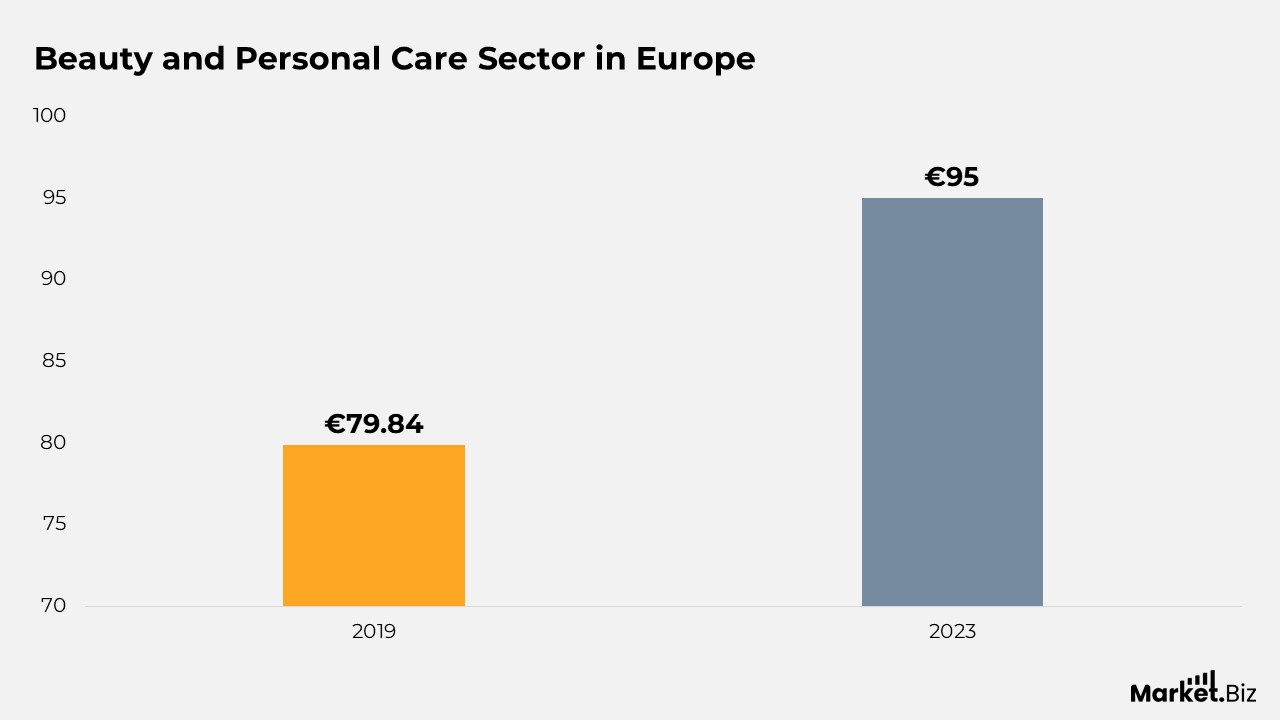
- The cosmetics industry generates a dynamic market in Europe. As per the most recent statistics, the worth of cosmetics and personal care items consumed amounted to €79.84 billion in 2019, increasing to over €95 billion in 2023.
- The Beauty & Personal Care sector in Europe is anticipated to generate USD148.10 billion in revenue in 2025, with a consistent annual growth rate of 2.22% projected from 2025 to 2029.
- The main segment of this market is Personal Care, which is expected to attain USD62.10 billion in 2025.
- In Europe, the expected revenue per capita is projected to be USD175.50 in 2025.
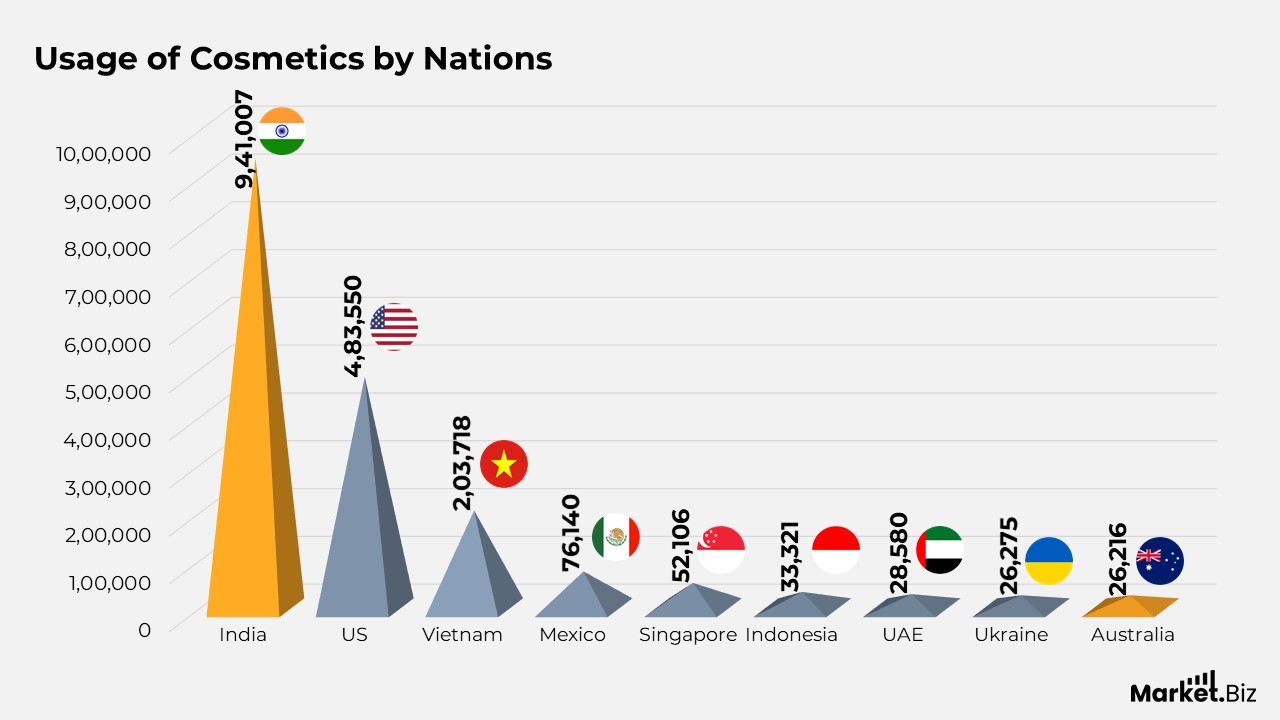
Usage of Cosmetics by Nations
- India ranks first globally in imports, with a total of 941,007 million units shipped. This underscores its diverse export portfolio and robust presence in international trade.
- Following India, the United States holds the second position with 483,550 million units, boosted by its powerful manufacturing sector and extensive trade networks.
- Vietnam has developed as a significant export region, recording 203,718 million units, propelled by its rapidly growing industries and increasing international trade.
- Mexico plays an important role in global trade, exporting 76,140 million units, attributed to its strategic location and strong manufacturing capabilities.
- Singapore serves as a vital trade hub in Southeast Asia, with shipments totaling 52,106 million units, owing to its essential function in global commerce.
- Indonesia is enhancing its influence in international trade, with exports amounting to 33,321 million units, supported by its expanding manufacturing sector and diverse export offerings.
- The United Arab Emirates is a prominent player in exports, with 28,580 million units shipped, benefiting from its advantageous location and flourishing trade network.
- According to Cosmetics Statistics, Ukraine significantly contributes to global exports, with shipments of 26,275 million units, thanks to its strengths in agriculture, manufacturing, and natural resources.
- Australia demonstrates a strong export performance, with 26,216 million units, underpinned by its natural resources, agricultural output, and advanced manufacturing capabilities.
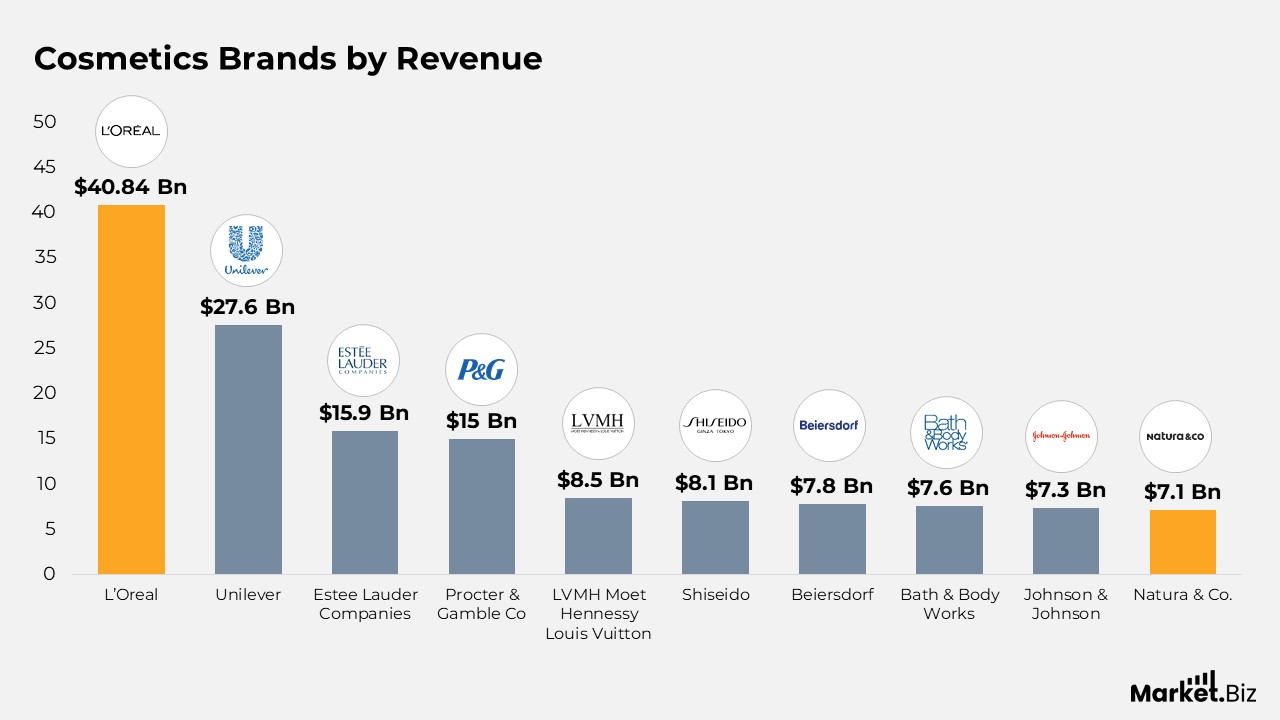
Cosmetics Brands by Revenue
- The worldwide hair care market is projected to generate USD 93.74 billion in revenue, with an annual growth rate of 2.80% anticipated from 2024 to 2028.
- The United States is at the forefront of the hair care market, expected to achieve USD 13.6 billion in revenue in 2024.
- Skincare constitutes 42% of the global beauty market. The beauty sector encompasses skincare, fragrance, makeup, and haircare, with skincare commanding nearly half of the market share.
- It is recognized as one of the most lucrative categories, projected to yield approximately USD 177 billion in revenue in 2025.
- American women allocate around USD 3,756 annually on beauty products and services. The primary expenditures include makeup, skincare, and haircuts, totaling about USD 85 per month.
- Men’s spending is nearly equivalent to that of women, averaging USD 2,928 each year on beauty products and services.
- Despite a significant preference for online shopping, 52% of consumers still favor purchasing beauty products in physical stores. This preference is largely due to the necessity of testing products to determine their suitability for individual skin or hair types.
- According to Cosmetics Statistics, approximately 21% of consumers primarily purchase beauty products online, while 27% enjoy a combination of online and in-store shopping.
- Millennials are the highest spenders on beauty products, averaging USD 2,670 per year, followed by Gen Z, who spend around USD 2,048 annually.
Animals in Cosmetics Testing
- The cosmetics industry conceals a troubling reality: animals frequently suffer during testing.
- Chemicals are administered orally, instilled in their eyes, or applied to their skin to determine their safety for cosmetic use.
- Common subjects of these distressing tests include guinea pigs, rabbits, rats, hamsters, and mice.
- While dogs and monkeys are not used for cosmetic testing globally, they are employed for testing other chemical substances.
- It is feasible to produce cosmetics without inflicting harm on animals.
- Companies are not required to conduct animal testing; they can rely on existing safe cosmetic ingredients and alternative methods that do not involve animals.
- Nations such as the European Union, Israel, Australia, India, Norway, and Switzerland have already prohibited animal testing for cosmetics.
Makeup Products Statistics
- In India, the beauty market is projected to exceed $20 billion in 2025, driven by rising incomes and a growing interest in makeup.
- Nykaa, an Indian beauty retailer, has successfully raised over $94 million and intends to go public with a valuation of $3 billion.
- In the United States, L’Oréal developed as the most recognized cosmetics brand in 2023, with 83% of online consumers being familiar with it. Revlon followed closely in second place, recognized by 80% of individuals.
- Ulta Beauty held the title of the leading beauty retailer in the U.S. in 2022, achieving $10.2 billion in retail sales, while Sephora generated nearly $7 billion.
- According to Cosmetics Statistics, Mascara was the best-selling eye product in the U.S. in 2023.
- Other popular products included eyeliner, eyeshadow, and eyebrow makeup. Lipstick also showed strong performance, generating over $550 million in sales in 2023.
Most Searched Cosmetics Brands
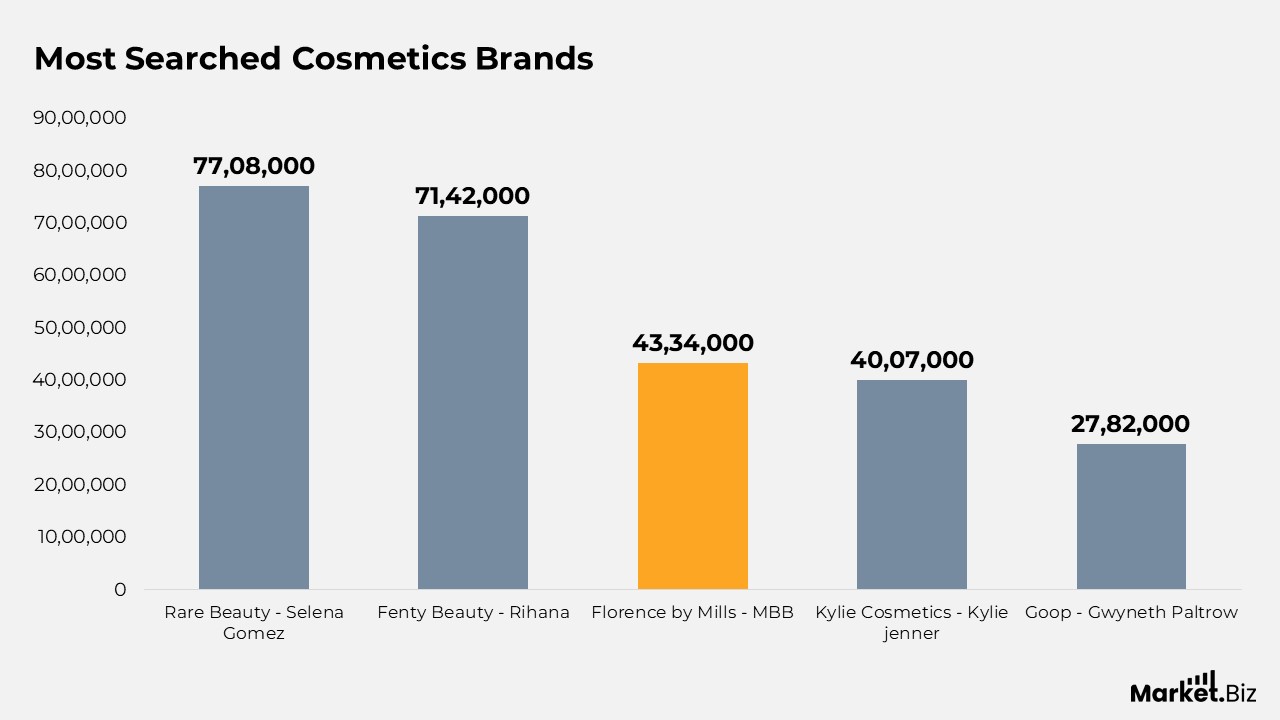
- According to statistics from the beauty industry, Rare Beauty, created by Selena Gomez, emerged as the most searched beauty brand on Google in 2023, accumulating a total of 7,708,000 searches.
- In the same year, Fenty Beauty, founded by Rihanna, garnered 7,142,000 searches on Google.
- Florence by Mills, associated with Millie Bobby Brown, recorded 4,334,000 Google searches in 2023.
- Kylie Cosmetics, established by Kylie Jenner, achieved 4,007,000 Google searches in 2023.
- Lastly, Goop, launched by Gwyneth Paltrow, had 2,782,000 Google searches in 2023.
Korean Cosmetic Brands Statistics
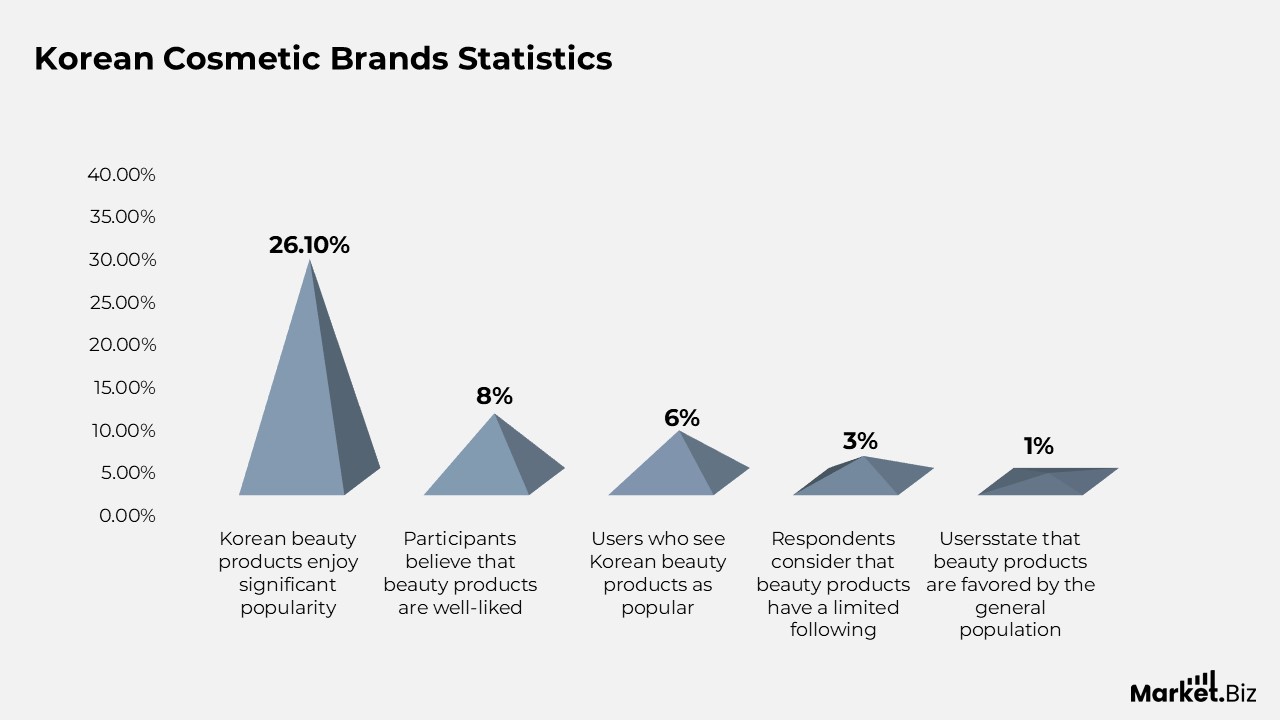
- Statistics from the Beauty Industry indicate that Korean beauty products enjoy significant popularity, as reported by 26.1% of participants.
- 6% of those surveyed see Korean beauty products as popular, along with the associated items that are marketed.
- 1% of respondents state that beauty products are favored by the general population, reflecting a broad appeal.
- 8% of participants believe that beauty products are well-liked among certain enthusiasts, demonstrating a moderate level of interest.
- 3% of respondents consider that beauty products have a limited following, implying restricted popularity.
Cosmetic Marketing Statistics
- Cosmetic companies allocated an estimated USD 7.7 billion for advertising in 2022, reflecting a 2.2% annual growth rate in advertising spending.
- Digital advertising constitutes roughly 33% of the overall advertising expenditure within the beauty sector.
- A third of consumers purchasing beauty products interact with brands via social media.
- YouTube serves as the primary source of beauty-related content for women aged 18 to 54, with viewing times for “makeup transformation” videos doubling each year.
- Approximately 80% of beauty consumers engage with Instagram on a daily basis, establishing it as a crucial platform for fostering brand engagement and loyalty.
- About 67% of beauty shoppers depend on influencers to learn about new products.
- Influencer marketing proves to be significantly effective, with 42% of consumers indicating they would buy a product endorsed by an influencer, while 43% express uncertainty.
- The average cost-per-click (CPC) for advertisements related to beauty and personal care stands at USD 1.68.
- Kylie Cosmetics ranks as the most-followed beauty brand on Instagram, boasting over 25 million followers, whereas Kylie Jenner’s personal account surpasses 300 million followers.
- Influencer Susan Yara’s cosmetics line, Naturium, garners over 110,000 monthly searches, demonstrating an 8,600% increase over the past 5 years.
- Videos that highlight sustainable and eco-friendly products are gaining popularity, in line with the rising consumer interest in sustainability.
- Marketing emails in the beauty industry achieve an open rate of 11.5%.
Cosmetic Brands on Instagram
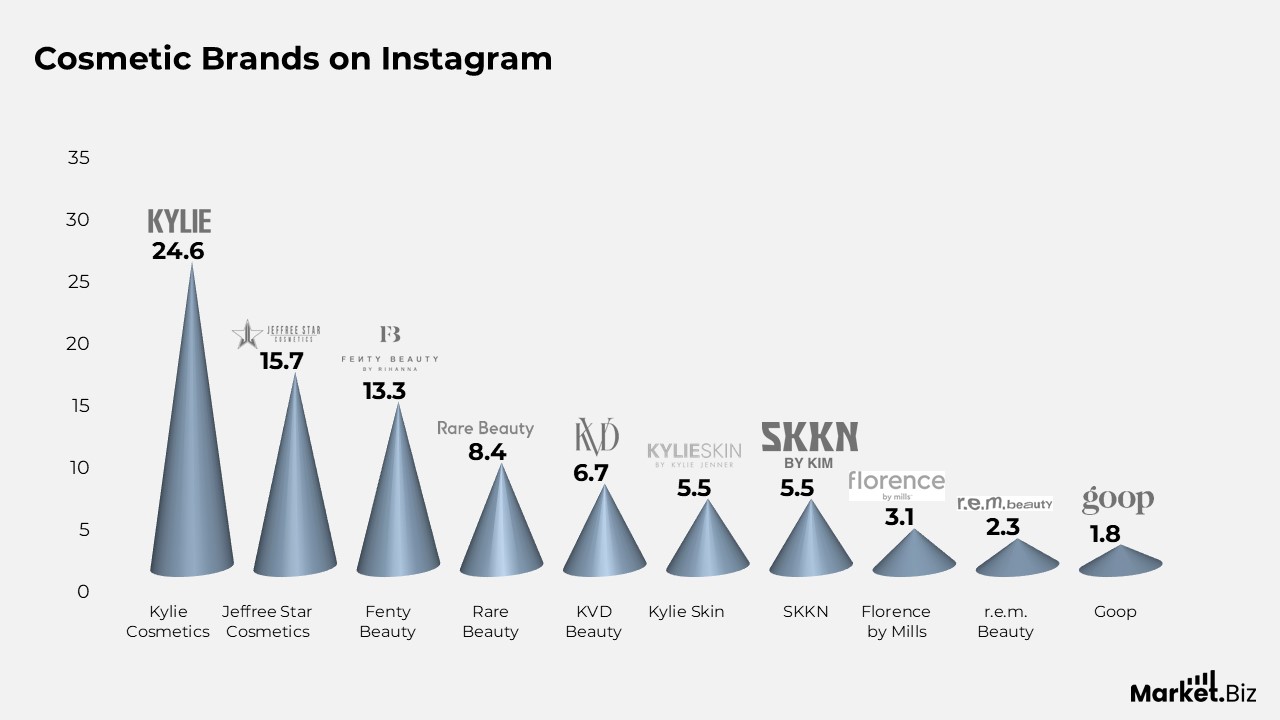
- Kylie Cosmetics, founded by Kylie Jenner, has 24.6 million followers on Instagram in 2025.
- Fenty Beauty, created by Rihanna, has garnered 13.3 million Instagram followers in 2025.
- KVD Beauty, established by Kat Von D, has 6.7 million Instagram followers in 2025.
- Jeffree Star Cosmetics, launched by Jeffree Star, has 15.7 million followers on Instagram in 2025.
- Kylie Skin, also by Kylie Jenner, has 5.5 million Instagram followers in 2025.
- SKKN, developed by Kim Kardashian, has 5.5 million followers on Instagram in 2025.
- Rare Beauty, introduced by Selena Gomez, has 8.4 million Instagram followers in 2025.
- Florence by Mills, created by Millie Bobby Brown, has 3.1 million Instagram followers in 2025.
- Goop, founded by Gwyneth Paltrow, has 1.8 million Instagram followers in 2025.
- r.e.m. Beauty, established by Ariana Grande, has 2.3 million Instagram followers in 2025.
Conclusion
The cosmetics sector is perpetually evolving and maintaining its strength by responding to consumer preferences and incorporating innovative technology. Recently, there has been a noticeable trend towards natural and eco-friendly products, indicating a heightened emphasis on environmentally responsible beauty.
These transformations are not only satisfying the demand for ethical products but are also contributing to market expansion. As the industry increasingly utilizes digital tools, personalized beauty experiences are becoming standard, ensuring customer engagement and fostering growth.
FAQs
Skincare is the leading segment in the beauty industry. This category encompasses the integration of skincare with various treatments or personal care items, including hair care and makeup products. It is not surprising that skincare emerged as the most favored beauty product category in 2024, capturing a market share of nearly 40 percent.
China may have encountered its own set of challenges regarding perceptions of product safety, yet it undeniably occupies a significant position among the foremost competitors in the global cosmetics market.
Numerous beauty brands are witnessing swift expansion, with some of the most rapidly growing being Fenty Beauty, Rare Beauty, Drunk Elephant, and Glow Recipe. Other projecting brands that are experiencing substantial growth include Glossier, Charlotte Tilbury, and E.l.f. Additionally, several Indian brands such as Nat Habit, Pilgrim, and Earth Rhythm are also achieving notable growth in the direct-to-consumer (D2C) sector.