








Introduction
Running Shoes Statistics: The market for running shoes includes specialized footwear aimed at improving performance and reducing the risk of injury for runners. It is categorized by type (road, trail, and cross-training), material (mesh, synthetic, foam), and end-user demographics (men, women, children). This market is propelled by trends in health and fitness, advancements in technology, and a growing demand for personalized options.
However, it also encounters challenges such as fierce competition and concerns regarding sustainability. Key players in this industry consist of Nike, Adidas, ASICS, New Balance, and Puma. In summary, the market is set for consistent growth, bolstered by an increase in participation in running events and the rise of lifestyle footwear, with an emphasis on innovation and environmentally friendly practices.
Editor’s Choice
- Revenue in the Running Footwear Market is anticipated to reach US$16.37 billion by the end of 2025.
- In the Running Footwear Market, the user base is expected to grow to 397.1 million users by 2030.
- The rocky trail running shoe segment, which is used for running on trekking trails, is projected to experience an 8.5% CAGR until 2030.
- The United States emerged as the leader, boasting a significant revenue of $14,904.01 million, closely trailed by China, which produced $12,240.12 million.
- The global market for running shoes is anticipated to follow a consistent growth path from 2022 to 2033, with a compound annual growth rate (CAGR) of 3.7%.
- The average lifespan of running shoes ranges from 300 to 1000 kilometers.
- The typical weight of men’s running shoes is 9.8 ounces, whereas women’s running shoes average 8.4 ounces.
- In 2022, Brooks achieved a record-breaking annual revenue of $1.2 billion, reflecting a 6% increase from 2021.
What is the Running Footwear Market?
The Running Footwear market pertains to the online platform that facilitates the purchase of running footwear via electronic methods. This market encompasses the sale of shoes specifically crafted for running activities, catering to various genders and age groups.
Running shoes are a category of footwear engineered to offer support and stability, thereby enhancing running performance. The Running Footwear market allows customers to explore and acquire shoes from a range of brands and retailers, providing the convenience of online shopping and home delivery.
General Running Shoes Statistics
- Revenue in the Running Footwear Market is anticipated to reach US$16.37 billion by the end of 2025.
- The revenue will likely show a compound annual growth rate (CAGR 2025–2030) of 2.89%, leading to an estimated market volume of US$19.63k billion by 2030.
- With a forecasted market volume of US$2.15 billion in 2025, the majority of revenue is generated in the United States.
- In the Running Footwear Market, the user base is expected to grow to 397.1 million users by 2030.
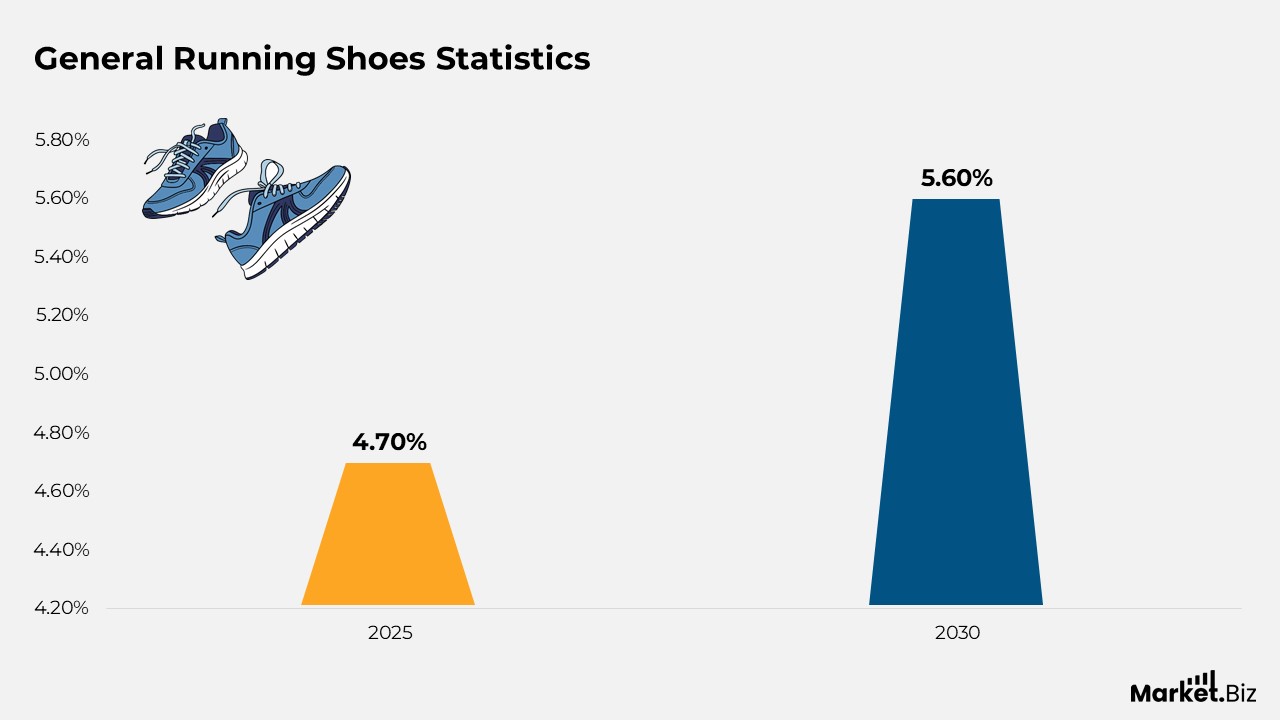
- User penetration is projected to be 4.7% in 2025, with an anticipated increase to 5.6% by 2030.
- The average revenue per user (ARPU) is expected to reach US$21.80.
Trail Running Shoe Market Revenue
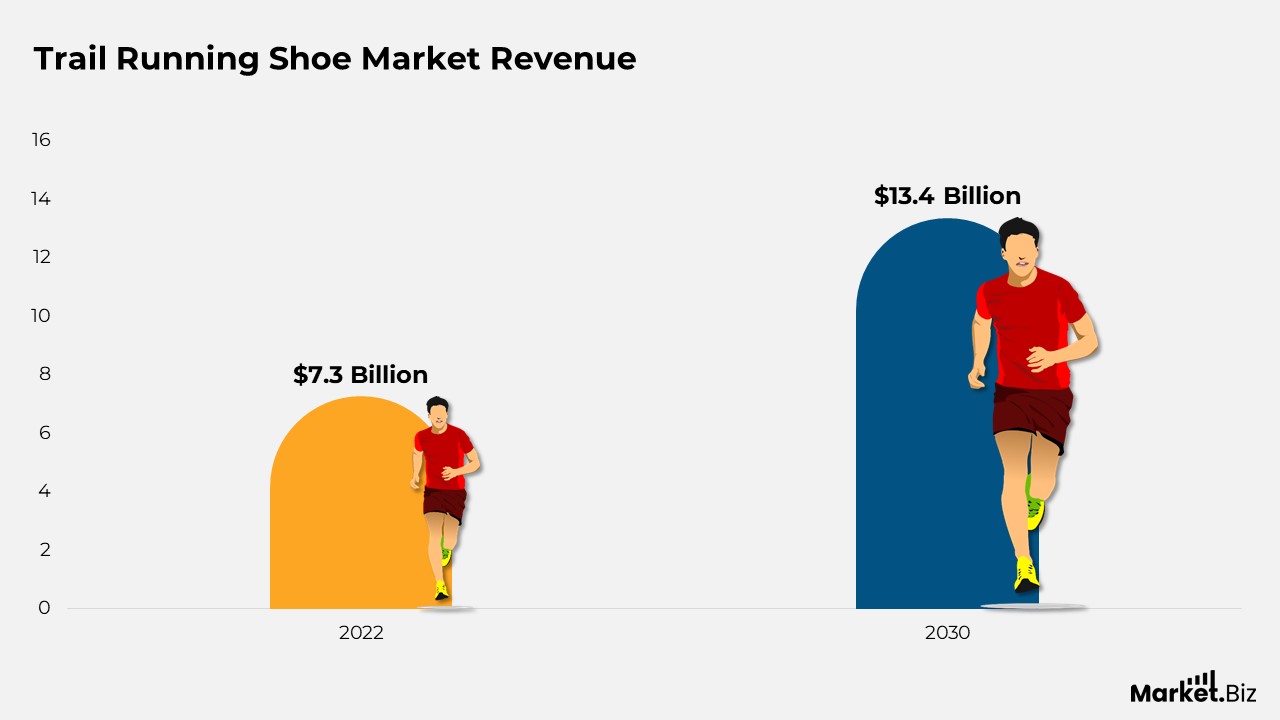
- The global market for trail running shoes was valued at $7.3 billion in 2022.
- By the year 2030, it is anticipated to grow to $13.4 billion, with a compound annual growth rate (CAGR) of 7.9% during the period from 2022 to 2030.
- The market for light running shoes, designed for gravel paths, fire roads, and rolling hills, is expected to expand at a CAGR of 7.6%, reaching $5.9 billion by 2030.
- The rocky trail running shoe segment, which is used for running on trekking trails, is projected to experience an 8.5% CAGR until 2030.
- The off-trail running shoe market, intended for challenging terrains, is forecasted to grow at a minimum CAGR of 6% through 2029.
- Throughout the period from 2022 to 2030, China’s running shoe market is predicted to grow at a CAGR of 12%.
- Japan, Canada, and Germany are expected to see their running shoe markets increase at CAGRs of 4.1%, 6.3%, and 5.4%, respectively.
Athletic Shoe Market by Country
- In 2023, the distribution of revenue within the global athletic footwear market exhibited considerable variation across different countries.
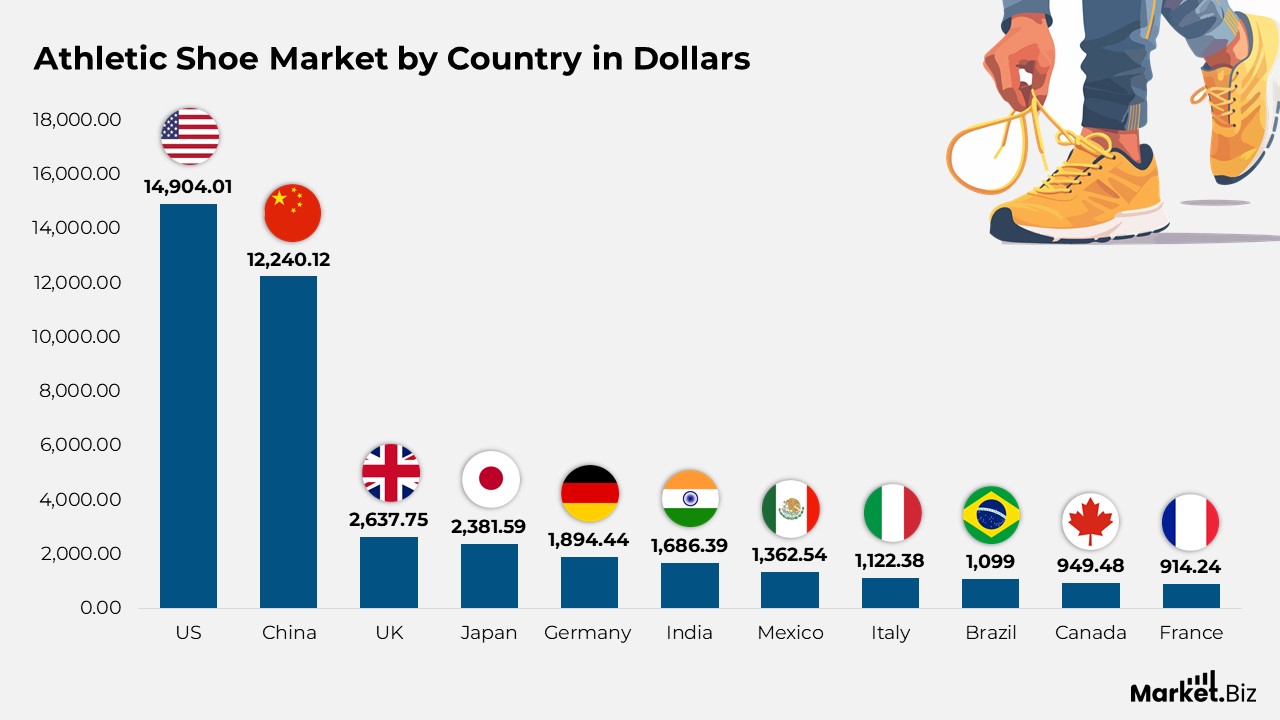
- The United States emerged as the leader, boasting a significant revenue of $14,904.01 million, closely trailed by China, which produced $12,240.12 million.
- The United Kingdom and Japan also commanded notable shares, with revenues amounting to $2,637.75 million and $2,381.59 million, respectively.
- India and Germany contributed $1,686.39 million and $1,894.44 million, respectively. Meanwhile, Mexico and Italy generated revenues of $1,362.54 million and $1,122.38 million, respectively.
- Brazil’s market size was slightly lower but still considerable at $1,098.54 million.
- Additional noteworthy contributions were made by France and Canada, with revenues of $914.24 million and $949.48 million, respectively.
- Smaller yet significant markets included Spain, South Korea, and Turkey, with revenues of $585.04 million, $597.92 million, and $618.18 million, respectively.
Running Shoes Market Size
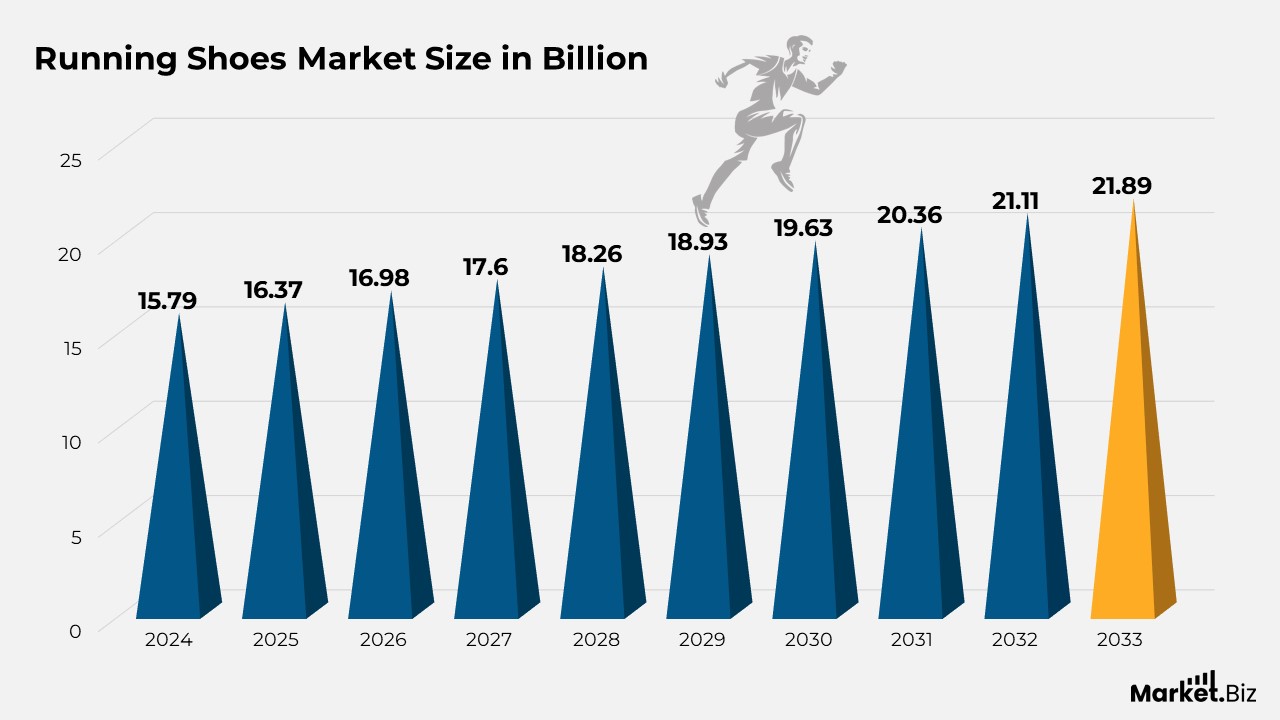
- The global market for running shoes is anticipated to follow a consistent growth path from 2022 to 2033, with a compound annual growth rate (CAGR) of 3.7%.
- In 2022, the estimated revenue for this market was $14.68 billion.
- This amount is projected to increase to $15.22 billion in 2023, indicating a rise as the market adapts to changing consumer preferences and trends in physical fitness.
- In 2024, revenue is expected to reach $15.79 billion, followed by a steady upward movement with revenues of $16.37 billion in 2025, $16.98 billion in 2026, and $17.60 billion in 2027.
- The growth trend persists, with the market projected to achieve $18.26 billion in 2028, $18.93 billion in 2029, and advance to $19.63 billion by 2030.
- The upward trend is anticipated to continue, with market revenues estimated at $20.36 billion in 2031, $21.11 billion in 2032, and ultimately reaching $21.89 billion by 2033.
Lifespan of Running Shoe Statistics
- The average lifespan of running shoes ranges from 300 to 1000 kilometers.
- After 750 kilometers, the foam may show wrinkling and develop holes.
- A reduction in cushioning of 16–33% in the heel area has been observed after 480 kilometers. Nevertheless, runners reported not noticing any difference even after using the same shoes for 640 kilometers.
- Shoes that are allowed to rest recover more quickly and can absorb more energy compared to those that are not rested during testing restarts. This study indicates a recommended rest period of 22 hours for every 20 kilometers.
Running Shoe Weight Statistics
- The typical weight of men’s running shoes is 9.8 ounces, whereas women’s running shoes average 8.4 ounces.
- On average, women’s running shoes are 15% lighter than their male counterparts.
- When considering road running shoes, they generally weigh 9.7 ounces, in contrast to trail running shoes, which have an average weight of 10.4 ounces. This indicates that trail running shoes are 7% heavier.
- The heaviest category of running shoes is motion-control running shoes, which weigh 12.1 ounces, making them 19% heavier than the average running shoe.
- In terms of road race running shoes, they have an average weight of 7.5 ounces, which is 31% lighter than the average running shoe.

Brooks Running Shoe Revenue
- In 2022, Brooks achieved a record-breaking annual revenue of $1.2 billion, reflecting a 6% increase from 2021.
- In 2021, Brooks Running generated a revenue of $1.11 billion.
- At the end of 2020, Brooks estimated that they had attracted 1.6 million new runners.
- In 2022, Brooks secured a 22% market share in the U.S. retail adult performance running footwear sector, positioning itself in the top spot.
- According to a survey conducted by the IRRC (Independent Running Retailers of Canada), Brooks was recognized as the leading running brand in Canada across 4 out of 5 categories.
- During the first quarter of 2022, the Brooks Adrenaline and Brooks Ghost running shoes emerged as the two best-selling franchise lines in the adult running shoe market.
- The Brooks Ghost and Brooks Adrenaline lines represented 14% of U.S. sales in the first quarter of 2022.
Running Shoe User Demographics
Age
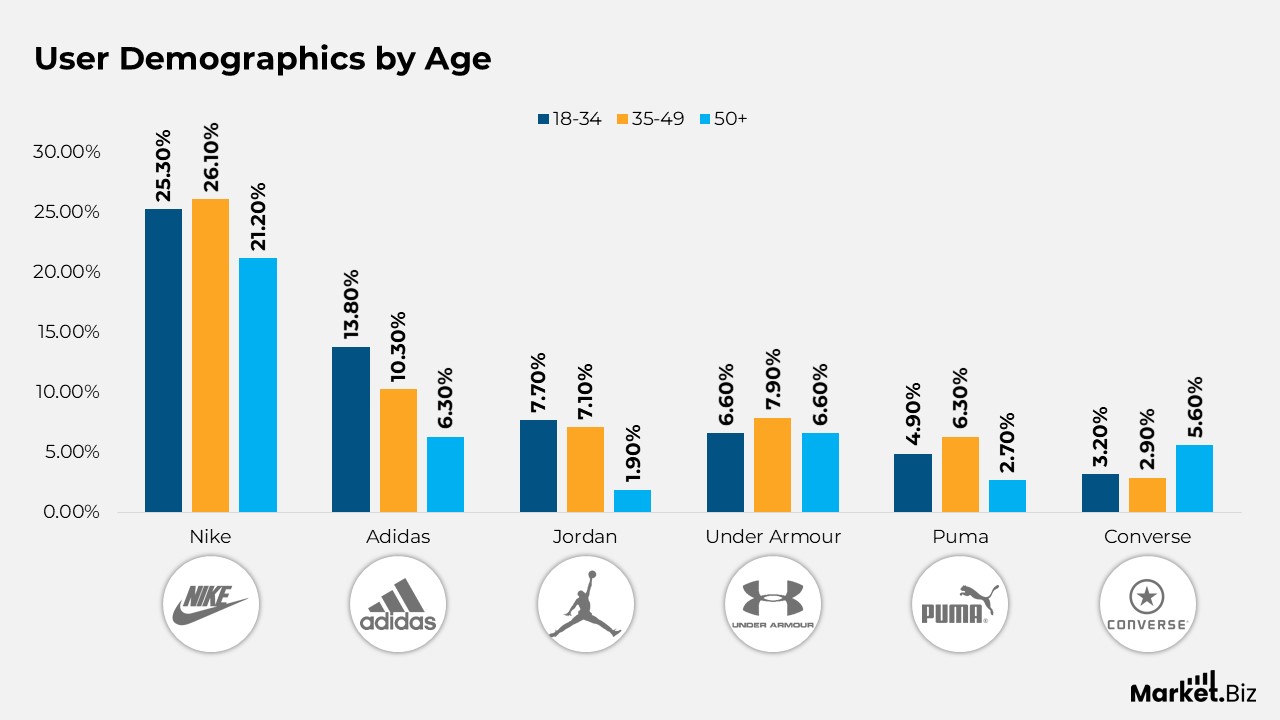
- Nike began as the most preferred brand across all age groups, securing 21.20% of the preference among individuals aged 50 and above, 26.10% among those aged 35 to 49, and 25.30% among the 18 to 34 age bracket.
- Adidas ranked second, with its appeal growing among younger consumers, 6.30% for the 50 and older demographic, 10.30% for the middle-aged group, and 13.80% for the youngest surveyed group. Both Jordan and Under Armour exhibited stronger preferences among middle-aged and younger consumers compared to older ones.
- In contrast, brands such as Skechers and New Balance displayed an opposite trend. Skechers were favored by 9.50% of the oldest age group but only 2.30% of the youngest demographic, while New Balance enjoyed a notable 15.40% preference among those over 50, which dramatically decreased to 2.30% among individuals aged 18 to 34.
Gender
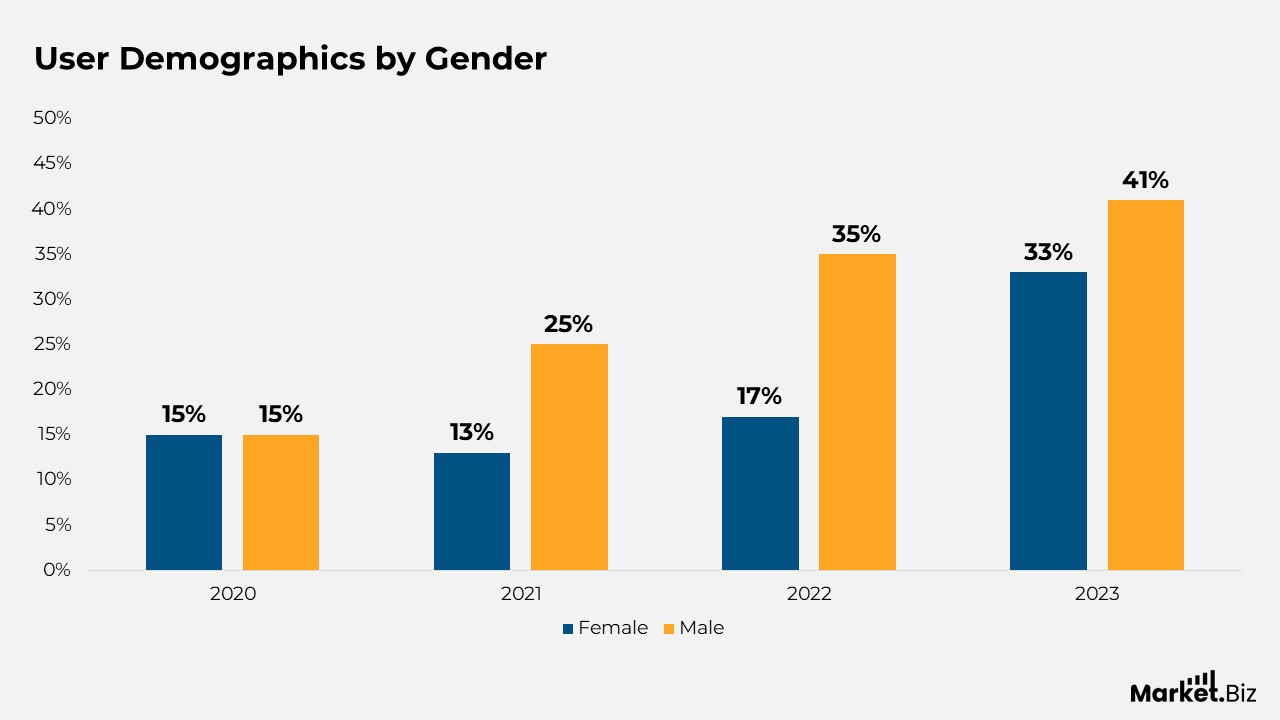
- Between 2019 and 2023, the proportion of the top 100 running athletes in China using Xtep running shoes demonstrated a significant upward trajectory for both male and female competitors, with male athletes consistently leading in adoption rates each year.
- In 2019, merely 5% of female athletes and 10% of male athletes donned Xtep shoes. This percentage experienced considerable growth by 2020, escalating to 15% for both sexes.
- Nevertheless, in 2021, the adoption rate among male athletes skyrocketed to 25%, whereas female athletes experienced a minor decline to 13%.
- The trend continued to diverge in 2022, with 35% of male athletes and 17% of female athletes opting for Xtep shoes.
- In 2023, genders showed significant increases in their adoption of Xtep footwear: 41% of male athletes and 33% of female athletes.
Recent Developments
- In January 2024, Adidas revealed its acquisition of the fitness application Runtastic for around $250 million. This strategic move is intended to bolster Adidas’ digital footprint and merge performance tracking capabilities with its running shoe products.
- In February 2024, Nike introduced the Air Zoom Pegasus 40, which incorporates cutting-edge cushioning technology aimed at enhancing comfort and performance for long-distance runners. The initial sales figures reached $5 million within the first month.
- In March 2024, On Running, recognized for its groundbreaking footwear, secured $50 million in a Series C funding round spearheaded by venture capital firms. The capital is earmarked for the expansion of global operations and the improvement of product development.
- Numerous brands are embracing 3D printing technology to improve customization possibilities. By the end of 2025, it is anticipated that 15% of running shoes will be manufactured using 3D printing techniques, facilitating personalized fits and minimizing waste.
Conclusion
The market for running shoes has experienced significant growth, propelled by technological advancements designed to improve both performance and comfort, attributes that consumers greatly appreciate. Price sensitivity continues to be a vital element affecting brand loyalty and buying choices, as consumers weigh costs against perceived advantages.
Companies such as Nike and Adidas are in intense competition, modifying their strategies to cater to varied consumer preferences and to address challenges like raw material expenses and changing demand.
FAQs
A well-constructed running shoe offers essential support, mitigates shock, and can even rectify issues related to running form, such as overpronation or supination. This consideration extends beyond mere comfort; it is also about improving your running efficiency, which is crucial for injury prevention.
The ideal running shoe is a matter of personal preference and varies according to individual requirements, yet some highly-rated choices for 2025 include the ASICS Novablast 5 for overall performance, the Nike Vaporfly 4 for competitive racing, and the ASICS Gel Kayano 32 for stability. Additionally, the Mizuno Neo Vista 2 is recognized for its excellent shock absorption.
Running shoes are specifically engineered to incorporate cushioning materials like EVA foam or gel in the midsole, which helps absorb shock and lessen the strain on your joints. This design can assist in preventing injuries that often arise from the impact of running on hard surfaces.