









Introduction
Botanicals Statistics: The term “Botanical” pertains to plants or their scientific study, known as botany. As a noun, it denotes substances derived from plants that are utilized in medicine, cosmetics, or food, such as herbs or extracts, frequently found in dietary supplements.
It represents anything that originates from plants, standing in contrast to synthetic products, and can refer to the plants themselves, products derived from them (such as botanical drugs), or the scientific discipline that investigates plant life.
Statistics related to botanicals involves the application of statistical techniques (including t-tests, ANOVA, and descriptive statistics) to evaluate biological data within the field of botany. This encompasses the analysis of plant diversity and distribution (utilising BSI data) as well as the evaluation of the expanding botanicals market (including herbs, spices, and flowers).
The focus is on economic value, conservation efforts, and growth trends, all of which are essential for scientific inquiry, industry development, and policy formulation.
Editor’s Choice
- The Asia-Pacific botanicals market is projected to reach USD 19.5 billion by 2024.
- The worldwide botanicals market is anticipated to be valued at US$161.9 billion in 2023.
- The adoption of advanced extraction techniques in the APAC region reached 20% by 2025.
- China’s contribution amounted to USD 1,600 million, which is 30.8% of the Asia-Pacific total.
- In 2023, the global trade volume reached approximately 1.2 million metric tons.
- In 2024, 65% of food manufacturers in Europe incorporated botanicals into their products.
General Botanicals Statistics
- The Asia-Pacific botanicals market is projected to reach USD 19.5 billion by 2024.
- The European market is estimated to be valued at USD 14.2 billion in 2024.
- In 2024, North America accounted for a share of USD 12.7 billion.
- In 2023, retail pharmacies represented 50% of the global distribution.
- In 2023, oils led the market with a 40% share, while tablets followed with a 30% share.
- Powders and metal herbs comprised 20% and 10% of the market, respectively.
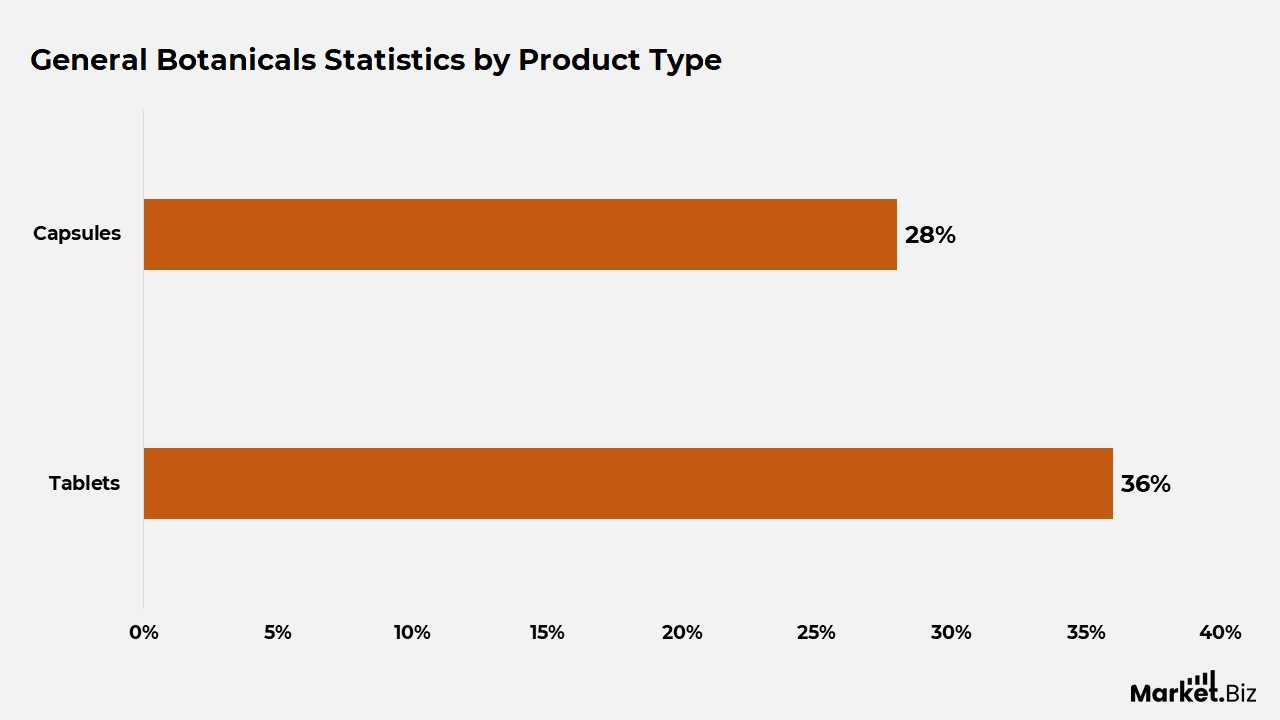
- In 2024, tablets (36%) and capsules (28%) collectively constituted 64% of the total usage.
Statistics of Botanicals Market Size
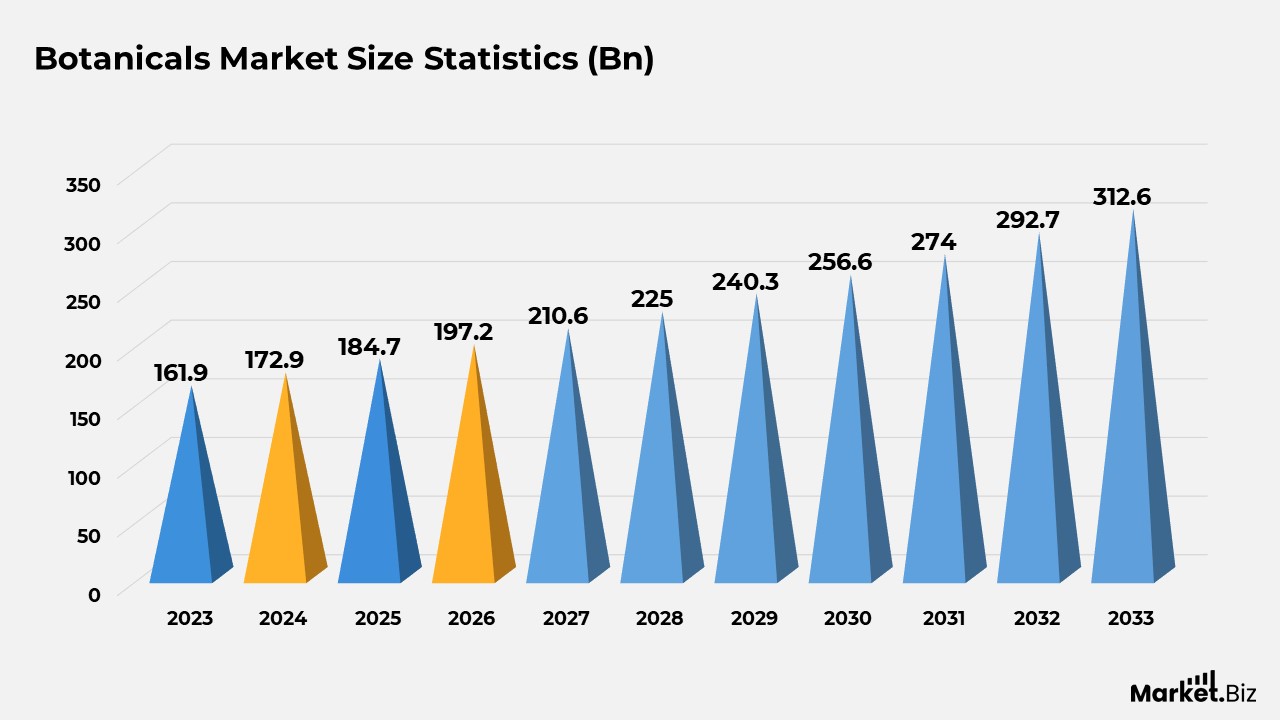
- The worldwide botanicals market is anticipated to be valued at US$161.9 billion in 2023.
- The global botanicals market is expected to grow to US$312.6 billion by 2033.
- Among the various forms, fresh botanicals represented the largest market share at 74.0%.
- In terms of sources, root botanicals held the predominant market share at 27.4%.
- Regarding application, pharmaceuticals are projected to hold the largest market share in 2023, accounting for 40.1%.
- The rising demand for natural and organic products is likely to propel market growth.
- Europe stands as the leading region in the global market, capturing a revenue share of 34.6%.
Botanicals Industry Growth Statistics
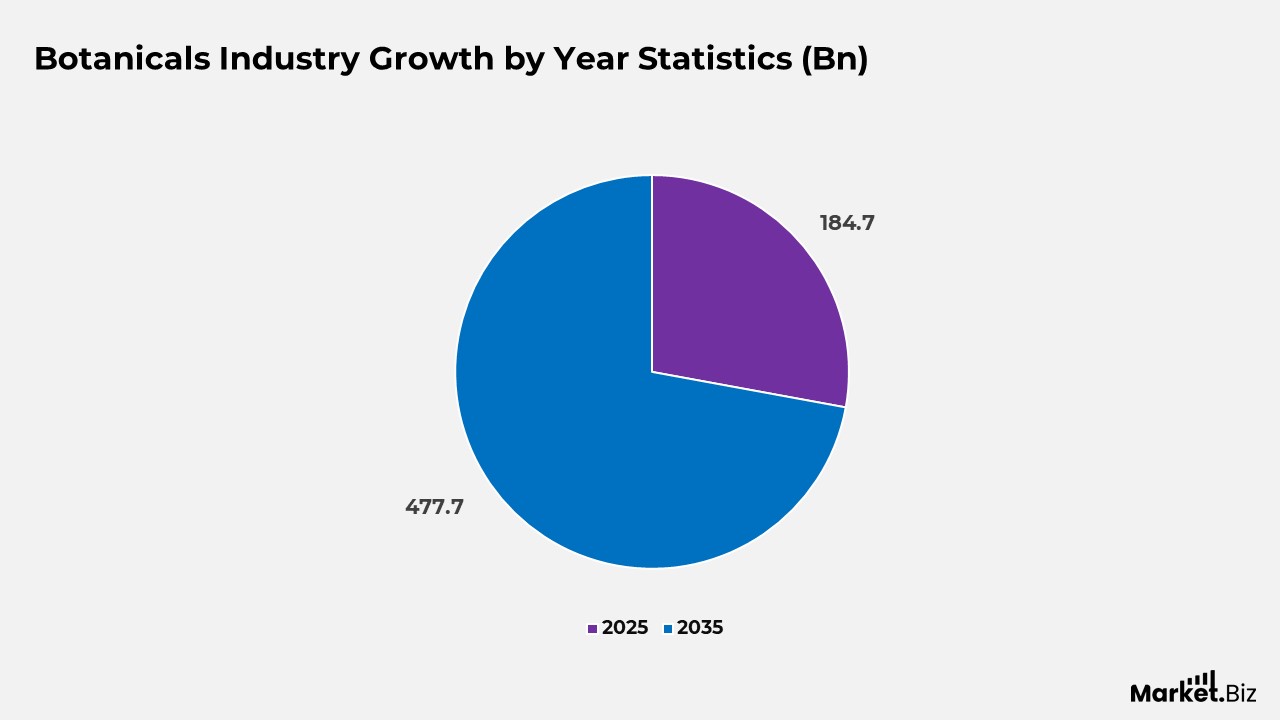
- The market is anticipated to expand from USD 184.7 billion in 2025 to USD 477.7 billion by 2035.
- The adoption of advanced extraction techniques in the APAC region reached 20% by 2025.
- Botanical product launches in North America increased by 12% year-over-year.
- Europe represented 14% of the global innovation in botanicals.
- India’s botanical exports experienced a growth of approximately 10% year-over-year.
- More than 40% of new functional food products in Asia incorporated botanicals.
- The usage of botanicals in the MEA region is rising at an annual rate of approximately 8%.
Country/Regional Botanicals Statistics
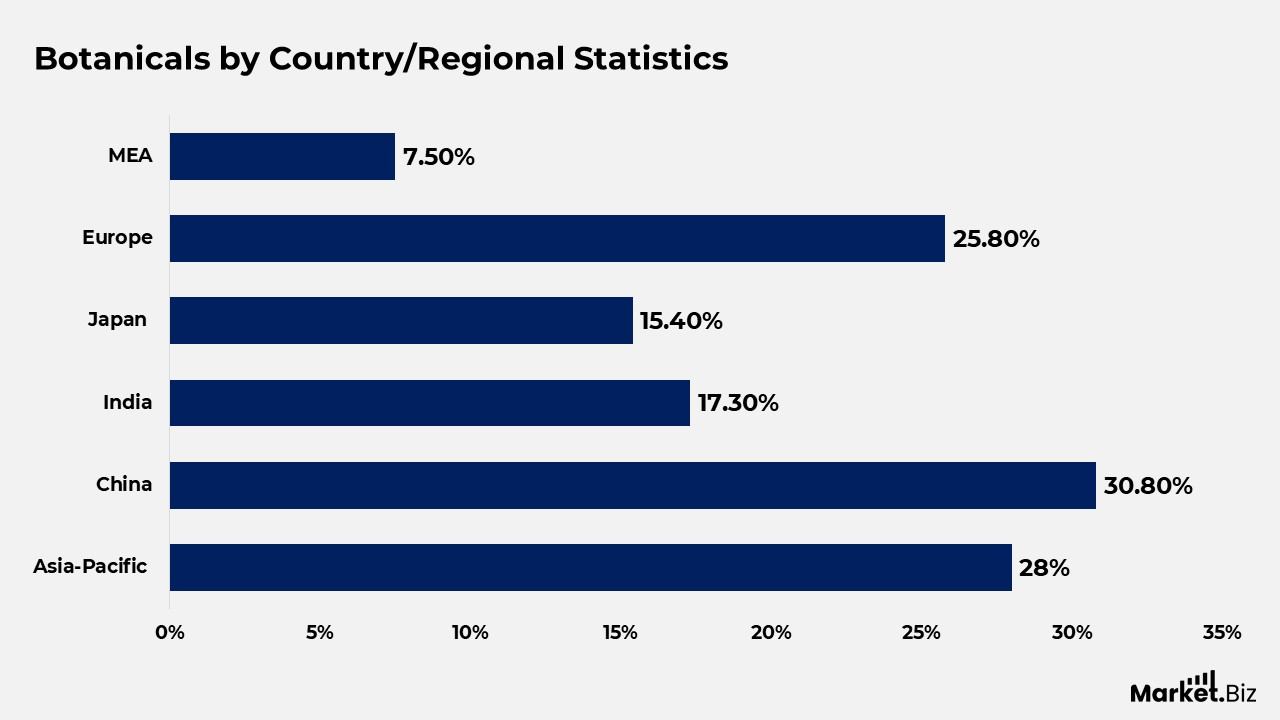
- In 2025, the Asia-Pacific region represented 28% of the botanical extracts market.
- China’s contribution amounted to USD 1,600 million, which is 30.8% of the Asia-Pacific total.
- India’s share reached USD 900 million, accounting for 17.3% of the Asia-Pacific market.
- Japan contributed USD 800 million, representing 15.4% of the total.
- The U.S. botanical extracts market was valued at USD 4,500 million in 2025.
- In Europe, the extracts market was valued at USD 4,800 million, which corresponds to a 25.8% share of the global market.
- The Middle East and Africa (MEA) extracts market reached USD 1,400 million, representing a 7.5% share of the global market.
Botanicals Import & Export Statistics
- In 2023, the global trade volume reached approximately 1.2 million metric tons.
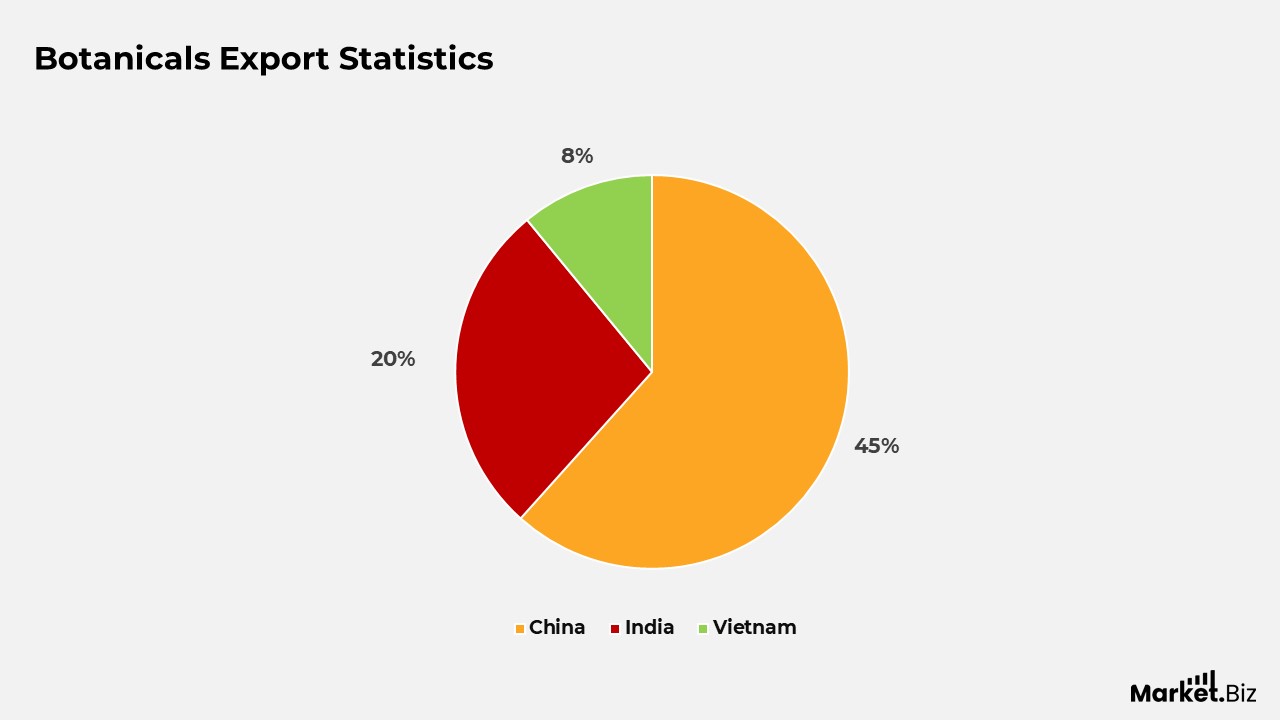
- China represented 45% of the exports, totalling around 540,000 metric tons.
- India maintained a 20% share, which is roughly 240,000 metric tons.
- Vietnam’s exports amounted to approximately 96,000 metric tons, accounting for 8%.
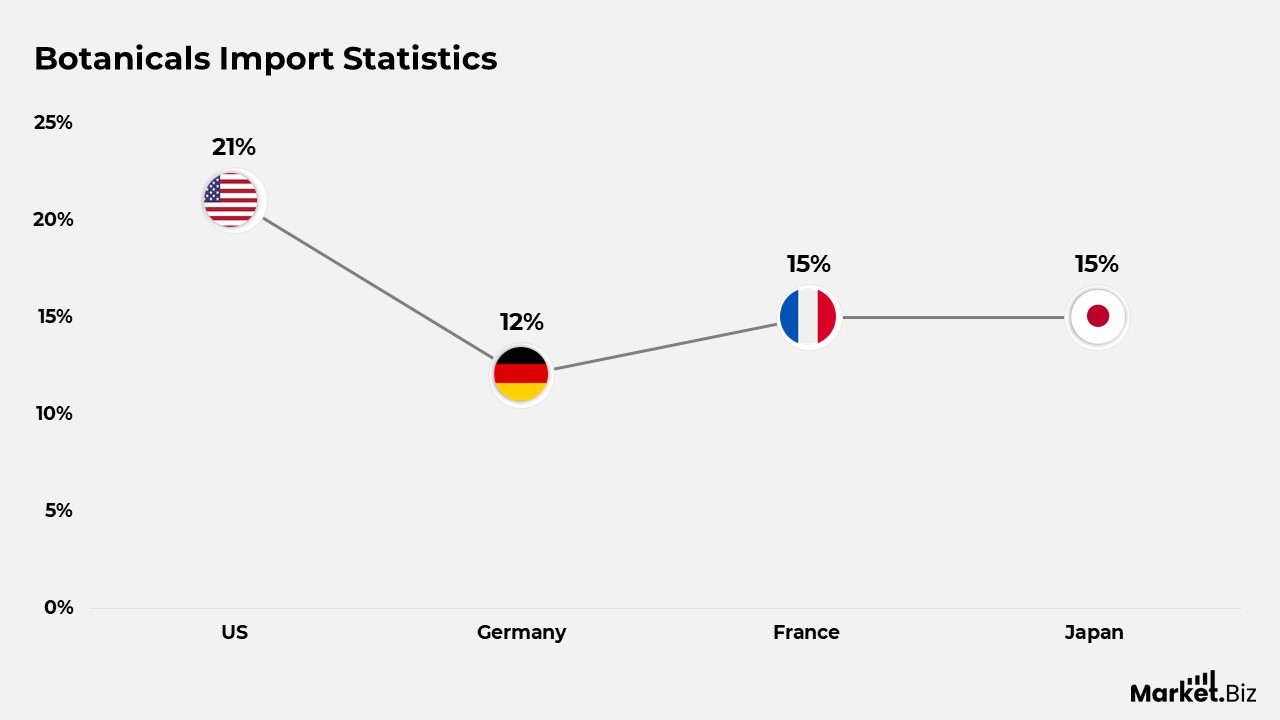
- The United States imported about 250,000 metric tons, valued at 900 million USD.
- Germany’s imports were around 150,000 metric tons, representing 12%.
- France and Japan collectively accounted for 15% of the total import volume.
Consumer Usage Statistics
- In 2024, 65% of food manufacturers in Europe incorporated botanicals into their products.
- The use of botanicals in packaged food and beverages in the APAC region increased by 52%.
- Urban awareness of botanicals in the MEA region reached approximately 40%.
- Year-over-year, the market for botanical pet supplements in the MEA region expanded by 18%.
- In 2024, there was a 15% increase in the launch of botanical skincare products in Europe.
- Botanical supplements in Europe experienced a growth of 13% in 2024.
- Asia was responsible for 70% of the sourcing of rare botanicals.
Botanicals Recent Development
- In October 2022, Givaudan Active Beauty introduced Siliphos, a natural substitute for retinoids, derived from milk thistle fruits and enhanced by Phytosome technology.
- In November 2023, MartinBauer announced the successful acquirement of Husarich GmbH, a respected provider of herbs and spices catering to various sectors of the food industry.
- In May 2023, DSM and Firmenich completed their merger, resulting in the establishment of a new organisation that brings together one of the largest communities dedicated to innovation and creation in the areas of nutrition, health, and beauty.
Botanicals Future Prediction
- In 2026, the trend in botanicals indicates an increasing consumer preference for natural and sustainable products across food, supplements, and cosmetics, which is propelling market growth through trends such as plant-based ingredients, clean labelling, and ethical sourcing.
- The market for botanical extracts is expected to exceed $10 billion, with a notable compound annual growth rate (CAGR) in the sectors of supplements, pharmaceuticals, and ingredients.
Conclusion
Statistics regarding botanicals indicate a rapidly expanding global market fuelled by consumer interest in natural and health-oriented products, demonstrating significant growth (CAGR ~7-9%) across food and beverage, supplements, and cosmetics sectors.
Europe is currently the leading region, while Asia-Pacific exhibits the fastest growth, underscoring potential in botanicals such as garlic, turmeric, and various herbs. However, this market also encounters challenges, including regulatory inconsistencies and the necessity for sustainable sourcing.
FAQ’s
A botanical refers to a plant or a part of a plant that is esteemed for its medicinal or therapeutic attributes, flavour, and/or aroma. Herbs constitute a specific category of botanicals. Items derived from botanicals that are utilised to sustain or enhance health are often referred to as herbal products, botanical products, or phytomedicines.
High Performance Thin-Layer Chromatography (HPTLC) is employed to evaluate the identity and quality of botanicals and various components. Frequently, this testing can identify adulterants and contamination, which may include incorrect plant parts, closely related species, and unidentified substances.
Antioxidant-rich botanicals, such as green tea, are known to prevent cancer, slow the aging process, and support cardiovascular health. Botanicals like St. John’s wort are effective in alleviating common psychological issues, including insomnia, anxiety, or mild depression.