









Introduction
Smart Bandages Statistics: Smart bandages are a significant advancement in healthcare, integrating embedded microelectronics, sensors, and wireless communication systems to transform wound care management.
These innovative bandages enable continuous, real-time monitoring of critical parameters such as temperature, infection, pH levels, and moisture content, providing healthcare providers with valuable insights into healing. The ability to transmit data seamlessly allows for timely medical interventions, improving wound management and offering a more customized approach to patient care.
As technology advances, smart bandages are poised to play a pivotal role in the future of personalized healthcare, contributing to improved patient outcomes, reducing hospital visits, and lowering overall treatment costs. These statistics offer a detailed analysis of the smart bandage market, covering key trends, market size, technological innovations, and the leading companies shaping its growth.
Editor’s Choice
- An estimated 4.5 million individuals in the U.S. and nearly 40 million people globally were affected by chronic wounds in 2023, including conditions such as diabetic foot ulcers and pressure ulcers, underscoring the extensive impact on healthcare systems and patient quality of life.
- The U.S. documented approximately 1 million cases of pressure injuries, emphasising the growing need for advanced wound care solutions and preventive strategies across care settings.
- Smart bandage technologies have revolutionised wound care, enabling remote monitoring and contributing to a 90% reduction in the necessity for in-person clinic visits, highlighting the promise of digital health in improving patient outcomes and reducing healthcare strain.
- Sports-related injuries continue to add to the wound care burden, with the U.S. alone reporting 482,886 cases linked to athletic activities in 2023, reflecting the importance of injury prevention and rapid treatment in active populations..
Smart Bandages Market Size Statistics
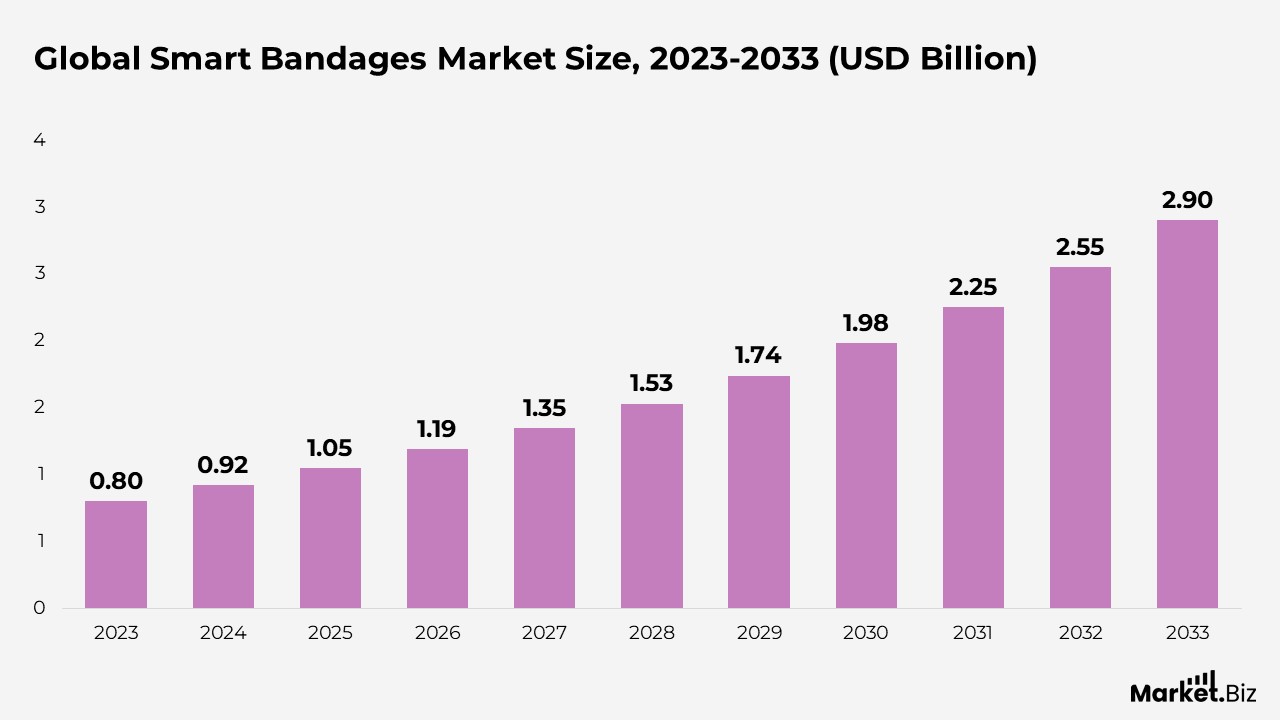
- According to Market.us, the global smart bandages market is projected to grow from $1.05 billion in 2025 to $2.55 billion by 2032, reflecting a compound annual growth rate (CAGR) of 13.6% from 2023 to 2033.
- The smart bandages market is expanding due to increasing demand for advanced wound care solutions, the integration of connected healthcare technologies, and rising injuries and wounds. The shift toward patient-centred care and digital healthcare technologies is driving market growth.
- Electroactive smart bandages accounted for 27.8% of the market in 2023. These bandages utilise electrical stimulation to enhance healing and enable real-time monitoring and drug delivery, solidifying their dominance.
- The graphene segment generated the highest revenue, accounting for 47.1% of total revenue in 2023. Its unique properties, such as transparency, electrical and thermal conductivity, and flexibility, make graphene well-suited for smart bandages.
- Chronic wound management remained dominant in 2023, with a 29.7% share, driven by the increasing prevalence of chronic conditions and injuries, especially in aging populations.
- Hospital pharmacies retained 39.5% of the revenue share in 2023, owing to their extensive product offerings, advanced medical equipment, and skilled professionals, positioning them as key players in smart bandage distribution.
- North America maintained a stronghold with a 42.8% share in 2023, supported by an aging population, advanced healthcare infrastructure, and high demand for innovative wound care solutions, a trend expected to continue.
(Source: Market.us)
Wound Care Market Size
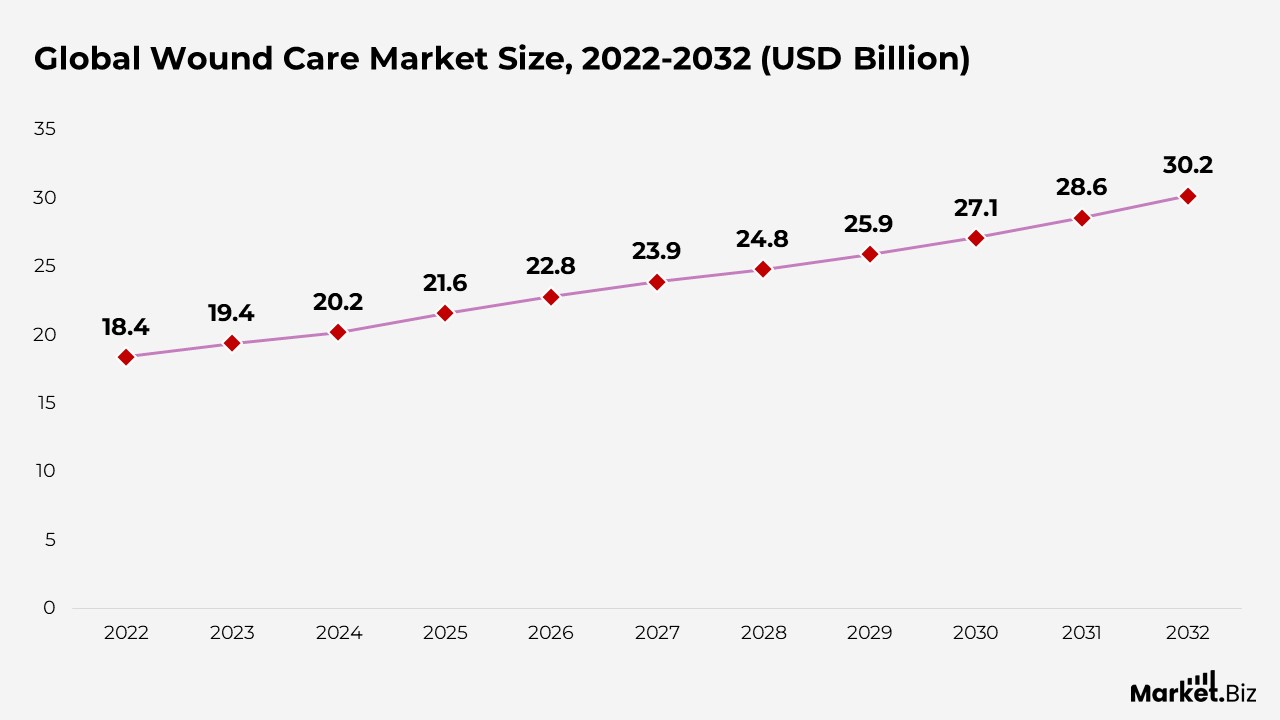
- According to Market.us, the global wound care market is projected to grow from $21.6 billion in 2025 to $30.2 billion by 2032, reflecting a compound annual growth rate (CAGR) of 5.2% from 2022 to 2032.
- The wound care market is growing due to the aging population, rising chronic diseases, technological advancements, more surgical procedures, and increasing accidental injuries.
- The advanced wound dressing segment is the most lucrative, driven by the growing number of burn cases, and is expected to account for the largest share of revenue during the forecast period.
- The chronic wounds segment holds the largest market share and is projected to grow significantly, driven by conditions such as pressure ulcers and diabetic foot ulcers, as well as increased spending on treatment.
- Hospitals hold the market share, driven by the rise of multispecialty hospitals with dedicated wound management departments, particularly in emerging economies.
- North America accounts for 45% of the wound care market. It is expected to experience continued growth, supported by a large population, a rising patient pool, and an aging demographic more prone to wounds.
(Source: Market.us)
Types of Smart Bandages
- Drug-Infused Smart Bandages
- Sensor-based Smart Bandages
- Temperature-Sensitive Smart Bandages
- Electroactive Smart Bandages
- Oxygen-Sensing Smart Bandages
- pH-Sensing Smart Bandages
Factors Driving the Demand for Smart Bandages Statistics
Chronic wounds, such as diabetic foot ulcers, pressure injuries, burns, and sports-related injuries, pose a significant global public health challenge, resulting in a high number of cases and deaths each year. The growing prevalence of these conditions underscores the urgent need for effective wound care solutions, particularly with the emergence of advanced technologies like smart bandages.
Chronic Wound Management and Monitoring
- In 2023, approximately 4.5 million people in the U.S. and around 40 million worldwide will be affected by chronic wounds, such as diabetic foot ulcers and pressure ulcers.
- The U.S. reported roughly 1 million cases of pressure injuries, highlighting the widespread occurrence of chronic wounds across the country.
- A study in the Journal of Biomedical Materials Research demonstrated that smart bandages can identify wound infections with 98% specificity and 93% sensitivity.
- According to data published by the NIH in August 2024, the global prevalence of diabetic foot ulcers is estimated to range from 9.1 million to 26.1 million cases, with approximately 15-25% of individuals with diabetes mellitus likely to develop a diabetic foot ulcer at some point in their lifetime.
- In the same year, approximately 18.6 million people worldwide, including 1.6 million in the United States, were affected by diabetic foot ulcers.
Burns
- Burns also represent a major public health issue, with an estimated 180,000 deaths occurring worldwide each year.
- A significant portion of these deaths happens in low- and middle-income countries, particularly in the WHO African and Southeast Asia regions, where nearly two-thirds of burn-related fatalities are concentrated.
- Smart bandages integrated with oxygen sensors have been utilized to track the healing process of burns and the successful integration of skin grafts.
Sports/Work/ Violence-related Injuries
- In 2023, injury-related global mortality rates showed concerning figures: 4.4 million deaths were attributed to injuries, with 3.16 million caused by accidental wounds and 1.25 million resulting from violence-related injuries.
- Sports injuries further contribute to the global burden of wounds, with the U.S. alone recording 482,886 sports-related injuries in 2023.
- The U.S. saw 4,486 fatal work-related injuries in 2022, emphasizing the severity of injuries across various industries.
- Smart bandages can track healing progress, monitor range of motion, and offer feedback on rehabilitation exercises, which supports recovery and helps minimize the chances of re-injury.
(Source: JAMA Network, Medscape, National Safety Council, Consumer Product Safety Commission, Bureau of Labor Statistics, World Health Organization, National Institute of Health)
Remote Monitoring and Telemedicine
Smart bandages with wireless connectivity facilitate remote wound monitoring, enabling patients to send wound data to healthcare providers without regular in-person visits. This enhances convenience and efficiency in follow-up care, particularly for individuals in remote areas or those with limited mobility.
- Using smart bandages for remote wound monitoring has resulted in a 90% reduction in the need for in-person clinic visits.
- Remote monitoring with smart bandages can save up to £3,000 per patient per year.
(Source: Journal of Wounds, Market.us)
Innovations in Smart Bandages Statistics
- In June 2024, researchers from the California Institute of Technology (Caltech) and the Keck School of Medicine at USC introduced advanced smart bandages that wirelessly track metabolic and inflammatory biomarkers in wound fluids. Utilizing electrochemical and optical sensors, these bandages detect proteins, antibodies, electrolytes, and nutrients, delivering real-time data to healthcare professionals for more timely interventions.
- In August 2024, a collaborative team from North Carolina State University and Columbia University developed an innovative, water-powered, electronics-free dressing. When activated, this dressing generates an electric field that accelerates tissue regeneration and promotes faster healing of chronic wounds. In animal studies, wounds treated with these electric bandages healed 30% faster than those treated with conventional dressings.
- In February 2023, a group of researchers created a collagen-based wound dressing infused with a halochromic dye that changes color in response to pH variations caused by infection. This color change serves as a visual indicator, enabling early infection detection and allowing for timely treatment to prevent complications.
(Source: University of Southern California, North Carolina State University, Cornell University)
Limitations of Smart Bandages
Although there have been notable advancements, several challenges hinder the widespread adoption and effectiveness of smart bandages.
- Smart bandages can be costly due to the advanced technology they incorporate, making them less accessible, particularly in resource-limited settings or among patients without comprehensive healthcare coverage.
- Many smart bandages rely on battery-powered sensors, which have limited lifespans and require frequent recharging or replacement, leading to additional costs and inconvenience.
- Since smart bandages collect sensitive health data, ensuring the security and privacy of this information is crucial. Risks of data breaches or unauthorized access could undermine trust and adoption.
- The technology behind smart bandages can be complex, requiring specialized knowledge for effective use. Both healthcare providers and patients need to be properly trained to avoid misinterpretation or incorrect use, which could hinder their effectiveness.
- Some smart bandages require a stable internet connection to transmit data for remote monitoring, presenting challenges in regions with poor connectivity.
- Certain smart bandages may use invasive sensors or adhesives that can cause discomfort or skin irritation, particularly for those with sensitive skin or when worn for extended periods.
(Source: Market.us)
Recent Developments
Regulatory Advancements
- Regulatory bodies have established guidelines to ensure the safety and performance of smart bandages, guaranteeing compliance with quality standards and protecting patient safety in wound care management.
Consumer Trends
- The growing need for advanced wound care solutions has driven the adoption of smart bandages, resulting in a 20% increase in sales of smart wound dressings compared to the previous year.
- During the COVID-19 pandemic, remote wound monitoring increased significantly, with telemedicine consultations for wound care rising by 30%, highlighting the growing acceptance of remote healthcare delivery enabled by smart bandage technologies.
Conclusion
Smart Bandages Statistics: The smart bandages market is experiencing rapid growth and innovation, driven by technological advancements such as AI integration, drug-delivery systems, and remote monitoring.
These breakthroughs improve wound care by facilitating real-time monitoring, personalised treatment, and enhancing healing outcomes. As a result, smart bandages are expected to play a key role in managing chronic wounds and shaping the future of healthcare.
However, the market faces challenges, including the high costs of developing advanced smart bandages and the need for comprehensive regulatory frameworks to ensure their safety and effectiveness.
Additionally, raising awareness among healthcare professionals and patients about the benefits and proper use of these technologies remains a significant obstacle to broader adoption. Despite these challenges, the future of smart bandages remains promising, with ongoing technological advancements and increasing demand in the healthcare industry.
FAQ’s
Smart bandages are innovative wound-care solutions that incorporate advanced technologies, including sensors and wireless connectivity, to monitor wound healing. They can track temperature, moisture, pH, and oxygen levels, and can even identify infections.
Smart bandages equipped with oxygen sensors are used to monitor the recovery process of burn wounds and the successful integration of skin grafts. They offer real-time data on wound conditions, enhancing healing and promoting faster recovery.
Despite technological advancements, several challenges remain, including high costs, limited battery life, concerns over data security, the requirement for specialized knowledge to effectively use the technology, and difficulties with internet connectivity in some regions.
Smart bandages are critical in post-surgical care because they detect early signs of infection, reduce the need for frequent in-person check-ups, and provide continuous monitoring. This helps improve recovery times and overall patient outcomes.

