









Introduction
Employee Motivation Statistics: Employee motivation plays a crucial role in the overall performance and success of an organization. Studies show that only 34% of employees are fully engaged at work, highlighting the need to focus on motivation. Motivated employees can be up to 21% more productive, and organizations with highly engaged employees experience 41% lower absenteeism and 17% higher productivity.
As companies face increasing competition, utilizing employee motivation statistics helps develop strategies to improve engagement, job satisfaction, and retention. Understanding both intrinsic and extrinsic motivators allows businesses to tailor their practices, enhancing employee satisfaction and driving organizational success.
Editor’s Choice
- Only 34% of U.S. employees are engaged at work, highlighting a need for better motivation strategies.
- 79% of employees would work harder if recognized, showing the power of acknowledgment on motivation.
- 94% of employees would stay longer if companies invested in their career development, crucial for retention.
- Motivated employees are 21% more productive, linking motivation to higher performance.
- 60% of employees prioritize work-life balance over salary, emphasizing its importance as a motivator.
- 61% of employees are more motivated with supportive leadership, showcasing leadership’s role in engagement.
- Motivated employees are 50% less likely to leave, highlighting engagement’s impact on retention.
- Poor mental health can reduce productivity by 30%, showing the need for well-being support.
- Employees who get regular recognition are 14% more likely to stay, underlining its role in retention.
- 73% of employees in collaborative settings are more motivated, proving that teamwork boosts engagement.
- 68% of employees say skill-building opportunities enhance motivation, emphasizing continuous development.
- 87% of companies believe technology will shape employee motivation, especially for feedback and tracking.
General Employee Motivation Statistics
- Only 34% of U.S. employees are actively engaged in their work, indicating a significant gap in motivation across organizations.
- 79% of employees report they would work harder if they were better recognized, emphasizing the power of acknowledgment in boosting motivation.
- 94% of employees would stay longer at a company if it invested in their career development, underlining the importance of growth opportunities.
- Motivated employees are 21% more productive compared to their less engaged counterparts, showcasing the link between motivation and performance.
- 60% of employees prioritize work-life balance over salary, highlighting its role as a key motivator in today’s workforce.
- 61% of employees are more motivated when they have supportive leadership, demonstrating the direct influence of leadership style on engagement.
- Motivated employees are 50% less likely to leave their company, showing how engagement directly impacts retention rates.
Moreover
- Poor mental health can reduce employee productivity by up to 30%, illustrating the need for companies to prioritize well-being for sustained motivation.
- Employees who receive recognition regularly are 14% more likely to stay with their current employer, indicating recognition’s role in reducing turnover.
- Employees who have control over how they perform their tasks are 30% more motivated, emphasizing the value of autonomy in the workplace.
- 73% of employees who work in collaborative environments are more motivated, highlighting the power of teamwork in fostering engagement.
- Companies with diverse workforces are 35% more likely to experience higher financial returns, linked to better employee motivation and satisfaction.
- 85% of employees believe flexible working hours improve their job satisfaction, showing that flexibility is a strong motivational factor.
- While not the primary motivator, 55% of employees list competitive compensation as a top reason for remaining with their employer, underscoring its importance.
- 68% of employees believe that skill-building opportunities make them more motivated, emphasizing the need for continuous learning and development in the workplace.
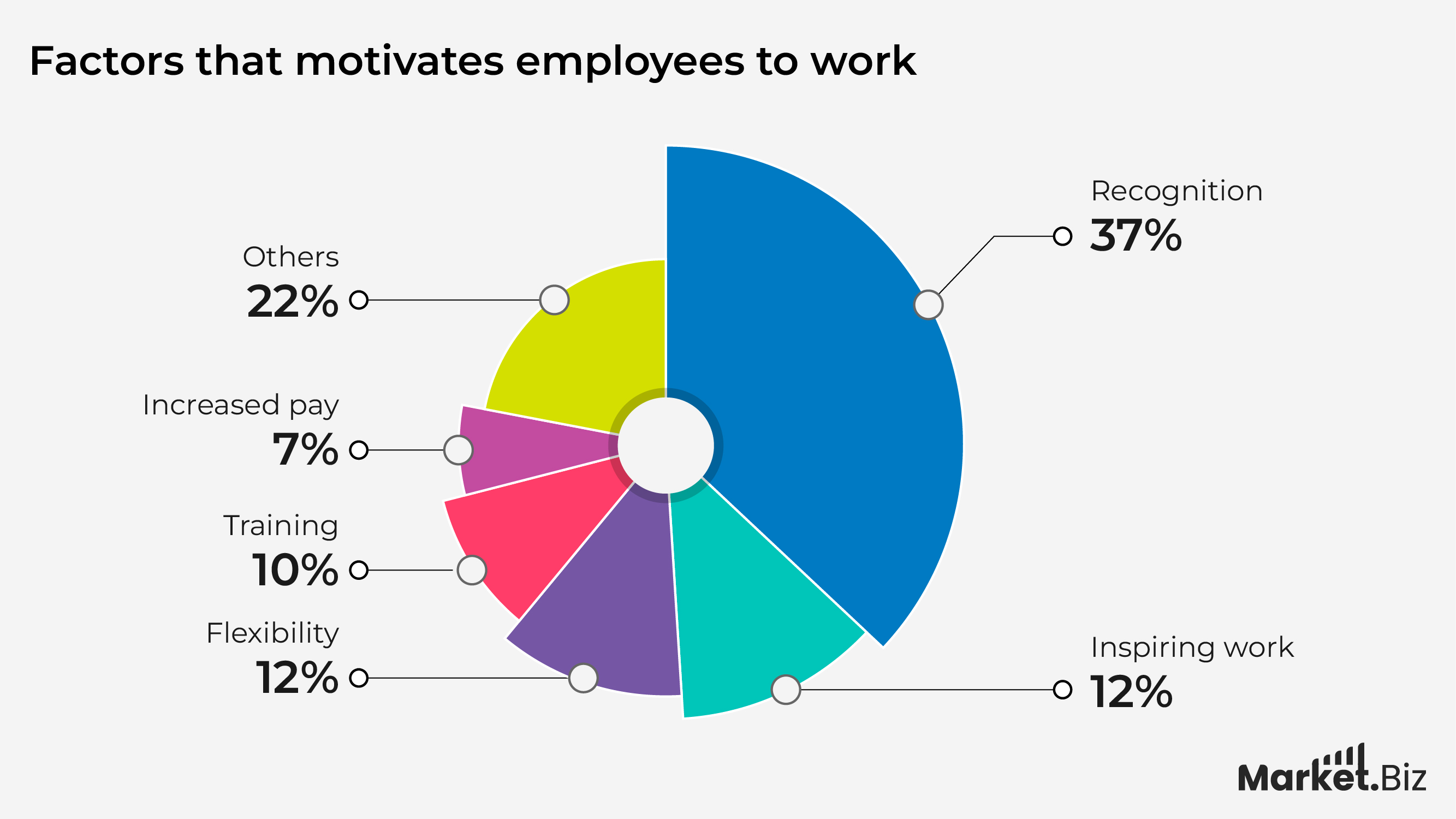
(Source: Zippia, WP-Content)
Intrinsic vs. Extrinsic Motivation
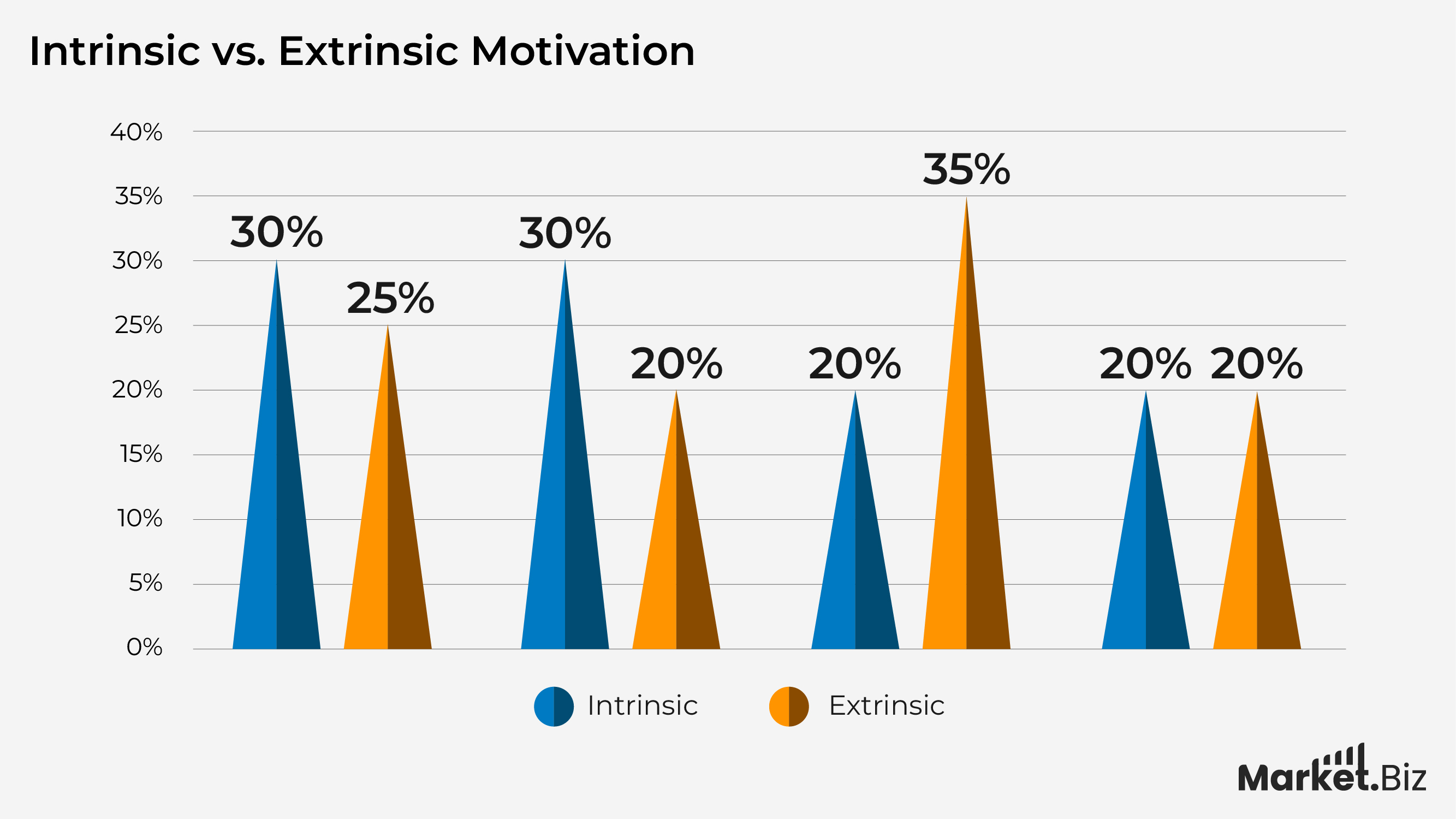
- Employees who are intrinsically motivated are 30% more likely to stay engaged in their work, as they find personal satisfaction in the tasks themselves.
- Research shows that extrinsic rewards like bonuses and salary increases are effective in motivating 25% of employees, especially in the short term.
- 30% of employees who are intrinsically motivated report higher job satisfaction, as they are driven by purpose, passion, and personal growth.
- While extrinsic rewards can increase productivity by 10-20%, they are less sustainable compared to intrinsic motivators, which lead to long-term performance.
- Employees who are intrinsically motivated are 20% less likely to leave their jobs, indicating the power of internal satisfaction over external rewards.
- 20% of employees feel more motivated when they have opportunities for personal growth and learning, showing the power of intrinsic motivation.
- Employees who have autonomy in their work are 25% more likely to experience intrinsic motivation, leading to greater creativity and problem-solving.
- For creative professionals, 73% report that intrinsic motivation, such as passion for the work, is the primary driver of their performance.
- Over-reliance on extrinsic rewards can diminish intrinsic motivation, a phenomenon known as the “over justification effect,” which affects 35% of employees.
- Intrinsically motivated employees are 20% more likely to report high levels of well-being, as they find meaning and fulfilment in their work.
- In sales, 20% of employees are driven by financial rewards, indicating that extrinsic motivation is crucial in high-performance, target-driven environments.
- Companies that focus on fostering intrinsic motivation see a 32% increase in innovation and idea generation, as employees feel empowered and valued.
Motivation in Remote Work Settings
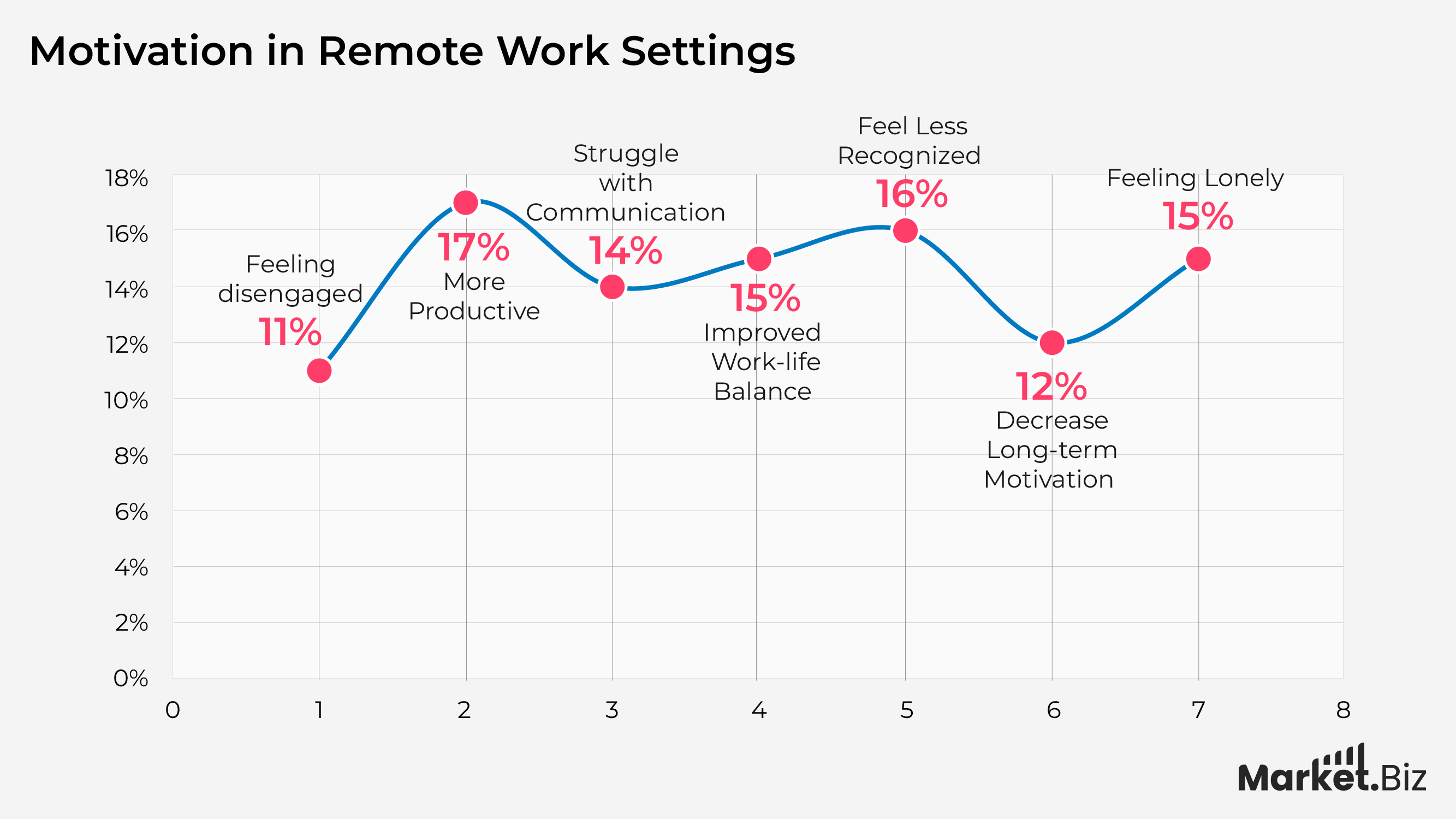
- Remote workers report feeling disengaged, with 11% highlighting the challenge of maintaining motivation outside traditional office environments.
- Flexible schedules make 17% of remote workers more productive, showing that autonomy in work hours boosts motivation.
- 14% of remote workers struggle with communication, which impacts their motivation, as a lack of interaction with colleagues can lead to isolation.
- Improved work-life balance is cited as a key motivator by 15% of remote workers, indicating that flexibility enhances both personal satisfaction and job performance.
- Employee recognition is a critical factor for maintaining motivation in virtual settings, as 16% of remote workers feel less recognized for their work.
- 12% of remote employees believe career development opportunities are limited, which can decrease long-term motivation if not addressed.
- Access to modern technology improves motivation for 15% of remote workers, emphasizing the role of effective tools in remote engagement.
- 13% of remote workers feel more motivated when given the freedom to manage their own schedules, highlighting the importance of trust in remote settings.
- 15% of remote workers report feeling lonely, suggesting that social isolation can negatively affect motivation and mental well-being.
- 25% of remote workers feel more satisfied with their jobs, often due to the freedom and control remote work offers, which fuels motivation.
- Clear performance expectations improve motivation for 68% of remote workers, indicating that well-defined goals are crucial for remote success.
- 35% of remote workers experience burnout, which can diminish motivation, underlining the need for supportive work environments and mental health resources.
Employee Motivation by Generations
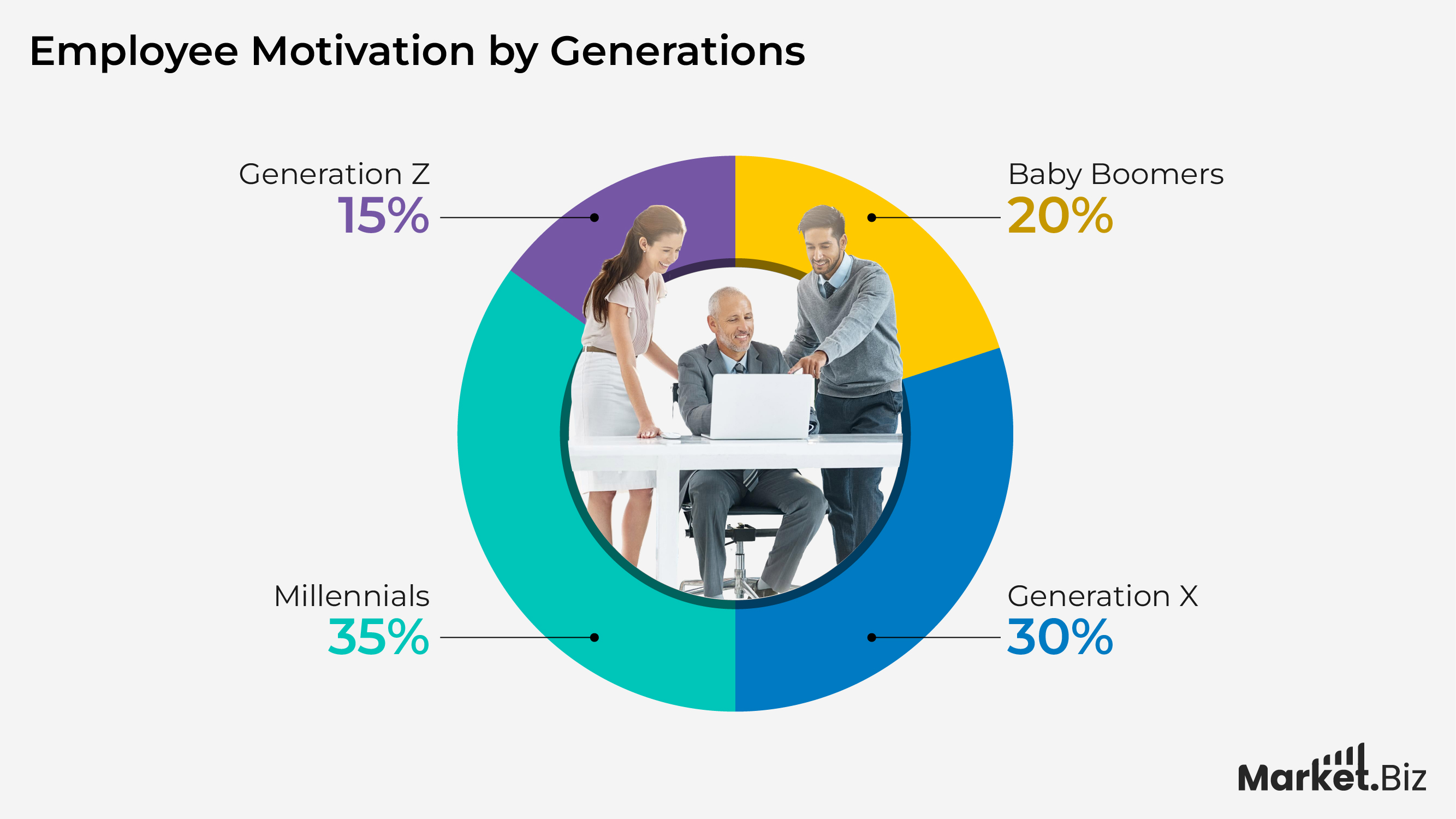
- 20% of Baby Boomers are motivated by job security, prioritizing long-term stability over immediate rewards or career advancement opportunities.
- 30% of Generation X employees prioritize work-life balance, reflecting their desire for flexibility to manage both personal and professional responsibilities.
- 35% of Millennials are motivated by opportunities for career advancement and learning, indicating a strong desire for growth and development in their roles.
- 15% of Generation Z employees are motivated by meaningful work, seeking roles that align with their values and offer social impact.
- 63% of Baby Boomers value recognition and appreciation for their work, showing that acknowledgment remains an important motivator across generations.
- 83% of Millennials consider flexible working hours as a top motivator, highlighting their preference for autonomy in managing their work schedule.
Role of Compensation
- 60% of employees consider competitive compensation to be a top factor in deciding whether to stay with their employer, indicating its significant role in retention.
- 55% of employees report that salary increases are a strong motivator, particularly in terms of improving their job satisfaction and performance.
- Performance-based compensation increases employee motivation by up to 15%, as employees feel directly rewarded for their contributions.
- 80% of employees who are satisfied with their compensation are more likely to feel motivated to perform at higher levels, linking financial satisfaction with work output.
- Companies that offer bonuses or incentives see a 22% higher engagement rate compared to those that do not provide such financial rewards.
- 45% of employees indicate that compensation packages with health benefits are a significant motivator for their productivity and loyalty to the company.
- 70% of millennials report that fair compensation is crucial for their long-term career commitment, especially in comparison to older generations.
- Employees are 50% more likely to go above and beyond when they perceive their compensation as equitable, boosting motivation and performance.
- 62% of employees in the tech industry prioritize stock options or equity as part of their compensation, showing that long-term financial incentives can increase motivation.
- Regular salary reviews, as reported by 67% of employees, are seen as a critical factor in maintaining ongoing motivation and satisfaction in their roles.
Teamwork and Employee Motivation
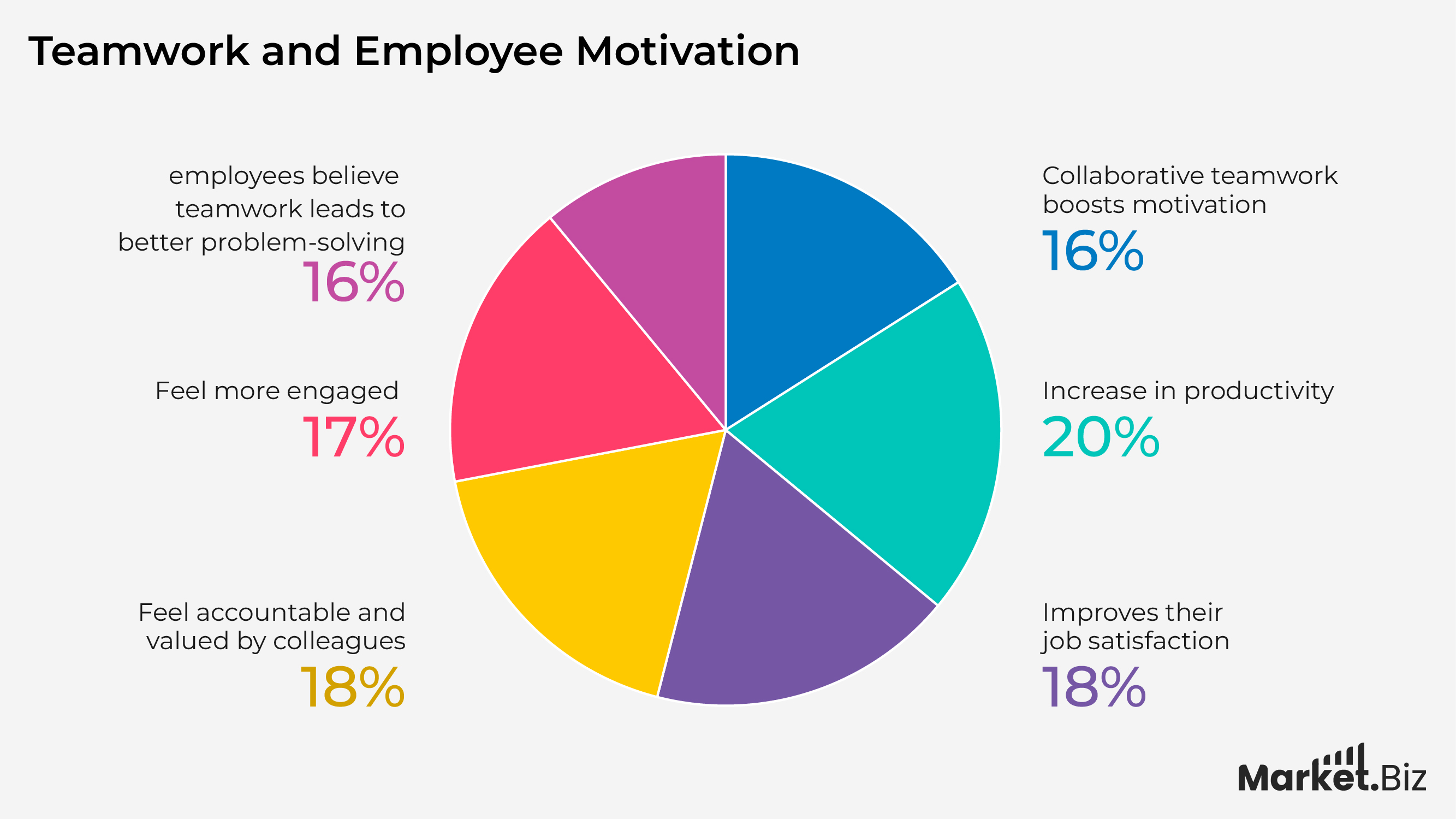
- 16% of employees report that collaborative teamwork boosts their motivation, as working together fosters a sense of shared purpose and achievement.
- Teams with strong collaboration experience a 20% increase in productivity, demonstrating how teamwork enhances individual motivation and output.
- 18% of employees say that having a supportive team environment improves their job satisfaction, showing the importance of positive relationships in motivating employees.
- 18% of employees in high-performing teams are more motivated to work hard, as they feel accountable and valued by their colleagues.
- 17% of employees feel more engaged when they are part of cross-functional teams, suggesting that diverse perspectives in teamwork fuel motivation and creativity.
- 11% of employees believe that teamwork leads to better problem-solving, as collaborative efforts enable innovative solutions and increase motivation to succeed.
- 20% of employees state that team-building activities enhance their motivation, as they help improve communication and trust among team members.
- Motivated employees who work in teams with clear goals and roles are 30% more likely to report high job satisfaction and motivation levels.
- 22% of employees say that they feel more motivated when their team celebrates successes together, emphasizing the role of recognition in team-based motivation.
- 32% of employees believe that strong team bonds increase their overall job satisfaction, making them more likely to stay motivated and committed to their roles.
- Teams that foster open communication see a 15% increase in employee motivation, as clear dialogue and support contribute to a more engaged and motivated workforce.
Technology and Employee Motivation
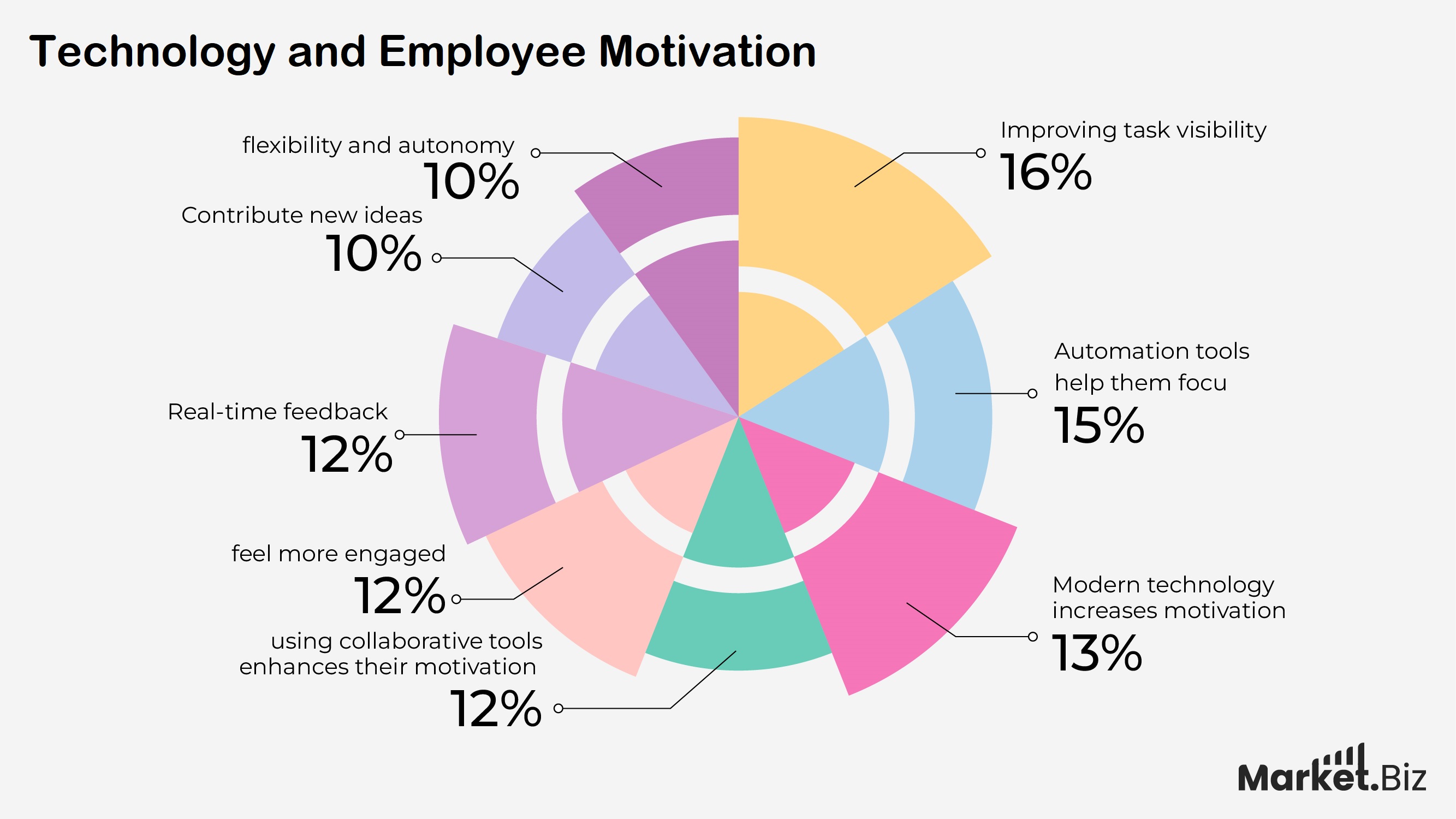
- Modern technology, which increases motivation for 13% of employees, helps them work more efficiently and effectively.
- 12% of employees report that using collaborative tools like Slack or Microsoft Teams enhances their motivation by improving communication and teamwork.
- When employees have access to up-to-date technology, 12% feel more engaged, showing that the right tools positively influence motivation.
- 15% of employees say automation tools help them focus on more meaningful work, boosting motivation by reducing repetitive tasks.
- Technology fosters innovation for 10% of employees in tech-driven companies, increasing their motivation to contribute new ideas.
- 10% of employees report being more motivated when they can work remotely using technology, highlighting the flexibility and autonomy it provides.
- Real-time feedback through performance management tools makes 12% of employees feel more motivated, helping them stay on track and improve.
- 16% of employees believe that advanced project management tools increase their motivation by streamlining workflow and improving task visibility.
- 59% of employees feel more motivated when their company invests in training them on new technologies, driving engagement through ongoing learning opportunities.
- Technology enhances motivation for 70% of remote workers, giving them the tools they need to stay productive and collaborate effectively.
- 54% of employees report higher motivation when they can access mobile-friendly work tools, offering them the flexibility to work from anywhere.
- 77% of employees feel more motivated when they use gamification tools that reward achievements, making work more engaging and enjoyable.
Role of Feedback in Motivation
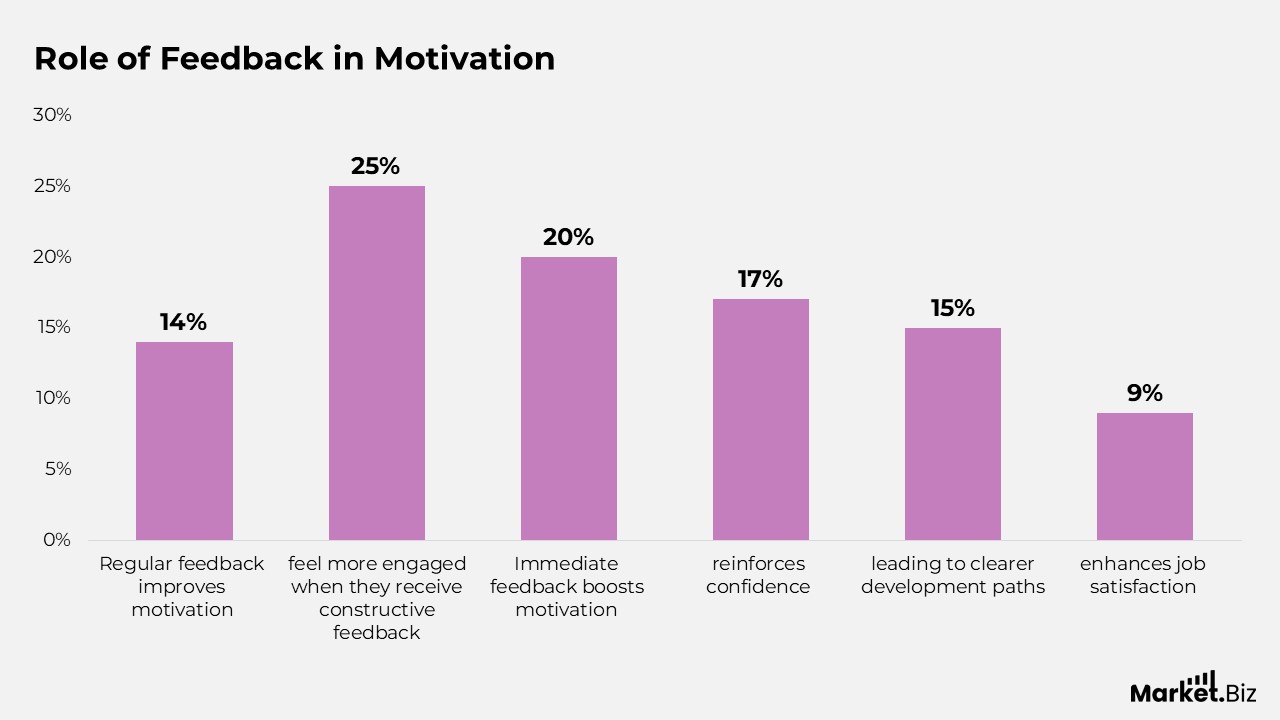
- Regular feedback improves motivation for 14% of employees, enhancing their overall job performance.
- 25% of employees feel more engaged when they receive constructive feedback, helping them understand areas for improvement.
- Immediate feedback boosts motivation for 20% of employees, making them feel more supported and valued in their roles.
- 17% of employees are motivated when they receive positive feedback, which reinforces their confidence and encourages higher performance.
- Specific and actionable feedback motivates 15% of employees, leading to clearer development paths.
- Frequent feedback enhances job satisfaction for 9% of employees, contributing to long-term engagement and motivation.
- 53% of employees feel more motivated when feedback helps them feel more connected to their team and company.
- Feedback fosters a growth mindset, motivating 80% of employees to continuously improve and take on new challenges.
- When feedback is aligned with personal goals and career aspirations, 63% of employees feel more motivated.
- 71% of employees report feeling more motivated when their managers are approachable and provide regular feedback.
- Positive feedback that highlights their strengths motivates 78% of employees to perform even better.
- 69% of employees are more motivated when they feel their feedback is valued and leads to real changes in the workplace.
Long-Term Effects of Employee Motivation
- 74% of motivated employees report higher job satisfaction, leading to improved retention rates over the long term.
- 62% of employees with high motivation levels are more likely to stay with a company for five years or more, reducing turnover costs.
- Companies with motivated employees see a 21% higher profitability, as motivation directly influences performance and productivity.
- 67% of highly motivated employees are more likely to take on leadership roles in the future, helping with succession planning.
- Long-term employee motivation improves organizational culture, with 73% of employees feeling more connected to the company mission.
- 58% of motivated employees show improved collaboration, fostering innovation and creativity within teams over time.
- Employees with sustained motivation are 50% more likely to actively contribute to company growth and strategic goals.
- 76% of employees who feel motivated by their roles are more inclined to recommend their company as a great place to work.
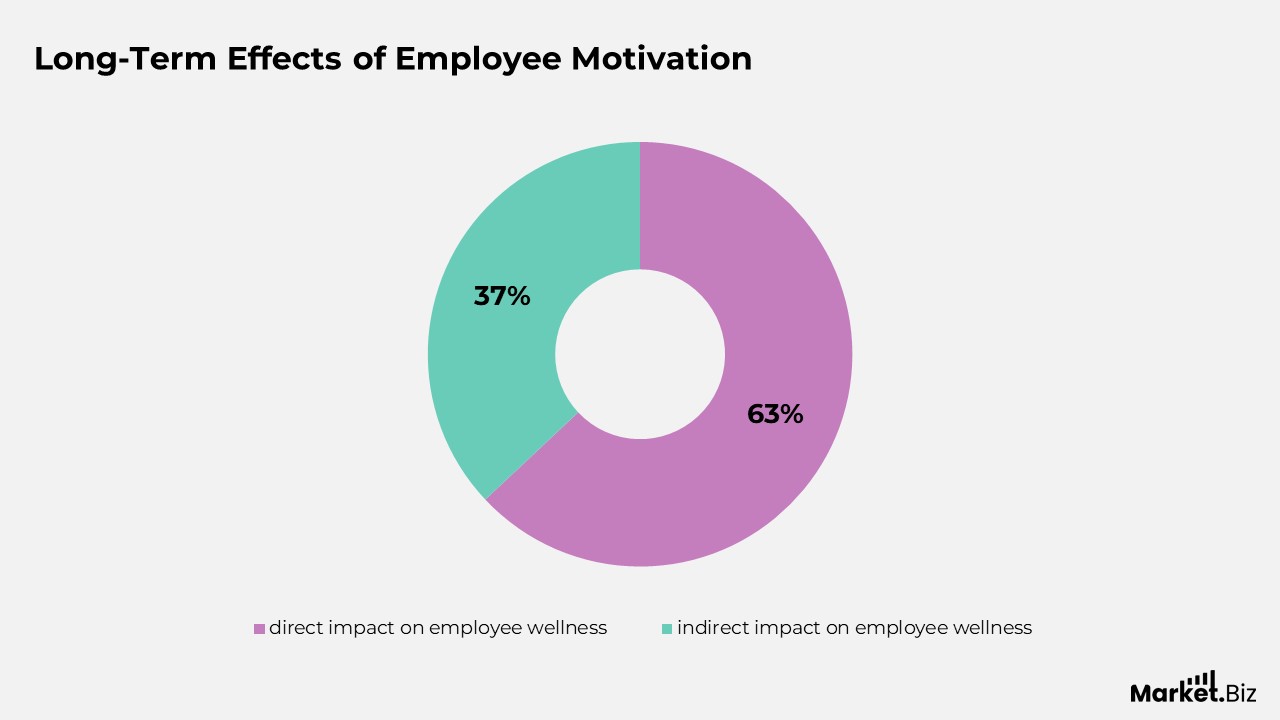
- Motivation has a direct impact on employee wellness, with 63% of motivated workers reporting better work-life balance and mental health.
- Over time, motivated employees develop stronger job skills, with 68% saying they feel more competent and prepared for career advancement.
Future of Employee Motivation
- By 2026, 75% of the workforce is expected to be comprised of Millennials and Generation Z, who prioritize flexibility, career development, and purpose in their motivation.
- 87% of companies believe that technology will play a crucial role in shaping the future of employee motivation, with tools for real-time feedback and performance tracking becoming essential.
- 63% of employees expect increased emphasis on work-life balance as a key motivator, especially with the rise of remote and hybrid work models.
- The future of employee motivation will see 72% of businesses focusing more on mental health initiatives, as employees increasingly demand support for their well-being.
- 64% of employees foresee career advancement opportunities as a leading motivator in the next five years, with more organizations adopting personalized growth plans.
- As automation and AI transform industries, 70% of employees expect new skills development programs to be a major focus, with motivation driven by learning and career progression.
- 60% of employees believe that social responsibility and company values will be key drivers of motivation in the future, as purpose-driven work gains more importance.
- 69% of leaders anticipate that gamification and rewards systems to increase in popularity, using these tools to boost motivation and engagement among employees.
- Employee recognition will become a stronger motivator, with 74% of workers expecting more frequent acknowledgment of their efforts through personalized, real-time feedback.
- 78% of HR professionals predict that flexible working hours and remote work options will continue to be integral in maintaining employee motivation over the next decade.
Conclusion
Employee motivation is a crucial factor in driving organizational success, with a significant portion of employees currently disengaged at work. Companies that prioritize motivation strategies experience notable benefits, including increased productivity and reduced employee turnover.
Recognizing the diverse needs of the workforce, such as the importance of career development and work-life balance, is essential for fostering engagement. As technology continues to shape workplace dynamics, future strategies should focus on personalized, flexible, and inclusive approaches to motivation.
By investing in recognition, leadership, and skill-building opportunities, businesses can cultivate a motivated workforce that drives performance, innovation, and long-term growth.
FAQ’s
Only 34% of U.S. employees are actively engaged in their work, highlighting a significant gap in motivation across organizations.
A majority of employees report they would work harder if better recognized, emphasizing the strong link between acknowledgment and motivation.
60% of employees prioritize work-life balance over salary, showing its importance as a key motivator in today’s workforce.
Employee motivation is heavily influenced by recognition (70%), career development opportunities (60%), and a positive work environment (50%). Studies show that employees who feel valued and have clear growth paths are 3.5 times more likely to be engaged and motivated at work.
Motivated employees are 20% more productive than their unmotivated counterparts. Research reveals that companies with high employee motivation report 12-20% higher profitability and improved retention rates, showcasing a strong correlation between motivation and overall business performance.
Workplace flexibility has a significant impact on employee motivation, with 80% of workers reporting higher job satisfaction when they have flexible work options. This flexibility leads to increased productivity and a 25% lower turnover rate, as employees feel more trusted and valued.
While compensation is important, studies show that only 30% of employee motivation is driven by salary alone. Factors such as recognition, work-life balance, and meaningful work play a larger role in sustaining long-term motivation and engagement. However, competitive pay remains essential for attracting top talent.