









Introduction
Leadership Statistics: Leadership Statistics underscore the pivotal role that effective leadership plays in shaping organizational success. Research indicates that 77% of companies view leadership as a top priority, highlighting its direct impact on employee performance and company growth. Strong leadership has been linked to a 65% increase in employee engagement, which in turn drives higher productivity and retention.
Additionally, businesses with exceptional leadership see up to 13% higher profitability compared to their competitors. As organizations continue to recognize the value of leadership, investments in leadership development programs are projected to exceed $366 billion by 2025, emphasizing the growing need for skilled leaders to navigate today’s fast-paced business world.
Editor’s Choice
- 77% of companies prioritize leadership for organizational success, highlighting its significant role in driving performance.
- Effective leadership leads to a65% increase in employee engagement, boosting productivity and retention.
- Businesses with strong leadership enjoy a 13% higher profitability compared to competitors.
- In 2025, global investments in leadership development programs will surpass $366 billion, emphasizing its growing importance.
- 90% of executives see leadership development as crucial for business growth and long-term success.
- 70% of employees would consider leaving their job due to poor leadership, showing the impact of leadership quality on retention.
- 42% of leaders report experiencing burnout, with long working hours and high expectations as primary causes.
- 55% of organizations are increasing their investment in leadership development to ensure competitive advantage.
- 64% of high-performing organizations have a formal leadership development program to drive success.
- Companies with diverse leadership teams are 35% more likely to outperform their competitors.
- 28% of senior leadership positions globally are held by women, highlighting the progress made in gender diversity.
- 73% of leaders report chronic stress due to high job demands and lack of time for self-care, stressing the need for better work-life balance.
General Leadership Statistics
- Leadership is considered a top priority for business success by organizations, with 77% of them ranking it as a key factor.
- Strong leadership enhances engagement and job satisfaction, as 65% of employees report.
- Companies with strong leadership outperform competitors in profitability by 13%.
- Leadership development is deemed essential for business growth by 90% of executives.
- Employees are 58% more motivated when they experience effective leadership.
- 70% of employees claim they would leave their job due to poor leadership.
- Lack of skilled leaders is the biggest challenge for 53% of organizations.
- Men hold 71% of leadership positions in Fortune 500 companies.
- 40% of employees say they rarely or never receive feedback from their leadership.
- 75% of workers report that leadership training boosts their confidence in their roles.
- Effective leadership skills are considered key to navigating change successfully by 78% of leaders.
- 55% of organizations are increasing their investments in leadership development programs.
- 89% of employees believe their leaders should be more transparent.
- 64% of high-performing organizations have a formal leadership development program.
- 60% of executives view leadership as the most crucial factor for driving innovation.
- Companies with diverse leadership teams are 35% more likely to outperform their competitors.
- 81% of global leaders say emotional intelligence is crucial for effective leadership.
- 63% of employees feel their leaders lack the ability to inspire innovation.
Leadership Burnout Statistics
- Leaders report experiencing burnout due to long working hours and high expectations, with 42% of them affected.
- Stress from their role negatively impacts the personal health of senior executives, affecting 58% of them.
- Burnout is cited as a significant barrier to maintaining effective leadership by 63% of CEOs.
- Insufficient work-life balance is believed to result in burnout for 50% of leaders.
- Leaders say they experience burnout at least once a year, with 44% of them reporting this.
- Leadership burnout leads to a 32% decline in decision-making quality and productivity.
- Symptoms of chronic stress are reported by 72% of leaders in high-pressure industries.
- The demands of their role leave 65% of leaders feeling emotionally drained.
- Burnout negatively affects team performance, as acknowledged by 56% of leaders.
- Nearly 40% of leaders in large corporations are seeking professional help to manage burnout.
Causes of Leadership Burnout
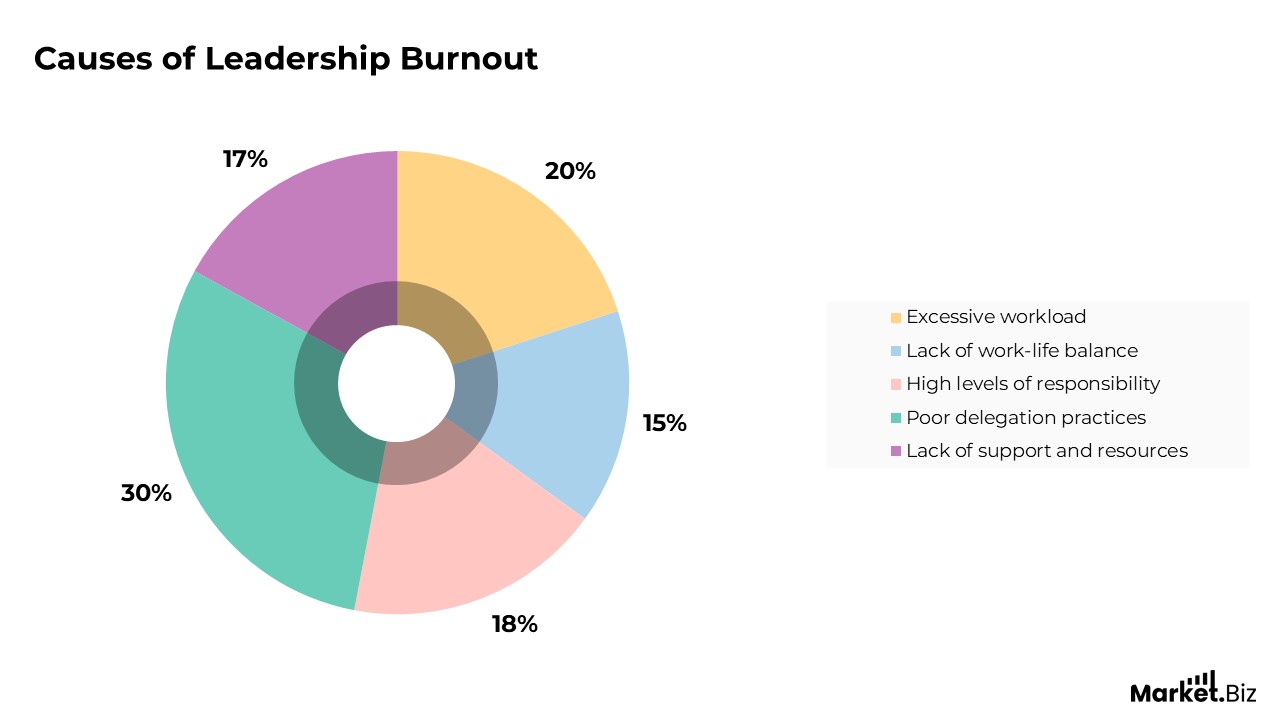
- 20% of leaders report excessive workload as a major cause of burnout, due to long hours and constant decision-making pressures.
- 15% of executives say a lack of work-life balance significantly contributes to their burnout, leaving them emotionally drained.
- High levels of responsibility are cited by 18% of leaders as a key factor in burnout, as they often feel accountable for both team and company outcomes.
- 30% of leaders believe poor delegation practices lead to burnout, as they feel the need to control every aspect of their organization.
- 17% of leaders attribute burnout to a lack of support and resources, leading to feelings of isolation and stress in their role.
Leadership Stress Statistics
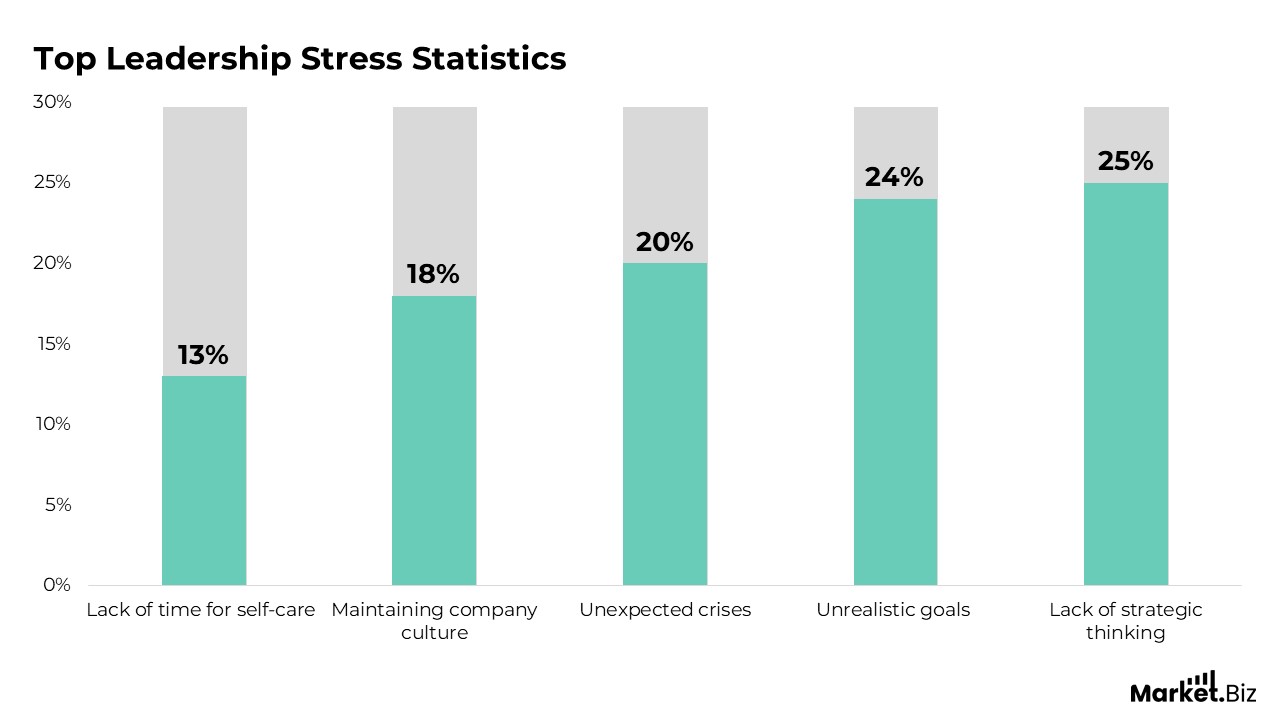
- 13% of leaders report that high job demands and a lack of time for self-care lead to chronic stress in their roles.
- 20% of senior executives experience stress from dealing with unexpected crises and urgent business decisions.
- 60% of leaders say that the constant need to stay ahead of competition contributes significantly to their stress levels.
- 55% of leaders in the healthcare industry report heightened stress due to the emotional and physical demands of the role.
- 49% of executives cite conflict resolution within teams as a significant source of stress in their leadership duties.
- More than 50% of leaders report that managing remote teams during the pandemic increased their stress, leading to higher feelings of isolation.
- 18% of leaders say stress related to maintaining company culture and employee engagement is a constant challenge.
- 25% of top-level managers indicate that their stress is exacerbated by a lack of time for strategic thinking, as they focus on day-to-day operations.
- According to studies, 24% of leaders experience burnout symptoms when faced with unrealistic goals set by the organization.
- 57% of leaders claim that stress is directly related to the difficulty of managing both internal team dynamics and external stakeholder expectations.
Leadership Training Statistics
- 68% of companies say leadership training is a priority, as it directly impacts organizational growth and employee satisfaction.
- 82% of leaders who undergo leadership training report feeling more confident in their decision-making and leadership abilities.
- Over 70% of organizations with formal leadership programs report higher retention rates among top-performing employees.
- 62% of executives agree that leadership training helps them navigate change and uncertainty in their industry.
- 59% of employees state they would be more committed to an organization that offers consistent leadership development opportunities.
- 77% of leaders believe leadership training enhances their ability to mentor and develop future leaders within the organization.
- 64% of organizations report that leadership training is one of the most effective strategies for improving employee engagement.
- 55% of companies allocate more than 10% of their annual training budget to leadership development programs.
- According to studies, 60% of employees working under well-trained leaders show higher levels of job satisfaction and performance.
- 80% of organizations that invest in leadership training see measurable improvements in overall team productivity within six months.
(Source: Flair)
Leadership Development Statistics
- 30% of high-performing organizations invest in leadership development to ensure their leaders can drive success and innovation.
- 72% of organizations state that leadership development is directly linked to improving employee retention and reducing turnover.
- 64% of leaders who receive development training report higher levels of productivity and job satisfaction among their teams.
- 58% of companies with leadership development programs claim to see measurable improvements in their overall business results.
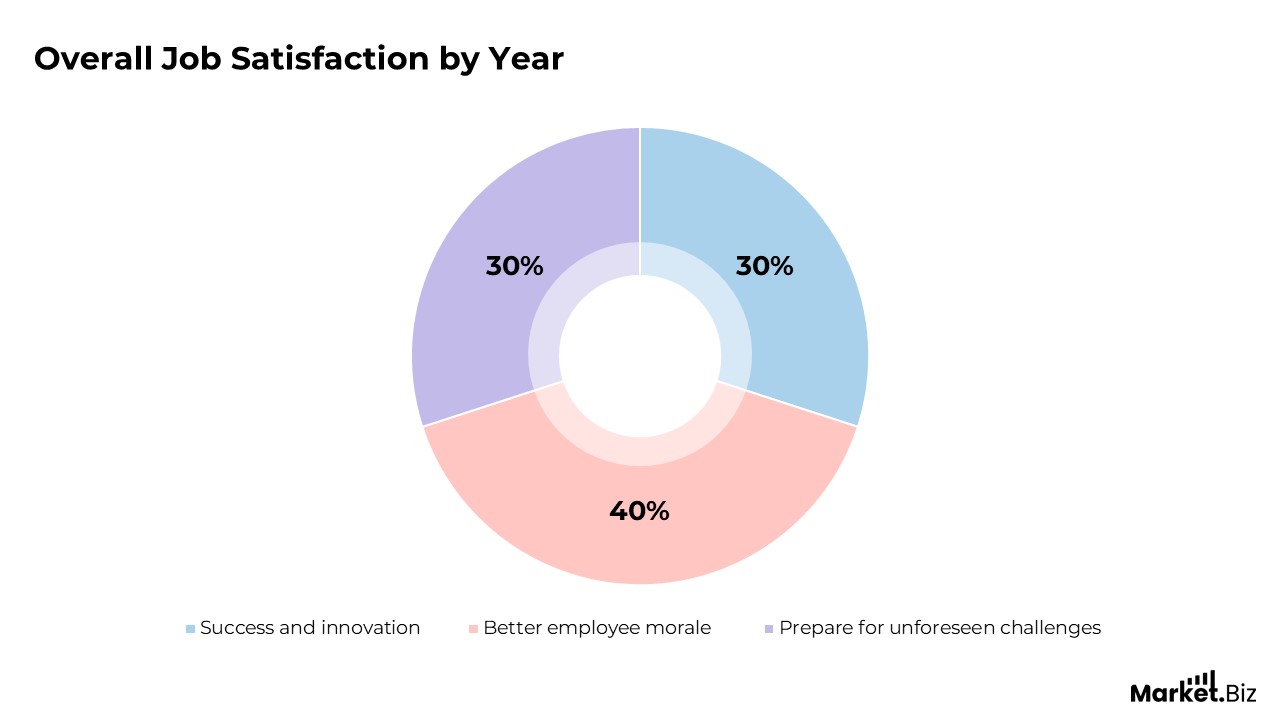
- 30% of top executives believe leadership development helps them prepare for unforeseen challenges and navigate market changes effectively.
- 50% of companies plan to increase their budget for leadership development initiatives in the next 2-3 years to stay competitive.
- 65% of employees say leadership development opportunities are a key factor in their decision to stay with an organization long-term.
- 40% of organizations with structured leadership development programs experience better employee morale and engagement across departments.
Women Leadership Statistics
- 28% of senior leadership roles globally are held by women, reflecting slow but steady progress toward gender parity in leadership.
- Research shows that companies with female leaders are 21% more likely to outperform their counterparts in terms of profitability.
- 35% of women in leadership roles report that they face more challenges compared to their male counterparts in the workplace.
- 45% of women believe that diversity and inclusion programs have positively impacted their career progression in leadership.
- 60% of organizations with women in leadership positions report higher employee satisfaction and engagement.
- 41% of women in leadership roles state that work-life balance is one of the most significant factors in their leadership effectiveness.
- Studies show that organizations with women in executive roles are 30% more likely to see increased innovation and creativity within their teams.
Leadership Impact on Company Culture
- 74% of employees believe that leaders who communicate effectively have a significant positive impact on company culture.
- Companies with strong leadership are 40% more likely to have a workplace culture focused on collaboration and shared goals.
- 66% of employees say leadership’s behaviour and decisions are crucial in establishing trust and transparency within company culture.
- 72% of businesses with strong leadership report a more innovative and adaptive organizational culture.
- 65% of employees feel that a company’s leadership plays a critical role in maintaining a healthy work-life balance within the culture.
- 55% of organizations with transformational leaders report higher employee morale and job satisfaction, leading to a stronger culture.
- Research shows that organizations with leadership emphasizing employee recognition experience 40% higher engagement and productivity.
- 60% of employees say that leadership has the power to influence the work environment, fostering inclusivity and collaboration.
- Leaders in companies that prioritize culture are 50% more likely to see a direct correlation between employee satisfaction and company success.
Leadership Demographics Statistics
By Gender
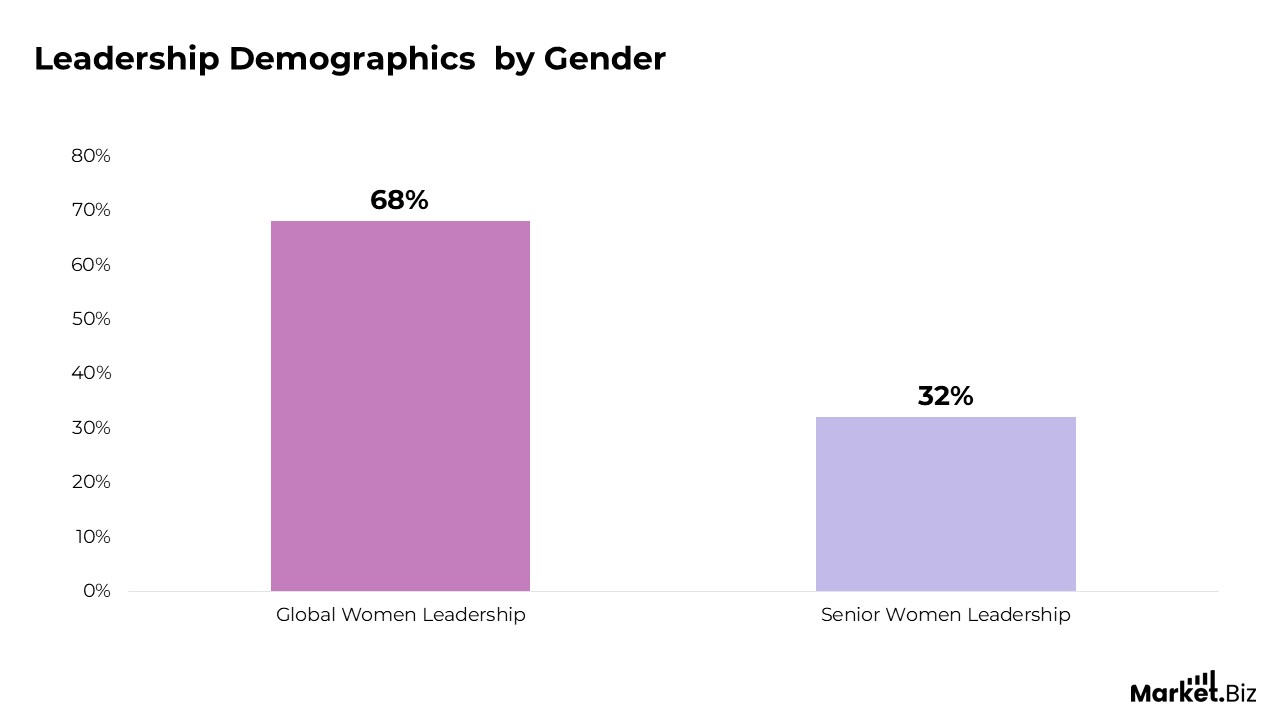
- 68% of leadership positions globally are held by women, with steady progress towards gender equality in executive roles.
- Women in senior leadership roles are 32% more likely to increase company profitability, contributing significantly to growth.
- 40% of companies globally have at least one woman in the executive team, signalling increased female representation at the top.
- 45% of female leaders report facing challenges in career advancement due to gender bias in leadership positions.
- Research shows that women make up 47% of mid-level management but only 22% of C-suite roles in large corporations.
- 53% of women in leadership roles believe mentorship opportunities have been essential to their career advancement.
- 38% of leadership roles in tech are held by women, compared to 29% in other industries.
- 60% of women in leadership positions say work-life balance is a significant factor in their leadership effectiveness.
- 35% of women in leadership positions claim they often have to work harder than their male counterparts to prove their capabilities.
By Age
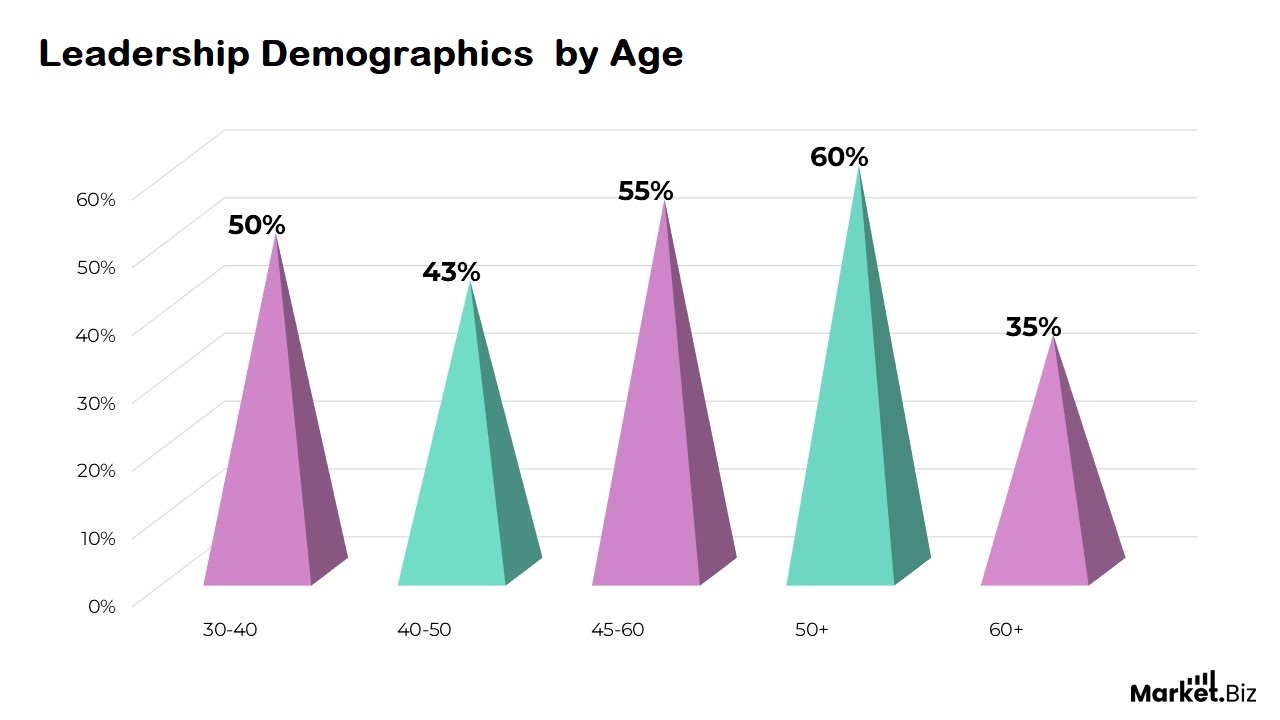
- 43% of leaders in organizations are between the ages of 40 and 50, representing a mature leadership demographic.
- 35% of Fortune 500 CEOs are over the age of 60, highlighting the prevalence of older leadership in top positions.
- 50% of leadership roles in start-ups are occupied by individuals aged 30-40, with younger leaders driving innovation and rapid growth.
- The average age of a CEO in the U.S. is 58 years, showing a trend toward experienced leadership at the highest level.
- 25% of leadership roles in tech companies are held by individuals under the age of 40, reflecting younger leadership trends in the sector.
- Studies show that 60% of leaders over the age of 50 have strong mentoring relationships that influence leadership effectiveness.
- 55% of C-suite executives are aged 45-60, signaling that experience remains a key factor in leadership selection.
- Leadership teams with a balance of older and younger individuals report 30% better performance due to diverse perspectives.
- 47% of new leaders under 40 claim they feel the pressure to perform in a fast-paced environment while navigating generational expectations.
Leadership skill statistics
- Successful leaders say that 78% of the time, strong communication skills are crucial for boosting team performance.
- 85% of employees believe that leadership development programs help leaders make better strategic decisions, enhancing team success.
- Leaders with great problem-solving skills report that 65% of the time, this leads to higher team satisfaction and engagement.
- Companies value emotional intelligence in leaders, with 72% saying it plays a key role in resolving conflicts within teams.
- Managers say that effective delegation is essential for improving productivity and preventing burnout, with 63% agreeing on its importance.
- Top leaders show strong adaptability, with 70% of them demonstrating this skill to navigate change and drive success.
- Employees say that leaders with a clear vision and goal-setting skills motivate and clarify team objectives, with 80% of them agreeing on its impact.
- Executives believe making confident decisions under pressure is one of the most important leadership skills, with 55% citing its significance.
- Leaders in fast-paced industries emphasize continuous learning, with 50% saying it’s necessary to stay ahead of the curve.
- Empathetic leaders create more inclusive and collaborative workplaces, with 69% of employees acknowledging this benefit.
- Developing a growth mind-set is key to overcoming obstacles and guiding teams, with 60% of leaders supporting this approach.
Challenges in Leadership Statistics
- 15% of leaders say managing diverse teams is one of their biggest challenges, requiring a balance of different perspectives and skill sets.
- 17% of executives report that a lack of clear communication within teams leads to misunderstandings and inefficiency in their leadership.
- Over 20% of leaders face difficulty adapting to rapid technological changes, which can hinder their decision-making processes.
- 20% of managers struggle with balancing short-term goals and long-term strategy, a challenge that often leads to burnout and missed opportunities.
- According to research, 28% of leaders find it hard to foster employee engagement, with motivation being one of the toughest leadership tasks.
- 52% of senior leaders identify emotional intelligence as one of the hardest skills to develop, despite its importance for team management.
- 63% of leaders cite handling organizational change as a significant challenge, particularly when it affects employee morale and productivity.
- Studies show that 70% of leaders report that maintaining a work-life balance while fulfilling leadership responsibilities is one of their most persistent challenges.
Leadership Challenges for Business Owners
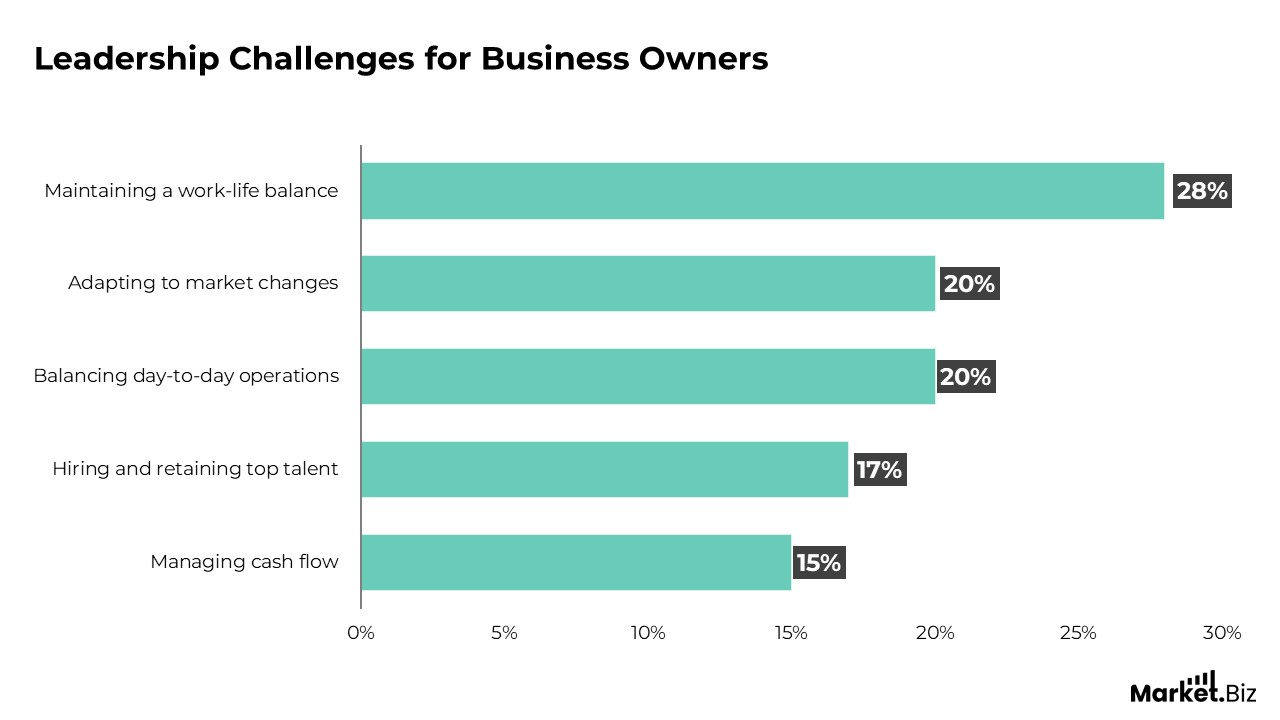
- 67% of business owners report that managing cash flow is their biggest leadership challenge, impacting growth and long-term stability.
- 55% of small business owners say hiring and retaining top talent is a constant struggle, making leadership skills in team management crucial.
- 60% of entrepreneurs find balancing day-to-day operations with strategic planning a significant leadership challenge, often leading to burnout.
- 50% of business owners cite difficulty in adapting to market changes as a major leadership obstacle, particularly in highly competitive industries.
- 63% of business owners admit that maintaining a work-life balance while managing a growing business is one of their most persistent leadership challenges.
Essential Qualities of Effective Leadership
- Strong communication skills are crucial for effective leadership, with 87% of employees agreeing that they foster transparency and trust within teams.
- Leaders who demonstrate empathy report higher team morale and engagement, with 75% of them creating a more positive work environment.
- 72% of successful leaders prioritize emotional intelligence, which improves their ability to manage conflicts and build strong relationships.
- Decision-making skills are considered a top leadership quality, with 80% of organizations agreeing that they directly impact company performance and growth.
- Leaders who have strong vision-setting capabilities inspire higher levels of innovation and alignment, with 65% of them contributing to team success.
- 70% of high-performing leaders believe that adaptability is essential, allowing them to respond effectively to change and challenges.
- Leaders who show integrity and ethical behaviour enhance trust, with 68% of employees reporting greater organizational loyalty as a result.
- Resilience is a key quality for effective leadership, with 60% of leaders agreeing that it helps them overcome setbacks and maintain focus on long-term goals.
- Leaders with mentoring skills contribute to developing future leaders, with 63% of them improving overall team growth and retention.
- 58% of leaders emphasize the importance of collaboration, reporting better team performance and problem-solving abilities when working together.
Conclusion
Leadership plays a vital role in shaping organizational success, with 77% of companies identifying it as a top priority. Strong leadership directly contributes to increased employee engagement (65%) and higher profitability (13%), making it a key driver of business growth. As organizations recognize the value of effective leadership, investments in leadership development are projected to exceed $366 billion by 2025.
However, leadership burnout remains a challenge, affecting 42% of leaders, emphasizing the need for better work-life balance and stress management. Furthermore, diversity in leadership, with 28% of leadership roles held by women, continues to evolve, showcasing the positive impact on company culture and performance. Overall, the statistics highlight the critical need for skilled, adaptable leaders in today’s fast-paced business environment.
FAQ’s
Leadership training is important because it gives leaders the tools they need to successfully lead their teams, coordinate organizational objectives, and promote success in general. Training programs that are effective increase participants’ leadership behaviours, learning capacity, and job performance, all of which contribute to improved organizational performance.
Effective leadership qualities can significantly increase a manager’s effectiveness, but not all managers must possess these qualities. Managers are in charge of organizing, planning, and coordinating work, but leaders do more than just these things. Leading entails encouraging, motivating, and directing group members toward common objectives. Leadership abilities may come naturally to some managers, while others may need to acquire them in order to lead more successfully.
Significant improvements in learning (25% increase), job performance (20%), and leadership behaviours (28% increase) can be seen by participants in leadership training programs. These improvements boost their capacity to lead teams, make wise choices, and produce favourable results inside their companies.
Employee turnover is frequently high in organizations with subpar leadership. Employees may depart in search of a better workplace where they are challenged more positively and feel valued. The performance of the team as a whole may suffer from poor leadership.