









Introduction
Employee Theft Statistics: Employee theft is a major issue for businesses, causing significant financial losses each year. It’s responsible for around 43% of inventory loss in the retail industry, costing businesses billions of dollars annually. Research by the U.S. Chamber of Commerce shows that employee theft leads to about $50 billion in losses each year.
Common forms of employee theft include stealing cash, merchandise, and even sensitive company information. Despite efforts to prevent it, this problem continues to affect businesses of all sizes. Understanding these numbers is key for companies looking to reduce theft and strengthen their security measures.
Editor’s Choice
- Employee theft accounts for 43% of retail inventory loss, costing businesses billions annually.
- Around 75% of employees steal from their employers at least once in their careers.
- Employee theft costs U.S. businesses approximately $50 billion each year.
- The average cost of each employee theft incident is $1,500.
- 60% of small businesses report experiencing employee theft in the past year.
- Employee theft in retail accounts for 50% of all theft, primarily involving merchandise pilfering.
- 70% of employee theft incidents go undetected, making it a hidden issue for many businesses.
- 35% of internal theft is committed by employees in managerial roles, despite higher trust levels.
- 43% of employee theft cases stem from financial hardship, with workers stealing as a coping mechanism.
- Implementing surveillance systems can reduce theft rates by up to 60%, offering effective deterrence.
General Employee Theft Statistics
- Employee theft is responsible for about 43% of all inventory loss in retail, according to the National Association for Shoplifting Prevention.
- Around 75% of employees steal from their employers at least once, based on various studies.
- 30% of businesses fail to recover stolen assets, highlighting the impact of employee theft.
- The average employee theft incident costs a company $1,500.
- 42% of employee theft involves employees taking merchandise, a common crime in retail.
- In a survey, 60% of small businesses reported experiencing employee theft in the past year.
- Employee theft in the U.S. costs businesses about $50 billion annually.
- 25% of all employees steal from the workplace at least once during their career.
- 70% of employee theft incidents go undetected, making it a hidden issue for many businesses.
- Employees in managerial roles are responsible for 35% of all theft incidents, despite their higher level of trust.
- Over 50% of employee theft cases involve items that are less than $50 in value.
- 90% of employers report experiencing at least one form of employee theft.
- The average age of employees committing theft is 30 to 40 years, often with years of experience in the company.
- One-third of thefts are committed by employees with a history of theft-related behavior.
- 50% of employee theft occurs during holidays, when businesses are busy and less focused on security.
- Employee theft in the hospitality industry accounts for 33% of overall inventory loss.
- Over 70% of employees admit to stealing from employers in the past, according to surveys.
- 10% of employees are responsible for 80% of all theft in the workplace, showing a high concentration of incidents.
Key Employee Theft Statistics
Internal theft statistics
- 43% of all retail inventory loss is attributed to employee theft, as reported by the National Association for Shoplifting Prevention.
- 25% of employees admit to stealing from their employers, even though many thefts go unreported.
- Employees in managerial positions are responsible for 35% of internal theft, despite their higher level of trust.
- The average loss per employee theft incident is approximately $1,500.
- 60% of small businesses report experiencing employee theft at least once, with losses often exceeding expectations.
- 40% of employee theft is motivated by financial difficulties, leading employees to steal in desperation.
- 70% of employee thefts occur during busy times, like holidays, when businesses are less vigilant.
- 50% of all employee theft occurs in retail settings, particularly through merchandise pilfering.
External theft statistics
- 52% of inventory loss in retail businesses is caused by shoplifting, the most common form of external theft.
- External theft contributes to over $13 billion in losses annually, with shoplifting being the most significant factor.
- 30% of employees are involved in external theft, either directly or indirectly assisting shoplifters.
- 45% of retailers report that external theft has increased by 10-20% over the past few years.
- 70% of external theft incidents involve organized retail crime, where thieves act in groups.
- 50% of external theft involves the stealing of high-ticket items, such as electronics and designer goods.
- External theft in the U.S. causes businesses an estimated $15 billion annually in losses.
- Over 70% of retail companies have increased their focus on security measures due to the rising threat of external theft.
Types of Employee Theft Statistics
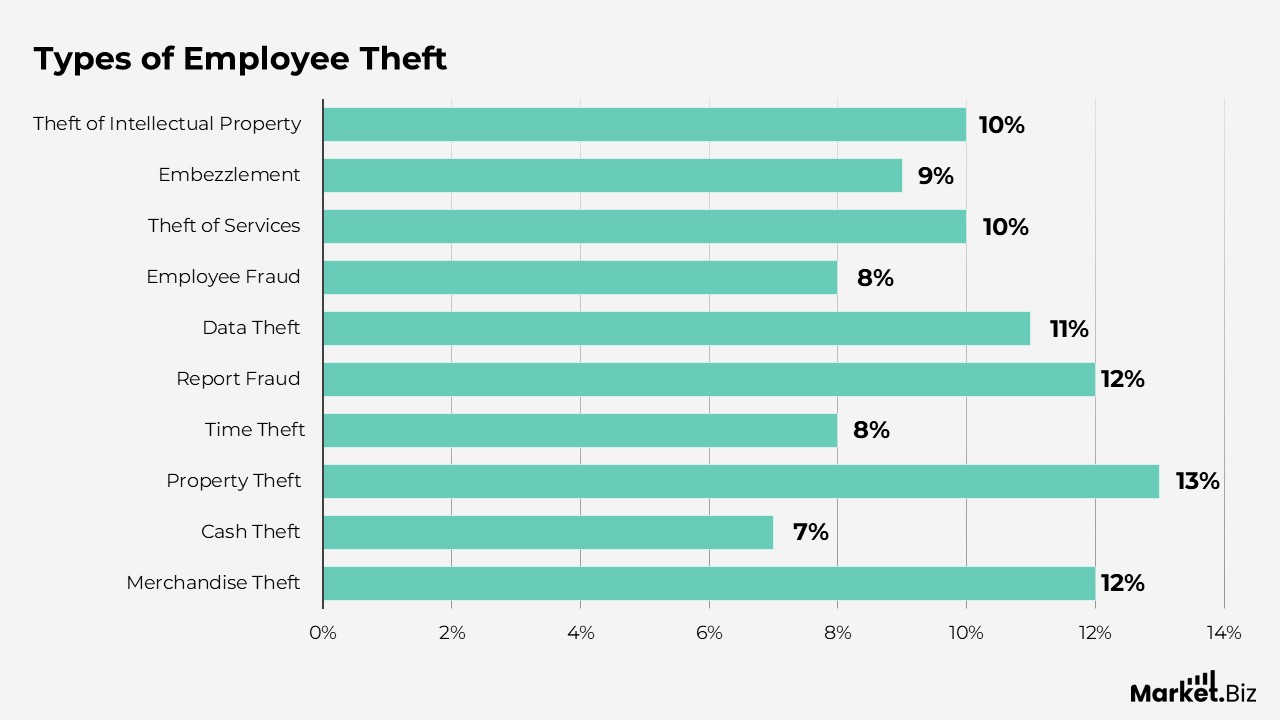
- Merchandise Theft accounts for 12% of employee theft, with employees taking goods for personal use or resale.
- Cash Theft represents 7% of employee theft incidents, often involving direct manipulation of registers or accounts.
- Intellectual Property Theft has grown significantly, affecting about 13% of companies, particularly in tech and creative industries.
- Time Theft, where employees manipulate work hours, accounts for 8% of internal theft, with workers fudging timecards or taking extended breaks.
- Expense Report Fraud is responsible for 12% of employee theft, where workers submit falsified expenses for reimbursement.
- Data Theft has increased by 11% in the last five years, with employees stealing confidential or sensitive business information.
- Employee Fraud contributes to 8% of workplace thefts, often involving falsifying financial records for personal gain.
- Theft of Services makes up 10% of employee theft, including unauthorized use of company vehicles or equipment.
- Embezzlement is responsible for 9% of employee theft, where employees secretly divert company funds for personal use.
- Theft of Intellectual Property and Trade Secrets is rising, with 10% of employees admitting to stealing proprietary business information for personal or competitive advantage.
Employee Time Theft Statistics
- Time theft costs U.S. employers an estimated $400 billion annually, with employees misappropriating around 4.5 hours per week on average.
- 29% of employees admit to engaging in time theft activities, such as taking extended breaks or working on personal tasks during work hours.
- Remote work has led to a 20% increase in time theft incidents, with employees citing distractions at home as a primary cause.
- 19% of employees report using company time for social media, accounting for 1-2 hours of lost productivity per week.
- Unauthorized overtime is another form of time theft, contributing to over $100 billion in lost revenue annually for companies.
- Younger workers (ages 18-34) are 50% more likely to engage in time theft compared to employees aged 45 and above.
- Time theft due to technology misuse, such as online shopping and gaming, accounts for 24% of all time theft incidents.
- Businesses that implement time-tracking software have seen a 15% reduction in time theft, as employees are more aware of their time usage.
Statistics By Employee Data Theft
- Employee data theft is responsible for 60% of all data breaches, with insiders being the primary source of sensitive information leaks.
- Over 60% of organizations report that employees intentionally steal data, including intellectual property, for personal gain or to join competitors.
- In 2023, the average cost of a data breach caused by insider threats was approximately $10.5 million, significantly higher than breaches caused by external threats.
- 33% of employees admit to taking company data with them when leaving a job, with most transferring files to personal devices or cloud accounts.
- The financial services industry is particularly vulnerable, with 42% of insider data theft cases reported within this sector.
- 72% of data theft incidents occur within the first 30 days of an employee’s departure, highlighting the importance of monitoring exits.
- Employees aged 30-40 are 35% more likely to commit data theft compared to older employees, often due to career transition concerns.
- 78% of organizations report that they lack adequate policies or tools to prevent or detect insider data theft effectively.
Employee Theft Statistics by Country
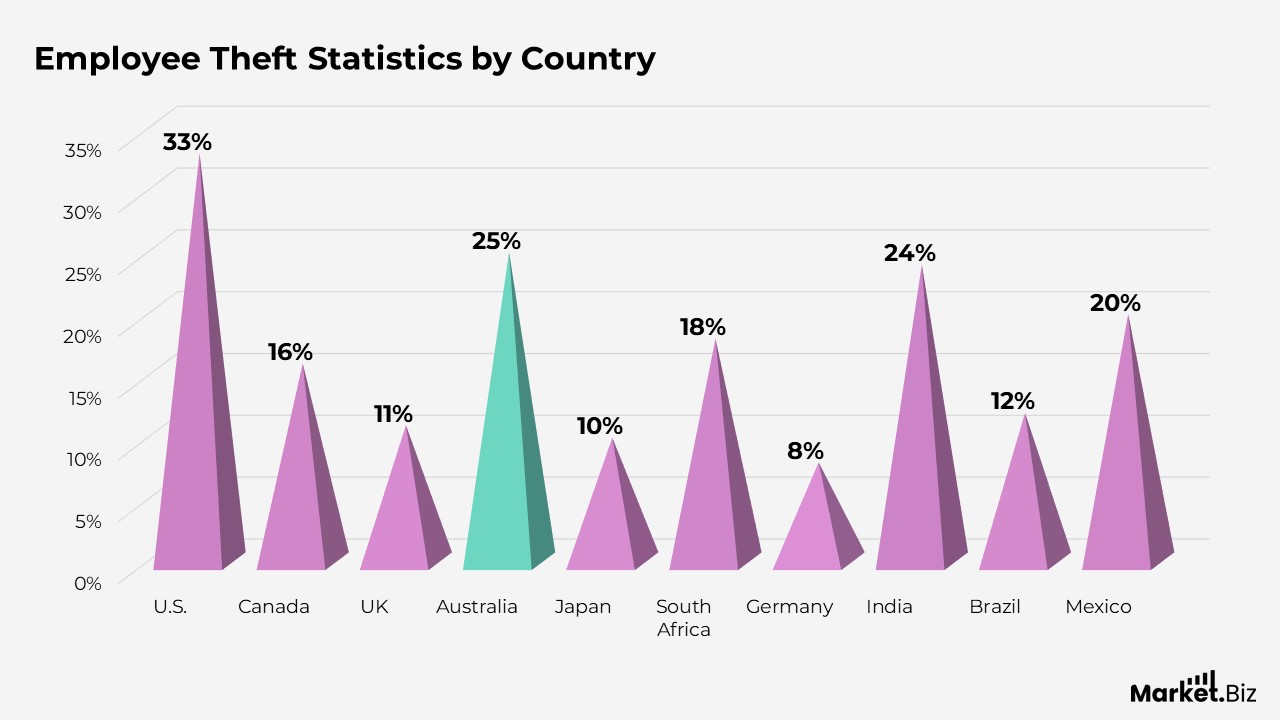
- In the U.S., employee theft accounts for 33% of all retail losses, amounting to over $50 billion annually, according to the National Association for Shoplifting Prevention.
- In Canada, approximately 16% of employees admit to stealing from their employers, with inventory theft and payroll fraud being the most common offenses.
- The UK experiences losses of about £190 million (11%) per year due to employee theft, with the food and beverage sectors being particularly vulnerable.
- Australia sees employee theft contributing to $4.5 billion in annual losses, with 25% of theft cases involving theft of company goods or resources.
- In Japan, employee theft is less prevalent, with estimates showing that 10% of companies report incidents of theft, mostly from small to mid-sized businesses.
- South Africa reports a higher rate, with nearly 18% of employees admitting to stealing from their employers, a factor that impacts both local businesses and global companies operating there.
- In Germany, employee theft represents 8% of total business losses, with most theft occurring in the form of misappropriated company assets and equipment.
- India sees employee theft of office supplies and company data costing businesses an estimated $1.5 billion (24%) annually, with industries like IT being most affected.
- In Brazil, nearly 12% of employees admit to stealing from their employers, contributing to nearly 10% of total annual business losses in certain sectors.
- In Mexico, employee theft is responsible for approximately 7% of total losses in the retail sector, with a 20% increase in theft rates seen in the past 5 years.
Employee Theft Statistics by Top Industries
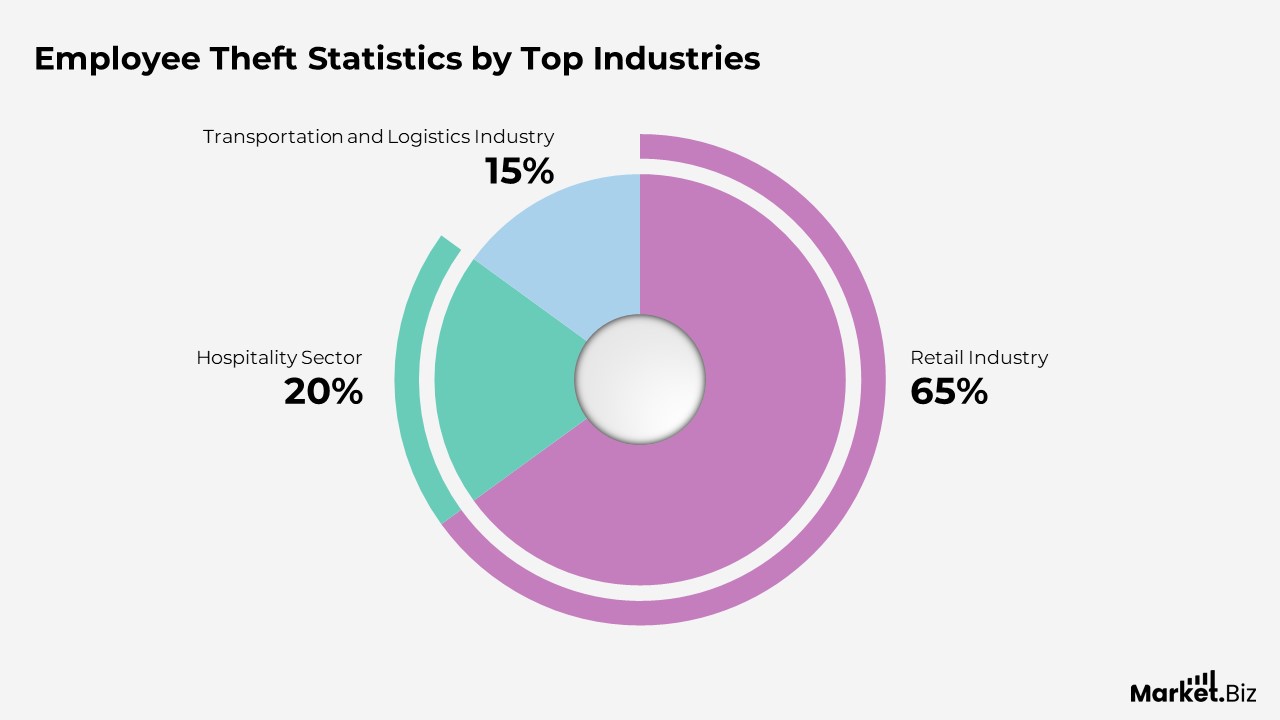
- The retail industry suffers the most from employee theft, with an estimated $15 billion lost annually, making up 65% of total retail theft losses.
- The hospitality sector reports that employee theft accounts for 20% of total annual revenue, with food and beverage fraud being the most common form of theft.
- The construction industry faces $1 billion in annual losses due to employee theft, with stolen tools and materials being the primary target for workers.
- In the manufacturing industry, employee theft of raw materials and equipment contributes to an estimated $10 billion in losses each year.
- Financial services and banking experience losses of up to $1.4 billion annually due to internal theft. Primarily in the form of embezzlement or fraudulent transactions.
- In healthcare, employee theft includes theft of prescription drugs and patient data, with losses amounting to $2 billion per year in the U.S. alone.
- The IT industry reports that data theft by employees is a growing concern, contributing to $6 billion in losses annually, primarily through intellectual property theft.
- In the transportation and logistics industry, employee theft is responsible for 15% of total supply chain losses. With drivers and warehouse employees often involved.
- The agricultural sector suffers significant losses due to employee theft of products and equipment, contributing to $2 billion annually in losses worldwide.
- The energy sector experiences employee theft of fuel and equipment, costing companies an estimated $500 million each year, particularly in remote or low-supervision areas.
Costs of Employee Theft Statistics
- The average amount stolen by employees annually is estimated at $1,000 per employee.
- Small businesses bear a disproportionate share of the cost, with thefts estimated to account for 30% of their annual losses.
- The retail sector alone suffers from an annual $15 billion in theft, with employees being responsible for nearly 35% of this amount.
- Employee theft accounts for 43% of total retail theft, significantly outweighing external theft by shoplifters.
- Employee theft costs U.S. businesses approximately $50 billion annually, according to the National Association for Shoplifting Prevention (NASP).
- Around 75% of employees steal from their employer at least once, with 30% engaging in frequent theft.
- Employee theft can reduce profit margins by up to 5% annually for affected businesses.
- Employees often steal cash, inventory, and supplies, with some incidents involving falsifying records or padding timesheets.
- Businesses invest over $2 billion annually in loss prevention strategies, such as surveillance, training, and employee monitoring systems.
The Red Flag of Theft Perpetrators
- Employees who exhibit sudden financial difficulties are more likely to engage in theft. With 45% of theft perpetrators citing financial stress as a trigger.
- Excessive borrowing of money from colleagues or requesting frequent pay cheque advances can signal potential theft behaviour in the workplace.
- Individuals with unexplained behaviour changes, such as increased secrecy or defensiveness, are often associated with higher theft risk.
- Unusual job performance, such as a sudden drop in productivity or absenteeism, can be a red flag, with 33% of employee theft cases linked to work disengagement.
- Lack of accountability is a strong indicator, with employees who resist or avoid taking responsibility often being involved in theft, especially in roles with less oversight.
- Privileged access to valuable assets and the ability to bypass security protocols or checks increase the likelihood of theft. With 60% of thefts happening by employees in managerial or supervisory roles.
- Employees who are overly protective of their workspace or show reluctance to let others see their work areas may be hiding stolen goods or evidence of misconduct.
- Frequent conflicts with other employees, especially around compensation or job responsibilities, can often precede theft. With 38% of thieves reported to have had interpersonal issues in the workplace.
Reason for Employee Theft Statistics
- 30% of employee theft cases stem from financial hardship, with workers turning to theft as a coping mechanism.
- Employees who feel they’re not being adequately monitored are more likely to steal. A significant percentage of thefts occur in businesses where supervision is minimal.
- 65% of thefts are opportunistic, with employees seizing chances when they believe their actions won’t be detected.
- Workers dissatisfied with their jobs are 60% more likely to commit theft, as they feel less loyalty to the company.
- 27% of employees believe they are underpaid and justify stealing company property as compensation for their work.
- In 50% of cases, employees believe the risk of getting caught is low, often because businesses fail to enforce strict anti-theft policies.
- In industries like retail, 48% of thefts involve items easily accessible, with employees using their positions to take inventory items for personal gain.
- Employees in a “cutthroat” corporate culture are 35% more likely to engage in theft, believing it’s a form of survival.
- Around 20% of employee theft is linked to personal issues, like substance abuse or gambling, where individuals use company resources to support their habits.
Employee Theft Prevention Methods
- Implementing regular audits is highly effective, with businesses reporting a 10% decrease in theft when internal audits are conducted frequently.
- Clear company policies and procedures related to theft and consequences reduce theft incidents by 14%, as employees are more aware of the risks.
- Surveillance systems, including CCTV cameras, deter theft, with studies showing that visible cameras can lower theft rates by up to 12%.
- Employee training programs that educate on ethics and theft prevention have been found to reduce incidents by 13%, fostering a culture of accountability.
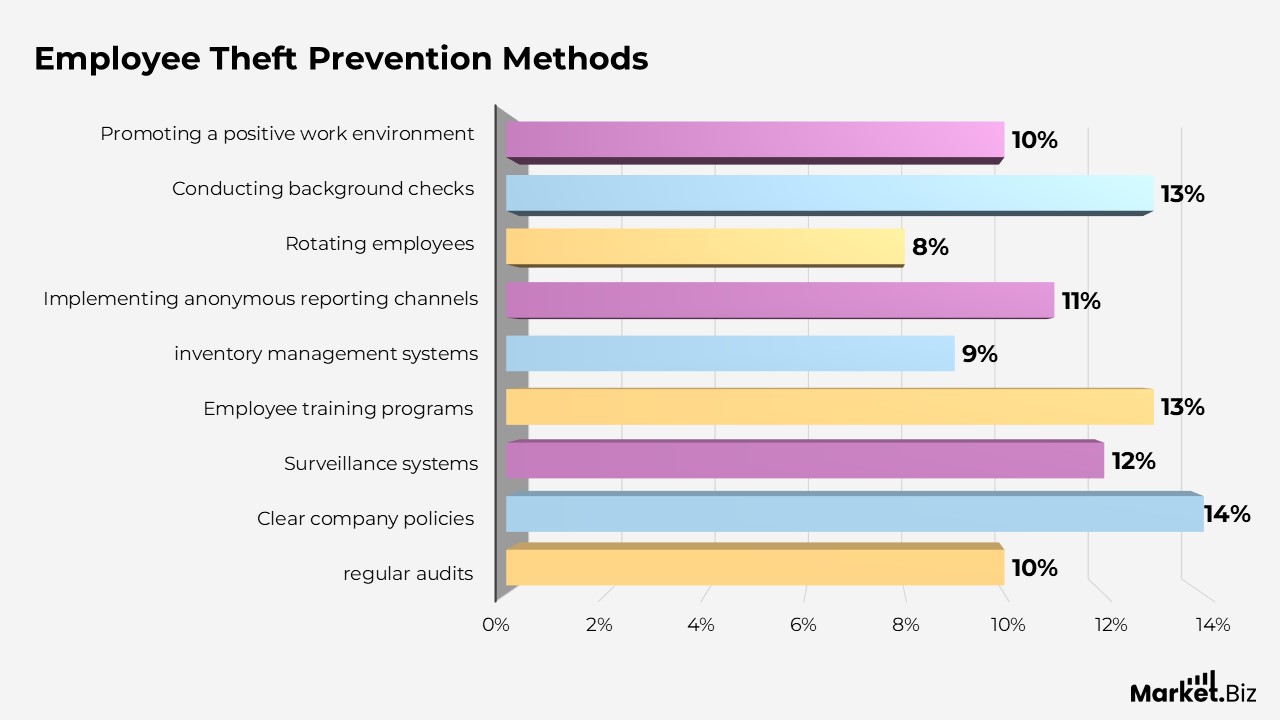
- Proper inventory management systems, such as barcode scanning, have proven to cut inventory theft by 9%, ensuring more accurate stock tracking.
- Implementing anonymous reporting channels, such as hotlines, has led to a 11% increase in theft tip-offs, helping identify theft early.
- Rotating employees in sensitive roles minimizes opportunities for theft, with companies that rotate employees reducing theft by 8%.
- Conducting background checks on potential hires has been shown to reduce employee theft by 13%, as it helps identify risky candidates.
- Promoting a positive work environment where employees feel valued and fairly compensated can reduce theft-related behaviour by up to 10%.
Employee Theft: Recent Trends
- Employee theft is on the rise, with recent reports indicating that 38% of businesses experienced some form of employee theft in the past year, up from 30% in 2023.
- Online retail has seen an uptick in internal theft, with 55% of inventory shrinkage being attributed to employees, driven by remote work and increased e-commerce activity.
- A shift toward digital assets has led to a 22% increase in data theft, with employees more frequently accessing and selling sensitive company information.
- The pandemic has impacted employee theft trends, with 45% of companies reporting higher theft rates due to remote work and decreased supervision in 2024.
- In retail, internal theft now accounts for 34% of total losses, a rise from 27% pre-pandemic, largely due to changes in consumer behaviour and staffing shortages.
- Younger workers are more likely to engage in theft, with 25% of employees aged 18-34 admitting to stealing, a 10% higher rate than older age groups, reflecting changing attitudes in the workplace.
Conclusion
Employee Theft Statistics: Employee theft continues to be a major issue for businesses, costing U.S. companies around $50 billion each year. Retailers are hit hardest, with employee theft responsible for 43% of inventory loss. Shockingly, 75% of employees admit to stealing at least once, and many thefts go undetected.
Factors like financial stress, lack of supervision, and job dissatisfaction are key contributors to this problem. To tackle theft, businesses have seen success with strategies like regular audits, surveillance systems, and employee training, which can reduce theft by up to 60%. Businesses must take proactive steps to protect their assets and reduce theft-related losses.
FAQ’s
Cash theft, which makes up 11% of asset misappropriation cases, is one of the most prevalent types of employee theft. This highlights a major issue for businesses because money is frequently easily obtained and stolen.
Of all theft-related business losses, 42% are caused by employee theft. In order to reduce these risks, this percentage emphasizes how important it is for businesses to spend money on efficient security measures and staff monitoring.
Maintaining composure and professionalism is crucial when confronting an employee about theft. Don’t accuse others; instead, clearly present the evidence. Let the employee present their case, but keep in mind that you must adhere to corporate guidelines and make sure the procedure is conducted in a tactful and discrete manner.
External theft. About 30% of all retail slowdown is caused by both internal and external theft, although the perpetrators of these crimes vary greatly. Internal theft happens when staff members or insiders in a retail establishment take goods, money, or private data for their benefit.