









Introduction
Remote Employee Monitoring Statistics: Working remotely? You got it! It’s a thing. Modern companies that have implemented tools to monitor their employees have grown to about 60%. This number rose when everybody was basically forced to WFH during the pandemic. Now, 74% of U.S. companies say that they have a remote work module. Apparently, this is not just a passing trend.
I know from experience that working under the watchful eye of a monitoring tool is not exactly an easy thing to do. I would give anything (but not a paycheck) to simply finish a task without worrying that somebody is peering into my every virtual workspace move. The upsurge of these developments has led to the following debate: Is it even POSSIBLE to get work done if your employer is using software to snoop on you? Let’s find out.
Editor’s Choice
- 60% of global companies now use monitoring tools for remote work, a trend amplified by the shift to hybrid models.
- 74% of U.S. businesses have adopted remote work setups, fuelling demand for advanced employee monitoring systems.
- Over 66% of remote workers are actively tracked during work hours, often through keystrokes, apps, and time tracking tools.
- 35% of employees report increased stress due to constant monitoring, raising questions about workplace mental health.
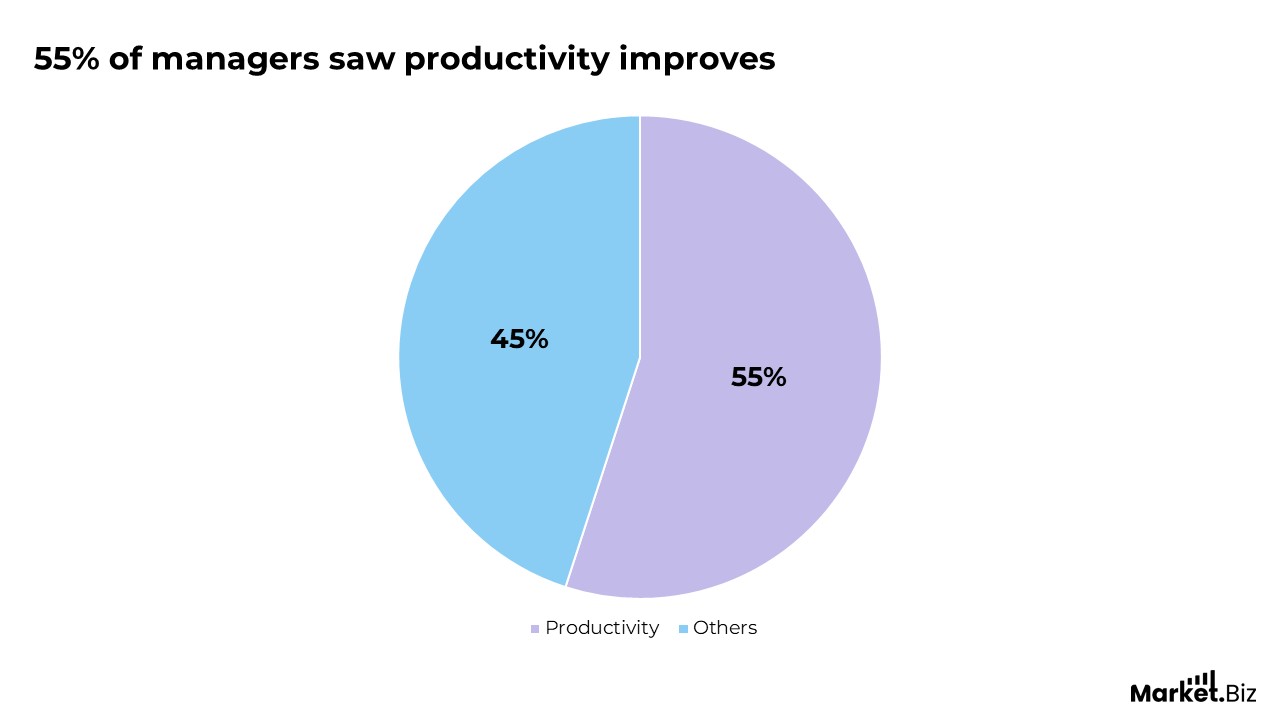
- 55% of managers say monitoring tools improve productivity, especially in managing distributed teams.
- 40% of employees are unclear about how their monitoring data is used, sparking privacy concerns across industries.
- Monitoring tools have expanded by 45% since 2020, now essential in 68% of companies for managing remote teams.
- AI-based monitoring, already used by 15% of businesses, is poised to drive the future of behaviour tracking and performance insights.
- Keystroke logging (40%), screen tracking (50%), and internet monitoring (72%) are among the most popular surveillance methods.
- 60% of finance companies and 74% of tech firms lead in monitoring adoption to enforce compliance and secure data.
- Monitoring tool usage is highest among mid-level professionals (59%) and younger employees (62%) who tend to be more accepting.
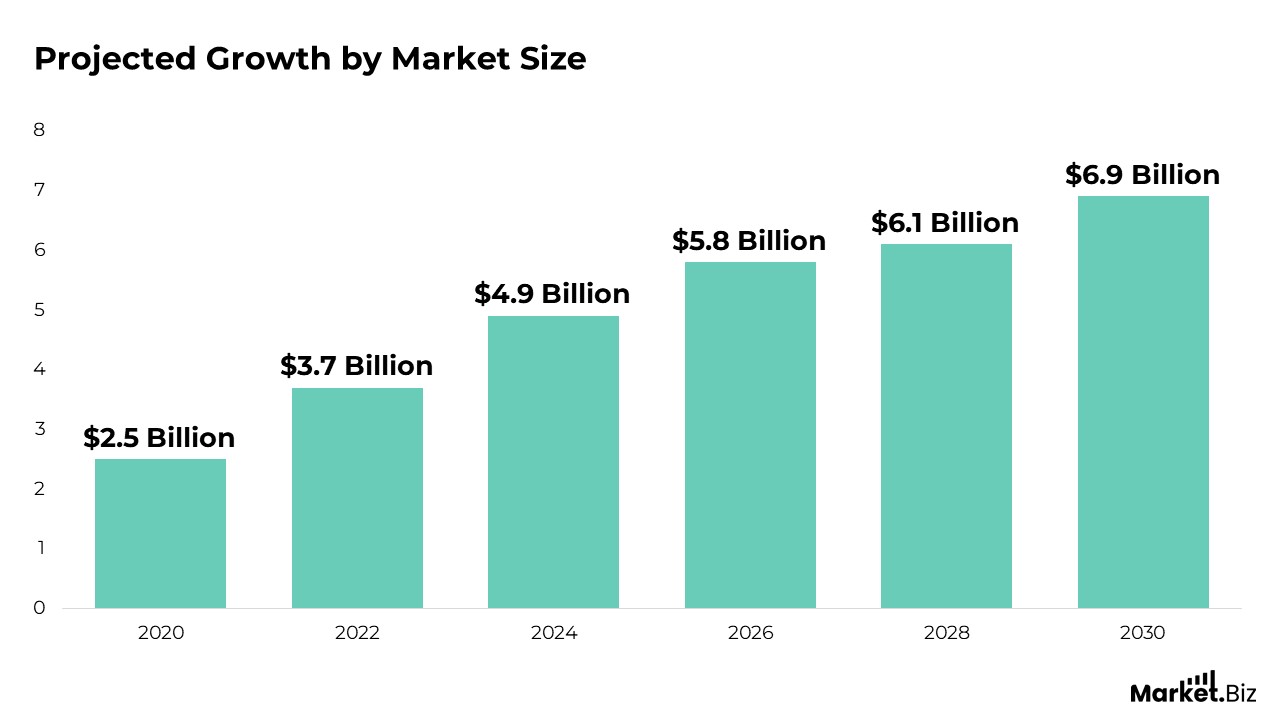
- The market is forecasted to hit $6.8 billion by 2027, with monitoring systems becoming deeply integrated into collaboration platforms.
- Monitoring discomfort is high, with 30% of employees reporting trust issues and 22% feeling overly controlled.
- Monitoring is not just for productivity—42% of companies use it to safeguard against cybersecurity threats.
- The future of monitoring will shift toward transparency, opt-in systems, and regulation-compliant solutions for global teams.
General Statistics
- Globally, 60% of companies use advanced monitoring tools to monitor their remote employees.
- The rise of these monitoring tools can be seen mainly in the US, where 74% businesses are adopting remote work models.
- Around 66% of remote employees are monitored by this tracking software during their work hours.
- 85% of companies monitor internet usage so that remote employees can stay productive.
- 74% of companies monitor keystrokes and typing to track employee productivity.
- Around 48% of employees believe monitoring is needed to maintain the workflow.
- 30% of employees have privacy concerns and report discomfort due to constant monitoring.
- Constant monitoring led to higher stress levels in 35% of remote employees.
- 50% of employees reported having limited autonomy due to their workplace monitoring.
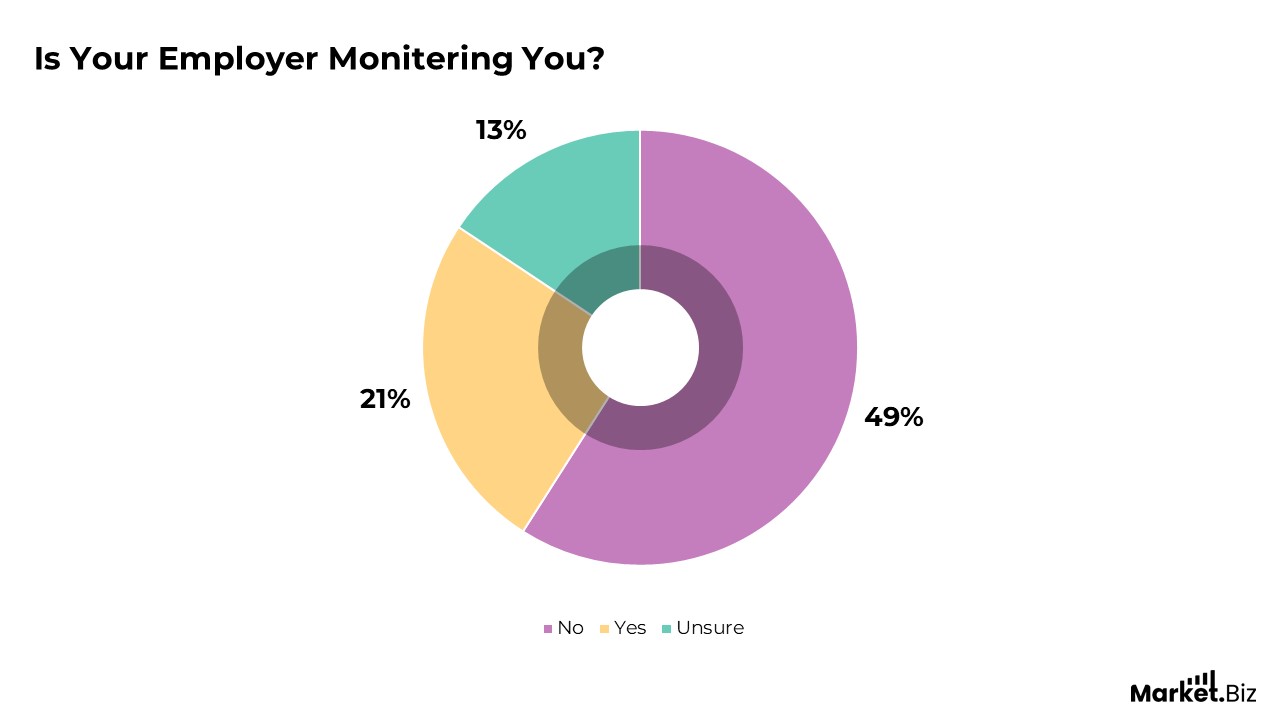
- An estimated 70% of remote employees know that their employer uses monitoring tools.
- According to 40% of remote employees, the policies on monitoring are clear and transparent.
- 55% of managers find that monitoring remote employees helps them increase their overall workplace productivity.
- 52% of companies use monitoring software to meet deadlines and for a better workflow system.
- 45% of businesses that used monitoring software have cashed in on significant cuts in employee downtime.
- 36% of employees use monitoring tools to stay focused and on track for the workday.
- 42% use the monitoring tools to detect and prevent possible security breaches in a remote environment.
- 22% of remote workers feel controlled with constant monitoring.
(Source: Zippia, wp-content)
Rise of Employee Monitoring
- Since the last monitoring of employees has come into this new field that is fast emerging, almost 60% of businesses around the world deploy tracking software in their remote conditions.
- Remote worker monitoring has increased by almost 45% from the year 2020 onward, giving organizations far greater visibility of their distributed teams’ work processes.
- According to the report, 74% of businesses intend to keep their hybrid or remote workforce as a result of the pandemic, thus raising the demand for such instruments.
- Recent statistics from surveys show that 77% of remote employees are aware of the fact that their employer is monitoring such activities.
- In addition, 60% of IT decision-makers are increasing their use of monitoring tools in their organizations as a result of the transition to a remote workforce.
- The U.S. alone declared that out of these 85%, monitoring is said to have been done regarding what employees do on computer applications and websites, as well as emails.
Moreover
- The monitoring software enhances performance and productivity such that 55% of organizations show improvement in productivity after its use.
- Keystroke tracking seems to be initiated by nearly 40% of the companies as a highly disputed method of observation, raising issues regarding privacy.
- 67% of employees would be uncomfortable with increased monitoring of employees because of privacy and trust issues.
- The market for employee monitoring software is expected to record 19% CAGR from 2021 to 2026.
- Half the companies track a component of employees’ screen activities according to time not idly spent and time actively spent working.
- Employee monitoring is not merely “productivity”; 42% of companies will also track the fact that an employee is doing something in the name of protecting data.
- About 30% of businesses will go further to monitor an employee’s internal comms via chat, email, or telephone for security and efficiency reasons.
- In 2023, 68% of managers admitted that remote management of personnel is highly dependent on tools that monitor employee activity.
- Currently, 52% of more than 500-employee organizations use employee monitoring software, with real-time performance tracking in remote access.
(Source: Apploye)
Popular Monitoring Methods
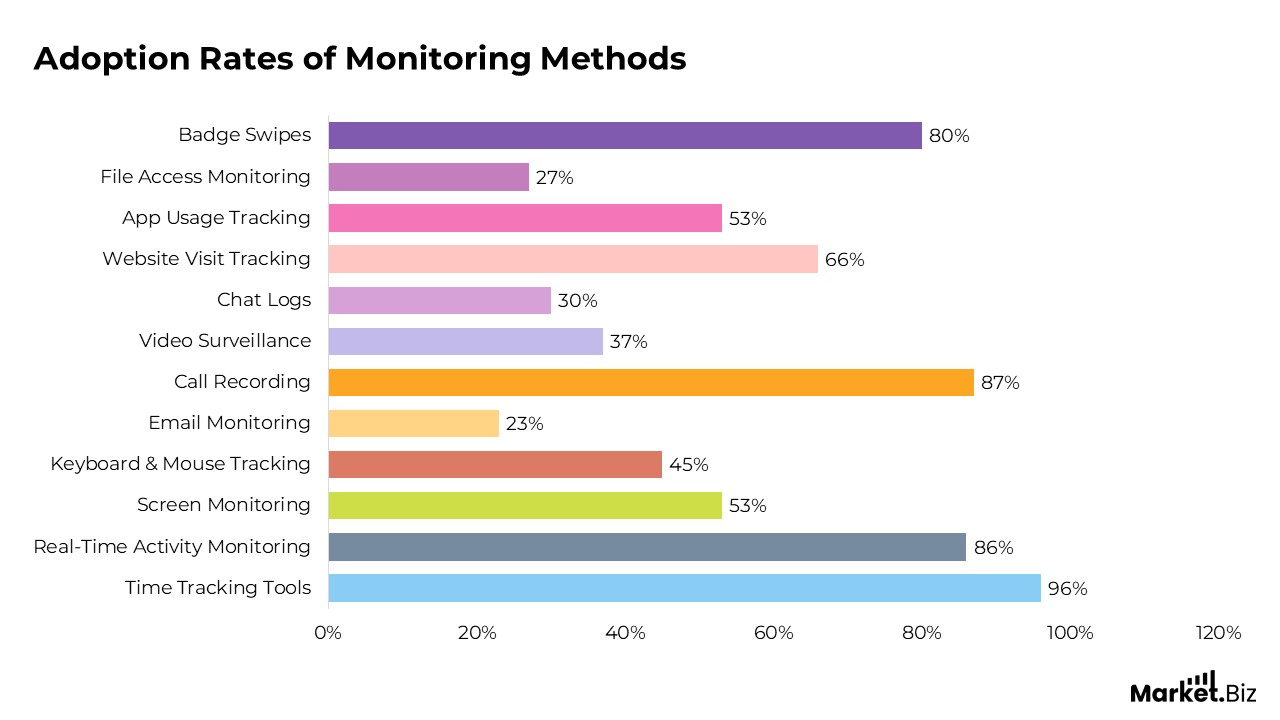
- Hence, some forms of keystroke are not unheard of, and about 40% of companies are using this to check up on employee productivity.
- Screen recording is used by 50% of companies to calculate idle time and hours of actual work.
- Almost 60% of organizations now use time-management software to track employees’ total time, especially in remote settings.
- Internet activities of 72% of companies go as far as tracking websites accessed by On-Duty employees.
- 30% of firms monitor employee communication, including emails, chats, and calls, to improve workflows and security.
- 30% of companies with remote workers, especially those in logistics and delivery services, employ GPS tracking to see where their employees are located.
- Tracking applications allow 63% of organizations to monitor which applications are used by employees during working hours so that employees do not stray from work duties.
- 55% of businesses keep track of mouse and keyboard activity to check engagement in work-related tasks.
- Roughly one-fourth of businesses, especially those located in high-security zones or those with serious physical activity, practice surveillance by cameras.
- 40% of firms measure employee engagement and participation using video-conferencing tools, so they can confirm participation by remote teams.
- Half of the companies check employee task completion and project deadlines through project tools like Asana or Trello.
- 17% of the companies utilize biometric methods based on predicted workforce availability, specifically fingerprints or face recognition, to monitor the attendance of employees.
- Use of cloud-based monitoring systems is increasing in organizations with 70% of organizations utilizing cloud platforms to monitor activities of greater number of employees.
(Source: Apploye)
Benefits of Remote Monitoring
- According to 55% of managers, productivity improves in teams after the use of remote employee monitoring tools.
- Time thieves are kept at bay from stealing companies’ labour costs up to 20% a year with this tracking software.
- 60% of companies say that such tools give a better chance at visibility into employee performance and task tracking.
- Real-time tracking of activities speeds up decision-making for 48% of remote team leaders.
- 42% of organizations monitor at least to safeguard data from unauthorized access.
- 53% of HR departments say that they find it easier to ensure compliance with different labour laws and work-hour regulations.
- It was found that those enterprises using any sort of remote monitoring became 30% better at meeting project deadlines.
- Employee accountability improved in 62% of organizations using monitoring to track task completion.
- Monitoring tools for remote onboarding helped almost 47% of businesses train new employees efficiently.
- Cloud monitoring improves cross-team collaboration in 57% of distributed organizations.
- Organizations that apply monitoring to catch potentially risky behaviour early encounter up to 25% fewer IT incidents.
- 39% of employees feel more focused when they know their productivity tools are being used fairly.
- The deep monitoring systems provided detailed insights that aided 51% of companies in optimizing resource allocation.
Challenges of Remote Monitoring
- According to reports, 35% of employees working from home feel heightened levels of stress owing to continuous digital monitoring.
- 30% of employees claim that surveillance reduces their trust in their employers.
- 22% of organizations run the risk of possible legal ramifications as a consequence of their unclear or non-compliant monitoring policies.
- As reported by 28% of HR managers, monitoring tools can trigger a high turnover among employees.
- 33% of remote employees hold the view that excess observation destroys their autonomy.
- Privacy concerns are being elevated as 40% of employees are oblivious of how their data is being utilized.
- 21% of organizations are still figuring out how to balance productivity tracking with an ethical sense of transparency.
- More than 25% of teams are micromanaged within their engagement because of real-time monitoring.
- 37% of organizations are stymied by the high cost of advanced monitoring software installations.
- According to 32% of employee surveys, monitoring can create a climate of fear quite unintentionally.
- Communication about monitoring policies is said to irritate 44% of remote workers.
- About 24 companies report technical issues and software incompatibility with their remote monitoring tools.
- Reliance on metrics can distort performance evaluations, as 31% of team leaders have noted.
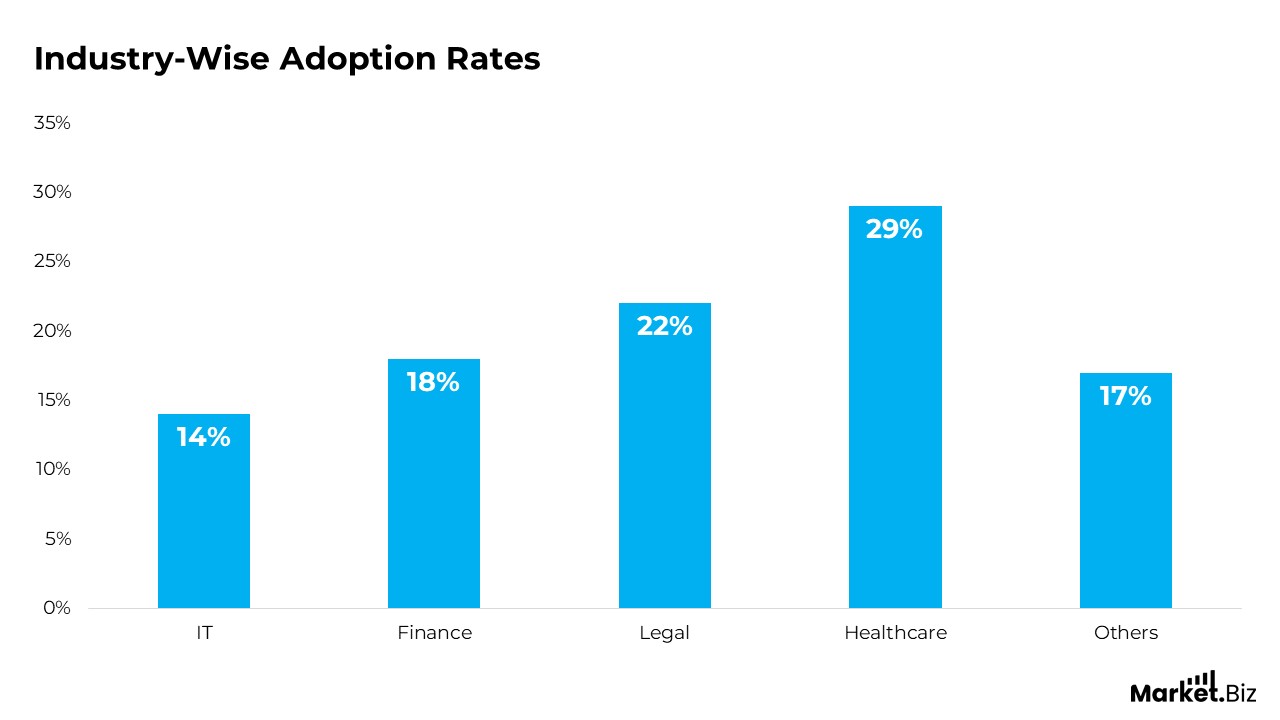
Industry-Wise Adoption Rates
- 14% of tech companies used monitoring tools to track distributed teams as they emerged as leaders in IT adoption.
- In finance services, 18% of them opted for monitoring to ensure privacy and protect data.
- As of the present, the legal services sector has an adoption of 22% due to confidentiality and accountability drives.
- In the healthcare sector, moderate use is being made as 29% of healthcare providers are involved in monitoring remote admin staff.
- Marketing and ad companies, 45%, choose these on a project-based monitoring tool basis.
- The education sector moved up to 53% mainly for monitoring remote teaching and securing examination integrity.
- 71% of customer support centres take on board monitoring for response time as well as quality assurance.
- Logistics in retail and e-commerce is monitored by 58% of their company services, which includes remote selling and customer service.
- Manufacturing monitors only 41% of their organizations concerning remote administrative and design teams.
- Consulting firms have reached a 65% adoption, emphasizing time tracking and productivity insight.
- Media and entertainment companies have monitored about 38%, chiefly for content creation workflows.
- At the moment, the insurance industry attains its 60% in monitoring the compliance of handling customer data and processing insurance policies.
- The monitoring tools captured 44% of the real estate firms, especially for the virtual agents conducting remote transactions.
- Sluggish of them all, the non-profit sector advances only to 34% due to budget constraints and privacy issues.
Demographic Monitoring Trends
- Young employees aged 25-34 are most accepting of monitoring. The survey indicates that 62% of respondents took a neutral or positive position concerning monitoring.
- Thus, productivity gains associated with monitoring will more likely be perceived by Millennials than by Baby Boomers.
- Some 71% of Gen Z workers know that monitoring takes place, whereas 36% express concerns about privacy.
- Workers older than 55 seem to resist the monitoring of work; 47% of them view this digital monitoring as intrusive.
- In urban settings, 65% of remote workers reported monitoring, while the figure was lower at 49% in rural areas.
- Workers with a high income (one hundred thousand dollars or more) are 33% more likely to be working in an organization that monitors productivity tools.
- Employees in their middle career stage seem to experience the most monitoring, with 59% reporting that their work activities are being monitored in real time.
- The entry-level employees are facing 44% of the monitoring that primarily works through time tracking.
- The executive-level employees are subject to 28% of the monitoring, which is mainly through performance dashboards.
- Women working remotely registered a higher percentage of exposure to monitoring: 51% against 48% for men.
- Single employees were found to be more accepting of surveillance than married employees by 15%, claiming this was due to their flexibility of work.
- Monitoring is less stringent on the part of remote freelancers or contractors: only 38% feel they are being monitored.
- Diversity teams have 25% more chances to raise the issue of monitoring bias or inconsistencies.
- 73% of remote Asia Pacific workers say they are monitored regularly, while North America is at 58%.
- Fluent employees are 19% more likely to be monitored for chat and email.
- Advanced degree-holding employees are monitored more for output quality rather than activity, at 61%.
Future of Remote Employee Monitoring
- The global employee-monitoring-software market is on its way to becoming a $6.9-billion business by the year 2030, largely due to hybrid work being here to stay. As distant workplaces become the new normal, corporates will invest in scalability to enhance feasibility for real-time surveillance. This shows a transition of the tools from temporary to durable and digitised architectures.
- AI-enabled monitoring tools are in a fast lane now, with 15% of the companies using AI for predicting behaviours and burnout alerts. The systems identify consumption patterns, concentration levels, and working rhythms that help to increase productivity levels. Expect smart devices that are informed by context and perform a great job of keeping employee well-being in focus!
- Activity-based monitoring will soon be replaced by outcome-oriented monitoring. These changes have been underway since 27% of organizations are converting to goal-based performance systems. This future model will regard deliverables more than digital presence or logged hours. Such systems will cut down on micromanaging and, instead, grow autonomy in a remote setting.
- Server-side coetaneous cosmopolitanism in privacy issues gets 62% of home employees to side with those tools that preach transparency and opt-in tracking. Future monitoring platforms will likely have this consent feature, along with some modifications to how data viewing is done. These changes will act as strong trust-building measures while generating actionable insights.
Moreover
- Integrated monitoring ecosystems will go mainstream, as 58% of platforms will embed into collaboration tools like Teams and Slack. These systems will fuse data from communications, task tracking, and engagement scores. The result will have a built-in monitoring experience that is, however, less intrusive.
- Emotion analytics are very much in demand now, whereby exploratory investigations are being made by 45% of the HR leaders into sentiment detection through digital behaviour. Mostly for these activities, tone, typing speed, and levels of interactivity will be measured to disengage. If used with integrity, this instrument may be supportive to the employees.
- Integration of wearable devices will grow by 22% in logistics, healthcare, and field environments. Health, movement, and fatigue can be tracked through biometrically embedded badges and smartwatches. The old and the new are measuring work safety and productivity, albeit in different ways.
- The future tools will depend on global labour law and digital rights, since 48% of companies anticipate that the tools will come with ever-stricter regulations for compliance. Companies having cross-border teams will be on the lookout for monitoring solutions that will also be compliant with local laws like GDPR and CCPA. That will be the future of flexible platforms with awareness of regulations that respect employee rights.
Conclusion
So, here’s the thing: remote employee monitoring? It’s not just a phase. A lot of companies are using tracking tools now, and honestly, it’s kind of locked in as the new normal. Sure, many managers say it’s helped boost productivity, but then again, some employees feel more stressed, and others aren’t comfy with all that digital peeking.
From keystroke logging to screen and internet tracking, businesses, especially in tech and finance, are going all in. The market for these tools is growing fast, and it’s only gonna get smarter, with AI and more transparent systems on the way. But yeah, finding that balance between control and trust? That’s the real challenge. At the end, it’s not just about tracking work, it’s about not forgetting the person behind the screen.
FAQs
Approximately 60% of organizations employ some form of monitoring for remote employees, driven by hybrid work arrangements and the need to demonstrate accountability and productivity in unbound locations.
Increased productivity is in the 15% to 25% range according to studies; monitoring acts as a solution to pinpoint workflow inefficiencies or help remote users with better time allocation.
General metrics include hours active, activity in front of the screen, keystrokes, app usage, website traffic, and a variety of other measures that enlighten the inner workings of productivity and focus.
The surveys indicate that almost 47% of employees are not fully aware of monitoring processes; thus, the debates continue on privacy, consent, and workplace transparency.
IT, finance, and customer support are the biggest users of these employee monitoring tools owing to high compliance requirements, data sensitivity, and even performance-related job roles.
There has been a relative surge in demand for these since 2020, contributing to an over 50% growth in the remote workforce and tightening the grip of these tools in the employers’ hands to provide visibility into remote workflows and productivity.
The surveys have produced mixed responses: between 35% and 45% of those surveyed regard the monitoring systems as intrusive, whereas others would accept them if the pertinent factors of transparency and data privacy were communicated.