









Introduction
Job Benefits Statistics: Job benefits play a crucial role in employee satisfaction and retention, with statistics highlighting their growing importance in today’s workforce. 60% of employees consider benefits and perks to be a significant factor when deciding whether to accept a job offer. Health insurance remains the top benefit, with 92% of employees reporting it as essential.
Additionally, retirement plans, paid time off, and flexible working hours have seen a steady rise in importance, with 45% of workers seeking jobs that offer more flexibility. Companies offering robust job benefits have a competitive edge in attracting top talent and fostering long-term employee loyalty. As the job market continues to evolve, these statistics reflect the shifting priorities of today’s workforce.
Editor’s Choice
- Companies are planning to offer more flexible remote work options, with 74% aiming for this in 2025.
- Mental health benefits are seeing a boost, with 60% of employers increasing investment in them.
- By 2026, over 50% of businesses are expected to provide student loan repayment benefits.
- Wellness programs, including gym memberships, are being expanded by 45% of companies.
- By 2028, 75% of organizations are predicted to offer paid family leave.
- Nearly 40% of employers will begin providing financial planning services to employees.
- 48% of workers expect personalized benefits packages by 2027, allowing for more flexibility.
- 36% of businesses will introduce eco-friendly benefits, such as subsidies for electric vehicles.
- 60% of companies are focusing more on employee wellness programs to improve health outcomes.
- Health insurance remains the most essential benefit for 65% of workers.
- 40% of employees prioritize flexible work hours to better balance their personal and professional lives.
- Remote work reduces commuting time for 70% of employees, enhancing their quality of life.
- 80% of companies offering wellness programs report higher employee engagement.
- By 2027, 50% of employers will offer more comprehensive retirement and financial wellness programs.
- 85% of companies that offer remote work options report higher employee retention.
General Job Benefits Statistics
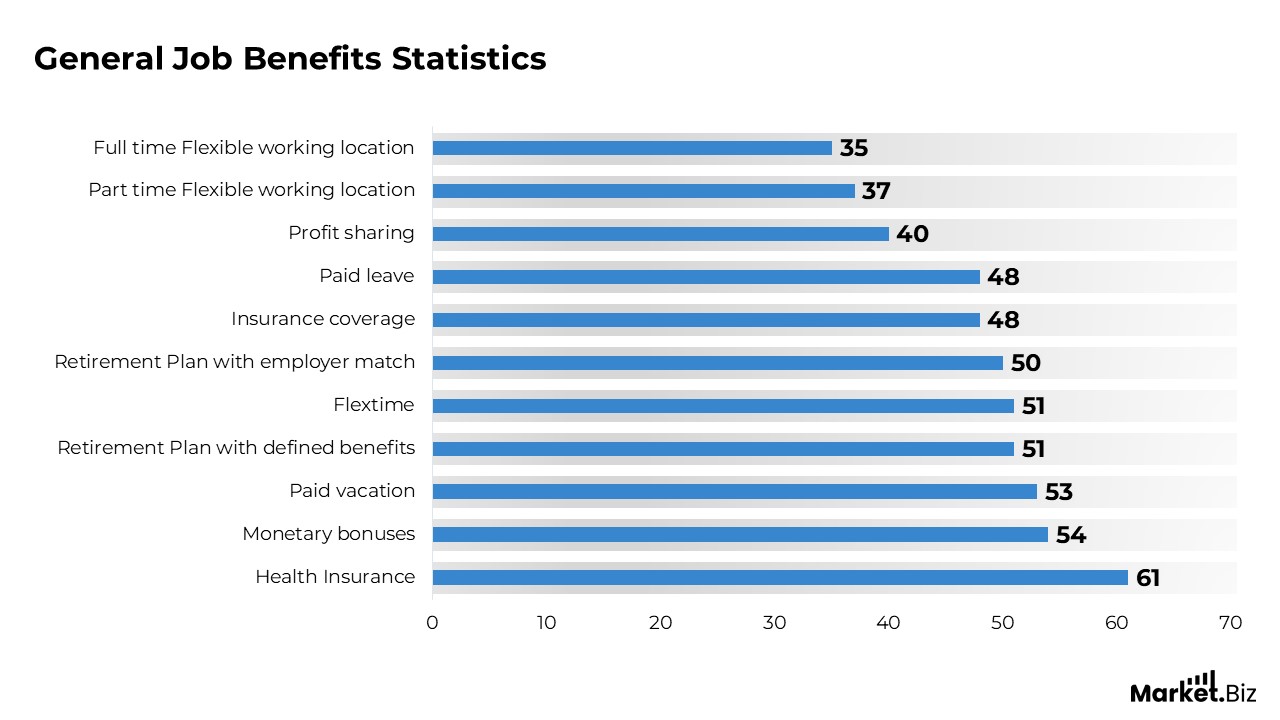
- Health insurance is considered one of the most important job benefits by 92% of full-time workers, with many employers offering employer-sponsored plans.
- Access to a retirement plan is a critical factor when evaluating job offers for 85% of employees.
- Paid time off (PTO) is valued as an essential benefit by 75% of workers, with most companies offering between 10 and 20 days annually.
- Flexible working hours are prioritized by 40% of employees, with remote and hybrid options gaining popularity.
- Paid parental leave is provided by 60% of companies, with an increasing focus on gender-neutral policies.
- Annual performance-based bonuses are reported by 48% of workers as part of their compensation package.
- Employee assistance programs (EAPs) are offered by 70% of employers to help employees with mental health, stress, and financial counseling.
- Career development benefits, such as tuition reimbursement programs, are crucial for job satisfaction for 65% of employees.
- Life insurance is offered as part of the benefits package by 55% of employers, providing financial security to employees’ families.
- Stock options or equity are part of the compensation package for 33% of employees in large corporations.
- Wellness programs, including gym memberships and stress management workshops, are available at 45% of companies.
- Dental and vision insurance plans are offered alongside medical coverage by 77% of employers.
- Retirement plan matching is provided by 58% of companies, typically up to 5% of an employee’s salary.
- 80% of workers in the U.S. are entitled to paid sick leave, though many report limited days offered.
- Workplace flexibility, such as the option to work remotely, is cited as a key factor for staying with an employer long-term by 50% of workers.
(Source: Statcdn)
Paid Time Off Across Industries
- In the technology sector, employees typically receive an average of 15-20 days of paid time off (PTO) annually, with larger tech firms offering up to 25 days.
- The healthcare industry often provides 10-15 days of PTO, with many organizations offering additional leave for sick days and holidays.
- Employees in the finance and banking sector receive an average of 12-20 days of paid leave, with many firms offering performance-based PTO increases.
- In education, teachers and academic staff generally receive 10-20 days of paid leave, depending on the region and institutional policies.
- Employees in the hospitality industry tend to have shorter PTO packages, with an average of 5-10 days, but often receive additional public holiday leave.
- In retail, 65% of employees report receiving between 5-12 days of PTO, with larger corporations offering slightly more generous benefits.
- Legal professionals typically enjoy 15-20 days of PTO, with senior-level lawyers often receiving more based on their years of experience.
- In the manufacturing industry, workers usually receive 7-14 days of paid time off, with some companies offering extra leave for long-term service.
Moreover
- In the non-profit sector, employees often receive between 10-15 days of PTO, but some organizations offer flexible leave policies to attract talent.
- Government workers in the U.S. receive an average of 12-20 days of paid leave, with some state and federal employees receiving additional holidays.
- In the construction industry, employees generally receive 10-15 days of PTO, with additional leave available for long-term workers.
- Financial services firms often offer 15-20 days of PTO, with many also providing extended leave for personal or family reasons.
- The entertainment industry tends to provide a higher range of PTO, often 20-30 days, especially for salaried employees in film and television production.
- In the pharmaceutical industry, employees typically receive 15-18 days of PTO, with some companies offering paid sick leave in addition to vacation time.
- Consulting firms generally offer 15-25 days of PTO, with some larger firms also providing personal days and mental health leave as part of their benefits package.
Wellness Ratings by Country
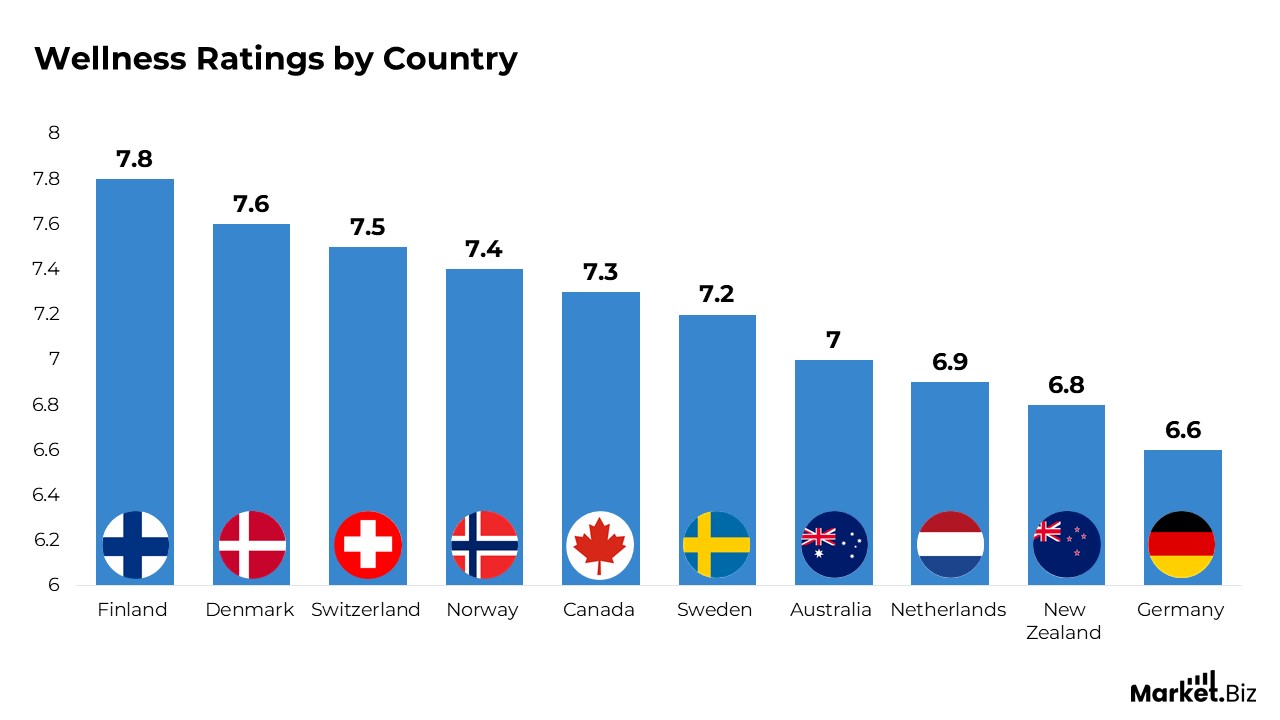
- Finland consistently ranks as the world’s happiest country, with a wellness rating of 7.8/10, thanks to its excellent healthcare, work-life balance, and social support systems.
- Denmark follows closely with a wellness rating of 7.6/10, benefiting from a strong focus on mental health and physical well-being through government-supported wellness initiatives.
- Switzerland boasts a wellness rating of 7.5/10, driven by its world-class healthcare system and high levels of job security and income equality.
- Norway scores 7.4/10 in wellness ratings, largely due to its extensive public services, high life expectancy, and the prioritization of work-life balance.
- Canada has a wellness rating of 7.3/10, with its universal healthcare system and access to mental health resources contributing to overall well-being.
- Sweden receives a wellness rating of 7.2/10, known for its strong social support, free healthcare, and commitment to gender equality and environmental sustainability.
- Australia ranks with a wellness rating of 7.0/10, supported by high-quality healthcare, access to nature, and a healthy lifestyle culture.
- Netherland scores 6.9/10, where the wellness ranking is influenced by excellent cycling infrastructure, healthcare access, and strong social services.
- New Zealand holds a wellness rating of 6.8/10, largely due to its focus on a balanced lifestyle, outdoor activities, and robust healthcare system.
- Germany reports a wellness rating of 6.6/10, benefiting from excellent healthcare, strong social security, and a focus on both physical and mental health support.
Healthcare and Wellness Benefits
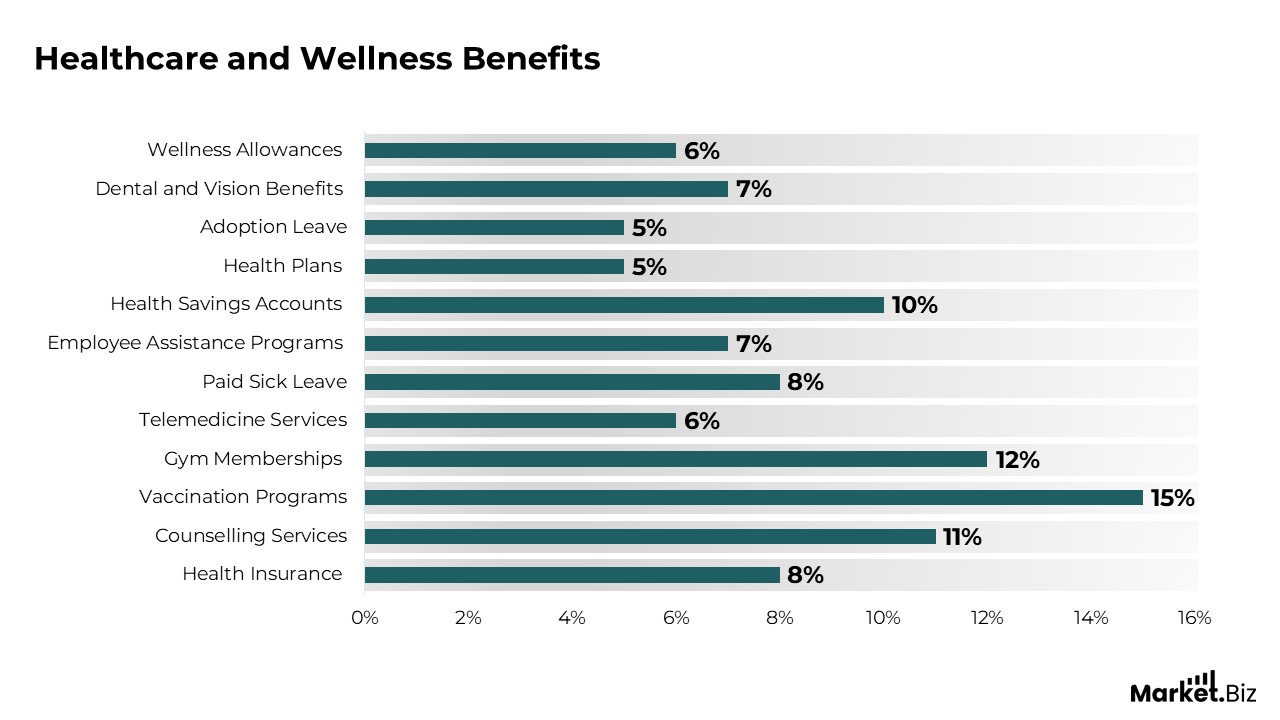
- 8% of large companies in the U.S. offer health insurance as part of their employee benefits, providing access to essential medical services.
- 11% of employers now provide mental health benefits, including counselling services, therapy sessions, and stress management programs.
- 15% of companies are offering wellness programs focused on preventative care, such as screenings, vaccination programs, and health check-ups.
- 12% of organizations provide fitness-related benefits, such as gym memberships or on-site fitness centers, to encourage physical health.
- 6% of employers have integrated telemedicine services, allowing employees to consult with healthcare providers remotely, and enhancing access to care.
- 8% of employees in the U.S. have access to paid sick leave, ensuring they can take time off when ill without losing income.
- 7% of employers offer employee assistance programs (EAPs) to help employees manage work-life stress, mental health, and personal crises.
- 10% of U.S. workers are enrolled in health savings accounts (HSAs), which offer tax-advantaged savings for medical expenses, often paired with high-deductible health plans.
- 5% of health plans now include services for managing chronic conditions like diabetes and hypertension, improving long-term wellness.
- 5% of companies provide health benefits for new parents, including maternity, paternity, and adoption leave, to support family well-being.
- 7% of employers offer dental and vision benefits alongside standard healthcare, ensuring comprehensive care for employees’ well-being.
- 6% of organizations provide employees with wellness allowances or stipends for activities such as massage therapy, yoga, or other wellness services.
Remote and Hybrid Work Benefits
- 65% of employees prefer remote or hybrid work arrangements, mainly because of the flexibility and better work-life balance they offer.
- Companies that offer remote work report a 75% increase in employee productivity, as workers are less distracted by office-related tasks.
- 70% of employees say that remote work helps reduce commuting time, leading to more personal time and an improved quality of life.
- 50% of employees in hybrid work models feel they have better mental health, benefiting from a combination of in-office collaboration and remote autonomy.
- Offering hybrid work has allowed 60% of companies to cut down on office overhead costs, including utilities and office supplies.
- 80% of employees in hybrid work environments say they have more control over their work schedule, contributing to better job satisfaction.
- 40% of workers state that remote work opportunities make them feel more trusted by their employers, increasing job loyalty.
- 55% of employees in hybrid models report improved work-life integration, allowing for better balance between family, health, and career.
- 70% of companies offering remote work options have been able to attract a broader talent pool, as location is no longer a limiting factor.
- 45% of workers in remote and hybrid roles report experiencing less burnout, as flexibility provides better rest and fewer in-office pressures.
- 65% of remote workers believe they have more opportunities for personal development, as they can focus on learning without office distractions.
- 50% of employees in hybrid roles appreciate the social aspects of in-office days, creating a balance between connection and independence.
- 85% of companies offering remote work options report higher employee retention rates, with workers valuing the flexibility and autonomy.
Employee Well-being Programs
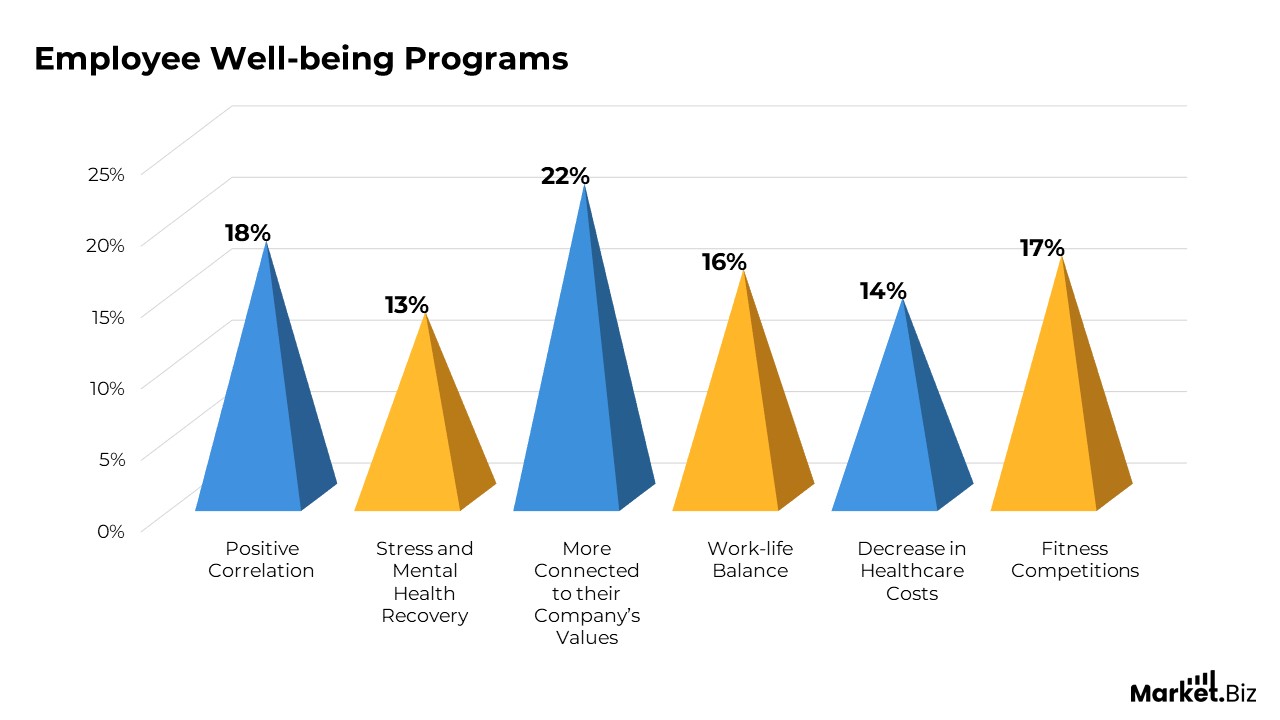
- 18% of companies now offer employee well-being programs, recognizing the positive correlation between well-being and productivity.
- 13% of organizations provide mental health days or paid time off specifically for stress and mental health recovery.
- 22% of employees participating in wellness programs report feeling more connected to their company’s values and mission.
- 16% of businesses have introduced flexible working hours as part of their well-being strategy to support work-life balance.
- 14% of companies with well-being programs report a decrease in healthcare costs due to better employee health and prevention efforts.
- 17% of employees value the opportunity to engage in wellness challenges or activities, such as fitness competitions or step challenges, offered by their employers.
- 58% of organizations provide access to on-site or virtual fitness classes to promote physical health and well-being among employees.
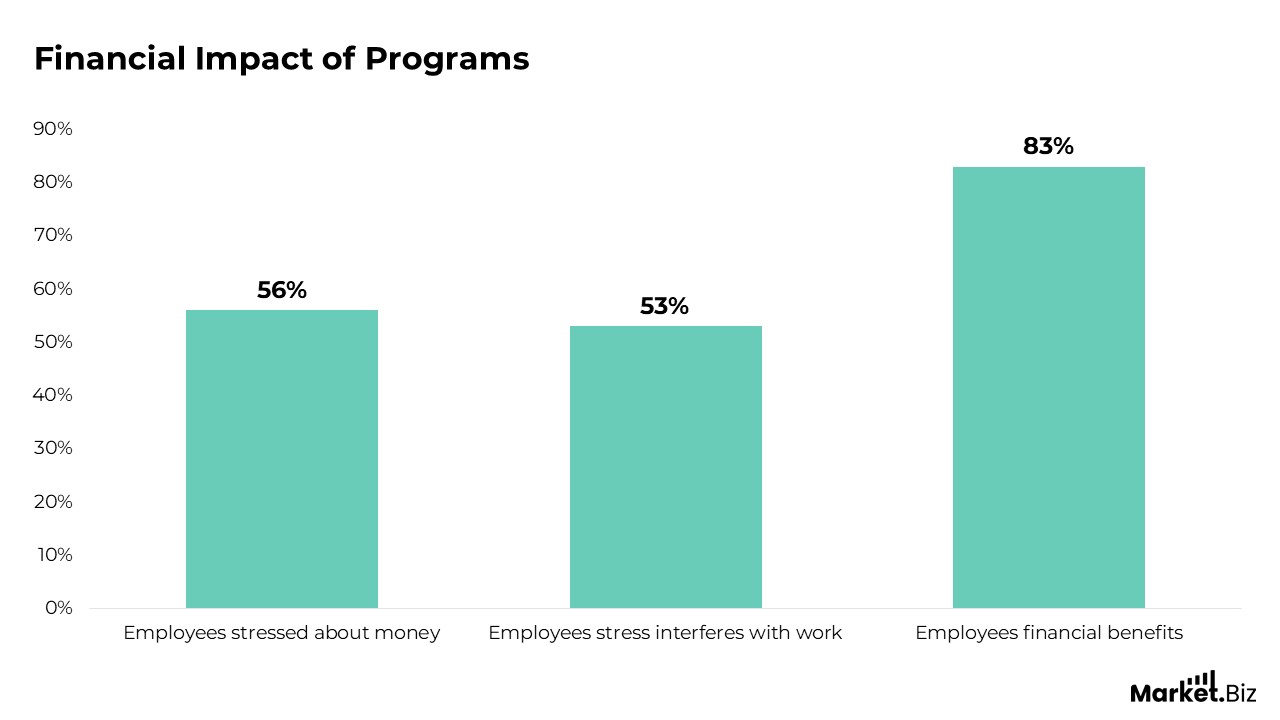
- 50% of employees claim that well-being programs, such as financial wellness education, have helped reduce their financial stress.
- 63% of workers at companies with well-being programs report feeling more supported in managing work-related stress and mental health issues.
- 85% of employees believe that having access to a well-being program increases their overall job satisfaction and loyalty to the company.
- 40% of organizations offer paid wellness days, allowing employees to focus on self-care and personal health without using vacation time.
- 72% of companies provide access to telemedicine services, allowing employees to consult healthcare providers remotely as part of their well-being offerings.
- 69% of companies with comprehensive well-being programs see increased productivity and innovation due to improved employee well-being.
Financial Impact of Programs
- Companies investing in employee wellness programs see a return on investment (ROI) of $3 for every $1 spent, due to reduced healthcare costs and increased productivity.
- 72% of organizations that implemented financial wellness programs report a significant reduction in employee financial stress, improving overall engagement.
- Businesses offering flexible work options, such as remote work, have experienced a 25% decrease in overhead costs, including office space and utilities.
- 60% of employers offering financial assistance programs, like retirement planning and student loan repayment, have reported higher employee retention rates.
- Companies that offer paid time off for wellness activities experience a 20% decrease in employee absenteeism, contributing to higher productivity levels.
- 80% of employees at organizations with financial literacy programs report feeling more financially secure, which directly improves their job satisfaction and focus.
- 50% of businesses see reduced turnover rates when offering employee assistance programs (EAPs), saving an average of $2,000 per employee annually in recruitment and training costs.
- In organizations that offer wellness challenges, employee engagement has increased by 30%, leading to greater job performance and reduced health-related absenteeism.
- 68% of employers report that offering comprehensive health benefits programs helps them save money on insurance premiums due to healthier employees.
- Financial wellness programs can reduce employee absenteeism by up to 15%, translating into a savings of approximately $1,800 per employee per year.
- 55% of businesses offering employee well-being programs report that they have seen an improvement in their bottom line, attributed to increased employee morale and productivity.
- Companies that provide mental health support programs save up to $4 for every $1 invested due to reductions in employee turnover, absenteeism, and healthcare costs.
(Source: Arizent)
Employee Wellness Market
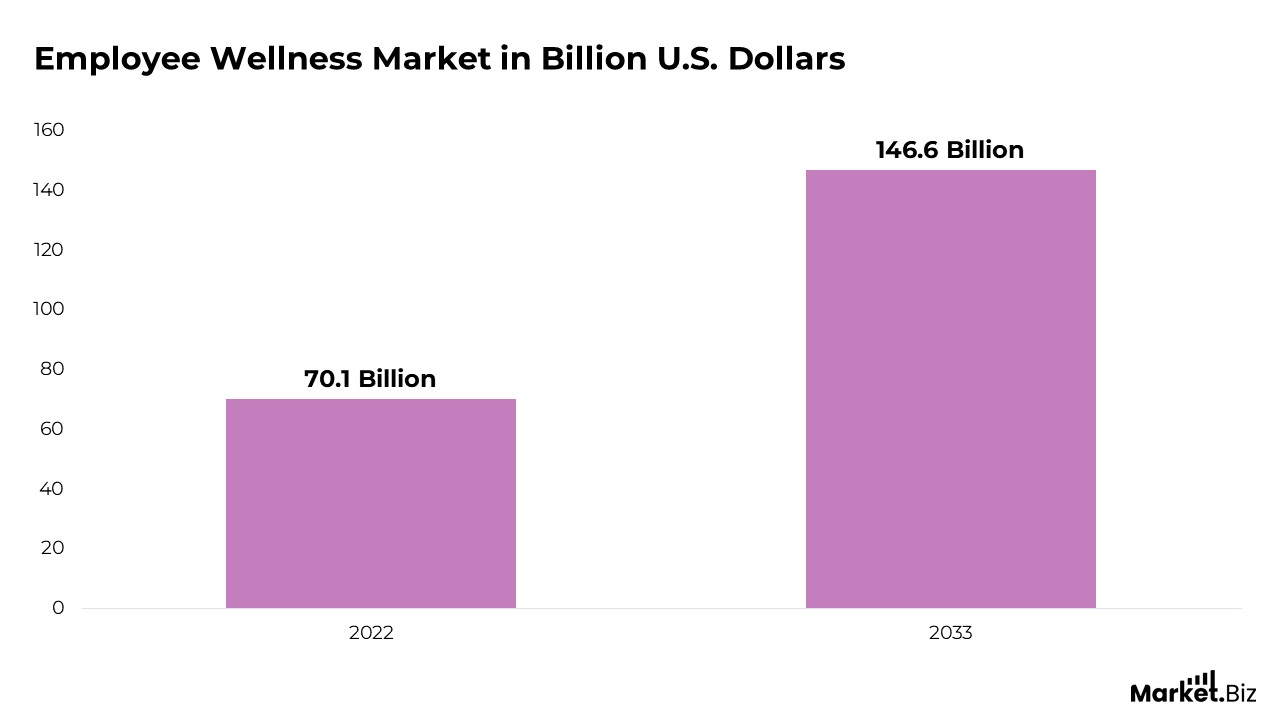
- The global employee wellness market is expected to reach $87.4 billion by 2026, growing at a compound annual growth rate (CAGR) of 6.8%.
- 60% of U.S. companies now offer wellness programs, with a strong focus on mental health services, fitness benefits, and work-life balance initiatives.
- In 2021, 65% of employees reported that wellness benefits, including mental health support, were critical factors when choosing an employer.
- Corporate wellness solutions are seeing a surge in demand, with 50% of organizations planning to increase their wellness program budgets over the next 5 years.
- 75% of organizations offering wellness programs have seen a significant improvement in employee engagement, resulting in higher job satisfaction and retention rates.
- Mental health-focused wellness programs are among the fastest-growing sectors in employee wellness, with a 10% increase in adoption in the last two years.
- The employee wellness market is shifting towards digital solutions, with 40% of companies adopting wellness apps to support remote and hybrid workforces.
- 45% of organizations with wellness initiatives report a decrease in healthcare-related costs, thanks to proactive health management and reduced absenteeism.
- The demand for wellness programs is also being driven by younger generations, with 68% of millennials and 60% of Gen Z employees prioritizing wellness benefits.
- Wellness programs that offer financial wellness benefits, like retirement planning and financial counselling, are growing in popularity, with 35% of companies offering these services.
- According to data on employee wellness, the global corporate wellness industry is projected to reach a valuation of 146.6 billion USD by 2033, growing at a rate of about 7% annually over 2022.
(Source: Statista)
Retirement Benefits
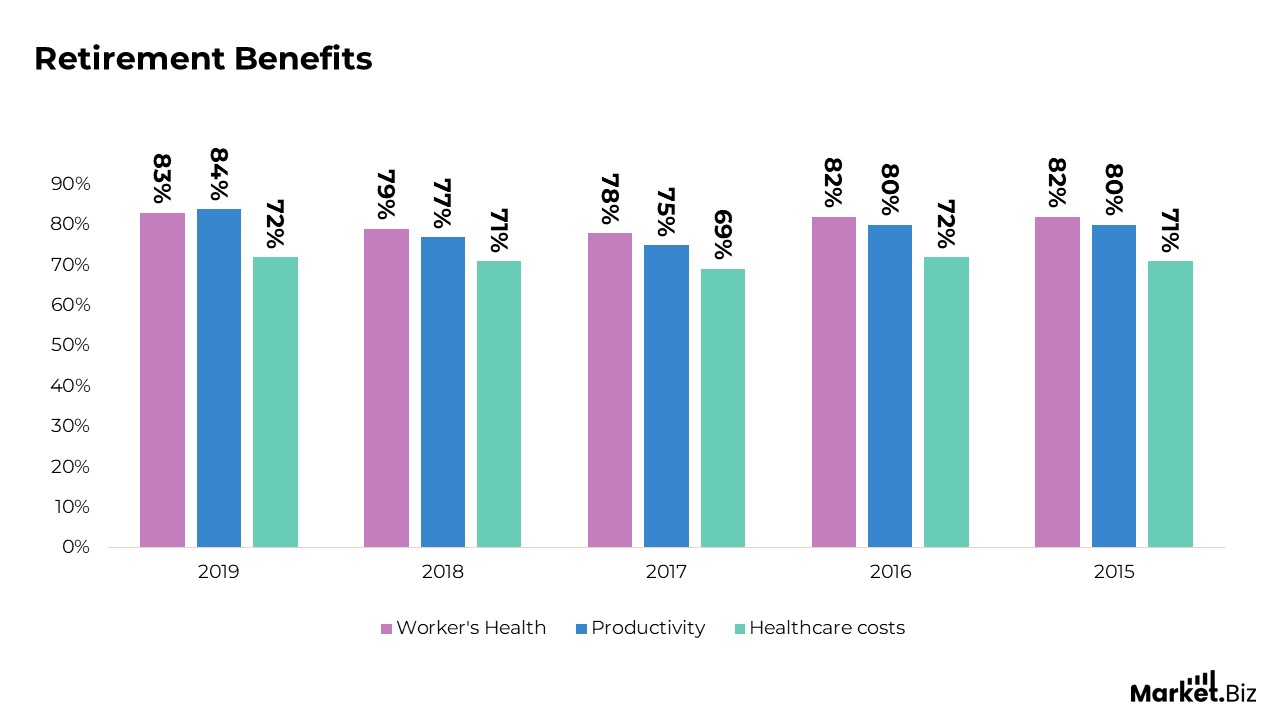
- 85% of U.S. companies offer retirement benefits, with the 401(k) being the most common retirement plan available to employees.
- 60% of employees participate in employer-sponsored retirement plans, with 80% of them reporting they are satisfied with the benefits offered.
- Companies that match employee 401(k) contributions up to 5% of salary report a 25% higher employee retention rate compared to those that don’t.
- 70% of workers prefer employers that offer retirement benefits as part of their compensation package, citing long-term financial security as a major factor.
- 50% of employers offer pension plans in addition to 401(k)s, but these plans are becoming less common due to rising costs.
- 40% of employees don’t feel confident about their ability to save enough for retirement, signaling a growing demand for more retirement planning assistance from employers.
- 45% of employees with access to financial wellness programs, including retirement planning, report increased confidence in their retirement savings.
- 60% of workers believe their employer’s retirement benefits help them achieve a comfortable retirement, with health benefits often included in the overall package.
- 30% of U.S. workers have a retirement savings account outside of their employer-sponsored plan, showing an increasing trend toward personal financial planning.
- Companies offering automatic enrolment in 401(k) plans have seen a 50% higher participation rate in retirement savings compared to those that don’t.
- 25% of employers provide financial counselling services to help employees make informed decisions about their retirement planning.
- 55% of companies now offer retirement savings tools, such as financial education seminars, to increase employee engagement with their retirement planning.
- The average employer match for 401(k) contributions is around 4.5% of salary, with larger companies offering higher matches.
- 80% of employees who contribute to a retirement savings plan are likely to remain at their company for more than 5 years, improving overall retention.
(Source: Statista)
Cost of Employee Benefits
- The average cost of employee benefits in the U.S. is approximately $13,000 per employee per year, accounting for 30% of total compensation.
- Health insurance is the most significant benefit cost, making up about 60% of total benefit expenditures for employers.
- Companies with 500 or more employees spend an average of $16,000 per employee annually on benefits, compared to $9,000 for smaller companies.
- Employers report that retirement plan contributions, including 401(k) matching, cost an average of 3-5% of employee salaries each year.
- Paid time off (PTO), including vacation and sick days, can add up to 7-10% of total employee compensation in some industries.
- Offering wellness programs costs companies an average of $150-$300 per employee annually, but these programs can reduce healthcare costs by 25%.
- The cost of providing life and disability insurance to employees averages $300-$500 per employee annually, depending on coverage levels.
- On average, U.S. companies spend between $500 and $1,500 per employee annually on employee training and development, a crucial part of employee benefits.
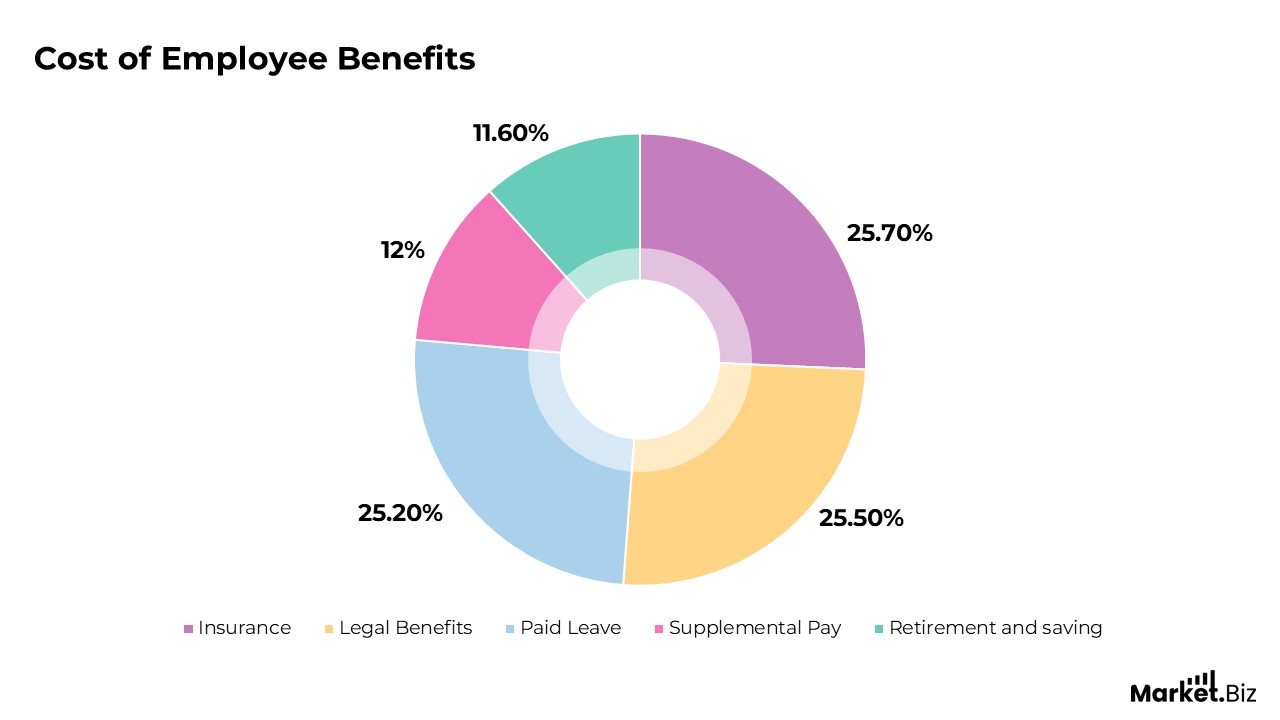
| Type of Benefit | Average Cost | Share of the Total Cost of Benefits |
|---|---|---|
| Insurance | $3.04 | 25.7% |
| Legally required benefits | $3.02 | 25.5% |
| Paid Leave | $2.99 | 25.2% |
| Supplemental pay | $1.42 | 12% |
| Retirement and savings | $1.37 | 11.6% |
(Source: Zippia, wp-content)
Future Trends in Job Benefits
- 74% of companies plan to offer more flexible remote work options by 2025, recognizing its impact on employee satisfaction and retention.
- 60% of employers are increasing investment in mental health benefits, with programs such as therapy reimbursements and wellness apps becoming standard.
- Over 50% of businesses are expected to offer student loan repayment benefits by 2026, addressing the growing debt crisis among younger workers.
- 45% of companies are expanding wellness programs, offering gym memberships or at-home fitness subscriptions as part of their benefits packages.
- By 2028, 75% of organizations are predicted to provide paid family leave, responding to the rising demand for work-life balance, especially for caregivers.
- Nearly 40% of employers will offer financial planning services to help employees with budgeting, retirement, and debt management, helping improve overall financial health.
- More companies will adopt flexible benefits options, with 48% of workers expecting personalized benefits by 2027, allowing employees to tailor packages to their needs.
- As sustainability becomes a priority, 36% of businesses will introduce eco-friendly benefits, such as subsidies for electric vehicle purchases or carbon offset programs.
Conclusion
The future of job benefits is evolving rapidly as companies adapt to the shifting needs of the workforce. Many organizations are enhancing remote work options and increasing their investment in mental health benefits, recognizing the growing demand for flexibility and well-being. Additionally, businesses are expected to introduce student loan repayment programs and offer paid family leave in the coming years.
As employees seek more personalized benefits, companies are focusing on tailored packages that address work-life balance, financial wellness, and sustainability. These trends highlight the increasing importance of comprehensive job benefits as key drivers of employee satisfaction and retention in the years ahead.
FAQ’s
Around 60% of employers are increasing their investment in mental health programs, recognizing the growing need for employee support in this area.
With a strong demand for better work-life balance, companies are expected to offer more flexible benefits, such as paid family leave and customized wellness programs, to meet employee needs.
Yes, 60% of employers are increasing investment in mental health programs to support employee well-being.
By 2027, many employees are expecting more personalized benefits packages, with 48% anticipating companies will offer tailored options based on individual preferences.