









Introduction
Meeting Statistics: Meetings have become a vital part of the business world, with both in-person and virtual gatherings growing rapidly. A 2023 Statista study shows that over 80% of companies now rely on virtual meetings, a shift that was accelerated by the pandemic. On average, professionals are attending 10 or more meetings a week, a 13% increase from previous years.
As more companies adopt hybrid work models, the demand for tools like video conferencing is skyrocketing, with the industry set to reach $50 billion by 2026. When meetings are well-organized, they can improve productivity by as much as 25%. These statistics highlight the importance of understanding and optimizing meeting practices to foster better communication and collaboration in today’s workplace.
Editor’s Choice
- 80% of companies now use virtual meetings, a trend accelerated by the pandemic, with the video conferencing industry set to reach $50 billion by 2026.
- Professionals attend 10+ meetings weekly, a 13% increase from previous years, showing growing meeting frequency.
- 65% of employees spend 3-4 hours daily in meetings, yet 53% report that those meetings are ineffective due to unclear objectives.
- Virtual meetings have enhanced connections, with 55% of remote workers feeling more engaged with colleagues.
- Meeting duration has increased by 25%, from 30 to 37 minutes, since 2019, indicating longer meeting times.
- 50% of businesses are investing in meeting technologies to improve efficiency and productivity.
- 70% of companies report meetings have become more frequent since adopting hybrid work models, highlighting their growing importance.
- 67% of employees say too many meetings waste time, leading to decreased productivity and engagement.
- Video meetings are shown to increase productivity by 20%, with 62% of employees believing virtual meetings are more inclusive.
- 70% of businesses will adopt hybrid models by 2025, balancing in-person and virtual interactions to increase flexibility and productivity.
General Meeting Statistics
- Over 80% of organizations now rely on virtual meetings, a trend that surged after the pandemic.
- The global video conferencing market is projected to grow to $50 billion by 2026.
- On average, business professionals attend 10 or more meetings a week, marking a 13% increase from previous years.
- 65% of employees say they spend 3-4 hours in meetings daily.
- 53% of meetings are reported as ineffective, mainly due to a lack of structure or unclear objectives.
- Meetings with fewer than 5 participants are 45% more likely to be productive.
- 70% of companies report that meetings have become more frequent since adopting hybrid work models.
- The average meeting duration has increased by 25%, from 30 to 37 minutes per session, since 2019.
- 55% of workers say virtual meetings help them feel more connected to remote colleagues.
- 74% of professionals believe poorly organized meetings negatively impact their productivity.
- Employees spend about 20% of their workweek in meetings, according to recent studies.
- 66% of companies are increasing investments in meeting technologies like video conferencing and scheduling tools.
- Remote workers attend an average of 6-7 virtual meetings per week, compared to 3-4 for in-office employees.
- 80% of organizations use some form of collaborative technology to enhance meeting efficiency.
- 45% of executives say that strategic meetings help in aligning company goals and improving overall performance.
Time Spent in Meetings
- On average, employees spend 15-20% of their workweek in meetings, equating to about 8-10 hours per week.
- 67% of employees believe they waste time in meetings, with nearly 50% stating that meetings often run longer than necessary.
- Remote workers attend 6-7 virtual meetings per week, while office workers average 3-4.
- Executives spend up to 50% of their workweek in meetings, making time management crucial for their productivity.
- The average time spent in meetings has increased by 25% over the last five years, largely due to remote work and hybrid models.
- A 2023 survey found that 44% of employees feel that meetings take up too much of their workday, reducing time for focused tasks.
- On average, managers spend 9 hours per week in meetings, which can impact their ability to focus on other responsibilities.
- 62% of employees report feeling disengaged during meetings, citing poor structure and lack of relevance.
- 50% of employees say that poorly structured meetings waste 1-2 hours each week.
- Teams in high-performing organizations spend 20% less time in meetings compared to lower-performing teams.
- Studies show that businesses can reduce meeting time by up to 40% with better planning, clear objectives, and efficient meeting tools.
Meeting Productivity Statistics
- Well-organized meetings can increase productivity by up to 25%, according to recent studies.
- 50% of meeting participants say that meetings are more productive when there’s a clear agenda shared beforehand.
- In fact, 80% of professionals claim that poor meeting planning leads to unproductive discussions, wasting valuable time.
- Teams that use collaborative tools in meetings are 30% more likely to report higher productivity and engagement.
- Studies show that shortening meetings by just 10 minutes can improve focus and efficiency, boosting productivity by 15%.
- Video meetings are shown to increase productivity by 20%, as remote teams can interact more effectively with visual cues.
- 63% of employees believe that reducing the number of meetings would significantly improve their productivity.
- In companies with more than 500 employees, productivity increases by 18% when meetings are limited to 30 minutes or less.
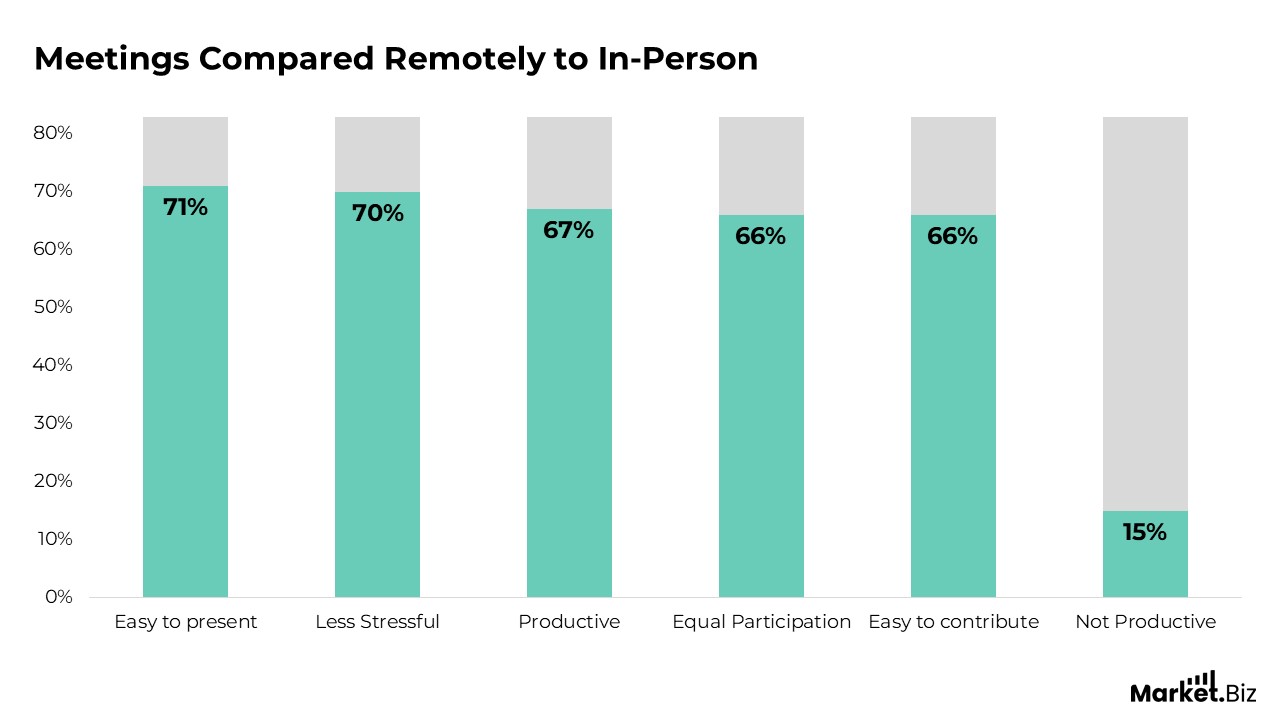
- 71% of workers state that virtual meetings are more efficient than in-person ones, allowing them to manage time better.
- Companies that implement “no meeting” days report a 25% increase in employee productivity, highlighting the need for balance.
Virtual Meeting Statistics
(Source: Notta)
Most Common Types of Meeting Statistics
- 40% of meetings are scheduled for team updates to improve communication and task alignment.
- Status update meetings make up 36% of business meetings, focusing on progress reports and project tracking.
- 28% of meetings are dedicated to brainstorming sessions, helping teams generate new ideas and solve problems creatively.
- Sales meetings account for 18% of corporate meetings, with a primary focus on reviewing client needs and sales strategies.
- 33% of meetings are held for decision-making purposes, often involving senior management and key stakeholders.
- Virtual team meetings make up 62% of all corporate meetings, reflecting the shift to remote and hybrid work models.
- 25% of meetings in organizations are project-related, focused on task delegation and project timelines.
- Training sessions represent 15% of company meetings, aimed at skill development and knowledge sharing.
- 22% of meetings are used for one-on-one discussions between managers and employees to improve performance and resolve issues.
- Internal strategy meetings account for 20% of corporate gatherings, where future goals and business direction are discussed.
- 12% of meetings are conducted for networking purposes, often involving external partners or industry peers.
- Quarterly business reviews (QBRs) represent 10% of corporate meetings to evaluate business performance and KPIs.
- 40% of meetings are considered ineffective, often due to a lack of structure, unclear objectives, or irrelevant discussions.
- 50% of executives claim that decision-making meetings are often too long, with 70% stating they could be more efficient with proper preparation.
- Leadership meetings make up 14% of all corporate gatherings, typically involving strategy, vision alignment, and company culture discussions.
Weekly Time Spent on Video Meetings Statistics
(Source: Notta)
- Usually, professionals spend 6 hours per week in video meetings, with remote workers attending more than in-office employees.
- 53% of employees report that they spend at least 10 hours per week in video meetings, reflecting the rise in virtual collaboration.
- 70% of business leaders say video meetings have increased in frequency, now accounting for about 40% of all meetings weekly.
- The average weekly time spent on video meetings has increased by 40% since 2020, due to the shift to hybrid and remote work models.
- 35% of employees feel they spend too much time in video meetings, stating it affects their productivity and focus on tasks.
- In 2023, employees working remotely spent an average of 8-10 hours per week on video calls, a 15% increase from pre-pandemic levels.
- Video meetings now make up 33% of a typical workweek for knowledge workers, according to recent studies.
- 62% of companies report an increase in the number of video meetings per week, driven by the need for frequent communication in remote setups.
- The use of video meeting tools like Zoom and Microsoft Teams grew by 75% from 2020 to 2023, with weekly meeting time seeing a significant uptick.
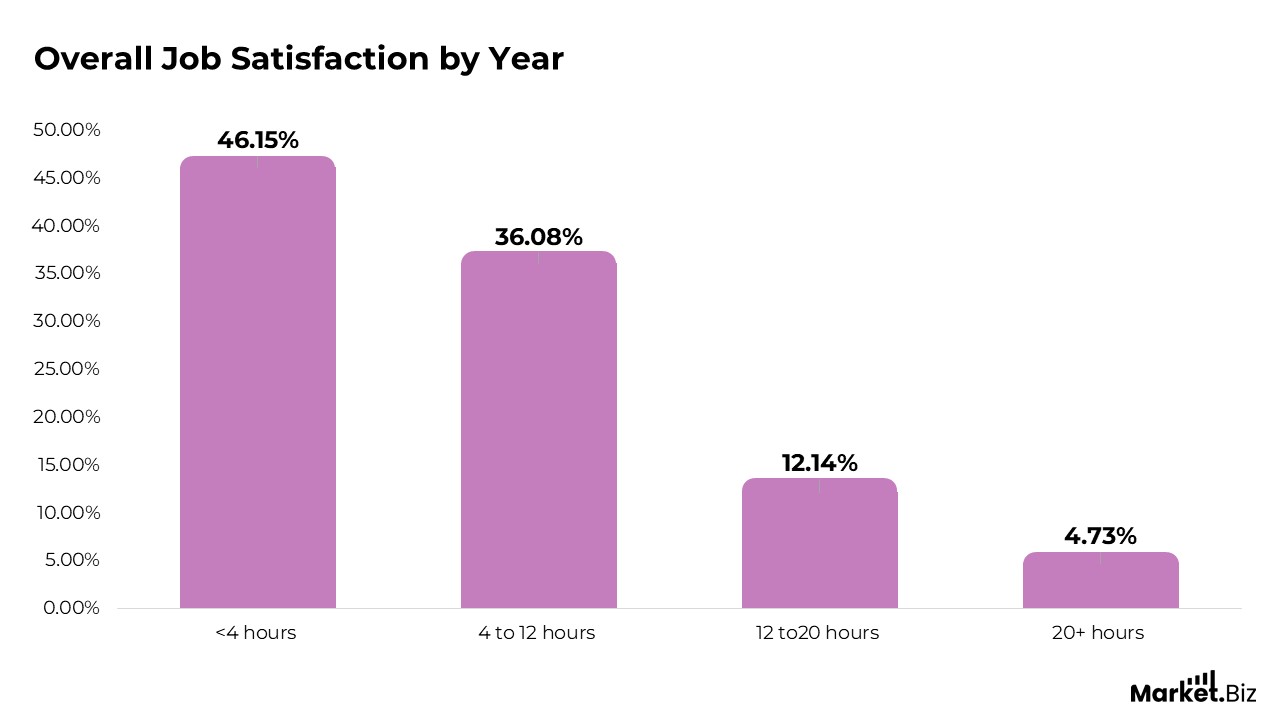
- According to 2024 meeting statistics, 83.13% of more than 2,800 US workers across a range of industries reported spending up to one-third of their week in meetings.
- In addition, workers spend less than four hours (46.15%), four to twelve hours (36.08%), twelve to twenty hours (12.14%), and twenty or more hours (4.73%) in meetings.
In-person and Hybrid Meeting Statistics
In-person Meeting Statistics
- 70% of professionals still prefer in-person meetings for relationship-building.
- 40% of companies report that in-person meetings lead to better decision-making.
- 85% of executives believe in-person meetings are essential for fostering company culture.
- 64% of workers feel more productive in face-to-face meetings compared to virtual ones.
- 75% of employees say in-person meetings help improve collaboration.
- 58% of business leaders believe in-person meetings boost team innovation.
- 60% of senior executives think face-to-face meetings help build trust in client relationships.
- 50% of people are willing to travel for in-person meetings to gain strategic insights.
- 45% of businesses report in-person meetings as a key driver for successful project completions.
(Source: Notta)
Hybrid Meeting Statistics
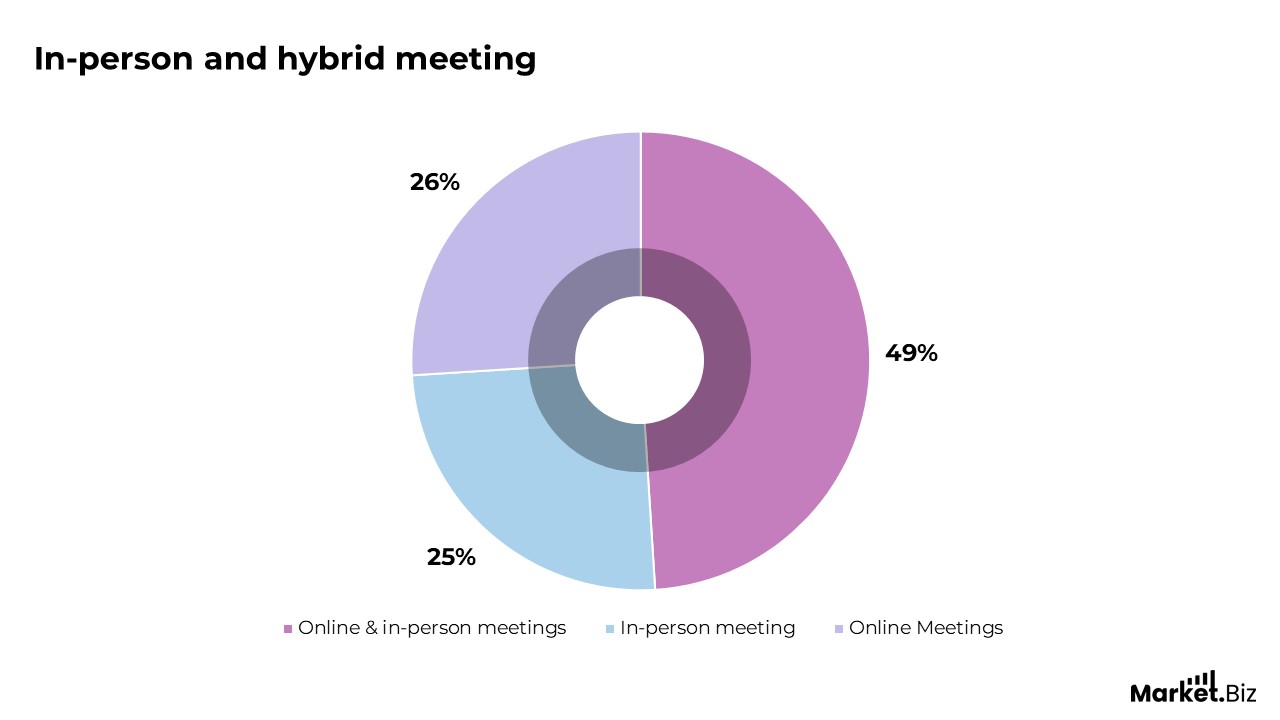
- 77% of organizations offer hybrid meeting options to balance flexibility and productivity.
- 66% of remote workers feel more included in hybrid meetings compared to fully virtual ones.
- 63% of companies report increased productivity from hybrid work models.
- 72% of employees want more hybrid meetings to ensure better work-life balance.
- 56% of hybrid meetings see improved participant engagement compared to traditional remote meetings.
- 53% of companies use a hybrid model to attract and retain top talent.
- 68% of business leaders see hybrid meetings as essential for adapting to global work trends.
- 50% of workers prefer hybrid meetings for flexibility while maintaining team collaboration.
- 45% of organizations believe hybrid meetings promote inclusivity in diverse teams.
Meeting Time Spent Statistics by Industries
- Professionals in tech spend an average of 23% of their workweek in meetings, primarily for project coordination and innovation sessions.
- Healthcare professionals dedicate around 18% of their time to meetings, focusing on team collaboration, patient care discussions, and research updates.
- Employees in finance typically spend 20% of their workweek in meetings, often for client discussions, team updates, and strategic planning.
- Marketing teams average 25% of their week in meetings, mainly for campaign strategy, brainstorming, and client reviews.
- Manufacturing professionals spend about 15% of their time in meetings, often focused on production planning and operational efficiency.
- Retail managers and corporate staff allocate around 18% of their time to meetings, especially for store operations and product development.
- Educators and administrators spend 21% of their workweek in meetings, mainly for curriculum planning, student performance reviews, and departmental coordination.
- Government employees average 22% of their time in meetings, focusing on policy discussions, budget meetings, and inter-departmental coordination.
- Lawyers and legal teams spend 19% of their workweek in meetings, primarily for case reviews, client briefings, and strategic discussions.
- Professionals in the energy sector spend approximately 16% of their time in meetings, particularly for safety reviews, operational planning, and regulatory discussions.
Unproductive Meetings Statistics
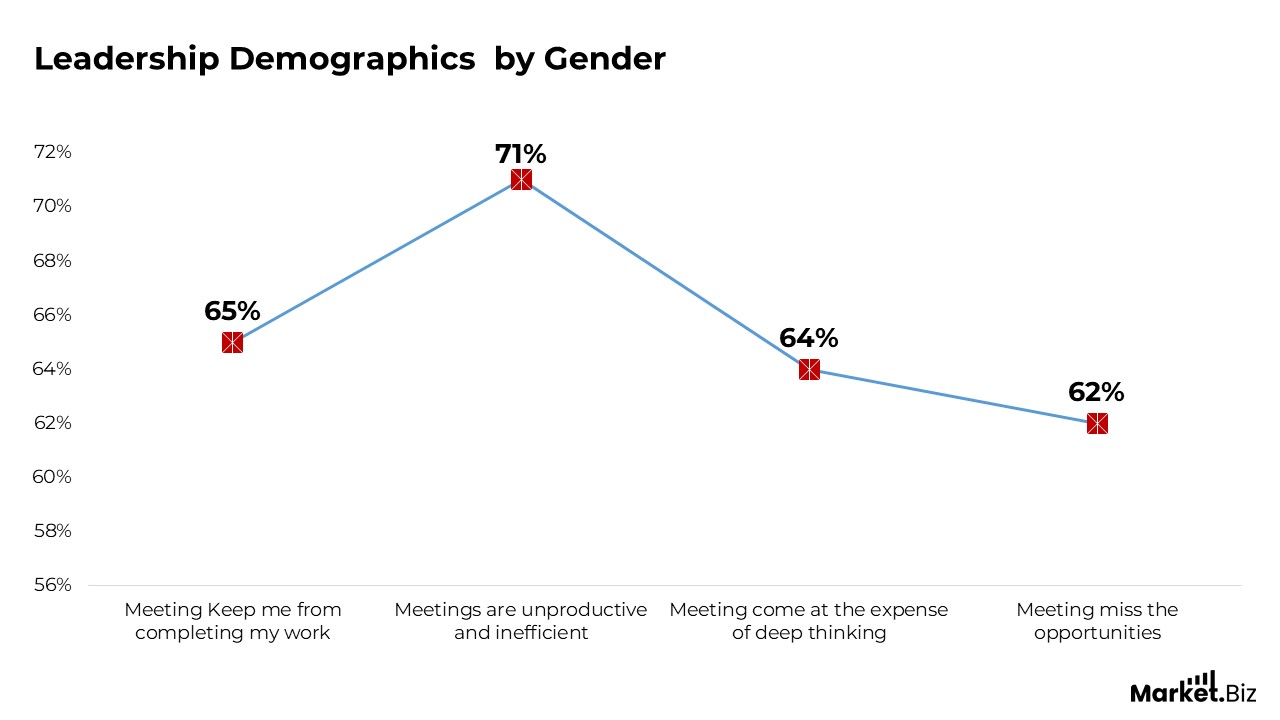
- 67% of senior executives believe that meetings are the biggest time-waster in their companies, with many sessions lacking clear goals.
- 47% of employees feel that too many meetings hinder their productivity, often due to unclear objectives or excessive attendees.
- 39% of meetings last longer than necessary, with over 20% of employees stating they often leave meetings without achieving the set objectives.
- 52% of remote workers report that virtual meetings are less productive than in-person sessions, mainly due to technical issues and distractions.
- 61% of employees say they are often invited to meetings where they don’t contribute or aren’t needed, leading to wasted time.
- 35% of employees say they attend more than 10 meetings per week, which often leads to burnout and decreased focus.
- 44% of meetings result in no follow-up or clear action points, making them ineffective and unproductive.
- 56% of employees state that meetings often fail to make decisions, causing delays in project timelines and reducing overall efficiency.
- 40% of workers report that meetings often lack a clear agenda, leading to confusion and unproductive discussions.
- 49% of workers experience meeting fatigue, feeling that they spend more time in meetings than doing actual productive work.
- Unproductive meetings cost U.S. businesses approximately $37 billion annually, with wasted time and resources being the major contributors.
(Source: Notta)
Zoom meeting statistics
- Due to the rapid adoption during the pandemic, Zoom’s daily meeting participants increased from 10 million in December 2019 to over 300 million by April 2020.
- The average length of a Zoom meeting is approximately 35 minutes, with many sessions extending as teams collaborate more.
- Zoom is used in over 200 countries, making it one of the most widely adopted video conferencing platforms worldwide.
- 60% of Zoom users join meetings through mobile devices, indicating a strong trend toward remote and flexible work.
- Over 90% of Fortune 500 companies use zoom for virtual meetings, showcasing its dominance in the corporate sector.
- Zoom is the leading platform for virtual events, with over 1,000 large-scale webinars hosted daily by businesses and institutions globally.
- 25% of organizations report increased attention to security features and settings on Zoom to ensure data protection and privacy compliance.
- 68% of Zoom meetings utilize additional collaboration tools such as screen sharing, breakout rooms, and chat, enhancing interactivity.
- The number of meetings on Zoom has risen by 40% annually, driven by the ongoing trend of remote work and virtual collaboration.
- 40% of educational institutions globally use Zoom for virtual classrooms and hybrid learning models, facilitating seamless interaction between students and teachers.
- 52% of remote workers report experiencing Zoom fatigue, with long meetings contributing to mental and physical burnout.
Statistics on the future of meetings
- In 2025, 70% of companies are expected to adopt hybrid meeting models, balancing in-person and virtual interactions to increase flexibility.
- 65% of meetings will be held virtually by 2026, driven by the ongoing trend toward remote and flexible work arrangements.
- 40% of meetings will use AI-powered tools for tasks like transcription, scheduling, and note-taking, improving efficiency and accessibility.
- 50% of organizations will implement personalized virtual meeting platforms tailored to the specific needs of attendees, enhancing engagement.
- The average meeting length is expected to reduce by 25% in 2025, with more focus on concise, goal-oriented discussions.
- 55% of businesses will automate meeting scheduling, with AI handling calendar management and conflict resolution.
- 60% of meetings will incorporate features like real-time translation and closed captioning, making them more inclusive for global teams.
- By 2027, 45% of companies will prioritize virtual meetings over travel for sustainability, aiming to reduce their carbon footprint.
- 50% of businesses will use advanced analytics to measure meeting effectiveness, focusing on productivity, engagement, and outcome tracking.
- 30% of organizations will integrate wellness features in meetings, including scheduled breaks and mindfulness practices to reduce stress and fatigue.
- 75% of companies will offer fully flexible meeting options, allowing employees to choose between in-person, hybrid, or virtual attendance.
- 60% of future meetings will integrate virtual whiteboards, real-time co-editing, and 3D interaction tools to foster collaboration and creativity.
- In 2025, 80% of meetings will use video as the primary communication channel, creating a more immersive and engaging experience.
- In-person meetings are expected to decline by 20% by 2030, with businesses shifting toward more digital and flexible meeting formats.
Conclusion
The report shows a strong shift toward virtual and hybrid meetings, with 80% of companies now relying on virtual meetings. Despite this, 53% of meetings are still seen as ineffective, highlighting the need for better planning.
70% of companies find hybrid models enhance flexibility and engagement, while virtual meetings are saving up to 60% in travel costs. Video meetings have boosted productivity by 20%, and by 2025, 70% of companies plan to adopt hybrid models, with AI and automation improving meeting efficiency.
FAQ’s
Purpose, Participants, Process, Payoff, and Preparation are the 5 Ps.
Over 67% of virtual meetings are deemed unsuccessful by executives. In virtual meetings, 92% of the employees multitasked. According to 70% of employees, virtual meetings are less stressful. Zoom fatigue affects 58% of introverts and 40% of extroverts.
Having meaningful meetings is essential to maintaining a healthy connection between all team members, no matter where they are. These gatherings also contribute to the culture and success of an organization by helping to set goals. Fundamentally, there are five reasons why we bring people together: to gather data or viewpoints.
Meetings in person have the special benefit of actual, physical presence. Communication is improved when participants are able to shake hands, look each other in the eye, and read body language. These human touches create bonds that go beyond the constraints of online communication.