









Introduction
Workplace Sustainability Statistics: Workplace sustainability is at the heart of a growing number of organizations today, primarily as a product of increasing environmental pressures, expectations among employees, and regulatory demands. In 2024, formal sustainability initiatives have been implemented in approximately 65%+ of the global companies, compared with 45% back in 2018.
Indeed, about 71% of employees make a point of ethical consideration on a company’s environmental impact when looking for a potential employer. This demonstrates the changing values of the workforce. Companies are now using energy-efficient technologies in the workplace; for example, buildings certified by ENERGY STAR use 35% less energy than average buildings.
Likewise, 80% of large companies are now publishing annual ESG reports. This shows a tendency toward transparency and accountability. Statistics are beginning to show how sustainability increasingly affects the work of a changing future.
Editor’s Choice
- The organizational implementation of formal sustainability programs increased globally by 20% in just a matter of years, despite a slow but still significant increase from 45% in the year 2018 to 65% for the year 2020 among global entities.
- Even 71 percent of employees consider environmental sustainability as important for their job evaluation when considering prospective employers.
- Ten to twenty percent of costs are reduced with sustainability initiatives over five years.
- Close to 80% of Fortune 500 companies produce and supply annual reports on their Environmental, Social, and Governance initiatives or sustainability considerations.
- Specialized green buildings, such as LEED, consume less energy, i.e., 25%-35% lower, and are responsible for 34% less CO2 emission when compared to a conventional building.
- 54% of global emissions are the avoided carbon emissions attributed to remote working, with the greatest reduction contribution from less commuting and office energy.
- For supplier selection, 60% of procurement teams now consider sustainability and ethical sourcing criteria.
- Only with effective recycling programs do businesses divert waste by up to 40% from landfills each year.
- About a third of institutions apply renewable energy sources such as solar or wind in their operations.
- 70 percent of employees are inclined to remain in employment linked to employer sustainability initiatives.
- 65 percent of global consumers consider sustainability a major factor when shopping.
- Most recently, the proportion of businesses committed to achieving net-zero emissions by 2030 was 50%, compared to a mere 30% in 2019.
What is Workplace Sustainability?
Workplace greening means putting environmental, social, and economic practices into daily business functioning. Against this backdrop, the workplace greening includes lowering carbon footprints by conserving resources, organizing waste, and promoting good health among the employees.
In addition, those companies that have adopted sustainable strategies have received, in return, improved efficiencies, reputational enhancement, and long-term cost savings. Sustainability is today the main driver of corporate responsibility, owing to emerging expectations in environmental, social, and governance issues. It also plays a part in shaping future-ready, resilient organizations.
General Workplace Sustainability Statistics
- Formalized sustainability initiatives were reported by 65% companies worldwide in 2023, against a strong 45% in 2018.
- 71% employees and job seekers regard environmental sustainability as an important criterion in selecting an employer.
- Organisations transitioning towards sustainability will see cost savings of 10-20% over five years.
- More than 80% within the Fortune 500 companies annually publish an ESG or sustainability report.
- Green buildings like LEED consume 25-35% energy and emit 34% less CO2 compared to traditional buildings.
- Remote work has reduced carbon emissions up to 54 %. This is mainly possible by commuting cuts and less electricity consumed in offices.
- Companies producing paperless work reduce paper usage by over half and save thousands of printing costs per year.
- Now, 60% of procurement teams evaluate suppliers on standards of sustainability and ethical sourcing.
- 46% of organizations offer in-house sustainability training to employees to help fulfil company-wide green goals. Businesses can divert as much as 40% of waste away from landfills each year with active recycling programs.
- Positive and green commute incentives such as bike storage, EV charging, or even transit subsidies, include more or less 42% of employers.
- Renewable energy utilization in its operation comprises 35% of Fortune 500 companies.
- The biophilic designs and natural light in workplaces increased the productivity of employees by as much as 15%.
- Only 28% of companies have done thorough assessments of climate risks, despite increasing pressure on them.
- Sustainability metrics are an increasingly important part of the executive compensation packages for 55% of top global firms.
- Employee engagement at work in green initiatives rises 25% in companies with cultures focused on sustainability.
- Top 10% of strong ESG performers, which is 4.8% better than the industry average stock returns over 5 years.
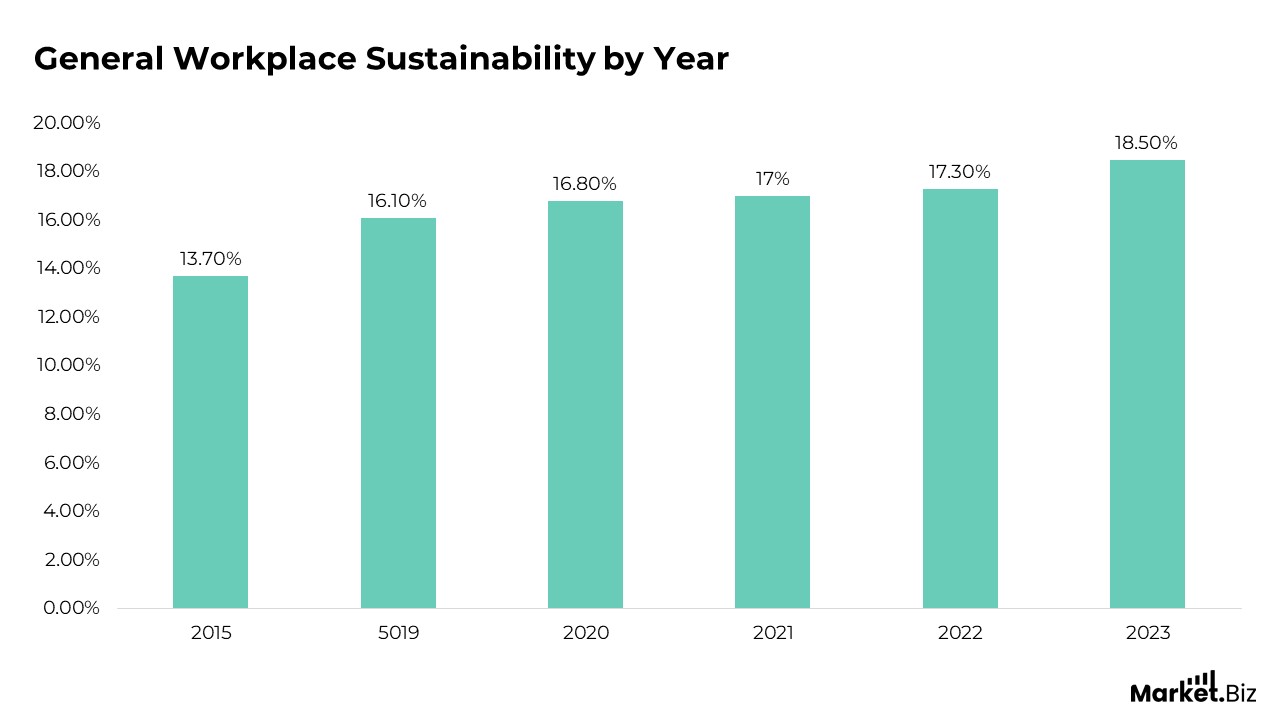
(Source: thesustainableagency, wp-content)
Market Trends in Sustainability
- The adoption of sustainable business practices must be adopted by countries all over the globe and funds for this are expected to reach $20 trillion by 2030 with the increase in ESG investments.
- 88% are loyal consumers toward the social and environmental reasons.
- The ESG asset market had a size of $40 trillion plus in 2023, compared to less than 3% of total world assets under management ten years ago and around 30% today.
- 75% of companies are expected to increase investment in the next three years on a sustainability focus.
- Corporate net-zero pledges have soared over the past four years, mainly by 700%, and more than 4,000 companies globally have pledged to achieve carbon neutrality.
- The percentage of CEOs who consider sustainability to be significant for the future growth strategy now amounts to 60%, as opposed to 44% in 2018.
- The 2023 sample of global generation indicates about 29% of all electricity produced comes from renewable sources, which shows a steady climb.
Moreover
- 52 percent of Gen Z consumers said they actively avoid brands that do not share their environmental values.
- Almost 80% listed companies will have climate-related regulations by year end 2026, so 2026 will give almost 80% of the worlds listed companies a normative climate-related regulation.
- It is quite likely that green technology jobs and sustainable jobs are going to grow at the rate of about 8% each year till the year 2030.
- The market for sustainable packaging is looking to cross and flourish beyond $470 billion by 2027 because of consumer clamour and process regulatory push.
- Well-performing ESG firms will pay lower costs of capital and also have increased strength when market volatility hits.
- The sustainable products grow at about a speed of 2.7 times than the growth rate of conventional products in most industries.
- More than 90% of S&P 500 companies now disclose ESG performance information, reflecting the increasing expectations of investors and regulators.
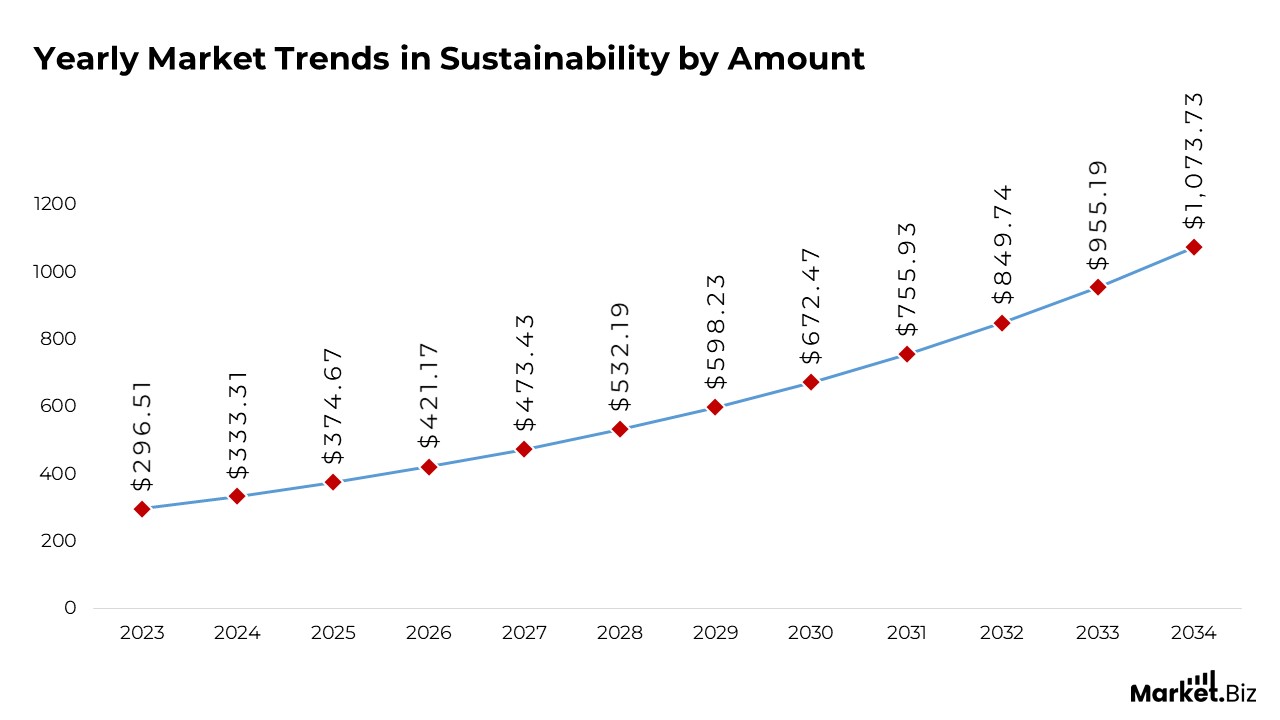
(Source: precedence research)
Employee Preferences with Sustainability
- Two-thirds of job seekers, employees, and managers have a preference for companies with strong policies regarding the environment.
- 58 percent of millennials consider sustainability performance before accepting a job offer.
- Nearly 70% of Gen Z workers would be more inclined to remain with an employer with predetermined climate action goals.
- In excess of four in five employees universally agree with the idea that their companies need to actively speak on environmental and social issues.
- Workers have 46% engagement when their employer offers the opportunity to take part in well-organized sustainability programs.
- The chances of employees being loyal to companies significantly increase, as much as 2.3 times, where sustainability policies are concerned.
- Most employees (57%) noted that the availability of sustainable workplace benefits such as remote work or green commuting makes a difference in their job satisfaction.
- One-in-three job seekers have declined an employment offer because of an organization’s poor environmental record.
- 76% wish their company incorporated sustainability into its mission from the very beginning and not just as a marketing gimmick.
- Employee-driven green initiatives experience a 25% rise in participation when stewarded by leadership and given support and funding.
- According to 61% of workers, working for a sustainable employer gives them a greater sense of purpose.
- Companies with strong ESG reputations attract top talent at three times the rate of those with no sustainability initiatives.
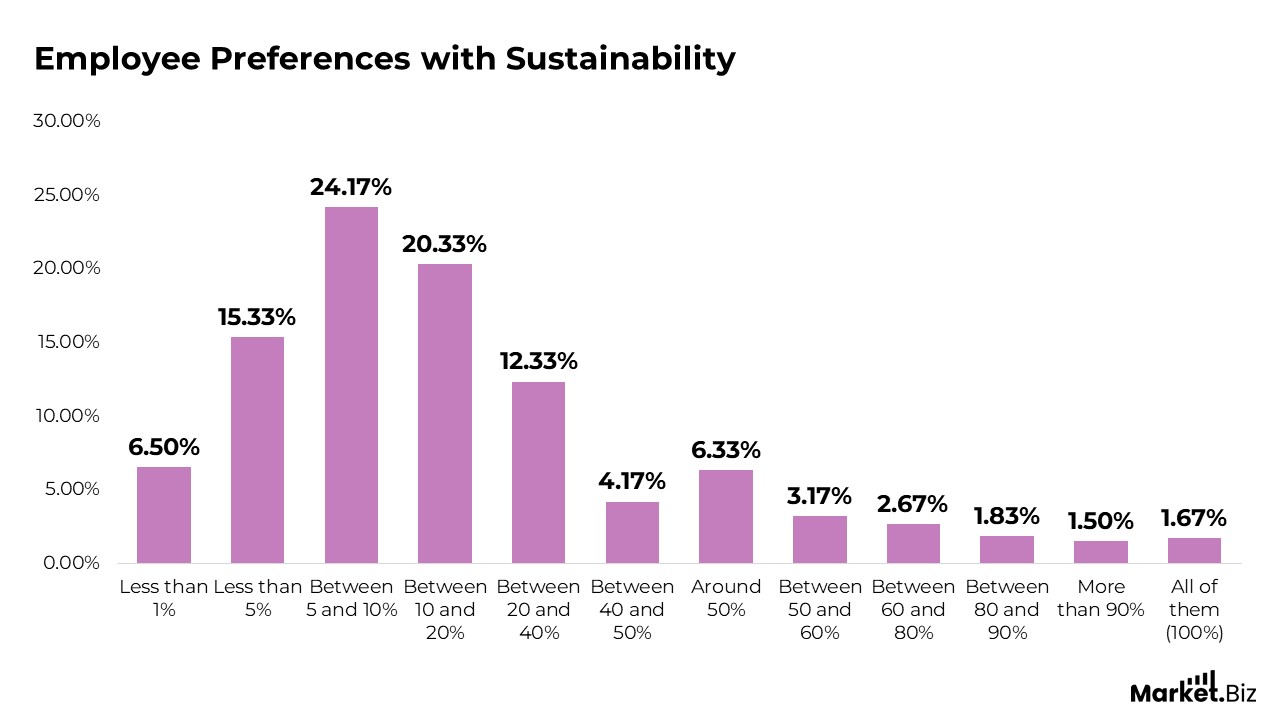
(Source: wp-content)
Sustainability Marketing Statistics
- Most global consumers about seventy-three percent say they would actually change consumption patterns to lessen environmental impact.
- Companies marketing their sustainable practices between 2015 and 2021 saw sales grow 5.6 times compared to those without sustainable practices.
- About 64% of Gen Z would pay more for products from sustainable brands.
- About 90 percent of marketers agree to provide that sustainability becomes a key prominent differentiator for brands in competitive markets.
- This Greenwashing backlash has received much of it: 34% of consumers reporting that they do not trust vague environmental claims.
- At the same time, 52% of online shoppers sought sustainability information before buying, especially for apparel and electronics.
- Consumers purchase about more than 60% of operations worldwide due to products being eco-labelled-to-their purchasing behaviour.
- Sustainable promise campaigns thus have better rates of engagement: an average of 6.2% on social media, against 4.1% found in general content streams.
- 44% of marketers are now doing sustainability goals for brand strategy planning every year.
- For every 10 years that a brand draws its identity from sustainability, its brand valuation increases by 23%.
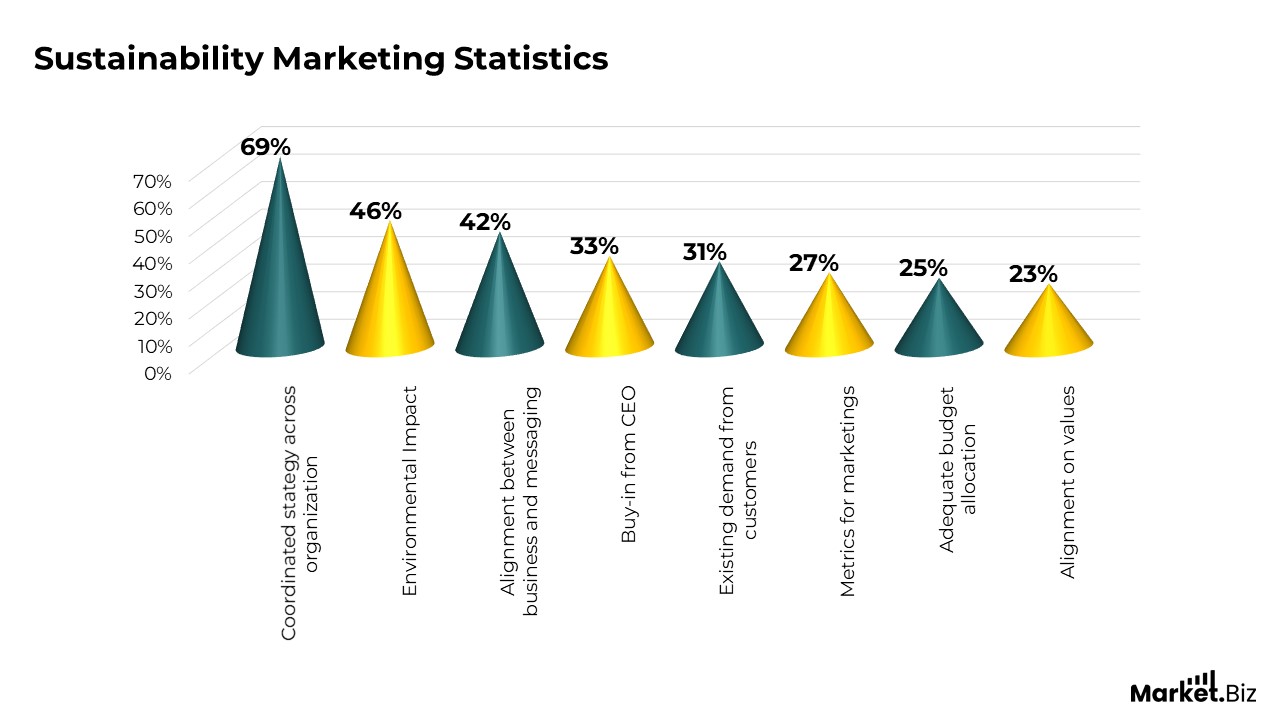
(Source: Deloitte)
Investment in Sustainability Training
- Now, 46% of organizations worldwide have included sustainability training programs in their employee development strategies.
- Companies investing in ESG education manage to increase employee engagement by 20% regarding sustainability initiatives.
- In 2024, 1 in every 3 large enterprises embarks on budgeting sustainability’s-specific upskilling, whereas in 2020 it was merely 19%.
- Organizations with a green training program will implement their sustainability goals 24% faster than organizations where no such training exists.
- More than 60% of employees feel that the sustainability training makes them more connected to the mission of the organization.
- Nine in ten green-skills training provide a focus now for 39% among HR leaders, specifically in varying sectors; including energy, tech, and manufacturing.
- Companies that provide their employees with training in ESG methods see 17% better compliance with environmental regulations.
- Sustainability-certified teams are 30% more likely to lead or engage in green innovation projects.
- Firms teaching climate literacy increase the level of internal advocacy for sustainability by 25%.
- 84% of executives say sustainability training drives resilience and competitive advantage in fast-changing markets.
- By 41% annually, demand for skills that can be applied has grown considerably for ESG-oriented employee workshops.
- Those companies that have integrated sustainability into their on-boarding programs have seen higher retention of younger employees.
- The investment in green training pays off, on average, for 8% per year via improved efficiency and other factors.
Sustainability on Remote Work
- Commutes are down and reducing emissions internationally by 54%; that is the chief advantage of remote work.
- Reducing energy consumption is one example of more sustainable practices that working from home has allowed 45% of employees to adopt.
- Companies with hybrid or remote business models have reduced their office energy requirements by 30 to 40 percent.
- According to a survey, 62% of employees consider remote work important in the company’s attempts to attain sustainability targets.
- So little paper and single-use materials are consumed during remote work that it results in a 60% waste reduction in the workplace per year.
- 72% of companies offering remote work have lower operational costs, which means savings on resources and reduced environmental footprints.
- Remote work saves the employee, on average, 1,000 to 1,500 kg of CO2 yearly by avoiding the daily commute.
- 52% of remote workers claim they are more likely to source sustainable products and services while working from home.
- More than one-third of companies claim remote work has been conducive to attaining sustainability goals, especially concerning waste and emissions reduction.
- Green office solutions such as energy-efficient appliances and waste reduction approaches are being rolled out at a much faster pace because of the rise in remote working.
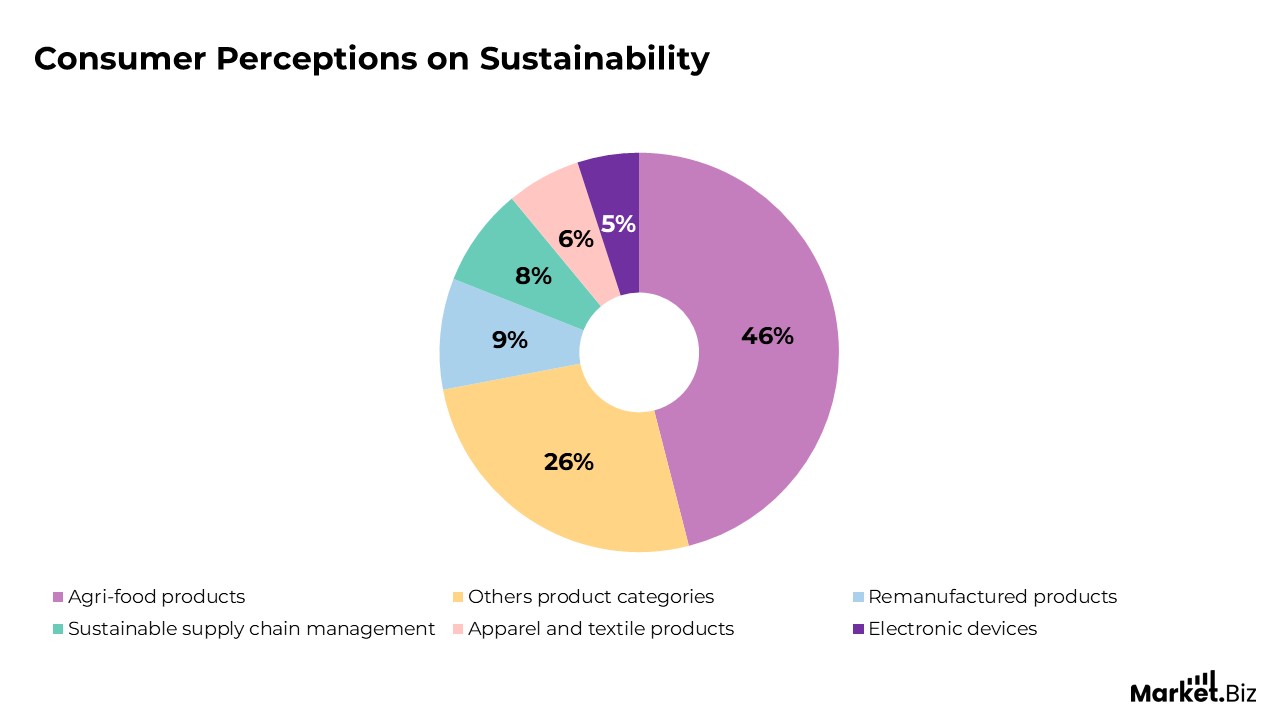
Consumer Perceptions on Sustainability
- 73% of consumers feel that a defect may allow companies to sell items in the name of sustainability.
- Initiated, then, are the further responsibilities of companies to create pathways to sustainability, if a 66% statistic can be believed.
- A majority of millennials would prefer to make a purchase from companies that are green.
- Investors are increasingly acknowledging 59%. They seek out information about sustainable products affecting purchasing decisions.
- 45% of people are fine with having to spend more for a product with unwanted packaging.
- Once again, “60% of consumers in this world would like to see businesses be much more transparent on every aspect, including environmental impact.”
- For each favourably built-in firm objects, yet a decreased 58% of consumers across representing changes geared towards helping those affected on the consumption list.
- Actually, 77% of Generation Z, 78% of whom are seen to take part in rebellion, think it is essential for companies to publicize the sustainability considerations concerning their products.
- 65% of consumers see sustainability as a must in their purchase cycle.
- Another 48% would not buy something from a company that they could see is bad for the environment.
- 41% of those shoppers cannot stand greenwashing and give the accused brands a wide berth.
- Today, 33% would probably tell everyone they know about a favourite, definitely sustainable brand.
- In 2025, more than half expect businesses to offer their customers greater choice of sustainable products.
- 52% of consumers believe that sustainability is a criterion when no other elements can be figured into a proper consumer choice.
- Among the larger majority of 72%, consumers feel that instead of reacting, companies should initiate real problem-solving on behalf of the environment.
(Source: MDPI)
Workplace Sustainability in Industries
- 70% of makers adopt sustainability practices, where they rely on energy efficiencies and reductions in waste to cut costs and enhance an efficient operational model.
- The construction domain has witnessed an increase the adoption of 30% in green building certifications like LEED in favour of sustainable design and materials.
- Energy companies heavily invest in renewable energy sources to generate 29% of global electricity from these renewable sources in 2023.
- There is a shift across retailers toward sustainable packaging. The market for such packaging is expected to exceed $470 billion by 2027.
- Healthcare organizations are turning towards sustainability practices by reducing waste and energy usage: 45% of the hospitals now have green building strategies.
- IT companies are creating energy-efficient data centers that reduce power consumption by up to 40% by enhancing the infrastructure and virtualization technologies.
- The automotive industry now has a major emphasis on sustainable vehicle manufacturing. Nearly 35% of the key auto manufacturing companies today have introduced electric vehicle models.
- Farming and food production are developing and adopting sustainable agriculture practices in terms of reduced water application by 30% with the use of modern irrigation techniques.
- More and more financial services are taking up ESG (Environmental, Social, and Governance) measures, and as a result, more than 40% of investors across the globe are making their sustainable investments.
- Using energy-efficient technologies and infrastructure improvements has helped the telecommunications companies to reduce their energy consumption by 20-30%.
- The logistics industry has used investments in electricity in EVs and optimized routes to reduce carbon footprints by up to 25% within a year.
- Six out of every ten brands in the fashion world amalgamated into becoming brands that use sustainable inputs in their commodities-that has made the principle of a circular economy in that industry.
Recent Trends in Workplace Sustainability
- Now, out of every 100 companies, 65 have operationalized formal sustainability programs. 30 out of the same cross-section plan on increasing their investments in green initiatives in 2025 while under regulatory pressure as well as employees screaming out for change in the mode of doing business for better sustainability.
- The results: 45% of hybrid and fully remote employees feel they identify more with the company’s sustainable goals, and because most companies go for flexible working arrangements, they also obtain a considerable reduction in office energy consumption and carbon emissions in general by promoting home working.
- Adoption of green building certifications like LEED increased by 30% in the latest five years. The certifications help companies scale their buy-in within the energy use spectrum, promote healthier workspaces, and help improve sustainability credentials.
- At the moment, 82% of the organizations have included sustainability metrics in executive performance reviews, as they feel sustainability should grow deeper within a corporate organization as a driver of success and develop long-term value for companies.
Conclusion
Workplace sustainability is fast becoming a priority for every organization all over the world. From such formal sustainability initiatives, most companies are tying some of these clearly defined sustainability scores into executive performance reviews. Another increasingly popular consideration for employees seeking to join the workforce is the environmental impact of employers.
Such growth evidence mentioned above is manifested mostly in new formations, like rise-shadowed green certifications, net-zero emissions commitments, and increasingly associated practices on the circular economy.
Such organizations that still look up to the benefits that are accruing from sustainability will always reap the benefits of being able to retain employees over time, and even incur cost savings through their activities, and increase loyalty for their brand, ensuring long-term success.
FAQs
As of the year 2024, it has been noted that 65% of global companies have joined up for formal sustainability initiatives, up from just 45% in 2018; this is an indicative increase in corporate commitment towards the environment.
Around 70% of the workers are more likely to remain in a company that shows a great deal of commitment to sustainability, thus proving how that would affect retention as well as job satisfaction.
Green-certified buildings like these LEED-certified buildings consume from 25 to as much as 35 percent less energy and produce 34 percent less CO² than a conventional building, which is advantageous both in terms of cost savings and for impacts.
Work-from-home drastically reduces carbon emissions by as much as 54%, reducing commuting, thus lessening the energy consumption of offices, and is, therefore, the most critical factor towards workplace sustainability.