









Introduction
Outsourcing Statistics: Outsourcing has become a key strategy for many businesses, helping them save costs and improve efficiency. In 2023, the global outsourcing market was valued at around $92.5 billion, and it’s expected to grow at a rate of 8.7% annually. Most outsourcing focuses on IT services, customer support, and business processes, with countries like India and the Philippines leading the way.
This growing trend shows how companies are increasingly turning to external partners for specialized skills, scalability, and flexibility. Outsourcing is playing a crucial role in helping businesses stay competitive and run smoothly in today’s fast-paced world.
Editor’s Choice
- The global outsourcing market is valued at $92.5 billion in 2024, growing 8.7% annually.
- India leads the IT outsourcing market, holding 55% share, while the Philippines generates $35 billion in BPO revenue.
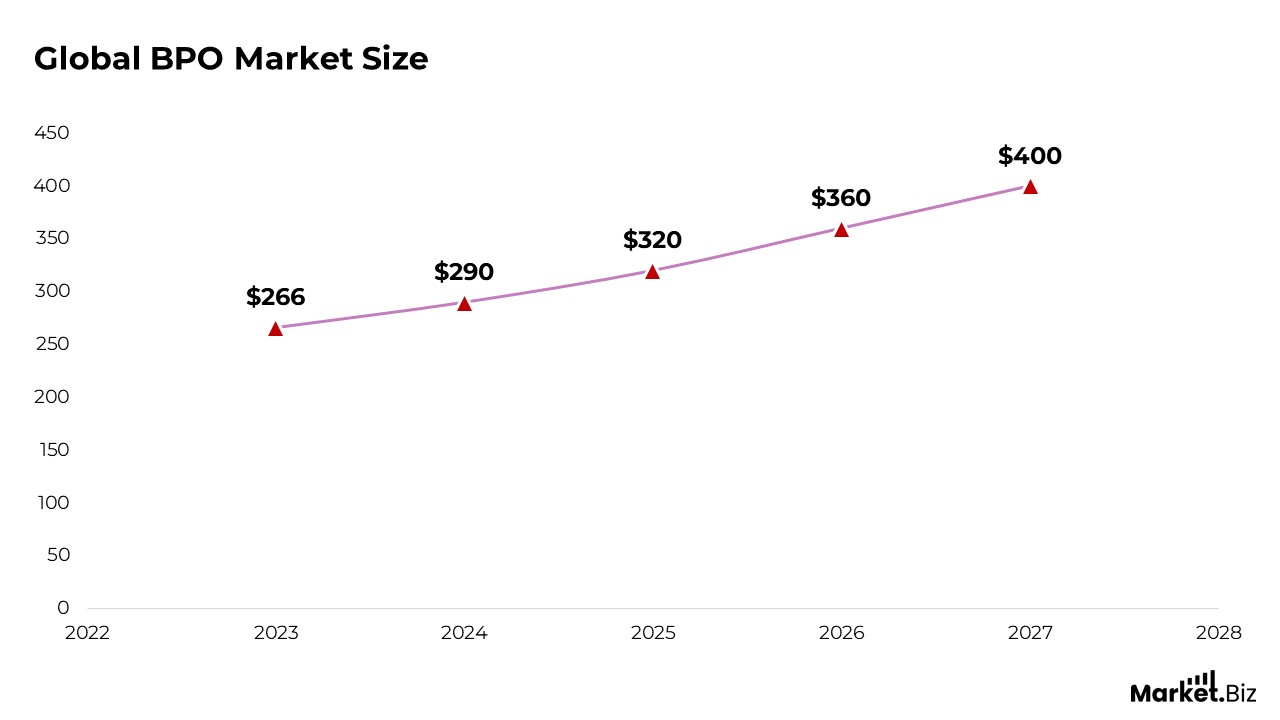
- The BPO market will reach $400 billion by 2027, driven by demand for customer support and HR services.
- AI-driven outsourcing will boost market value by 10% in 2025, especially in data analysis and customer service.
- 90% of consumers consider customer service crucial, with 70% willing to pay more for great service.
- The global call centre market is valued at $400 billion in 2024, with growing use of cloud and AI for cost savings.
- The customer service outsourcing market will hit $110 billion by 2026, driven by demand for 24/7 support.
- 66% of small businesses outsource at least one function, with 45% using outsourced IT services.
- The IT outsourcing market will generate $591.24 billion in 2025, with the U.S. leading at $213.57 billion.
- The global outsourcing market will grow to $524 billion by 2027, fuelled by cloud services and nearshoring.
General Outsourcing Statistics
- The global outsourcing market is valued at approximately $92.5 billion in 2024, reflecting a steady growth rate of 4.7% annually.
- IT outsourcing accounts for over 60% of the total outsourcing market, with software development and technical support being the leading services.
- The global BPO industry is expected to grow to $400 billion by 2027, with services like customer support and HR outsourcing driving demand.
- As of 2023, India remains the top destination for IT outsourcing, holding a 55% market share.
- On average, companies can save up to 30-40% in operational costs by outsourcing non-core functions to offshore locations.
- Nearly 45% of companies outsource at least some aspect of remote work, focusing on functions like IT support and content creation.
- India, Philippines, China, and Mexico are the leading outsourcing hubs due to their cost-effectiveness and skilled labour.
- Around 59% of companies prioritize cost reduction when outsourcing services, often leveraging countries with lower labour rates.
Moreover
- European companies are expected to spend over €20 billion annually on outsourcing by 2026, with IT and customer service being the primary sectors.
- In 2025, AI-powered outsourcing is expected to contribute to a 10% increase in global outsourcing value, particularly in areas like data analysis and customer support.
- Over 50% of firms report data security as the top challenge in outsourcing relationships, especially in IT and financial outsourcing.
- Around 300,000 U.S. jobs are outsourced annually, with IT and manufacturing being the most commonly offshored sectors.
- The customer service outsourcing market alone is expected to grow to $110 billion by 2026, driven by demand for 24/7 support and multilingual services.
- Outsourcing to Eastern European countries like Poland and Ukraine is on the rise, with 70% of businesses citing improved access to talent as the main advantage.
- Nearly 37% of small businesses in the U.S. outsource at least one business function, with the most common being marketing and IT services.
Global BPO Market Size
(Source: Orientsoftware)
- The global BPO market size was valued at approximately $266 billion in 2023, with expectations to grow at a compound annual growth rate (CAGR) of 9.1% from 2024 to 2030.
- India remains the largest outsourcing destination for BPO services, contributing to over 50% of global BPO revenue, particularly in customer service, finance, and accounting.
- The IT services segment within the BPO market is anticipated to be worth $150 billion in 2025, with cloud-based services and cybersecurity becoming increasingly vital.
- North America holds the largest market share in BPO, valued at $97 billion in 2023, driven by demand for customer service, IT support, and HR outsourcing.
- The Philippines is projected to maintain its position as the second-largest BPO hub globally, reaching $35 billion in revenue by 2026, with expertise in customer care and finance.
- The global outsourcing of customer support services alone is expected to reach $360 billion by 2026, with virtual assistants and catboats expanding rapidly in adoption.
Further
- Outsourcing for back-office functions such as data entry, payroll, and accounting is projected to increase by 12% annually, reaching a market value of $160 billion by 2028.
- The Asia-Pacific BPO market is expected to expand significantly, with a forecasted growth rate of 10.6% from 2024 to 2030, led by India, China, and the Philippines.
- Robotic Process Automation (RPA) in the BPO sector is expected to be a key growth driver, with the market for RPA services growing to $15 billion by 2027.
- Outsourcing for HR services is growing rapidly, with $44 billion projected in 2025, driven by demand for talent acquisition, payroll processing, and employee benefits management.
- Latin America is emerging as a competitive BPO destination, with Brazil and Mexico capturing around 15% of global BPO revenue, valued at approximately $40 billion in 2024.
- The rise in AI-driven BPO solutions is projected to create new market opportunities, with AI technologies expected to capture 25% of the global BPO market share by 2030.
Customer Service and Call Centre Sector Statistics
Customer Service Statistics
- The global customer service market is expected to reach $1.8 trillion by 2027, growing at a CAGR of 9.6% as businesses continue investing in improving customer experience.
- Over 90% of consumers say customer service is a key factor in deciding whether to do business with a company, with 70% of them willing to spend more on brands that provide excellent service.
- 79% of customers prefer to reach businesses through digital channels, with social media and live chat becoming the most preferred methods for communication.
- Companies with a strong focus on customer service experience a 14% increase in customer retention, leading to an estimated $10 billion in additional revenue annually.
- 80% of customer interactions are handled without human intervention, with the use of AI, catboats, and automated systems significantly reducing costs.
- Research shows that 63% of customers expect companies to resolve issues within 10 minutes, leading to higher customer satisfaction when businesses meet this expectation.
- Omni-channel customer service has become critical, with 75% of consumers preferring a consistent experience across multiple touchpoints like phone, email, chat, and social media.
- 71% of customers expect companies to offer 24/7 support, driving the demand for businesses to integrate AI or outsourced customer service operations.
- A 2019 study revealed that 86% of customers would pay more for a better customer service experience, showcasing the economic value of investing in support.
Call Centre Sector Statistics
- The global call centre industry is valued at $400 billion in 2024, with the U.S. contributing more than $60 billion to this market, reflecting its prominence in business operations.
- Call centres in emerging markets such as India and the Philippines account for over 40% of global call centre services, with India maintaining a 55% market share in the BPO sector.
- The use of cloud-based call centre solutions has grown exponentially, with 35% of all call centres worldwide adopting this technology as of 2023, driven by flexibility and cost savings.
- Call centres handling inbound customer calls see an average 90% retention rate for customers who are satisfied with the service, highlighting the importance of positive customer interactions.
- The average cost per call in a traditional call centre is around $6, but with the implementation of automation and AI, this can be reduced to as low as $1 per interaction.
- 60% of call centre agents experience burnout within the first year, leading to a 30% turnover rate, making employee retention a critical focus in the sector.
- In 2023, the global call centre outsourcing market was valued at approximately $90 billion, with 30% of firms outsourcing their customer service functions to offshore locations.
- About 40% of call centres globally are using AI tools like virtual assistants to automate routine queries and reduce wait times, improving efficiency and customer satisfaction.
- The rise of self-service options has led to a 30% decrease in the volume of calls handled by live agents, especially with increased adoption of IVR (Interactive Voice Response) systems and mobile apps.
Outsourcing Market Statistics
- The global outsourcing market is projected to reach $524 billion by 2027, with a growth rate of 6.2% CAGR, driven by an increasing reliance on third-party vendors to reduce costs and improve efficiency.
- Cloud computing outsourcing is rapidly expanding, with the global market expected to reach $40 billion by 2026, as companies increasingly adopt cloud services for flexibility and scalability.
- Nearshoring is on the rise, with 38% of businesses choosing to outsource to nearby countries instead of offshore locations, particularly in regions like Central America and Eastern Europe for their proximity and cultural similarities.
- Asia-Pacific continues to dominate the outsourcing market, representing 45% of global outsourcing revenue, with India and the Philippines as key players in IT and BPO services.
- The global outsourcing of human resources is projected to grow to $57 billion in 2025, driven by the increasing need for efficient talent management, recruitment services, and employee benefits outsourcing.
- Outsourcing for finance and accounting services is expected to exceed $60 billion by 2026, with companies outsourcing functions like bookkeeping, tax preparation, and auditing to improve accuracy and reduce overhead costs.
- 60% of organizations have increased their outsourcing budgets for digital transformation initiatives, especially for areas like data analytics, AI development, and digital marketing.
- The BPO sector in the United States is valued at approximately $28 billion, with customer support and back-office services being the most outsourced functions to countries like India and Mexico.
- The AI and automation adoption in outsourcing services has accelerated, with 40% of organizations using AI to automate routine tasks like data processing, leading to a 10-20% reduction in operational costs.
- The outsource market for cybersecurity services is expected to grow to $24 billion by 2027, as businesses increasingly rely on external experts to protect their networks, especially in the wake of rising cyber threats.
Small Business Outsourcing Statistics
- 66% of small businesses outsource at least one function to external vendors, with administrative tasks being the most commonly outsourced.
- 27% of small businesses rely on outsourcing to reduce operational costs, citing savings of up to 25% on non-core activities such as marketing and logistics.
- Around 33% of small businesses outsource customer service to specialized providers, primarily using third-party call centres to improve customer experience without the cost of in-house teams.
- 51% of small business owners say that outsourcing allows them to focus on growing their core business and scaling more effectively.
- 45% of small businesses use outsourced IT services, primarily for network security, data backup, and system management, reducing the need for in-house technical staff.
- 15% of small businesses outsource their payroll processing, helping them stay compliant with tax regulations while ensuring timely and accurate payments to employees.
- In 2023, small businesses in the U.S. spent approximately $18 billion on outsourced services, with the majority directed toward marketing, technology, and customer service.
- 38% of small businesses outsource their logistics and supply chain management, allowing them to expand their reach without the overhead of maintaining warehouses and distribution teams.
- 28% of small businesses leverage outsourcing for graphic design and branding, allowing them to access high-quality creative services on demand without hiring a full-time design team.
- A survey found that 40% of small businesses are now outsourcing content creation to freelancers or agencies, recognizing the importance of high-quality content marketing to attract and engage customers.
Worldwide IT Outsourcing Statistics
- The global market for IT outsourcing is anticipated to grow at a remarkable rate.
- In 2025, the market is expected to generate an astounding US$591.24 billion in revenue.
- With a forecasted compound annual growth rate (CAGR) of 8.28% from 2025 to 2029, this growth trajectory is anticipated to continue, with a market volume of US$812.71 billion by that year.
- In 2025, the average spend per employee is expected to be US$164.56.
- This statistic shows how much money businesses are prepared to spend on IT outsourcing market services in order to guarantee effectiveness and affordability.
- With the highest revenue of US$213.57 billion in 2025, it is clear from a global comparison that the US will control the market.
- This demonstrates the nation’s dominant position and sway in the IT outsourcing industry.
- India’s IT outsourcing industry is still booming thanks to its highly qualified workforce and affordable solutions, which draw in clients from all over the world.
Outsourcing Statistics by Top Countries
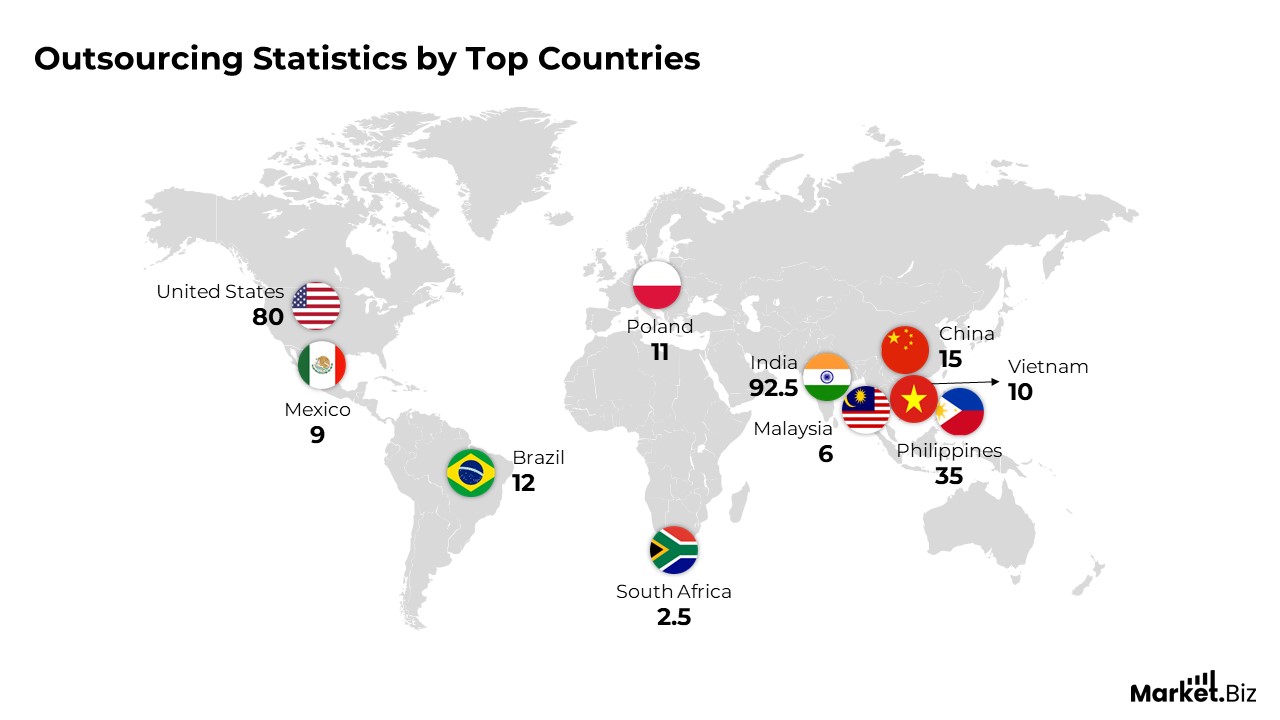
- India remains the leading outsourcing destination, capturing over 55% of the global IT outsourcing market, valued at $92.5 billion in 2024, with a primary focus on software development, customer support, and IT services.
- The Philippines is the second-largest outsourcing hub, generating $35 billion in revenue from BPO services in 2023, especially in customer service and healthcare outsourcing, making it the top destination for voice-based services.
- China holds a significant share of the outsourcing market, contributing $15 billion globally, with its primary outsourcing services in manufacturing, IT support, and product design.
- Mexico has emerged as a top nearshoring destination for the U.S., with outsourcing revenue projected to reach $9 billion in 2025, mainly in customer service, IT support, and finance.
- Poland is a leading outsourcing hub in Eastern Europe, accounting for $11 billion of the global outsourcing market, with its strengths in IT services, software development, and back-office functions.
Moreover
- Brazil is another key player in the Latin American outsourcing market, expected to reach $12 billion in BPO revenue by 2026, with increasing demand for customer service and IT outsourcing from companies in North America and Europe.
- Vietnam is growing rapidly in the outsourcing sector, particularly in IT and software development, with the market projected to surpass $10 billion in 2025, attracting companies due to its competitive labour costs and skilled workforce.
- The United States remains one of the largest consumers of outsourcing services, spending over $80 billion annually on outsourcing, with the most outsourced services being IT support, customer service, and marketing functions.
- Malaysia continues to grow as an outsourcing destination, with its market valued at $6 billion in 2023, driven by BPO services in areas like finance, accounting, and customer support for industries in the Asia-Pacific region.
- South Africa is becoming a major player in the outsourcing market, particularly for English-speaking BPO services, with its outsourcing market expected to grow to $2.5 billion by 2026, driven by customer service and IT support.
Outsourcing Statistics by Industries
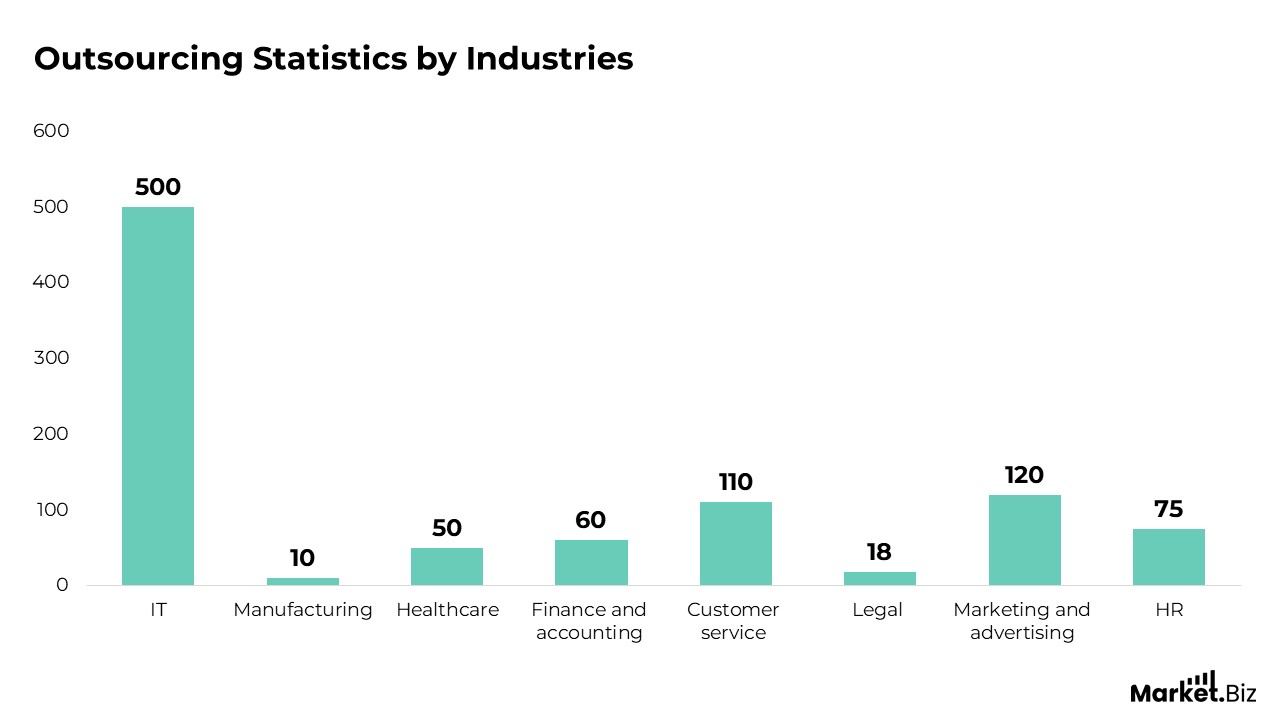
- The IT outsourcing industry is projected to reach $500 billion by 2027, with cloud services, software development, and cybersecurity leading the demand due to the increasing need for digital transformation across businesses.
- Manufacturing outsourcing continues to thrive, with an estimated value of $10 billion annually, with countries like China, India, and Mexico leading in production, assembly, and supply chain management services.
- Healthcare outsourcing is a rapidly growing sector, with an expected market size of $50 billion by 2026, driven by the outsourcing of administrative functions, medical billing, telemedicine, and IT support services.
- Finance and accounting outsourcing is expected to reach $60 billion in 2025, as businesses look to reduce costs and improve financial compliance, particularly in payroll processing, tax services, and auditing.
- The customer service outsourcing sector is projected to exceed $110 billion by 2026, with businesses increasingly outsourcing call centres, email support, and social media customer care to improve customer satisfaction.
- Legal outsourcing is expanding, with a market size of $18 billion expected by 2027, driven by the demand for services like contract management, patent research, and legal process outsourcing (LPO) to reduce overhead costs.
- The marketing and advertising outsourcing market is projected to reach $120 billion in 2025, with businesses outsourcing digital marketing, content creation, SEO, and social media management to specialized agencies for expertise and cost-efficiency.
- The HR outsourcing industry is expected to surpass $75 billion by 2026, as companies increasingly outsource recruitment, employee benefits management, and payroll services to improve efficiency and focus on strategic growth.
Benefits of Outsourcing Statistics
- Outsourcing can reduce operational costs by 20-30% on average, with companies able to focus their resources on core business functions, leading to increased efficiency and cost savings.
- 60% of businesses report improved service quality and customer satisfaction after outsourcing, particularly in customer support and IT services, due to access to specialized expertise.
- 70% of companies outsource non-core business functions, enabling them to focus more on innovation and strategic initiatives, which drives overall growth and competitive advantage.
- Outsourcing helps businesses scale operations rapidly, with 72% of small businesses able to expand more quickly by outsourcing accounting, IT, and HR tasks to external vendors.
- Companies can reduce labour costs by 50-70% by outsourcing to lower-cost countries, particularly for roles in IT, customer service, and manufacturing.
- 85% of companies report faster turnaround times for outsourced projects, especially in areas like software development, marketing, and data processing, due to access to specialized skills and round-the-clock support.
- 55% of businesses say outsourcing helps them focus on core competencies, allowing them to improve product quality and customer experience while offloading routine or administrative tasks.
- 90% of businesses that outsourced customer service report a 10-20% increase in customer retention and loyalty, thanks to improved support availability and higher-quality services.
Conclusion
Outsourcing remains a key growth driver for businesses worldwide, with significant annual growth projected for the coming years. India and the Philippines continue to dominate the IT and BPO services sectors, while countries like Mexico and Brazil are emerging as strong outsourcing hubs. The integration of AI is expected to further boost market growth, especially in areas like data analysis and customer support.
The customer service outsourcing market is also experiencing strong growth, reflecting the increasing demand for 24/7 support and multilingual services. As companies focus on core functions, outsourcing continues to be essential for cost savings, scalability, and access to specialized expertise.
FAQs
Approximately 70% of companies use outsourcing to reduce their costs. About 70% of companies worldwide are using outsourcing as a means of reducing their operating costs. The company is well-known for providing expert services.
Accounting and finance. One of the sectors that gains the most from outsourcing is the finance and accounting sector. No matter the size of the company, effective financial process management is essential. These jobs, however, can take a lot of time and call for specific knowledge.
The most popular kind of outsourcing is called business process outsourcing, or BPO. It entails hiring a third-party business to manage particular business operations. These procedures may involve back-office assistance, accounting, and customer service.
Through outsourcing, you can take advantage of your entire supply chain as well as your knowledge and skills. In addition to offering cost savings and service level enhancements, outsourcing can help your company become more agile and flexible so it can respond to shifting market conditions and obstacles.