









Introduction
Trampoline Park Statistics: Trampoline parks are recreational venues that feature interconnected trampolines, foam pits, and various attractions, appealing to a diverse age group for entertainment, fitness, and social engagement. The global trampoline park industry is witnessing significant expansion, with forecasts predicting a market value of $3,958.9 million by 2032, reflecting a compound annual growth rate (CAGR) of 16.2%.
This growth is driven by a rising consumer interest in active entertainment and leisure pursuits, especially among families. Trampolining can be as simple as installing a trampoline in a backyard and executing aerial maneuvers, or it can take place in a large trampoline park; regardless of the setting, trampoline jumping is enjoyable and provides excellent exercise.
Nevertheless, the frequent use of trampolines leads to an increase in injuries associated with trampoline activities. Statistics regarding trampoline-related injuries should facilitate users, parents, and industry investors in adopting safer practices, thereby reducing the incidence of injuries.
Editor’s Choice
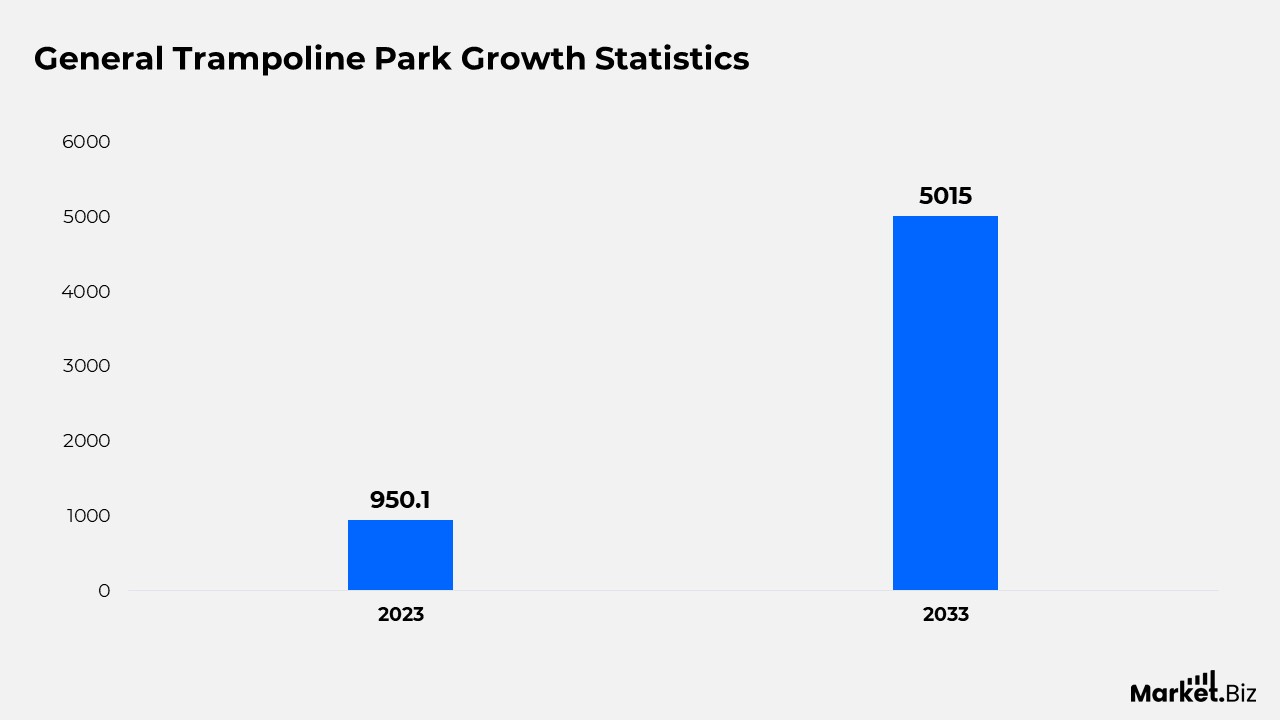
- By 2033, it is projected that the global trampoline market will expand to USD 5.15 billion.
- In 2023, the market was valued at USD 950.1 million.
- The market is expected to maintain its upward trend, reaching USD 1,403.9 million in 2026 and USD 1,599.1 million in 2027.
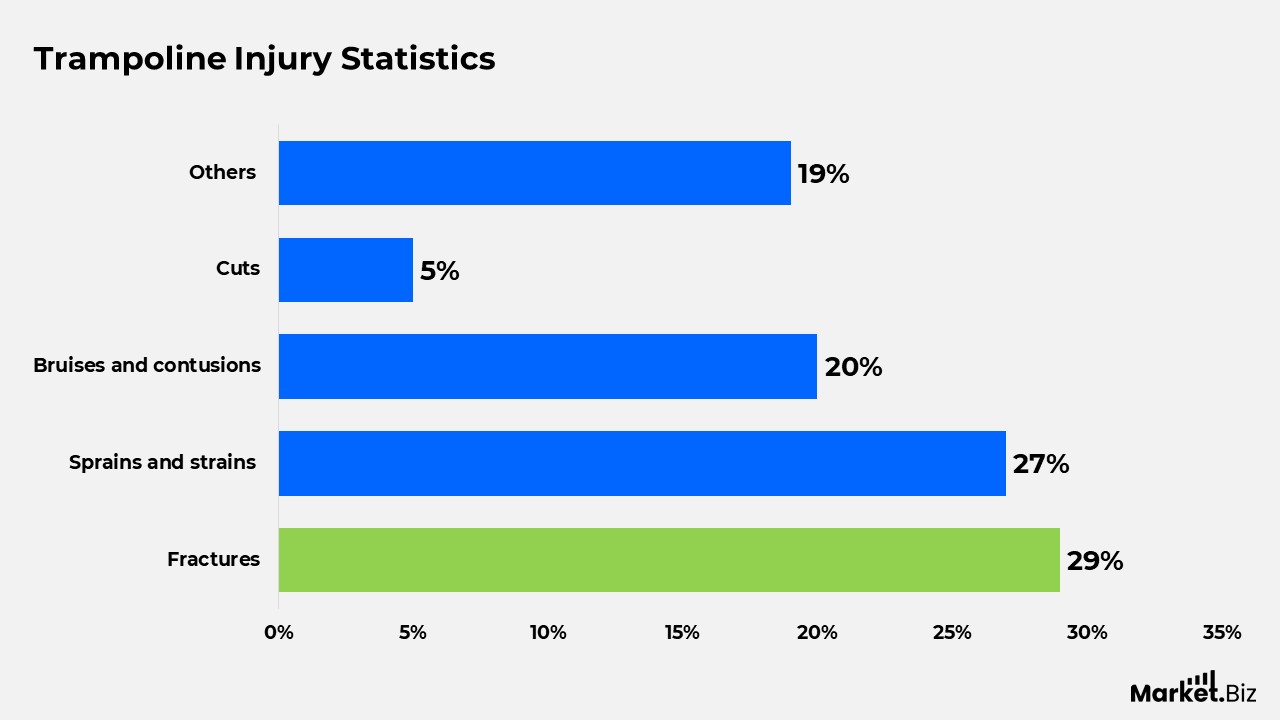
- Trampoline injuries encompass a range of problems: 29% are fractures, while sprains and strains also frequently occur, constituting 27%.
- Approximately 40% of injuries arise from falls off the trampoline, while 15% result from collisions between jumpers.
- 9% of injuries sustained at trampoline parks necessitate hospitalization, in contrast to 5.2% for backyard trampolines.
- 59% of injuries at trampoline parks involve leg fractures.
- The total of 2,471 active participants in Trampoline Gymnastics comprised 738 senior men and 685 senior women, in addition to 450 younger men and 598 younger women.
- The worldwide trampoline park industry is projected to increase from USD 1,026.4 million in 2023 to USD 3,958.9 million by 2032, reflecting a compound annual growth rate (CAGR) of 16.2%.
General Trampoline Park Statistics
- The origins of trampoline games can be traced back to the 1930s, when gymnasts Larry Griswold and George Nissen created the first modern trampoline in 1936.
- By the year 2000, at the Sydney Games, trampoline made its Olympic debut, setting its recognition as a global sport.
- By 2033, it is projected that the global trampoline market will expand to USD 5.15 billion.
- In 2033, the revenue from the global trampoline park market is anticipated to reach USD 3,491.5 million.
- In 2018, the supply of trampoline parks by chains in the Netherlands revealed a diverse landscape. JumpXL began as the leading chain, commanding a 30% share among all trampoline parks, which underscores its leading position in the market.
- The 2023 Trampoline Gymnastics Men’s rankings showcase a varied collection of athletes hailing from different parts of the globe. At the forefront of these rankings is WANG Zisai from China, who has accumulated a total of 230 points.
- A comprehensive analysis conducted over three months, from April to June 2019, across 50 trampoline parks, uncovered notable trends in the demographics of participants. It was determined that the most prevalent age among jumpers is nine years old.
- Each year, approximately 100,000 trampoline-related injuries occur in the United States, resulting in around 3,000 hospital admissions.
Trampoline Park Market Size Statistics
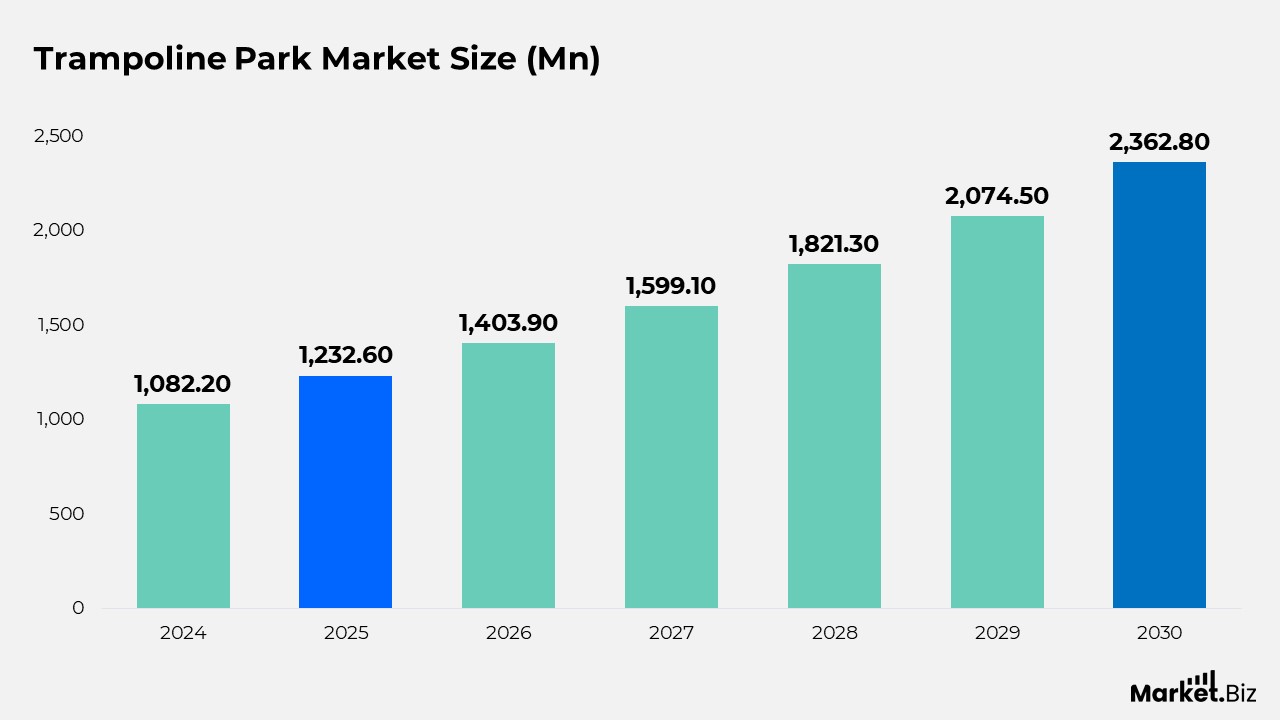
- The global trampoline park market is anticipated to witness substantial growth from 2023 to 2033, with a compound annual growth rate (CAGR) of 13.90%.
- In 2023, the market was valued at USD 950.1 million.
- By 2024, it is projected to rise to USD 1,082.2 million, followed by further growth to USD 1,232.6 million in 2025.
- The market is expected to maintain its upward trend, reaching USD 1,403.9 million in 2026 and USD 1,599.1 million in 2027.
- A continued expansion is forecasted, with the market size anticipated to reach USD 1,821.3 million in 2028 and USD 2,074.5 million in 2029.
- As we approach the next decade, projections indicate that the market size will increase to USD 2,362.8 million in 2030, USD 2,691.3 million in 2031, and USD 3,065.4 million in 2032.
- By the conclusion of the forecast period in 2033, the global trampoline park market is expected to attain USD 3,491.5 million.
- This ongoing growth highlights the rising popularity and investment in trampoline parks across the globe.
Trampoline Olympic Statistics
2012 London Olympics
- The trampoline gold medalists from Beijing were unable to replicate their victorious performance in London. In the women’s final, the current Olympic champion, He Wenna of China, faltered at the end of her routine and had to settle for a bronze medal.
- Trampoline statistics indicate that Canada’s Rosie MacLennan achieved a personal best score of 57.305 to secure the gold medal, marking the first for Canada in the London Games.
- This was also a significant accomplishment for the United States, as Savannah Vinsant became the first American athlete to qualify for the Olympic trampoline final since the event’s inception in 2000.
2016 Rio Olympics
- In the men’s trampoline competition, Belarus achieved its inaugural Olympic gold in this discipline as Uladzislau Hancharou recorded an impressive score of 61.745 during his Olympic debut.
- In 2012, Dong Dong from China, who had previously won gold, had to settle for silver while his fellow countryman secured the bronze medal.
- In the women’s competition, Canada’s Rosie MacLennan scored 56.465 in her defense of the Olympic title, making her the first athlete to win consecutive gold medals in trampoline events.
2020 Tokyo Olympics
- One of the leading medal hopefuls before the Tokyo Games was Rosie MacLennan, a 2-time Olympian; however, she was ultimately surpassed by Zhu Xueying of China, who achieved a score of 56.635 to secure the gold medal and end MacLennan’s winning streak.
- Liu Lingling of China followed closely behind her fellow countrywoman to claim the silver medal. Once again, the Olympic podium featured two athletes from China. Bryony Page of Great Britain earned the bronze with a score of 55.735, adding to her silver medal from the Rio Games.
- Team USA demonstrated a strong performance in this event, with Nicole Ahsinger finishing in an impressive sixth place, equaling the best-ever finish by a female athlete from the USA in Olympic trampoline, a record previously established by Savannah Vinsant in 2012.
2024 Paris Olympics
- Belarus’s Ivan Litvinovich, who participated as an Individual Neutral Athlete at the Paris Olympics, successfully defended his title from the Tokyo Olympics by becoming the first male trampolinist player to win gold medals in 2 separate Olympic events.
- China delivered an outstanding performance, with Wang Zisai securing a silver medal thanks to his remarkable execution score, while Yan Langyu claimed the bronze medal.
- In contrast, American athlete Aliaksei Shostak experienced a fall during the qualifications and again did not progress to the finals. On the women’s side, Bryony Page from Great Britain won Olympic gold at the age of 33, thereby completing her medal collection.
- Viyaleta Bardzilouskaya of Belarus, also competing as an Individual Neutral Athlete, earned a silver medal in her first Olympic appearance, while the bronze medal was awarded to Canada’s Sophiane Methot, who barely qualified for the final round.
Statistics of Trampoline Injuries
- Trampoline injuries encompass a range of problems: 29% are fractures, while sprains and strains also frequently occur, constituting 27%.
- About 10–17% of injuries affect the head and neck, whereas 20% are bruises and contusions, and 5% are cuts.
- Ankle injuries are notably prevalent, accounting for 30% of all leg injuries associated with trampolines.
- Overall, injuries to the legs and arms each represent 30% of all trampoline injuries, while 35% of them are soft tissue injuries, such as bruises to muscles and tendons.
- Fractures of the arms alone constitute 60% of all broken bones resulting from trampoline use. Head injuries are responsible for 10-15% of all emergency room visits related to trampoline incidents.
- In addition, leg injuries account for 40% of all trampoline injuries. Although spinal cord injuries are less frequent, they remain significant, representing 1-2% of total injuries.
- Furthermore, approximately 20% of all spinal cord injuries resulting from sports and recreational activities are attributed to trampolines, with concussions making up 10% of trampoline injuries requiring emergency treatment.
- About 75% of trampoline injuries occur when multiple individuals are jumping simultaneously, and the likelihood of injury increases by 75% in these circumstances.
- Children are two to three times more prone to injuries on trampolines at home compared to those in supervised training environments.
- Executing somersaults and flips considerably heightens the risk of neck injuries.
- Approximately 40% of injuries arise from falls off the trampoline, while 15% result from collisions between jumpers.
Trampoline Park vs. Backyard Injuries Statistics
- Trampoline parks are linked to more serious injuries compared to backyard trampolines.
- Injuries to the lower extremities are more prevalent at trampoline parks than those occurring on backyard trampolines.
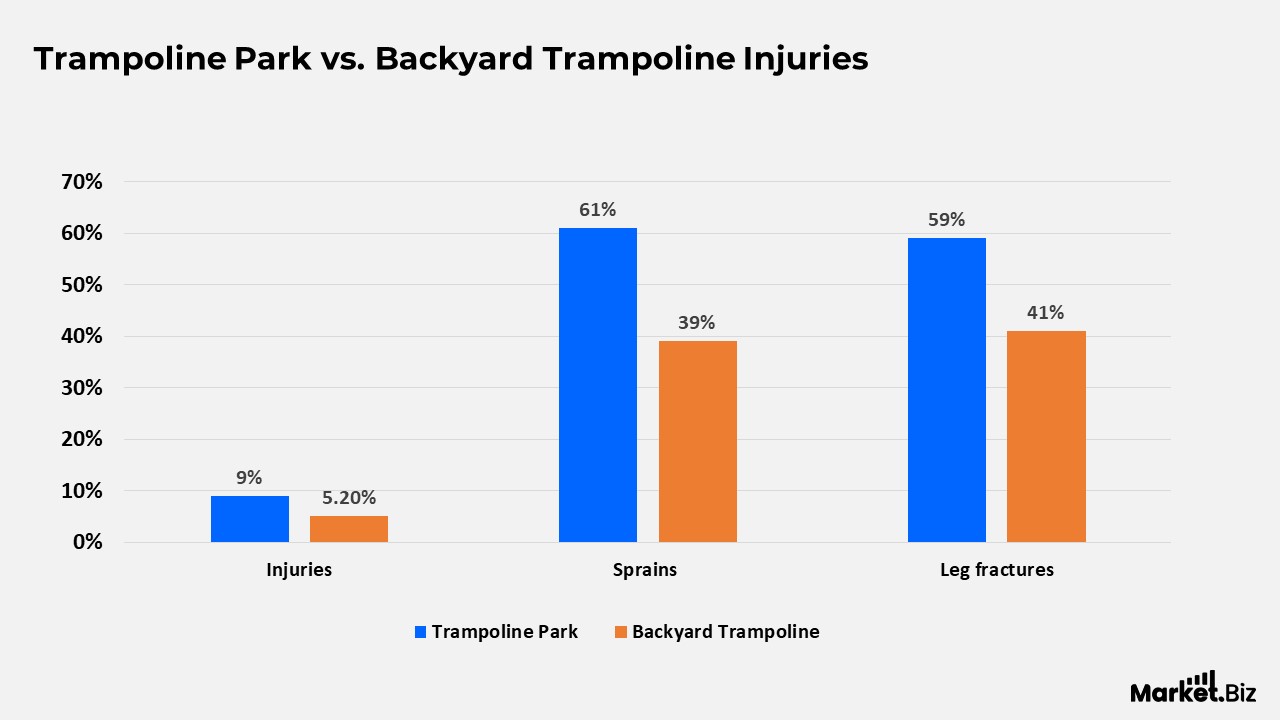
- 9% of injuries sustained at trampoline parks necessitate hospitalization, in contrast to 5.2% for backyard trampolines.
- Injuries at trampoline parks are 1.7 times more likely to lead to an emergency room visit and result in longer hospital stays than injuries from backyard trampolines.
- Children are over twice as likely to experience musculoskeletal and/or orthopedic injuries at trampoline parks.
- Sprains are 61% more frequent at trampoline parks.
- 59% of injuries at trampoline parks involve leg fractures.
Trampoline Injury Prevention Measures
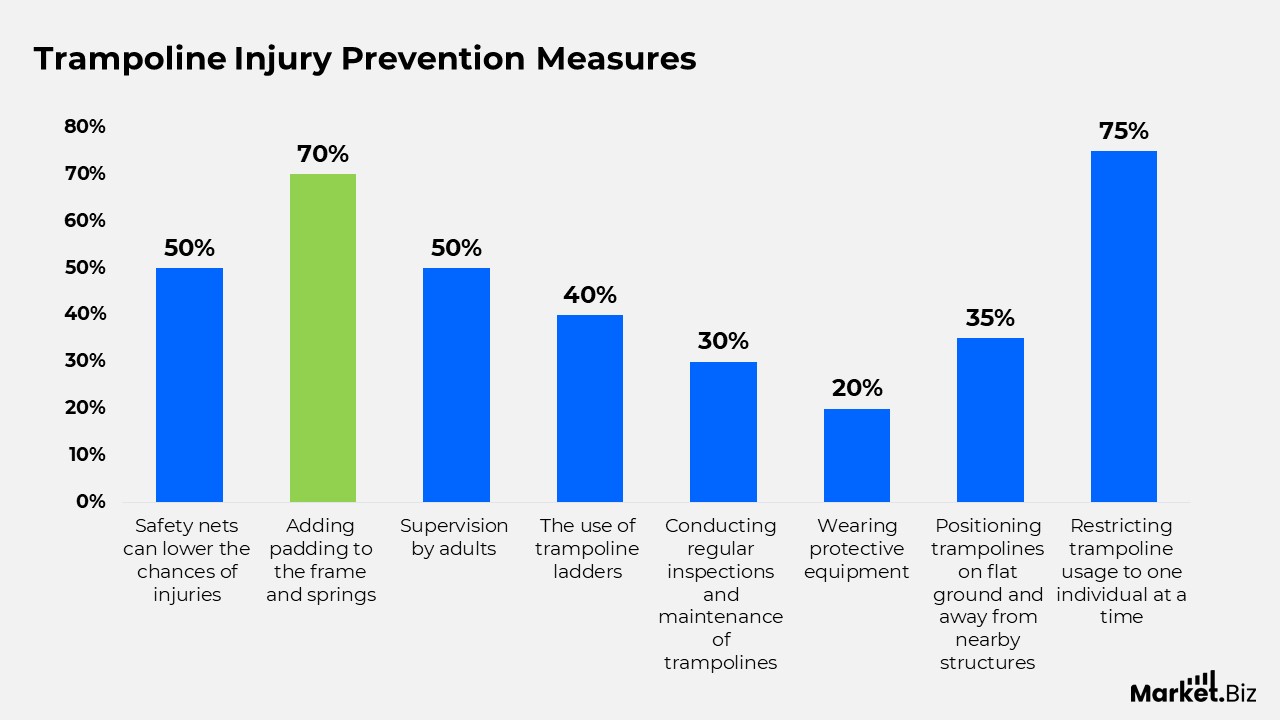
- Utilizing safety nets surrounding trampolines can lower the probability of injuries by 50%, whereas adding padding to the frame and springs can diminish the risk by 70%.
- Supervision by adults can also diminish the probability of injuries by 50%.
- For young children, the use of trampoline ladders can lower the risk by 40%.
- Conducting regular inspections and maintenance of trampolines aids in injury prevention, resulting in a 30% reduction in risk.
- Wearing protective equipment, such as helmets and knee pads, can decrease the risk of injury by 20%.
- Positioning trampolines on flat ground and away from nearby structures can lead to a 35% reduction in risk.
- Lastly, restricting trampoline usage to one individual at a time can significantly reduce the risk of injuries by 75%.
Demographics
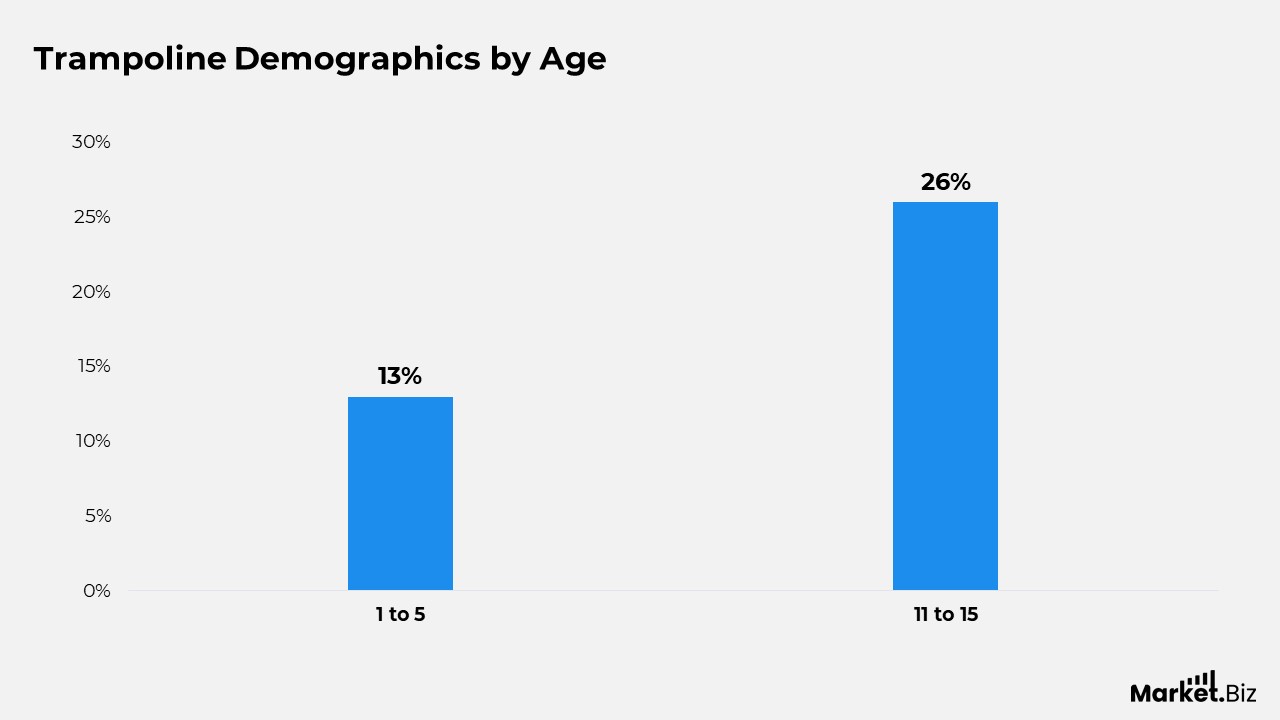
- Teenagers aged between 11 and 15 years followed closely, securing the second position with 26% of the jumpers. Additionally, toddlers aged one to five years accounted for 13% of the participants at trampoline parks.
- There has been a notable increase in trampoline participation among adults, particularly those in their twenties and thirties, who represent 15% of all trampoline users. These statistics highlight the age diversity present among trampoline users in the parks.
- A further breakdown of the competitions by age and other disciplines provides additional insights into the distribution of participants across genders.
- In total, active male gymnasts amount to 1,611, which includes 1,177 senior men and 434 junior participants in Men’s Artistic Gymnastics.
- In Women’s Artistic Gymnastics, there were no senior male participants; however, the total included 1,117 senior women and 582 junior participants, leading to a cumulative total of 1,699 active female gymnasts.
- In Rhythmic Gymnastics, which is exclusively for women, there were 2,256 participants overall: 1,201 in the senior category and 1,055 in the junior category.
Moreover
- The total of 2,471 active participants in Trampoline Gymnastics comprised 738 senior men and 685 senior women, in addition to 450 younger men and 598 younger women.
- Acrobatic Gymnastics featured 287 senior men and 558 senior women, along with 64 additional younger men and 290 additional younger women, culminating in a total of 1,199 athletes.
- According to Trampoline statistics, the total number of active participants in Aerobic Gymnastics from the specified categories is 2,120, which includes 224 senior men, 146 younger males, 502 senior women, and 1,248 younger females.
- The Parkour category, which had the least participation, included 227 individuals, comprising 176 men and 51 women aged 18 years and older.
- The grand total of active athletes in gymnastics stands at 11,583, which encompasses 2,602 senior men and 4,114 senior women, while the younger demographic includes 1,094 men and 3,773 women.
Recent Developments
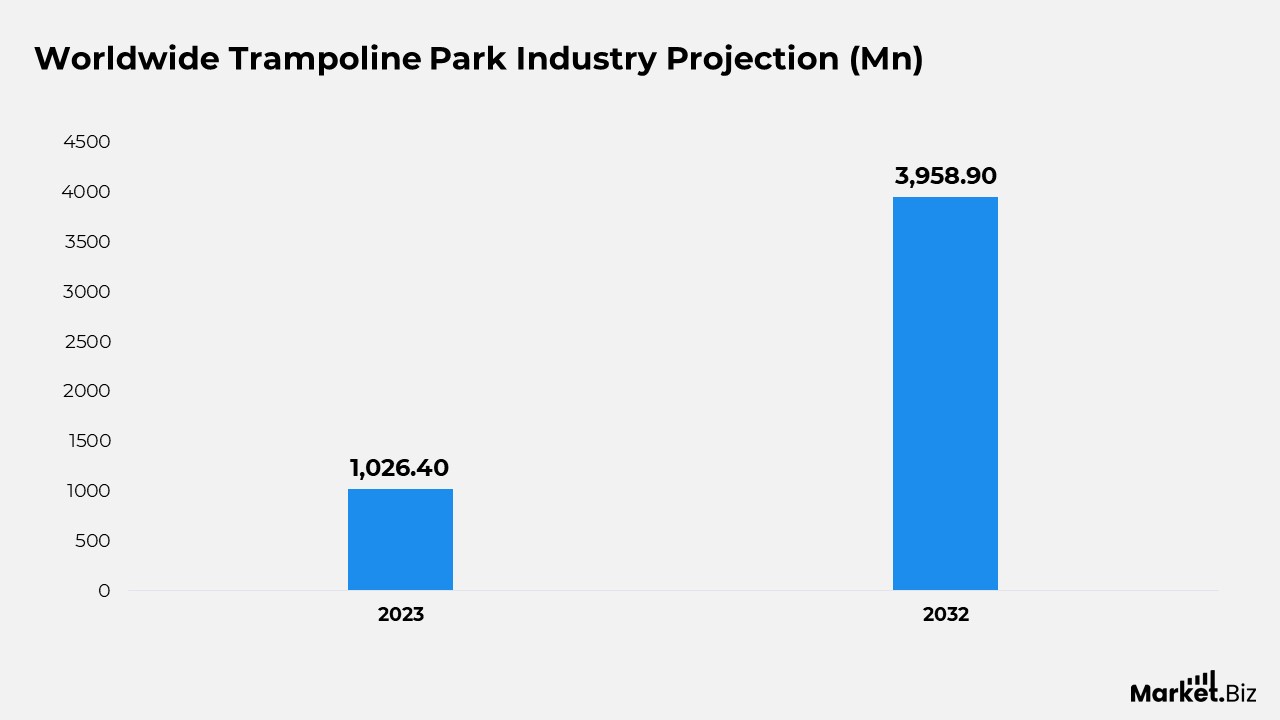
- The worldwide trampoline park industry is projected to increase from USD 1,026.4 million in 2023 to USD 3,958.9 million by 2032, reflecting a compound annual growth rate (CAGR) of 16.2%.
- Parks are broadening their offerings beyond traditional trampolines, adding attractions such as obstacle courses, laser tag, virtual reality gaming, and even bowling alleys to draw in a wider audience.
- Certain parks are focusing on sustainability and the use of eco-friendly materials, while others are integrating cutting-edge trampoline technology and safety improvements to appeal to consumers who prioritize safety.
- Indoor trampoline parks represent the largest share of the market, with a significant preference for indoor venues.
Conclusion
Trampoline Park Statistics: The trampoline industry has seen significant expansion, fueled by a growing enthusiasm for recreational pursuits and fitness. Innovations in design and safety features.
Along with the increasing popularity of home fitness and outdoor activities, its attractiveness is increasing. There are growth prospects in both the residential and commercial markets, with trampoline parks and fitness facilities showcasing the versatility of the product.
Nevertheless, safety regulations and concerns regarding injuries pose challenges. In summary, ongoing innovation and an emphasis on safety are anticipated to support market growth, propelled by the demand for engaging, fitness-focused recreational products.
FAQs
Trampolines present various safety hazards for children and are often responsible for accidents and injuries. These injuries can range from minor sprains or bruises to more serious conditions such as broken bones, dislocated joints, head trauma, and even paralysis.
The target market encompasses a wide range of demographics, including children, teenagers, young adults, and those who are health-conscious. Additionally, trampoline parks are increasingly being used for group activities, such as birthday celebrations, corporate events, and fitness classes.
Over 75% of trampoline injuries occur when multiple children are jumping simultaneously and collide with one another. Other frequent causes of trampoline injuries include: falling onto the trampoline mat, frame, or springs, as well as attempting somersaults, flips, and other dangerous stunts that may result in injury.
The typical lifespan of a trampoline ranges from three to eight years; however, a higher-quality trampoline can endure for a significantly longer period. Whether you are a new trampoline owner or have been using one for years, it is crucial to adhere to a regular maintenance and inspection schedule to ensure its longevity and safety for all users.