









Introduction
Workplace Data Privacy Statistics: In our digital era, workplace data privacy is an important concern for organisations globally. The 2025 Data Privacy Benchmark Study from Cisco shows that 94% of organisations consider privacy a business imperative, and that two-thirds of organisations (98%) said that they report privacy metrics in their board meetings, indicating a global level of maturity around data protection at the board and management levels that we have not always seen in corporate governance.
But while organisations may be focused on data protection, breaches, increasingly internal breaches from employees, and system misconfiguration, etc, are still very real, formidable threats. The 2024 Cost of a Data Breach Report indicates that the global average total cost of a data breach is now $4.88 million, a 10% increase from the previous year and the highest amount of total cost ever recorded by IBM.
This data tells us that data privacy in the workplace has become critical to safeguard our personal, professional, and organisational information, and to foster loyalty and trust.
Editor’s Choice
- 73% of consumers are more aware of their data privacy in 2025 than they were 5 years ago.
- 61% of users say privacy policies fail to properly outline how companies use people’s data.
- Over 160 jurisdictions around the world now have general data protection laws.
- Awareness also varies between countries, 81% in China, compared to 26% in Australia.
- 42% of American workers believe monitoring technology measures their health and safety.
- 38% of American workers believe the monitoring is to identify solid work.
- Stolen or compromised credential breaches had an average cost of USD 4.81 million.
- Breaches involving phishing attacks were on average USD 4.88 million.
- The average cost per breached record was USD 169 in 2024.
- Average lost business cost including uptime and customer loss was $2.8 million per breach.
- Ireland has the largest cumulative GDPR fines at 2.88 billion euro in total since May 2018.
General Workplace Data Privacy Statistics
- 73% of consumers are more aware of their data privacy in 2025 than they were 5 years ago.
- By the end of 2025, 75% of the global population will likely have their personal data protected with updated privacy legislation.
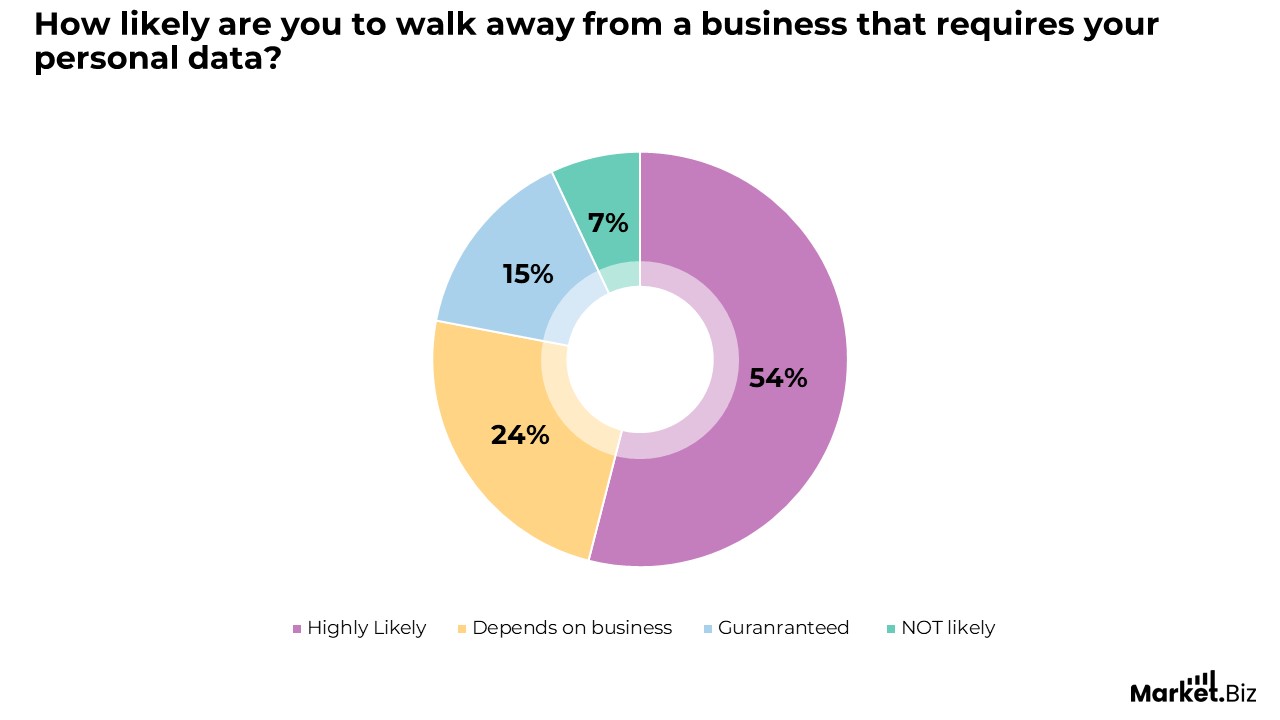
- 94% of organisations agree, if a customer does not feel their personal data is secure, they will not buy from that company.
- By the end of 2025, it increased by 12% over the previous year, so the average total cost of a data breach was USD 4.62 million.
- Phishing attacks had become prevalent in 2025 and accounted for almost 30% of total breaches around the world.
- According to a newly released report by the Identity Theft Resource Center, in 2025 a total 15% of employees fell victim to a workplace-related data breach, or 42 million records being breached from March 2023 to Feb 2024.
- Large organisations will likely exceed USD 2.5 million in direct annual budget to comply with privacy expectations in 2025.
- 88% of users say their willingness to share their personal data is based on their level of trust in a company.
- 26% of US states have laws regarding data privacy.
- 80% of organisations can state they have seen increased customer loyalty and trust as a result of their investment in data privacy.
- 98% of organisations are reporting privacy metrics to their board of directors.
- 61% of users say privacy policies fail to properly outline how companies use people’s data.
(Source: Dataprivacymanager)
Global Adoption of Data Privacy
- Over 160 jurisdictions around the world now have general data protection laws.
- DLA Piper’s 14th edition of Data Protection Laws of the World includes all 160+ laws, up from nothing when the first edition in 2012.
- In 2024, global consumers reporting awareness of privacy laws in their country increased to 53%, up from 36% in 2019.
- This is a year-over-year increase pf 17 percent points in awareness (46% in 2023 to 53% in 2024).
- 81% of respondents that are aware of their country’s privacy laws feel confident that they can protect their personal data.
- In contrast, only 44% of consumers that are not aware of privacy laws feel they can protect their data.
- There is a significant confidence gap of 37 points between the aware (81%) vs the unaware 944%) consumers.
- 70% of consumers that are aware of their country’s privacy laws indicated the laws have positively impacted their lives.
- On average, only 5% of global consumers reported that privacy laws have negatively impacted them.
- 67% of global consumers reviewed or updated their privacy settings in the past year.
- 75% of respondents responded that they would not purchase items from organisations that they did not trust their data with.
- Younger adults were more aware than older adults; 65% of global consumers aged 18-24 are aware of their country’s privacy laws, compared to only 24% from persons aged 75+.
- Awareness also varies between countries, 81% in China, compared to 26% in Australia.
- 59% of global consumers indicated that strong privacy regulations made them feel more comfortable sharing information in AI applications.
Employee Surveillance Technology
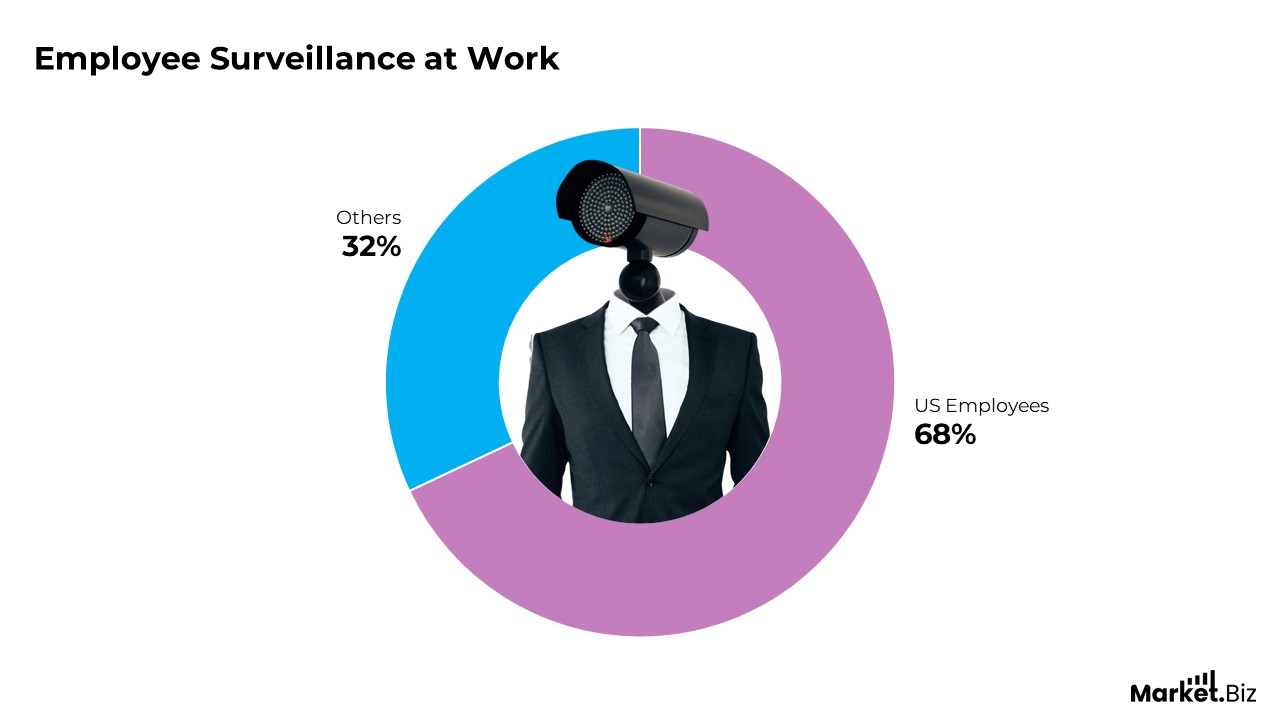
- 68% of American employees say they have been subjected to some sort of electronic monitoring while at work.
- 88% of employees in large companies (1000+ employees) are monitored electronically, while the number for small companies is 43%.
- 42% of American workers believe monitoring technology measures their health and safety.
- 38% of American workers believe the monitoring is to identify solid work.
- 36% of American workers believe monitoring helps them perform better.
- The share of businesses using employee monitoring software grew 166% from 2015-2020, especially due to an increase in hybrid work.
- Only 30% of companies in 2015 electronically monitored their employees and that figure grew to 80% by 2020.
- The disparity between 1999, when 45% of companies electronically monitored, shows continued and very long term growth for electronic monitoring technologies.
- Today, roughly 80% of companies worldwide have some form of employee monitoring software.
- The value of the global employee monitoring software market was $1.12 billion in 2021 and is projected to reach $2.10 billion by 2030.
- The employee monitoring software market is forecasted to grow at a CAGR of 12% through 2026, showcasing growing demand for employee surveillance technologies.
- Data breaches also grew by 67% between 2019-2022, forcing companies to monitor their staff more closely for security reasons.
- 61.6% of remote employees admitted to accessing social media while they are on the clock, which is a good reason companies want to know where the employees are directing their online attention.
Costs of Workplace Data Breaches
- In 2024, the average global cost of a data breach increased to USD 4.88 million, a 10% hike compared to 2023.
- Public cloud breaches have the highest cost of all. At USD 5.17 million.
- Organisations using security AI and automation had an average saving of USD 2.22 million in breach costs.
- 1 in 3 breaches involved shadow data, making it more difficult to track and secure sensitive data.
- The average data breaches involving shadow data, had a cost of USD 5.27 million, or 16% greater than breaches not involving shadow data.
- Malicious insider’s attacks were the single most expansive data breach sector, with an average cost of USD 4.99 million.
- Stolen or compromised credential breaches had an average cost of USD 4.81 million.
- Breaches involving phishing attacks were on average USD 4.88 million.
- Getting law enforcement involved in ransomware incidents saved nearly USD 1 million in breach costs.
- The average cost per breached record was USD 169 in 2024.
- “Mega breaches” of between 1-10 million records cost nearly 9 times the average breach costs, at approximately USD 43.9 million.
- Organisations took an average of 258 days to identify and contain the breach in 2024.
- Data breaches longer than 200 days had an average cost of USD 5.46 million.
- The US had the highest average cost per breach at USD 9.36 million, compared to other geographical regions.
- In terms of industry, the healthcare sector had the highest average cost of USD 9.77 million per breach.
- 26.2% increase in staffing shortages within the cybersecurity sector calculated an additional average USD 1.76 million to the average breach costs.
Data Privacy Challenges in Remote Work
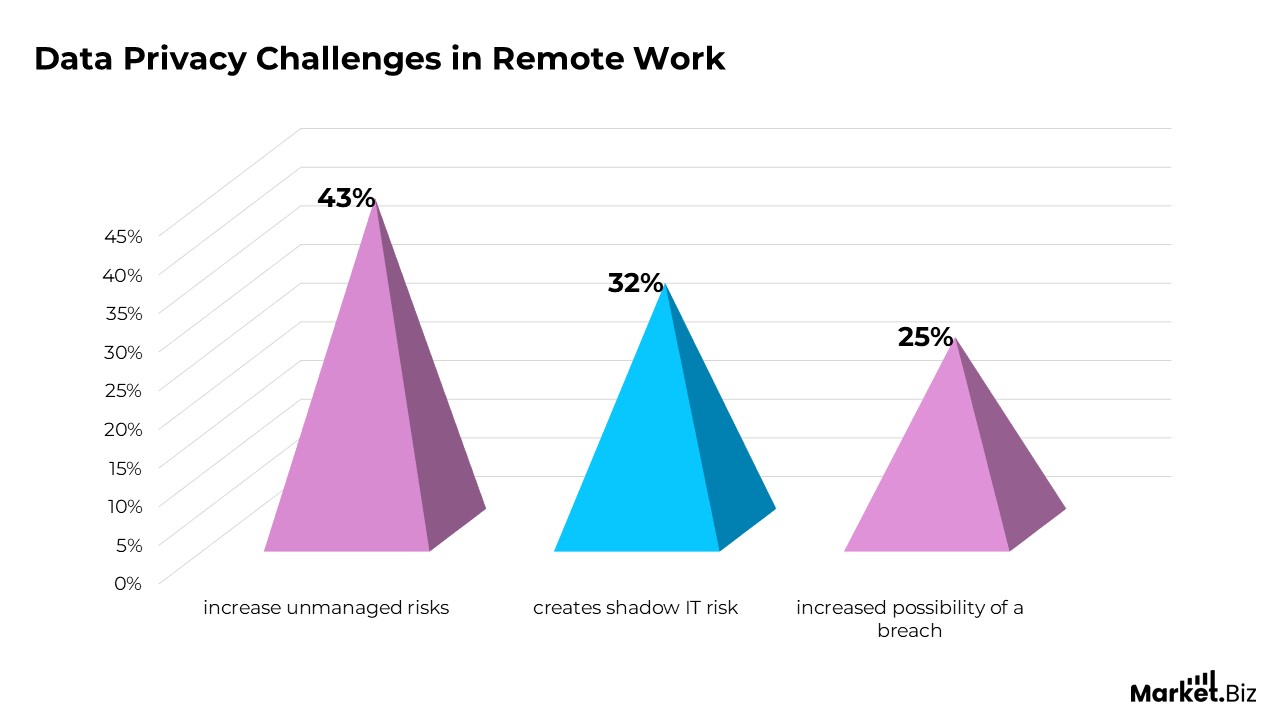
- 43% of remote workers rely on personal devices instead of company issued devices which exponentially increase unmanaged risks.
- 32% of workers that are remote install software/apps that have not been approved by IT which creates a shadow IT risk.
- 25% of remote workers reuse passwords for work activities and personal activities creates an increased possibility of a breach event whenever a personal account is either involved or breached.
- 46% of remote workers save their work files on personal drives instead of corporate drives which creates the potential for leaking corporate data.
- 92% of remote workers conduct activities on mobile devices which are personal devices and are outside of a captive environment.
- 31% of workers stated that they are less likely to follow approved security or cyber security procedures when compared to working within the organisation.
- Nearly 1 in 3 remote workers are spending more than 20 hours per week doing work on their personal tablets/smartphone.
- 54% of hybrid workers are also using their work time for personal activities, which further increases privacy concerns and risks to the organisation.
- 61% of remote workers reuse passwords in work and personal accounts which makes credential stuffing a reality for a remote activity.
- 53% of remote workers stated that they use personal software for work tasks, which has the potential to vest corporate data in unsecured apps.
- 47% of remote workers stated that they use work software for personal daily tasks increasing the potential of accidental leaks of sensitive information.
- 57% of workers aged 18-24 have included BYOD as part of the work process and this group are the least likely to separate while responsible for work and personal apps.
Increasing Data Breaches in Workplaces
- In 2024, the global average cost of a data breach was $4.88 million, the highest on recorded.
- This is an increase of 10% from the average cost in 2023 of $4.45 million.
- 1 in 3 breaches accounted for “shadow data”, making it all the more difficult for organisations to keep track and secure sensitive information.
- Organisations that used security AI and automation saved an average of $2.22 million per data breach.
- Globally, there were 10,626 confirmed data breaches in 2024, a record high.
- These breaches represented 94 industries making ransomware a growing threat which led to increased delays in business operations.
- Nearly 92% of industries suffered from ransomware as a critical threat leading to more business disruptions.
- Human error or misuse contributed to the human element in 68% of breaches, showing the need or gaps in training.
- On average, it took approximately 55 days to patch and remediate half of all critical vulnerabilities.
- Financial companies suffered an average breach cost of $6.08 million, representing a 22% increase over the global mean.
- Average lost business cost including uptime and customer loss was $2.8 million per breach.
- In the industrial sector the average cost of a breach increased by $830,000 from last year’s average cost.
- Overall the industrial sector took an average of 199 days to identify, and 73 days to contain.
- Malicious insider attacks caused an average breach cost of $4.99 million, on average representing a higher cost than any other sector.
- Engaging law enforcement when dealing with a ransomware incident reduced the breach costs by as much as $1 million.
GDPR Impact on Workplace Data Privacy
- Only 9% of privacy professionals said their organisations were totally compliant with the GDPR more than one year the regulation went live.
- 36% of privacy professional said that their organisations are “very compliant” with GDPR requirements.
- 38% of GDPR organisations reported at least one data breach in the last year.
- 52% of EU based organisations said they reported a GDPR related data breach in the past year.
- 22% of respondents said they faced more than 10 data breaches in one year.
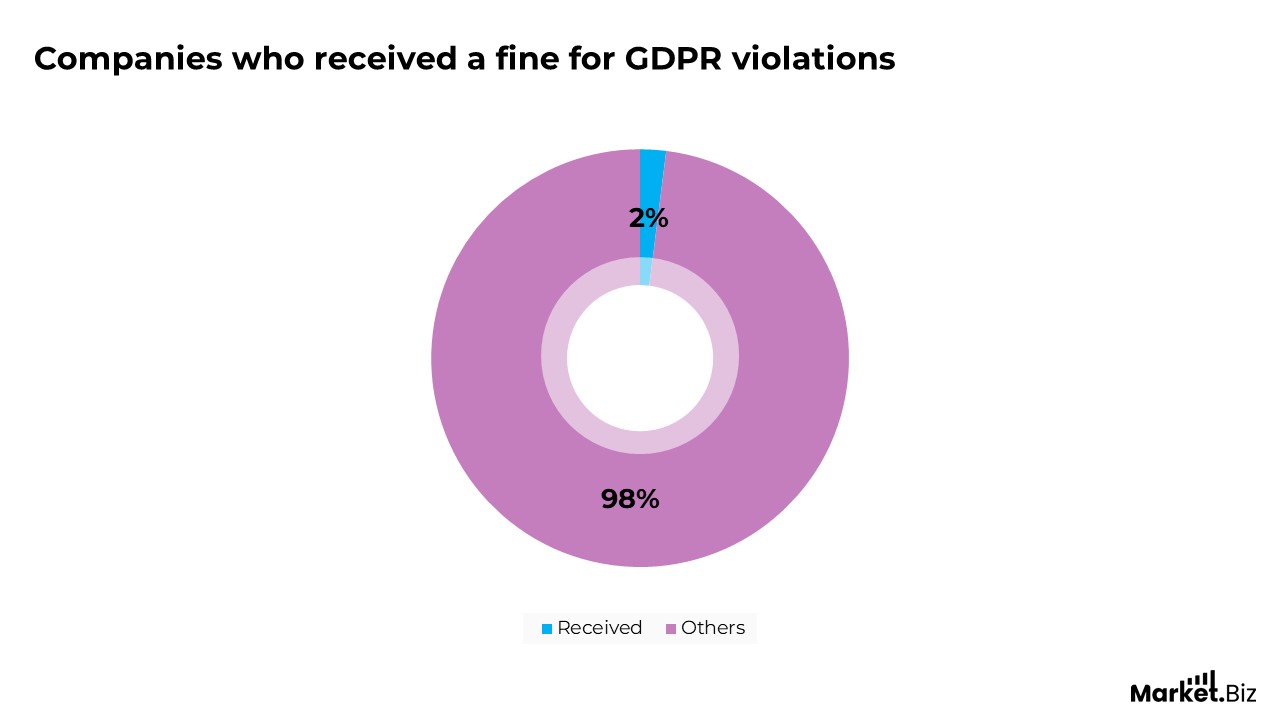
- Only 2% of companies said they received a fine for GDPR violations in their first year of compliance.
- By the first anniversary of the GDPR, around 500,000 organisations had registered Data Protection Officers (DPO).
- 58% of respondent’s privacy professionals from the EU SDAs prioritized GDPR compliance as their number one business goal (compared to 11% from US PDAs).
- In the 12 months between January 2023 and January 2024, European data protection regulators issued 1.78 billion euro in GDPR fines. This amount represents a 14% rise in fines based on the previous 12 months.
- From January 2023 to January 2024, there were an average of 335 notifications of data breaches per day.
- This is slightly greater from the previous year of 328 notifications per day, indicating reporting levels have remained steady.
- Ireland has the largest cumulative GDPR fines at 2.88 billion euro in total since May 2018.
- Meta received the largest single GDPR fine of 1.2 billion euro imposed in 2024 by the Irish Data Protection Commission.
- Germany had the most breach report with 32,030 notifications over the 12 month reporting period.
Conclusion
Data privacy in the workplace is become increasingly important as employers continue to collect and manage more employee information. A rise in data breaches and the enforcement of stricter privacy regulations all signal of businesses that now is the time for a stronger commitment to protecting employee data.
Investing I privacy tools and training is an investment in an employee trust relationship and support’s a company’s bottom line when it comes to overall security. As remote work grows, so do opportunities for shared digital collaboration tools. Businesses must make the importance of employee data protection a priority.
Keeping pace with data privacy trends and regulations helps businesses avoid negative and costly consequences due to a privacy lapse and protect their human capital, as an employee with no data privacy held is a risk to public safety.
FAQs
Workplace data privacy safeguards employee information from leaks or misappropriation. Workplace data privacy also promotes trust between the business and employee, and minimizes legal liability for the business.
According to a report from IBM, over 80% of businesses in the world have had at least one data breach, showing how prevalent these occurrences are.
No, only about 45% of businesses conduct ongoing training on data privacy, even though it is a central element of preventing security incidents.