









Introduction
Virtual Reality Statistics: Virtual Reality (VR) has become a game-changing technology, transforming industries such as entertainment, healthcare, education, and beyond. Ongoing advancements in both hardware and software are enabling more immersive and interactive experiences. VR is transforming the way businesses connect with consumers, the way medical training is conducted, and the way educational materials are presented.
As the technology becomes increasingly accessible, its applications are expanding, with industries leveraging VR for purposes ranging from gaming and virtual tourism to therapy and remote collaboration. This shift is driven by the growing demand for innovative solutions that enhance user engagement, streamline processes, and deliver improved results across various fields.
Editor’s Choice
- Globally, over 171 million people are currently using Virtual Reality (VR) technology.
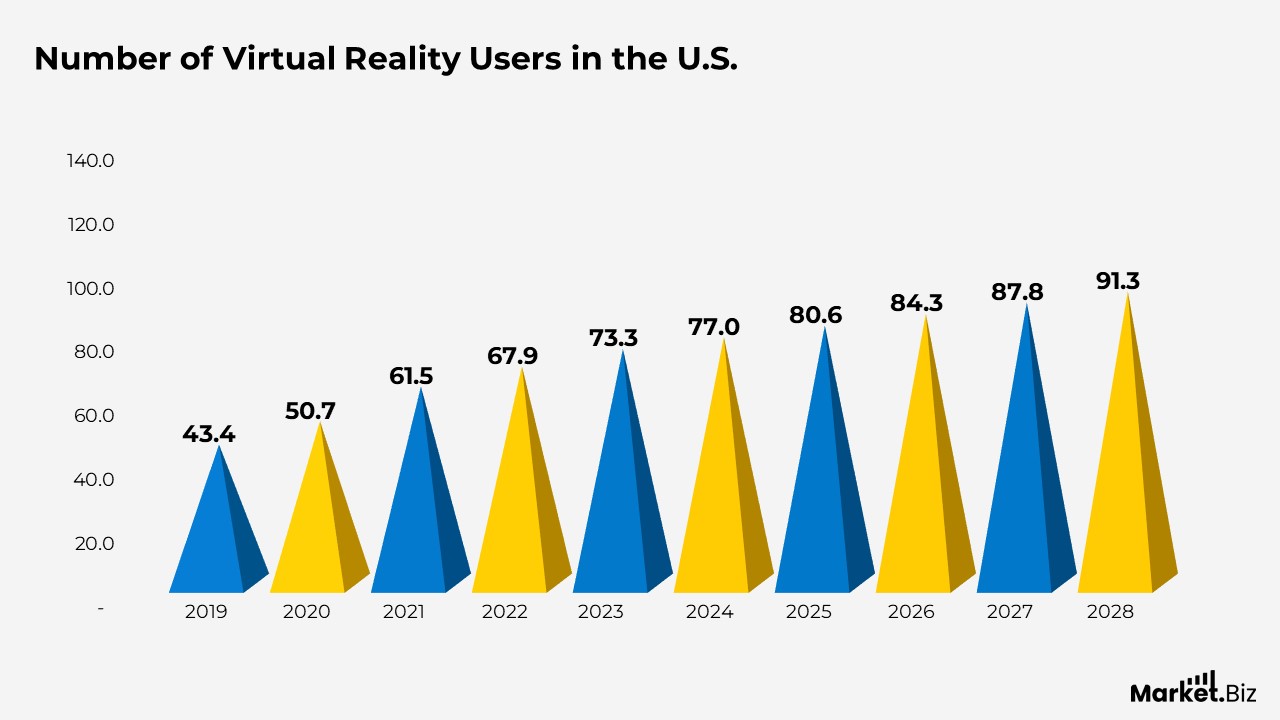
- The US VR market is expected to reach 77 million users by 2024.
- Virtual Reality is projected to contribute $450.5 billion to the global economy by 2030.
- The number of VR hardware users is anticipated to surpass 130 million by 2027.
- Worldwide revenue in the AR & VR market is forecast to hit US$46.6 billion by 2025.
- The market is expected to grow at a compound annual growth rate (CAGR) of 7.42% from 2025 to 2029, reaching a total of US$62.0 billion by 2029.
- A significant 91% of businesses have already implemented or plan to integrate AR or VR technology.
(Source: DemandSage, Statista )
Virtual Reality Statistics
- By 2022, the number of virtual reality users exceeded 171 million.
- In 2022, more than 10.8 million virtual reality devices were sold, with sales projected to reach 23.8 million by 2025.
- An estimated 23 million jobs are expected to be dependent on Virtual Reality technology.
- Consumer spending on augmented Reality and Virtual Reality is anticipated to hit $72 billion by 2024.
- The user satisfaction rate for virtual Reality stands at 55%.
- Approximately 75% of Forbes’ “World’s Most Valuable Brands” are incorporating AR or VR into their operations.
- In the United States, an estimated 77 million people are expected to use VR technology.
- According to 27% of surveyed organizations, the limited availability of content is the primary barrier to VR adoption.
- Individuals between the ages of 16 and 34 are more likely to engage with virtual Reality.
- In 2023, approximately 36% of game developers worldwide reported working on games specifically for the Meta Quest VR headset.
- The Oculus Quest is the most widely recognized VR/AR technology product, with 54% recognition.
- As of August 2022, only 2% of Steam users owned a VR headset.
- The Meta Quest 2 VR headset weighs 17.7 ounces (503 grams), making it notably lighter than other models, such as the Valve Index, which weighs 28.5 ounces (809 grams).
(Source: Academy Of Animated Art, Statista, Forbes, AR Insider, Virtual Speech, Finances Online)
Virtual Reality Adoption Statistics
- Over half of businesses (51%) have already incorporated or are in the process of integrating virtual Reality (VR) technology into their operations.
- 34% of companies identified that developing and training employees is one of the key advantages of VR and the Metaverse.
- 91% of businesses have either already adopted or are planning to incorporate AR or VR technology.
- 60% of companies use AR/VR to supplement labor on production floors virtually.
- 53% of companies utilize AR/VR for virtual customer visits.
- 53% of businesses implement AR/VR in design and product engineering.
- 26% of companies use AR/VR for employee training.
| State Of Companies With VR Adoption | Percentage Of Companies |
|---|---|
| No activity | 9% |
| Research | 13% |
| Planning | 17% |
| Paused | 11% |
| Integrating into our strategy | 30% |
| Part of our Strategy | 21% |
(Source: PwC, DemandSage)
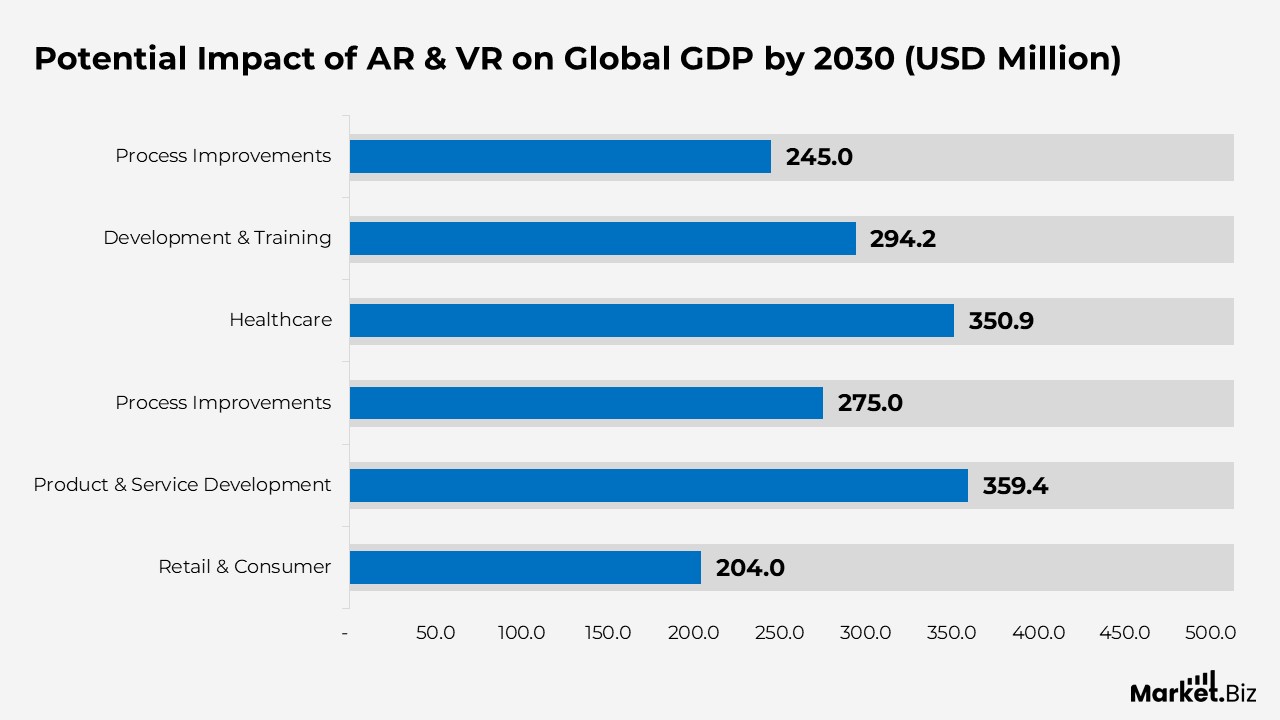
Potential Impact of AR & VR on Global GDP
(Source: PWC)
Industries Driving VR Adoption
- With a 61% adoption rate, gaming is leading the way in VR, offering users an exceptionally immersive experience.
- Healthcare is utilizing VR, accounting for 41%, for training, simulations, and improving patient care.
- 41% of educational institutions are incorporating VR to foster interactive and engaging learning environments.
- VR holds a 23% share in the manufacturing and automotive sectors, being widely used for design, prototyping, and training.
- The entertainment industry, at 21%, is adopting VR to create dynamic storytelling and interactive experiences for viewers.
- With 20% adoption, VR is revolutionizing workforce training by offering immersive, hands-on virtual experiences.
- Marketers, with a 16% share, are increasingly using VR to craft engaging and innovative immersive campaigns.
(Source: FinancesOnline)
Augmented Reality and Virtual Reality Market Size
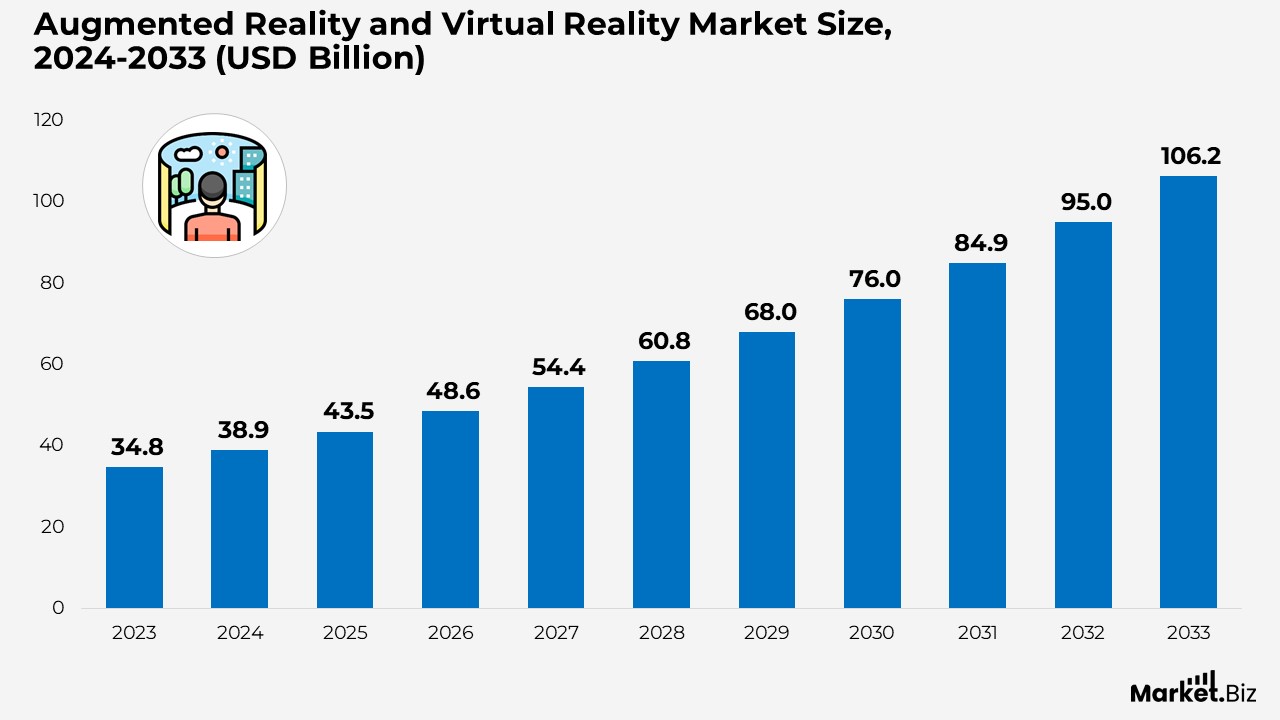
- According to Market.us, the augmented reality and virtual reality market is projected to grow from $38.9 billion in 2024 to $106.2 billion by 2033, representing a compound annual growth rate (CAGR) of 11.8% from 2024 to 2033.
- The growth of the AR and VR market is driven by increasing demand for enhanced, immersive user experiences across various sectors, including entertainment, education, and training.
- In 2023, Augmented Reality (AR) led the market with a 61.0% share, with applications spanning advertising, gaming, and education.
- Hardware dominated the market in 2023, holding a share of over 67%, driven by the importance of high-quality components, such as headsets and sensors, for immersive experiences.
- The gaming and Entertainment sectors were the primary end-users in 2023, capturing more than 32% of the market share.
- The Asia-Pacific region held the largest market share in 2023, surpassing 35%, driven by rapid technological advancements and significant investments in countries such as China, Japan, and South Korea.
(Source: Market.us)
Virtual Reality Social Platform Market Size
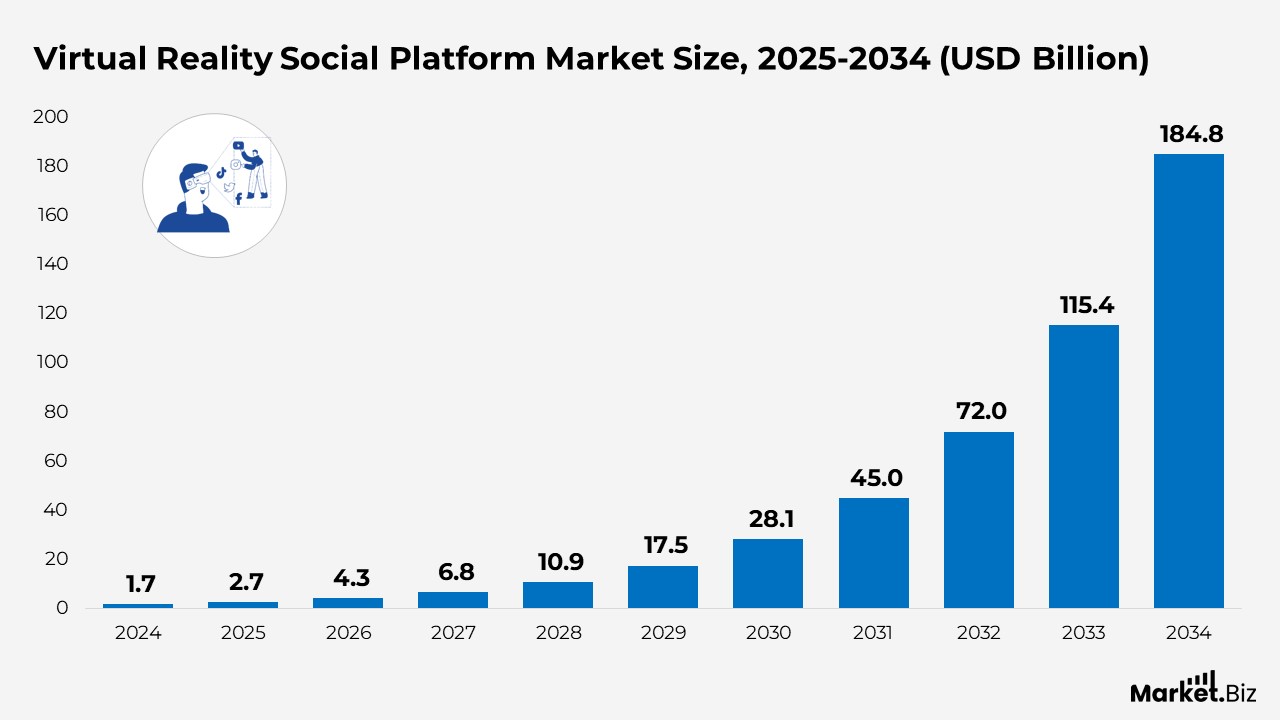
- According to Market.us, the global virtual reality social platform market is projected to grow from $2.7 billion in 2025 to $184.8 billion by 2034, representing a compound annual growth rate (CAGR) of 60.2% from 2025 to 2034.
- The VR Social Platform market is growing due to advancements in technology, increased user engagement, affordable VR hardware, and the rise of remote work and virtual collaboration tools.
- In 2024, the hardware segment held the largest share of the VR Social Platform Market, capturing over 42%.
- The Mobile VR Platforms segment dominated in 2024, accounting for over 34% of the market, driven by increased accessibility and affordability.
- Social Gaming led the market in 2024, capturing more than 33% of the global VR Social Platform market share.
- Individual and Consumer Users accounted for over 58% of the global VR Social Platform market in 2024, leading the market segment.
- North America held a dominant position in 2024, with over 35% of the global VR Social Platform market share, generating approximately USD 0.58 billion in revenue.
- The US VR Social Platform Market was valued at USD 0.54 billion in 2024 and is projected to grow at a CAGR of 58.7% over the forecast period.
(Source: Market.us)
General Virtual Reality Gaming Statistics
- Gaming holds the largest share of VR content revenue, generating $1.2 billion in 2020, with expectations to grow to $1.4 billion by the end of 2021.
- 25.92% of gamers on Steam were using Facebook’s Oculus Rift S headset, followed by HTC Vive (16.27%), Oculus Quest (16.48%), Valve Index HMD (16.13%), and Oculus Rift (9.31%) as of January 2021.
- Social media content leads VR/AR usage with 47%, followed by live streaming (32%), video (40%), advertising (28%), film and entertainment (31%), and music (28%).
| Activity | Super Gamers | Avid Gamers | Casual Gamers |
|---|---|---|---|
| Meeting new people / Socializing | 51% | 48% | 36% |
| Watching documentaries/entertainment videos | 49% | 48% | 60% |
| Attending live events | 38% | 30% | 23% |
| Traveling to different world locations virtually | 36% | 31% | 28% |
| Attending educational classes or work-related events | 31% | 26% | 13% |
(Source: PwC, Perkins Coie, Steam, FinancesOnline, Statista)
Consumer Virtual Reality Statistics
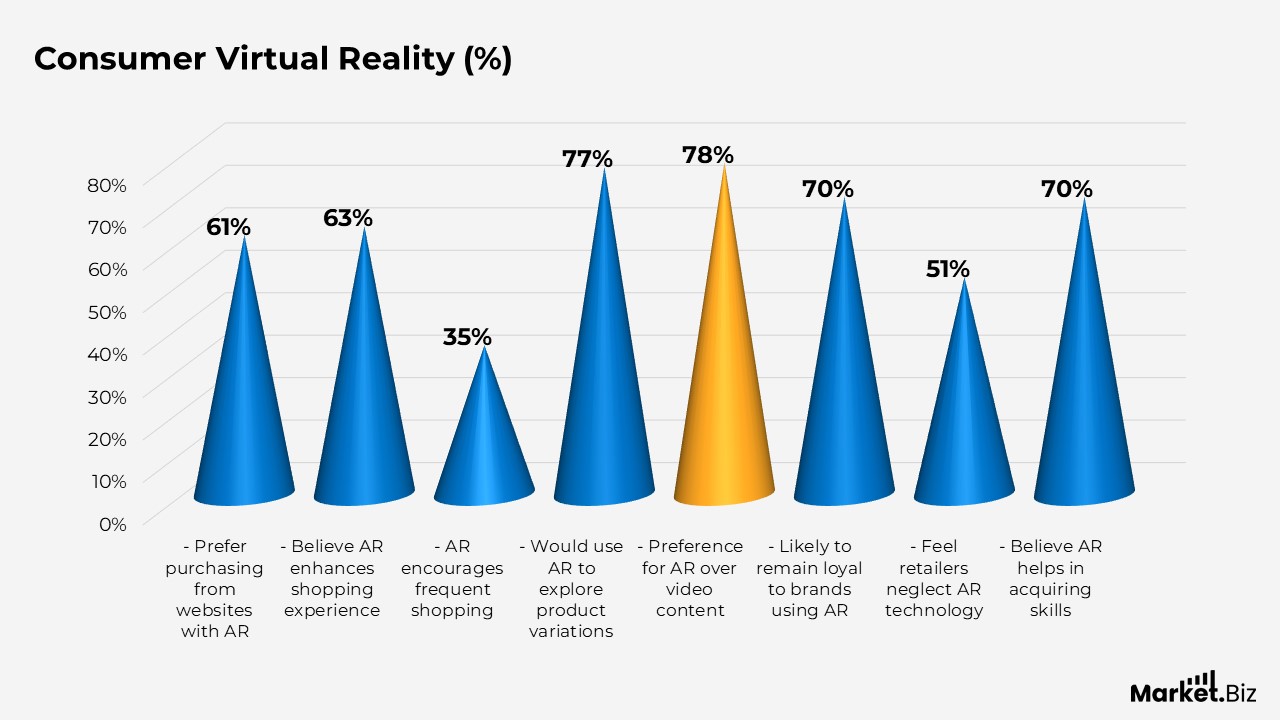
- 61% of shoppers prefer purchasing from websites that integrate AR technology.
- 63% of shoppers believe AR would enhance their shopping experience.
- 35% of shoppers indicated that AR would encourage them to shop more frequently.
- 77% of shoppers would choose AR to explore different product variations.
- 78% of individuals who have used AR expressed a preference for it over video content.
- 70% of consumers are likely to remain loyal to a brand that incorporates AR into their shopping experience.
- 51% of consumers feel that retailers are neglecting to recognize or utilize AR technology.
- 70% of consumers believe AR can aid in acquiring new personal and professional skills.
(Source: Source: invesp, Digital Delane, UK Web Host)
Role of Virtual Reality in Retail
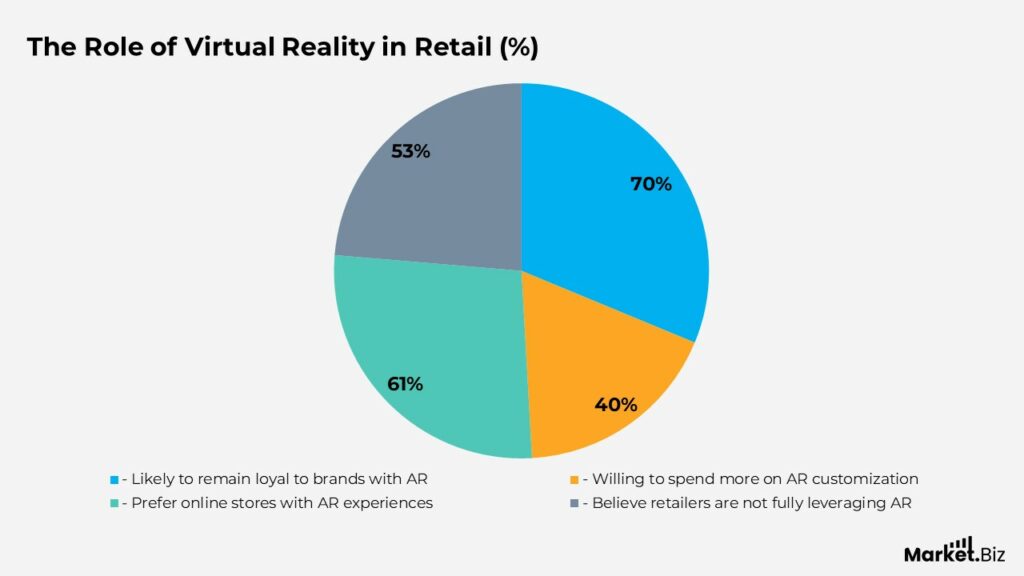
- 70% of shoppers are more likely to remain loyal to brands that offer AR experiences.
- 40% of consumers are willing to spend more on products that offer AR customization.
- 61% of customers prefer online stores that provide AR experiences.
- VR-based virtual fitting rooms can help retailers increase conversion rates by over 6.4%, increase order value by 1.6%, reduce fulfilment costs by 5%, and lower returns by 5.2%.
- Product pages featuring AR and 3D experiences resulted in a 13% increase in average order size and a 21% rise in revenue per visit.
- Despite the positive reception of AR, 53% of consumers believe retailers are not fully leveraging the technology.
(Source: ZDNet, FinancesOnline, Threekit, BigCommerce)
Virtual Reality in Manufacturing
- 53% of organizations utilize VR/AR technology for product engineering and virtual design.
- The discrete manufacturing sector is projected to receive $5.9 billion in commercial VR investments by 2024, while process manufacturing is expected to receive $5.1 billion.
- The application of AR and VR in service and product development could contribute to a $360 billion boost in global GDP by 2030.
- Airbus leverages virtual Reality (VR) to enhance maintenance procedures through simulated protocols, reducing maintenance time by 25%.
(Source: PwC, FinancesOnline, International Data Corporation, Airbus)
Virtual Reality Trends
- By 2030, VR and AR technologies could impact up to 23 million jobs globally.
- Currently, AR/VR growth affects fewer than 1 million jobs; however, the technologies are expected to drive innovation and productivity, leading to a significant increase in the number of jobs affected, especially in China and the US.
- Virtual and augmented Reality is projected to contribute $1.3 trillion to the global economy by 2030.
- According to PwC UK, the use of AR and VR is expected to have a substantial positive impact on global GDP as these technologies continue to evolve across industries.
(Source: PwC )
Benefits of Virtual Reality
- 49% of VR applications offer immediate access to data and insights.
- VR is widely used for simulating real-world scenarios, improving skill development through immersive training.
- Around 48% of VR use cases contribute to creative product design and development.
- 47% of VR users utilize the technology for remote work and collaboration.
- Approximately 41% of VR applications enable users to experience others’ lives, fostering empathy and understanding.
- 25% of VR applications track user behaviors, including gestures and eye movements.
- The VR market is projected to exceed $22 billion by 2025.
- VR adoption in education is growing, with significant market shares in Asia-Pacific (37%) and North America (28%).
- 30% of VR users are millennials and Gen Z, with interests in virtual concerts and online shopping.
- VR-based training is 3.75 times more emotionally engaging and 275% more effective than traditional training methods.
- 41% of adults express a willingness to try VR if given the opportunity.
(Source: Enterprise Apps)
VR Use Cases Across Companies
- 60% of companies integrate AR/VR to enhance labor efficiency on production floors.
- 53% of companies utilize AR/VR for virtual customer interactions.
- 53% of companies adopt AR/VR in design and product development.
- 26% of companies implement AR/VR for employee training.
(Source: Grid Raster, DemandSage)
VR Device Ownership Statistics
- 49% of VR device owners use Oculus.
- 31% of VR device owners use Sony PlayStation.
- 12% of VR device owners use HTC Vive.
- 6% of VR device owners use Valve Index.
- 14% of VR device owners use other devices.
(Source: Security.org., DemandSage)
Factors Hampering VR Adoption
- The primary factors hindering VR adoption include a lack of content offerings (27%), followed by challenges in resistance from regulatory and legal concerns (12%), user experience (19%), high costs for consumers (11%), businesses and consumers (19%), and issues related to financing and investment (9%).
- Investors in VR startups are most concerned about the absence of an established market for the technology (46%), slow consumer uptake (32%), slow adoption by businesses (38%), the untested nature of the technology (38%), and the lack of reliable teams and technologies to invest in (13%).
- In the case of AR, the main challenges include limited content offerings (18%), user experience (32%), regulatory and legal concerns (14%), reluctance from businesses and consumers (15%), financing and investment issues (11%), and the cost to consumers (7%).
(Source: FinancesOnline, Perkins Coie)
Recent Developments
Product Launches :
- In March 2025, ASICS Corporation introduced the DISC Virtual Sport, an innovative esports experience designed to engage both the body and mind in Virtual Reality (VR) and Mixed Reality (MR).
- In August 2024, VIVERSE launched VIVERSE Create, a platform that enables users to create and share interactive worlds across any device with no coding required. The cross-platform, “no-install” feature enables users to enjoy the experience on VR headsets, mobile devices, PCs, or Macs without requiring specialised gaming hardware.
Partnership:
- In May 2024, Apparel Group and Sandbox VR formed a partnership to introduce Virtual Reality innovation to the Middle East. This collaboration follows Sandbox VR’s recognition on Fast Company’s 2024 list of the World’s Most Innovative Companies, where it earned the number two spot in the Augmented and Virtual Reality category for its creation of fully immersive VR experiences for a global audience.
- In May 2022, Toyota Material Handling partnered with VR Vision to enhance its training programs by integrating virtual Reality (VR) learning resources. These resources aim to complement existing onboarding programs for service technicians and other professionals.
Technological Advancements:
- Advancements in immersive technology, particularly in semi- and fully immersive systems, are propelling market growth. These developments are facilitating broader adoption across various industries, including entertainment, education, and corporate training.
Conclusion
Virtual Reality (VR) is experiencing substantial growth across multiple industries, fueled by technological advancements and rising interest from both consumers and businesses. While VR is most widely adopted in gaming, healthcare, and education, challenges such as limited content, user experience issues, and high costs continue to hinder its widespread adoption.
Despite these challenges, VR holds immense potential to revolutionize industries such as entertainment, workforce development, and marketing. As VR technology continues to evolve and become more accessible, it is poised to have an even greater impact on shaping the future of consumer experiences and business strategies.
FAQ’s
Gaming, healthcare, and education are the top industries adopting VR. These sectors leverage VR for immersive experiences, training simulations, and interactive learning.
Key challenges include limited content offerings, issues with user experience, slow adoption by businesses and consumers, regulatory and legal risks, high consumer costs, and difficulties in financing and investment.
As of 2022, over 171 million people are actively using VR globally, with the technology being increasingly adopted across both consumer and business sectors.
The VR market is growing due to advancements in technology, more affordable hardware, improved internet connectivity, and a rising demand for immersive experiences across various industries, including entertainment, healthcare, and education.
While both VR and AR are gaining popularity, VR has seen stronger adoption in industries like gaming and healthcare. In contrast, AR is more commonly used in retail, marketing, and other interactive applications.
A significant 91% of businesses have already incorporated or plan to integrate VR or AR technologies into their operations.