









Introduction
Employee Side Hustle Statistics: The employee-side hustle scenario has been blooming in recent times. Data suggest that at least 44% of workers in the US actually have gigs on the side of their main jobs. This movement ibid-motivated because people want to feel financially independent and to follow their passions.
A 2023 Bankrate survey states that almost 45% of millennials and 33% of Gen Z workers are opting for side hustles as a means of added earnings. Some of these would be freelancing, selling stuff online, and consulting. It’s estimated that a side gig pays about $1,000 extra per month for a person. Because of work being changed now, the companies of today respect entrepreneurial ideas from their modern workforce, along with the considerations towards full-time employment.
Editor’s Choice
- 44% of workers in the United States have side gigs; this tendency arises from gaining financial independence and pursuing some of their own interests.
- 53% of millennials report having side gigs, making them the largest group of side hustlers.
- The average side gig earns its worker an additional $1,122 per month.
- 56% of side hustlers spend more than 10 hours a week on their gigs.
- 40% of Gen Z workers say side hustles are a means toward gaining financial independence.
- 68% of side hustlers say they are saving money or reducing their debt.
- The U.S. freelance economy has expanded by 3.7 million freelancers since 2014.
- Side gigs would be embraced by more than 60 million Americans come 2025, marking a 12% spike from 2023.
- In 70% of cases, said side hustlers reported that their additional work has helped them gain new skills.
- In the midst of the pandemic, 30% of side hustlers started their gigs.
- The global freelance economy is expected to hit a market size of $455 billion by 2026.
- Popular side gigs include freelance writing, rideshare driving, and e-commerce.
General Employee Side Hustle Statistics
- 44 percent of employees in the U.S. have a side income to supplement their primary earnings.
- 53% of millennials maintain a side gig, more than any other age group.
- About 56% of those with side hustles claim they work more than ten hours per week away from their main jobs.
- Typically, from their side activities, U.S. workers make a monthly income of $1,122.
- 40% of Gen Z workers, ages 18 to 24, are busy with side gigs to earn financial independence.
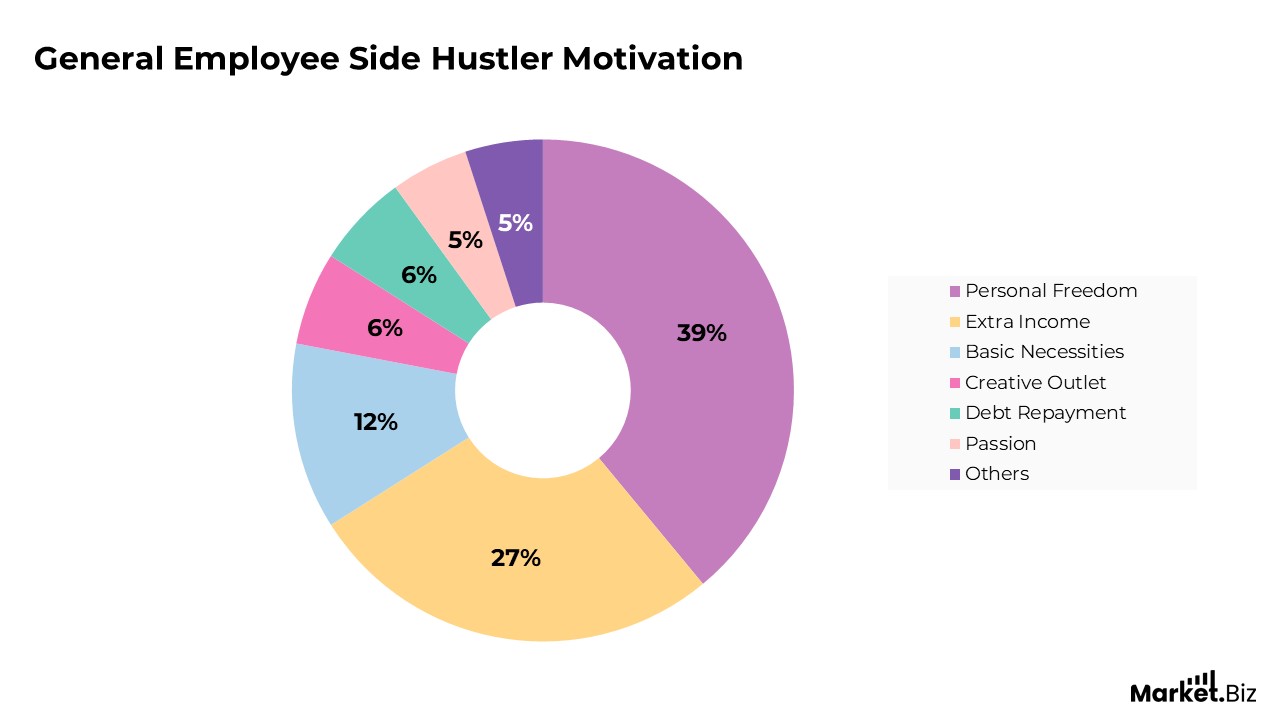
- Nearly 32% of people with side hustles said they pursued the gig to support their personal projects or passions.
- Somewhere around 20 percent of full-time workers in the U.S. have a side hustle or freelance job.
- 68% said they side hustle to save money or pay off debts.
- About 50% of the gig workers are in their prime working ages of 25 to 44.
- Since 2014, the freelance population in the U.S. has grown by 3.7 million.
- 60% of side hustlers intend to become completely self-employed within a period of three years.
- Side hustles have given 70% of employees a way to develop new skills.
- Over 70% of side hustlers say the extra work is done after office hours or on weekends.
- A large part of them, that is about 35%, are side hustlers using gigs to get networking or career flexibility.
- About 30% of side hustlers started their side gigs during the COVID-19 pandemic.
- The freelance economy worldwide is projected to touch $455 billion by the year 2026.
- 45% of workers under 30 say they would take a pay cut in exchange for more flexible working conditions, such as side hustles.
(Source: Jobera, WP-Content)
What is a Side Hustle?
The term side hustle refers to a flexible secondary job or business activity that individuals take up alongside their main job. Typically, a side hustle either offers people additional income, a chance to pursue a passion, or a platform to develop some professional skills. Most workers perform some sort of side gig, be it freelance work, consulting, or e-commerce.
With the advent of online platforms, it is much easier to embark upon a side hustle with minimal upfront investment. For some, side hustles build an additional layer of financial security; for others, they are a means to getting out of debt; while for yet others, side hustles are about getting that flexible work-life balance.
As the expansion of the gig economy continues, there will be more networking possibilities and career diversification through side hustles. In any case, side hustlers tend to gain greater control over filled calendars and income sources.
Common Employee Side Hustles
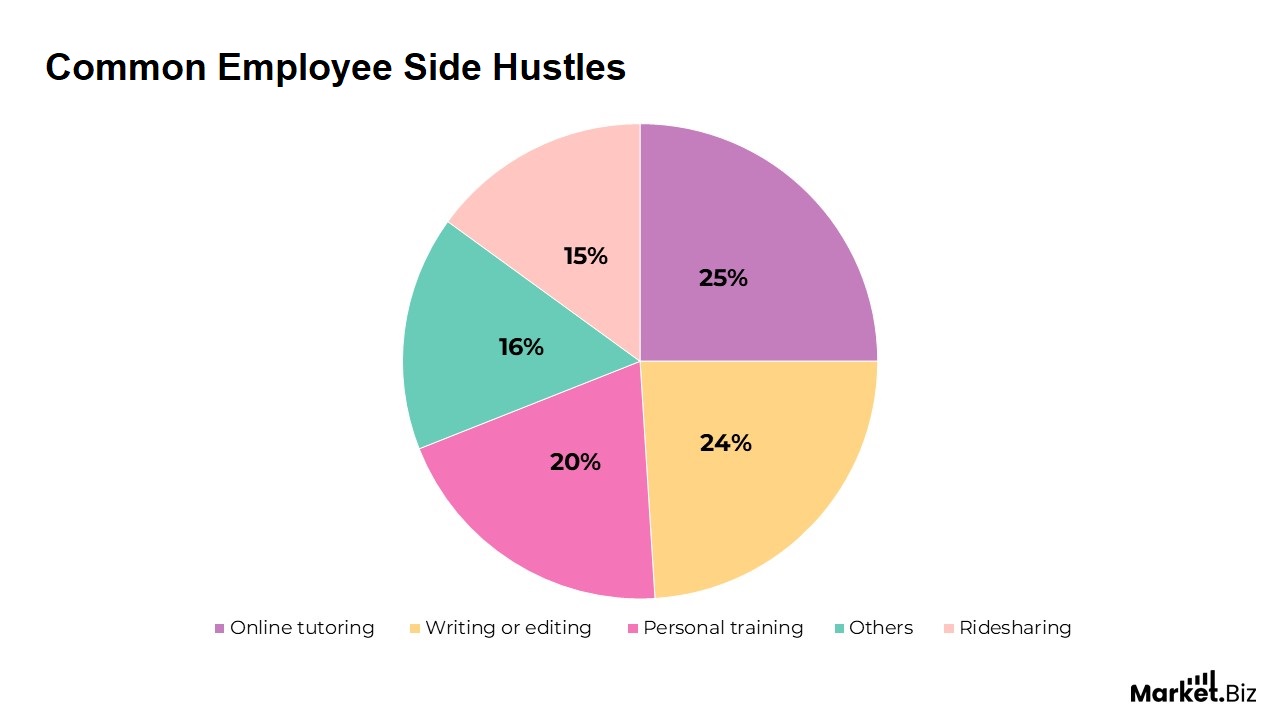
- Nearly 24 percent of side hustlers are into writing or editing services.
- Ridesharing through Uber or Lyft is another good panel of about 15 percent of side-hustle activity in the country.
- Online tutoring now stands as the other big side hustle, with a 25% increase in demand during this pandemic period.
- E-com is a top-level side hustle for 30 million sellers all over the globe through platforms like Etsy and eBay.
- Social media management is becoming another popular side hustle-cum-profession for digitally savvy workers.
- Graphic design is one of the side hustles that is rapidly evolving with the growth of digital marketing demand.
- Photography as a side hustle helps earn money through event coverage or selling stock photos online.
- Affiliate marketing is going strong nowadays, with affiliates sit commissions on product sales.
- Almost 20% of side hustlers in the health and wellness industry are involved in personal training, another side-hustler in high demand.
- Another sort of remote side job is virtual assistance, helping companies with administrative tasks like scheduling and email management.
- Web development has become a very lucrative side-hustle, almost exclusively, as companies seek out freelance developers.
- Professional pet sitting and dog walking sit on the other fast-growing business as more find their way to Rover.
- Consulting in marketing, finance, or HR remains the stereotypical big-money side hustle.
- Content creation on platforms like YouTube and TikTok has opened up new income opportunities for creative workers.
Top Searches about Side Hustles in 2025
- Remote side hustles- The increase of 1,797% since 2020 sheds light on a marked pace of change toward online income opportunities.
- Remote data entry jobs- With more than 1.7 million searches registered in 2024 alone, it is the frontrunner’s type of side hustle, accounting for an incredible 2,111% growth from 2020.
- How to start an e-commerce business- E-commerce businesses are yet another great flexibility-type side hustle to work with about 24,000 monthly searches.
- How to start an Instagram business- Social media managers’ demand will increase along with the growing relevance of social media for businesses.
- How to start an Amazon business- In popular demand for new kinds of side hustling, Amazon businesses thrive on the sale of goods.
- How to start an Etsy business- Selling digital products through such platforms as Etsy will make one passive income somewhere in the range of $200 to $5,000 a month.
- How to start an Airbnb business- Airbnb’s rise is being spurred by tourism and travel.
- How to start a blogging business- Independent freelance blogging continues to provide an excellent side hustle with an earnings range of $2,000-$5,000 for 10 hours of work per week for most writers.
Highest-Paying Side Hustles
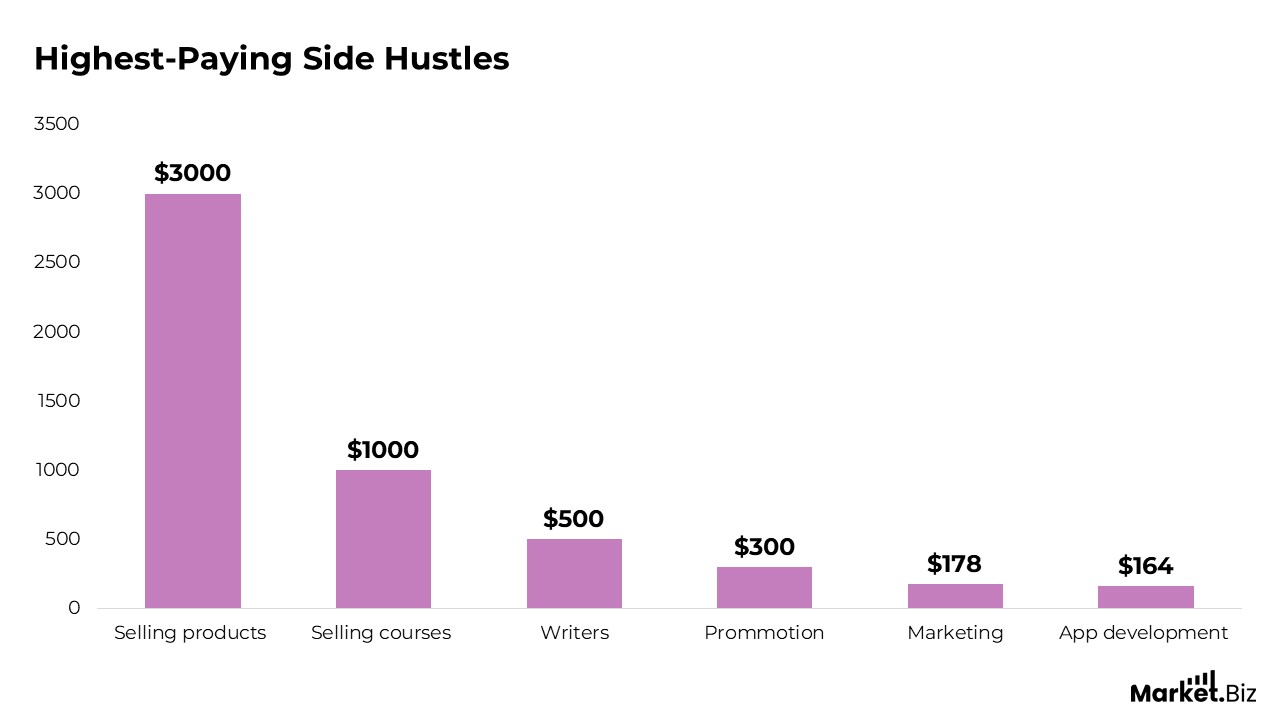
- Up to $178/hour may be earned by advising start-ups and established businesses on marketing strategies that work.
- The app development business is forecast to be worth $583 billion by 2030. So, developers will be valued for their skills and charged $164/ day for the same.
- Writers who create blog content, articles, and social-media-related content can make around $500 every month.
- By promoting a certain product and getting commissions, one can make from $300 to $10,000 a month.
- Creating and selling courses or conducting tutorials can assure an income ranging from $1,000 to $6,000 per month.
- Selling products online without holding inventory can earn entrepreneurs anywhere from $3,000 in sales.
- Depending on how many clients you can take, managing social media for a company could bring in $500 to $4,000 per month.
- Remote admin support can bring about $300 to $3,000 a month, depending on the actual work required.
- Voice acting is a fast-paced business, with the average earnings depending on $48 per hour.
- Focus group participation will make you $28/hour; experience is not required.
- For the construction of websites and digital assets, developers and designers make $25-to-$100+ an hour.
- Content creators make money from ads, sponsorships, and affiliate marketing, and variations depend on their audience size.
- Online fitness coaches make between $30 and $100-plus an hour while providing personalized training sessions.
Employee Side Hustles Earnings
- Employees with side hustles tend to earn approximately $1,215 in earnings per month, with an income median of $400/month.
- Roughly 44% of Americans have side hustles, 43% of which use that money toward day-to-day expenses.
- With an average income of $1,580/month, men claim to be earning more than twice what women claim, which is $749/month.
- Millennials earn, on average, $12,689 from side-hustles in addition to their main income.
- More among Gen Z (age: 18-26) and Millennials (age: 27-42) engage in side hustling than among Baby Boomers.
- As many as 71% of the side hustlers make less than $500 each month, with nearly one-fourth of the group making less than $100 per month.
- AI content generation is highly paid work: up to $200/hour. So, this can be one of the highest-earning gigs.
- Freelance digital marketing can pull in about $50,000-$75,000 a year, depending on skills and clients.
- Virtual assistants work the fewest number of hours per week, charging $15 to $50 an hour for somewhere between 10 and 20 hours per week. They can expect to earn roughly $10,000 to $25,000 per year.
- Social media managers have the option to charge hourly fees or monthly retainers, with hourly rates between $15 and $50 and monthly fees that typically vary between $500 and $2,000, depending on their client base and agreed-upon services. That translates to roughly $10,000 to $25,000 per year.
- These side hustles generally refer to selling digital products that include e-books or online courses and would bring in about $100-$5,000/month, depending on the product and marketing efforts.
- Online tutors earn between $200 and $2,000 a month, with Teachable as a good platform.
- Pet sitting, dog walking, or childcare can bring great earnings, with opportunities in cleaning, ironing, and baking cakes at home for additional income.
Benefits of Side Hustles
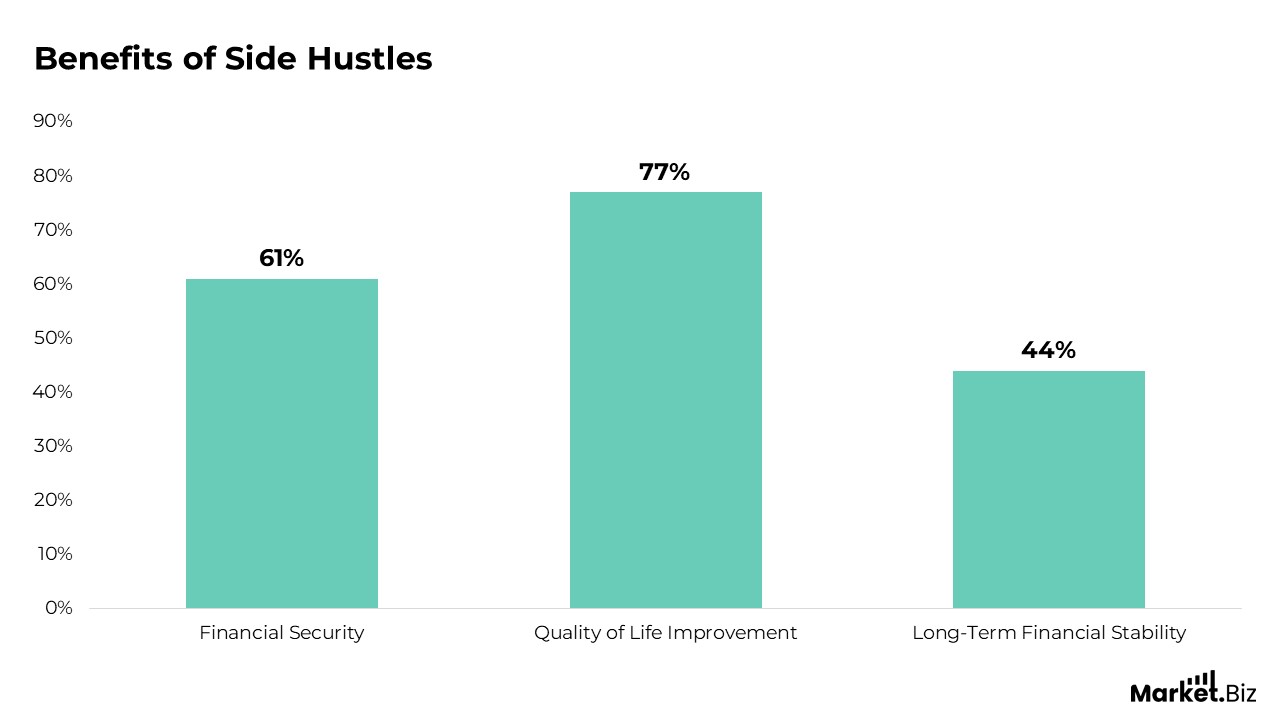
- Financial Security
61% side hustlers say that life could have been unaffordable if they didn’t have the side hustle as an income.
- Quality of Life Improvement
77% people say their side hustle enhances their life.
- Long-Term Financial Stability
44% side hustlers think that the more earnings save them for deep, long-term financial savings.
- Income Diversification
Side hustling holds the productivity of alternate income streams from relying on a single earning source.
- Skill Enhancement
A side job becomes a platform for any person to develop or refine personal skill sets that apply in the real-world environment.
- Networking Opportunities
Side-hustling might include networking options that later can be a front for career-building.
- Entrepreneurial Experience
For those looking to jump into self-employment, side hustling is the safer way to test a concept and develop entrepreneurial skills.
- Personal Fulfilment
Most side hustlers declare that they enjoy satisfying their passions and interests outside work.
- Work-Life Balance
Aside from fostering creativity and satisfaction, side hustling offers a much-needed outlet for support in work-life balance.
- Increased Job Satisfaction
With good publicity, side-hustling might actually extend employee satisfaction and retention.
- Financial Independence
Extra dollars generated from side hustles can be credited toward debt or saved for a much-needed trip or even start retirement planning.
- Community Engagement
Strong local side hustlers build stronger communities through personalized and reliable services.
Side Hustles Demographics
Age, Gender & Income
- 53% of Gen Z (18–26) and 50% of Millennials (27–42) make side incomes.
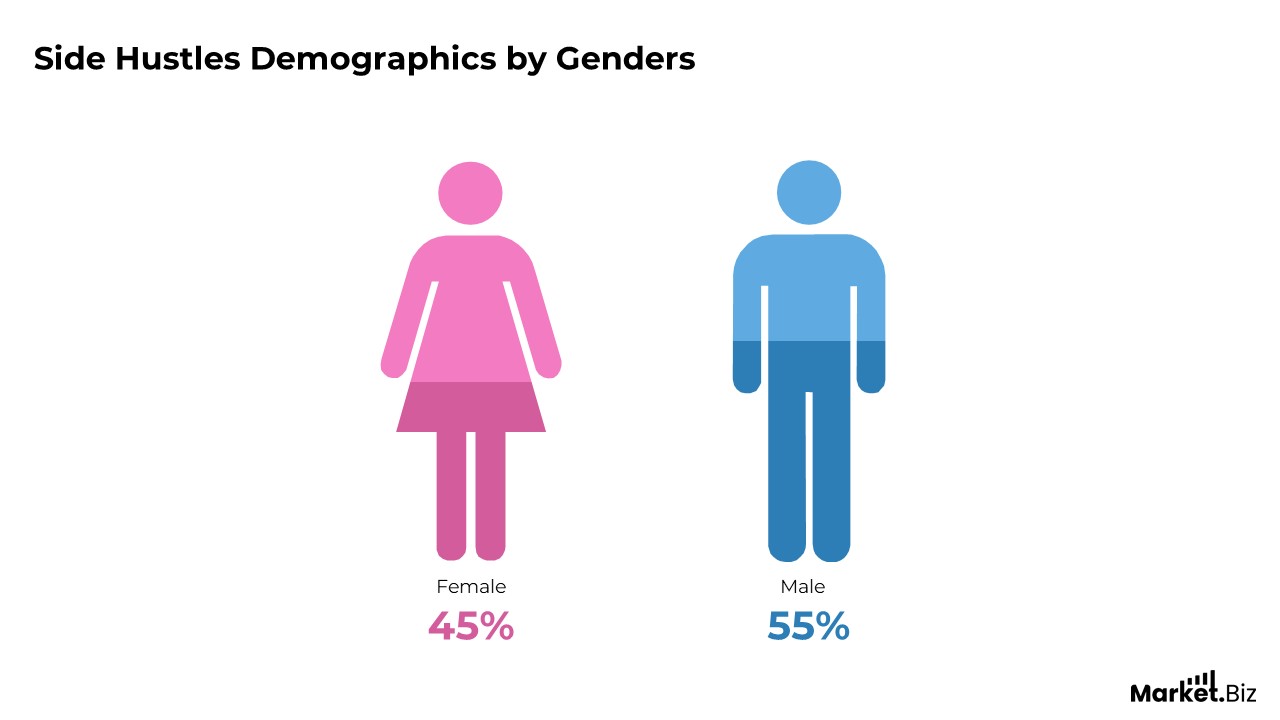
- Side gigs are more of a male thing (55%) than a female one (45%).
- 55–64 year-olds bring in the most during their side hustles: $1,061/month, on average.
- 33% of the side hustlers use their earnings to get them through the day.
- 42% of side hustlers from a household with <$50,000 earn side income for their daily expenses.
- Even those earning over $100,000 a year go for side hustles at 45%.
- 68% of side hustlers say they don’t even make $500 a month doing so, while 12% state they make over $1,000.
- 25% of side hustlers are between the age groups of 18 and 26, 37% are between 27 and 40, and 33% are between 41 and 54.
- 55–64 year-olds earn the most from the side hustle at $1,061 per month.
- 44% of side hustlers feel that they will need to keep one indefinitely to stay afloat.
Location & Education
- 52% of side hustlers are residents of a major city or urban areas.
- In this group of people, 55% of them have attained, at some point, a university degree or a postgraduate degree.
- Almost 45% of parents with children less than 18 are also doing side gigs.
- 36% of childless adults are into side hustles.
- 28% of those having adult children venture into side hustles.
- 31% of side hustlers plow their side hustle revenue into discretionary expenditure.
- 33% would rather work gig jobs to repay debts.
- 22% of side hustlers aim to save for retirement.
- 45% of side hustlers work on a side gig at least once per week.
- 30%-40% of side hustlers actually spend 5 to 10 hours a week working on their gigs.
Occupation & Work Patterns
- 57 million Americans participate in this economy.
- Among half of side hustlers, the side gig is pursued at least once a week.
- 30–40% of the side hustlers work on their gigs for five to ten hours a week.
- About 25% of side hustlers reportedly make over $500 every month from their side gigs, while 15% are earning over $1,500 per month.
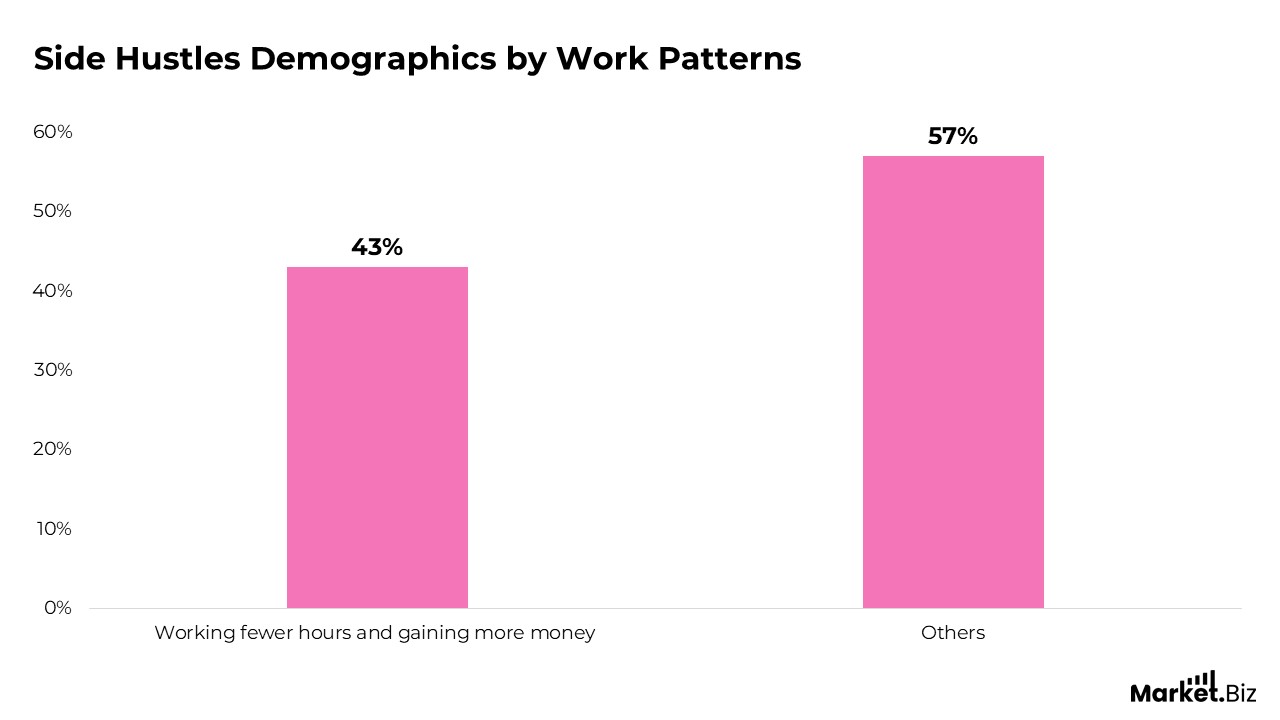
- 43% of side hustlers report working fewer hours and gaining more money than if they had just relied on their jobs.
- The majority of popular side hustles include reselling or flipping items (39.4%) and online freelance work (29.8%).
- Earned income is at least moderately important to 77.2% of side hustlers.
- Of those side hustlers who used their earned income to pay for expenses and bills, only 69% reported doing so.
- Another 31% say they use that earned income for fun and entertainment.
- 33% of side hustlers would like to work to pay off debts.
Quitting Statistics of Side Hustles
- 41% of workers have considered quitting full-time jobs for the sake of working full-time on a side gig, 10% have already done so.
- 57% of workers say that their side ventures have to bring in at least 75% of their current pay before quitting their full-time jobs.
- 65% of side workers would like a single main income source rather than a few different side jobs.
- Another 73% of workers are at present looking to go off and quit their day jobs.
- 31% of workers have also considered quitting their jobs to go for full-time side hustling.
- 10% have leaped into full-time side gig work.
- 57% require their side hustle to generate at least 75% of their current salary before quitting.
- 46% of the side workers use the income to pay the bills, whereas 31% spend it on discretionary stuff.
- 33% bust their backsides trying to get out of debt through side hustles.
- 22% hustle to save for retirement.
Future of Side Hustles
- Driven by digital platforms and remote opportunities, the global gig economy is projected to reach $455 billion by 2026.
- The e-learning side hustles are growing at a rate of 25%, fuelled by online education and skill development.
- Sustainability-focused side hustles are growing by 20% as customers prefer eco-friendly and ethically sourced products.
- Social commerce causes 22% growth in side-hustle sales, using Instagram and TikTok to broaden side-hustle completion.
- Slack-side hustles are growing at the rate of 28%, in tune with hybrid work models and flexible job arrangements.
- The AI-driven tools offer a 30% efficiency increase, simplifying marketing, outreach, and task management for side hustlers.
- In 2025, there will be 12% more than 60 million Americans engaged in side hustling than in 2023.
- Millennials are making up to $12,689 per year from side-hustles, proving supplementary income is worth having.
Conclusion
More and more, the modern world of work is driven by half-days, or “side gigs,” where a considerable portion of the U.S. adult population engages in gig jobs alongside mainline jobs. The trend is more accentuated among the younger generations, with Millennials and Generation Z vying for top spot when it comes to choice, preference, or level of engagement in side activities.
Financial reasons are the principal motivators for side gigs, and many side hustlers report that life simply would be unaffordable without the cash flow from their secondary source. On average, quite a lot of money is earned every month, with men earning more than twice as much as women do.
Freelance work, e-commerce, and consulting stand at the top as the most popular side gigs, with the global freelance economy expected to hit a huge mark by 2026. As the gig economy expands, companies will be working toward supporting employees in their entrepreneurial aspirations along with their full-time duties.
FAQs
About 39% of U.S. adults participate in some sort of side hustle, with Gen Z and millennials leading in participation.
Side-hustlers earn an average of about $810 per month, depending on age, gender, etc., according to different sources.
They do so to pay the bills, to save money for something, or to wipe out some personal debt. Monetary need is the primary cause of doing a side-hustle.
Gen Zs and Millennials lead the side-hustling culture with 53% and 50% involvement, respectively.
On the other hand, side-hustling does afford some measure of financial security, as most side-hustlers use the money they make on the side for things like supporting basic living expenses and saving towards future financial goals.