








Introduction
Gender Pay Gap Statistics: The gender pay gap remains a persistent issue globally, with women earning, on average, 20% less than men. This means women earn 80 cents for every dollar earned by men. At the current rate of progress, it could take approximately 132 years to close this gap.
This disparity is evident across various industries, with women in finance and technology earning as much as 25% less than their male counterparts. The gap is even more pronounced among women, with Black and Hispanic women earning 37% and 46% less, respectively, than white men.
Despite advancements in gender equality, pay inequality continues to hinder women’s economic c and long-term financial security. Addressing this gap requires systemic change, including pay transparency, policy reforms, and active corporate strategies.
Editor’s Choice
- Women globally earn 20% less than men, making 80 cents for every dollar earned by men.
- Women in finance and technology earn 25% less than their male counterparts, despite similar qualifications.
- The gender pay gap in the U.S. stands at 82 cents for every dollar earned by men.
- Black women earn 37% less, and Hispanic women earn 46% less than white men in the U.S.
- Women in leadership roles earn 23% less than men in similar positions.
- Women in STEM earn 30% less than their male counterparts, despite similar qualifications.
- The global gender pay gap could take 132 years to close if current trends continue.
- The gender pay gap is narrower in the public sector (12%) compared to the private sector (20%).
- Education increases women’s earnings, but they still earn 10% less than men in professional fields.
- Women with children earn 7% less than those without children, while men’s earnings remain unaffected by fatherhood.
- The gender pay gap for women over 50 is 20%, reflecting an increasing gap with age
- Countries like Iceland and Finland, with pay transparency policies, are narrowing their gender pay gaps significantly.
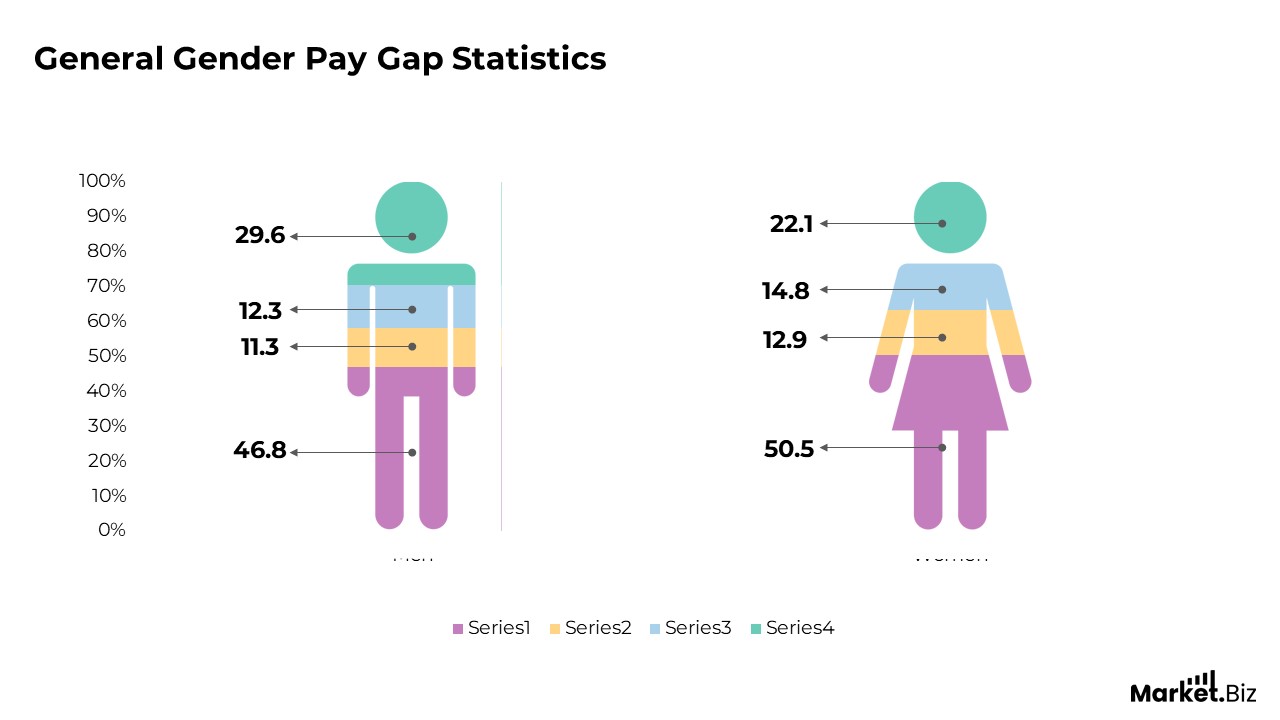
General Gender Pay Gap Statistics
- On average, women globally earn 20% less than men, meaning women make 80 cents for every dollar earned by men.
- In the technology and finance sectors, women earn 25% less than their male counterparts, despite similar qualifications and experience.
- In the U.S., women earn 82 cents for every dollar earned by men, with women facing even wider gaps.
- Women with children earn 7% less than women without children, while men’s earnings remain largely unaffected by fatherhood.
- Women in top leadership roles earn, on average, 23% less than their male counterparts, despite holding similar responsibilities.
- Black women earn 37% less, and Hispanic women earn 46% less than white men in the U.S., reflecting compounded racial and gender inequality.
- Women are more likely to work part-time than men, and part-time jobs tend to pay 10% less than full-time roles, contributing to the overall pay gap.
- Although women surpass men in educational attainment, they still face a 7% wage gap in sectors like law, medicine, and business.
Moreover
- Women in STEM fields earn about 20-30% less than their male counterparts, despite similar educational backgrounds.
- If progress continues at the current pace, it could take up to 132 years to fully close the global gender pay gap, indicating the need for accelerated action.
- Women working in managerial roles earn 22% less than their male counterparts in similar positions, despite similar job responsibilities.
- The gender pay gap for women aged 25-34 is 13%, but this gap increases as women age, with women over 50 earning 20% less than men.
- In the U.K., the gender pay gap stands at 15.5%, with women in full-time roles earning £1.09 less per hour than men for every £1 earned.
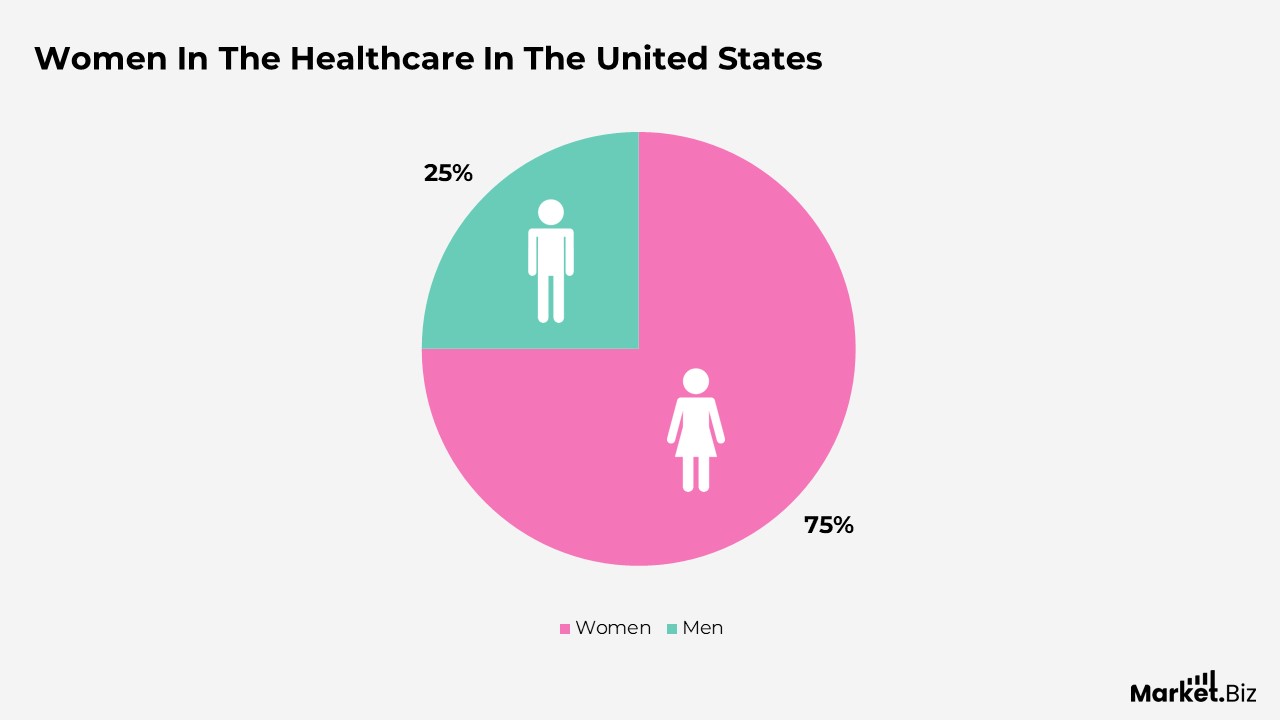
- Women in the healthcare industry earn about 18% less than men, even though women make up the majority of the workforce in this sector.
- While women make up 47% of the U.S. labour force, they hold only 24% of senior executive roles, contributing to the ongoing wage disparity.
- Women in education typically earn about 10% less than their male counterparts in similar academic and administrative roles.
- The global gender pay gap is expected to close by 2059, but improvements are uneven across different countries and regions.
- Women with disabilities face an even wider pay gap, earning approximately 20% less than men with disabilities in similar roles.
(Source: zippia, wp-content)
Historical Trends in Gender Pay Gap Statistics
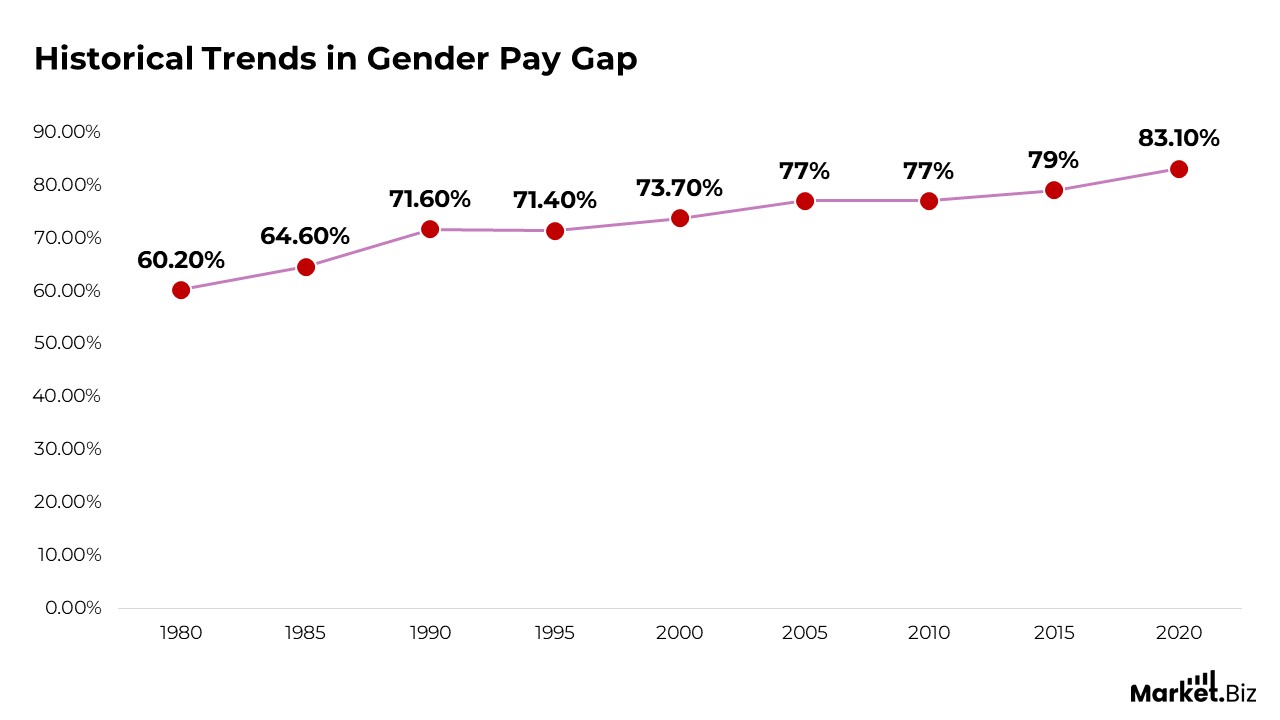
- In 1950, women in the U.S. earned about 59% of what men made, marking a significant early disparity in the workforce.
- In 1980, the gender pay gap in the U.S. had narrowed slightly, with women earning 60.2% of what men earned.
- In 1990, the gender pay gap in the U.S. had reduced to 71.6%, a result of increased women’s participation in higher education and the workforce.
- By the early 2000s, the gap had narrowed further, with women earning about 73.7% of what men made in similar roles.
- In 2010, the gender pay gap in the U.S. stood at 77%, but women, especially women, still faced substantial disparities in certain industries.
- In 2019, women in the U.S. earned 82 cents for every dollar earned by men, reflecting slow but steady progress over several decades.
- Globally, the gender pay gap has narrowed from 28% in 2006 to 16% in recent years, though progress has been uneven across regions.
- In the 1960s, the gap in earnings was even wider, with women earning only 60% of what men earned in most industries.
Moreover
- The Equal Pay Act of 1963 in the U.S. was a landmark moment, marking the beginning of federal efforts to address pay disparities.
- In the 1980s, gender pay gap statistics showed a sharp increase in women entering higher-paying professional fields, helping to close the gap slightly.
- In the 1990s, the gender pay gap was notably wider for women in senior management and executive roles, with women in leadership earning as much as 30% less than their male counterparts.
- In 2000, women’s labour force participation in high-paying fields like law and medicine had significantly increased, yet the gender pay gap remained at around 15% in these sectors.
- During the 2010s, conversations around wage transparency and equal pay gained momentum, contributing to the gradual narrowing of the gap in developed countries.
- Data from 2020 showed that the gender pay gap in the U.K. was 83.1%, a notable decrease from previous decades, with slow progress being made in areas like finance and tech.
- Looking forward, experts predict that it could take 132 years to completely close the global gender pay gap if current trends persist, highlighting the need for accelerated action.
(Source: zippia, wp-content)
Gender Pay Gap in the United States
- In 2021, the overall gender pay gap in the U.S. was 83 cents for every dollar earned by men, with women consistently earning less across all industries.
- The gender pay gap is more pronounced for women, with Black women earning 64 cents and Native American women earning 57 cents for every dollar earned by white men.
- The pay gap tends to widen with age; women aged 45-54 earn about 75% of what men in the same age group earn in the U.S.
- While women make up nearly half of the workforce, they hold only 27% of executive or senior management roles, contributing to the pay gap in leadership positions.
- Among those in the tech industry, women earn approximately 18% less than men in similar roles, with the gap more prominent in engineering and technical jobs.
- The gap is smaller in part-time jobs, but women are more likely to work part-time than men, which contributes to the overall disparity in earnings.
- In the healthcare sector, despite women making up 75% of the workforce, they earn about 14% less than men in comparable positions.
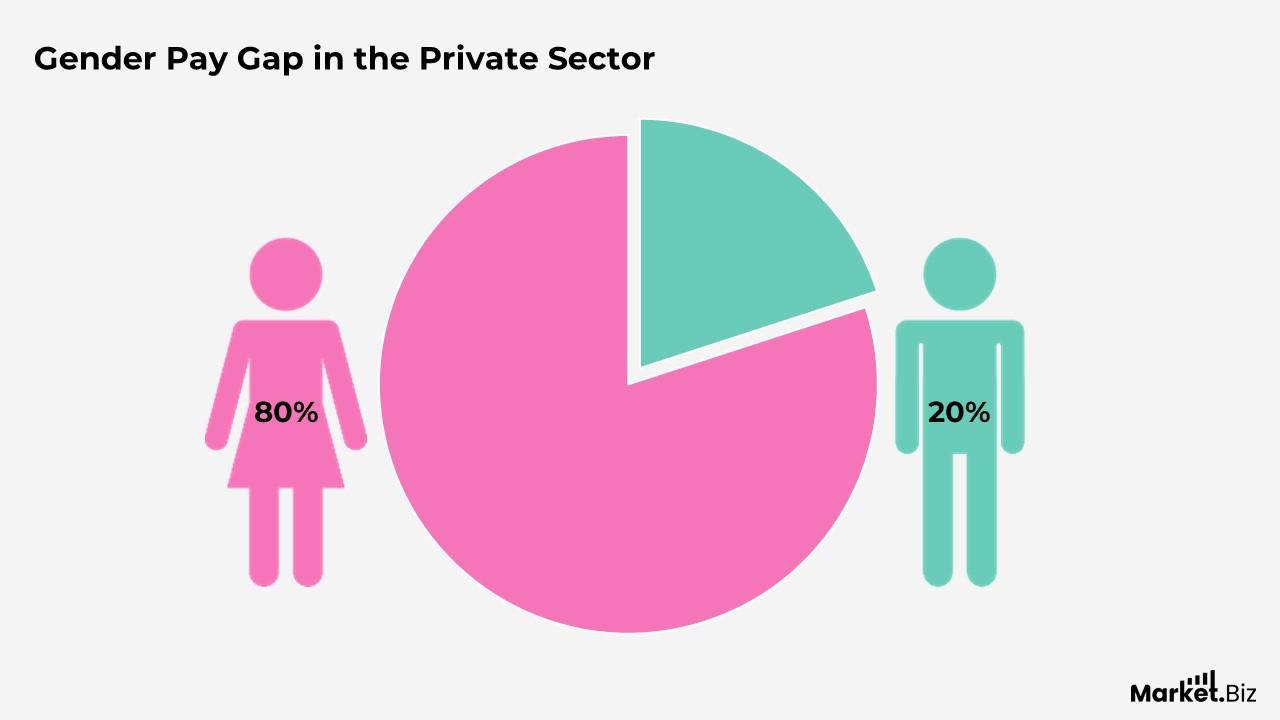
- The gender pay gap is more significant in the private sector, where women earn 20% less than men, compared to a narrower gap of about 12% in the public sector.
- Gender segregation in certain industries continues to exacerbate the pay gap, with women overrepresented in lower-paying fields like education and social services.
- Despite women’s increasing educational attainment, with more women than men graduating from college, they still earn about 10% less on average in professional fields like law and business.
European Union Gender Pay Gap
- The gender pay gap in the European Union stands at 13%, with women earning 87 cents for every euro earned by men.
- The pay gap is largest in Estonia, where women earn 25% less than men, while the smallest gap is in Romania at 3%.
- Across the EU, women are underrepresented in high-paying sectors such as technology and finance, contributing to the overall wage disparity.
- In leadership roles, women in the EU earn 22% less than their male counterparts, despite equal qualifications and experience.
- Women in the EU work in lower-paid occupations like health, education, and caregiving, which increases the gender pay gap.
- The pay gap is significantly wider for mothers in the EU, with mothers earning 10% less than women without children.
- The gender pay gap in part-time work in the EU is narrower, but women are more likely to hold part-time jobs, which affects overall earnings.
- Data shows that women in the EU are less likely to negotiate salaries, which also contributes to ongoing pay disparities.
- Countries like Iceland and Finland have implemented pay transparency measures, which have contributed to narrowing the gender pay gap.
- While the EU has seen a gradual decrease in the pay gap, at the current rate, full gender pay equality is still estimated to take another 60 years to achieve.
Gender Pay Gap by Industry
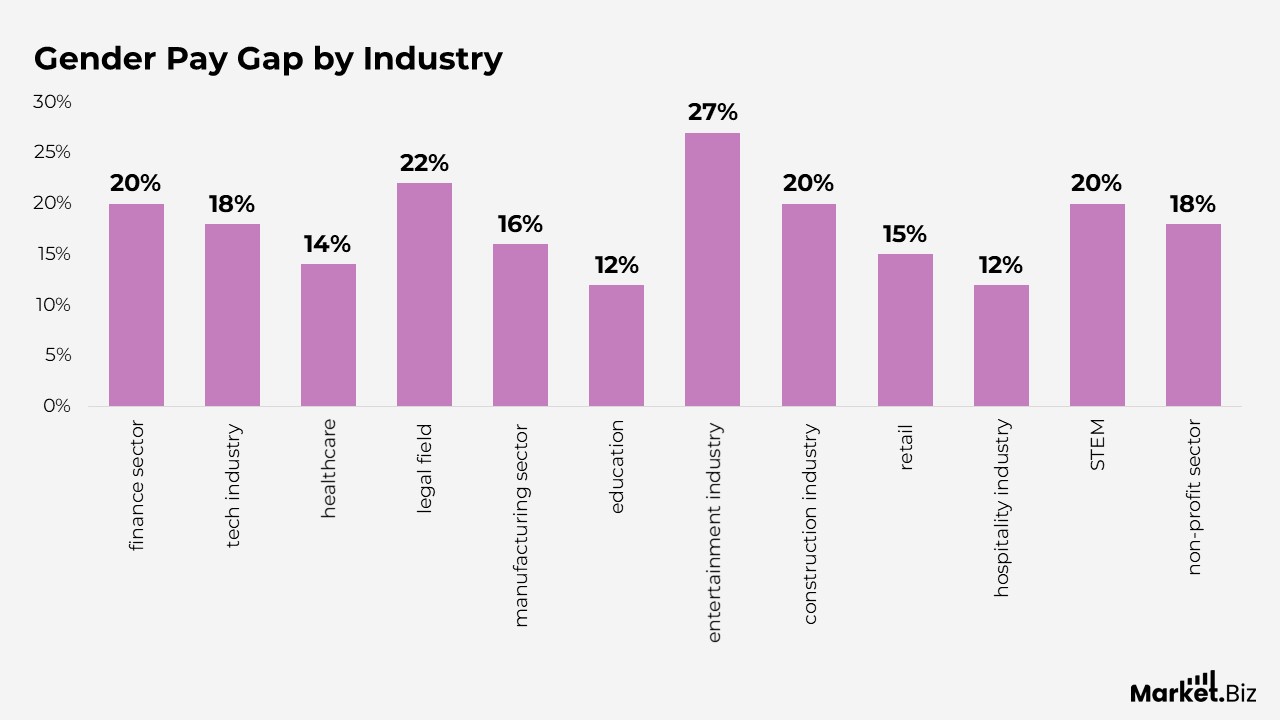
- In the finance sector, women earn 20% less than men, particularly in high-paying roles like investment banking and asset management.
- Women in the tech industry earn about 18% less than men, with the gap being wider in engineering and software development.
- In healthcare, despite women making up a large portion of the workforce, they earn 14% less than men, especially in senior positions.
- The gender pay gap in the legal field is around 22%, with female lawyers and judges earning significantly less than their male counterparts.
- Women in the manufacturing sector earn approximately 16% less than men, with a more significant gap in senior management and technical roles.
- In education, women earn about 12% less than men, even though they make up a large majority of the workforce.
- The gender pay gap in the entertainment industry is notable, with women earning 27% less than men, particularly in film and television production.
- Women in the construction industry face a substantial pay gap, with earnings 20% less than their male counterparts, especially in fieldwork and leadership roles.
- The gender pay gap in retail is about 15%, with women in managerial positions earning significantly less than male managers.
- In the hospitality industry, women earn 12% less than men, with the gap being more pronounced in high-level management and executive roles.
- The science, technology, engineering, and mathematics (STEM) fields show a 20% gender pay gap, especially in research and engineering positions.
- In the non-profit sector, women earn around 18% less than men, despite holding a significant portion of the workforce, particularly in administrative and program roles.
Impact of Education
- Despite women surpassing men in educational attainment, earning 57% of all bachelor’s degrees, they still earn about 10% less in the workforce.
- Women with a college degree earn 25% less than their male counterparts, even though they have similar educational qualifications.
- In STEM fields, women with equivalent degrees earn 20% less than their male peers, demonstrating the influence of industry choice in education.
- Women with advanced degrees, such as master’s or doctoral degrees, still experience a 12% pay gap compared to men in similar fields.
- In law, women with a Juris Doctor (JD) degree earn 25% less than their male counterparts, despite having similar qualifications and experience.
- Female medical professionals, even with medical degrees, earn about 15% less than their male counterparts in comparable positions.
- Gender pay disparities in higher education persist even in disciplines where women are the majority, such as in education and healthcare.
- While women are more likely to graduate with a degree in education, they earn 10% less than men in similar academic roles.
- Women with technical degrees in engineering or computer science face a 15% pay gap compared to male graduates in the same fields.
- The gender pay gap for women with postgraduate education in business fields, like MBA programs, is around 15% less than for men.
- Female graduates in humanities fields, despite equal degrees, earn approximately 12% less than men working in the same area.
- In graduate programs, women often experience a “motherhood penalty” that negatively affects their future earning potential, even with similar educational qualifications.
Role of Parental Leave
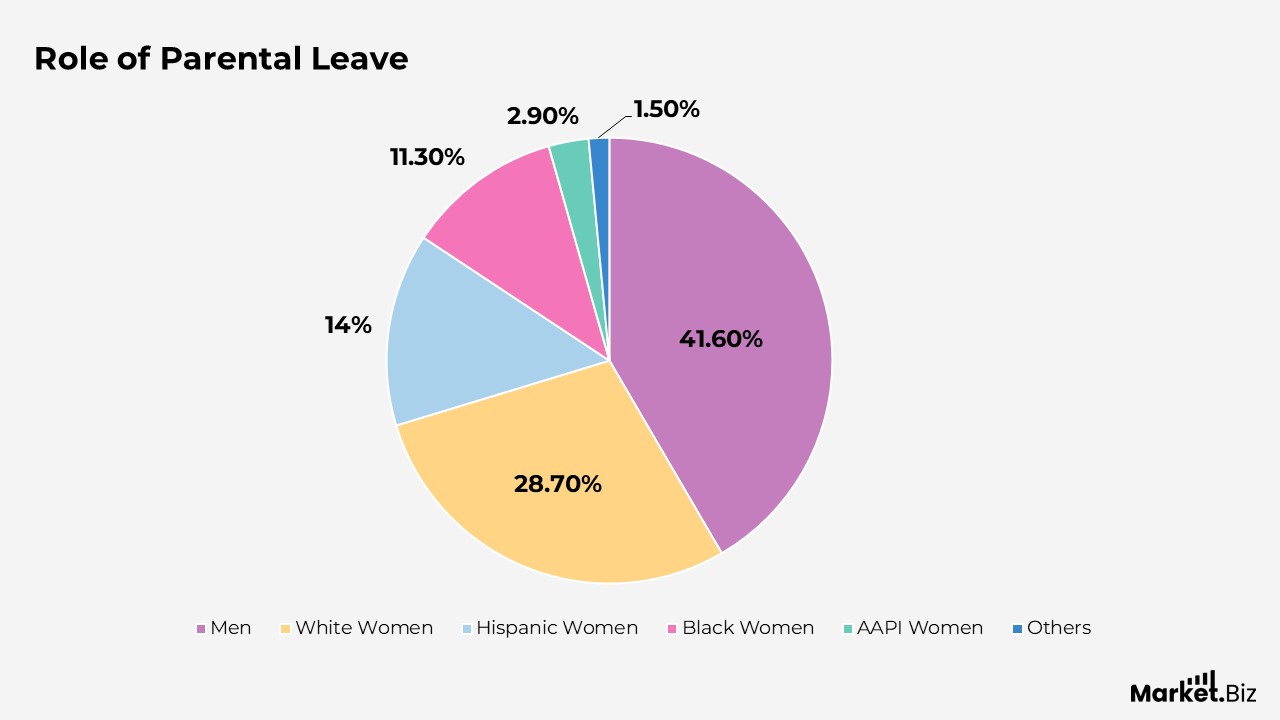
- Mothers earn 7% less annually after taking parental leave, contributing to the gender pay gap.
- In the U.S., 1 in 4 women experience lower wages after returning from parental leave.
- The “motherhood penalty” results in a 15% wage gap for women in the EU after parental leave.
- Men typically face no wage penalty from taking paternity leave, reinforcing the gender gap.
- In countries with paid parental leave, like Sweden, the gender pay gap is smaller, around 13%.
- Only 23% of U.S. workers have paid family leave, exacerbating wage disparities when women take unpaid leave.
- Women who take parental leave are less likely to be promoted, widening the pay gap over time.
- Women’s earnings drop by 4% per child in the U.S., while men see no similar decrease.
- Gender disparities in parental leave policies cause more career interruptions for women than men.
- Shared parental leave policies help reduce the gender pay gap by normalizing caregiving for both parents.
(Source: zippia, wp-content)
Gender Pay Gap in STEM Fields
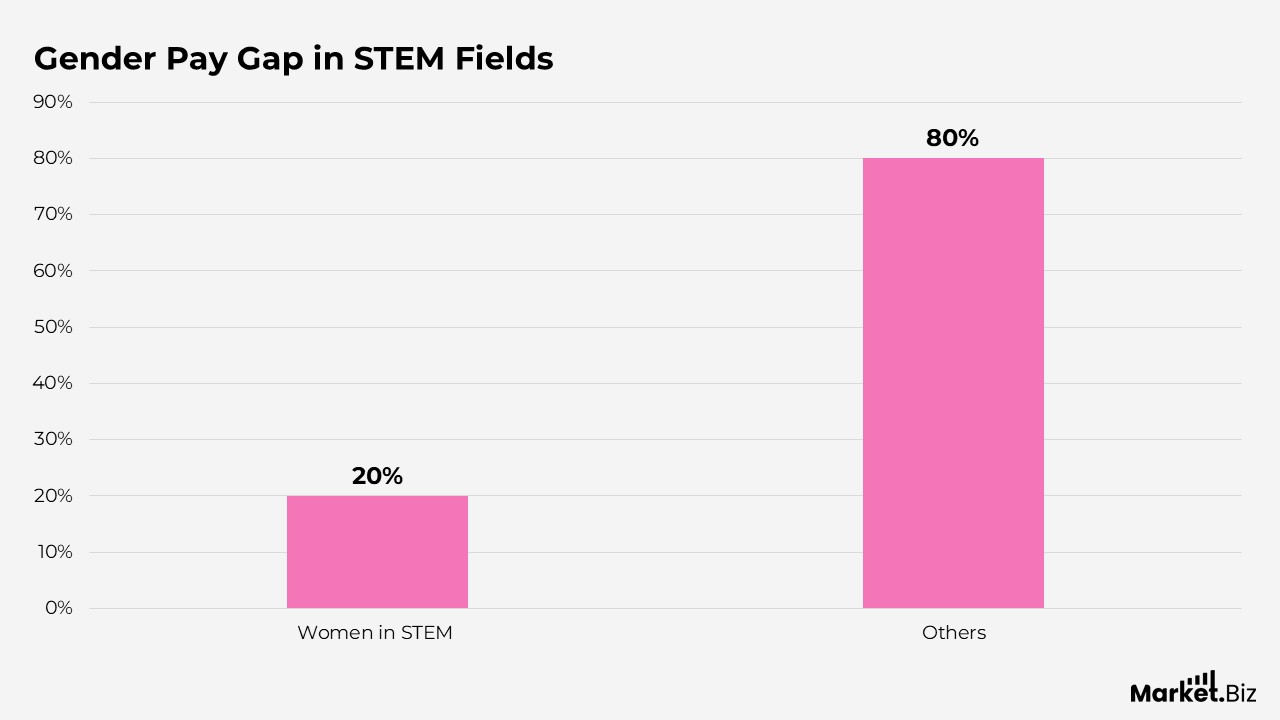
- Women in STEM earn about 20% less than their male counterparts, despite having similar qualifications and experience.
- Female engineers earn 21% less than male engineers in the U.S., even though women make up 15% of the engineering workforce.
- In the tech industry, women earn 18% less than men, with the gap being wider in high-level technical roles such as software development.
- Women in STEM face an even larger pay gap, earning 25% less than their male counterparts in similar positions.
- The gender pay gap in research roles is approximately 15% in many STEM fields, with female scientists earning less than male counterparts in similar research areas.
- Women make up only 28% of the workforce in STEM-related fields, contributing to a wider pay gap as fewer women reach higher-paying positions.
- In academia, female STEM professors earn 10% less than male professors, with the gap widening at higher ranks like full professor.
- Closing the gender pay gap in STEM could increase overall productivity, with estimates suggesting that equal pay in STEM could add up to $300 billion to the U.S. economy.
Public Sector By Gender Pay Gap
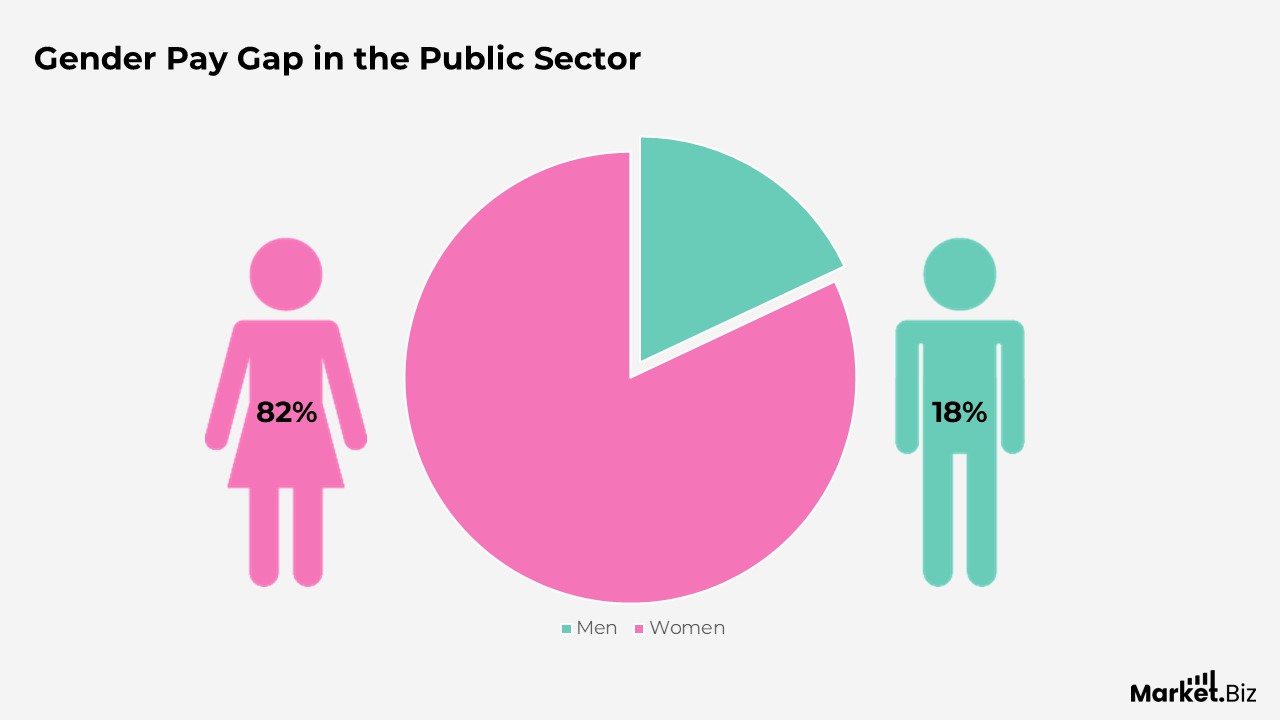
- In the public sector, women earn 12% less than men, especially in higher-level roles.
- Women in leadership positions in the public sector earn 18% less than men.
- The gender pay gap in the public sector is closing more slowly than in the private sector.
- Women in public administration earn 15% less, particularly in managerial roles.
- In the EU, the public sector pay gap is about 10%, with women holding 35% of senior roles.
- In the U.S., female government workers earn 80 cents for every dollar earned by men.
- Occupational segregation in the public sector contributes to a gender pay gap, with women in lower-paying roles.
- Countries like Finland and Sweden have a smaller public sector pay gap, around 7%.
- In the U.S. federal workforce, women earn 15% less than men despite equal representation.
- Women in public sector union jobs face a smaller pay gap, earning 10% more than non-unionized workers.
Gender Pay Gap in the Private Sector
- Women in the private sector earn 20% less than men, with a bigger gap in senior roles.
- Black women earn 63 cents, and Hispanic women earn 54 cents for every dollar earned by white men.
- In finance and tech, women earn 30% less than men.
- Female executives earn 18% less than male executives in the private sector.
- Women hold 27% of executive roles in the private sector despite making up 47% of the workforce.
- Women in sales earn 15% less, with disparities in base salary and commissions.
- Women are less likely to negotiate salaries, contributing to the pay gap.
- In tech, women earn 18% less than men in software and engineering roles.
- Diversity initiatives help reduce the pay gap, but progress is slow in finance and insurance.
- Closing the private sector pay gap could add $2 trillion to the global economy.
Strategies to Close the Gender Pay Gap
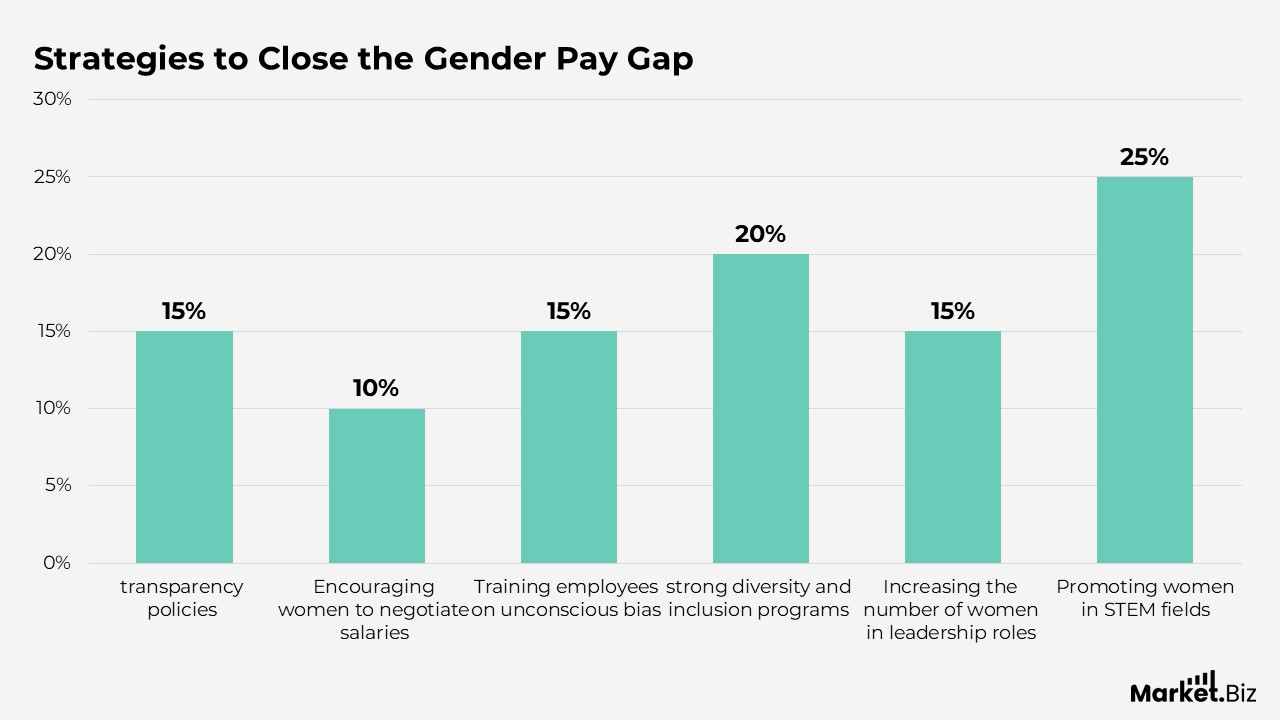
- Companies with pay transparency policies experience a 15% reduction in the gender pay gap over time.
- Implementing equal paid parental leave for both individuals can help reduce the pay gap, with countries like Sweden showing smaller gaps due to these policies.
- Encouraging women to negotiate salaries can reduce the gap, as studies show that women who negotiate earn 10% more than those who don’t.
- Having mentorship programs for women, especially in senior roles, can help bridge the pay gap by increasing promotion opportunities for women.
- Training employees on unconscious bias can reduce hiring and pay disparities, with companies seeing up to 15% improvement in gender equity after implementing such training.
- Offering flexible working hours or remote work can help women balance family responsibilities, reducing the long-term pay gap.
- Companies with strong diversity and inclusion programs have seen a 20% reduction in the gender pay gap, according to recent studies.
- Conducting annual pay audits can identify and address disparities, helping close the gender pay gap by adjusting pay discrepancies.
- Increasing the number of women in leadership roles can reduce the pay gap, with women leaders in organizations earning 15% more than those in lower positions.
- Promoting women in STEM fields, where the pay gap is larger, can help close the gap, as women in STEM earn 25% less than their male counterparts.
Future of the Gender Pay Gap
- If current trends continue, gender pay parity could take up to 250 years to achieve globally, according to the World Economic Forum.
- Automation and AI are expected to close some of the gender pay gap, as women, who are more likely to be employed in administrative roles, benefit from job transformations.
- Increased focus on diversity and inclusion in workplaces is projected to reduce the gender pay gap by 15% over the next decade.
- Countries like Iceland, which have implemented pay transparency laws, are expected to narrow their gender pay gap to less than 5% by 2030.
- The rise of remote work and flexible hours is expected to help women balance family and career, potentially reducing the gender pay gap in the coming years.
- Research shows that by 2050, if women continue entering higher-paying industries, the global gender pay gap could decrease by 25%.
- Gender-neutral parental leave policies in Europe are predicted to significantly decrease the pay gap by 2035, especially with more fathers taking leave.
- Shifting societal norms around caregiving roles, with men increasingly participating, could reduce the gender pay gap by up to 8% over the next two decades.
Conclusion
The gender pay gap remains a significant issue globally, with women consistently earning less than men, especially in sectors like finance and technology. While progress has been made, structural barriers like job segregation and leadership inequalities persist.
Closing the gap will require targeted actions such as pay transparency, diversity initiatives, and reforms to parental leave policies. Addressing this disparity is crucial for achieving economic equality.
FAQs
The global gender pay gap stands at approximately 20%, with women earning 80 cents for every dollar earned by men. This disparity varies across regions, industries, and job roles.
The gender pay gap is particularly pronounced in high-paying sectors like finance, technology, and STEM fields, where women often face lower wages despite similar qualifications and experience.
Parental leave disproportionately impacts women, often resulting in a “motherhood penalty,” where women’s wages decrease after taking leave, while men’s earnings remain unaffected.
At the current pace of progress, it could take up to 132 years to fully close the gender pay gap worldwide, highlighting the need for more accelerated action in addressing the issue.
Companies can implement pay transparency, promote mentorship programs, offer flexible work arrangements, and conduct regular pay audits to address and reduce gender-based pay disparities.