









Introduction
Workplace Mental Health Statistics: Workplace mental health is an urgent issue, with recent statistics highlighting its widespread impact on both employees and organizations. One in five employees globally experiences mental health challenges such as anxiety, depression, or stress, significantly affecting their productivity and well-being.
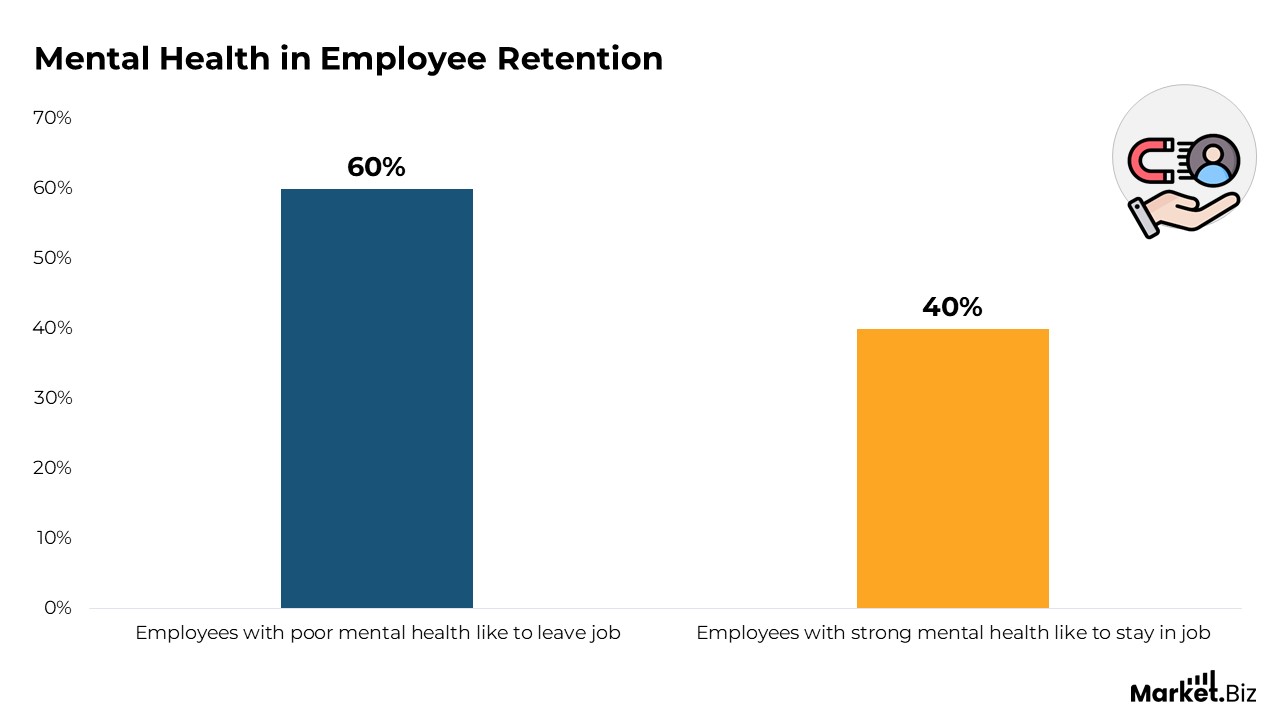
Mental health issues contribute to $1 trillion in lost productivity each year, with absenteeism and presenteeism being key factors. Companies that fail to address mental health concerns face increased turnover, with 60% of employees at risk of leaving jobs due to poor mental health support. As businesses strive to foster healthier work environments, understanding the latest workplace mental health statistics is crucial for creating effective policies and support systems.
Editor’s Choice
- 1 in 5 employees face mental health issues, impacting productivity.
- Mental health costs $1 trillion annually in lost productivity.
- 60% of employees say poor mental health affects job performance.
- Mental health issues because 200 million workdays lost annually in the U.S.
- 50% of mental health issues develop by age 14, highlighting early intervention.
- 36% of employees avoid discussing mental health due to stigma.
- 80% of employees in high-stress jobs report burnout.
- 42% of remote workers face isolation and loneliness, affecting performance.
- 70% of employees in companies with mental health support are more engaged.
- Depression is the leading disability, affecting 264 million people.
- Men are 34% less likely to seek mental health support than women.
- Employees with support are 2.5 times more likely to stay in their jobs.
- Mental health issues account for 50% of long-term absences.
- Mental health days increase retention by 22%.
General Workplace Mental Health Statistics
- 1 in 5 employees globally experience mental health issues such as anxiety, depression, and stress at work, highlighting the widespread nature of the issue.
- $1 trillion is lost annually in global productivity due to mental health conditions like absenteeism, presenteeism, and diminished work performance.
- 60% of employees report that mental health problems directly impact their job satisfaction and performance, leading to lower productivity.
- Mental health conditions, such as depression, are responsible for 200 million workdays lost every year in the U.S. alone.
- 50% of mental health conditions develop by the age of 14, indicating the importance of early workplace interventions and support programs.
- According to a survey, 36% of employees feel uncomfortable discussing mental health issues with their employers due to fear of stigma and discrimination.
- 80% of employees in high-stress professions, such as healthcare and law enforcement, report experiencing symptoms of burnout.
Moreover
- Around 42% of remote workers face significant mental health challenges like loneliness and isolation, which affect their work performance.
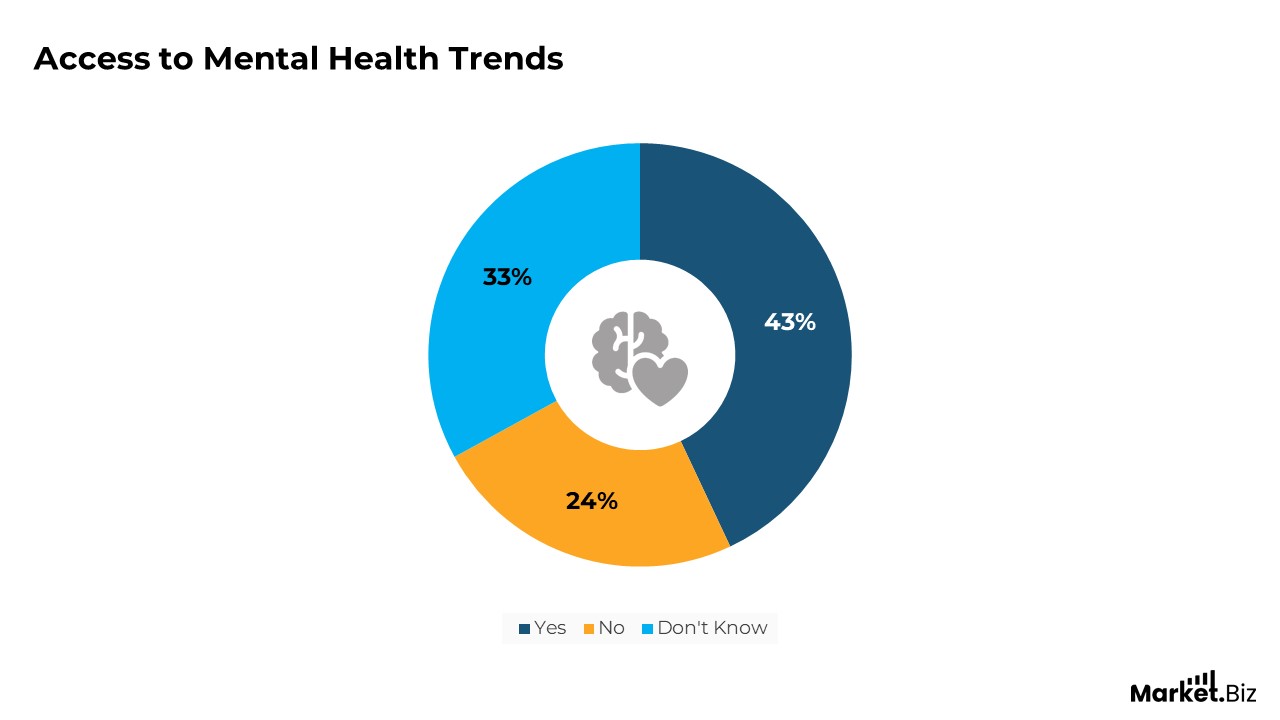
- A study found that 45% of employees feel that their employer does not provide enough mental health support, leading to higher rates of burnout and disengagement.
- 70% of workers in companies that offer mental health support programs report feeling more engaged and motivated at work.
- Depression is the leading cause of disability worldwide, with approximately 264 million people affected, many of whom experience its effects in the workplace.
- Men are less likely than women to seek support for mental health issues, with studies showing that 34% of men are hesitant to access mental health services.
- Employees who feel supported by their company’s mental health initiatives are 2.5 times more likely to stay in their current job.
- Mental health problems account for 50% of long-term sickness absence in the workplace, particularly in high-pressure industries like finance and healthcare.
- Providing mental health days as part of workplace benefits increases employee retention by 22%, as employees feel their well-being is valued by their employers.
Mental Health and Employee Retention
- 60% of employees experiencing poor mental health are more likely to leave their job, highlighting the direct link between mental well-being and retention.
- Companies with strong mental health support systems report 40% higher employee retention rates, as workers feel more valued and supported.
- 1 in 3 employees who report mental health challenges indicate they would consider leaving their job if they do not receive adequate support from their employer.
- 70% of employees say that access to mental health resources, such as counselling or Employee Assistance Programs (EAPs), influences their decision to stay with a company.
- Offering flexible working arrangements as part of mental health initiatives increases employee retention by 20% among workers facing stress and burnout.
- Mental health-friendly workplace cultures contribute to a 25% decrease in turnover, as employees feel more connected and committed to their organization.
- 42% of workers say they would leave their job if their employer did not provide support for mental health challenges, stressing the importance of a supportive work environment.
- Employees with access to mental health resources are 2.5 times more likely to remain with their employer long-term compared to those without support.
- Companies that implement mental health days see a 15-20% reduction in voluntary employee turnover, as workers appreciate the company’s commitment to their well-being.
- The cost of employee turnover due to mental health issues is high, with businesses losing approximately $3,000 per employee who leaves because of mental health-related stress.
- 80% of employees who have access to mental health support programs feel more loyal to their employer and are more likely to stay, even in a competitive job market.
- Mental health stigma reduction in the workplace can boost employee retention by 30%, as employees are more likely to seek help and remain with organizations that promote inclusivity.
Global Trends in Mental Health
- Mental health awareness has increased globally, with 87% of countries implementing mental health policies and strategies to improve support and resources for mental health conditions.
- Telehealth services for mental health are growing rapidly, with a 35% increase in digital mental health solutions, such as apps and online therapy, particularly since the COVID-19 pandemic.
- Workplace mental health initiatives are gaining traction, with 60% of employers worldwide offering mental health programs, reflecting a global push to reduce workplace stress and improve employee well-being.
- Mental health disorders such as depression and anxiety are now the leading causes of disability worldwide, affecting over 300 million people, according to the World Health Organization.
- Global spending on mental health services is expected to rise, with global mental health expenditure projected to reach $8.5 billion by 2025, as more governments and organizations prioritize mental health care.
- In the Asia-Pacific region, mental health awareness has surged, with countries like Japan and Australia seeing significant policy improvements, leading to a 20% reduction in stigma-related barriers to seeking help.
- Mental health in schools is being prioritized worldwide, with 45% of global schools introducing mental health education programs, aiming to address issues early and support youth well-being.
- The integration of mental health services into primary care is becoming more common, with countries like Canada and the UK seeing a 30% increase in integrated care models, improving accessibility for individuals with mental health challenges.
(Source: Gallup)
Gender Differences in Mental Health
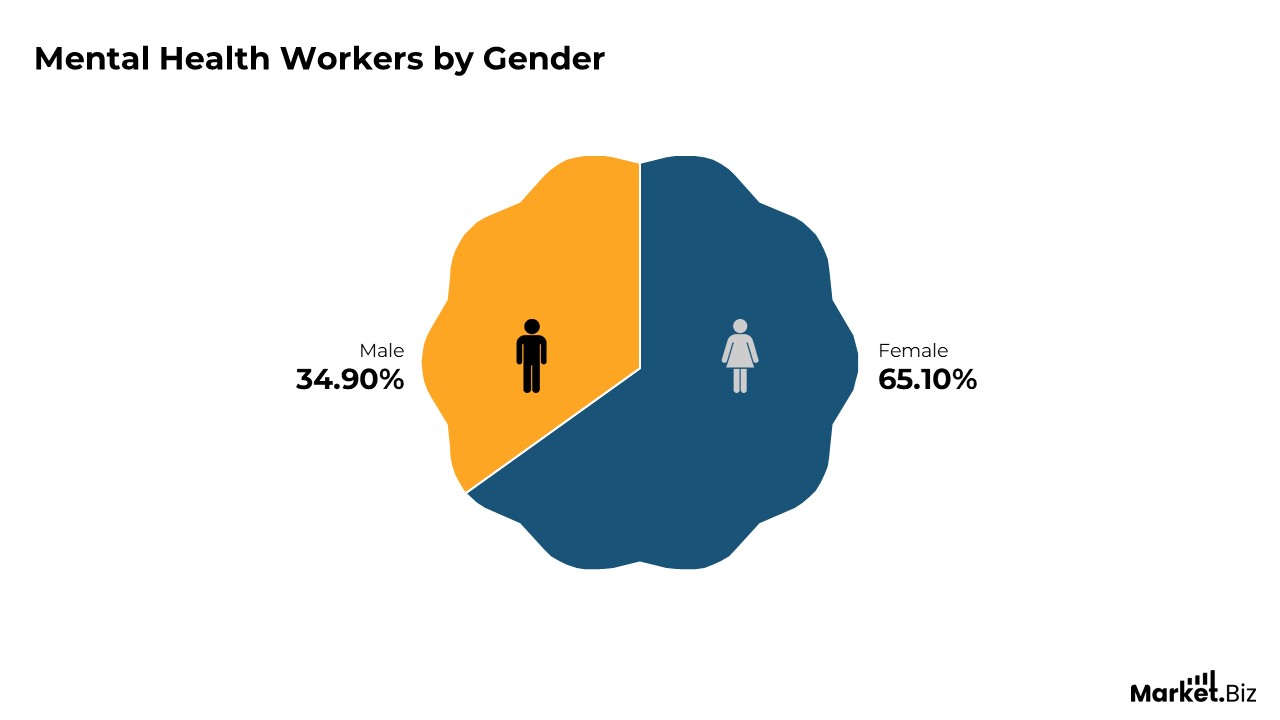
- Women are 1.5 times more likely than men to experience mental health disorders such as depression and anxiety.
- 25% of women report higher stress levels at work compared to 15% of men, with work-life balance being a significant factor.
- 40% of women experience symptoms of anxiety and depression during pregnancy or postpartum, highlighting gender-specific mental health needs.
- Men are less likely to seek help for mental health issues, with more than 70% of men avoiding treatment compared to 50% of women.
- Suicide rates are 3 times higher in men than in women, making mental health care for men a critical area of focus.
- Gender-based violence affects 1 in 3 women globally, significantly contributing to long-term mental health challenges such as PTSD and depression.
- Women of color experience mental health disparities, with 40% more likelihood of reporting poor mental health compared to white women.
- Women in high-stress professions (e.g., healthcare, teaching) are 2.5 times more likely to report burnout than their male counterparts.
- Men are more prone to engage in substance abuse as a coping mechanism for mental health issues, with 18% of men affected compared to 9% of women.
- Gender differences in mental health care utilization show that women are twice as likely to utilize mental health services compared to men, who often face stigma.
(Source: Zippia)
The Role of Leadership
- 60% of employees report feeling more supported when leadership actively promotes mental health awareness in the workplace.
- Effective leadership can reduce employee stress by 35% through clear communication and mental health support initiatives.
- Leaders who prioritize mental health see a 40% increase in employee engagement and overall job satisfaction.
- 75% of employees believe that leadership sets the tone for mental health culture in the workplace, highlighting the influence of senior management.
- Leaders who receive mental health training are more likely to identify early signs of burnout, leading to 30% fewer sick days for employees.
- Organizations with mentally supportive leaders experience 20% lower turnover, as employees feel valued and cared for.
- 92% of workers say that leadership’s approach to mental health directly impacts their decision to stay at a company.
- Leaders who openly discuss mental health reduce stigma by 45%, encouraging more employees to seek help when needed.
- Research shows that inclusive leadership results in a 25% increase in mental health program participation among employees.
- Leaders’ mental health awareness can improve workplace productivity by 19%, as employees feel more comfortable discussing issues affecting their work.
- Companies with mental health-friendly leadership see a 15% improvement in overall workplace morale, fostering a supportive environment.
- 70% of employees believe their leadership team’s commitment to mental health directly influences their level of productivity and job satisfaction.
Impact of Workplace Culture
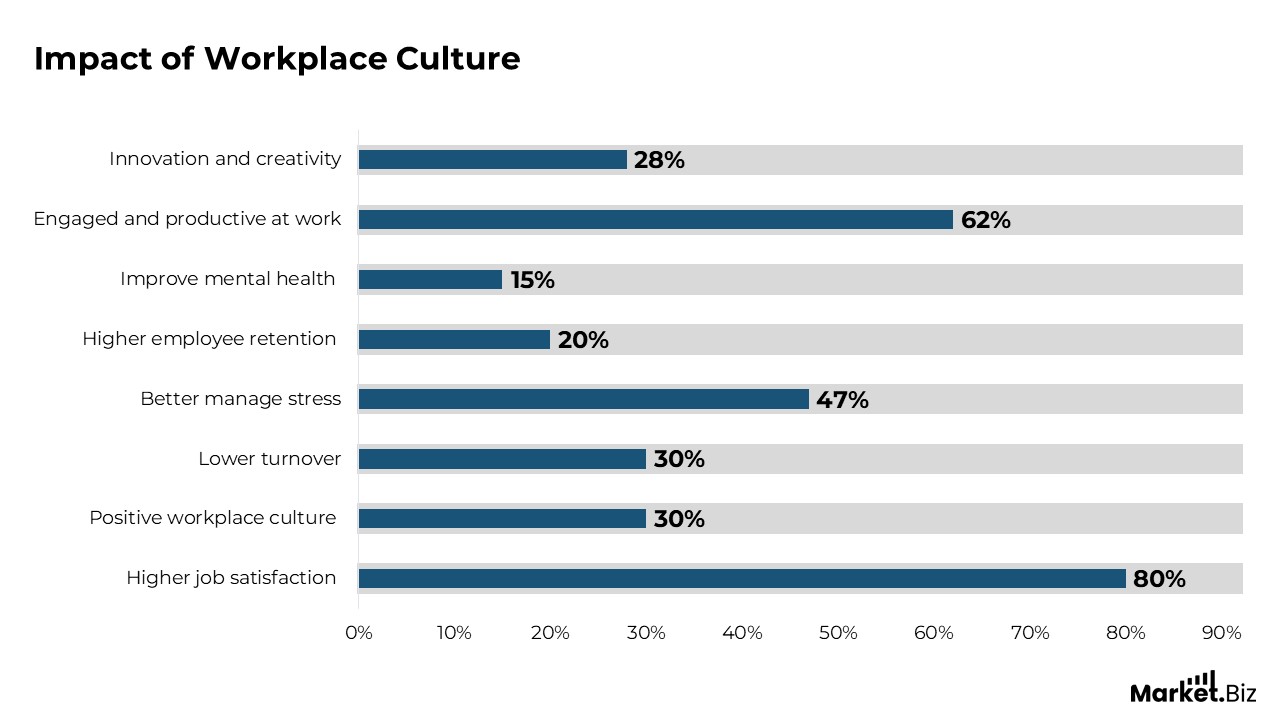
- 80% of employees report higher job satisfaction in workplaces that foster a supportive and inclusive culture, directly improving mental well-being.
- A positive workplace culture can reduce employee burnout by 30%, as employees feel valued and empowered.
- Companies with strong workplace cultures experience 30% lower turnover, as employees are more likely to stay in a supportive environment.
- 47% of employees say that a healthy work culture helps them better manage stress and mental health challenges.
- Research shows that workplaces with open communication and transparency lead to 20% higher employee retention rates.
- A workplace culture that prioritizes work-life balance can improve mental health outcomes, with employees reporting 15% higher job satisfaction.
- 62% of employees in organizations with a focus on mental health report feeling more engaged and productive at work.
- Organizations with a collaborative culture see 28% higher levels of innovation and creativity, which fosters employee well-being and reduces stress.
- Employees in toxic workplace cultures are 50% more likely to report symptoms of anxiety and depression, significantly impacting mental health.
- A culture of recognition can improve mental health by 22%, as employees feel more appreciated and motivated in their roles.
- Diverse and inclusive workplace cultures have been shown to reduce workplace stress by 18%, improving mental health outcomes for marginalized groups.
- Companies with mental health-focused cultures report 25% higher productivity and reduced absenteeism due to better employee well-being.
Cost of Mental Health Issues for Employers
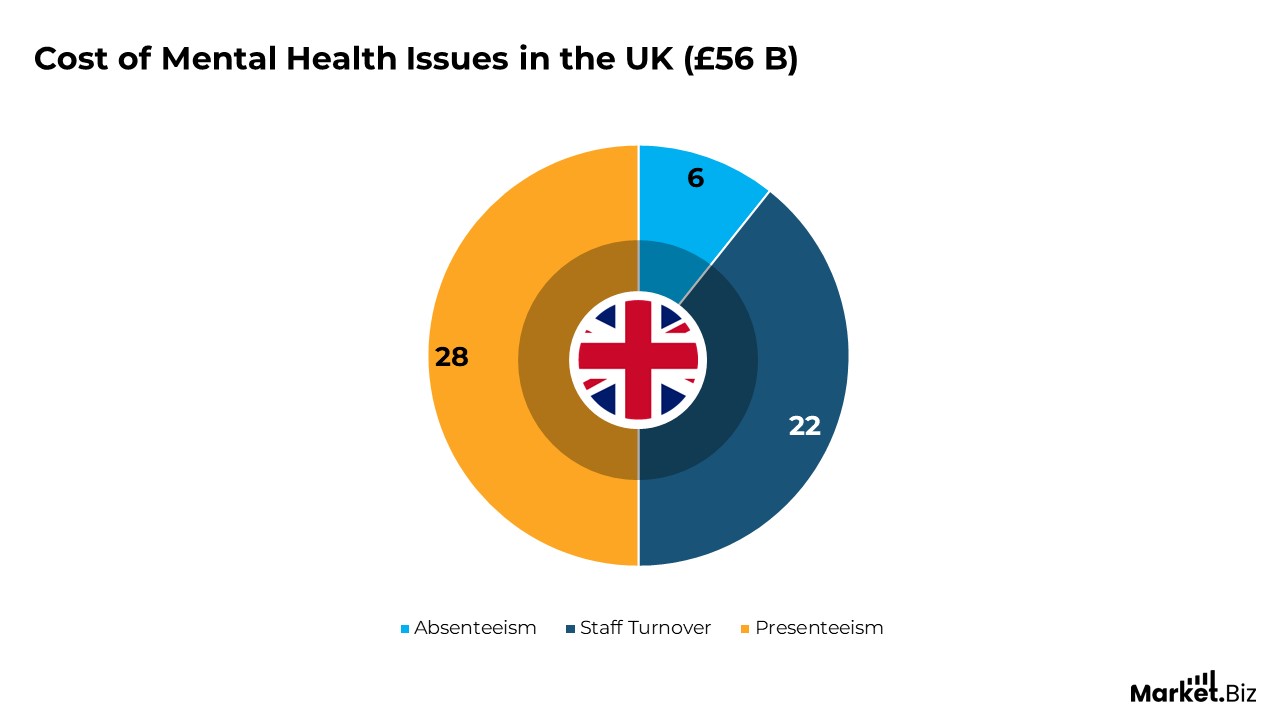
- Mental health issues cost employers over $1 trillion annually in lost productivity due to absenteeism, presentism, and disengagement.
- Absenteeism due to mental health disorders costs U.S. employers approximately $200 billion annually, significantly impacting bottom-line profits.
- Employees suffering from mental health challenges are 2.5 times more likely to take sick days, increasing operational costs for businesses.
- Presentism—employees being physically present but mentally disengaged—costs employers three times more than absenteeism, totalling $150 billion annually in the U.S.
- 40% of employees with mental health issues report reduced productivity, leading to an overall loss of efficiency and revenue for businesses.
- Research indicates that employees with untreated mental health conditions cost companies up to 45% more in healthcare-related expenses than those with good mental health.
- The average cost of replacing an employee due to mental health-related turnover is $3,000 per employee, making retention efforts critical for cost savings.
- Mental health-related disability claims account for approximately 50% of long-term absences in the workplace, increasing insurance and disability costs for employers.
- Businesses with strong mental health support programs can reduce healthcare costs by up to 30%, as proactive care leads to healthier, more engaged employees.
- Companies that invest in employee mental health initiatives experience a 5:1 return on investment, with reduced turnover, absenteeism, and healthcare costs.
(Source: PROD)
Mental Health and Remote Work
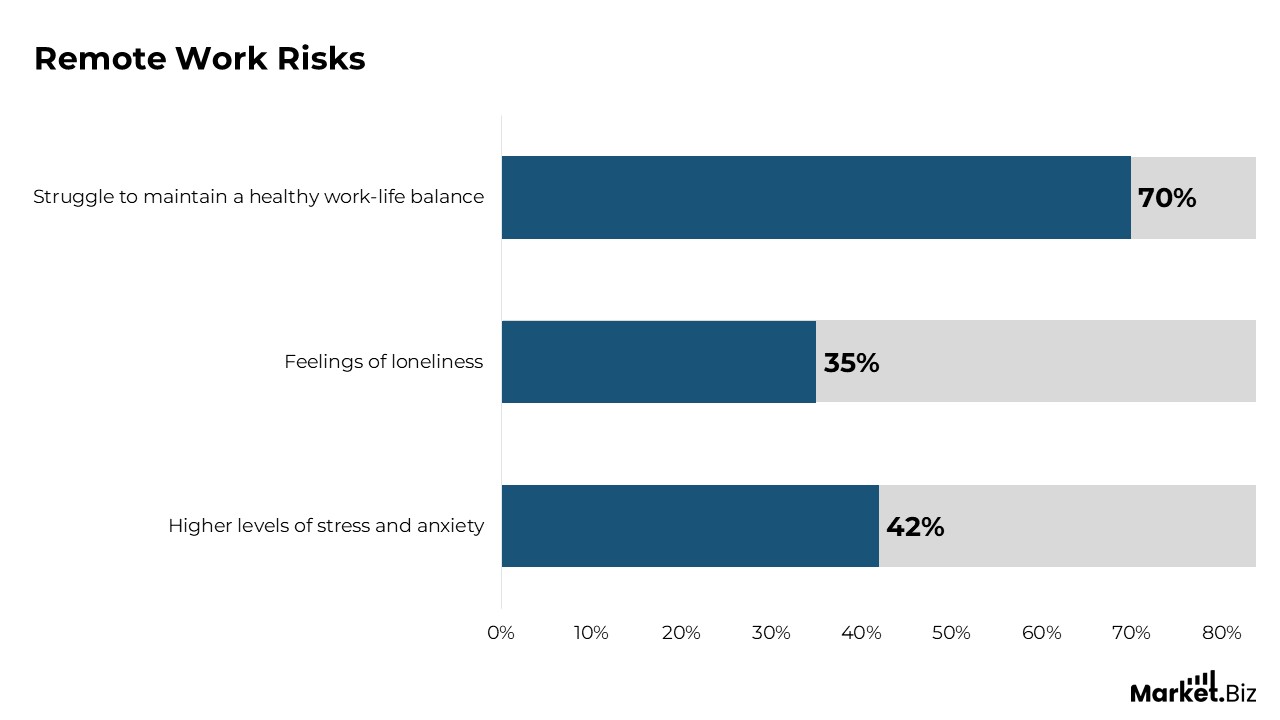
- 42% of remote workers report experiencing higher levels of stress and anxiety, mainly due to isolation and difficulty maintaining work-life balance.
- 35% of remote employees experience feelings of loneliness, which can negatively impact mental health and job satisfaction.
- Studies show that employees working remotely are twice as likely to experience burnout compared to those in traditional office settings due to blurred boundaries between work and home life.
- 70% of remote workers say they struggle to maintain a healthy work-life balance, contributing to higher rates of stress and mental health challenges.
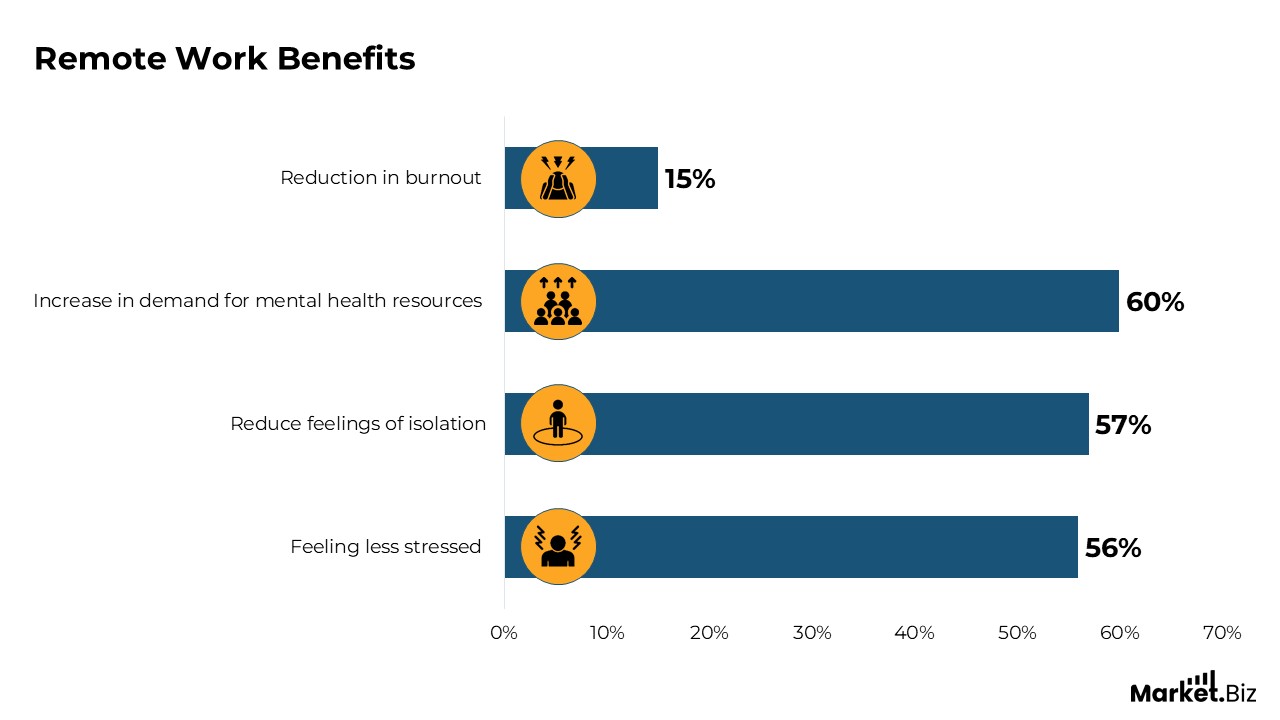
- Despite the challenges, 56% of remote workers report feeling less stressed due to the flexibility and control over their work environment.
- Regular virtual check-ins by employers can help reduce feelings of isolation, with 57% of remote employees feeling more connected when offered mental health support through online channels.
- The rise of remote work during the pandemic saw a 60% increase in demand for mental health resources like virtual counselling and therapy services.
- Employers who provide mental health days for remote workers see a 15% reduction in burnout and an increase in employee productivity and engagement.
Mental Health Training for Managers
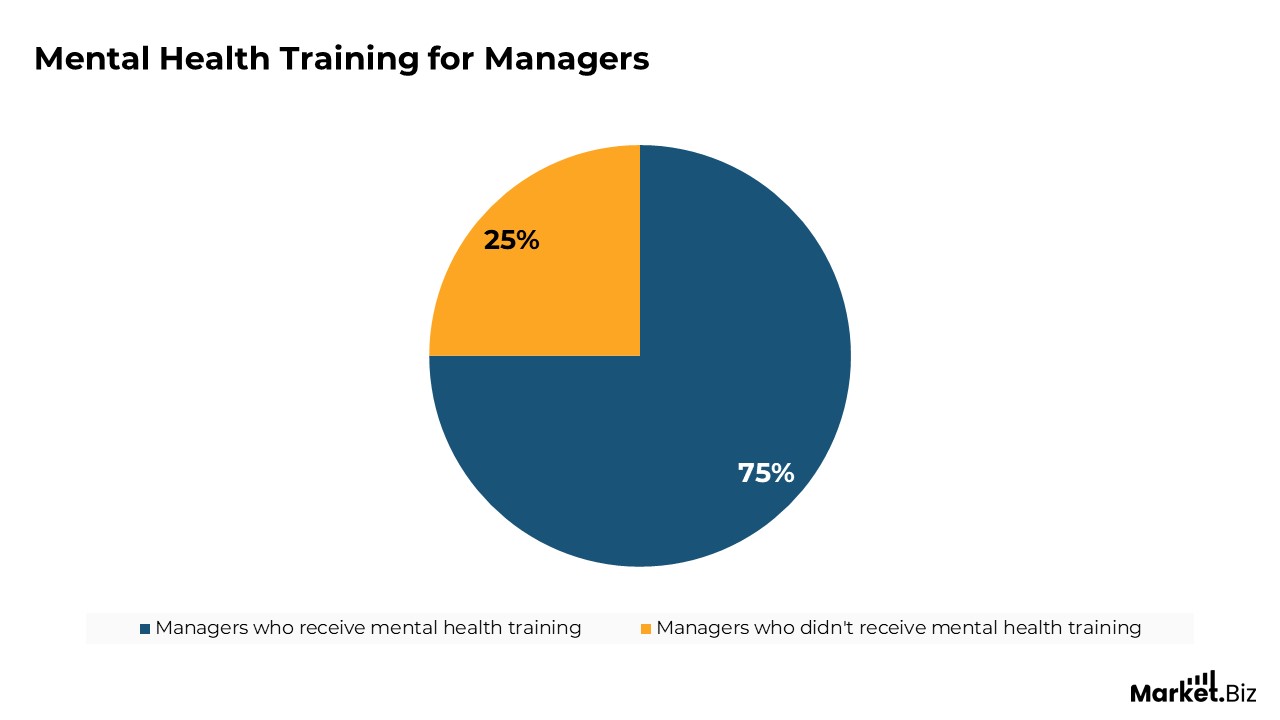
- 75% of employees say that managers who receive mental health training are more likely to recognize and address mental health concerns effectively in the workplace.
- 80% of organizations with trained managers’ report improved employee well-being, as these leaders are better equipped to provide the support their teams need.
- Mental health training for managers can lead to a 20% increase in employee retention, as workers feel more supported in a mentally healthy environment.
- 40% of employees believe that their managers lack the skills to effectively support mental health issues, underscoring the need for better training.
- Managers trained in mental health awareness are 50% more likely to promote a culture of openness, reducing stigma around mental health in the workplace.
- Managers who complete mental health training see a 15% reduction in employee absenteeism, as they can better manage stress and intervene early.
- 65% of workers report that having a manager who understands mental health significantly improves their job satisfaction and mental well-being.
- Providing mental health training for managers can reduce the risk of burnout by 30%, as leaders are better at spotting signs of stress and offering support.
- Companies with trained managers experience 33% fewer workplace disputes, as managers can better address interpersonal conflicts related to mental health.
- Managers trained in mental health support are 25% more likely to create a psychologically safe work environment, leading to increased employee trust and morale.
- 60% of employees say that mental health training for their direct supervisors improves communication, helping them feel more comfortable discussing challenges.
- Investing in mental health training for managers has been shown to increase overall productivity by 12%, as employees feel more understood and valued.
The Importance of Mental Health Days
- 75% of employees report that having access to mental health days improves their ability to manage stress and reduces burnout.
- Companies that offer mental health days see a 25% reduction in absenteeism, as employees can address mental health concerns before they escalate.
- 54% of employees say that mental health days are crucial for maintaining their work-life balance, contributing to overall job satisfaction.
- 63% of employees believe that allowing mental health days reduces workplace stress and increases productivity, as employees return to work feeling refreshed.
- Offering mental health days is linked to a 20% increase in employee retention, as employees feel their well-being is valued and prioritized.
- 40% of workers say they would consider leaving a job if their employer did not offer mental health days, highlighting their importance for retention.
- Research shows that employees who take mental health days are 40% more productive after returning to work, compared to those who continue working through stress.
- 83% of employees in companies that offer mental health days report feeling more loyal and committed to their employer.
- A study found that providing mental health days can lower healthcare costs for employers by up to 10% due to reduced stress-related illnesses.
- Employees who are allowed to take mental health days are 30% less likely to experience burnout, improving long-term productivity and well-being.
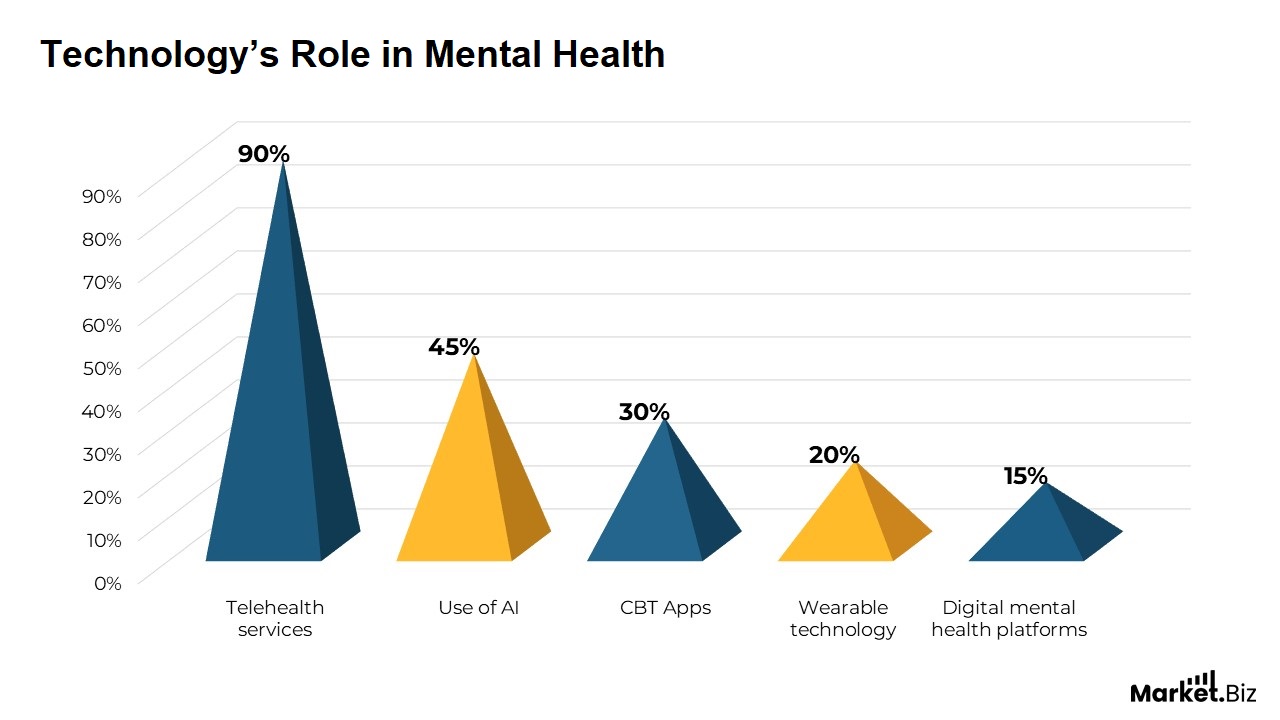
Technology’s Role in Mental Health
- The mental health app market is projected to grow to $6 billion by 2030, as more people turn to digital tools for managing their mental well-being.
- Over 50% of people who use mental health apps report feeling less stressed and more in control of their mental health after regular use.
- Telehealth services have expanded rapidly, with 90% of mental health professionals in the U.S. offering virtual therapy during the pandemic, making mental health care more accessible.
- Cognitive Behavioural Therapy (CBT) apps have been shown to reduce symptoms of anxiety and depression by 30% in users, highlighting the effectiveness of digital treatments.
- \ like fitness trackers is being integrated with mental health management tools, helping users track mood patterns and reducing stress by 20%.
- AI-driven mental health platforms are becoming more popular, with 45% of users reporting improved emotional well-being due to personalized recommendations and interventions.
- Digital mental health platforms are helping businesses reduce workplace stress, with companies seeing a 15% reduction in mental health-related absenteeism.
- Online mental health communities have grown, with over 70% of users feeling more connected and supported by others experiencing similar challenges.
The Future of Mental Health
- The global mental health market is projected to reach $242 billion by 2030, driven by increased awareness and demand for mental health services and solutions.
- Artificial Intelligence (AI) is expected to play a major role in mental health diagnostics, with AI-powered tools predicted to assist in identifying mental health disorders with 95% accuracy by 2030.
- The rise of virtual therapy and telemedicine will continue, with 60% of therapy sessions expected to be conducted online by 2027, making mental health care more accessible.
- Mental health in the workplace will become a key focus, as 75% of employers are predicted to offer comprehensive mental health support programs by 2025.
- Wearables and mental health apps are anticipated to increase, with 50% of the population expected to use digital mental health tools for tracking mood and well-being in the next 5 years.
- Mental health education will be integrated into schools and workplaces, with 80% of schools offering mental health curricula by 2030, aiming to reduce stigma and promote early intervention.
- Advances in psychedelic therapies are expected to gain approval, with 3-5 new drugs in clinical trials for mental health treatment, potentially revolutionizing care for conditions like depression and PTSD.
- The future will see an emphasis on mental health prevention, with 40% of health spending shifting toward preventive mental health care and wellness programs by 2030, aiming to address issues before they escalate.
Conclusion
Workplace mental health is a critical issue affecting both employees and organizations globally. With a significant portion of the workforce experiencing mental health challenges, businesses must prioritize mental well-being to ensure productivity and retention. Mental health issues result in substantial losses annually, highlighting the need for effective support systems.
Companies offering mental health programs see higher engagement and reductions in turnover. Mental health days and managerial training are key factors in improving employee satisfaction and reducing burnout. As organizations invest in mental health initiatives, the return on investment can be significant, with improved retention, productivity, and loyalty across the workforce.
FAQ’s
Mental health issues result in significant productivity losses, with absenteeism and presentism being major factors. Businesses lose over $1 trillion annually due to mental health-related challenges, underscoring the importance of addressing mental well-being at work.
Companies that offer comprehensive mental health support programs see notable improvements in employee retention. Workers in organizations with mental health initiatives are more likely to stay, with a significant reduction in turnover rates and higher employee engagement.
Mental health days provide employees with the opportunity to recover and manage stress, leading to reduced burnout and improved job satisfaction. Offering mental health days has been linked to increased productivity and employee retention.
A supportive and inclusive workplace culture directly contributes to improved mental health outcomes. Organizations that prioritize mental well-being, open communication, and work-life balance experience lower turnover and higher employee satisfaction.
Digital tools like mental health apps and telehealth services are transforming how employees access support. Companies are increasingly adopting these technologies, seeing improvements in employee well-being, reduced absenteeism, and higher engagement levels.