








Introduction
AI Agents Statistics: AI agents have rapidly emerged as a transformative force in modern technology, revolutionizing industries by autonomously performing tasks, making decisions, and engaging with users. These intelligent systems are being widely adopted across sectors such as customer service, sales, healthcare, and finance, driven by advancements in natural language processing, machine learning, and autonomous capabilities.
As organizations leverage AI agents to boost efficiency, enhance customer experiences, and foster growth, the statistics on their usage underscore their growing impact. Gaining insight into these trends and growth patterns is crucial for businesses looking to maintain their competitive edge in an ever-evolving digital world.
Editor’s Choice
- 15 million developers are currently utilizing GitHub Copilot.
- Hundreds of thousands of users are engaging with Microsoft 365 Copilot.
- More than 230,000 groups, including 90% of the Fortune 500, have leveraged Copilot Studio to shape AI agents and automation tools.
- The Autonomous Agents technology is projected to reach the Plateau of Productivity within 5 to 10 years.
- The GenAI-Enabled Virtual Assistants expertise is expected to reach the Plateau of Productivity in less than 2 years.
- AI-Augmented Software Engineering technology is predicted to reach the Plateau of Productivity in 2 to 5 years.
- GenAI Application Orchestration technology is projected to reach the Plateau of Productivity in 5 to 10 years.
- Nearly half of customers believe AI agents can demonstrate empathy when addressing concerns.
- 70% of CX leaders agree that chatbots are becoming expert architects of personalized customer journeys.
- More than two-thirds of CX organizations believe generative AI will enable them to provide warmth and familiarity in customer service, even for millions of customers.
- 69% of organizations think generative AI will humanize digital interactions.
- 72% of CX leaders suppose AI agents to be a delay of their brand’s identity, reflecting its voice and values.
- 90% of companies using AI agents account improved workflows and smoother operations.
- 51% of organizations are actively exploring ways to integrate AI agents into their business processes.
- Companies using AI agents experience a 61% boost in employee efficiency.
- 39% of consumers are comfortable using AI agents.
- By 2030, AI agents are expected to manage 80% of customer interactions, revolutionizing customer service.
(Source: International Business Machines Corporation, Pragmatic Coders, Microsoft blogs, Gartner, Zendesk)
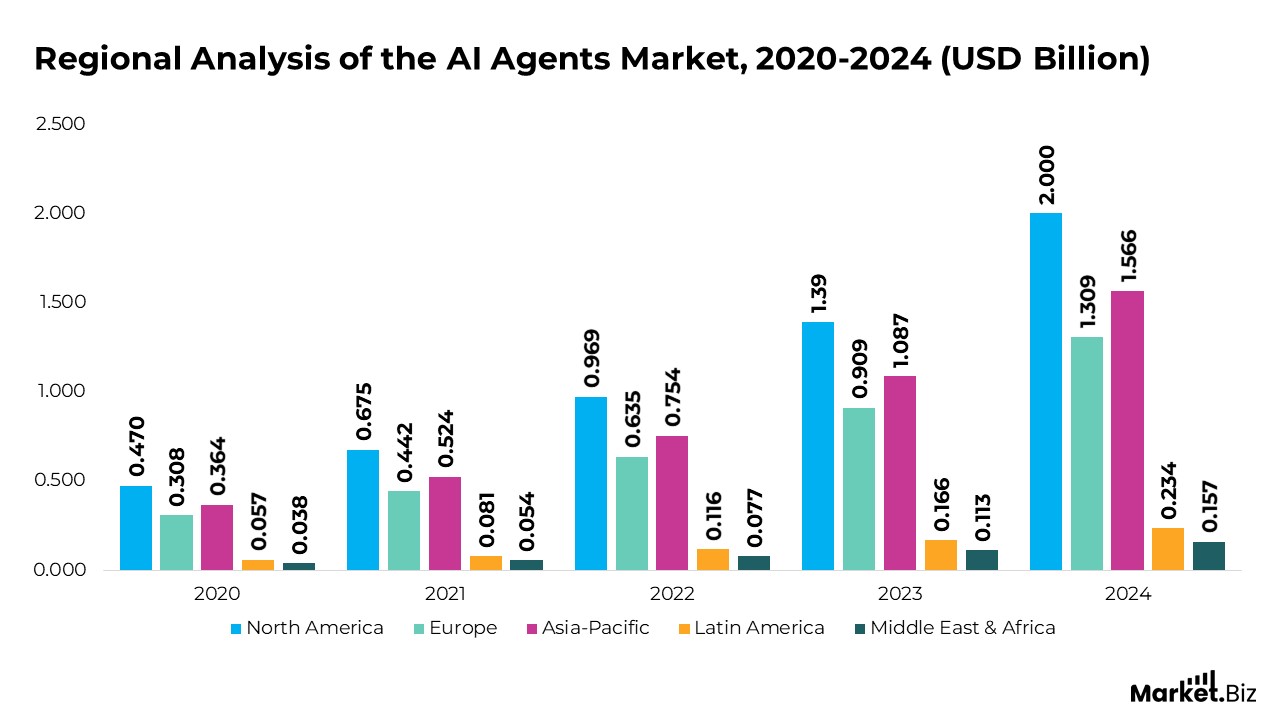
Regional Analysis of the AI Agents Market
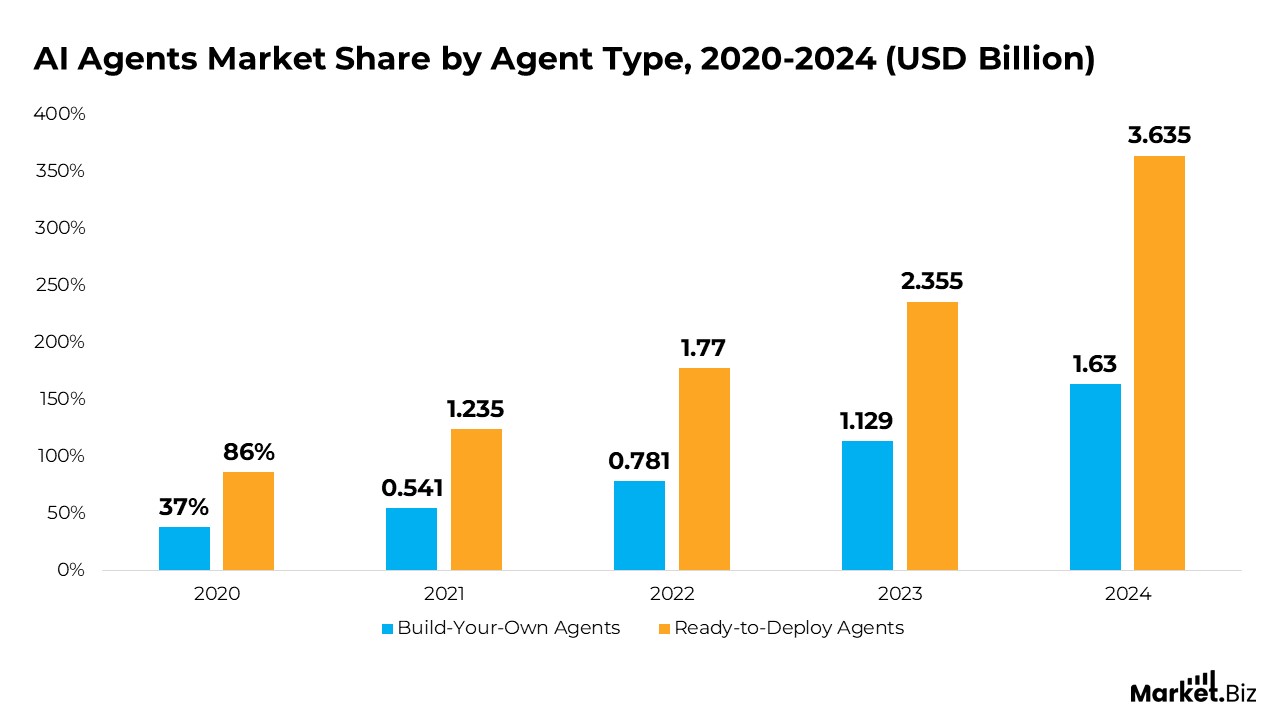
AI Agents Market Share by Agent Type
AI Agents Market Size
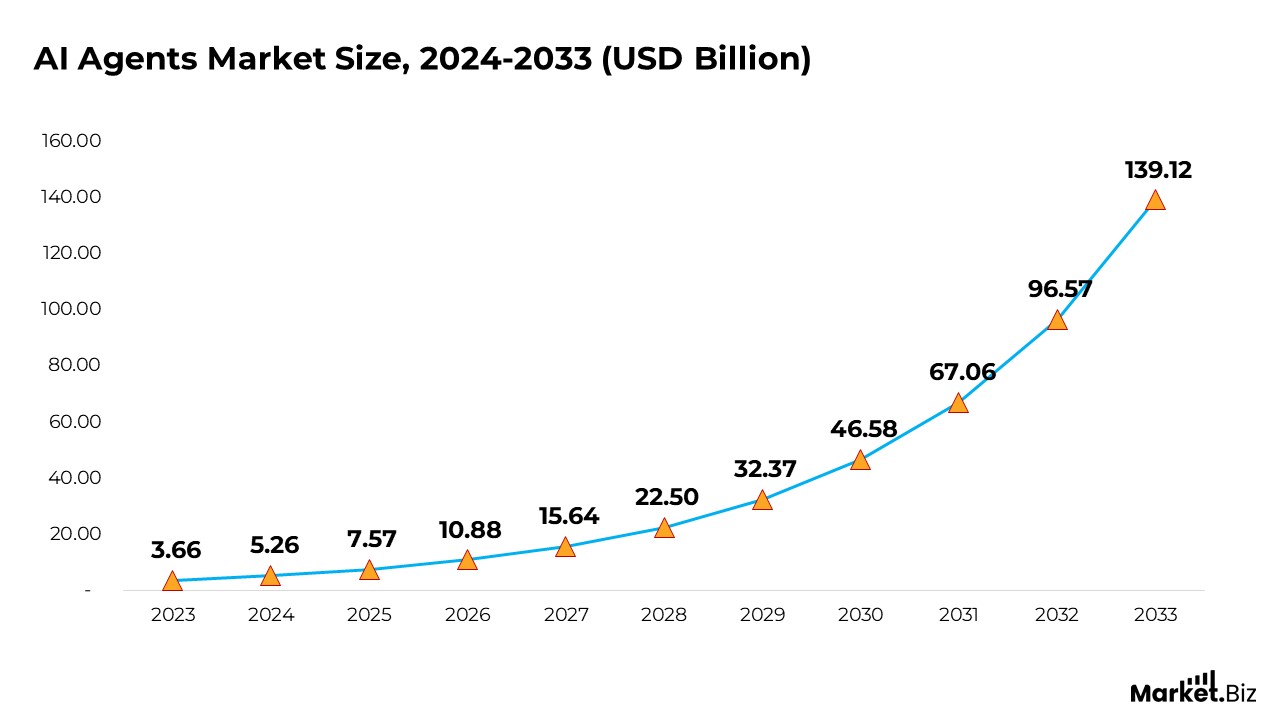
- According to Market.us, the global AI agents market is expected to rise from $7.57 billion in 2025 to $96.57 billion by 2032, representing a compound annual growth rate (CAGR) of 43.8% from 2024 to 2033.
- According to Market.us, the AI agents market is expected to rise from5.26 billion in 2024 to $139.12 billion by 2033, representing a compound annual growth rate (CAGR) of 43.8% from 2024 to 2033.
- The AI agents market is expanding rapidly due to the increasing adoption of AI technologies across industries like customer service, healthcare, finance, and transportation.
- In 2023, the ready-to-deploy agents segment dominated the market with a 69.19% share, driven by their broad appeal to both enterprise and consumer sectors.
- In 2023, single-agent systems captured 73.49% of the AI agents market, favored for their simplicity, cost-effectiveness, and specific use cases.
- In 2023, customer service and virtual assistants held 34.85% of the market share, reflecting the widespread adoption of AI-driven solutions to improve customer service operations.
Moreover
- In 2023, the enterprise segment accounted for 58.74% of the AI agents market, driven by businesses automating operations and enhancing decision-making.
- In 2023, North America dominated the AI agents market with a 37.92% share, equating to USD 1.3 billion in revenue, due to early AI adoption and strong R&D investments.
- 65% of online retailers have integrated AI agents with CRM systems to boost sales by 20–30% through personalized recommendations, according to Experro.
- 70% of shoppers, particularly Gen Z, prefer AI agents for faster responses, improving digital experiences, and reducing cart abandonment by 25%.
- 62% of eCommerce businesses report improved customer satisfaction after implementing AI, as per recent data.
- Data from Plivo shows that 85% of enterprises will use AI by 2025, with 63% of leading companies planning to increase cloud budgets by 6% or more.
- By 2025, 80% of firms will use AI chatbots for customer service, and 78% are already applying AI in some capacity.
- By 2029, AI agents are expected to resolve 80% of routine customer issues autonomously.
(Source: Market.us)
AI Agents for Predictive Analytics Market Size
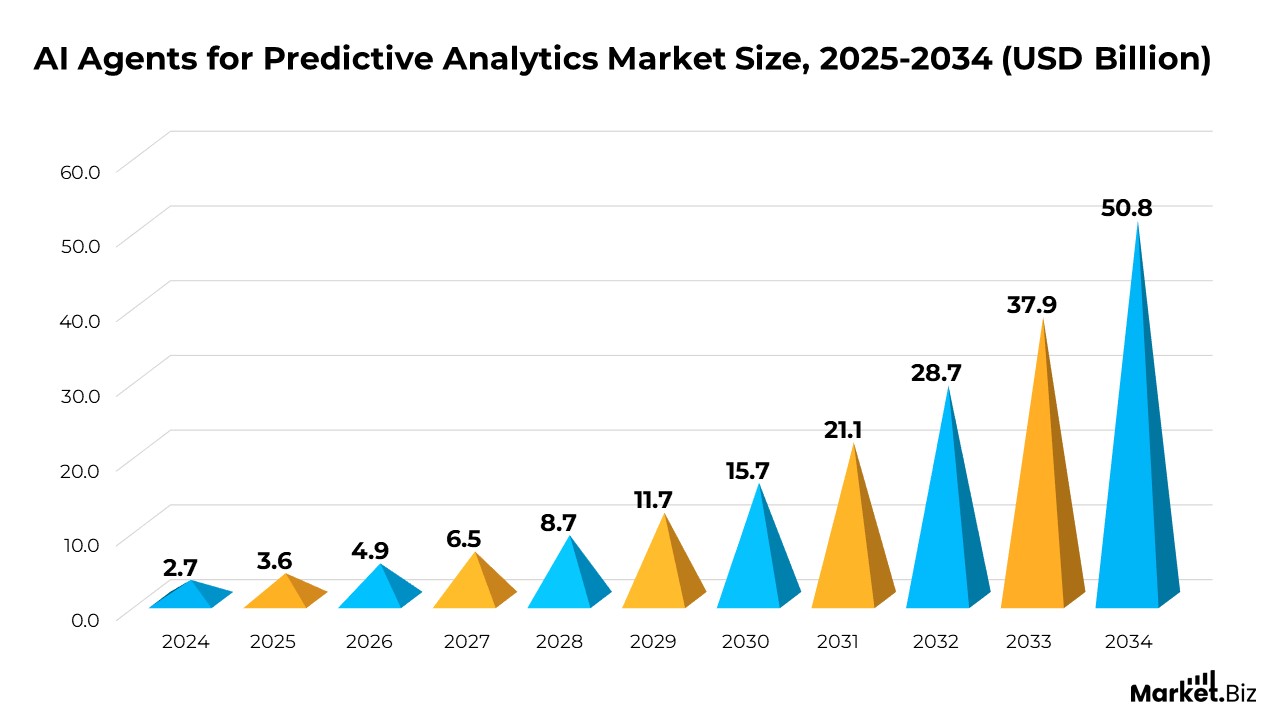
- According to Market.us, the AI agents for predictive analytics market is expected to grow from $3.6 billion in 2025 to $50.8 billion by 2034, representing a compound annual growth rate (CAGR) of 34.1% from 2025 to 2034.
- The growth of the AI agents market is fueled by advancements in technology, enhancing decision-making, operational efficiency, and customer engagement in a data-driven landscape.
- In 2024, the solutions segment dominated the AI Agents for Predictive Analytics market, holding more than 65% of the market share, driven by increased demand for advanced predictive tools.
- In 2024, the cloud-based segment led the AI Agents for Predictive Analytics market, capturing over 73% of the market share, owing to the scalability and flexibility of cloud solutions.
- In 2024, the machine learning agents segment captured over 30% of the global revenue share, driven by the adoption of machine learning algorithms for data analysis across industries.
- In 2024, the large enterprises segment dominated the market, holding over 68% of the global share, benefiting from substantial resources to invest in advanced AI technologies.
- In 2024, the BFSI sector accounted for over 20% of the market share, leveraging AI-driven predictive analytics for risk management and operational efficiency.
- In 2024, North America led the market with a 38% share, equating to approximately USD 1.0 billion in revenue, driven by strong digital infrastructure and early AI adoption.
- The US AI Agents for Predictive Analytics Market is valued at approximately USD 0.9 billion in 2024, projected to grow to USD 15 billion by 2034, at a CAGR of 32.5% from 2025 to 2034.
- The United States remains at the forefront of AI innovation, fueled by government support, high R&D spending, and major tech players like Google, IBM, and Microsoft.
(Source: Market.us)
General AI Agents Statistics
- 85% of large enterprises and 78% of small and medium-sized businesses (SMBs) are currently utilizing AI agents.
- 90% of businesses regard AI agents as a competitive advantage, viewing them as more than just tools.
- By 2027, AI agents are expected to automate 15–50% of business processes.
- Companies adopting AI agents report 55% higher operational efficiency and a 35% reduction in costs.
- Only 2% of companies show no interest in autonomous agents, signaling nearly universal curiosity.
- Users of GitHub Copilot write code 126% faster, demonstrating the impact of AI agents on software development.
- 40% of Fortune 500 companies are already leveraging CrewAI’s autonomous agents.
- The healthcare sector alone could save $150 billion annually by utilizing AI agents by 2026.
- 70% of manufacturers have integrated AI agents into their workflows, reducing downtime by 50%.
- Amazon’s AI-driven engine powers 35% of its online sales, demonstrating the real commercial value of AI agents.
- 80% of customer support inquiries are now handled by AI agents, cutting response times by 52%.
- 47% of HR teams prioritize AI agents for recruitment, with 65% reporting significant improvements in the onboarding process.
- 83% of executives believe AI agents will overtake humans in handling repetitive tasks.
- India (60%) and China (83%) are leading global enterprise adoption of generative AI.
(Source: Tenet, Statista)
AI Agents in Customer Experience
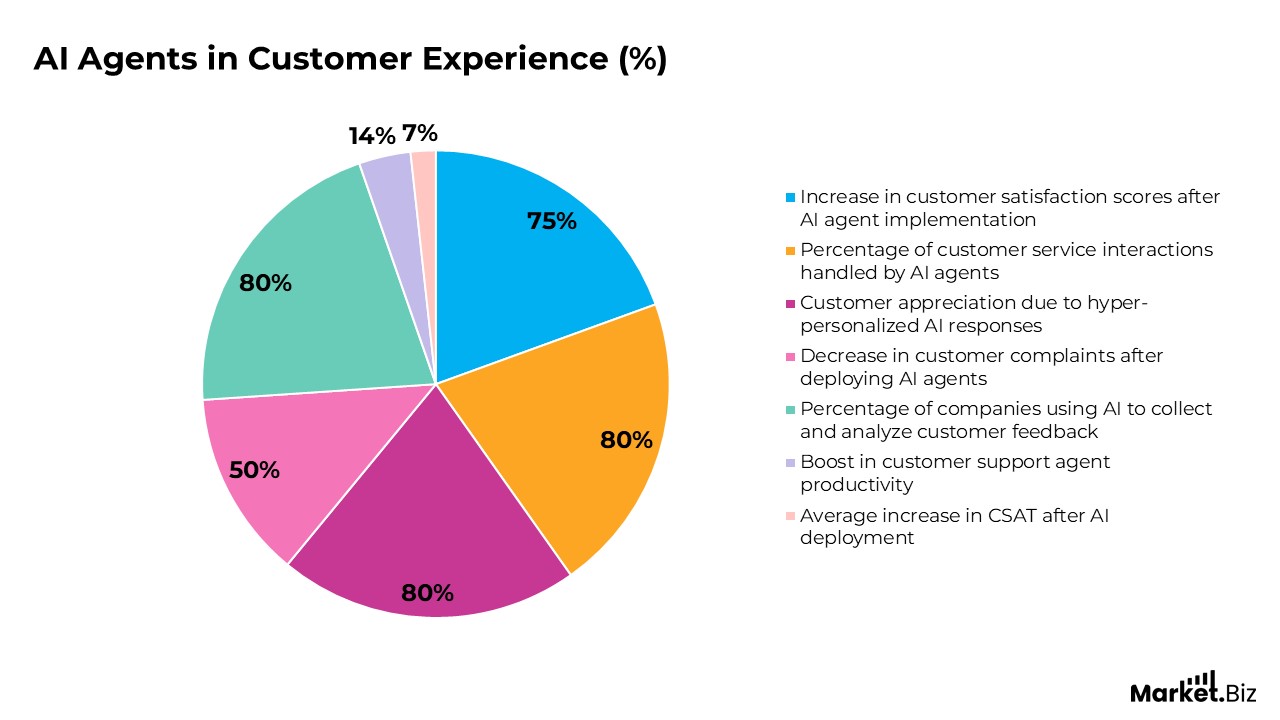
- 75% of businesses report an increase in customer satisfaction scores after implementing AI agents.
- AI agents now handle around 80% of all customer service interactions, resulting in a 30% reduction in operational costs.
- 80% of customers feel more appreciated when interacting with AI agents that offer hyper-personalized responses. This personalization is largely driven by large language model-based assistants, which can better understand customer context and intent.
- The deployment of AI agents has led to a 50% decrease in customer complaints.
- 80% of companies utilize AI agents to collect and analyze customer feedback to enhance service quality.
- AI tools have boosted customer support agent productivity by 13.8%, allowing agents to handle more inquiries per hour and resolve issues more swiftly.
- 75% of organizations have experienced improvements in customer satisfaction scores after deploying AI agents. On average, businesses have seen a 6.7% increase in CSAT in areas where AI has been tested or implemented.
(Source: Toric Labs Inc., Expero, Statista)
AI Agent Adoption Trends
- 44% of U.S. customers are open to using an AI agent as a personal assistant, with interest peaking at 70% among Gen Z.
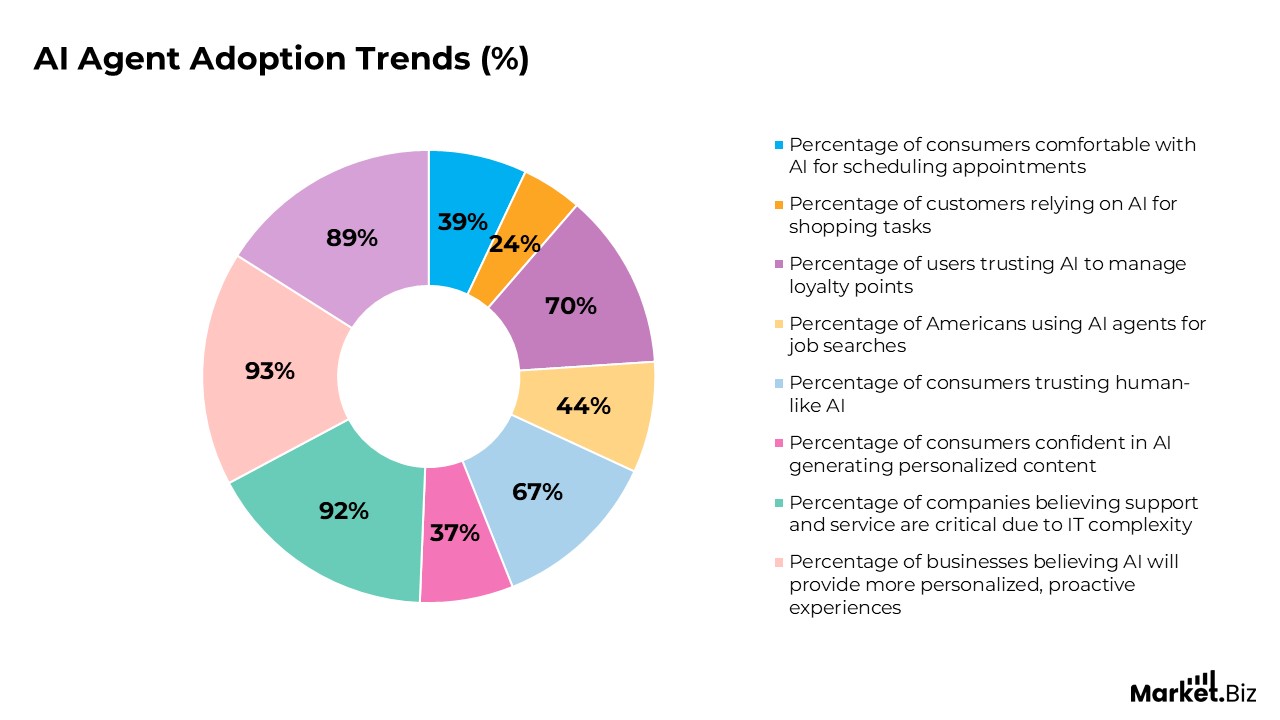
- 39% of consumers are already comfortable with AI solutions for scheduling appointments, while 34% prefer AI to avoid repeating themselves.
- 24% of customers rely on AI to handle shopping tasks, and 36% favor automated purchases over human interaction.
- 70% of users trust AI to manage loyalty points, and 66% would use AI for price-drop purchases.
- 44% of Americans utilize AI agents for job searches, and 45% would seek assistance with crafting resumes and cover letters.
- 43% are interested in using AI for smart meal planning and fitness goal-setting apps, with over 60% of Gen Z already adopting these technologies.
- 67% of consumers trust human-like AI, and 68% prefer AI that feels more personalized in its interactions.
- 37% are confident in AI systems generating tailored, personalized content based on their preferences.
- Trust in AI agents is highest among Millennials (72%), followed by Gen Z (64%), Gen X (68%), and Boomers (60%).
- By 2028, 68% of customer interactions are projected to be handled by autonomous AI tools.
- 92% of companies believe support and service are increasingly critical due to rising IT complexity.
- 93% of businesses believe AI will provide more personalized, proactive, and predictive customer experiences.
- 89% of clients emphasize the importance of blending human connection with machine intelligence to optimize service delivery.
(Source: Master of Code Global, Statista)
AI in Efficiency and Productivity
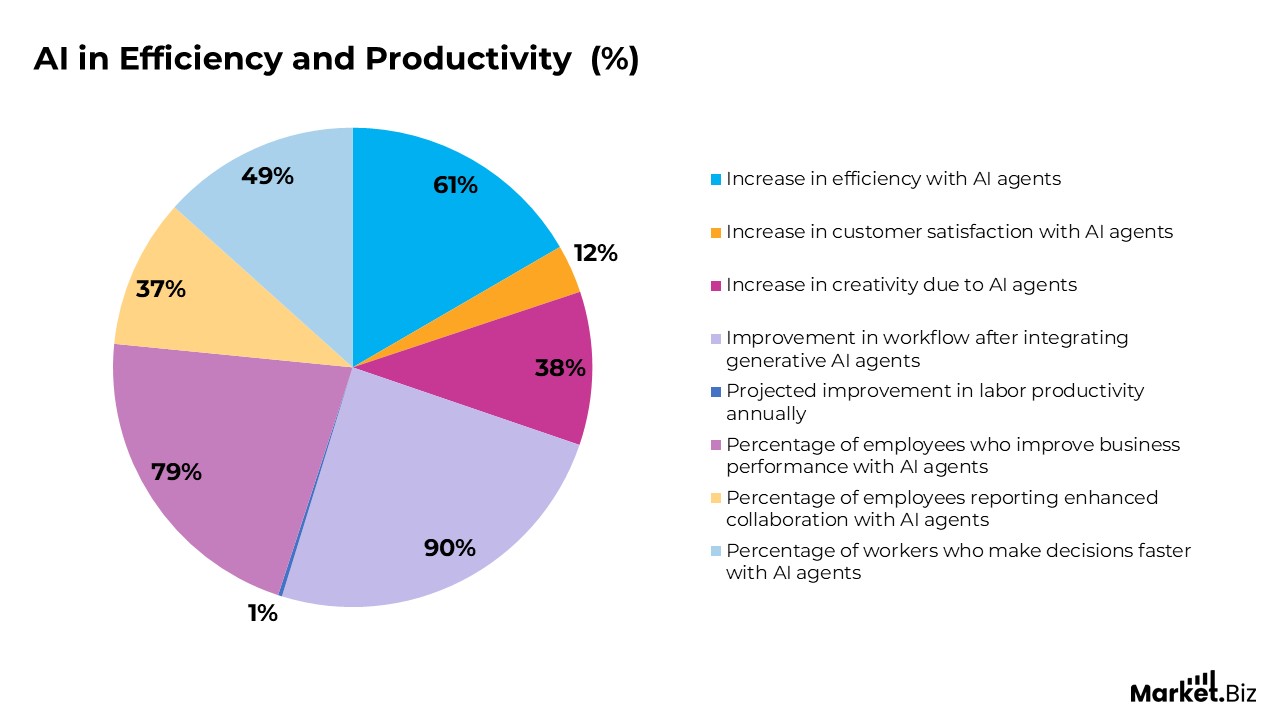
- AI agents significantly boost productivity, with a 61% increase in efficiency reported by employees using them.
- AI agents enhance customer satisfaction by an average of 12% across businesses.
- 38% of workers experience an increase in creativity due to the use of AI agents.
- 90% of companies report a notable improvement in workflow after integrating generative AI agents.
- AI agents can accelerate task completion for programmers by 126%.
- AI agents are projected to improve labor productivity by 1% annually.
- By 2027, generative AI agents are expected to automate 15% to 50% of business functions.
- AI agents assist 79% of employees in improving business performance.
- 37% of employees report enhanced collaboration with team members through the use of AI agents.
- AI agents help 49% of workers make decisions faster.
(Source: One Realm, Inc., Statista)
How the Public Perceives and Trusts AI?
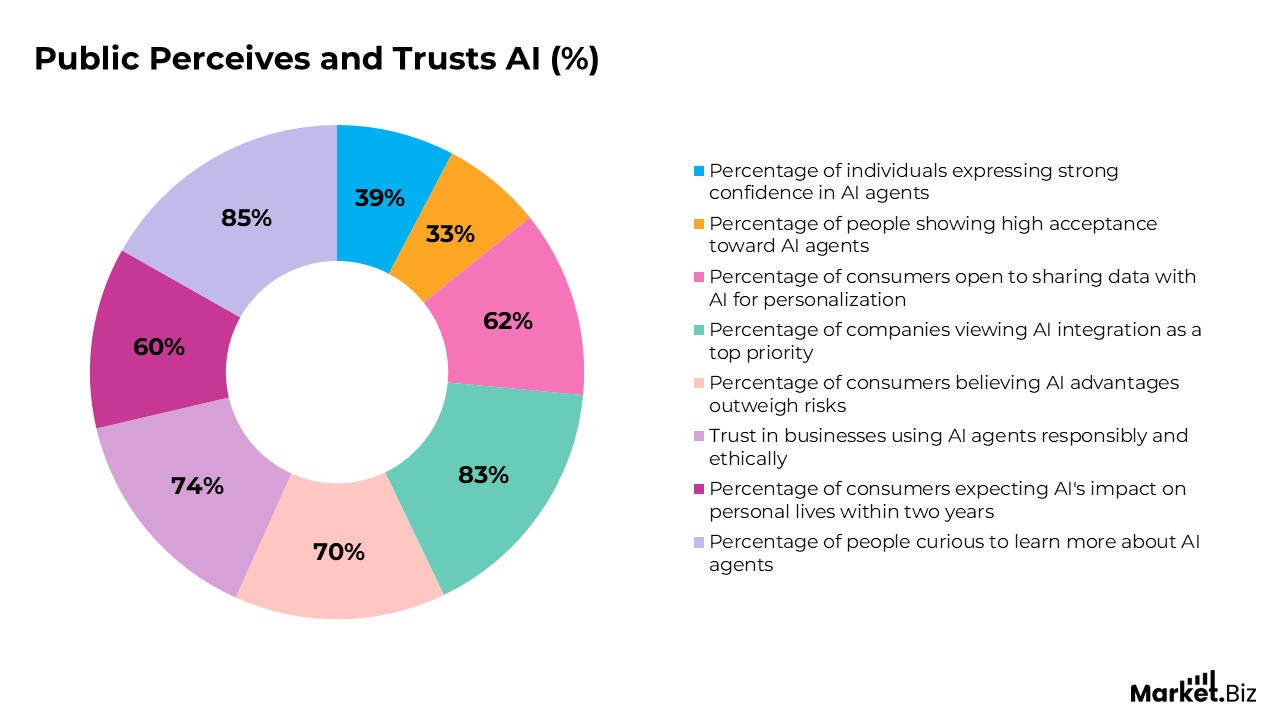
- 39% of individuals express strong confidence in AI agents, demonstrating a significant and growing trust in these technologies.
- 33% of people show a high level of acceptance toward AI agents, especially when they can see the benefits these technologies bring to their daily lives.
- 62% of consumers are open to sharing their data with AI in exchange for a more personalized and improved experience.
- 83% of companies view integrating AI into their strategies as a top priority.
- 70% of consumers believe the advantages of AI agents far outweigh any potential risks, particularly in areas like mental and physical health, cybersecurity, and sustainability.
- AI agents developed by universities, research institutions, and defense organizations are trusted by 76–82% of individuals to be governed ethically and responsibly.
- 74% of consumers place trust in businesses that use AI agents, provided these companies demonstrate responsibility and ethics in their implementation, recognizing the importance of fostering trust in AI.
- 60% of consumers expect AI agents to have a major impact on their personal lives within the next two years, with 77% anticipating significant changes in their professional lives as well.
- 85% of people express a strong curiosity to learn more about AI agents, highlighting a rising interest and readiness to engage with these emerging technologies.
(Source: One Realm, Inc., DemandSage)
How Consumers Engage with AI Agents?
- 70% of consumers prefer using AI agents for booking flights, making it the most popular category.
- 65% of consumers turn to AI agents when booking hotels and resorts, highlighting the technology’s growing influence in the travel sector.
- AI agents are also commonly used for purchasing consumer electronics (59%) and beauty products (56%), as they offer personalized recommendations based on user preferences and reviews.
- 45% of consumers use AI agents for regular grocery shopping, with a similar adoption rate for snacks (45%). This lower adoption can be attributed to the preference for habitual shopping, last-minute purchases, or in-person selection, particularly for perishable items.
- 70% of consumers use AI agents for booking flights, making it the most popular category.
- 65% rely on AI agents for booking hotels and resorts, demonstrating their growing role in the travel industry.
- 59% of consumers turn to AI agents for purchasing consumer electronics, while 56% use them for beauty product recommendations, both benefiting from tailored suggestions based on preferences and reviews.
- 53% of people use AI agents for buying clothes, and 51% use them for over-the-counter remedies.
- On the other hand, 45% of consumers use AI agents for regular grocery shopping and snacks, with these categories seeing lower adoption rates due to habitual shopping habits, last-minute purchases, and in-person selection, especially for perishable items.
(Source: DemandSage, Statista)
AI Agents Adoption in Various Industries
Healthcare
- More than 70% of healthcare organizations have either adopted or are exploring intelligent systems.
- In the short term, key use cases include workflow automation (36%), patient data structuring and analysis (37%), and charge capture and reconciliation (39%).
- Long-term priorities are shifting toward predictive analytics and clinical decision support (41%), risk scoring (44%), and AI-powered diagnostics and treatment guidance (37%).
- Mayo Clinic reduced diagnostic turnaround times by 30% and minimized unnecessary procedures by 15%.
- Insilico Medicine achieved a 35% ROI within nine months and reached 79% trial accuracy during clinical development.
- An AI pharmacy for a Canadian insurance giant resulted in a 43% reduction in customer support inquiries, secured and processed over 1 million medication records with zero data breaches. It expanded the drug database by 320%.
Automotive:
- 75% of automotive companies are piloting at least one AI use case, with AI agents already shortening auto part development timelines by 10–20%.
- AI-powered predictive maintenance has led to a 67% reduction in unplanned downtime across all facilities, a 45% reduction in overall costs, a 92% accuracy rate in predicting failures 30 days in advance, and a 23% increase in overall equipment effectiveness.
- AI voice agents have increased lead conversion rates by 37%, boosted test-drive appointments by 26%, and initiated 357 successful after-sales engagements within the first two months.
Energy:
- Siemens AG used AI agents in manufacturing to reduce maintenance costs by 20% and improve production uptime by 15%.
- Investment in AI-driven intelligent systems in the energy sector is expected to grow from $40 billion in 2023 to over $140 billion by the end of the decade.
- British Petroleum reduced exploration costs by 20% and increased drilling success rates by 15%.
- Agentic AI-driven data analysis empowered non-technical employees with real-time insights and eliminated barriers like SQL, speeding up decision-making. Supply chain intelligence-driven demand forecasts reduced lead times by 22% and cut expedited shipments by 27%, boosting supplier-level accuracy by 35–42%. AI in supply chains resulted in 14.2% fewer stockouts and an 8.7% reduction in excess inventory.
- DHL achieved a 15% reduction in operational costs and improved delivery speeds by 20%.
- Uber Freight reduced empty miles by 10–15%, moved $20 billion in freight, and slashed support wait times from 5 minutes to 30 seconds.
Insurance:
- By 2025, 48% of businesses in the insurance sector will be using AI-driven agents. Benefits include enhanced customer service (48%), improved staff efficiency (61%), cost reductions (56%), and business growth (48%).
- An AI assistant for a global insurance leader helped lower compliance risks, streamlined claims processing, reduced client churn, and provided data-driven insights for more accurate risk assessment.
(Source: Canadian Insurance Giant, Master of Code Global, Statista, DemandSage, Mayo Clinic)
Conclusion
The rapid integration of AI agents across industries highlights their significant role in transforming business operations. Both large enterprises and SMBs are increasingly adopting these technologies, recognizing them as crucial competitive advantages.
The data demonstrates how AI agents enhance efficiency, lower costs, and automate many business processes, all while boosting customer satisfaction and streamlining operations.
As the AI agent market grows at an accelerated rate, its potential to revolutionize industries such as healthcare, manufacturing, and customer service becomes more apparent. The rising confidence in AI agents, reflected in high adoption rates and executives’ belief in their effectiveness for repetitive tasks, indicates a bright future ahead.
With AI agents expected to take over a large portion of routine tasks by the decade’s end, businesses embracing this technology will secure a significant competitive advantage in the increasingly digital and automated global marketplace.
FAQ’s
AI agents are self-operating systems designed to carry out tasks, make decisions, and interact with users or their environment using data and algorithms. They utilize technologies like machine learning, natural language processing, and robotics, allowing them to learn, adapt, and enhance their performance over time.
Unlike traditional software that follows predefined instructions, AI agents possess the ability to learn from data, make autonomous decisions, and adjust their behavior based on changing conditions. This learning capability enables them to handle complex problems more flexibly and efficiently.
AI agents have been adopted by 85% of large enterprises and 78% of small and medium-sized businesses (SMBs), showing their increasing role in business operations across various sectors.
90% of businesses view AI agents as a competitive advantage, recognizing them as critical tools for driving operational efficiencies and fostering innovation.
By 2027, AI agents are projected to automate between 15% and 50% of business tasks, highlighting their potential to enhance efficiency across different business functions.
Companies employing AI agents report a 55% improvement in operational efficiency and a 35% reduction in costs, demonstrating the powerful impact AI agents have on optimizing business processes.
Only 2% of companies report no interest in autonomous agents, reflecting the widespread curiosity and adoption of AI technologies across industries.