









Introduction
Employee Feedback Statistics: Employee feedback has become essential for both company growth and employee satisfaction. A large majority of employees feel that regular feedback helps improve their performance, with many stating they are more likely to stay with a company that listens to their input.
Top-performing organizations make it a priority to regularly gather employee feedback, recognizing its value in shaping a positive work environment. With the rise of digital tools, employee feedback platforms have grown significantly, highlighting the importance of maintaining open communication. Collecting and acting on feedback is key to keeping employees engaged, satisfied, and loyal.
Editor’s Choice
- 65% of employees would be more engaged with frequent feedback.
- 83% of employees prefer feedback at least monthly, with 30% preferring weekly.
- Regular feedback boosts engagement by 14.9%.
- Employees with consistent feedback are 23% more productive.
- 74% of employees stay longer if their voices are heard.
- 60% say actionable feedback improves performance.
- 40% rarely receive meaningful feedback.
- 72% want feedback on career development for better retention.
- Valued feedback increases performance by 4.5 times.
- 50% of companies use digital platforms for real-time feedback.
General Employee Feedback Statistics
- Employees say they would be more engaged at work if they received more frequent feedback, with 65% agreeing.
- Employees who receive regular feedback are 3.6 times more likely to be engaged than those who don’t.
- 83% of employees prefer feedback at least once a month, while 30% want it weekly.
- 72% of employees would stay longer at a company if they felt their voices were heard.
- 92% of employees believe that a manager’s feedback has a direct impact on their performance.
- Organizations that collect regular feedback see a 14.9% improvement in employee engagement and satisfaction.
- Employees who receive consistent feedback are 23% more productive than those who don’t.
- 74% of employees say they would be more satisfied if their managers offered feedback on career development.
- 60% of employees report that clear, actionable feedback helps them perform better.
- 47% of companies now use digital platforms for real-time employee feedback collection.
- 42% of employees are more likely to provide honest feedback when it is anonymous.
- 56% of employees report that regular feedback is a key factor in feeling recognized at work.
- Companies that regularly collect employee feedback are 3 times more likely to be innovative.
- 38% of employees prefer receiving feedback immediately after a project or task is completed.
- Only 19% of employees say they feel their manager is effective at providing useful feedback.
Rate of Feedback on Employee Performance
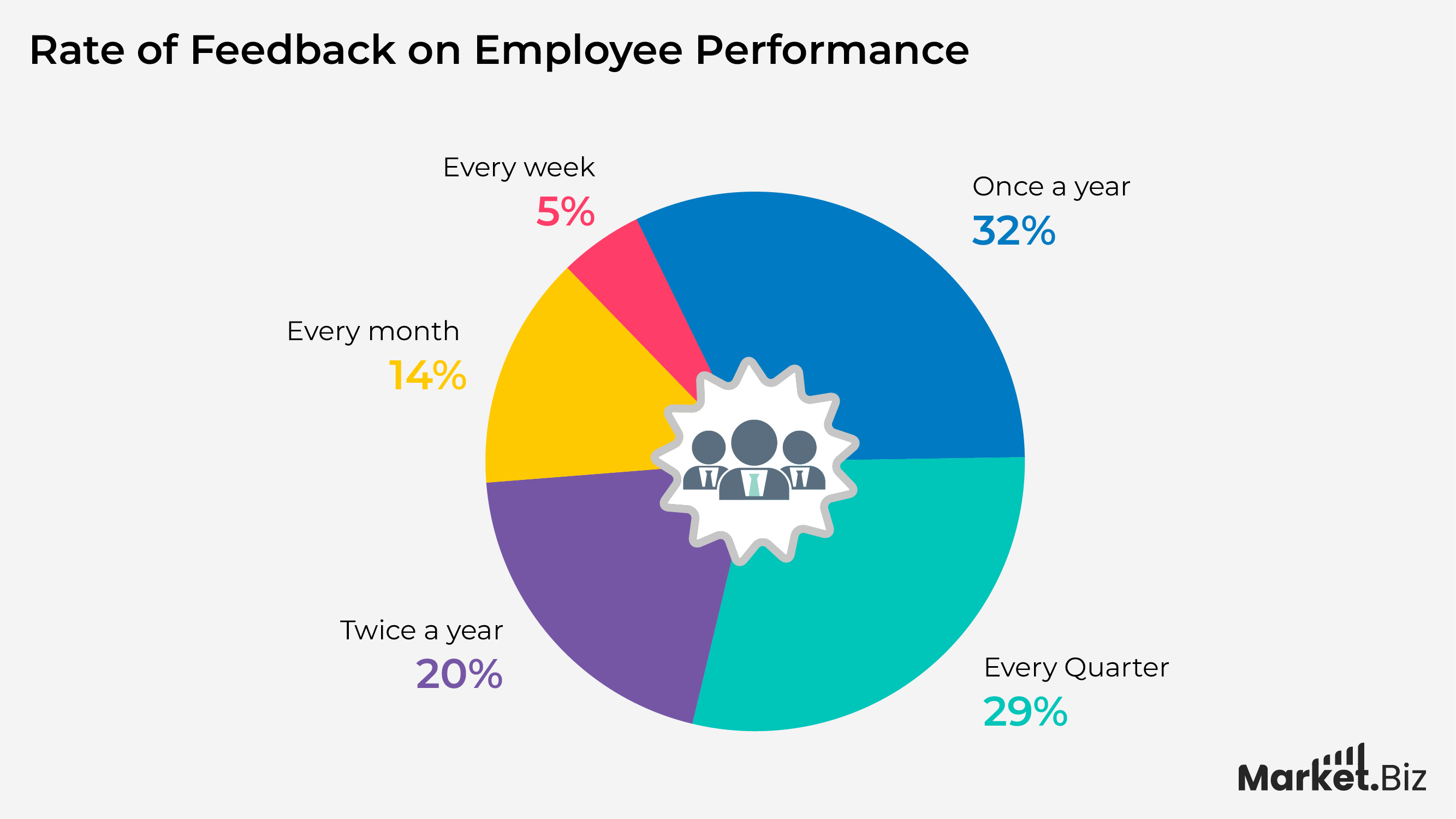
(Source: Statista)
Employee Feedback by Engagement and Turnover
By Engagement
- Employees who receive regular feedback are 3.6 times more likely to be engaged in their work compared to those who don’t.
- 74% of highly engaged employees report that receiving frequent feedback significantly contributes to their job satisfaction.
- Employees who receive clear, actionable feedback are 23% more productive and engaged in their roles.
- Employees who feel their feedback is valued are 4.5 times more likely to show higher performance levels.
- Managers who regularly provide feedback see 21% higher engagement levels among their teams.
- 63% of employees report that consistent feedback motivates them to go the extra mile at work.
- 56% of employees say that feedback plays a key role in helping them feel recognized, increasing their engagement.
- 74% of engaged employees report receiving feedback that helps them grow professionally, enhancing overall job satisfaction.
- High-quality feedback is linked to a 31% increase in employee engagement, especially when feedback is timely and specific.
By Turnover
- Employees who receive regular feedback are 27% less likely to leave their current organization.
- Employees who feel that feedback is valued are 40% more likely to stay with the company long-term.
- A significant 47% of employees who leave their jobs cite a lack of regular feedback as a key factor in their decision to depart.
- Companies with managers who regularly provide feedback experience 14% lower turnover rates.
- 66% of employees who receive frequent feedback report that they are more likely to stay with their employer due to clear career development paths.
- 59% of employees say they would leave a job if they didn’t feel their feedback was considered, highlighting a direct link between turnover and feedback engagement.
- Employees who feel their feedback drives their personal and professional development are 33% less likely to seek opportunities elsewhere.
- Companies that provide regular feedback see 22% lower turnover rates due to improved employee morale and satisfaction.
- Employees who report that feedback leads to positive changes are 50% more likely to stay with their current employer, reducing turnover.
Feedback Gap Statistics
- A feedback gap refers to the disconnect between customer expectations and the feedback businesses collect, leading to missed opportunities for improvement. Many companies fail to close the feedback gap effectively.
- 65% of customers feel that businesses don’t listen to their feedback, creating a significant feedback gap.
- Companies that actively close the feedback gap experience a higher annual revenue growth compared to those that don’t.
- Many businesses use AI tools to collect and analyse customer feedback, but only a fraction have integrated it into their decision-making processes, contributing to the feedback gap.
- A large number of customers report leaving feedback on social media, but only a small percentage of businesses respond, amplifying the feedback gap.
- Email surveys are the most common feedback channel (45%), yet only 30% of companies use the insights to adjust their products or services.
- Many customers expect brands to act on their feedback, but only a portion report seeing any real changes, highlighting the feedback gap.
- A large percentage of employees say their feedback isn’t valued, which results in low morale and a broader organizational feedback gap.
Moreover
- A significant portion of businesses lack real-time feedback mechanisms, leading to slower responses and widening the gap between customer needs and business actions.
- Only 10-15% of customers respond to surveys, leading to a skewed perception and an incomplete view of customer sentiment.
- Few companies utilize AI-driven analytics for feedback, despite many customers preferring businesses that use data to personalize services, widening the feedback gap.
- A significant percentage of millennials expect immediate responses to their feedback, yet many businesses are slow to act, increasing the feedback gap.
- A large percentage of companies do not incorporate customer feedback into product development, resulting in products that don’t align with consumer needs.
- Companies that actively close the feedback gap report a 50% increase in customer retention, demonstrating the importance of addressing feedback effectively.
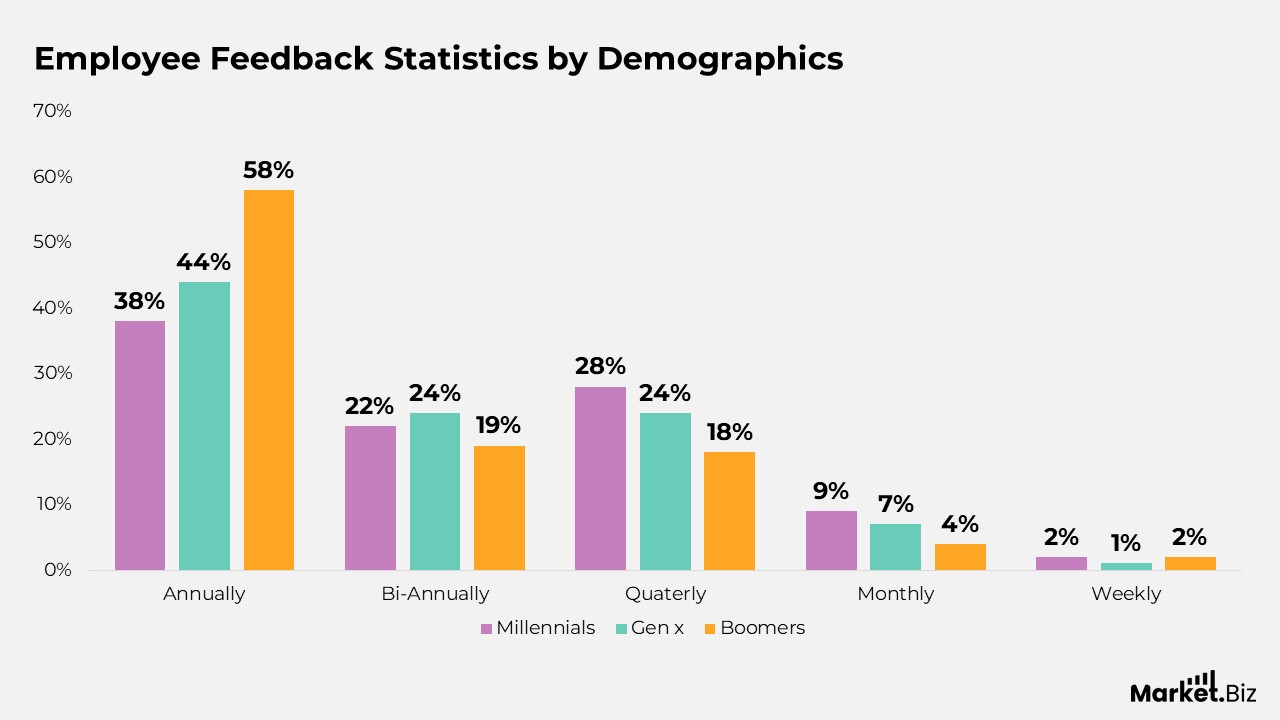
Employee Feedback Statistics by Demographics
Generational Differences in Employee Feedback
- Millennials make up 50% of the global workforce and 38% of them prefer continuous feedback over annual reviews.
- Gen Z employees (born after 1997) prioritize transparent communication and expect real-time feedback, with 70% expressing dissatisfaction with traditional performance reviews.
- Baby boomers (born 1946-1964) prefer structured, formal feedback sessions, with 58% indicating they value face-to-face meetings more than digital feedback.
- Gen X (born 1965-1980) employees show a preference for a balance between formal and informal feedback, with 40% expressing frustration when feedback is not timely.
- 77% of Millennials report feeling more engaged in their work when feedback is given regularly, compared to only 53% of Baby Boomers.
- Over 65% of Gen Z workers say they would leave an organization if they felt their feedback wasn’t valued.
- Millennials are 25% more likely than Baby Boomers to seek feedback on their performance to improve skills and development.
- Gen X employees typically desire feedback that supports professional development and career advancement, with 44% requesting constructive, actionable advice.
Feedback Preferences Based on Gender
- 65% of women employees prefer frequent, constructive feedback, while only 50% of men report the same preference.
- Men are 10% more likely than women to feel that feedback is given promptly, especially in tech-related industries.
- 70% of women believe that receiving feedback on their communication skills is essential to their career growth, compared to 55% of men.
- Women are 20% more likely than men to participate in formal feedback programs, with a focus on improving workplace relationships.
- 60% of male employees report feeling more motivated when feedback includes recognition for their accomplishments, whereas 55% of women prioritize feedback on their improvement areas.
- Female employees are 30% more likely to prefer feedback delivered in private settings, while men tend to be more open to group feedback.
- 67% of women report that feedback significantly impacts their job satisfaction, with 40% of men expressing the same.
- Men generally expect feedback to be given directly and to the point, while women prefer a more balanced approach, including both positive and constructive elements.
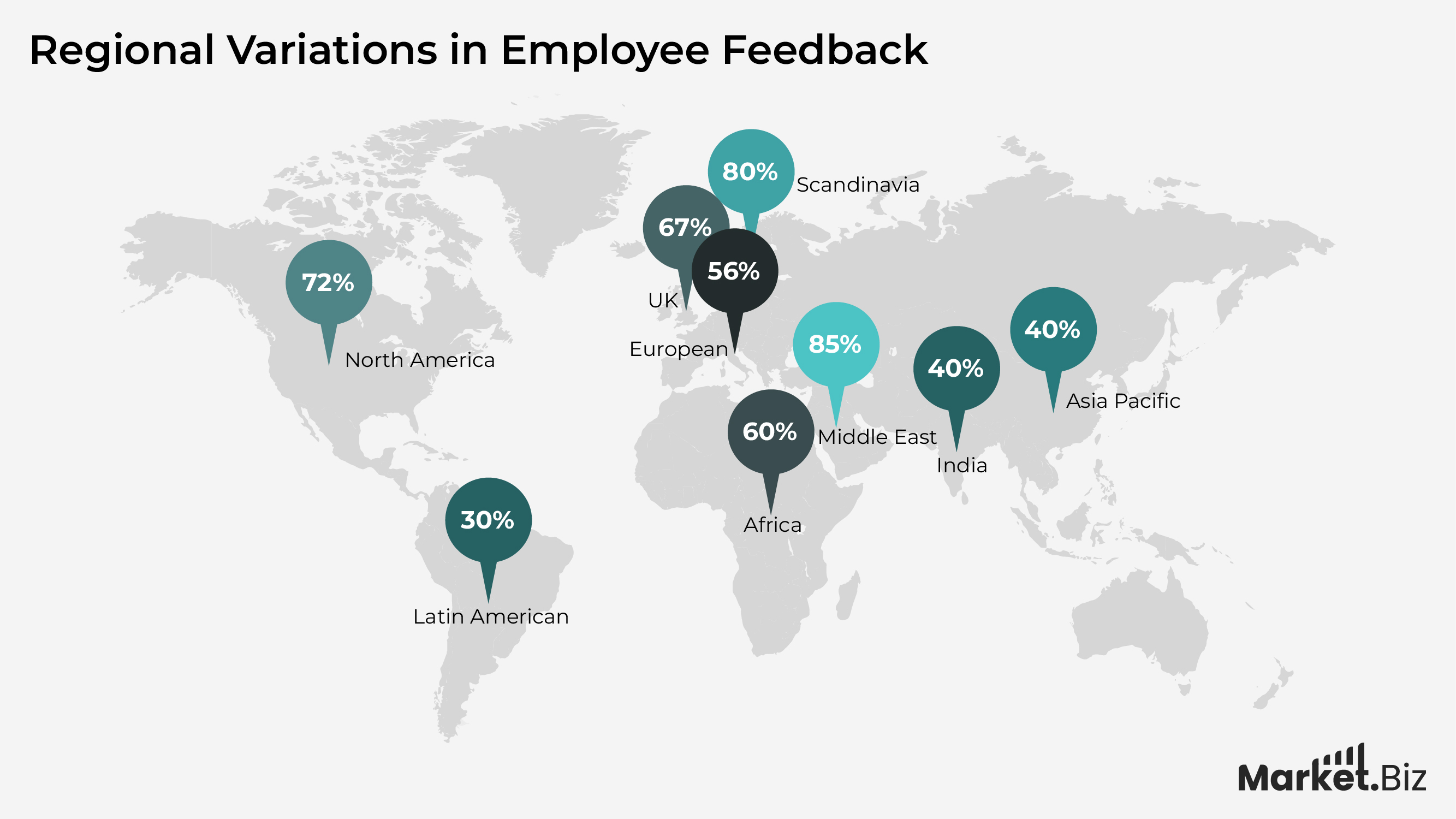
Cultural and Regional Variations in Employee Feedback
- In North America, 72% of employees prefer regular, direct feedback from managers, compared to only 56% in European markets.
- In the Asia-Pacific region, only 40% of employees report receiving feedback regularly, reflecting cultural differences in how feedback is given and received.
- Latin American employees are 30% more likely to express satisfaction with feedback provided through digital platforms compared to employees in Europe.
- 85% of employees in the Middle East value feedback that is culturally sensitive and context-aware, with less focus on direct criticism.
- In Africa, 60% of workers prefer feedback from a senior manager, showing a preference for hierarchical feedback structures.
- Employees in Scandinavia report the highest levels of satisfaction with 360-degree feedback systems, with 80% stating it provides comprehensive insights into their performance.
- In the UK, 67% of employees expect feedback to be tied to their personal and professional development goals, a trend less common in other regions.
- In India, employees are 40% more likely to appreciate feedback given through structured performance appraisals rather than informal, spontaneous feedback.
Employee Feedback to Company Statistic
- 68% of employees believe their feedback is collected regularly, but only 40% report that it leads to noticeable improvements in their workplace.
- Companies that actively seek feedback see a 14% increase in employee engagement compared to those that don’t engage in feedback collection.
- 57% of employees express a desire to give feedback on management, but only 22% feel that their input is taken seriously.
- 62% of employees prefer giving feedback through digital platforms like surveys or apps, while 38% prefer face-to-face interactions.
- 52% of employees report they feel more valued when their feedback results in actionable changes, enhancing their job satisfaction.
- Organizations that act on employee feedback experience 31% higher retention rates than companies that do not address feedback.
- Only 33% of employees feel that the feedback they provide is being communicated back transparently to the leadership, which can hinder trust.
- 45% of employees cite communication barriers as a reason their feedback isn’t heard or acted upon by the company.
- Companies that offer multiple feedback channels, such as surveys, focus groups, and one-on-ones, are 20% more likely to implement changes based on employee feedback.
- 70% of employees say that regular feedback is a critical factor in shaping a positive company culture, indicating its role in fostering collaboration and innovation.
The Role of Feedback during Recruitment and onboarding
- 75% of candidates say that receiving feedback during the recruitment process increases their likelihood of accepting a job offer, indicating the importance of transparent communication.
- 60% of employees report feeling more engaged and prepared in their roles when feedback is provided early during onboarding, leading to smoother transitions.
- Companies that provide structured feedback during onboarding have 50% higher retention rates within the first year compared to those that do not.
- 84% of new hires say receiving regular feedback within the first 90 days significantly improves their understanding of job expectations and accelerates productivity.
- 69% of employees who receive feedback during the onboarding process feel more aligned with company culture, helping them integrate faster.
- Recruitment processes that include feedback loops for candidates, such as post-interview surveys, result in 35% better employer branding and attract higher-quality applicants.
- 40% of employees who received timely feedback during onboarding report higher satisfaction with their onboarding experience, contributing to a more positive long-term relationship with the company.
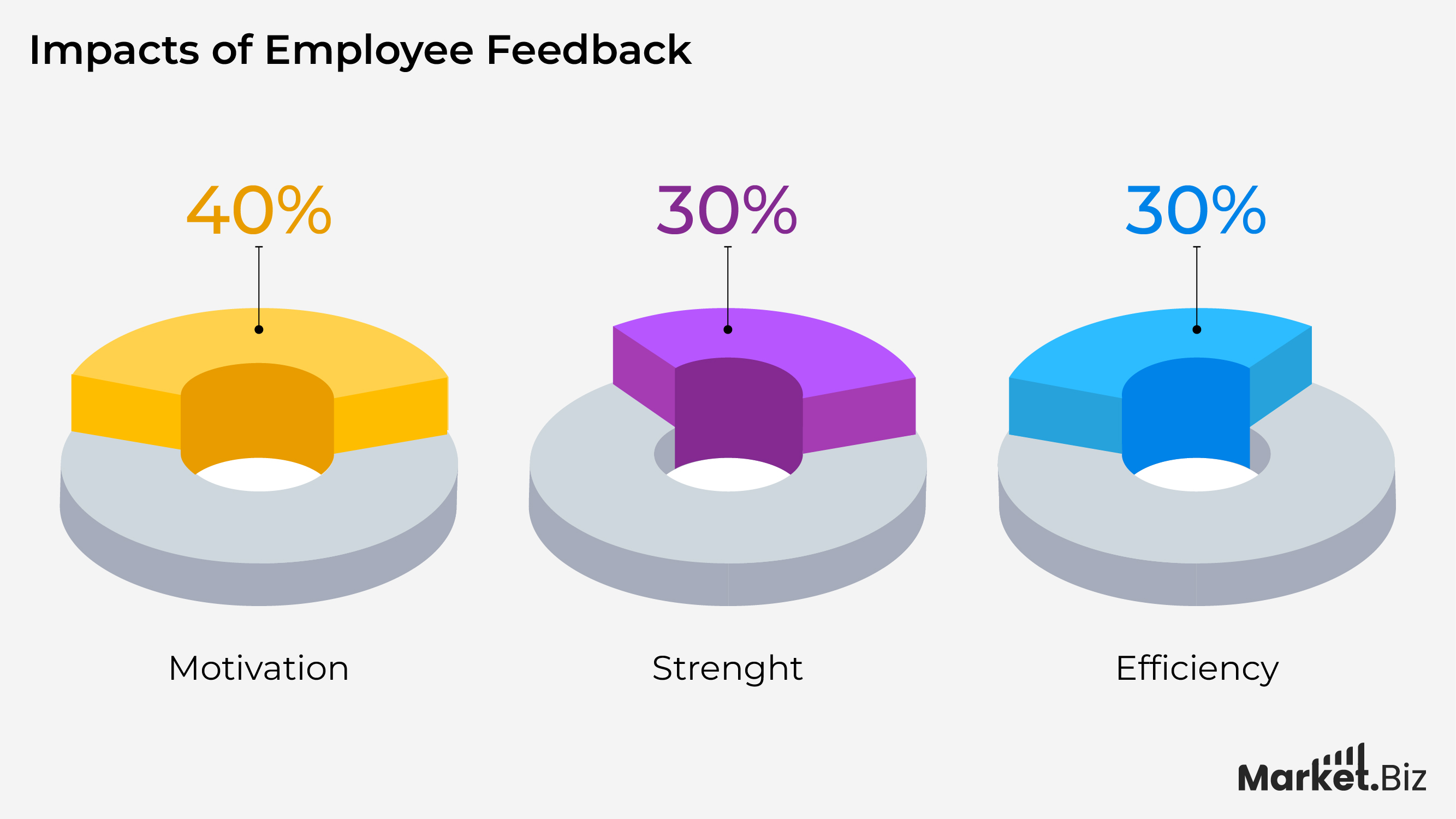
Impacts of Employee Feedback on Performance
- Employees who receive regular feedback are 3.5 times more likely to be engaged in their roles, which directly improves overall performance.
- 65% of employees say constructive feedback helps them improve their skills and enhances their productivity, making it a key driver of performance.
- Companies that actively provide feedback to employees see a 14.9% increase in productivity, as feedback leads to improved clarity and job satisfaction.
- 30% of employees report that regular performance feedback helps them understand their strengths and areas for improvement, enabling more focused performance.
- 55% of high-performing teams report having consistent, actionable feedback from managers, which fosters continuous improvement and better collaboration.
- 40% of employees who receive timely feedback say it directly impacts their motivation, pushing them to meet performance expectations more effectively.
- When feedback is integrated into daily workflows, 30% of employees report increased efficiency and better decision-making, which improves team performance.
- 50% of employees who receive feedback on a regular basis show a significant improvement in their performance reviews compared to those who receive less feedback.
The Challenges with Employee Feedback Strategies
- 40% of employees say they rarely receive meaningful feedback, which limits the effectiveness of feedback strategies and leads to disengagement.
- 50% of managers struggle to provide actionable feedback due to time constraints and lack of training, reducing the impact of feedback initiatives on performance.
- 35% of employees report feeling uncomfortable giving honest feedback to their managers, which creates a barrier to open communication and feedback culture.
- 60% of organizations fail to implement a structured feedback process, resulting in inconsistent feedback and missed opportunities for growth and improvement.
- 45% of employees feel that feedback is often too generic and lacks specific, actionable points, leading to confusion and frustration with the feedback system.
- 55% of HR professionals indicate that measuring the effectiveness of feedback programs is challenging due to a lack of proper metrics and data analytics tools.
- 70% of employees believe feedback is ineffective if not followed up with concrete actions, highlighting the importance of translating feedback into tangible results for continuous improvement.
Benefits of Employee Feedback Strategies
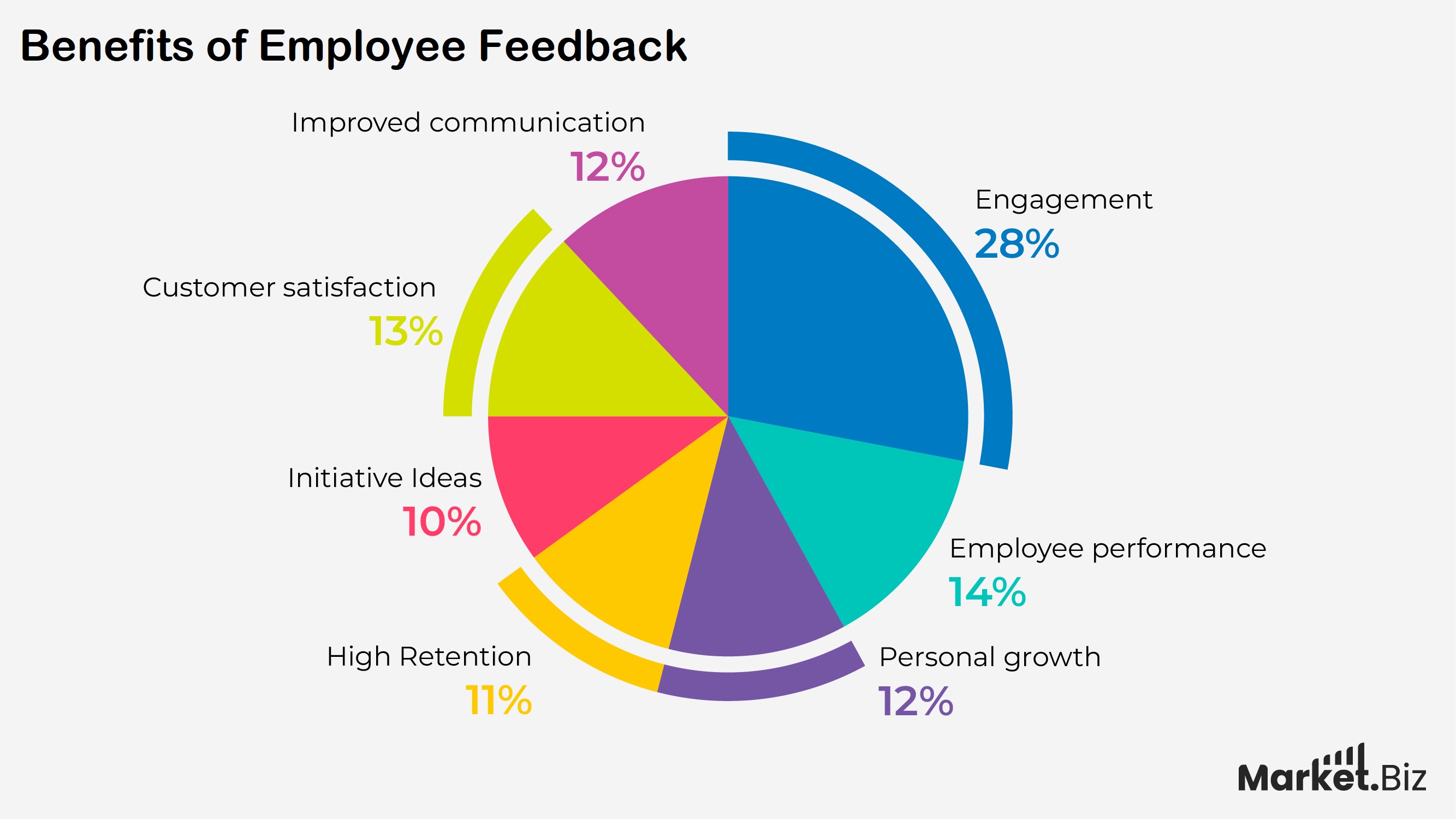
- 28% of employees who receive regular feedback feel more engaged in their work, leading to higher productivity and job satisfaction.
- Companies with effective feedback strategies report a 14% increase in employee performance, as continuous feedback helps employees align with business goals.
- 12% of employees say that feedback contributes to their personal growth and career development, enhancing overall skill improvement and organizational success.
- Organizations that encourage feedback see 11% higher retention rates, as employees feel more valued and motivated to stay with the company.
- 10% of employees say they are more likely to take initiative and contribute ideas when they receive regular, constructive feedback from their managers.
- Companies with robust feedback strategies have 13% higher customer satisfaction scores, as employees who feel supported are more likely to deliver better customer experiences.
- 12% of organizations that implement feedback systems report improved workplace communication, fostering a more collaborative and innovative environment.
Employee Feedback Programs Statistics
- 89% of employees say they are more engaged when they receive regular feedback, which directly correlates to higher productivity.
- 58% of companies that conduct regular employee surveys see a 20% improvement in employee satisfaction over those that don’t have such programs.
- 48% of employees report feeling more accountable for their work when they receive ongoing feedback, leading to enhanced performance outcomes.
- Organizations with continuous feedback programs are 3 times more likely to outperform competitors in terms of revenue growth.
- 65% of employees believe that feedback helps them align with organizational goals, contributing to clearer expectations and improved job performance.
- 71% of employees would work harder if they felt their efforts were being recognized through feedback, demonstrating its motivational impact.
- 40% of employees say they are less likely to leave a company that actively seeks and acts upon employee feedback, improving retention rates.
- Companies with feedback programs that include peer reviews report a 15% increase in team cohesion and collaborative work efficiency.
Future of Employee Feedback
- By 2026, 58% of organizations plan to use AI-powered tools for real-time feedback, providing more accurate and personalized insights for employee development.
- 77% of companies are shifting to continuous feedback models rather than annual reviews, with real-time input becoming the new norm for better agility and responsiveness.
- 65% of businesses are adopting sentiment analysis tools to assess employee moods and engagement levels, allowing for more proactive adjustments in management strategies.
- In 2025, 62% of feedback programs will be mobile-first, allowing employees to give and receive feedback through easy-to-use apps, enhancing accessibility and engagement.
- 54% of HR professionals predict that the future of feedback will be highly personalized, tailored to individual preferences, and aligned with career development goals.
- The use of 360-degree feedback is expected to increase by 45% over the next five years, offering more holistic insights from peers, managers, and subordinates.
- 68% of companies are expanding their employee feedback systems to include regular “Voice of Employee” initiatives, allowing workers to provide input on company culture and leadership.
- 80% of organizations are investing in advanced analytics to better understand feedback trends and make data-driven decisions that improve employee satisfaction and performance.
- 60% of companies will implement feedback programs that specifically address diversity and inclusion, fostering a more inclusive workplace environment and ensuring all voices are heard.
- Over 50% of companies will have fully automated feedback systems by 2027, reducing manual intervention and speeding up the feedback loop for timely responses and improvements.
Conclusion
Employee feedback is crucial for engagement, productivity, and retention. 65% of employees report higher engagement with regular feedback, and companies see a 14.9% increase in engagement when feedback is collected consistently. Employees who feel heard are 4.5 times more likely to perform better, and feedback-driven cultures boost productivity by 23%.
With 74% of employees staying longer when their voices are valued, businesses must leverage digital platforms for timely, actionable feedback to meet employee expectations.
FAQs
Compared to 18% of workers with low engagement, 43% of highly engaged workers receive feedback at least once a week. Feedback and engagement have a close relationship.
Employee feedback is essential for retention because it enables businesses to recognize possible problems early on and take appropriate action. Employee engagement and commitment to their jobs are more likely to remain high when they feel heard and appreciated. Frequent feedback improves job satisfaction, cultivates a positive work atmosphere, and eventually lowers turnover rates by fostering a sense of community.
Although research indicates that high-performing teams have a golden ratio, performance does drive feedback. The optimal praise-to-criticism ratio, as determined by research, is 5:1. To put it another way, you should share five positive comments for every negative one.
Net Promoter Scores (NPS) for workplace advocacy, employee engagement scores, and satisfaction ratings are examples of common employee feedback metrics. Organizations also frequently monitor survey response rates, employee attrition rates, and performance indicators related to feedback programs. Businesses can evaluate the success of their feedback procedures and make well-informed decisions to enhance employee experiences by keeping an eye on these metrics.