









Introduction
HR Technology Adoption Statistics: HR technology adoption has become essential for businesses aiming to streamline operations and improve employee experience. Over 75% of companies globally are utilizing HR technology, with cloud-based solutions making up 60% of the market.
Automation, artificial intelligence (AI), and data analytics are key drivers, enhancing processes like recruitment (80% of organizations use applicant tracking systems), payroll, and performance management. Small and medium enterprises (SMEs) are also embracing HR software, with over 50% adopting such solutions.
This digital transformation is reshaping HR departments, driving data-driven decisions, improving employee engagement (68% of HR professionals report increased engagement), and boosting operational efficiency. As investment in HR technology surpasses $25 billion in 2024, the trend toward modernization continues to grow.
Editor’s Choice
- Over 75% of businesses globally are adopting HR technology, with 60% of HR solutions being cloud-based.
- 80% of organizations utilize AI in recruitment, streamlining processes like candidate screening.
- 68% of HR professionals report improved employee engagement through HR technology.
- The HR tech market is projected to surpass $50 billion by 2027, growing at a 12% CAGR.
- 64% of organizations plan to integrate AI and machine learning into HR systems in the next two years.
- 72% of HR departments are using technology to enhance diversity, equity, and inclusion (DEI) initiatives.
- 70% of businesses will use employee experience platforms by 2026 to boost engagement and retention.
- 62% of companies are focusing on mobile-first HR solutions to manage remote and global workforces.
- 45% of HR leaders anticipate increased investments in remote work management technologies.
- 58% of businesses are planning to invest in HR tech to promote employee wellbeing and mental health support.
General HR Technology Adoption Statistics
- Over 75% of businesses worldwide have integrated some form of HR technology into their operations, with cloud-based solutions leading the way.
- Approximately 60% of HR software solutions are now cloud-based, providing organizations with flexibility, scalability, and better security for managing HR processes.
- 80% of organizations are utilizing artificial intelligence (AI) in recruitment, with tools like applicant tracking systems (ATS) significantly reducing time-to-hire.
- Around 65% of HR departments have adopted automation technologies for administrative tasks like payroll, attendance tracking, and benefits management, increasing efficiency.
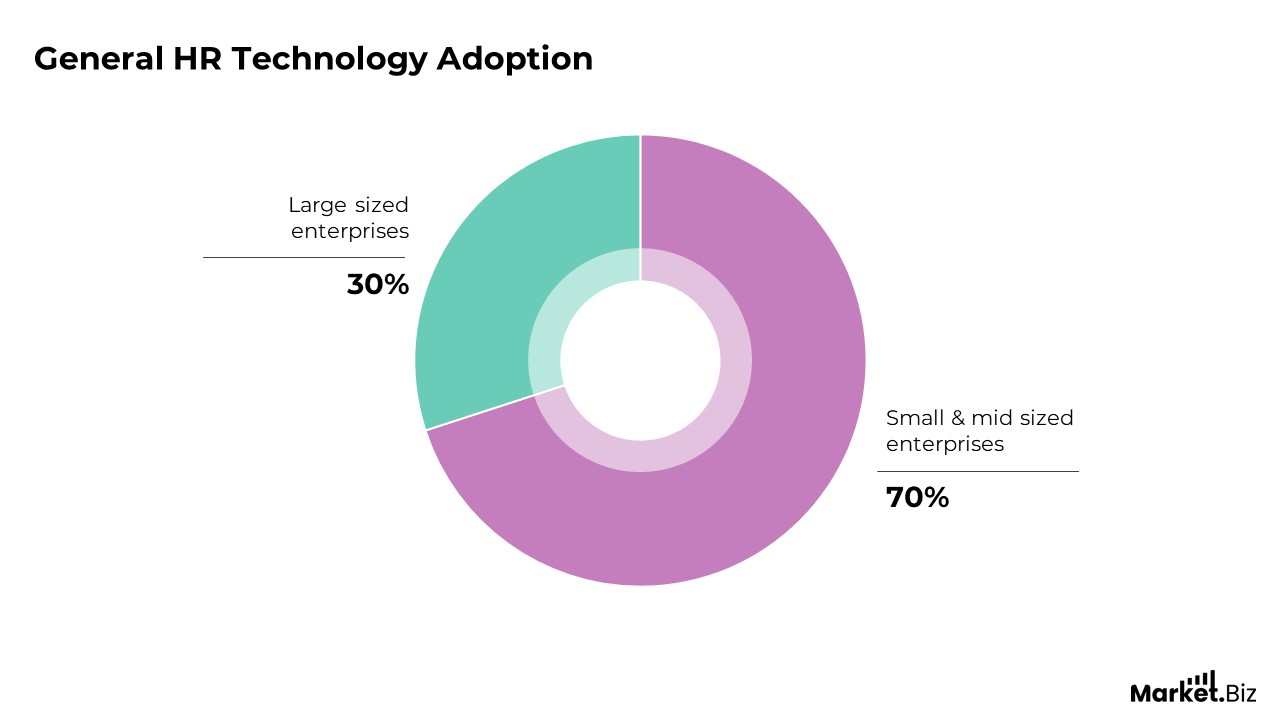
- Over 50% of small and medium enterprises (SMEs) have adopted HR software, reflecting a growing shift towards technology in smaller organizations.
- 68% of HR professionals report improved employee engagement through the use of technology such as engagement and feedback platforms.
- 55% of organizations use data analytics tools to guide HR decision-making, from hiring practices to compensation planning.
- Over 70% of companies are using learning management systems to provide training and development opportunities for employees, with personalized learning paths.
- Global investments in HR technology surpassed $25 billion in 2024, reflecting the growing reliance on tech solutions in HR functions.
- 63% of businesses use HR software for performance management, helping to streamline feedback processes and align employee goals with organizational objectives.
- 60% of employees prefer using mobile apps for HR-related tasks like time-off requests, accessing pay stubs, and checking benefits information.
- 52% of HR departments have implemented wellness technology, including mental health apps and fitness tracking tools, to support employee wellbeing.
- 85% of HR leaders have expressed an interest in investing more in recruitment technology, particularly AI-driven tools for candidate screening and sourcing.
- 59% of HR leaders consider cybersecurity a top priority when selecting HR software, given the sensitive nature of employee data.
- 72% of HR departments use technology to monitor and improve diversity, equity, and inclusion (DEI) initiatives, helping to drive more inclusive workplaces.
(Source: Adoptoprod)
Global HR Technology Adoption Rates
- About 85% of large enterprises worldwide have adopted HR technology, with cloud-based solutions leading the way.
- Over 90% of businesses in the U.S. and Canada use HR technology, focusing on automation and talent management.
- Around 78% of European organizations have integrated HR technology, prioritizing compliance, payroll, and employee well-being.
- HR tech adoption is growing in Asia-Pacific, with over 70% of companies in Japan, Singapore, and Australia using HR tools.
- More than 60% of companies in the Middle East and Africa have adopted HR technology for workforce management and engagement.
- 56% of small and medium-sized businesses (SMBs) now use HR software for payroll, recruitment, and performance tracking.
- Nearly 70% of employees globally use mobile HR apps for tasks like time-off requests and benefits tracking.
- Over 50% of organizations use HR analytics for decisions on recruitment, talent development, and compensation.
- Global HR tech investments are expected to surpass $30 billion in 2025, driven by AI and automation demand.
- In Latin America, 65% of companies have adopted HR technology, focusing on employee experience and talent management.
(Source: Adoptoprod)
The Shift towards Cloud-Based HR Solutions
- Over 60% of global companies are shifting to cloud-based HR solutions, driven by the need for scalability and flexibility in managing HR functions.
- The cloud HR market is expected to grow at a compound annual growth rate (CAGR) of 12% through 2027, highlighting the increasing demand for cloud-based platforms.
- Cloud-based HR systems allow organizations to reduce infrastructure costs by up to 40%, making them more cost-effective than traditional on-premise solutions.
- More than 70% of HR departments are adopting cloud-based solutions for employee data management, enabling easier access and collaboration across global teams.
- Nearly 50% of small and medium-sized businesses (SMBs) have transitioned to cloud-based HR systems, benefiting from lower upfront costs and easy scalability.
- Cloud solutions offer real-time updates, with 65% of organizations reporting improved efficiency in payroll processing after switching to the cloud.
- A significant 80% of businesses are adopting cloud-based performance management tools, allowing for better employee feedback, tracking, and engagement.
- In 2025, 90% of new HR technology investments are expected to be in cloud-based systems, as organizations increasingly prioritize digital transformation.
- 72% of companies using cloud HR solutions report improved compliance and security, as cloud platforms offer better data protection and regulatory updates.
- Cloud-based HR systems are particularly popular in industries like tech and healthcare, where agility and fast scaling are critical.
- 55% of global companies are implementing cloud-based learning management systems (LMS) to facilitate employee development and training remotely.
- Around 63% of companies report enhanced collaboration and communication among HR teams after migrating to cloud-based HR platforms.
- A growing 67% of organizations are using cloud-based recruitment tools, allowing for faster and more accurate candidate screening.
- Cloud HR solutions are also streamlining employee benefits management, with 50% of businesses seeing improved employee satisfaction due to easier access to benefits information.
Impact of AI on HR Technology
- Over 70% of businesses are using AI-powered tools in recruitment, streamlining resume screening and candidate matching, significantly reducing hiring time by up to 60%.
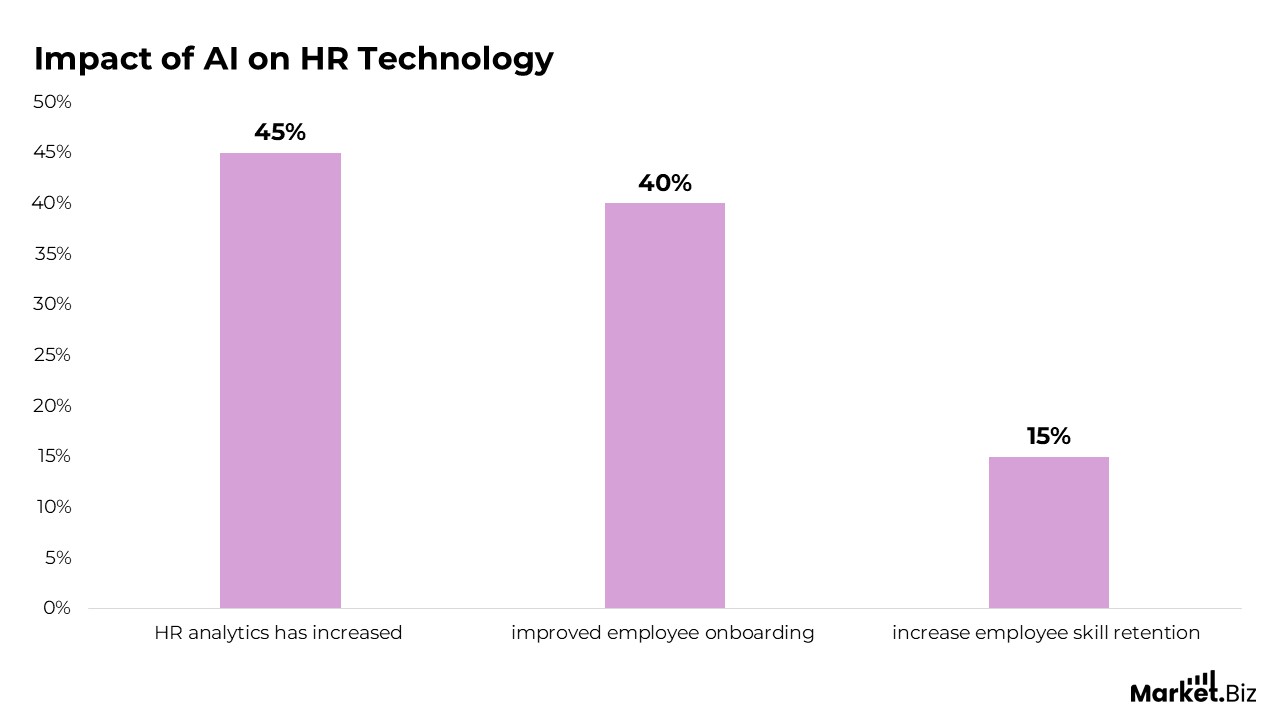
- AI has improved employee onboarding efficiency by automating documentation, training schedules, and FAQs, leading to a 40% reduction in onboarding time.
- Around 55% of companies are adopting AI in performance management to provide real-time feedback, identify skill gaps, and create personalized employee development plans.
- Approximately 50% of HR departments are implementing AI-driven chatbots to answer employee queries, resulting in a 30% reduction in HR service desk inquiries.
- 64% of organizations are leveraging AI for workforce optimization, predicting workforce needs, and enhancing talent retention by analyzing employee turnover trends.
- AI tools have led to a 20% improvement in employee engagement by offering personalized experiences for learning, career development, and feedback.
- 52% of companies are using AI to analyze employee sentiment, helping HR teams identify potential workplace issues and improve retention strategies.
- Around 48% of companies use AI-powered learning management systems (LMS), offering tailored training programs that increase employee skill retention by 15%.
- Over 40% of HR teams are using AI in benefits management, utilizing predictive analytics to create more customized benefit packages based on employee behavior and preferences.
- 68% of companies utilizing AI in hiring report an increase in diversity, as AI helps eliminate unconscious bias during candidate selection processes.
- HR teams report a 35% reduction in time spent on administrative tasks after integrating AI, allowing HR professionals to focus on more value-driven activities.
- AI’s use in HR analytics has increased by 45%, with companies leveraging data-driven insights for better talent management, compensation planning, and retention strategies.
HR Technology Investment Trends
- Global HR technology investments have surged, reaching over $27 billion in 2024, a significant increase from $15 billion in 2018, indicating rising business confidence in HR digital transformation.
- 85% of organizations are prioritizing cloud-based HR solutions, allowing for greater scalability and flexibility, according to Deloitte’s 2023 HR Technology Report.
- AI-driven tools are transforming recruitment and employee management, with 35% of companies incorporating AI in their HR processes to automate repetitive tasks and improve decision-making.
- Companies are increasingly investing in platforms designed to enhance employee experience, with 43% of firms planning to implement or upgrade such solutions by 2025.
- HR leaders are allocating 30% of their budgets to data analytics tools, recognizing the power of predictive insights for improving talent retention and workforce planning.
- As of 2024, 50% of HR functions are mobile-enabled, reflecting the shift towards accessible, on-the-go management of HR tasks and employee engagement.
- Investment in L&D platforms has grown by 20% year-over-year, driven by the increasing need for continuous skills development and employee upskilling.
- Companies are increasing investments in D&I technology by 18%, using platforms to eliminate bias in hiring and foster inclusive work environments.
- As remote work becomes permanent for many, 65% of HR tech investments are now directed toward tools for managing distributed teams, including virtual collaboration platforms and remote performance tracking systems.
- With growing concerns over data breaches, 40% of HR tech budgets are allocated to cybersecurity and compliance solutions to protect sensitive employee data in the digital age.
Challenges in HR Technology Adoption
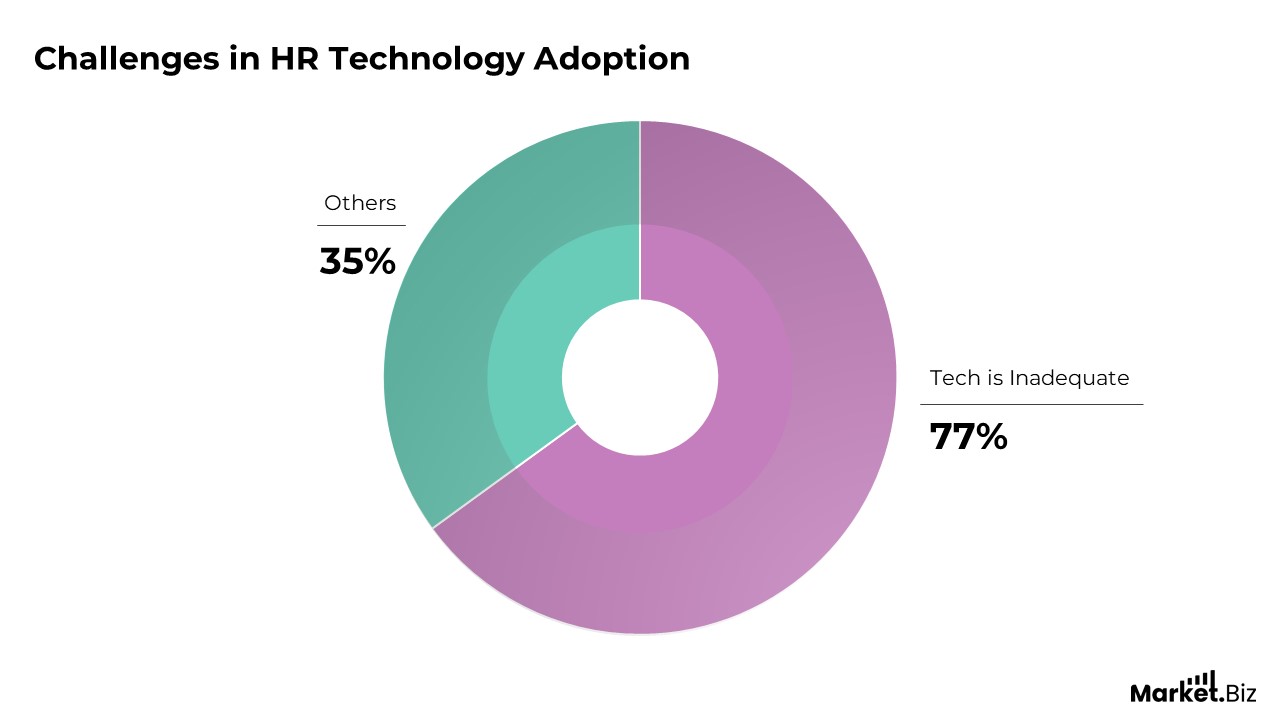
- 52% of organizations struggle to select the right HR technology vendor, often overwhelmed by the variety of available solutions and their varying levels of scalability.
- 60% of companies report that the high upfront cost of HR technology is a significant barrier to adoption, especially for small and mid-sized businesses.
- 55% of organizations struggle with integrating new HR technologies into existing systems, leading to inefficiencies and data silos.
- 47% of HR leaders cite employee resistance to adopting new technologies as a primary challenge, with workers fearing job displacement or difficulty with the tools.
- With 74% of HR professionals concerned about data privacy, the integration of HR technology poses significant risks regarding the handling of sensitive employee information.
- 40% of HR professionals struggle to find skilled personnel capable of managing new HR tech platforms, leading to implementation delays.
- 38% of companies face difficulties customizing HR technology solutions to meet their unique needs, resulting in underutilized systems.
- Effective change management remains a struggle for 48% of organizations, with many failing to properly train staff or communicate the benefits of HR technology.
- 55% of HR departments highlight data security as a major concern, with the fear of cyberattacks and breaches increasing as HR tech systems become more complex.
- 41% of companies report uncertainty about the ROI of HR technology investments, causing hesitation in fully committing to these tools.
(Source: Adoptoprod)
Mobile HR Technology Solutions
- 78% of employees prefer mobile HR solutions for easy access to payroll, benefits, and other services.
- Mobile HR platforms increase employee engagement by 20% through better access to training and performance tracking.
- 65% of companies see a 30% improvement in real-time feedback with mobile HR platforms.
- 57% of job seekers apply via mobile, prompting 62% of companies to optimize recruitment for mobile devices.
- 54% of HR departments save up to 18% in costs by adopting mobile HR solutions.
- 49% of businesses invest in mobile learning platforms to improve skills development.
- 58% of companies with remote workers rely on mobile HR tools for team management and communication.
- 72% of mobile HR solutions are integrated with cloud technologies for secure, scalable access.
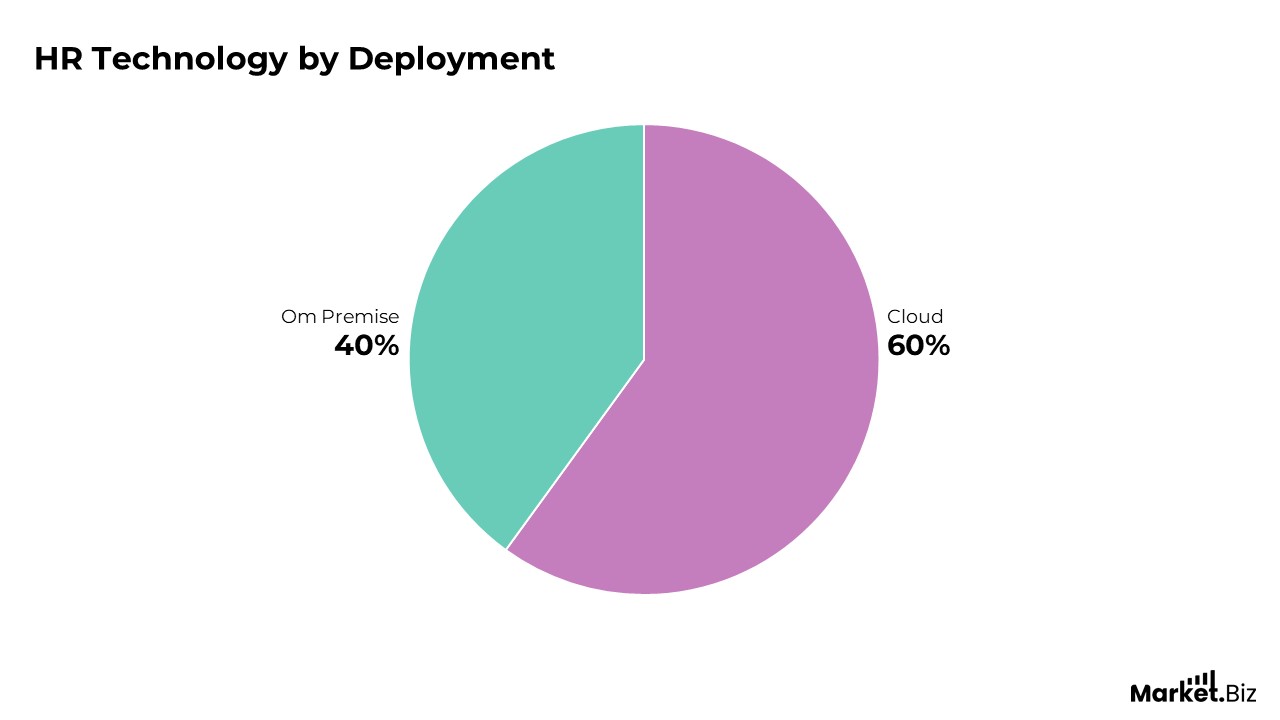
HR Technology by Deployment
- 65% of HR professionals prefer cloud-based solutions for scalability and accessibility, with the global HR cloud market expected to reach $30 billion by 2026.
- While cloud solutions dominate, 30% of large enterprises still opt for on-premise HR technology for greater control over data security and customization
- 40% of organizations are adopting hybrid deployment models, combining both cloud and on-premise systems to balance flexibility with security.
- The SaaS HR tech market is growing at a rate of 12% annually, driven by the ease of subscription-based models and lower upfront costs for businesses.
- 50% of companies have deployed mobile-enabled HR technology to support remote and hybrid workforces, enhancing employee engagement and self-service access.
- 32% of organizations are implementing AI-driven cloud HR systems for talent acquisition, performance management, and predictive analytics.
- 48% of HR tech budgets are dedicated to cybersecurity solutions, ensuring secure deployment of cloud-based HR systems to protect sensitive employee data.
- 25% of public sector organizations rely on hybrid deployment for HR technology to ensure compliance with government regulations while maximizing efficiency.
- 41% of companies prefer vendor-specific HR technology solutions, citing ease of integration and ongoing vendor support as key factors in their decision.
- Cloud-based HR technology has led to a 20% reduction in costs for 56% of organizations, particularly through lower infrastructure and maintenance expenses.
(Source: Snsinsider)
Importance of Technology Adoption
- 70% of organizations report a significant improvement in operational efficiency after adopting new technologies, streamlining processes, and reducing manual tasks.
- Businesses that embrace digital transformation experience 2.5 times faster revenue growth, according to a 2023 PwC report.
- 64% of companies indicate that technology adoption improves decision-making by providing real-time data and advanced analytics for better insights.
- 55% of employees say that technology adoption enhances their productivity by automating repetitive tasks and enabling them to focus on higher-value work.
- 58% of organizations note that adopting new technology helps them improve customer satisfaction by providing faster, more personalized services.
- Companies with advanced technology adoption are 3 times more likely to report a strong competitive advantage in their industry, according to Accenture’s 2023 study.
- 70% of businesses state that adopting cloud technology has reduced IT costs and improved scalability, making it easier to support growth.
- 53% of firms adopting artificial intelligence report enhanced innovation capabilities, allowing them to create new products and services faster.
- 42% of companies believe technology adoption is crucial to attracting and retaining talent, as it provides employees with more flexible and engaging work environments.
- 61% of businesses report a higher level of data security and risk management after adopting modern technology solutions, protecting against cyber threats.
HR Tech for Employee Wellbeing
- Companies using HR tech for wellness programs report a 20% reduction in healthcare costs, with 58% of businesses adopting these tools.
- 72% of employees feel more engaged when digital mental health tools like virtual therapy and mindfulness apps are provided.
- To boost retention by 15%, 65% of organizations are investing in flexible wellbeing platforms for their employees.
- 49% of companies track employee wellbeing metrics, using the data to address stress and provide support.
- 41% of employees report that HR tech wellness programs improve their work-life balance.
- With personalized health resources, HR tech for wellbeing reduces absenteeism by 22%.
- 50% of organizations are using AI to monitor stress levels and recommend customized wellness programs.
- 63% of employees value HR tech that offers fitness programs, which can increase productivity by 45%.
- 56% of businesses have adopted virtual wellness platforms to support their remote workforces.
- HR tech for wellbeing has led to a 19% boost in employee engagement, making employees feel more supported.
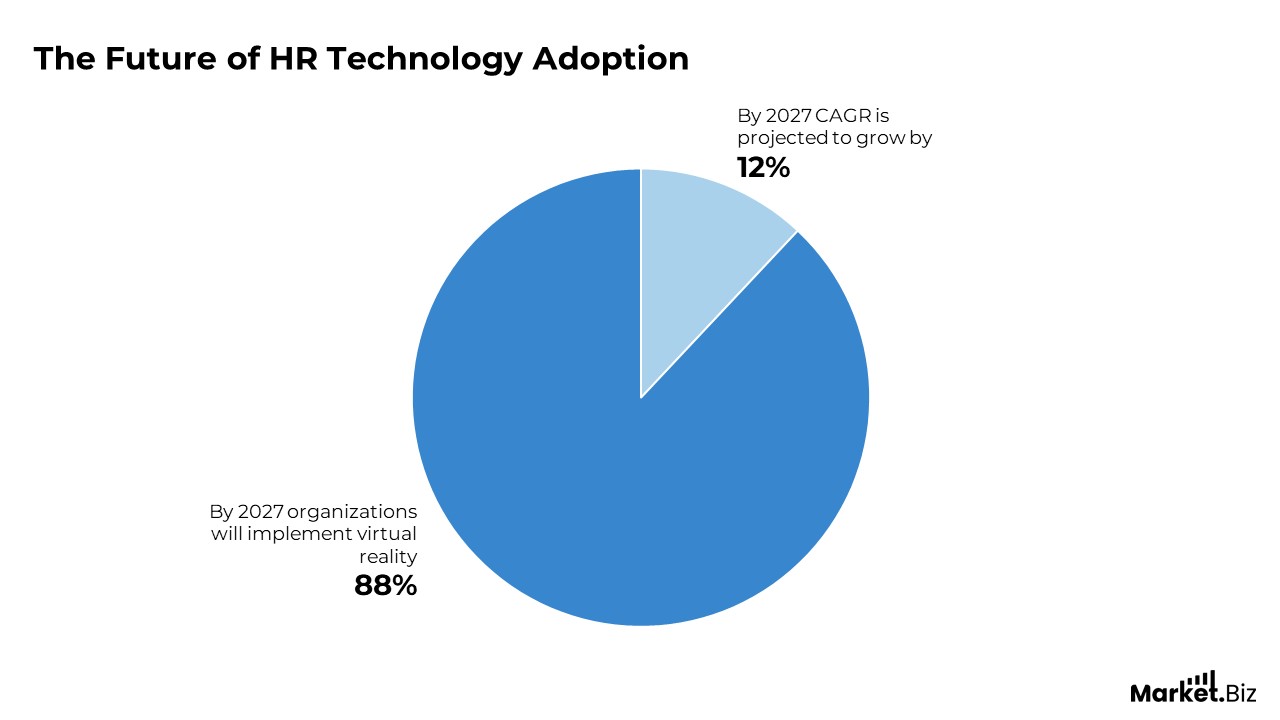
The Future of HR Technology Adoption
- 78% of HR leaders believe AI and automation will significantly transform HR functions by 2026, streamlining tasks like recruitment and performance management.
- The global HR tech market is projected to grow at a 12% CAGR, reaching $50 billion by 2027, driven by increasing demand for cloud-based solutions.
- 64% of organizations plan to integrate AI and machine learning into their HR systems within the next two years to enhance decision-making and workforce analytics.
- 45% of HR professionals foresee an increase in remote work management technology, as hybrid and remote work models are expected to remain permanent.
- By 2026, 70% of businesses will use employee experience platforms powered by HR technology to improve engagement and retention.
- The adoption of HR analytics will grow by 18% annually, as organizations look to leverage data for better talent management and predictive workforce planning.
- 62% of companies are investing in mobile-first HR solutions, anticipating that mobile access will become essential for managing remote and global workforces
- With 54% of HR leaders prioritizing cybersecurity, HR tech will increasingly focus on enhancing data protection and privacy, especially with cloud solutions.
- By 2027, 88% of organizations will implement virtual reality (VR) for training and development, providing more immersive learning experiences.
- 58% of businesses are planning to invest in HR technology for diversity, equity, and inclusion (DEI), helping to foster more inclusive workplaces through tech-driven initiatives.
Conclusion
HR technology adoption continues to grow globally, with a significant number of businesses integrating cloud-based solutions for greater flexibility and scalability. AI and automation drive efficiency, particularly in recruitment and performance management. The HR tech market is expected to see substantial growth, fueled by demand for data-driven insights and mobile-first solutions.
As organizations prioritize employee engagement, well-being, and DEI initiatives, investments in HR tech are projected to rise, positioning businesses for improved operational efficiency and long-term growth.
FAQ’s
Over 75% of businesses worldwide have integrated HR technology into their operations, with cloud-based solutions comprising 60% of the market due to their scalability and flexibility.
AI is revolutionizing HR by automating tasks like recruitment, with 80% of organizations using AI-powered applicant tracking systems. It helps streamline processes, reducing time-to-hire and improving talent management.
HR technology has been shown to enhance employee engagement, with 68% of HR professionals reporting improvements in engagement through platforms that focus on feedback, performance management, and wellbeing.
The global HR technology market is projected to reach $50 billion by 2027, driven by the increasing demand for AI, cloud-based solutions, and mobile-first platforms that enhance operational efficiency.
Key challenges include selecting the right vendor, high upfront costs, integrating new systems with existing infrastructure, and ensuring data security, with 74% of HR professionals expressing concern over data privacy risks.