









Introduction
Internet Privacy Statistics: Internet privacy represents a crucial issue in our digital era. Involving individuals’ rights to manage their personal information and online behaviors. It plays a vital role in protecting against data exploitation, identity theft, surveillance, and the preservation of free expression.
Various elements, such as technological progress, changing laws, business practices, cybersecurity risks, heightened user awareness, governmental monitoring, and ethical dilemmas, shape the ever-evolving realm of internet privacy.
Internet privacy is increasingly becoming a significant concern. With a substantial number of users are expressing anxiety over data collection and misuse. This has prompted many to engage in protective measures, such as deleting cookies or utilising privacy-enhancing tools.
However, users often concede that they frequently sacrifice privacy for convenience and find it challenging to comprehend intricate policies. Which underscores a disparity between awareness and consistent application.
Notable statistics indicate that a large majority (over 80%) voice their concerns and report heightened anxiety. While many actively manage their data (by clearing cookies and refraining from sharing), yet often accept policies without reading them, illustrating contradictory behaviours.
General Internet Privacy Statistics
- As of August 2022, the total number of records compromised during the Cam4 data breach is still the highest recorded.
- In 2022, the average cost of data breaches in the healthcare sector increased to $10.1 million.
- This represents an increase of $0.87 million from the $9.23 million observed between May 2020 and March 2021.
- In 2021, 71% of companies gathered data from residents of the European Union.
- Additionally, 59% of companies acknowledged collecting personal data from individuals residing in Canada, while 43% gathered data from UK residents.
- In 2023, 77% of Americans lack knowledge regarding online privacy.
- In 2021, 97% of internet users consented to privacy policies.
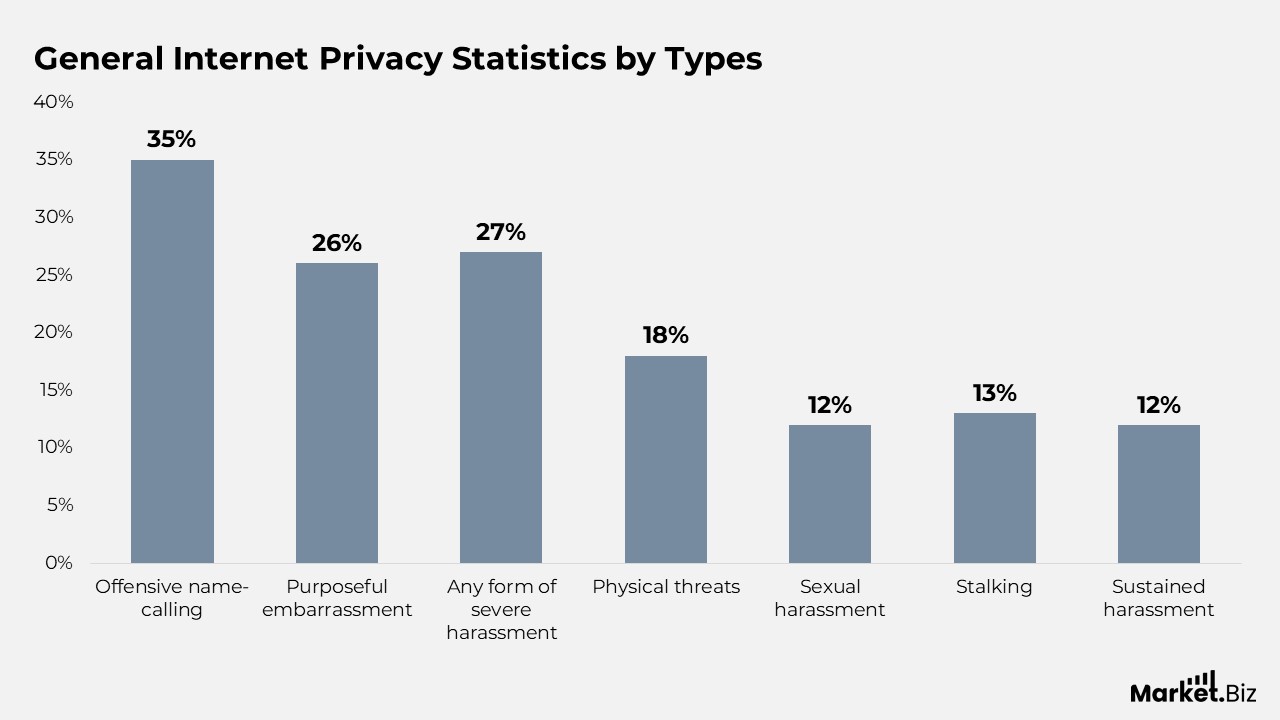
- Furthermore, 41% of American internet users experienced online harassment in 2021.
- During the fourth quarter of 2021, 290 million desktop users employed Adblockers.
- In 2021, 51% of internet marketers based in the United States utilized third-party cookies as part of their marketing strategies.
- Badoo was the leading collector of user activity data from iOS users in 2022.
Internet Privacy Market Size Statistics
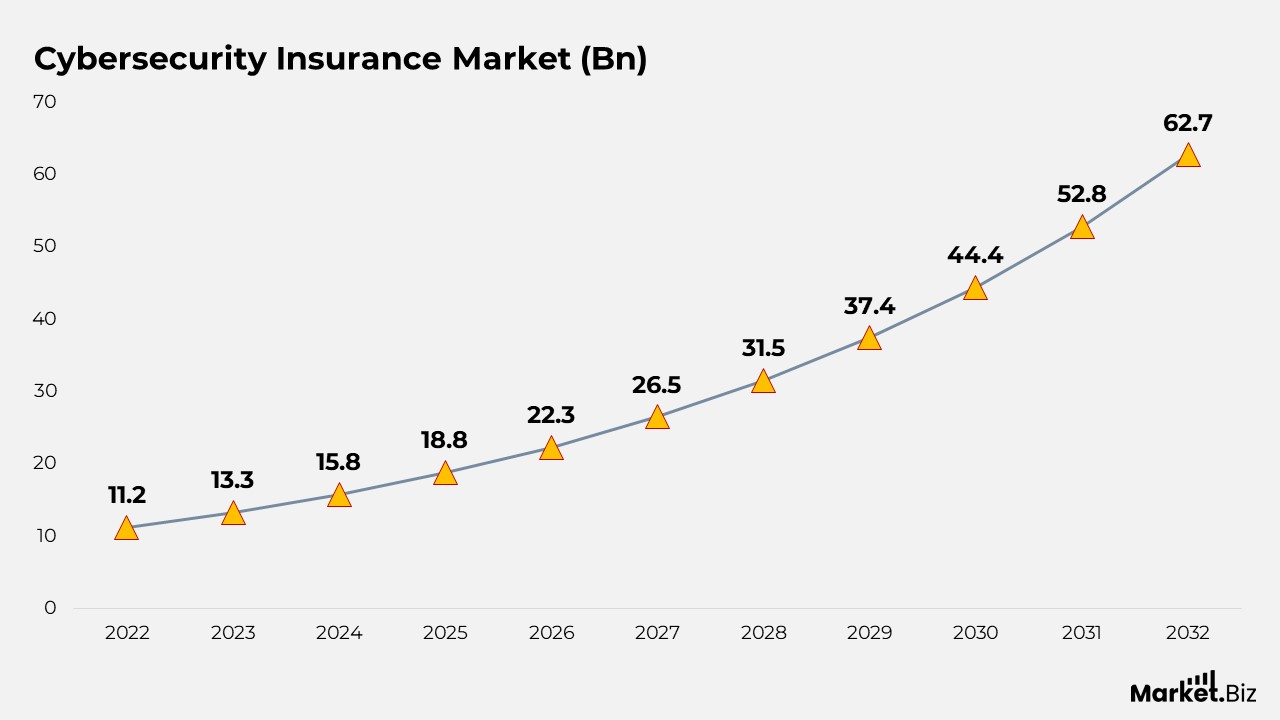
- The Global Cybersecurity Insurance Market is projected to reach a valuation of USD 62.7 billion by the year 2032.
- As the global market continues to expand, the cybersecurity insurance sector is anticipated to experience a growth rate of 18.8% from 2023 to 2032.
- Concerning privacy statistics from the U.S. for the first quarter of 2020 indicate that more than 164.68 million private records were compromised.
Internet Privacy by Country Statistics
United States
- The adoption of the internet in the United States has been extraordinary over the last twenty years.
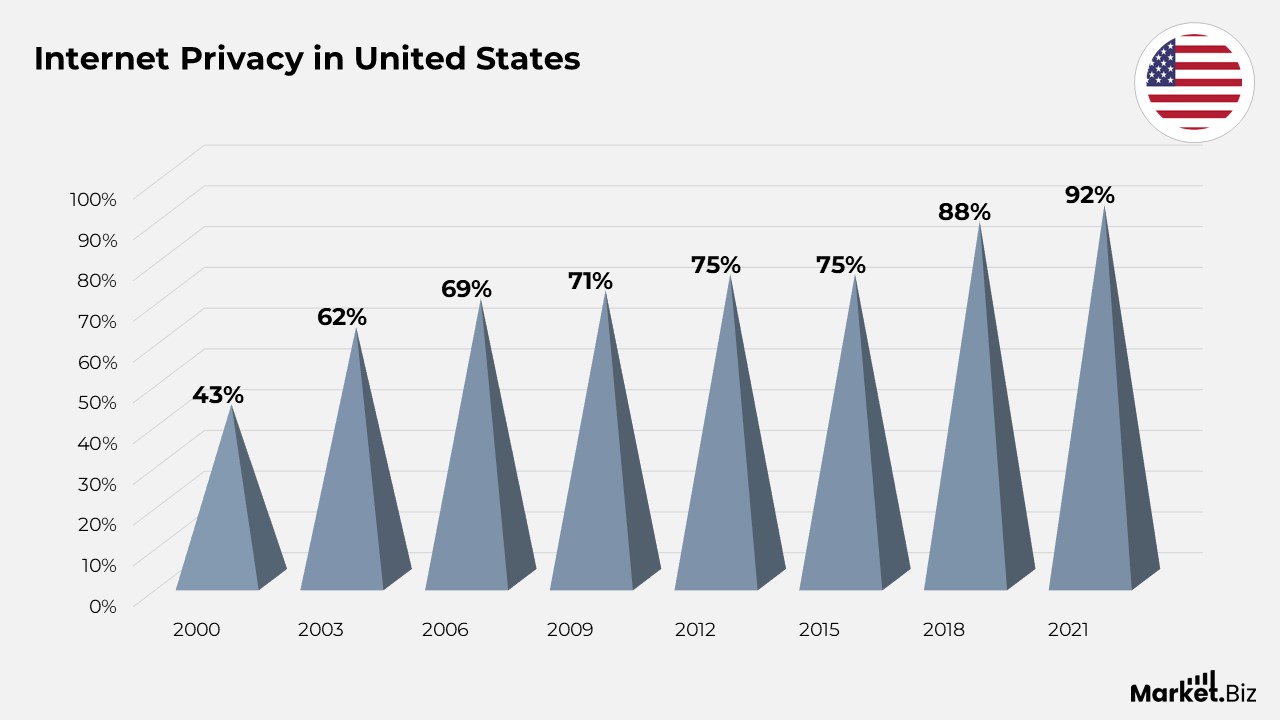
- In the year 2000, approximately 43% of the U.S. population had access to the internet. A significant increase occurred in the subsequent years, with access rising to 62% by 2003.
- This upward trend persisted, as internet usage grew to 69% by 2006 and further increased to 71% in 2009.
- Importantly, the years 2012 and 2015 were characterised by stability, with a steady rate of 75% being maintained.
- Nevertheless, in the following years, there was a remarkable leap, with internet penetration soaring to 88% in 2018 and achieving an impressive 92% by 2021.
China
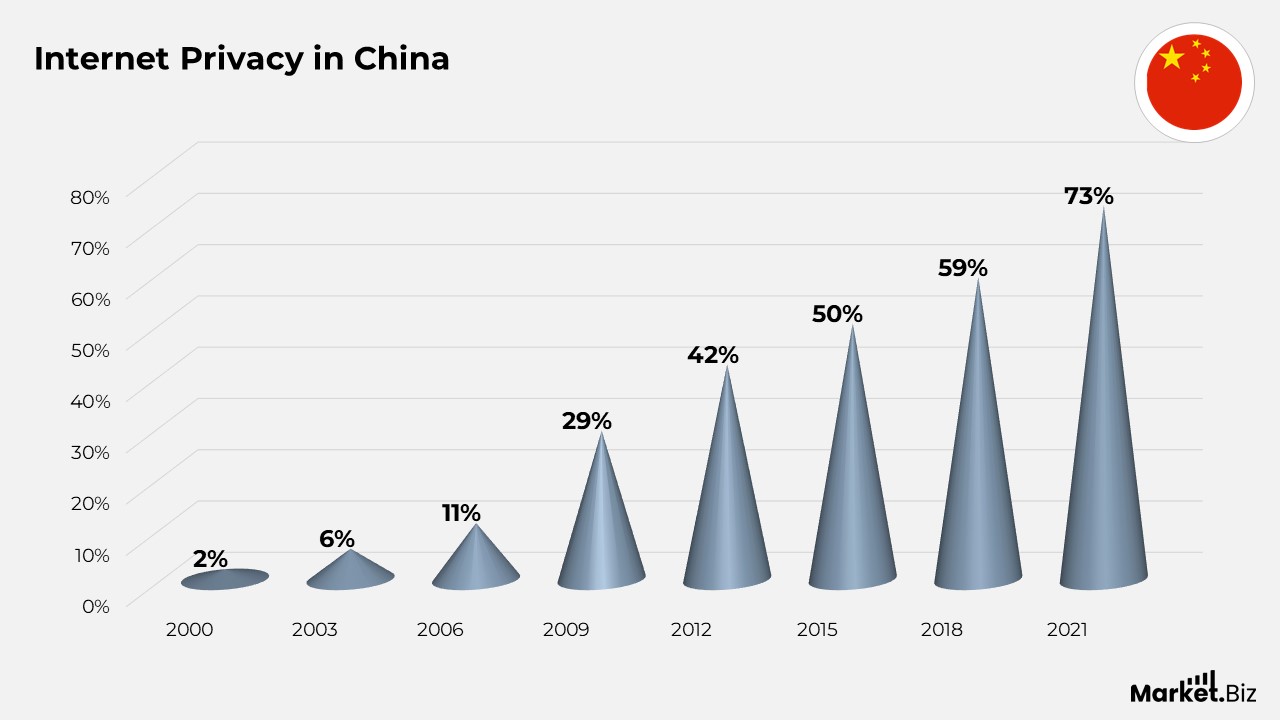
- In the year 2000, merely 2% of the population in China accessed the Internet. However, in the subsequent years, there was considerable growth, with internet usage climbing to 6% in 2003, 11% in 2006, and an impressive 29% by 2009.
- The following years continued to demonstrate advancement, with internet penetration rising to 42% in 2012, 50% in 2015, and further escalating to 59% in 2018.
- The digital age experienced a remarkable surge, achieving 73% of the population by 2021.
India
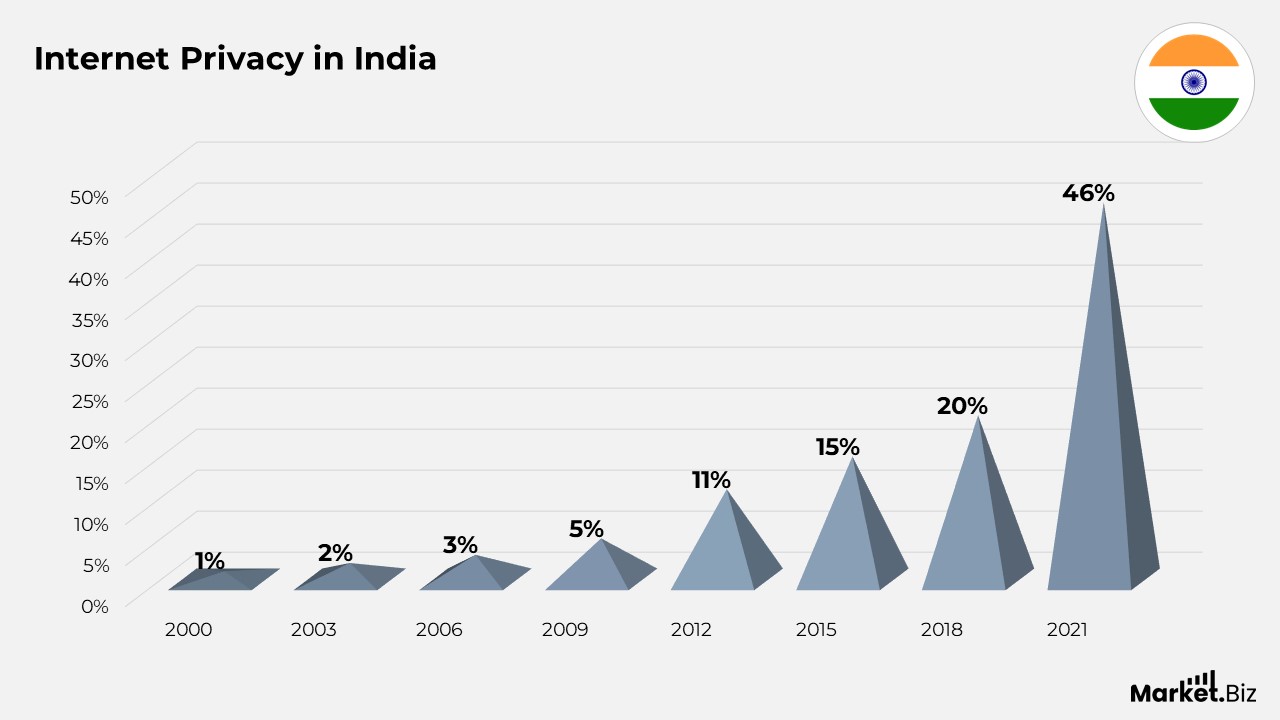
- In the past few decades, India has undergone a significant change in its internet usage. In the year 2000, only 1% of the Indian population had access to the internet, which increased to 2% by 2003.
- However, the following years witnessed a remarkable rise in internet adoption, with usage climbing to 3% in 2006 and 5% in 2009.
- Importantly, there was a notable acceleration, as internet usage jumped to 11% in 2012 and further advanced to 15% in 2015.
- By 2018, internet adoption had escalated to 20%, indicating considerable growth.
- The most extraordinary increase occurred in 2021 when internet penetration soared to 46%.
Australia
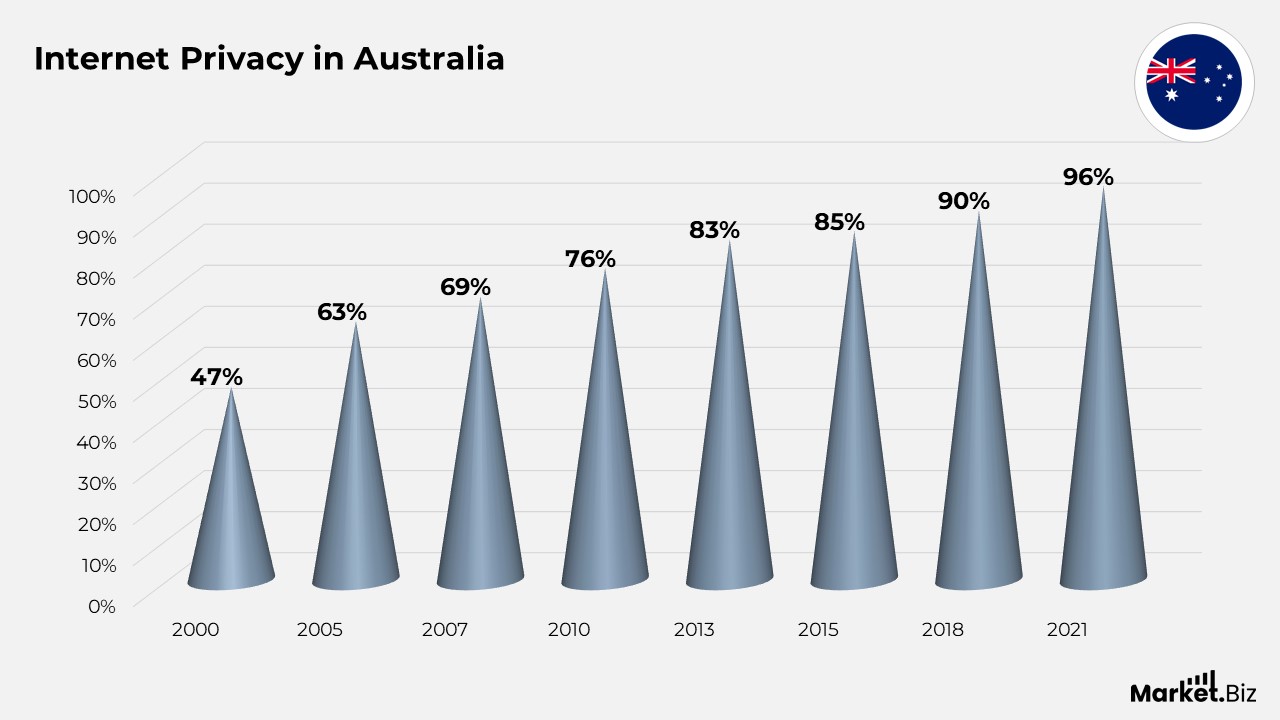
- In the year 2000, around 47% of Australia’s population had Internet access.
- This figure significantly increased to 63% by 2005 and continued to rise, achieving 69% in 2007.
- This steady upward trajectory signified an expanding digital footprint. In the subsequent years, internet usage further escalated, reaching 76% in 2010 and attaining 83% in 2013.
- By the year 2015, the digital landscape reached a remarkable penetration rate of 85%, with steady growth that eventually peaked at 90% in 2018.
- The apex of this trend was observed in 2021, when internet usage experienced a significant increase to 96%.
Internet Privacy Concerns Statistics
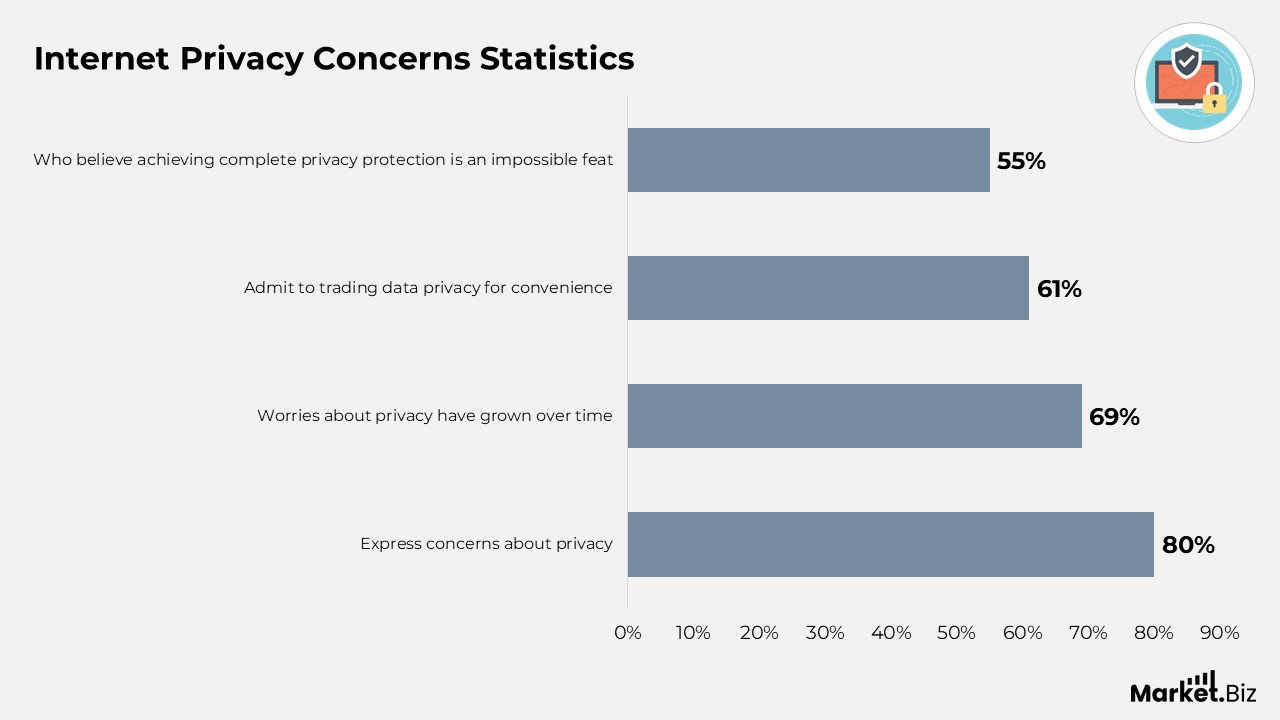
- A survey conducted in 2022 with 10,000 adults from 10 different countries revealed their perspectives on data privacy.
- 80% of participants voiced concerns regarding their privacy.
- 69% indicated that their apprehensions about privacy have increased over time.
- 61% acknowledged that they compromise their data privacy for the sake of convenience.
- 55% are of the opinion that attaining total privacy protection is an unachievable goal.
- 51% admitted to feeling unsure about how to protect their privacy.
Geographical Statistics for Internet Privacy
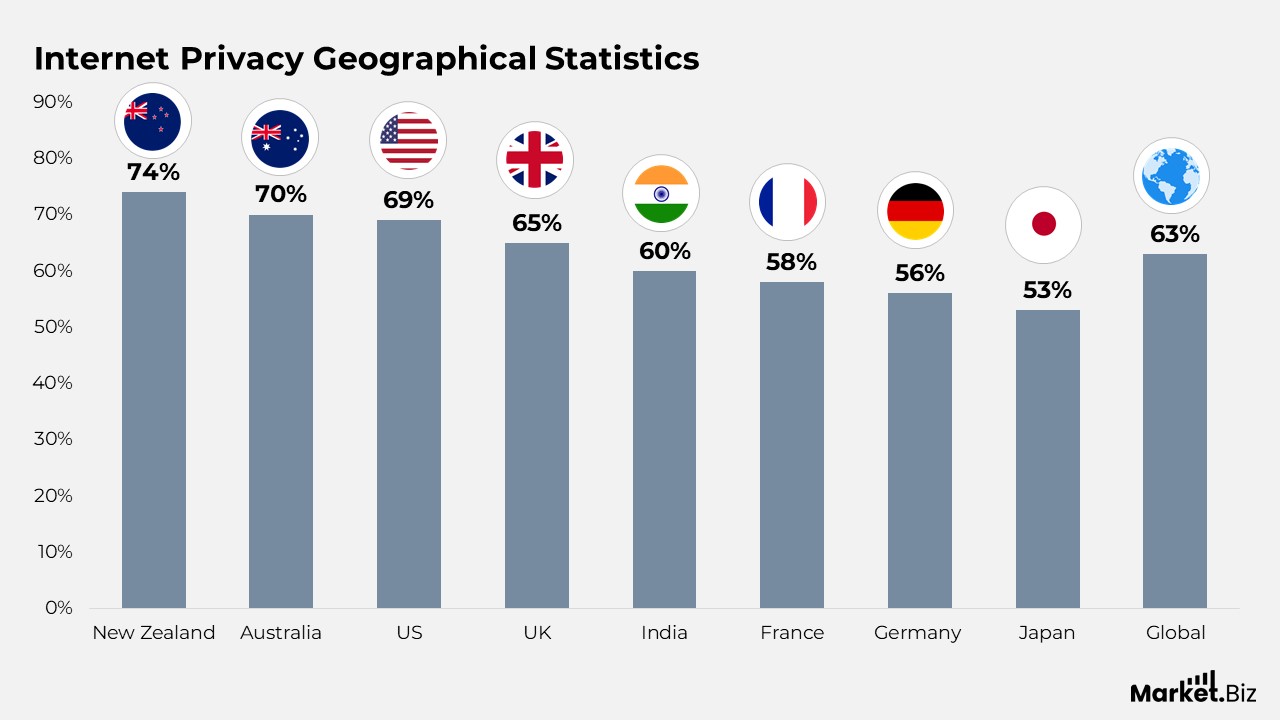
- In New Zealand, 74% of participants expressed a willingness to accept such risks. Closely followed by Australia at 70% and the United States at 69%.
- The United Kingdom reported a figure of 65%, while the global average was 63%.
- In contrast, India showed a lower willingness at 60%, with France and Germany at 58% and 56%, respectively.
- Japan had the lowest percentage, with only 53% of respondents indicating a readiness to accept online privacy risks for enhanced convenience.
Internet Privacy and AI Statistics
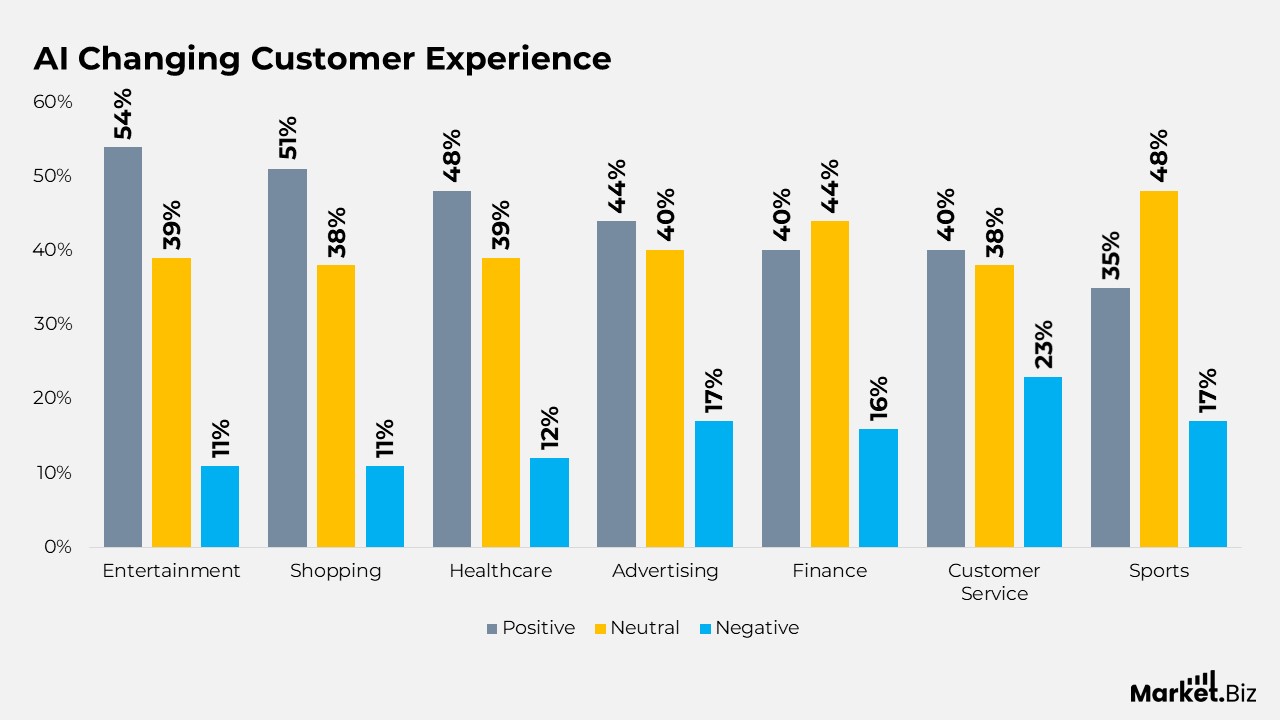
- Gartner indicates that 40% of businesses have experienced a privacy breach associated with AI, highlighting the necessity of robust security measures when utilizing AI technology.
- A survey conducted by the International Association of Privacy Professionals revealed that 57% of individuals globally perceive AI’s involvement in the collection and processing of personal data as a significant threat to their privacy.
- According to Online Privacy Statistics, 70% of adults in the U.S. express a need for greater assurance regarding companies’ capacity to employ AI in a responsible manner.
- Additionally, a study by Cisco discovered that 91% of organizations acknowledge the need to enhance efforts to reassure customers about the usage of their data in conjunction with AI.
- This concern is particularly pressing as 48% of organizations are inputting sensitive corporate information into Generative AI (GenAI) applications, which raises significant privacy concerns.
User Concern Internet Privacy Statistics
- In 2022, 63% of internet users worldwide expressed concerns about the potential theft of their identity.
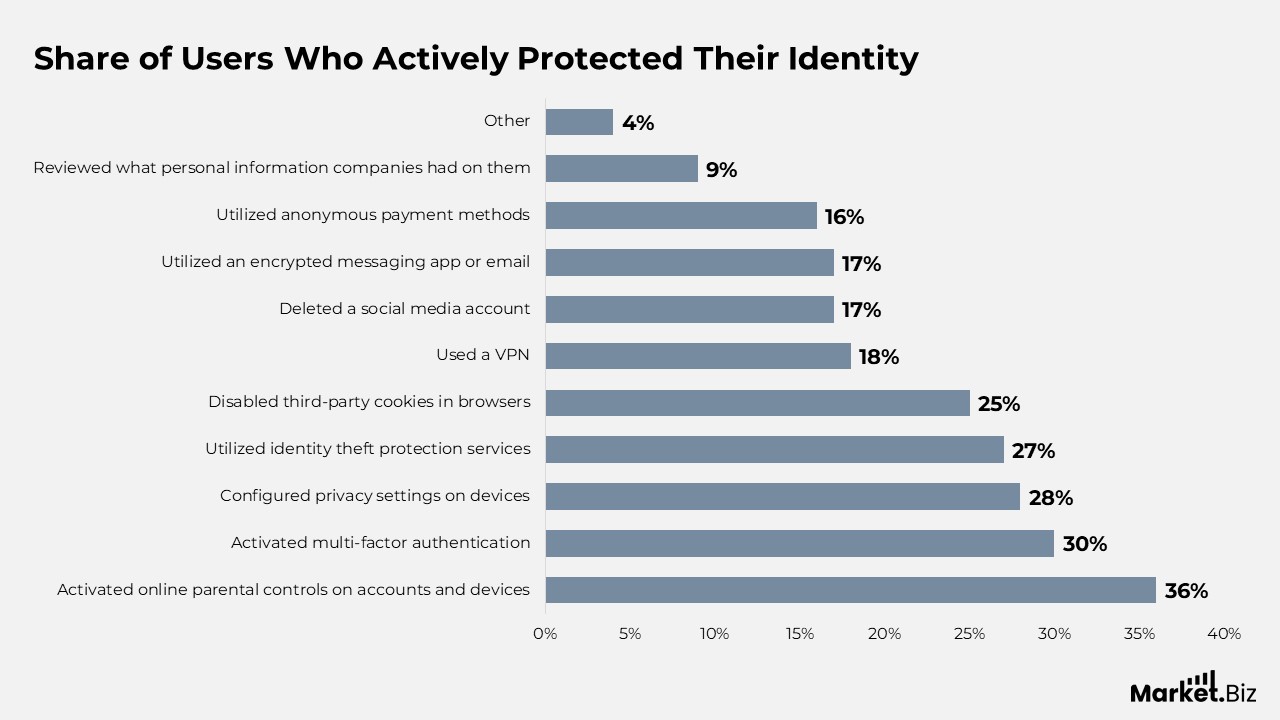
- Additionally, 30% of global internet users took no measures to safeguard their online activities or personal information during the same year.
- In 2021, 63% of users reported a lack of trust in the internet.
- Only 60% of users admitted to having trust in the internet, which indicates an 11% decline from 74% in 2019. Notably, Japan was the only country to experience a 7% increase in trust towards the internet.
- In 2021, 79% of internet users were apprehensive about their online privacy.
- By 2022, 63% of global online users were prepared to sacrifice their internet privacy for the sake of convenience.
- Furthermore, 83% of internet users worldwide in 2022 expressed a willingness to take additional steps to enhance their online privacy.
- In 2021, 34% of adults believed that it was probable their online accounts would be compromised.
- Lastly, 72% of American internet users in 2021 felt that technology companies exerted excessive control over their personal data.
Internet Privacy Regulations & Fines Statistics
- In 2023, it is anticipated that 65% of the global population will have their data safeguarded by contemporary privacy regulations.
- In 2020, merely 10% of the global population had their data secured under existing privacy laws.
- Forecasts indicate a 55% increase in the number of individuals protected by modern privacy regulations in 2023.
- In 2021, 71% of privacy professionals acknowledged that their security firms transferred EU data to countries outside the EU for processing purposes.
- In 2021, 45% of marketers reported difficulties in reconciling data privacy laws with the need for personalization.
- In 2021, 43% of users expressed that the Internet was significantly lacking in governance.
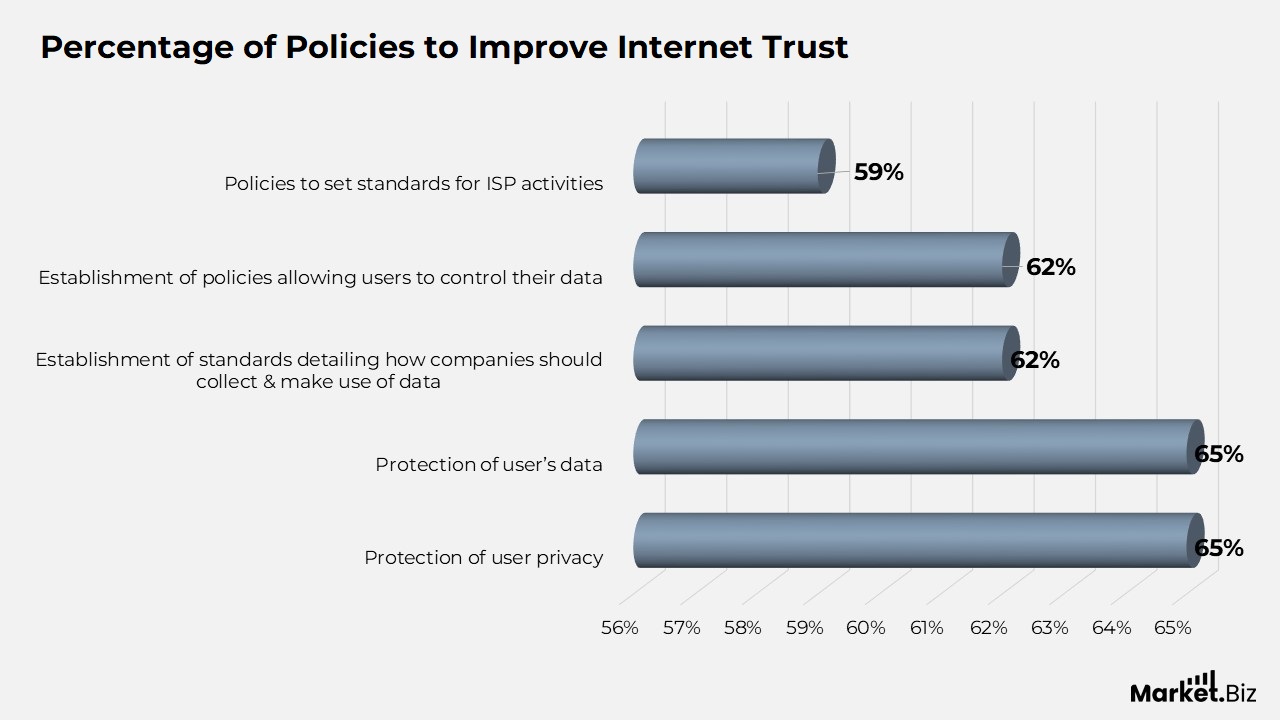
- In 2021, 65% of users believed that enhancing user privacy would foster greater trust in the Internet.
Internet Privacy Recent Development
- In 2025, internet privacy experienced significant changes, as India implemented its Digital Personal Data Protection (DPDP) Rules, 2025, in November, creating a robust data framework centred on citizens.
- Meanwhile, the United States witnessed a rise in state-level legislation and a continued emphasis on AI governance, cross-border data transfer, and more stringent consent protocols for cookies and online data collection worldwide.
- Surveys conducted in 2022 indicated that approximately 80% of the public expressed considerable concern regarding data privacy, with many individuals indicating a willingness to change companies due to inadequate data practices. Although a substantial number also reported feeling powerless.
Conclusion
Online privacy presents a complex challenge that encompasses data breaches, cybersecurity risks, governmental surveillance, online tracking, and social media behaviours, all of which provoke significant concerns. As awareness of these issues grows, an increasing number of individuals are turning to privacy-enhancing tools.
Nevertheless, many still favour convenience over privacy, leading to necessary compromises. Legislation such as GDPR and CCPA represent significant advancements, yet as technology evolves, continuous efforts are required to adapt to new regulations.
Different nations exhibit diverse privacy practices, and we may witness emerging trends in decentralised technologies and AI that prioritise privacy in the future. It is essential to strike a balance between the advantages of connectivity and the safeguarding of personal information to create a secure and privacy-respecting online environment for all.
FAQ’s
Internet privacy holds great significance as it empowers individuals to maintain control over their identity and personal data. In the absence of such control, anyone with the intent and capability can exploit your identity for their own purposes, whether that involves marketing a more costly vacation or misappropriating your funds.
The primary objective of privacy pertains to an individual’s capacity to decide when, how, and for what reasons their personal information is utilized by others. Safeguarding privacy is essential for upholding human dignity, security, and self-governance. It enables individuals to cultivate their own identity freely.
Examples of threats to data privacy encompass identity theft, data breaches, online surveillance, phishing schemes, and social engineering tactics.