









Introduction
Career Change and Reskilling Statistics: Understanding that technological advancement and industry demands are shifting rapidly, career transitions and reskilling are now identified as one of the co-develops for professional development. The AI sector is projected to employ 2.3 million people in India by 2027, with projected talent pool levels increasing only to 1.2 million. It certainly makes sense to reskill over 1 million workers.
The key understanding here is that the individual will own any new skills that they need to stay current in a vast and ever-evolving job market world. 55% of workers feel pressured to upskill within the next five years, with only a 31% global average. This active push is important in conjunction to the understanding of skill based hiring, that organisations will increasingly move to wanting a notion of skills versus just degree qualifications.
In the world of AI and sustainability jobs, it is often the specific jobs and competencies required that transcend formal qualifications. In light of all this, we need to pledge to lifetime learning and successfully navigate through future career transition and reskills.
Editor’s Choice
- 70 percent of US workers have changed or thought about changing careers in 2024.
- 44 percent of workers will see their skills disrupted by AI in five years.
- By 2033, it’s projected to reach USD 104.4 billion at a CAGR of 2.97%.
- The worldwide IT training market reached USD 80 billion in 2024.
- 39% of workers in the UK reported job satisfaction as their primary reason for seeking a new role.
- 17% of workers change careers to better align with their own values of the organisations they work for.
- 66% of global respondents agree that working from home should be a legally protected right.
- The percentage of remote jobs in the US increased from 10% in Q1 2023 to 15% in Q4 2024.
- Education is estimated to be one of the top three industries creating new jobs within the next few years.
- By 2030, almost 60% of workers will need to upskill to accommodate heightened job demands.
- 36% say the potential loss/change in health insurance is a concern if they want to leave their current role.
General Career Change and Reskilling Statistics
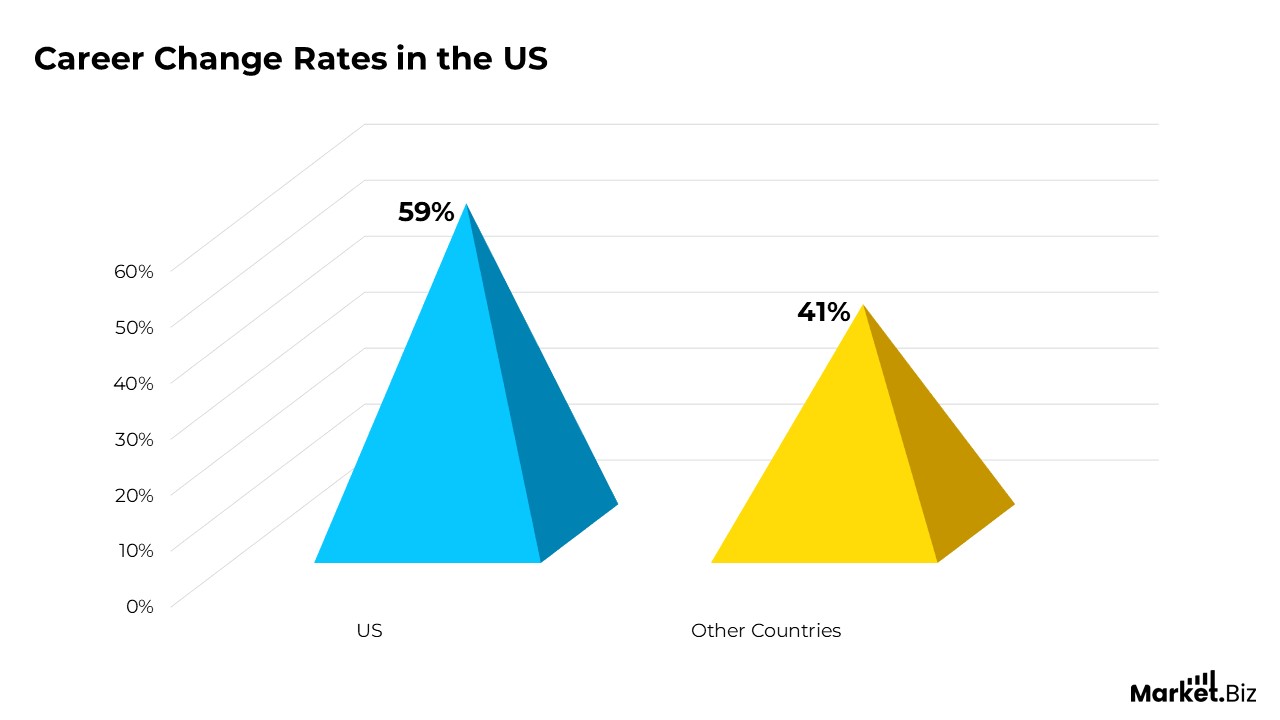
- On average, professionals will hold 12 different jobs throughout their careers. In 2024, 59% of US professionals were actively looking for new jobs, which shows movement is alive and well in careers.
- Also, 32% of Americans ages 25-44 thought about changing careers in the past year. This is a sign that younger professionals want to try new careers.
- 70 percent of US workers have changed or thought about changing careers in 2024. This represents a substantial change in how the workforce is thinking about developing their careers.
- The average job tenure in the US dropped to 3.9 years as of January 2024, the lowest it has ever been since 2002. Job mobility is obviously changing.
- A study of future labor and other changes by 2030 will see 70% of the skills needed for current jobs change with the adoption of AI and automation. This expresses a need for learning and the importance of adaptability.
- 44 percent of workers will see their skills disrupted by AI in five years. The time is now for initiatives to upskill and reskill.
- The world economic forum has a goal to reskill 1 billion people worldwide by 2030. Their efforts are to create a workforce equipped with future ready skills.
Moreover
- 75 percent of HR leaders saw upskilling as a top priority in 2024, and 62% saw reskilling to fill skill gaps. This all represents a mind-set shift to develop talent internally.
- Transitioning to a green economy could generate 24 million new jobs globally by 2030. This opens possibility for career transition into sectors that are now becoming sustainable.
- In 2024, 57.65% of employees are planning on making a substantial career move, which indicates that a lot of employees are looking to go in a new direction.
- 83% of workers prefer work-life balance over pay. This change in priorities will affect career decisions and overall job satisfaction.
- A skills gap exist in the area of sustainability and digital skills, which could be critical to utilizing AI for environmental purposes. Two-third of executives reported a moderate-to- extreme skills gap in this area.
- Employers are increasingly using skills based hiring, particularly in AI and green jobs. This makes an assumption about skills rather than a qualification.
(Source: High5test, Wp-content)
Global Investment in IT Upskilling
- The worldwide IT training market reached USD 80 billion in 2024.
- By 2033, it’s projected to reach USD 104.4 billion at a CAGR of 2.97%.
- In 2024, companies spent an average of USD 774 per learner, down from USD 954 in 2023.
- 46% of organisations increased their training budgets in 2024.
- In 2024, learners received an average of 47 hours of training, 10 hours less than in 2023 when learners received and average of 57 hours.
- 78% of IT training hours were delivered online in 2024.
- Small organisations averaged USD 1,047 per learner on training, midsize organisations averaged USD 739 per learner, and large organisations averaged USD 398 per learner.
- 24% of all training hours in 2024 were delivered in blended doormats.
- Virtual instructor-led sessions and webcasts accounted for 27% of total training hours.
- Organisations spent 37% of their training budgets on non-exempt staff in 2024.
Motivations behind Career Changes
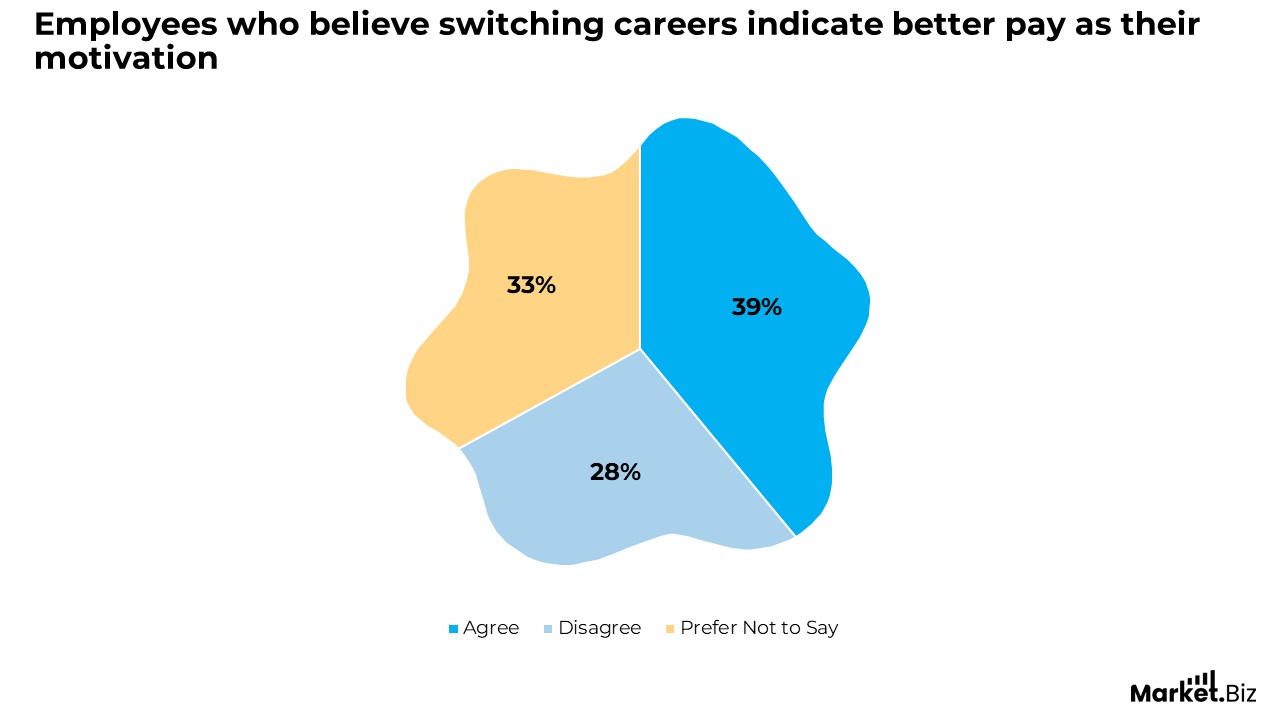
- 39% of people who have thought about switching their careers indicate better pay as their motivation for switching.
- Around 33% of workers in the UK cite wanting a achieve s better work-life balance as their reason for looking for a new job.
- 39% of workers in the UK reported job satisfaction as their primary reason for seeking a new role.
- 30% of professionals will change careers based on needing new challenges, opportunities, or to learn new skills.
- 25% of workers have reported changing jobs because of poor leadership or management.
- 17% of workers change careers to better align with their own values of the organisations they work for.
- 21% of workers will switch jobs because they feel their work contribution and achievements are not being recognised.
- 68% of Gen Z’s and 61% of millennials report feeling burnt out, triggering consideration of new job opportunities.
- Many workers choose to initiate their careers by seeking a career change to start their own business, due to their interests and need for autonomy.
- A desire for more stable work follows the concern over the impact of AI and automation on jobs, and thus leads workers to consider different and more reliable careers.
- Some people change their careers to pursue their careers based on intrinsic motivations like passion or interests.
- 41% of workers consider flexible arrangements above all else in their pursuits of changing careers.
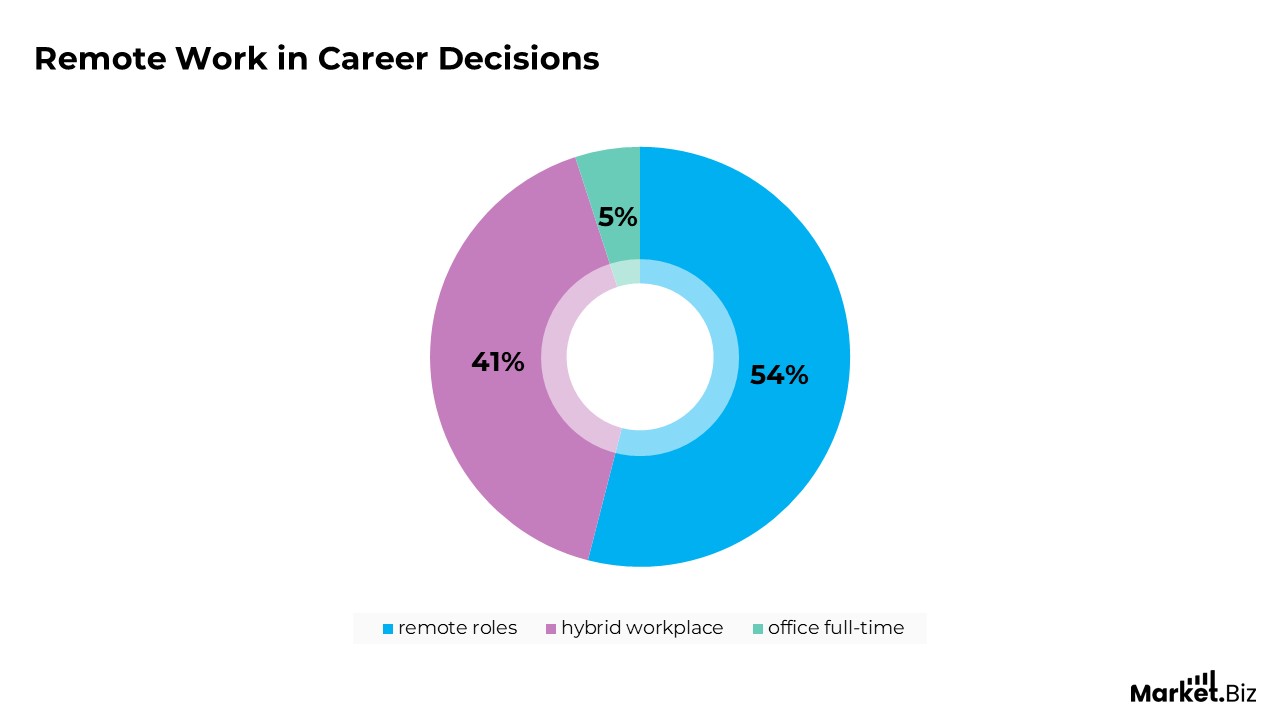
Remote Work in Career Decisions
- 54% of employees want fully remote roles, 41% want a hybrid workplace, and 5% want to work in an office full-time.
- Almost two-third of employees consider remote work to be the most important part of a job, and they even value it higher than salary and work-life balance.
- 98% of remote workers would want to work remotely for the rest of their careers, and they would recommend to anyone remote work.
- 66% of global respondents agree that working from home should be a legally protected right.
- If the option to work remotely were taken away, 31% of workers would start looking for a new job, and a further 6% would quit.
- In the UK, 42% of workers said they would work in an office full-time if they were required to do so, compared to 54% in early 2022.
- The resistance to working in an office full time is more pronounced for women (64% would comply) and employers of parents.
- In Australia, 74% of employers think office presence plays a huge role in whether you get a promotion.
- There are currently 22,000,000 employed adults in the US working 100% from home, roughly 14% of the adult’s workforce.
- In 2025, estimated that there will be 32.6 million fully remote workers in the US.
- The percentage of remote jobs in the US increased from 10% in Q1 2023 to 15% in Q4 2024.
- The percentage of hybrid job postings in the US increased from 9% in Q1 2023 to 23% by the end of 2024.
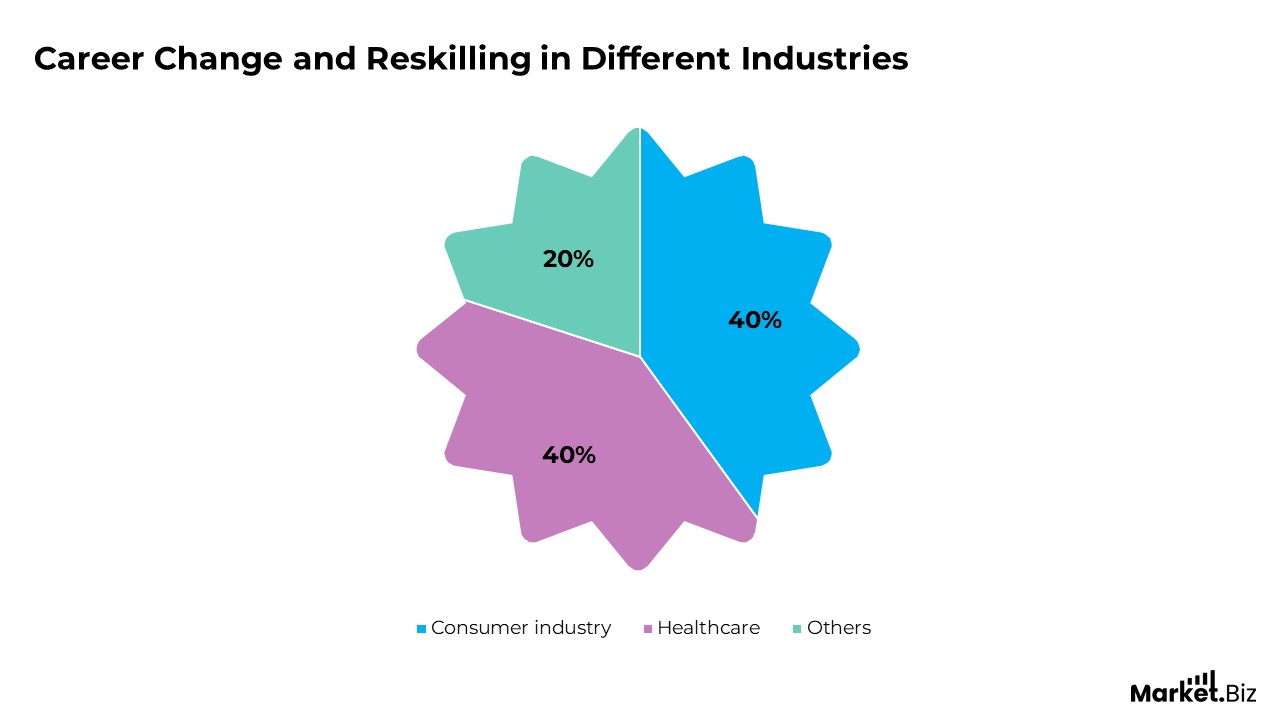
Career Change and Reskilling in Different Industries
- Approximately 40% of consumer industry workers will need to reskill in six months on led, given the shift in responsibilities.
- A little more than 40% of healthcare players will need reskilling in 6 months or less based on emerging digital applications and processes.
- Only about 30% of finance players can reskill in 6 months or less, indicating a deeper burden of change compared to other industries.
- An estimated 30% of energy industry workers will reskill every 6 months or less as the number of clean tech roles continues to grow.
- By 2027, almost one in five (23%) of the jobs in the world will change as a consequences of AI and green energy, prompting major reskilling efforts.
- 42% of the physical labor and manual tasks in manufacturing are estimated to be automated by 2027, which creates new requirements for skills.
- AI and the green energy changes are expected to create 69 million new jobs by 2027, which creates new job paths.
- Education is estimated to be one of the top three industries creating new jobs within the next few years.
- Agriculture is also expected to be a leading source of new jobs because of agricultural technology (ag-tech) and sustainability initiatives.
- Digital commerce has the potential to grow globally by 2027 since online retail and platforms are increasingly internationally.
- At 50%, half or all workers globally will have competed at least one reskilling program or upskilling program in 2025, up from 41% in 2023.
Impact of Reskilling Programs
- 22% of the jobs around the world are expected to change in the next five years because of technology, green job shifts, and demographics.
- 39% of critical job skills are projected to change by 2030, reinforcing the speed of evolution in skills needs.
- By 2030, almost 60% of workers will need to upskill to accommodate heightened job demands.
- In 2025, 44% of employees will need to reskill ot upskill to remain employable.
- The WEG’s reskilling revolution has engaged over 716 million people through January 2025.
- The initiative aims to engage 1 billion people with skills by 2030.
- 75% of HR leaders are reporting that upskilling is their top tactic to close skills gaps in 2024.
- 62% of HR leaders are going to be employing reskilling programs to attempt to reduce skills shortages in the business.
- 43% of companies are going to be engaging in investment in reskilling, as employees shift to different roles.
- Unfortunately, despite the reskill, 58% of companies plan to hire from outside the company for open roles.
- The reskilling revolution is now engaging 350 companies and 20 country accelerators globally.
- Over half of the activities are in preparation for green and digital jobs.
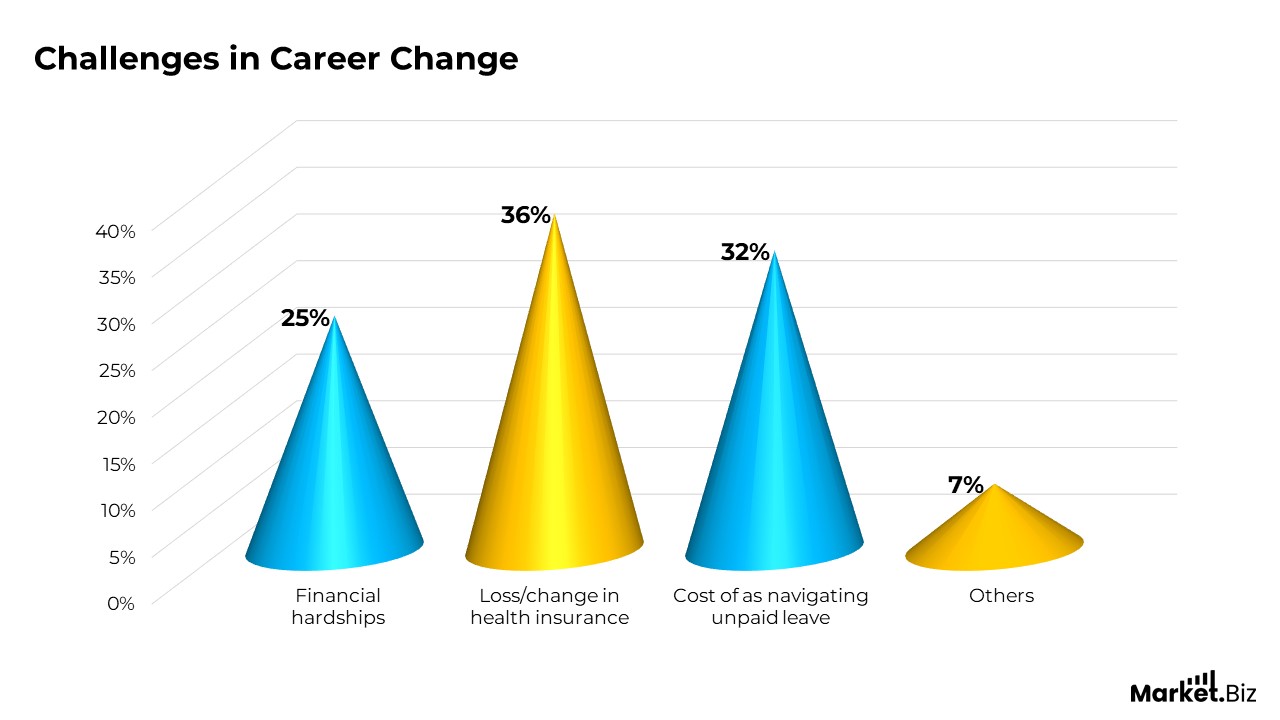
Challenges in Career Change
- Financial hardships are keeping 25% of workers from changing jobs in the last five years.
- 36% say the potential loss/change in health insurance is a concern if they want to leave their current role.
- 32% use the cost of as navigating unpaid leave when job searching and interviewing, to be a significant hurdle.
- 30% say they would have switched careers, but the price of upskilling/reskilling programs is prohibited to explore.
- 57% of low-income workers indicated that money challenges have made it more challenging to pursue a new role.
- 30% of workers under $40k salary indicated that travel to interviews is limiting them.
- 40% of $40k-$79k income earners indicated that the coverage gaps are a significant blocker.
- 19% of individuals with an income over $80k indicated they experienced financial barriers changing jobs.
- Only 24% of the global workforce feel they have the necessary skills to advance their career.
- 17% of workers believe that their company genuinely values the development of their skills.
- 9% of males feel satisfied with their employer’s upskilling opportunities.
- 7% of females feel satisfied that their employers have training that meets their needs.
AI’s Impact on Career Change and Reskilling
- 86% of employers believe that AI and data analytics will shape a fundamental transformation in the world of business by 2030.
- 58% of employers believe that we will see a new era of robotics and automation by 2030 which will rethinking approached to production and operational processes.
- 60% of employers believe that a greater number of people will have access to digital products and services, and this will change the business model, experience, and transaction.
- AI and data analysis are expected to generate 11 million new jobs by 2030. At the same time, AI and data will displace 9 million jobs over this period.
- Robot and automation processes will eliminate 5 million more jobs than the number of jobs created by 2030.
- 77% of employers believe that reskilling and upskilling their workers towards AI project activities is a core employee strategy for the next 7 years.
- The WEF reskilling revolution consists os a project that aspires to skill 1 billion people with new skills by 2030.
Conclusion
The high turnover of jobs right now demonstrates the urgent importance of career change and reskilling. With advances in AI and automation carving up industries, millions of workers are changing career paths or reskilling to remain competent. Global statistics show both organisations and employees are deciding to invest in growth as a way to close the skill gap.
Young professionals, in particular, are driving this paradigm shift in organisations through their strong desire for growth. Reskilling is not a short-term trend, it has established itself as a key ingredient to career success. Analytical career change and reskilling statistics helps professionals make informed choices for the future.
FAQs
Career changes are very common. Around 57% of employees intend to have a career change, and most people change jobs over 12 times in their professional lives.
Reskilling is important in 2025 because more than 40% of jobs and skills will change im the next few years as a result of AI or new technologies.
Most fast-growing industries like tech, green energy, or healthcare will require workers to reskill for new job roles, tools, etc.