









Introduction
Employee Loyalty Statistics: Employee loyalty is a critical metric for organizational success, directly impacting retention, productivity, and overall performance. Studies show that companies with high employee engagement experience 59% lower turnover rates and 21% higher profitability. In contrast, over 51% of workers are actively seeking or open to new job opportunities, reflecting shifting workplace dynamics.
Loyalty trends vary across demographics, with Millennials averaging 2.8 years in a role, compared to 4.1 years for Baby Boomers. As businesses adapt to hybrid models and prioritize employee experience, tracking loyalty statistics becomes essential for strategic workforce planning. These data points provide actionable insights for improving long-term employee commitment and reducing attrition costs.
Editor’s Choice
- Companies with high employee engagement see 59% lower turnover and 21% higher profitability, proving loyalty drives performance.
- 52% of employees are job-hunting or open to offers, underlining the urgency for retention-focused strategies.
- Millennials switch jobs every 2.8 years, compared to 4.1 years for Boomers, revealing a generational loyalty gap.
- Lack of career growth causes 63% of resignations, making advancement a critical loyalty factor.
- Poor management drives 50% of employees to quit, highlighting leadership quality as a retention cornerstone.
- Flexible work options improve loyalty—25% lower turnover is reported among companies with hybrid models.
- Remote work boosts loyalty by 22%, thanks to improved autonomy and work-life balance.
- Organizations with strong DEI programs achieve 27% greater retention among underrepresented groups.
- Recognition matters—employees who feel appreciated are 63% more likely to stay long-term.
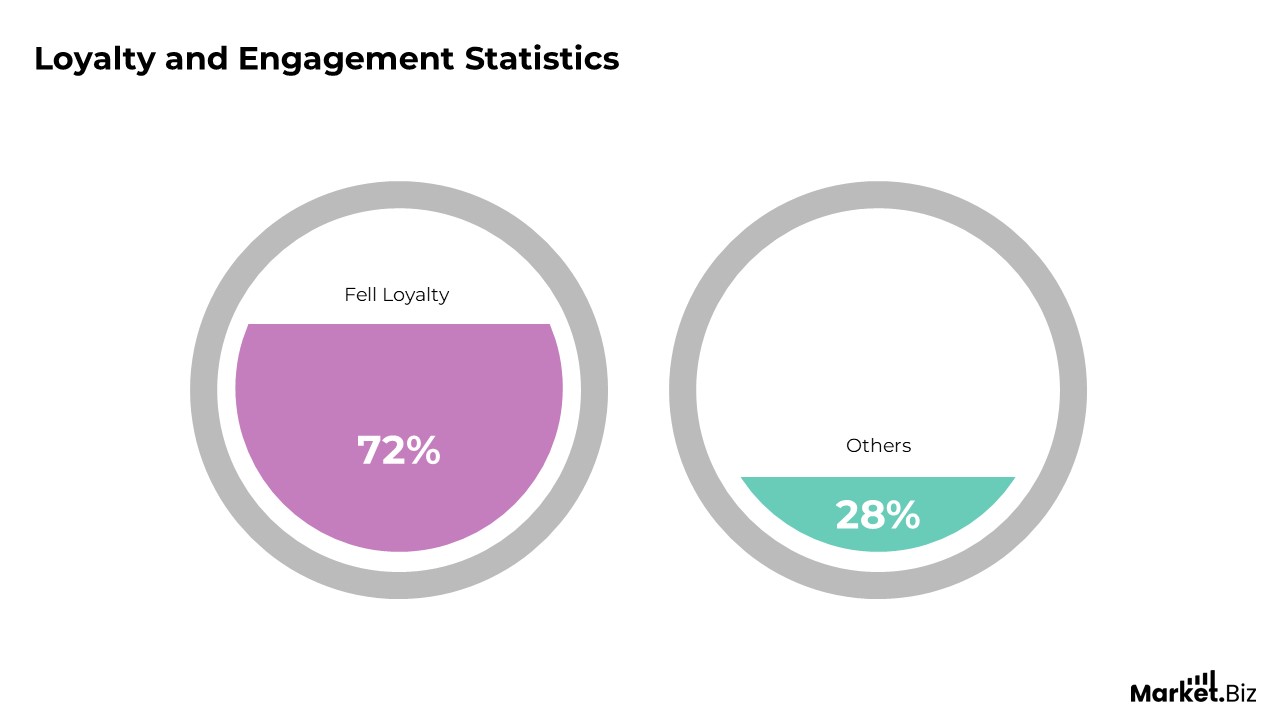
- Loyalty-building efforts like mentoring and internal mobility can increase retention by up to 72%.
- Technological tools like real-time feedback systems reduce disengagement-related exits by 23%.
- Loyal employees are 4x more likely to advocate for their employer, strengthening recruitment and brand image.
- High engagement leads to 87% lower attrition, linking emotional commitment directly with loyalty outcomes.
- Companies investing in loyalty strategies save on rehiring, with turnover costs averaging 33% of annual salary.
General Employee Loyalty Statistics
- Nearly 52% of employees are actively or passively looking for new jobs, highlighting the need for stronger loyalty-building strategies.
- Companies with engaged employees report 59% less turnover, proving a strong link between engagement and loyalty.
- Millennials change jobs every 2.8 years on average, making them the least loyal generation in the workforce.
- Organizations with high employee satisfaction scores see up to 50% more employee loyalty over five years.
- The average cost of replacing a loyal employee is 33% of their annual salary, emphasizing the value of retention.
- 70% of the variance in team engagement is attributed to management quality, directly affecting employee loyalty.
- Employees who feel recognized are 63% more likely to stay with their current employer long-term.
- Over 87% of HR professionals agree that improving employee loyalty reduces recruitment costs significantly.
- Companies offering career development opportunities see 34% higher loyalty rates than those that don’t.
- Only 25% of employees strongly agree their organization is loyal to them, creating a potential trust gap.
- A positive work culture increases employee loyalty by up to 37%, particularly in collaborative environments.
- Remote workers report 22% higher loyalty scores due to better work-life balance and autonomy.
- More than 60% of Gen Z workers say they would leave a job within two years if it lacks purpose or alignment with their values.
- Firms with strong diversity, equity, and inclusion (DEI) programs report 27% greater retention among underrepresented groups.
- Employee Net Promoter Scores (ENPS) above +10 are linked with high loyalty and low attrition across all sectors.
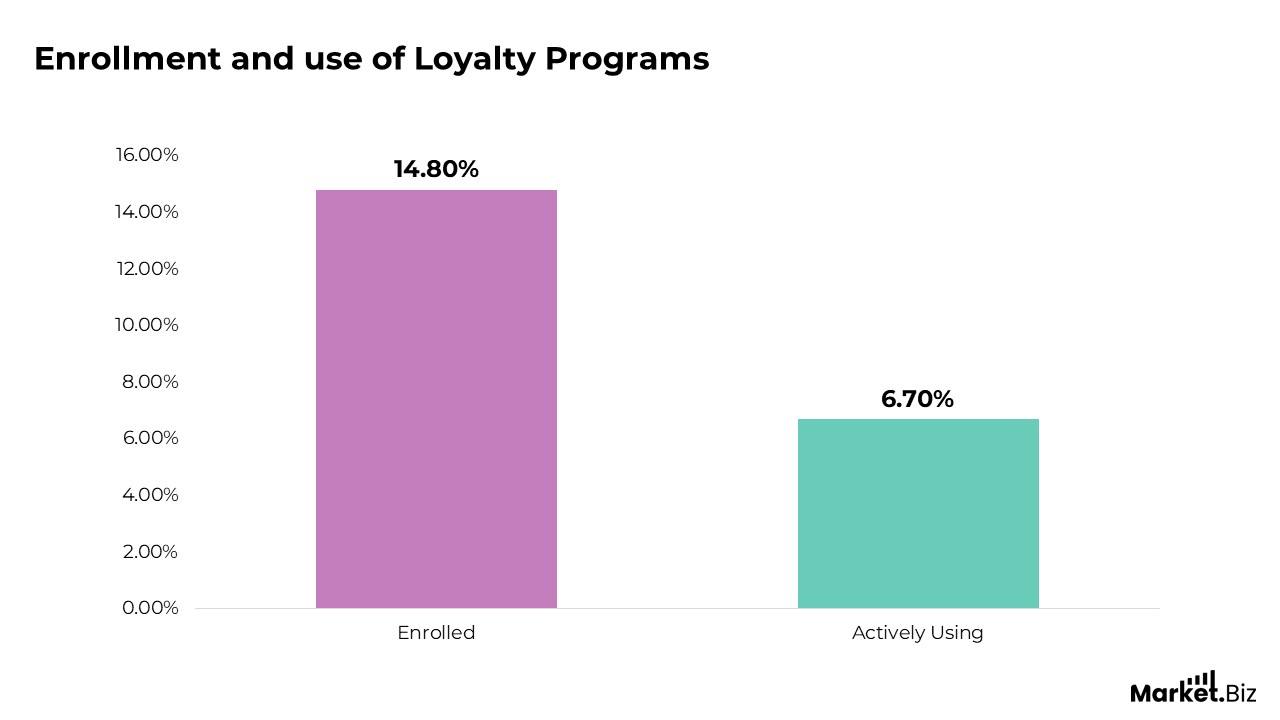
(Source: zippia, WP-Content)
Importance of Employee Loyalty
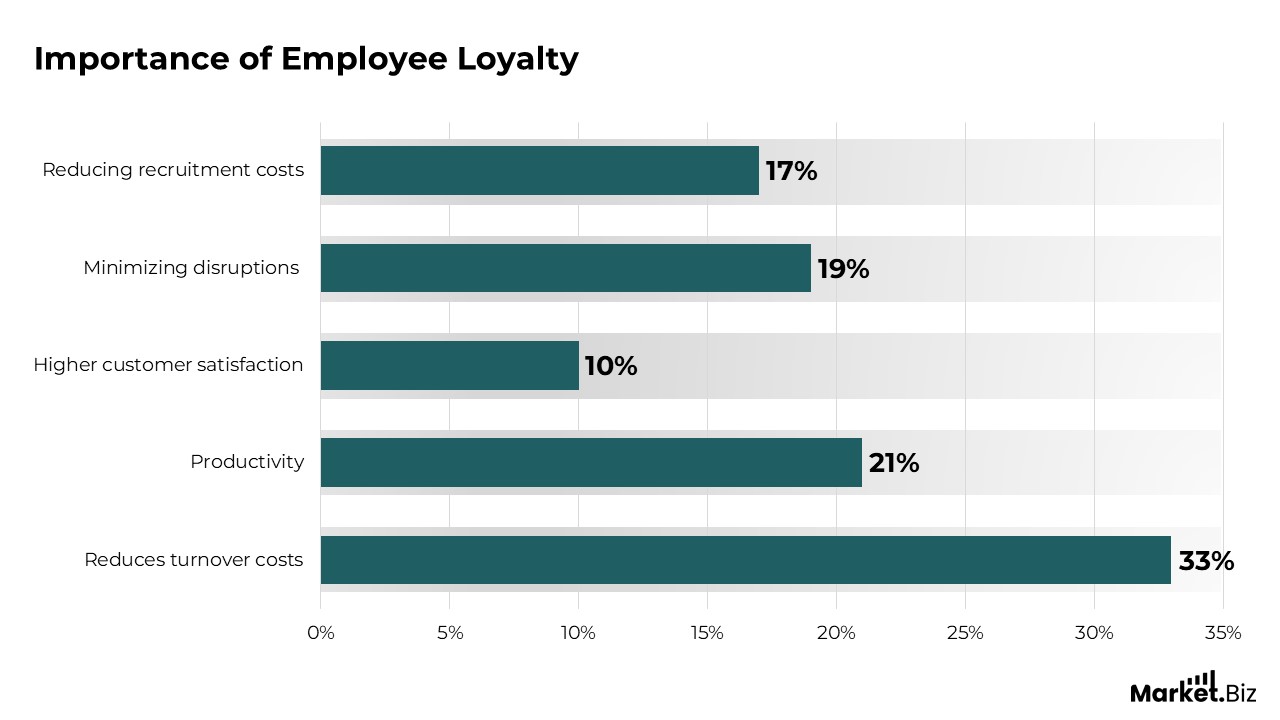
- Employee loyalty reduces turnover costs, which average 33% of an employee’s annual salary, saving organizations thousands per exit.
- Loyal employees are 21% more productive, contributing to overall business efficiency and competitive advantage.
- Companies with high employee loyalty enjoy up to 10% higher customer satisfaction, due to better service continuity.
- Long-tenured employees bring institutional knowledge that reduces training time and enhances workflow consistency.
- High loyalty correlates with 19% lower absenteeism, minimizing disruptions and improving team performance.
- Employee loyalty strengthens employer branding, attracting top talent and reducing recruitment costs by up to 50%.
- Engaged and loyal teams drive 23% higher profitability by improving output, innovation, and collaboration.
- Organizations with loyal employees experience lower rates of workplace conflict, fostering healthier work environments.
- Loyal employees are 4x more likely to advocate for their organization, enhancing public perception and referrals.
- Retention improves by 34% when companies invest in loyalty-building efforts like recognition, growth, and transparency.
- Consistent employee presence leads to better customer relationships, particularly in client-facing industries.
- Loyalty leads to faster recovery from organizational disruptions, such as restructures or economic downturns.
- A loyal workforce contributes to long-term business sustainability, aligning with strategic goals and minimizing volatility.
Loyalty and Engagement Statistics
- Highly engaged employees are 87% less likely to leave their organizations, making engagement a powerful predictor of loyalty.
- Teams with high engagement levels show a 21% increase in profitability and 17% boost in productivity, strengthening overall retention.
- Gallup reports that only 33% of U.S. employees are actively engaged at work, leaving a large gap in potential loyalty.
- Companies that regularly survey employee engagement see a 19% improvement in retention rates year-over-year.
- Engagement and loyalty are strongly correlated, with loyal employees being 5x more likely to be emotionally committed to their role.
- Workplaces with effective communication practices have 47% higher engagement, translating to significantly stronger loyalty outcomes.
- Employees who receive daily feedback are 3.6x more engaged, and consequently more loyal to their managers and organizations.
- Organizations with inclusive cultures show 35% higher employee engagement, which directly boosts loyalty across diverse groups.
- Only 15% of global employees are engaged at work, suggesting that companies are underleveraging engagement as a loyalty driver.
- A study found that loyalty increases by 26% when engagement initiatives are aligned with employee values and goals.
- Engaged employees are 2.3x more likely to say they will still be with the company in two years compared to disengaged peers.
- Companies that invest in engagement tools and programs report a 24% reduction in employee turnover, reflecting a strong return on investment.
(Source: Buttercms)
Common Reasons Employees Quit
Internal Workplace Factors
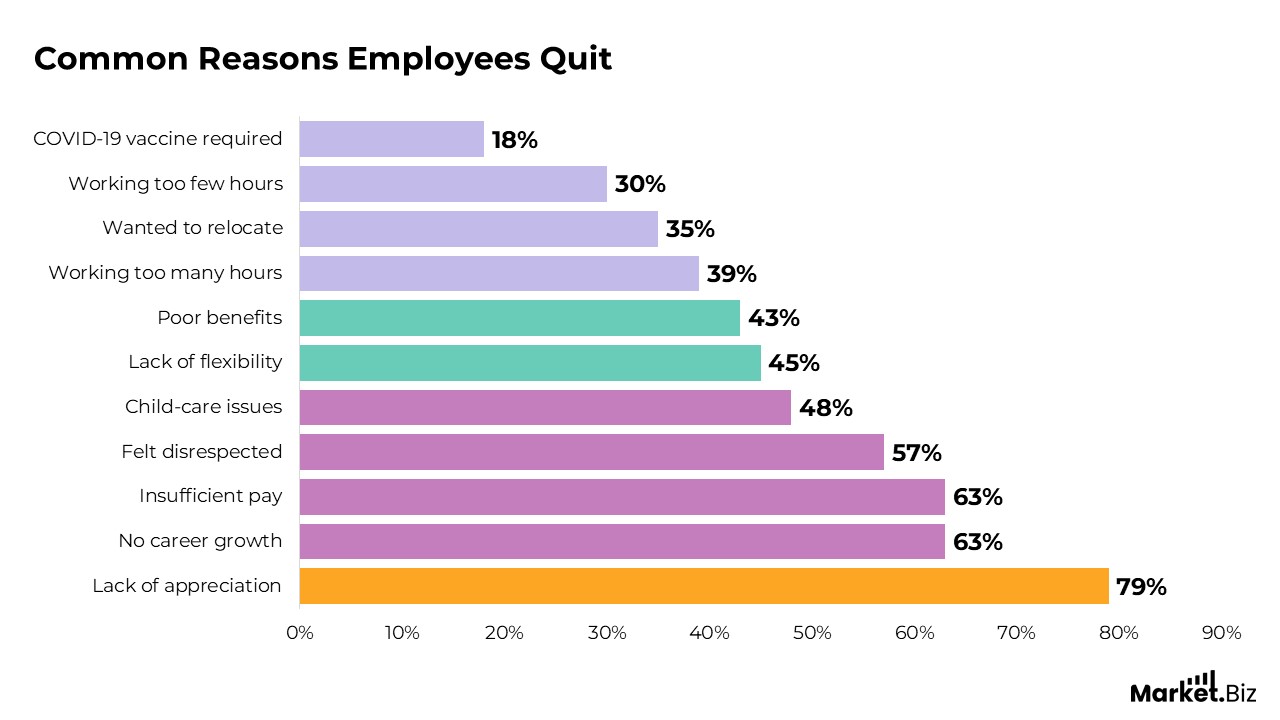
- Limited Career Growth – Around 63% of employees cite lack of advancement as their top reason for leaving.
- Poor Management – Nearly 50% of workers say they’ve quit a job to escape a bad boss.
- Toxic Work Culture – Toxicity in the workplace drives 62% of voluntary resignations, according to MIT Sloan.
- Lack of Recognition – Employees who don’t feel appreciated are 2x more likely to leave within a year.
- Unclear Role Expectations – 27% of employees report quitting due to confusion or shifting job responsibilities.
- Work-Life Imbalance – 39% of employees say burnout or excessive hours led them to resign.
- Insufficient Training – Lack of skill development opportunities drives 40% of turnover in early-career roles.
- Micromanagement – Constant oversight reduces autonomy and leads to early exits, particularly among Gen Z.
- Poor Workplace Communication – Teams with ineffective communication are 4.5x more likely to experience high turnover.
- Job Insecurity – Fear of layoffs or unstable company performance pushes employees to seek safer roles.
External and Structural Factors
- Better Pay Elsewhere – 37% of employees leave their roles primarily for higher compensation.
- Lack of Remote or Hybrid Options – 54% of professionals would leave if flexible work isn’t offered.
- Limited Benefits – Inadequate health coverage and PTO are key factors in employee dissatisfaction and turnover.
- Commute Stress – 23% of workers consider quitting due to long or costly commutes, especially in urban areas.
- Mismatch with Company Values – Over 60% of Gen Z employees leave when their values don’t align with the company’s.
- Outdated Technology or Tools – Frustration with inefficient systems contributes to employee disengagement and exits.
- No DEI Initiatives – Lack of diversity and inclusion programs influences decisions for 1 in 5 minority employees.
- Recession-Proof Roles – During economic uncertainty, workers pivot to more stable industries or government jobs.
- Attractive Job Market – In high-demand sectors, 34% of workers switch jobs for faster advancement.
- Global Relocation or Remote Work Opportunities – Employees often resign to pursue international or fully remote positions offering greater flexibility.
(Source: zippia, WP-Content)
Benefits of Employee Loyalty
- Loyal employees lower hiring expenses, with the average cost to replace a worker being 33% of their annual salary.
- Long-term employees are up to 21% more productive, thanks to their familiarity with processes and reduced onboarding needs.
- Companies with high employee loyalty report 10% higher customer ratings, due to service consistency and stronger relationships.
- Loyal employees contribute to a stable, positive workplace culture, increasing team morale and cohesion.
- Businesses with highly engaged and loyal employees see 23% greater profitability, according to Gallup.
- Long-tenured staff are more likely to contribute to innovation, having deeper institutional knowledge and commitment to company success.
- Loyal employees are more likely to stay and support the company during downturns or restructuring, minimizing disruption.
- Employee loyalty is linked to 41% lower absenteeism, leading to smoother operations and reduced productivity loss.
- Companies with high retention rates and loyalty enjoy a 50% boost in job application quality through positive word of mouth.
- Loyal workers are 4x more likely to recommend their company to others, helping attract top talent and improve reputation.
Strategies to Build Employee Loyalty
- 79% of employees say competitive pay is a top factor in job satisfaction—benchmark salaries against industry standards to retain talent.
- Companies with strong internal mobility retain employees nearly 2x longer, according to LinkedIn’s Workforce Learning Report.
- A Gallup study shows teams with engaged cultures see 21% greater profitability—culture drives loyalty more than perks.
- 70% of employees say morale and motivation would improve with increased recognition; structured reward systems foster long-term commitment.
- Organizations offering flexible schedules report 25% lower turnover, reinforcing that balance builds trust and loyalty.
- Teams with open communication are 4.5x more likely to retain top performers, emphasizing the role of transparency in retention.
- Employees who find purpose in their roles are 3x more likely to stay—align roles with mission-driven tasks.
- Bad management is the #1 cause of turnover; equipping leaders with emotional intelligence reduces attrition by up to 32%.
- Personalized benefits (e.g., mental health support, remote options) increase retention by 22%, especially among Gen Z and Millennials.
- Companies with regular feedback mechanisms see 14.9% lower turnover—two-way feedback empowers and retains employees.
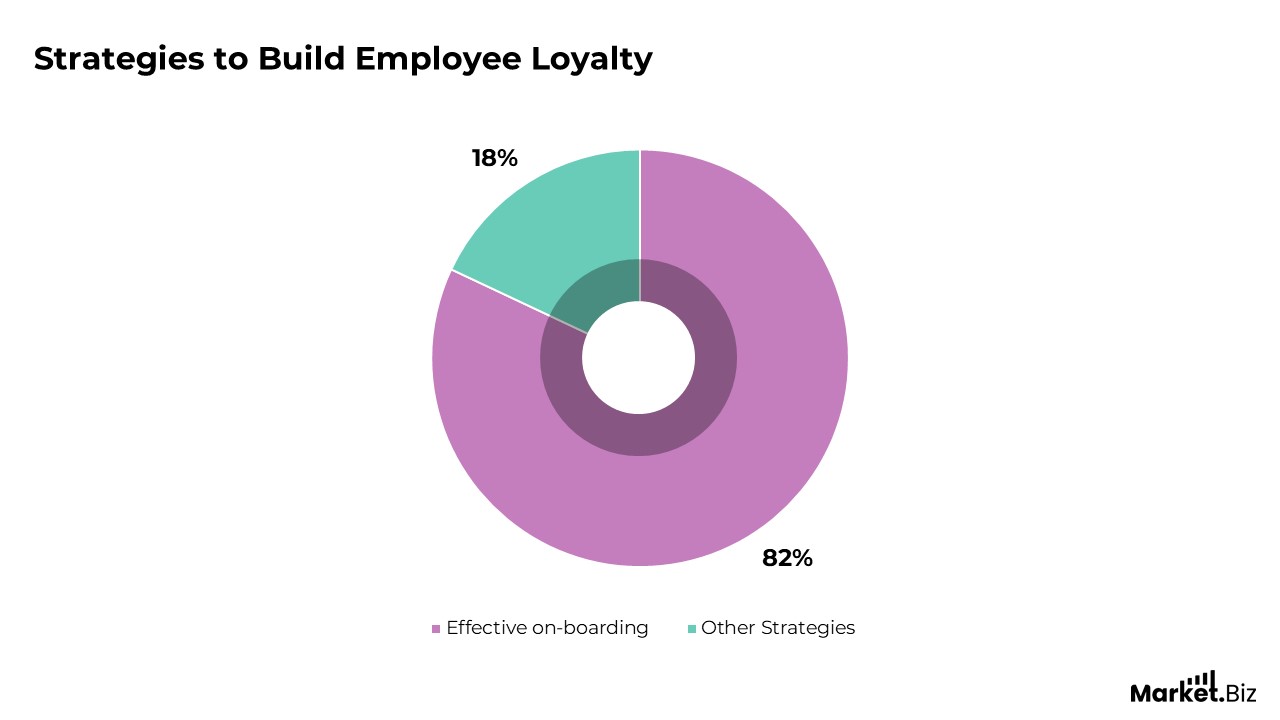
- Effective onboarding boosts new hire retention by 82%, setting loyalty foundations from day one.
- Digital recognition tools can boost employee engagement scores by up to 60%, driving long-term loyalty.
- Unlike exit interviews, stay interviews help identify loyalty drivers proactively—used quarterly, they cut attrition by 20%.
Management in Fostering Loyalty
Leadership Behaviours That Drive Loyalty
- Managers who show empathy increase employee retention by 40%, as emotional connection enhances loyalty.
- 58% of employees say trust in leadership directly affects their desire to stay—trust-building is foundational.
- Transparent decision-making processes lead to 30% higher engagement, directly boosting loyalty levels.
- Leaders who promote autonomy improve team retention by 20%, as autonomy is linked to job satisfaction.
- Active listening by managers improves employee morale, reducing turnover intent by 27%.
- Setting clear expectations and goals reduces ambiguity, which is a top driver of disengagement and churn.
- Leaders who consistently recognize efforts improve employee engagement by up to 60%.
- Coaching-style leadership correlates with 23% higher employee performance and retention.
- Managers who support mental health initiatives are seen as 2x more trustworthy, influencing loyalty.
- When leadership is aligned with company values, employees are 87% more likely to stay long-term.
Organizational Practices Led by Management
- Structured mentorship programs, driven by management, can increase retention by 72% among younger employees.
- Regular one-on-one check-ins reduce turnover risk by 39%, according to Harvard Business Review.
- Managers who implement flexible scheduling report 43% greater team satisfaction and loyalty.
- Promoting from within increases loyalty; internal promotions reduce attrition by up to 41%.
- Leadership-led DEI (Diversity, Equity, and Inclusion) initiatives improve retention rates by 33%, especially among minority employees.
- Managers driving cross-functional collaboration see 2x more innovation and stronger loyalty to teams.
- Encouraging knowledge-sharing and continuous learning increases engagement and loyalty by 29%.
- Performance reviews that are growth-focused rather than punitive improve employee loyalty by 26%.
- Management involvement in onboarding boosts new hire success and loyalty by up to 82%.
- Data-driven leadership decisions—using pulse surveys or analytics—can cut turnover by 22% through proactive engagement.
Challenges in Maintaining Loyalty
Factors Impacting Loyalty
- Limited career advancement opportunities are a key loyalty risk—45% of employees leave due to stagnant roles.
- Inadequate recognition programs contribute to disengagement, with 63% of workers feeling underappreciated.
- Poor leadership remains a top issue; 50% of employees quit to escape ineffective or toxic managers.
- Employees working under high stress and low support are 2.6x more likely to actively seek other jobs.
- Lack of transparent communication results in 23% lower engagement, weakening loyalty across teams.
- Misalignment between company values and employee beliefs increases turnover risk by 29%.
- Inflexible workplace policies lower retention—43% of employees prefer hybrid or remote models for job satisfaction.
- Absence of employee feedback loops causes 30% lower trust in leadership, impacting retention.
- Failure to invest in reskilling leads to job insecurity—70% of employees want continuous learning access.
- Outdated technology and rigid systems frustrate employees, with 34% citing this as a key retention issue.
Pressures and Cultural Shifts
- Competitive job markets raise attrition risks—64% of workers are open to new roles even if not actively job hunting.
- Economic uncertainty drives fear of layoffs, affecting loyalty; 42% of employees value job stability above benefits.
- Rising expectations for DEI initiatives highlight a challenge—lack of inclusion increases turnover by 2.5x.
- Toxic workplace culture is 10.4x more predictive of attrition than compensation, per MIT Sloan research.
- Younger workers prioritize purpose; 60% of Gen Z employees will leave if they lack meaning in their work.
- Pay transparency gaps damage trust—41% of employees suspect pay inequity within their teams.
- Negative employer branding online leads to 50% lower job application rates, harming both retention and recruitment.
- Mental health neglect reduces employee loyalty—75% of employees expect mental wellness support from employers.
- Global talent mobility gives high performers more exit options, increasing voluntary attrition rates by 22%.
- Social media amplifies internal issues externally, creating reputation risks that impact employee retention.
Future Trends in Employee Loyalty
Impact of Remote Work
- 74% of employees say remote work makes them less likely to leave their jobs, indicating a strong correlation with loyalty.
- Companies offering hybrid work models report a 25% increase in retention, showing flexibility as a loyalty driver.
- Remote work reduces commute-related stress, which contributes to 22% higher job satisfaction and lower turnover.
- 60% of remote employees feel more productive, fostering a deeper sense of trust and commitment to the organization.
- Lack of in-person interaction in remote settings can decrease team cohesion, with 35% of workers reporting weaker emotional ties.
- Organizations with remote-first cultures are 2.5x more likely to retain top digital talent over competitors with rigid structures.
- Work-from-anywhere policies are expected to grow by 93% by 2030, making geographic flexibility a core loyalty factor.
- Remote work expands talent pools but also increases competition, making employee engagement programs more critical than ever.
- Remote workers who receive regular check-ins are 3x more likely to remain with their company long-term.
- The absence of career visibility in remote settings leads to 21% lower perceived promotion opportunities, potentially impacting loyalty.
Technological Advancements
- AI-powered personalization in HR systems enhances employee experience, improving retention by up to 32%.
- Companies using predictive analytics to monitor disengagement reduce voluntary turnover by 20%.
- Automation tools free up time for strategic tasks, increasing job satisfaction and loyalty by 27%.
- Digital learning platforms boost upskilling and loyalty—70% of employees are more likely to stay when given growth tech.
- VR-based training improves engagement and knowledge retention, leading to 33% better onboarding satisfaction.
- AI Chatbots for internal support increase employee satisfaction by 18%, making them feel more supported and connected.
- Blockchain-enabled HR systems improve transparency in promotions and pay, reducing turnover caused by mistrust.
- Gamified employee engagement platforms can raise retention levels by up to 50%, especially among younger workers.
- Real-time feedback tools improve performance culture and reduce disengagement-driven exits by 23%.
- Integration of wellness tech (e.g., wearables and mental health apps) is linked to 26% higher employee loyalty, especially post-pandemic.
Conclusion
Employee loyalty has evolved into a strategic priority that directly influences organizational performance, stability, and growth. Companies that foster engagement and trust are more likely to retain talent and maintain a competitive edge. As generational preferences shift and workplace expectations diversify, strategies like flexible work arrangements, purpose-driven roles, and continuous learning are becoming essential.
Technological advancements, including AI-based feedback tools and wellness platforms, are reshaping how organizations build long-term commitment. Recognition, inclusive leadership, and transparent communication further strengthen loyalty across diverse teams. In today’s dynamic labour market, cultivating a loyalty-centric culture is critical to sustaining workforce resilience and operational excellence.
FAQs
Employee engagement is a critical driver of loyalty, with highly engaged employees being significantly less likely to leave their jobs. Companies with strong engagement initiatives see lower turnover rates and better overall performance.
Recognition plays a major role in fostering loyalty. Employees who feel valued and appreciated are more likely to remain with their employer, with recognition increasing retention and job satisfaction significantly.
Millennials tend to change jobs more frequently compared to Baby Boomers, with an average tenure of just under three years, reflecting a shift in workplace loyalty dynamics. This trend emphasizes the need for tailored retention strategies.
The cost of replacing a loyal employee can be significant, often reaching a third of their annual salary. This underscores the importance of investing in retention strategies to avoid costly turnover.
A positive and inclusive company culture increases loyalty, with employees in supportive environments reporting higher satisfaction and commitment. A strong workplace culture leads to improved team cohesion and long-term retention.