









Introduction
Employee Experience (EX) Statistics: Organisations are putting increased focus on employee experience, from engagement and retention to productivity and performance.
The 2023 Gallup report shows only 41% of employees say they are engaged in work, which is still a staggering 59% who are not engaged, including 18% are actively disengaged and cause a potential 8.8 trillion loss annually, almost 9% of the total world GDP! On the other hand, the 2024 Qualtrics Employee Experience Trends report shows 68% of employees globally are engaged in work, while the prices in the US are slightly higher at 73%.
Either statistics shows the importance of EX, in that we must help people to have a positive employee experience, not only for their benefits, but for the benefits of the organisations EX can lead to customer satisfaction, innovation and profits. It is going to be very important as the workplace continues to change, and the emphasis on employee experience has gone from benefit to must do.
Editor’s Choice
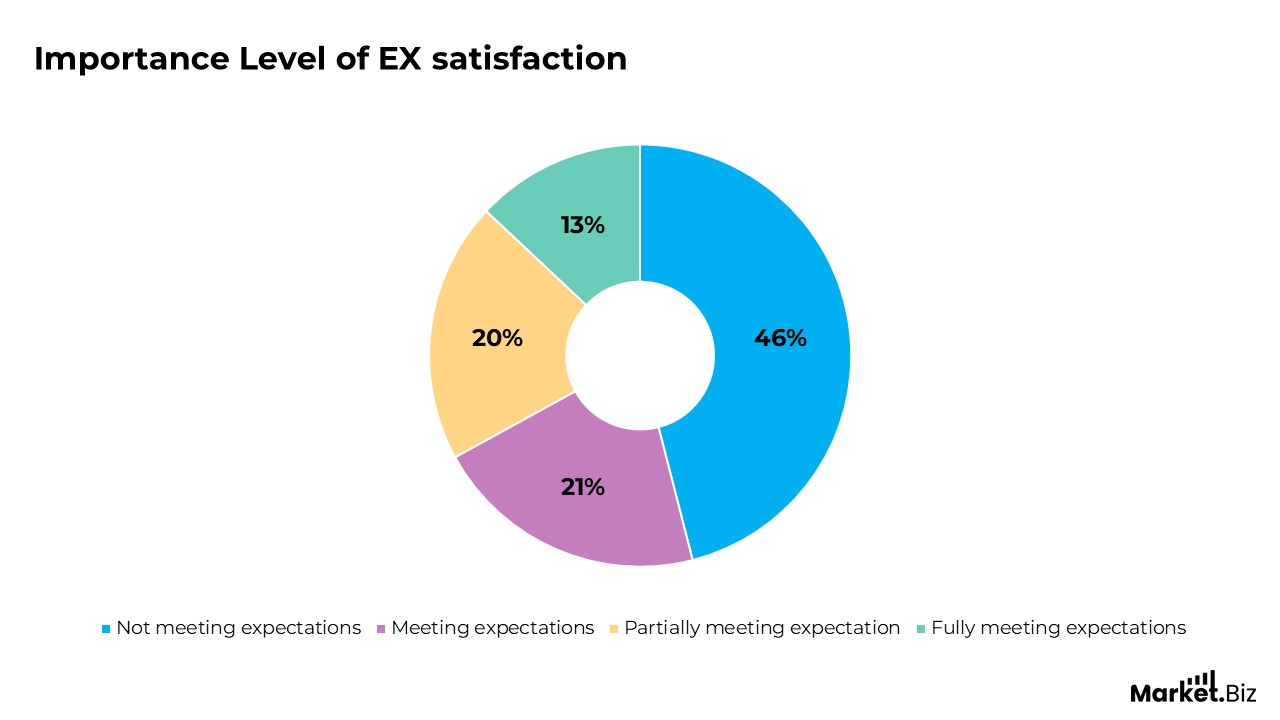
- The impact of employee engagement in the global atmosphere remains low at 23%, where only 13% of employees feels fully satisfied with their total experience.
- 77% of working professionals would consider a company’s culture before considering an offer.
- According to the reports by Gallup, lack of engagement costs $7.8 trillion dollars in revenue in the world economy.
- A slightest upgrade in employee experience can result in a 50% increase in overall revenue.
- Employee experience founders crossed the average S&P by 122%.
- In 2021, 92% of HR professionals prioritise employee experience, but only a 13% of employees believe or felt filly satisfied with their current organisations.
- Almost 50% of its US workforce choosing to stay remote even with limitations on promotions and role change for remote employees.
- According to 53% of employees, company roles that offers them to have a good work-life balance and better personal growth is very important to them.
What is employee experience?
Employee experience (EX) is the opinion of an employee’s entire career within an organization, from first application to the last. It includes all interactions and key points, including company culture, physical workspace, technology, and relationships. Basically, EX is how an employee feels about their work environment and their connections with the company.
Developing a positive employee experience is generally seen as a good advantage for organisations. A good experience always offers a positive linking to higher productivity and better organisation results and returns on investment.
General Employee Experience (EX) Statistics
- The impact of employee engagement in the global atmosphere remains low at 23%, where only 13% of employees feels fully satisfied with their total experience.
- Organisation with engaged employees experience a 41% reduction in absenteeism and a 17% increase in productivity.
- According to stats 77% of working professionals would consider a company’s culture before considering an offer.
- Around 59% of organisational executives stated their organisations are not ready or somewhat ready to talk about employee experience.
- According to Gallup’s findings, dis-engaged employees can cost companies between $450 to $550 billion annually in the United States.
- Approximately 59% of the world’s working population are somewhat dis-engaged, and 18% employeeemployee well-beings are actively dis-engaged.
- Researches stated that lack of engagement can cost the global economy up to US $8.8 trillion and accounts for 9% of the global GDP.
- According to studies, 67% of employees would prefer a hybrid work setup, trying to blending remote and in person work.
- Approximately 84% of employee experience professionals reported that supporting their employees’ preferences of working is a top priority for organisations.
Moreover
- Only 21% of working professionals involved in their own work and around 33% of working professionals are successful in their general well-being.
- According to the reports by Gallup, lack of engagement costs $7.8 trillion dollars in revenue in the world economy.
- Employees who resign their job within the first 6 months, would have stayed longer than that if 54% of their employees and 52% of their managers appreciates their contribution.
- A slightest upgrade in employee experience can result in a 50% increase in overall revenue.
- According to the recent data, 73% of HR recruiters thinks employee experience should be shared.
- According to 62% of employees purpose to be the biggest employee experience factor before joining any organisation.
- According to a survey conducted by Deloitte on more than 4000 working professionals, 36% of respondents reported that a company’s goals and objectives were just as important as its salaries and benefits package.
- Organisations that performs a healthy work culture sees 1.5 times more likely to report average revenue growth of more than 15%.
- According to statistics a minimum 5 percent increment in employee engagement can lead to a 3% increase in revenue.
- According to the Gallup research, organisations with high engaged employees show 21% more revenue rate, as working professionals with employee experience are more engaged, which leads to higher productivity and good performance.
(Source: Adoptoprod)
Importance of Employee Experience
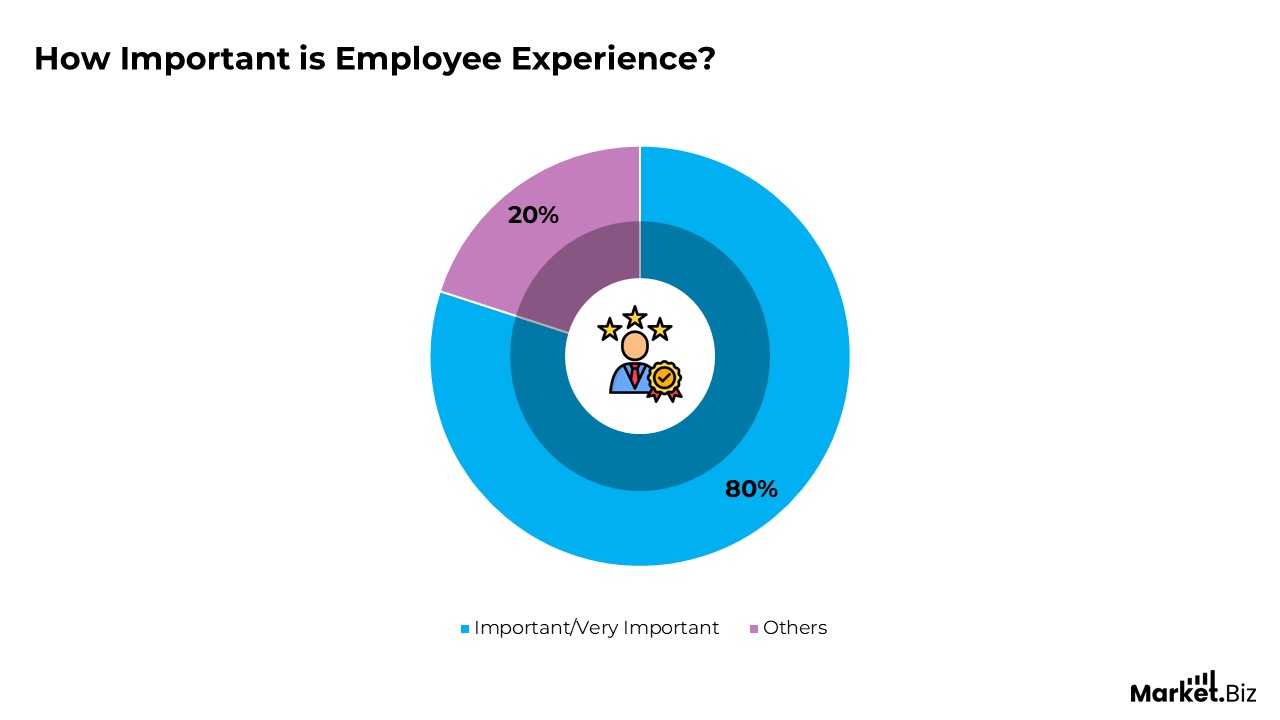
- According to Deloitte’s research, around 80% of organisational professionals stated that employee experience (EX) is important or very important.
- Employee experience (EX) and customer experience (CX) is well connected. According to Glassdoor research 1point growth in organisation rating is associated with a 1.3 point growth in customer satisfaction.
- Organisations with highly engaged employees outperform their competitors by 147% in earnings per share.
- Employee experience is important for most organisations because it directly affects organisation’s success.
- IBM’s Smarter Workforce Institute reported, those organisations which ranks in the top 25% for employee experience reported a 2x return on sales and almost a 3x return on assets.
- According to Gallup’s findings, dis-engaged employees can cost companies between $450 to $550 billion annually.
- Employee experience (EX) founders have 25% higher profit rates as compared to those who have poor EX.
- Organisations who have employee experience (EX) founder/leaders have four times higher average profits, 2x higher average revenue growth, 40% less turnover rates and 24% smaller headcount.
- Employee experience founders crossed the average S&P by 122%.
- Employees with good employee experience are 59% less likely to look for other opportunities or a new job.
- Employees with good employee experience can produce higher quality work, they are also very innovative problem-solvers and provide better customer experiences.
- Engagement plays a vital role in an organisational success, organisations can earn up to 21% more profits with high level of engagements.
(Source: Ctfassets)
Challenges of Employee Experience
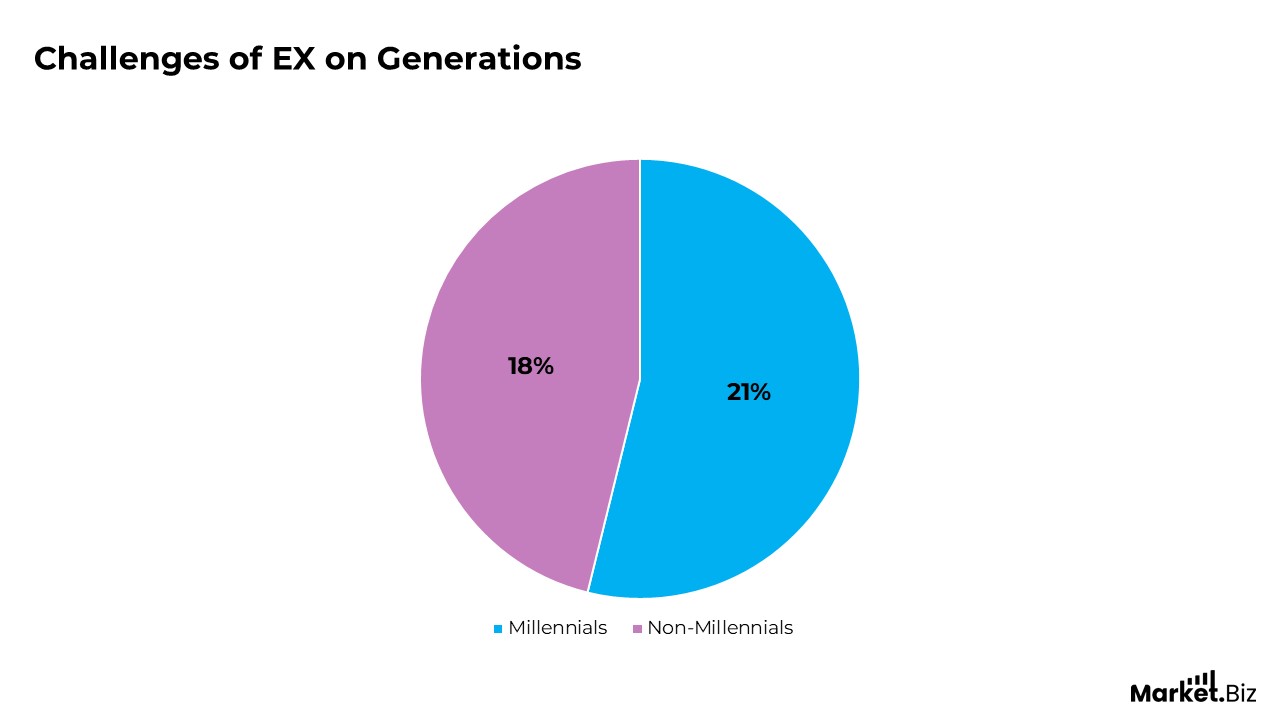
- In this digital work era employee interaction is becoming a key challenge for employee experience, where 21% of millennials and 18% of non-millennials reported that they meet with their manager only once in a week and sometimes less than once in a month.
- Lack of information is another challenge that rose in the recent times, with 75% of employees stated they care about the performance of their employer, while on the other hand, only 23% of employees feel that they have insight into how the business runs.
- An Indeed survey stated that, almost 30% of employees who resign their job within the first 6 months, would have stayed longer than that if the organisation appreciates their contribution.
- 82% of employees have some sort of unique or different ideas to boost their organisations performance. But only a few can do that as most employees struggle to get these ideas to the upper management.
Moreover
- Burnout, stress and anxiety are some of the major issues that employees face, employees who feels less valued are 2.5 times more likely to suffer from it, and as a result it drains out their physical well-being and job satisfaction.
- According to studies, in 2024, one of the major challenge that employees face was in inflexibility. If employees feel stressed to follow to inflexible work styles, bitterness and frustration can buiwork-life balanceld.
- According to a Gallup survey, almost 49% of US working citizens is actively searching for jobs or new opportunities, indicating a dissatisfaction with current work environments or low chances of growth opportunities.
- According to a Scalable report almost 59% of knowledge employees stated that their company doesn’t have an EX manager or they don’t know if something like that exists.
- According to a survey by Gartner in 2021, 92% of HR professionals prioritise employee experience, but only a 13% of employees believe or felt filly satisfied with their current organisations.
- Additionally, another challenge that employees face is to struggle with outdated, governmental processes that overpower more than empower.
Employee Experience in Remote work
- Employee’s rate remote work more than 42 points higher than the office work environment even though the employees feel they lose more time and even their productivity with remote work. Indicating the craze for remote work among employees.
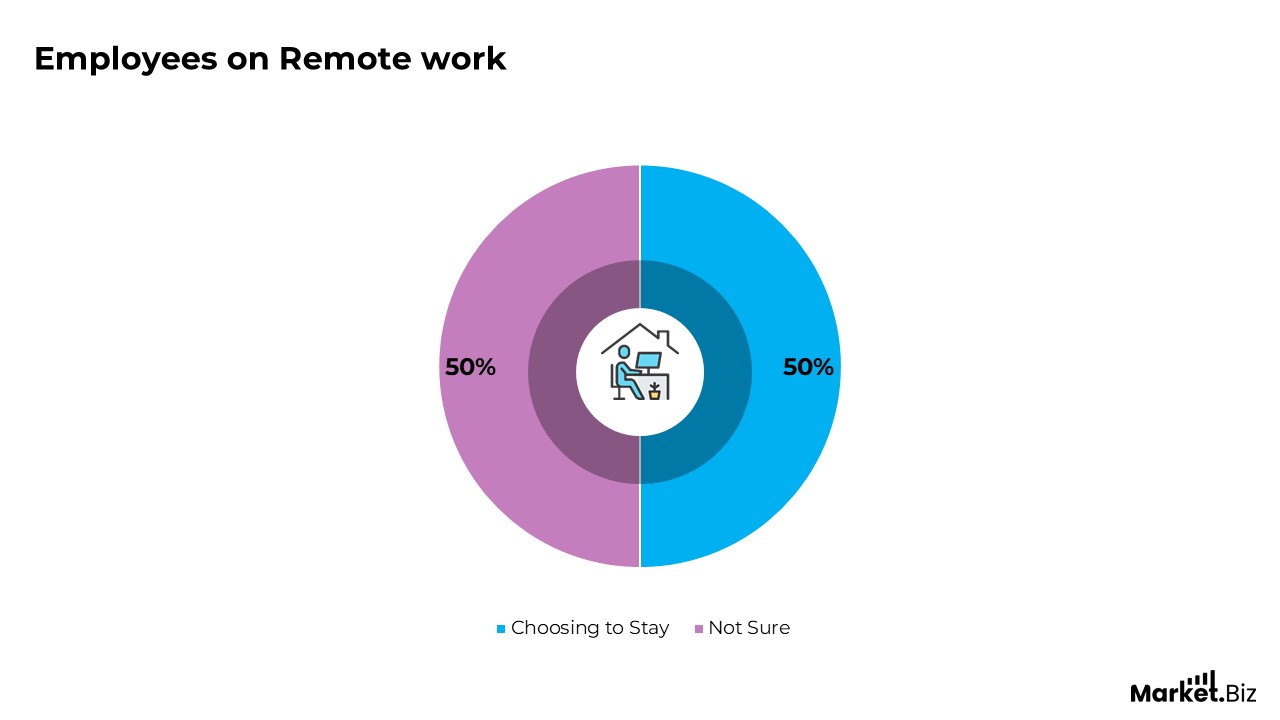
- Companies like Dell experienced some short of confrontation to its return to office policy. Almost 50% of its US workforce choosing to stay remote even with limitations on promotions and role change for remote employees.
Strategies By Employee Experience
- Human resource plays a significant role in managing the employee experience, but these initiatives will be more effective if the C-level and a strong cross-functional group including managers, IT, operations facilities and other teams that interact with employees who support them.
- Analyze 100% of employee experience data in real time with AI. It may seem like a scary task to collect and analyze all of the various forms of employee experience data covered in the preceding section, but businesses can now do it at scale with the help of text analytics and voice analytics with the help of AI. This techniques have the ability to quickly identify the main themes, subjects, and general sentiment in large data sets.
- Whether through all-hands meetings, a corporate magazine, or the internet, savvy leaders regularly change or update their staff members on the input they receive and the steps they have taken in response to employee feedback.
- Employee’s at large companies aren’t all the same, and the same is true of their experiences. Experience differs depending on the type of employee such as desk, desk less, etc., seniority, length of service, and identity for example, gender, age, race, etc.
- Following the collection and analysis of sufficient data about once employees through surveys, other sources of direct feedback, and the previously mentioned indirect signals, company owners can able to develop a predictable analytics framework that can identify mix indicators and serve as an early warning system to guide prompt and efficient involvements.
Employee Experience Examples
- Google: One of the best place to work in, google offers innovative workplace culture and assurance to employee well-being, on site fitness centres, don’t forget the free meals they provide and much more. With benefits like these employees are content and motivated due to the attention given to creating a satisfying work atmosphere.
- Salesforce: With a focus on giving back through the salesforce foundation, their philanthropic arm, employees are encourage to engage in volunteer work while on paid time off. In addition to helping local communities, this gives employers a sense of purpose.
- Purmo Group: Purmo group experience notable increases in overall engagement scores in just 6 months to assess and raise employee engagement levels across several nations.
Factors that Affect Employee Experience
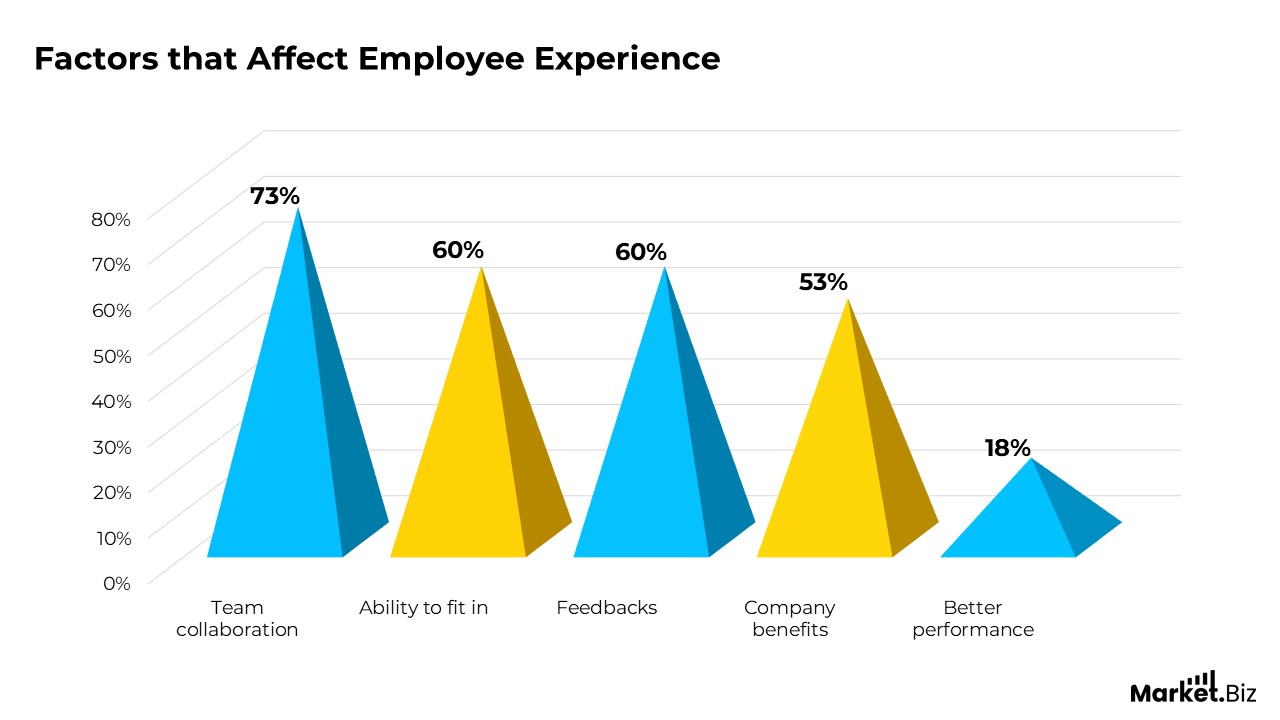
- Among employees 73% of who work in a team collaboration are mostly to report a positive employee experience.
- For tough personalities, around 61% of individual working professionals stated a positive EX.
- 60% of working professionals stated that the ability to fit in every environment and what they do best in a specific role is very important to them.
- Around 18% of working professionals truly admitted that those who perform better grow faster at their company.
- According to 53% of employees, company roles that offers them to have a good work-life balance and better personal growth is very important to them.
- While, on the other hand, just 23% of organisations claim that their work-life balance programs are above average.
- Around 10% of US working officials stated that they have suffered a negative consequences as a result of having a flexible work schedule.
- Approximately, 60% of US working citizens reported that they have some way to provide feedback about their EX.
- Around 30% of US working individuals stated their employer’s acts positively upon their feedback.
Conclusion
Employee Experience (EX) Statistics: As the work environment changes rapidly, employee experience (EX) has now become a top priority for many organisations. Organisations that invest in a strong EX have increased productivity, better productivity and higher performance. Studies show that having a great workplace culture, flexible working options and having the best technology, seriously enhances employee engagement factor.
As more organisations aggressively compete to recruit and retain quality talent, keeping track on employee experience metrics is extremely crucial. As the demand for EX focus increases employee engagement and morale, it will also drive business growth well into the future.
FAQs
Good employee experience leads to higher job satisfaction, better performance, and lower turnover. Businesses with strong EX see 21% greater profitability.
Around 80% of businesses now rate employee experience as very important, but only 22% feel they are doing it well.
Yes, businesses with engaged employees deliver 10% higher customer satisfaction and strong brand loyalty.