









Introduction
Part Time Vs Full Time Employment Statistics: The way people work has changed a lot in recent years, with more individuals choosing part-time jobs. As of 2024, about 25% of workers in the U.S. are employed part-time, a number that has been steadily rising. This shift highlights changing preferences for work-life balance, the growing demand for flexible schedules, and evolving economic conditions.
Despite this, full-time employment still makes up the majority, with over 70% of the workforce working full-time. Understanding these trends is key to seeing how the job market is evolving and how different types of employment are affecting workers today.
Editor’s Choice
- 25% of the U.S. workforce is employed part-time, reflecting a growing preference for flexible work arrangements.
- Full-time workers still make up over 70% of the U.S. labor force, with most full-time employees working 35-40 hours per week.
- 40% of women work part-time compared to only 10% of men, indicating gender-based differences in work preferences.
- The increasing demand for flexible work, such as gig and remote jobs, has contributed to the 12% rise in part-time employment since 2020.
- Nearly 50% of part-time workers under 25 years old, often balancing work with education.
- Over 35% of part-time workers are employed in industries like retail, healthcare, and hospitality.
- In the EU, about 20% of the workforce works part-time, with variations depending on country-specific labor laws.
- Full-time workers contribute to over 60% of the U.S. GDP, demonstrating their role in the economic productivity of developed nations.
General Part-time vs Full-time Employment Statistics
- As of 2024, about 25% of workers in the U.S. are employed part-time, showing a consistent rise in part-time job participation.
- Full-time employment still dominates, with over 70% of the U.S. workforce working full-time jobs.
- Women make up a larger proportion of part-time workers, with 40% of women in part-time roles compared to 10% of men.
- The number of part-time workers increased by 1.5 million from 2020 to 2024, reflecting changing economic conditions.
- Part-time workers typically earn less per hour than full-time workers, with a notable income gap across sectors.
- In the European Union, around 20% of workers are part-time, with rates varying significantly between countries.
- The rise of gig economy jobs has contributed to the increase in part-time employment worldwide.
- Over 35% of part-time workers in the U.S. are in industries such as retail, healthcare, and hospitality.
- Full-time workers in the U.S. average 40 hours per week, while part-time workers typically work 20 hours or less.
- Among part-time workers, nearly 50% are under the age of 25, often balancing work with education.
- In the U.S., nearly 1 in 10 full-time workers have a second part-time job to supplement their income.
- Part-time workers account for about 17% of the total labor force in the UK as of 2024.
- In Canada, nearly 18% of the workforce is employed part-time, with a higher rate among students and parents.
- Full-time employment rates have slightly decreased over the past decade, partly due to shifts toward remote and flexible working options.
- Part-time jobs are growing fastest in sectors like technology and customer service, with many roles offering remote work opportunities.
How Many Hours are Full-time and Part-time Work?
Over Industries
- In the healthcare sector, full-time workers typically work 36 to 40 hours a week, while part-time roles often involve 20 to 30 hours.
- In retail, full-time employees often work 35 to 40 hours, with part-time positions ranging from 15 to 25 hours per week.
- The tech industry tends to offer more flexibility, with full-time workers averaging 40 hours per week, while part-time tech roles may vary from 10 to 30 hours.
- In education, full-time teachers typically work 40 hours a week, whereas part-time instructors usually work 15 to 30 hours.
- Full-time workers in the hospitality industry often work 35 to 40 hours, while part-time jobs may involve irregular hours, typically around 20 to 30 hours weekly.
- Full-time positions in finance and banking usually require 40 hours a week, with part-time roles averaging 15 to 30 hours.
- The transportation sector sees full-time employees working 40 hours per week, while part-time drivers or staff often work 20 to 30 hours.
- In the creative industries (like marketing or design), full-time workers often work 40 hours, with part-time roles ranging from 15 to 25 hours per week.
By Regions
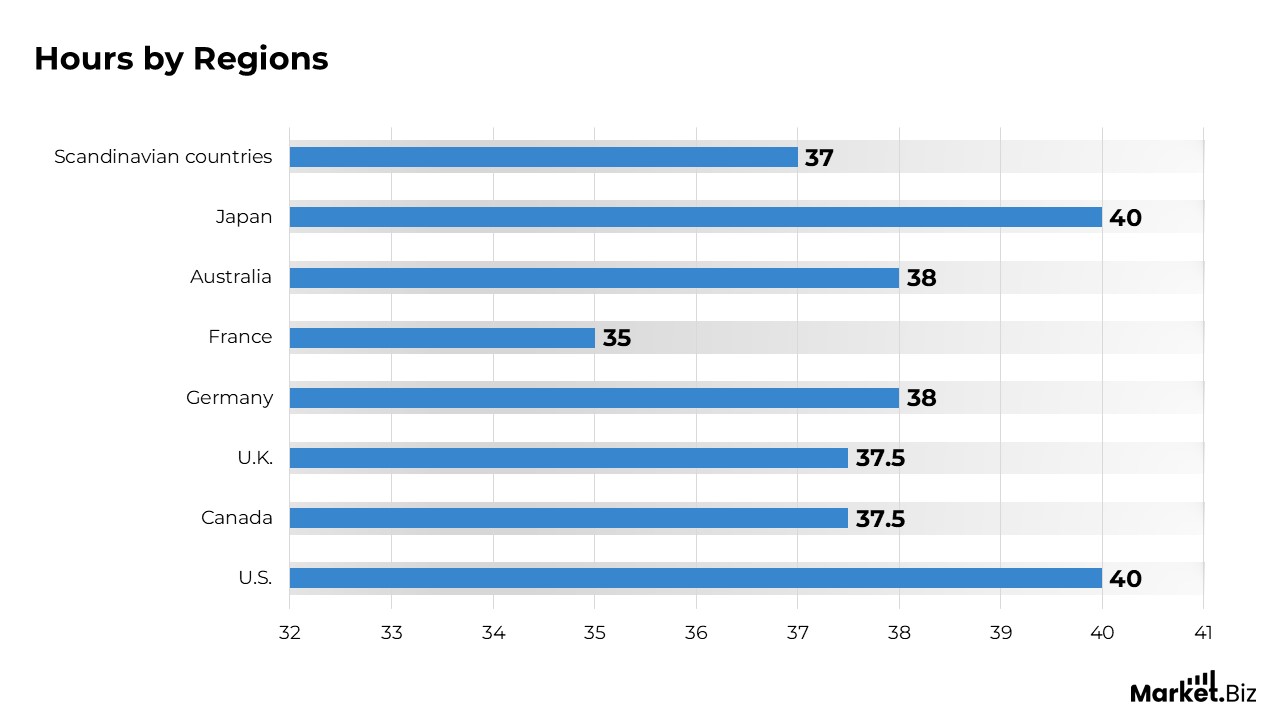
- In the U.S., full-time workers typically work 40 hours a week, with part-time jobs averaging 20 to 30 hours.
- In Canada, full-time employees generally work 37.5 to 40 hours, while part-time workers average 20 to 30 hours per week.
- In the U.K., full-time employees work 37.5 to 40 hours, with part-time workers averaging about 20 hours per week.
- In Germany, full-time work averages 38 hours per week, while part-time work typically involves 20 to 30 hours.
- Full-time jobs in France are capped at 35 hours per week, with part-time roles averaging 10 to 30 hours, depending on the industry.
- In Australia, full-time employees usually work 38 hours, with part-time roles averaging around 15 to 30 hours per week.
- Japan’s full-time workers typically put in 40 to 45 hours weekly, with part-time positions varying from 20 to 30 hours.
- In Scandinavian countries, full-time workers average 37 to 40 hours, with part-time roles ranging from 20 to 31 hours weekly.
By Age
- Workers aged 25 to 54 are most likely to work full-time, with an average of 40 hours per week in the U.S.
- Young adults aged 16 to 24 often work part-time, averaging 20 hours a week as they balance work and education.
- Workers aged 55 and older tend to work part-time more frequently, with an average of 25 to 30 hours per week.
- Teenagers (ages 16-19) often work part-time jobs, averaging 15 to 20 hours per week, depending on local regulations.
- In the U.K., full-time workers aged 25-49 work 37.5 hours a week on average, while those aged 16-24 often work part-time with hours around 20 per week.
- In Canada, full-time workers aged 25-54 work 40 hours a week, while those under 24 work part-time, averaging 20 to 30 hours.
- As workers age (50+), many reduce their hours, with part-time work being common, averaging 20 to 30 hours weekly.
- In the U.S., part-time work is particularly common among workers aged 18-24, with an average of 20 hours per week, often due to school schedules.
Part-time and Full-time Statistics for Employed Parents
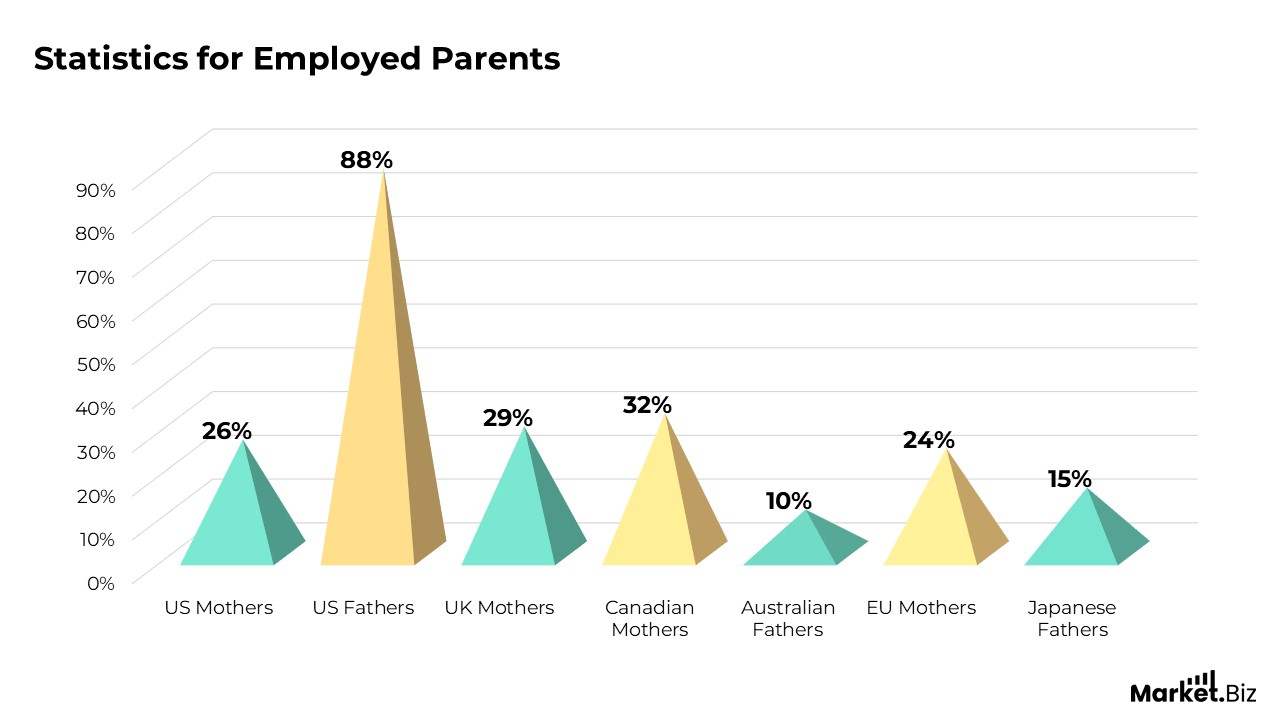
- In the U.S., 26% of employed mothers work part-time, reflecting the challenge of balancing work and childcare.
- Full-time employment among U.S. fathers stands at 88%, with many fathers seeking part-time opportunities to be more involved in childcare.
- Around 29% of mothers in the U.K. are employed part-time, with most choosing this option for flexibility in managing family life.
- In Canada, 32% of mothers work part-time, with a growing trend of fathers also seeking part-time positions to share caregiving duties.
- A 2023 survey revealed that 25% of parents working part-time in the U.S. do so to accommodate school schedules and other family commitments.
- Around 10% of fathers in Australia are employed part-time, a figure that has been steadily increasing as more men seek work-life balance.
- In the EU, 24% of mothers with children under 12 are part-time workers, with many preferring flexible hours over full-time roles.
- In Japan, about 15% of fathers take on part-time work, driven by the desire for more time to spend with their children despite long work culture norms.
Facts of Part-Time and Full-Time Employment
- As of 2024, approximately 25% of the U.S. workforce is employed part-time, showing a steady increase driven by flexible work preferences.
- Full-time employment still constitutes the majority of U.S. workers, with over 70% working 35-40 hours a week as of 2024.
- Women are more likely to work part-time, with nearly 40% of employed women in the U.S. holding part-time roles, compared to 10% of men.
- Young adults, especially those between 16-24 years old, make up a significant portion of part-time workers, with about 40% of this age group in part-time employment.
- Industries such as retail and hospitality are major employers of part-time workers, with over 30% of these sectors’ workforce employed part-time as of 2024.
- Studies have shown that part-time workers report higher work-life satisfaction compared to full-time employees, with 70% of part-time workers citing improved balance.
- In Europe, around 20% of the workforce is part-time, with countries like the Netherlands and Germany having the highest part-time employment rates.
- Full-time employees are responsible for the bulk of the economic output in developed nations, with over 60% of U.S. GDP attributed to full-time employment.
- About 25% of working parents in the U.S. work part-time, with many choosing flexible schedules to balance childcare and professional duties.
- In sectors like finance and technology, full-time employees often work beyond 40 hours a week, with many high-paying roles requiring long hours to meet industry demands.
Pros and Cons of Employment
Pros of Part-time Employment
- Part-time workers often enjoy a better work-life balance, with more flexibility to manage family or personal commitments. About 35% of part-time employees report better job satisfaction due to flexible hours.
- Studies show part-time workers experience lower stress levels compared to full-time workers, with 60% citing less work-related pressure.
- Part-time jobs offer more free time for education, hobbies, or side businesses. Approximately 40% of part-time workers use their free time for skill development or additional income.
- Many part-time jobs offer benefits, such as healthcare, though on a reduced scale, with some employers covering prorated health insurance costs.
- Part-time workers typically experience shorter or fewer commutes, saving up to 40% in transportation costs compared to full-time workers.
Cons of Part-time Employment
- Part-time workers earn significantly less than their full-time counterparts, with part-time workers earning about 25-50% less per hour on average.
- About 30% of part-time workers report limited advancement opportunities, often due to fewer hours and less involvement in key projects.
- Many part-time jobs don’t offer full benefits like health insurance, paid vacation, or retirement plans, with 50% of part-time workers reporting a lack of benefits.
- Part-time roles often come with less job security, as many positions are temporary or hourly-based, with 15% of part-time employees experiencing frequent job turnover.
- Part-time workers may feel excluded from workplace activities or networks, affecting their social connections and professional development.
Pros of Full-time Employment
- Full-time employees earn a more consistent paycheck, typically making 50-100% more than part-time workers, providing financial stability.
- Full-time workers often receive more comprehensive benefits, including health insurance, paid leave, and retirement contributions, covering up to 80% of employees in large organizations.
- Full-time positions provide better opportunities for career advancement, with 70% of managers in the U.S. starting in full-time entry-level roles.
- Full-time employees are often offered training programs and workshops to enhance their skills, with 40% of companies providing ongoing development for full-time staff.
- Full-time workers are more likely to enjoy job security compared to part-time employees, with a 30% lower turnover rate in full-time roles.
Cons of Full-time Employment
- Full-time workers typically work 40-50 hours a week, with 25% of employees reporting they regularly work overtime, which can lead to burnout.
- Full-time positions often have rigid schedules, making it challenging for employees to balance family, education, or other personal commitments.
- Full-time workers are more likely to experience stress and burnout, with 60% of employees in full-time roles reporting high levels of work-related stress.
- Full-time employees often have limited time for personal pursuits or relaxation, with 50% saying they feel they lack time for hobbies or self-care.
- Full-time workers tend to have longer commutes, with 40% spending over 45 minutes daily traveling to work, leading to increased costs and fatigue.
Impact of Employment on Work-Life Balance
- Part-time employees generally report a higher work-life balance, with 68% of part-time workers stating they have more time for family and personal activities compared to full-time workers.
- Full-time workers often struggle with work-life balance, with 45% of them citing challenges in balancing family responsibilities and career commitments.
- Part-time jobs provide flexibility, with 60% of part-time workers reporting that flexible hours improve their work-life integration.
- Full-time employees typically work 40+ hours a week, with many experiencing burnout. About 55% of full-time workers report working beyond their standard hours, affecting their personal time.
- Part-time workers report lower stress levels than full-time workers, with 60% of part-time employees stating they feel less work-related pressure.
- Full-time workers are more likely to experience work-life conflict, with 48% reporting difficulty in finding time for personal activities due to their long work hours.
- Studies show that 70% of part-time workers are more satisfied with their work-life balance compared to 50% of full-time workers
- About 33% of part-time workers report using their flexible schedule to manage childcare, helping improve their overall work-life balance.
- Full-time workers face a higher risk of burnout, with 40% of them feeling physically and emotionally drained from their work, negatively impacting their life outside of work.
- 65% of part-time workers use their extra time for self-care or personal growth, highlighting a significant improvement in their overall work-life balance.
Gender Differences in Part-Time vs Full-Time Employment
- Women in part-time jobs earn 20% less on average than men in similar positions, contributing to the ongoing gender pay gap.
- About 75% of men are employed full-time, as men are more likely to take on full-time roles, particularly in higher-paying industries.
- The main reason women work part-time is to balance childcare and family care, with 40% of part-time women workers citing this as a primary factor.
- While 70% of men work full-time, only about 60% of women hold full-time positions, reflecting the higher representation of women in part-time work.
- Full-time employment is more prevalent in male-dominated industries like construction and manufacturing, where over 80% of workers are employed full-time.
- Men, particularly in their prime working years (ages 25-54), are more likely to opt for full-time positions, with 85% working full-time compared to 75% of women in the same age group.
- Women working part-time are more economically vulnerable, with 50% of part-time female workers earning below the poverty line, compared to 30% of part-time male workers.
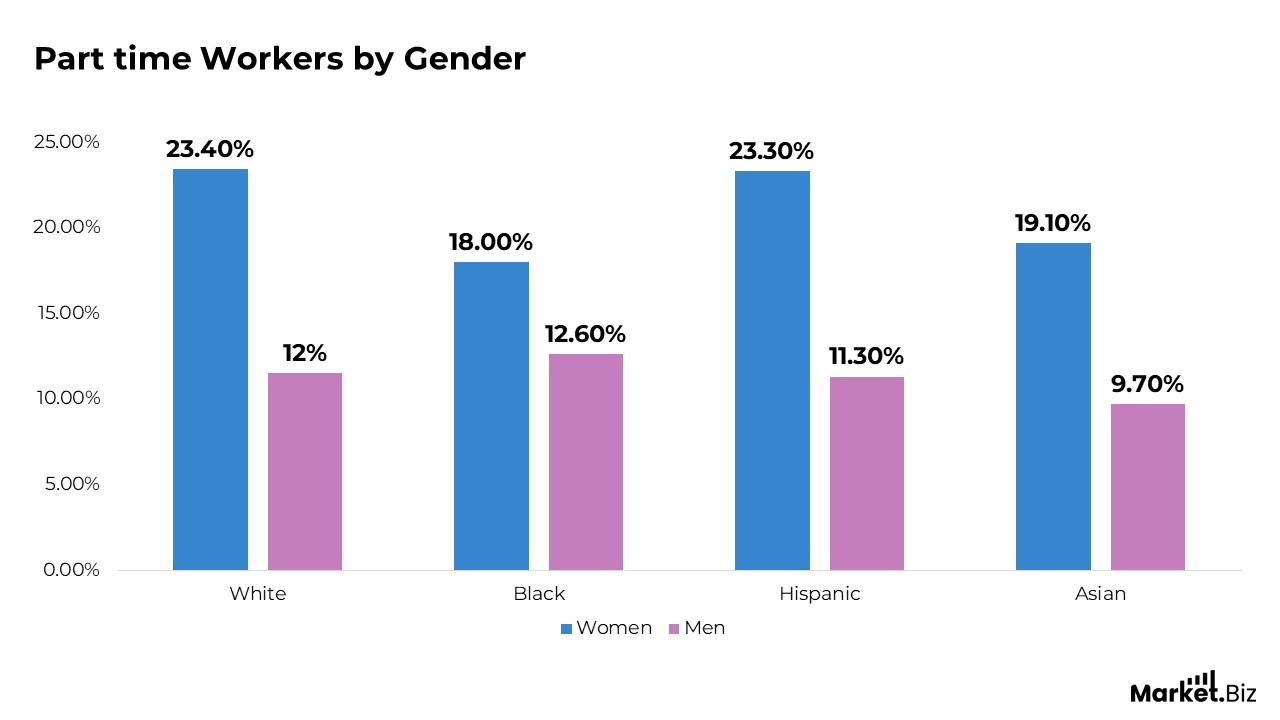
- Compared to men, women work part-time at the highest rate. Whites make up 23.4%, Blacks make up 18%, Hispanics make up 23.3%, and Asians make up 19.1%.
- Men, on the other hand, are approximately 11.5% white, 12.6% black, 11.3% Hispanic, and 9.7% Asian.
C(Source: Enterpriseappstoday, WP-content)
Role of Education in Part-Time and Full-Time Employment
- College graduates are more likely to secure full-time positions, with 85% of bachelor’s degree holders employed full-time, compared to just 60% of high school graduates.
- Nearly 40% of full-time students in the U.S. work part-time while attending school, primarily in flexible, entry-level jobs to support their studies.
- Younger workers, especially those with less education, are more likely to work part-time, with 45% of workers aged 16-24 holding part-time jobs.
- Individuals with higher education levels are more likely to have access to flexible full-time roles, with 65% of degree holders working in jobs with work-life balance benefits.
- Workers with less than a high school education are more likely to work part-time, with over 25% of this group employed in part-time roles.
- Education levels influence part-time work among parents, with 55% of parents with a high school diploma or less working part-time compared to 30% of college-educated parents.
- Highly educated individuals often prefer full-time roles due to career growth potential, with 80% of workers holding graduate degrees opting for full-time employment.
- College-educated individuals working part-time tend to have more flexible job schedules, with 45% of part-time employees holding a degree working in jobs with flexible hours.
Part-time vs Full-time Employment: Recent Development
- The demand for remote part-time roles has surged by 40% since 2020, with workers seeking more flexible employment arrangements.
- Full-time gig workers, particularly in tech and transportation sectors, have grown by 30%, as more individuals turn to flexible, full-time contract work.
- Post-2020, part-time employment has increased by 12% in sectors like retail and hospitality, driven by a desire for better work-life balance.
- 55% of full-time workers are now seeking flexible work arrangements, with many requesting part-time hours or hybrid schedules to accommodate personal life demands.
- Industries like digital marketing and e-commerce have seen a 25% increase in part-time roles, reflecting growth in online business models that offer flexibility.
Conclusion
The world of work is changing, with 25% of the U.S. workforce now in part-time roles as of 2024, reflecting a growing demand for flexibility. However, full-time jobs still make up more than 70% of the workforce.
Women are more likely to work part-time, with 40% in these roles compared to just 10% of men. Part-time jobs are especially common in industries like retail and healthcare, and younger workers and students are major contributors to this trend.
The rise of the gig economy and remote work has also made part-time opportunities more popular. While part-time work is growing, full-time employees continue to play a key role in driving economic growth, especially in high-output industries.
FAQs
Working part-time can reduce the costs of administering retirement, health insurance, flexible spending accounts, paid time off, and leaves. However, full-time employees may result in higher benefits and compensation costs.
Part-time employment in India as a percentage of total employment was recorded at 23.90% in 2023. Compared to the 20.850% for 2022, this represents an increase.
Indian labor laws, like the Factories Act of 1948, regulate working hours and guarantee fair conditions in an effort to protect workers’ rights. According to the Factories Act, workers must put in no more than 48 hours per week and no more than nine hours per day.
People who work part-time jobs are regarded as fully engaged under the laws. The unemployment rate understates the level of unemployment in the economy as a result of this factor.