








Introduction
Cell Phones at Workplace Statistics: In today’s digital workplace, cell phones have fundamentally transformed professional dynamics. Studies show employees check their smartphones an average of 262 times daily, with 41% occurring during work hours.
Research indicates that 50% of professionals admit to checking their phones during meetings, 67% of employees use personal devices for work-related tasks through BYOD policies, while workers lose approximately 56 minutes daily to mobile distractions.
However, mobile technology is also linked to improvements in efficiency, with 56% of employees stating that smartphones help them perform their jobs faster. With 85% of organizations now implementing formal cell phone policies, the impact of mobile devices on workplace productivity and safety has become a critical focus of corporate strategy.
Key Takeaways
- Over 80% of employees use their smartphones for work-related tasks, such as checking emails and accessing work apps, indicating a strong integration of mobile technology in the workplace.
- Despite the productivity benefits, 60% of employees find smartphones distracting, with social media and personal apps causing significant interruptions during work hours.
- 70% of companies implement Bring Your Own Device (BYOD) policies, allowing employees to use their personal devices, with 59% of workers reporting increased productivity due to their comfort with personal gadgets.
- 70% of employees believe that smartphones improve communication speed, particularly in remote and hybrid work environments, where mobile devices facilitate quick responses and real-time collaboration.
- Around 30% of companies have strict policies banning cell phones during work hours, while 45% allow personal use during breaks, reflecting a balanced approach to mobile usage.
- 55% of businesses cite mobile security as a key issue, with personal devices often lacking adequate protection against potential data breaches and cybersecurity threats.
- 35% of businesses have integrated AI-powered virtual assistants into workplace smartphones, improving employee productivity by assisting with scheduling and task management.
- 50% of remote workers rely on their smartphones for communication, which contributes to a 20% increase in productivity by allowing seamless task management and team coordination.
General Cell Phones at Workplace Statistics
- According to Pew Research Center, recent studies show that over 80% of employees use their smartphones to perform work-related tasks, such as checking emails, scheduling meetings, and accessing work apps, reflecting, etc.
- Gallup research says, with the rise of remote work, 65% of employees rely on their mobile phones to stay connected with teams, access files, and attend virtual meetings, facilitating a flexible and mobile workforce.
- According to Deloitte Global Mobile Consumer Survey, approximately 56% of workers report that smartphones help them complete tasks more quickly and efficiently.
- Despite their benefits, 60% of employees say that smartphones cause significant distractions at work, with social media and personal apps being the main culprits, leading to reduced productivity during working hours.
- A study found that 70% of employees believe that having a smartphone at work improves communication speed, as instant messaging and mobile apps allow quicker responses and real-time updates.
- With the widespread use of smartphones, 55% of businesses cite mobile security as a significant concern, as personal devices often lack the security protocols necessary for safeguarding sensitive company data.
- As more businesses adopt mobile-first strategies, 45% of companies provide employees with mobile-optimized tools and resources, ensuring that workers have seamless access to work tools regardless of location.
- Statista report shows, an estimated 58% of employees admit to using their phones for personal reasons during work hours, which can affect overall workplace efficiency, especially in industries where focus and attention are critical.
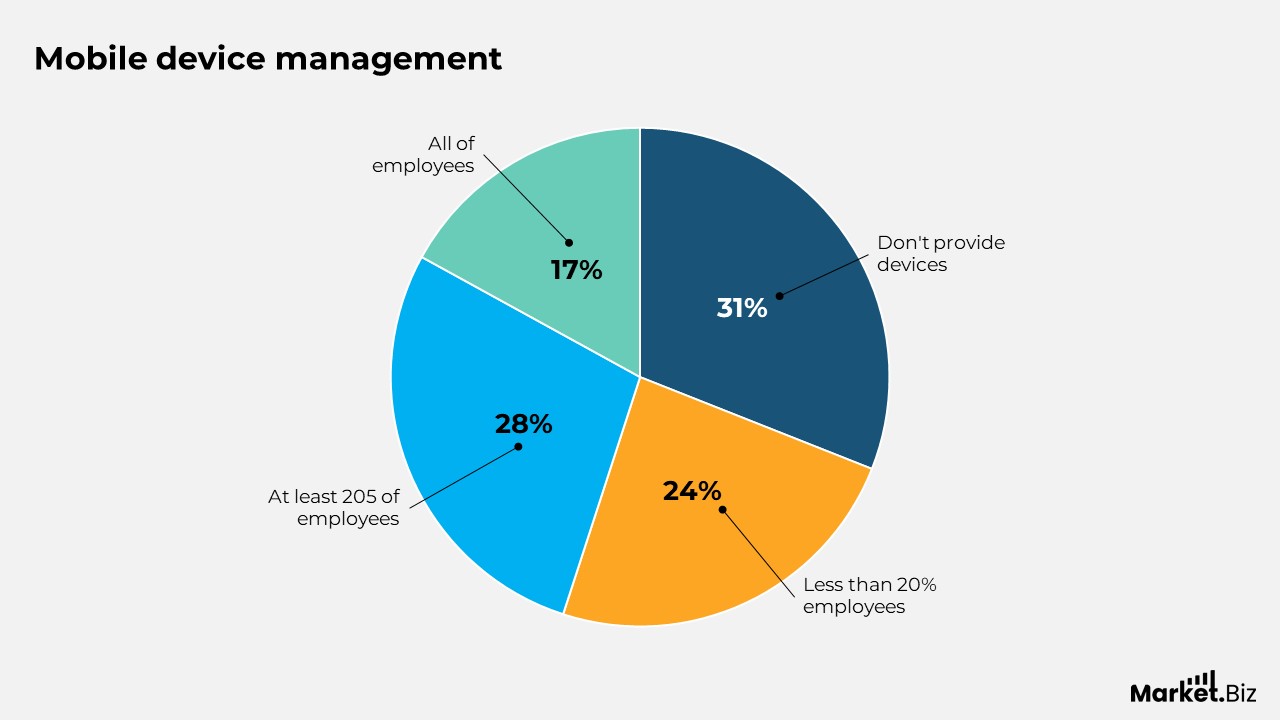
- According to TechRepublic, about 40% of companies now offer employees company-issued smartphones to enhance work efficiency and ensure proper data security.
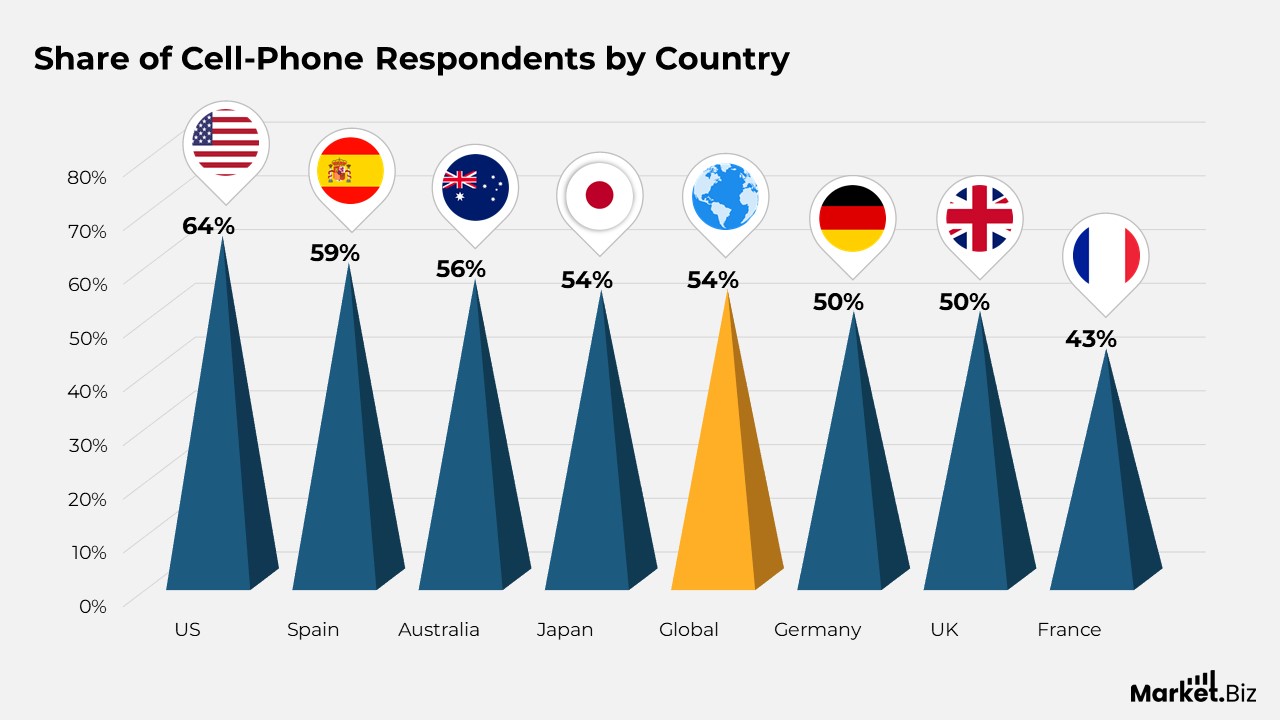
- Approximately 97% of American adults report owning a cell phone as of 2023, with 85% claiming to own a smartphone.
- Workers use their phones for non-work-related purposes for 56 minutes every day.
Company Policy on Cell Phones Statistics
- Around 30% of companies have strict policies prohibiting cell phone use during working hours to minimize distractions and maintain productivity.
- According to SHRM, almost 45% of companies allow employees to use their personal cell phones during breaks, recognizing the importance of work-life balance while still enforcing limited use during work hours.
- IBM Security Report says, 50% of organizations restrict cell phone usage due to security risks, ensuring sensitive data and registered information are not carelessly exposed through personal devices.
- 40% of companies issue company-provided smartphones to their employees, often with pre-installed security apps and access restrictions, to ensure controlled communication and data access.
- According to Gallup, 56% of businesses enforce stricter cell phone policies for employees in customer-care roles, prohibiting phone use during customer communications to maintain professionalism.
- Around 70% of businesses have adopted a Bring Your Own Device (BYOD) policy, allowing employees to use their personal smartphones for work tasks while ensuring agreement with security guidelines.
- 60% of employees report that their company’s cell phone policy has a direct impact on their job satisfaction, with clear rules contributing to a better work environment.
Moreover
- In healthcare environments, 55% of hospitals enforce strict cell phone bans in critical areas, such as operating rooms, due to concerns over patient safety and the risk of electronic interference.
- Employees in workplaces with flexible cell phone policies spend, on average, 15-20 minutes per day on personal tasks using their phones during work hours.
- According to Forbes, 21% of companies monitor employees’ cell phone usage to ensure compliance with company policies, focusing on limiting time spent on non-work-related activities.
- About 60% of companies encourage employees to use their smartphones for work communication, including emailing, calling, and messaging, as part of a modern workplace strategy.
- Around 35% of companies restrict access to social media sites on company-issued smartphones, enforcing policies to avoid distractions and maintain workplace focus.
- Gallup research stated, 45% of remote workers rely on their cell phones as their primary device for work-related tasks, highlighting the need for companies to adapt their policies to support mobile use for productivity.
- In tech and creative sectors, 80% of companies allow softer cell phone policies, acknowledging that mobile devices support collaborative tools and foster innovation in these fields.
- In the manufacturing industry, 40% of companies restrict cell phone use on the shop floor to ensure safety and prevent accidents, with policies enforced by supervisors to minimize risks.
BYOD System at Workplace Statistics
- 70% of businesses have implemented Bring Your Own Device (BYOD) policies, which permit staff members to use their own laptops, tablets, and smartphones for work-related purposes, according to Gartner data.
- According to Cisco’s research, 59% of employees report that using their personal devices for work increases their productivity, as they are more comfortable and efficient with devices they personally own.
- Companies can save up to 30% on hardware and device-related expenses by adopting BYOD policies, as employees bear the cost of their own devices.
- Almost 50% of companies face challenges managing mobile devices securely under BYOD policies, particularly in protecting sensitive data and maintaining privacy.
- More than 60% of security breaches are linked to mobile devices, raising concerns for businesses that implement BYOD without sufficient cybersecurity measures in place.
- In the IT industry, 85% of companies have adopted BYOD policies, reflecting the sector’s focus on flexibility, innovation, and the need for employees to stay connected.
- 73% of employees express higher job satisfaction when they are allowed to use their own devices at work, appreciating the flexibility and convenience it provides.
- In small businesses, 65% have adopted BYOD policies to reduce upfront costs for equipment, yet they often face higher challenges in securing devices and data.
Moreover
- According to Deloitte, 56% of companies with BYOD policies report an increase in the use of mobile apps for work-related tasks, especially productivity tools, communication apps, and project management software.
- 55% of companies use Mobile Device Management (MDM) tools to manage and secure personal devices, ensuring data encryption and safe access to corporate resources.
- In 2022, 40% of organizations reported experiencing a data breach directly linked to personal devices used under BYOD policies, stressing the importance of strong security practices.
- With the rise of remote work, 66% of remote workers rely on BYOD policies, using their personal devices to access company systems and collaborate effectively while working from home.
- In healthcare, 45% of hospitals have implemented BYOD programs, allowing healthcare professionals to use personal devices for patient data management, but with stringent security measures to comply with regulations like HIPAA.
- The average cost of a data breach involving a personal device under BYOD policies is $4.45 million, highlighting the high financial risks for companies that do not implement proper security controls.
- The research conducted, found the global BYOD market is expected to grow from $27.8 billion in 2023 to $73.3 billion by 2028, driven by increased adoption across industries looking to improve employee flexibility and reduce costs.
Time Spent on Cell Phones at the Workplace
By Employees
- Employees spend an average of 2 hours daily on their cell phones during work hours.
- 30% of employees report spending over 30 minutes on social media during work hours, with platforms like Facebook and Instagram being the most visited.
- Around 40% of employees accept that excessive cell phone use detracts from their productivity, particularly when distracted by non-work-related content.
- Employees check their phones on average 262 times a day, with most interactions being related to personal messages or quick social media checks rather than work tasks.
- About 45% of employees admit to using their phones during meetings, often to check notifications or engage in non-work-related browsing, which impacts the quality of discussions.
- Over 50% of employees use their cell phones for personal activities during break times, spending an average of 15-20 minutes on personal calls, social media, or other distractions.
- 42% of employees use their phones for work-related tasks such as checking emails, responding to messages, and accessing work apps, indicating a growing reliance on mobile devices in professional environments.
- Around 70% of employees under BYOD policies use their personal devices for work purposes, spending an average of 1 hour daily on tasks like communication and project management.
By Employers
- 23% of employers actively monitor employees’ mobile phone usage to ensure compliance with company policies, with a focus on limiting personal distractions during work hours.
- About 40% of companies provide employees with company-issued smartphones, enabling better control over work-related communication while restricting non-essential usage.
- 56% of employers in customer-care industries impose strict cell phone usage policies, limiting phone access during customer interactions to maintain professionalism and focus.
- 50% of employers restrict personal cell phone use due to concerns over data breaches, especially in sectors with sensitive customer information, such as healthcare and finance.
- 55% of employers with BYOD policies impose usage restrictions, including limiting personal app usage and requiring security software to prevent unauthorized access to company data.
- 40% of employers note that excessive cell phone usage negatively impacts workplace culture, particularly in terms of employee engagement and communication during collaborative tasks.
- 30% of employers provide training on mobile device usage and security to ensure employees follow best practices for using phones at work, reducing both distractions and security risks.
- 50% of employers allow employees to use their mobile phones freely while working remotely, recognizing that cell phones contribute to better communication and flexibility in a hybrid work environment.
Impact of AI on Cell Phones at Workplace
- About 35% of businesses have included AI-powered virtual assistants into their workplace cell phones, helping employees with scheduling, email management, and quick data retrieval, improving productivity.
- Around 48% of companies are using AI-based security solutions on mobile devices to detect and prevent cybersecurity threats in real-time, safeguarding sensitive workplace data.
- AI applications on workplace cell phones, such as smart calendars and task management tools, have improved employee productivity by 27%, streamlining workflows and reducing time spent on repetitive tasks.
- 40% of businesses in customer service sectors have adopted AI-driven mobile chatbots to assist employees in responding to customer queries, enhancing service speed and efficiency while reducing response times by 50%.
- 55% of companies are using AI-based mobile device management systems to automatically monitor and configure workplace cell phones, ensuring compliance with corporate policies and reducing administrative overhead.
- AI-powered voice recognition tools on workplace cell phones, used for tasks like transcription and communication, are now employed by 43% of businesses, making it easier for employees to multitask and stay efficient.
- AI is helping customize workplace apps on mobile phones, with 38% of companies utilizing AI to tailor the user experience based on individual work preferences, leading to improved employee satisfaction and engagement.
- AI-driven data analytics applications on mobile devices are now used by 30% of businesses to help employees make data-driven decisions in real time, enhancing responsiveness and business agility.
Cell Phone Usage at Workplace Impact on Productivity
- 60% of employees admit that personal use of cell phones during work hours is a significant distraction, reducing their focus and productivity, especially when engaging in non-work-related apps like social media.
- On the positive side, 45% of employees report that cell phones enable quicker communication and task coordination, significantly improving productivity in fast-paced environments, especially with instant messaging and work apps.
- Around 40% of employees use their phones to multitask during work hours, such as checking emails while working on other tasks.
- Employees working remotely rely on their cell phones for approximately 50% of their communication, contributing to a 20% increase in work productivity by enabling seamless communication and task management from anywhere.
- Employees using their personal phones for work under BYOD (Bring Your Own Device) policies report a 25% increase in productivity due to familiarity and comfort with their personal devices.
- 63% of employees say that the ability to use their smartphones for work-related tasks positively impacts their job satisfaction, as it provides more flexibility and access to work tools outside traditional office hours.
- 40% of employees report experiencing burnout due to the constant connectivity enabled by smartphones.
- 56% of workers use productivity apps on their cell phones to streamline project management, resulting in more efficient tracking of deadlines, tasks, and team collaboration, leading to a 15% increase in overall work efficiency.
Advantages of Cell Phone at Workplace Statistics
- Cell phones have boosted communication within workplaces, with 67% of employees reporting improved collaboration through messaging apps, emails, and video calls, making teamwork more efficient and timely.
- 54% of employees state that using their cell phones at work allows them to stay connected to tasks and information, leading to a 20% increase in their overall productivity, especially for remote or hybrid workers.
- Around 45% of employees use their cell phones to access essential work tools, including CRM systems and project management apps, ensuring they can complete tasks and stay productive, even when away from their desks.
- Mobile technology enables quicker decision-making by providing real-time access to critical information, with 35% of managers stating that cell phones help them make decisions faster, improving operational efficiency.
- Cell phones play a pivotal role in remote work environments, with 60% of remote workers using their mobile devices to attend meetings, check emails, and collaborate with teams, helping maintain productivity outside the office.
- 36% of employees report using their cell phones for time management tools such as calendars and task reminders, helping them stay organized and meet deadlines more effectively in fast-paced work settings.
Disadvantages of Cell Phones at Workplace
- 42% of employees report that personal cell phone use during work hours reduces focus and productivity, leading to frequent distractions from tasks.
- 38% of workers say that frequent notifications from their cell phones interrupt their work, leading to a disruption in task flow and decreased work efficiency.
- 51% of businesses cite personal cell phone use as a significant security risk, as employees may inadvertently expose company data through unsecured apps or networks.
- 30% of employees report feeling overworked due to constant connectivity via cell phones, which leads to work-life balance issues and potential burnout.
- 32% of employees note that excessive cell phone use during meetings or team interactions undermines collaboration and harms workplace relationships.
- 40% of employees admit to using their cell phones during meetings for non-work-related activities, which decreases overall engagement and productivity during discussions.
Conclusion
Mobile phones have transformed the workplace, boosting productivity for 56% of employees, but also causing distractions for 60%. With 70% of companies adopting BYOD policies, flexibility has increased, though security concerns persist for 60% of businesses. AI integration in mobile devices is improving efficiency, with 35% of businesses using AI tools to streamline tasks. Balancing the benefits and challenges of mobile phone usage will remain key to maintaining workplace productivity.
FAQs
The average employee checks their phone 96 times a day, or once every ten minutes, according to research. Regular disruptions can cause one to lose focus, which makes it more difficult to finish tasks effectively.
Many workers use their cell phones for work-related purposes, including texting co-workers who are out of the office on business, taking pictures that aid in their work, conducting research for work-related projects, keeping calendars, and using productivity-boosting apps.
There are a number of reasons why businesses decide to forbid cell phone use, including avoiding personal calls, using social media or apps, texting, and other interruptions at work, as well as protecting confidentiality and averting security breaches.
According to a Deloitte report, smartphones produced 146 million tons of carbon dioxide emissions in 2022, primarily from their production, shipping, and first year of use. According to scientists, smartphones need rare earth elements like lithium, neodymium, and antimony, all of which are in short supply.