









Introduction
Office Relocation and Workforce Mobility Statistics: Just as everyone on a ship manoeuvres it through difficult tides of change, so it is with office relocation and workforce mobility: it is difficult, but full of possibilities. A whopping 44% of companies are looking to relocate their business over the next 24 months, and a whopping surge of 156% in remote work arrangements since 2019 indicate the changes in an ever-evolving business environment.
Your organization is acting at this junction where the workspace decisions either free surplus flexibility or set in its wake disruptions at great costs. Like planting a garden in new soil, every office will require careful preparation for relocation; studies show that companies that allow at least 12 months for planning have a 31% higher satisfaction rating. If you understand these statistics well, they will serve as a compass for the interesting yet complex journey into workplace transformation.
Editor’s Choice
- Changing workplace strategies will affect the future of work: 44% of these companies will move to new premises in the next 24 months.
- COVID-related remote working setups, which increased by 156% since 2019, bring into question so many companies’ design and use of present-day offices.
- On the flip side, another key insight states that the longer the time frame envisioned for the relocation—anything over 12 months-satisfaction increases by 31%.
- Today, 67% of employees consider flexibility to be their most important consideration regarding their work.
- Remote-work-enabled offices save employers $11,000 per employee and reduce turnover rates by 25%.
- Worker turnover increases by an additional 12-15% post-relocation, attributable to commute times.
- To cut a long story short, the general idea is that lease durations have been reduced from the average benchmark of 7.5 years to 4.8 years, which in itself is a display of corporate flexibility.
- Productivity in office designs centred on employee experience increases by up to 13%.
- 76% of firms relocating cite cost savings as a major reason for the move, typically coupled with between an 18% and 25% reduction in overall space.
- The relocation industry will increase from $29.5 billion in 2022 to $41.2 billion in 2027.
- Some 82% of relocating companies allow remote work to retain talent.
- Transit-friendly cities have a 34% higher retention rate after relocation.
General Statistics
- Roughly about 40% of companies will move their office space every 5 or 7 years, with an average individual employee cost of $4,000-$7,000 depending on the size of the company.
- As of 2024, 67% of workers count workplace flexibility as their top priority when choosing between job offers- up from just 53% in 2019.
- Companies allowing remote work have 25% less turnover on average compared to companies working in an office environment, leading to an average cost saving of $11,000 for employers per retained employee.
- Office move increases the voluntary departure of employees by 12-15% if commute times increase by more than 30 minutes.
- The average commercial lease length between 2013 and 2024 has reduced from 7.5 to 4.8 years, demonstrating a growing requirement for flexibility that is supported by corporate culture.
- The end result is that companies that provide strong relocation support avenues report 31% higher employee satisfaction and a 23% faster recovery in productivity after the relocation.
- Cost savings are cited by almost 76% of organizations as the primary reason for relocation, with average space reduction targets from 18-25%.
Moreover
- Hybrid working arrangements have reduced office space requirements for organizations implementing hot-desking and flexible seating configurations by around 30-40%.
- Some 53% of the workers are willing to change jobs for a shorter commute, with the ideal commute time stated as being 16-20 minutes long.
- Businesses that move from one location to another in order to improve the experience of their employees assume that productivity increases by 13% in the first 18 months after having settled in the new premises.
- In 2023, the global corporate relocation market stood at $29.5 billion and is expected to clock in at $41.2 billion by 2027.
- Almost 82% of companies that relocate offer some form of remote work option in order to retain those employees who cannot or will not move.
- Corporate relocations are expected to see retention rates of 34% higher in cities with good public transportation than in automobile-dependent towns.
- Modernizing workspaces during relocations improve collaboration metrics and team performance by 18% to 22%.
- Compliance with return-to-office averages 63% for the 2022-2024 relocating companies, while that number rises to 71% for those companies that were already sitting in the same location pre-pandemic.
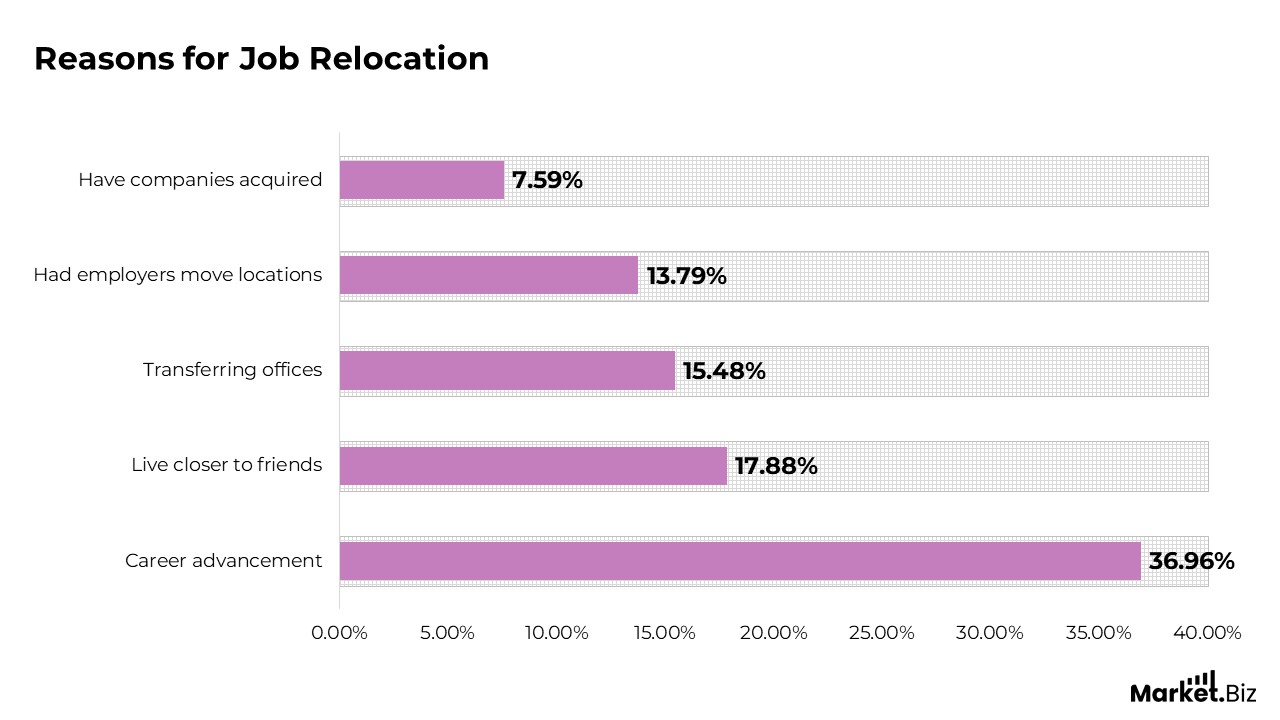
(Source: Jobera, WP-Content)
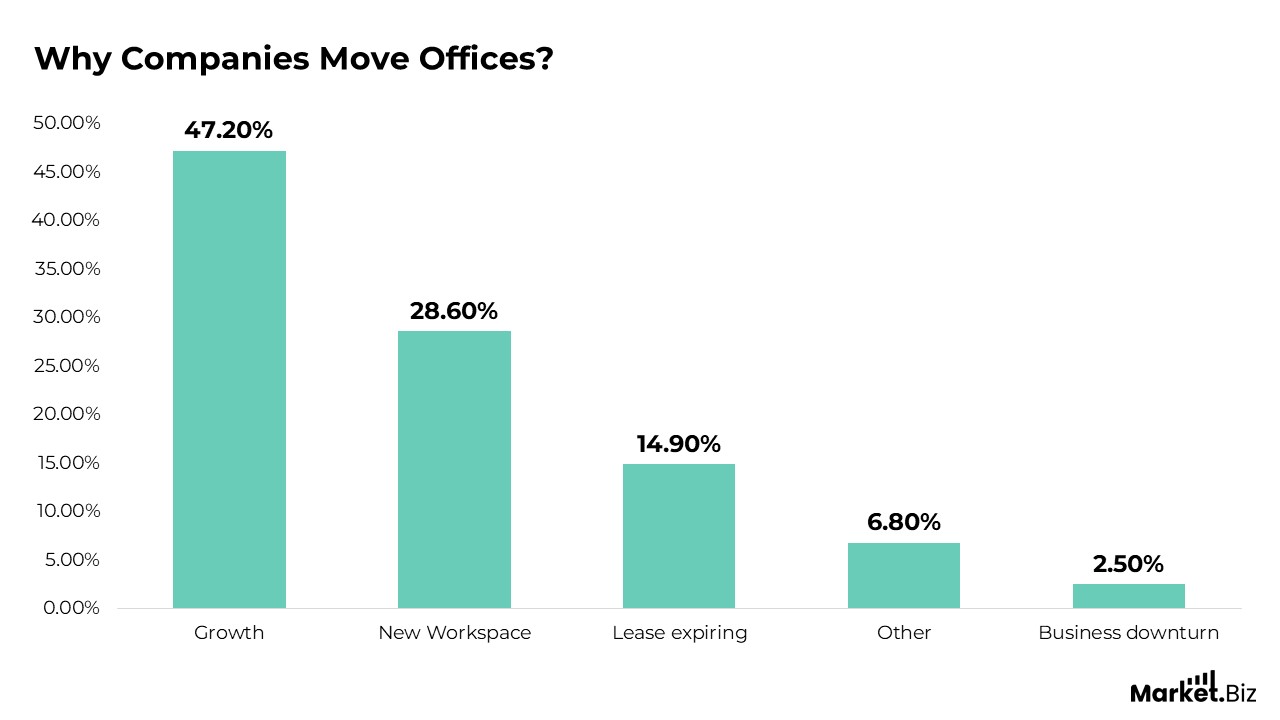
Why Companies Move Offices?
- By relocating, nearly 61% of companies seem to do it in the name of cutting expenses, primarily pertaining to rent and utilities in expensive areas.
- Three out of five employers said that relocation would help them to open up to a better talent pool because it would be closer to a place where skilled professionals live.
- As companies grow, 42% would need larger space now that they would be accommodating new teams and new functions.
- As 74% of the companies embrace hybrid work, many are downsizing or redesigning their work locations.
- However, the main reason for going in those directions is to shorten the commuting lengths of employees, with 66% of employees really caring about the lengths of travel.
- Modern buildings with better tech, green certifications, and amenities are a great temptation for companies that are growing.
- About 30% of office relocations happen when their lease runs out and gives companies a chance to rethink their needs.
- Mergers and acquisitions mostly lead to serving office consolidation-these accounted for 18% of moves last year.
- Common relocation purposes include businesses wanting to move closer to clients or to the new market, especially for B2B industries.
- A brand new office, for instance, in a prime location or stylish surroundings could do wonders for building up a company’s brand image and visibility.
- Being close to suppliers, partners, or logistics hubs makes day-to-day working easier and less costly.
- After COVID-19, 53 percent of companies are more focused on safer buildings with better health infrastructure and HVAC systems.
(Source: Exactdn, WP-Content)
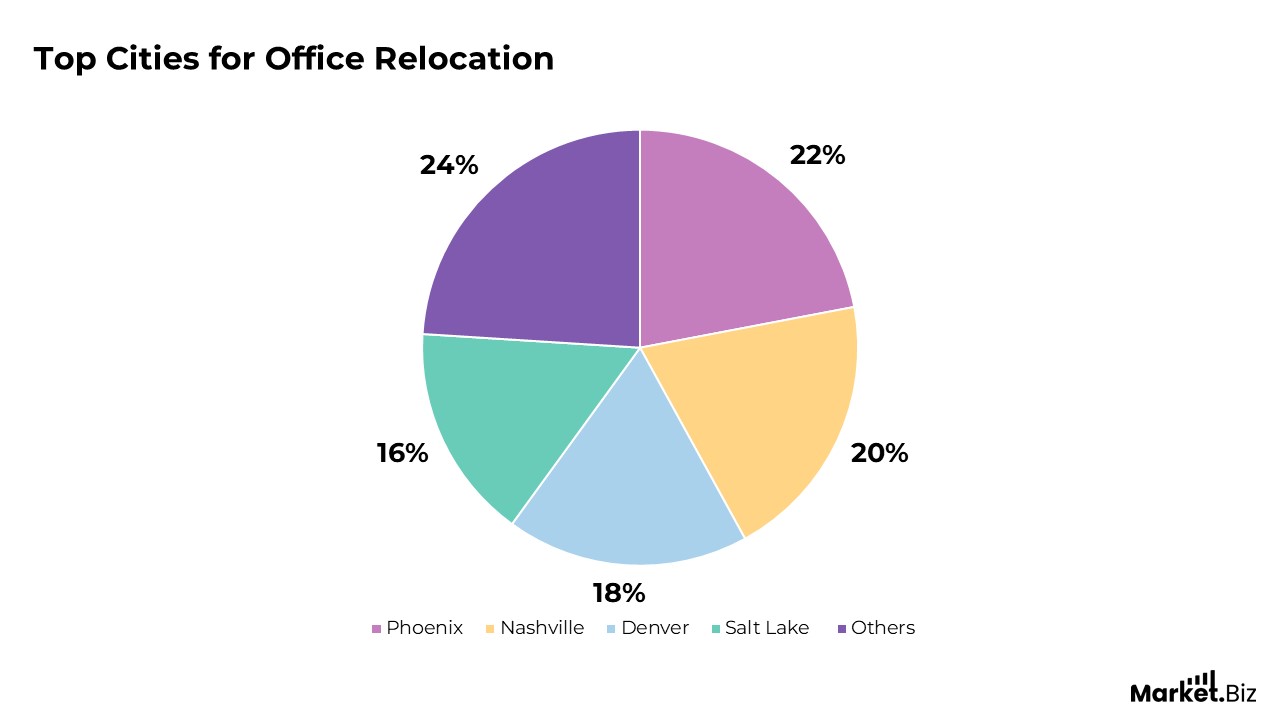
Top Cities for Office Relocation
- There is, however, one bright relocation star yet to be displayed. The latest data was Nashville HA, which reported a flurry of 20% initial occupancy from office space.
- Still traveling farthest in corporate relocation are Dallas-Fort Worth. During the last decade, around 175 corporate offices moved in.
- Denver’s cost brings businesses in for lifestyle rather than money which made demand in office space rise to 18% since 2020.
- Phoenix offers inexpensive office space combined with a young population, increasing the relocation count by 22% compared with the count in the previous year.
- Atlanta is probably one of the most dynamic places in terms of the talent that it draws, with high students for itself, connections, and over 80 Fortune 1000 companies under its roof.
- Salt Lake is pretty close behind when it comes to the fastest-growing tech job markets regarding pushing an increment for office expansions and relocation of 16%.
- The Research Triangle within Raleigh-Durham can attract biotech and R&D companies that create a significant demand for office growth every year.
- Though some are leaving, Chicago draws many regional headquarters due to its location and its infrastructure, especially in logistics and finance.
Office Relocation Costs
- On average, the office moving price goes anywhere from $5 to about $12 per square foot, depending on locality, layout, and services.
- A mid-sized office moving exercise, considering logistics, may range from $50,000 to $120,000, including IT set-up, downtime, and other associated costs.
- About 20-25% of the budgets for office relocations have been allocated for IT infrastructure because server rooms and cabling requirements account for most of the cost.
- Costs run anywhere from $1,000 to $10,000, depending on how much you want and the state.
- Often overlooked is the revenue loss: productivity losses per employee average $2,000-$3,000 for each day away from work.
- A tenant build-out-from painting to carpeting to lighting improvements, costs $10 to $50 per square foot, based on the depth of customization required.
- Hiring a relocation project manager will add 10-15% to your overall budget but will save you from time overruns and surprise costs.
- Address change marketing-featuring signs, stationery, and website updates-could run another $2,000-$5,000 for a small business.
- These insurance and legal fees, which may apply 1% to 3% of the total relocation costs for liability and compliance purposes, have been ignored.
- Long-distance moving, where interstate logistics come in, affords a jump of 25% to as much as 40% in costs, especially when the movement is to be coordinated across the country.
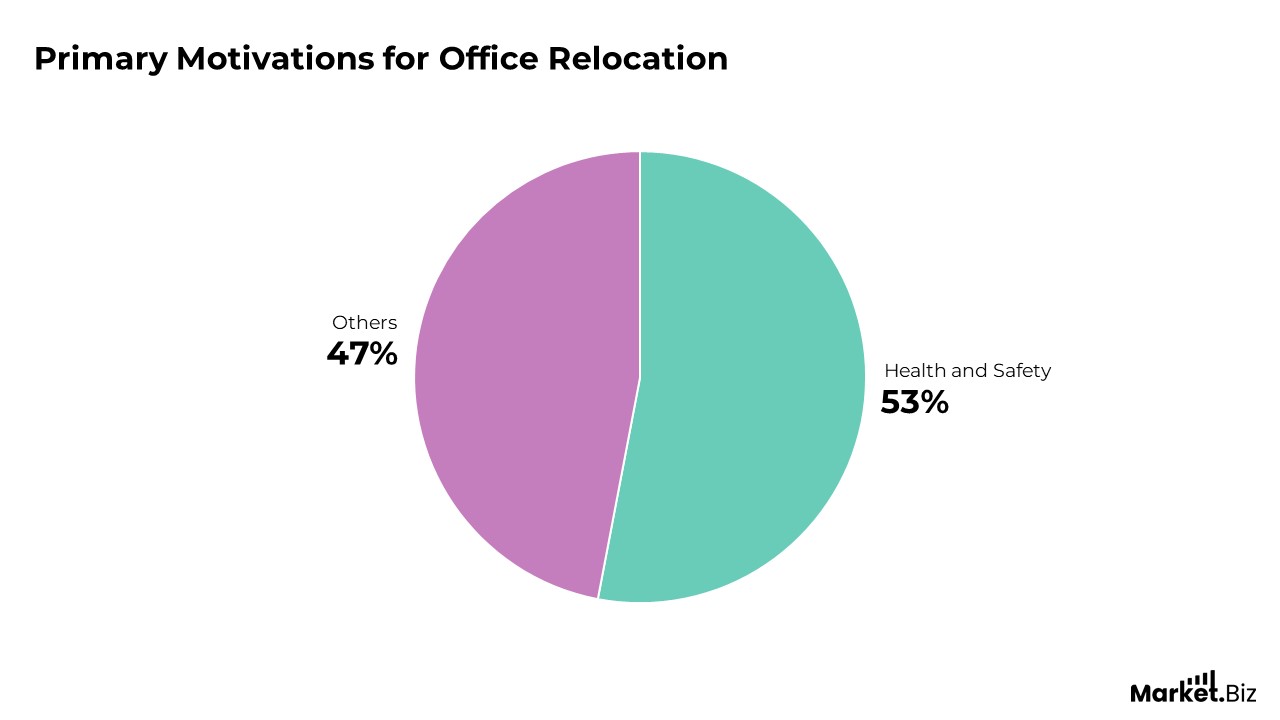
Primary Motivations for Office Relocation
- Operational expenses, particularly in high-rent jurisdictions, are prompting new office moves for some 61% of companies.
- Relocation is often motivated by talent access, with 57% of firms classifying the availability of skilled labour as a prime consideration in site selection.
- 74% of companies implementing the hybrid work model are going through the relocation process to optimize space and reduce wasted square footage.
- Expansion of any type results in relocation 42% of companies cite the need for more space to accommodate planning projects and the expansion of their workforce.
- Proximity to client’s matters-BTOB companies estimate that service efficiency could improve by up to 20% when the relocation is closer to major clients.
- Better facilities and standards of work environment and building attract and retain employees-Gen Z and millennial employees especially.
- Lease expiration often serves as a natural decision point 30% of relocations are triggered where companies rethink needs at the end of a lease.
- Tax incentives and pro-business policies are also considered in determining moves, especially toward Austin, Nashville, and Tampa.
- Approximately 18% of office relocations are triggered by mergers and acquisitions, as these businesses consolidate their physical footprints.
- Brand image upgrade is a very strong motivation-interestingly branded endeavours aimed at upgrading credibility and elevating visibility: relocation into older state-of-the-art modelling buildings.
- Companies are looking for better infrastructure focus has now shifted to improving internet connectivity, green building certifications, and wellness attributes.
- Employee satisfaction increases with easier commutes 66% of workers surveyed indicated that the location is an important aspect of job satisfaction.
- 53% of companies recently began prioritizing health and safety due to COVID, beginning moves to upgrades in buildings with HVAC systems and touchless technologies.
Regional Relocation Patterns
- State-wide in the Sun Belt-Texas, Florida, Arizona-was even a 28% increase in office relocations due to cheaper costs and much warmer temperatures.
- California is still losing people; over 352 HQs moved out of California between 2018 and 2023. Most migrated instantly toward Texas.
- The New York firms have turned operations increasingly to New Jersey and Connecticut in where cost savings amount to almost 30% in rents.
- Southeast gains traction, and cities such as Atlanta and Charlotte are gaining ground in office demand by 15 to 20 percent.
- Columbia and Indianapolis-based Midwest metros are now emerging as undiscovered treasures for companies because of the good deal in real estate.
- With suburban leases up an average of 12% year over year, companies have vacated expensive downtown cores for suburban hubs of activity.
- In Texas alone in 2023, there were 4 of the 10 top destinations for relocation, headed by Austin and Dallas.
- Mountain west is witnessing the emerging rising stars, Utah, and Colorado because of the tech boom and additional 17% population growth within the last decade.
- Lease activity increased 26% for South Florida, mainly Miami, basically with the office being occupied by finance- and crypto-related firms.
- Companies are moving from the Pacific Northwest to the Rockies as at least double-digit growth is being reported for office absorption in Boise and Salt Lake City.
- Northeast Corridor is undergoing decentralization now since small cities such as Raleigh and Richmond are emerging destinations for relocation.
- Cross-border relocations into Canada have subsequently fallen 8% due to companies’ regional re-entering towards growth within the United States given the shifting trade and taxes after 2020.
Industry-Specific Relocation Behaviours
- Some 35% of transitions were made by tech firms from Silicon Valley to be low-cost alternatives, such as Austin, Denver, and Raleigh.
- Results are mixed, with Miami and Dallas emerging as a kind of magnet for the financial services sector, wherein 23% of relocation choices are driven by tax incentives and deregulated environments.
- Healthcare organizations tend to relocate downstream of research universities, with Nashville and Boston being prime picks where talent pools concentrate in the medical field.
- States like Ohio or Indiana will attract manufacturers that offer relocation lower by 20 to 30% and better logistic access.
- Law firms and consulting firms typically stay within high-end metro areas but shift from downtown offices to suburban campuses with cheaper lease rates.
- 15% of media and entertainment companies, while moving away from L.A., have relocated to Atlanta and Albuquerque.
- Biotech sectors would prefer to be close to innovation. San Diego, Cambridge (MA), and the Bay Area remain the favourites for that, notwithstanding the costs.
- More than 40% of retail headquarters are starting to relocate closer to distribution centres sited in the Midwest or Southeast for optimal fulfilment logistics.
- Non-profits and other NGOs are starting to move to secondary cities like Minneapolis or St. Louis for the sake of administrative cost-cutting and tapping into local talent.
- Education companies are clustering around university towns, identifying Ann Arbour and Chapel Hill as emerging targets for niche relocations.
Industry-Specific Mobility Rates
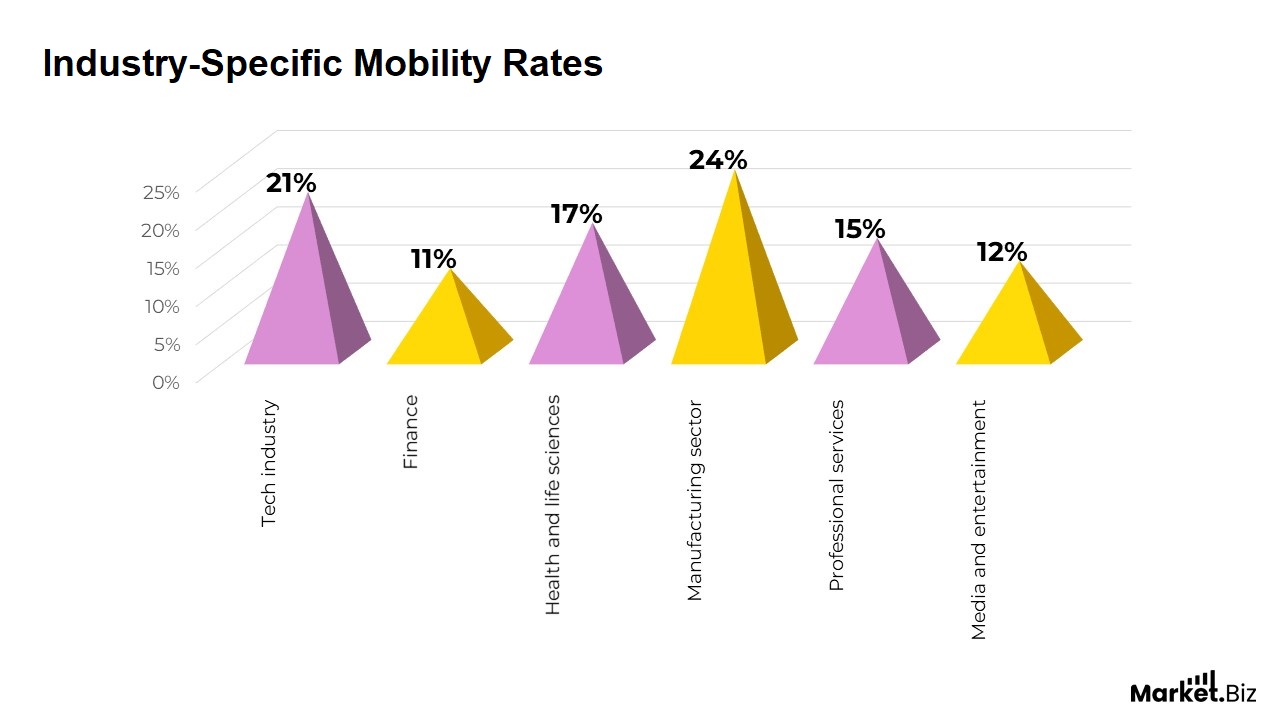
- The tech industry ranks highest for relocation mobility, with 21% of all tech companies moving or considering moving between 2020 and 2023.
- All companies in mobility follow by at least 11% mobility in the finance and insurance moving companies-from highly taxed New York to Florida-and Texas.
- 17% mobility was given to health and life sciences, but it is tied mainly due to the talent pools or R&D hubs.
- Companies from the manufacturing sector have 24% mobility, which is mainly induced by access to logistics corridors and labour cost benefits.
- The mobility figures for professional services (legal, consulting, accounting) run at a low level: 15%, since most of them are client-centric and would be situated in the CBAs.
- It was finding the lion share of new relocations-purring 12% of media and entertainment operations relocated to lower cost creative centres, often outside California.
- The mobility rate of 31% should also be the retail and e-commerce headquarters, which touches upon almost anything, shifting in supply chain networks to regional access to distribution.
- Education indeed presents a unique mobility metric of 12%, but still, many strategic relocations are beginning to come out so close to academic ecosystems.
- Close to 19% of all non-profits have at least one or more purpose for moving: lower operating costs or finding talent through a community association.
- 26% is mobility in the energy field because most of it is moving into states with better infrastructure and friendly regulations towards policies.
Workforce Mobility by Demographics
- Mobility in this demographic-70%, with most Gen Z graduates being more mobile than ever for a relocation. Usually, it is around these cities where affordability and lifestyle pull more of the weight in decision-making.
- In excess of 70% of Gen Z workers will move into cities that offer such amenities visible parts of street culture supportive of working from home for the job.
- A rather scant percentage would consider Gen-X’s 38% and largely binding to the ideas of family stability and an established community to effect such relocations.
- Baby Boomers have very low mobility, with an estimated 15% willing to relocate for benefits in high-level and consulting roles.
- Usually, single professionals are 2.1 times more likely to shift for work as compared to married ones, mainly to fast-growing or developing cities.
- Conversely, employees get 45% more likely to relocate since the quest for job opportunities in the hubs of technology, healthcare, or finance.
- Diversity-based relocation trends: minority professionals are gaining more prominence in migrating to work in cities with more engaging and inclusive cultures like Atlanta and Austin
- Workers older than 62 years have high tendencies for relocation due to absence of dependents in their families.
- And where these workers are now staying is different. 31% have moved into different states between 2020 and 2023. This shift in lifestyle is brought about by remote work that stems mostly from living costs.
- Women are moving less at 12% for work compared with their male peers, with reasons ranging from caregiving responsibilities to perceived threats of personal security or safety.
Challenges in Workforce Mobility
- Before moving out, they usually have to go through this border-to-border house-hunting.
- Over 46% of working individuals and own property in a different city say they will not move just for a job to a higher rental or home price location.
- With kids, however, the choices about moving differ. Along with all the other weighing factors, about 37% of parents cite education and childcare as reasons for their reluctance to move.
- Dual careers: Negatively impact for 29% of employees since the couple’s job is a factor in deciding whether to move or not.
- The emotional baggage of home is not easy to let go of. Old memories and connections matter more to 1 in 4 employees than a new job.
- Government procedures and continuous changes in immigration and visa policies are real hindrances. More than half of all global relocations across the continent stumble into a very thick veneer of red tape.
- However, it’s actually rather expensive to move, averaging from $19,000 to $24,000 for relocation of a mid-level employee, and not all companies can afford to do it.
- Culture shock often leads to dropouts, where an estimated 22% of international relocation attempts face an adjustment and retention issue.
- The game’s changed with remote work. Now, you have 45% asking, “Why move?” when they can log in from anywhere.
Virtual Mobility and Borderless Work
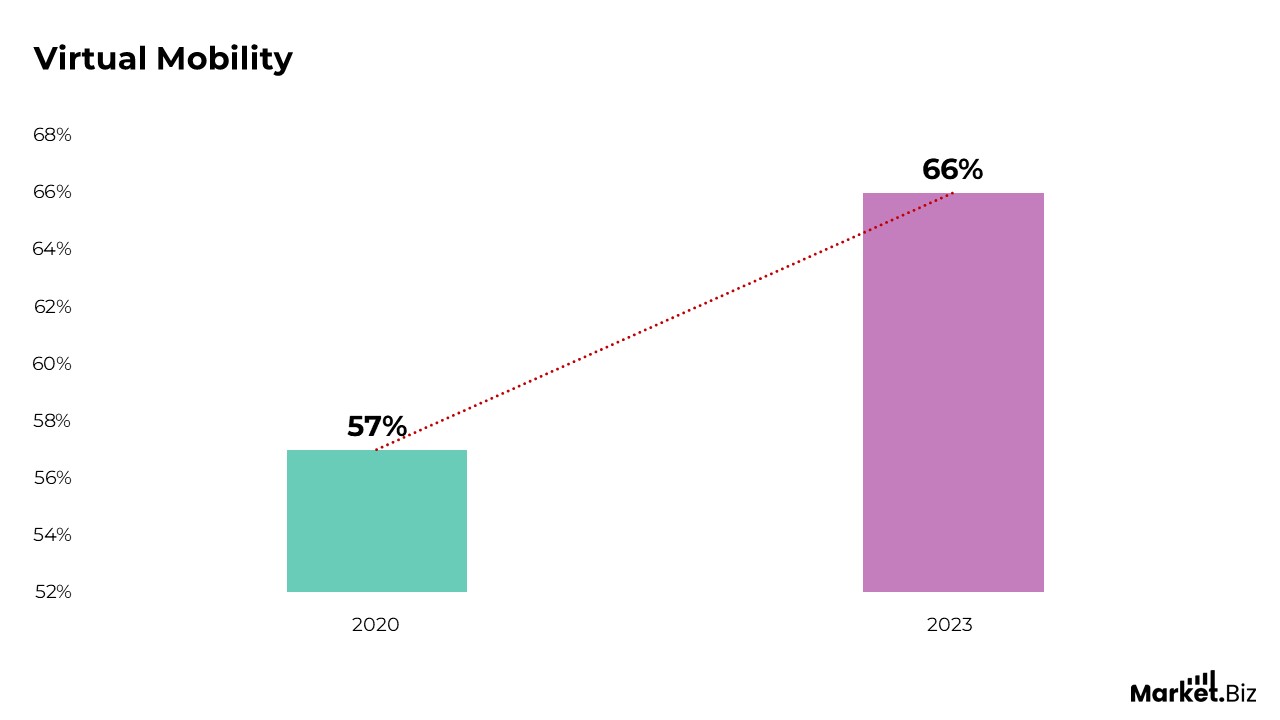
- All work is basically remote. Borderless and hybrid working have found some footing in 74% of businesses.
- There are about 35 million people around the globe identifying as digital nomads as of 2023, whereas there were only 11 million in that category as of the year 2019. This increase indicates the rise in global digital nomadism.
- Hence, the talent pool is now global. Over 58% of HR leaders affirm that they are now hiring across borders to gain skills that are not available in their regions.
- It does take some time for time zone flexibility to kick in. Quite a few remote-first companies, in fact, 42% are focusing on hiring in overlapping time zones to eliminate collaboration difficulties.
- Compliance across borders is painful. About 39% of companies suffer legal and tax headaches in their multi-national distributed teams.
- Virtual mobility saves relocation expense. Companies could pocket savings averaging about $20,000 for not relocating employees.
- But, this resource has become very much essential with the increased use of more than 300 since 2020: Cloud-based collaborative tools like Slack, Zoom, or Asana.
- Work anywhere has been an advantage for retention for businesses. Flexible companies see 25% less turnover than inflexible ones.
(Source: Teamraderie, WP-Content)
Recent Trends in Relocation and Mobility
- The hybrid working model is reshaping mobility since 68% of study companies are said to have altered their brick-and-mortar facilities and relocation strategy for a flexible model.
- Therefore, a lot has been said about the rise of minor urban centres (not metros, but major urban areas), where destinations such as Austin, Nashville, and Raleigh have seen interest rise to 20% above the curve.
- There is an increase in employee-driven moves, with 32% of ex-Company workers shifting to other places because of lifestyle or cost-of-living issues.
- UK’s short-term assignments have been competitive when compared to the latter in global roles; 41% of companies now use project-based policies.
- True to maintain as world businesses, the downward trending of the traditional relocation budget has seen an average reduction of 18% since 2021 from the past. So the second emerging trend could be cost containment here.
- Now, with virtual assignment becoming the thing, the concern here is around the use of digital platforms for syncing remote on-boarding processes and relocation support to 60% of HR teams.
- Sustainability is paramount as 44% of employees in the 18 to 24 age group prefer relocation programs with minimal carbon footprints.
- Cross-functional mobility is the growing trend when, essentially, internal lateral transfers and upskilling across departments are replacing the bulk of geography transfer cases.
Conclusion
The relocation of offices and mobility of workforces have no longer been seen as the routine transaction to get completed, but rather the primary tool for agility enhancement, employee retention, and efficiency improvement. As hybrid forms of work and flexible office models become ever more practiced within organizations, decision-making on space is also becoming decidedly people-oriented.
To be successful today requires a deep understanding of putting together fitting plans backed-up by digital tools and strong mobility support in order to allow for an essentially seamless transition. Relocation at this growing juncture is no longer just about moving offices; it is about creating a much smarter, more flexible future of work.
FAQs
Moving can inspire innovative ways of working. It makes it easy to create open work areas, collaboration areas, small acoustic rooms, hot desk areas and lunch packages for employees.
Global mobility, also known as employee shifts, is an HR process in which companies can postpone workers from one location to another to meet the company’s operational, strategy or development needs.