








Introduction
Workplace Gamification Statistics: Gamification isn’t just a buzzword. It is a successful business tactic that changes the way business motivates employees. Thanks to gamification in training, 90% of employees feel more productive at their workplace and 35% of employees report better productivity.
According to the numbers, 78% sales teams are hitting higher quotas to 40% lower turnover rates in gamified on-boarding, and the numbers don’t lie. We saw an unbelievable growth in remote works during COVID 19 pandemic and after the pandemic as well. And as remote work becomes widely accepted, gamified platform improve their collaboration rates by 45%, making its presence more than just fun and games.
Editor’s Choice
- It is forecasted that by 2030, the gamification world will reach $96.8B of which education, health, and enterprise were the fuel to demand there.
- 90% of employees say they are motivated better with gamified training, but only 20% of complete satisfaction with it.
- New hire ramp-up time is reduced by 30%. The company sees a 40% reduction in turnover.
- Remote teams using gamification collaborated 45% more and felt 73% more connected to one another.
- From AI-based gamification, it can be expected that by 2026, 45% of the market will be served, therefore increasing the personalization and retention.
- 78% of sales teams will achieve their targets faster with gamified CRMs, while reducing blend by 25%.
- Gamified cybersecurity will reduce click through rate on phishing by 50% with much greater digital safety.
- In health care, gamified applications can increase adherence to treatment by as much as 66% by offering different types of rewards and streaks.
- Retailers employing gamification tend to be 22% more converting, including 60% of loyalty programs making use of gamification.
- 93% of Gen Z and millennials prefer gamified tools that synchronize across devices on their mobile devices.
- Gamified learning can improve a person’s knowledge retention beyond 5% to 45%.
- Gamification will bring in returns of five times within a year for companies through improved engagement and output.
What is Workplace Gamification?
Gamification in the workplace is a tool for improving engagement and performance by practically using gaming mechanics like points, leader board, and rewards. Around 90% of employees report that training with game-like elements increase their motivation and productivity. Instead of doing things the regular way, it plays on core motivation.
Gamified teams achieve their goals 1.5 times faster, for example sales incentive programs and cybersecurity training, which can be seen to reduce click through rates in response to phishing emails by 50%. Gamification turns boring tasks into fun challenges. Around 80% of Fortune 500 companies are using the gamification concept. But the successful way of doing things is rewarding employees meaningfully, not on points.
General Workplace Gamification Statistics
- According to findings 72% gamified training is engaging compared to traditional methods. When gamified companies observe that learning programs are held with increased attendance for 50% longer periods.
- Sales teams with gamified targets hit quotas 78% faster and reduce turnover by 25%.
- While 90% of employees claim that gamification increases motivation, only a mere 20% of them are satisfied with its implementation.
- Gamified programs for wellness have attracted 60% more participation.
- Due to the presence of reward mechanisms or progress tracking, improvements in productivity could be as such as 35%.
- Remote teamwork with gamified tools collaborates 45% more.
- 83% of employees who aged 35 and under prefer gamified feedback over annual performance reviews.
- Gamified cybersecurity training shares the phishing click-through rate.
- In 89% of the cases, leader boards will increase performance.
- Gamified on-boarding reduces ramp time for new hires by 30%.
- 65% of Fortune 500s now use platforms like Bunch ball for training.
- Customer support gamification increased CSAT by 15%.
- About 40% of remote employees admit they would skip training without game aspects.
- Projects accomplished by teams with real-time productivity tracking will be completed 22% faster.
- Gen Z workers are 2x more likely to engage with gamified tasks than lectures.
- Gamified goal-setting increases goal achievement by 33%.
- In 2025, 80% of gamification should be using AI for personalized rewards.
Global Gamification Market Trend
- According to projections, the market size of gamification would grow to $58.8 billion in 2028 thriving at a CAGR of 27.4% as engagement becomes the primary focus of organizations.
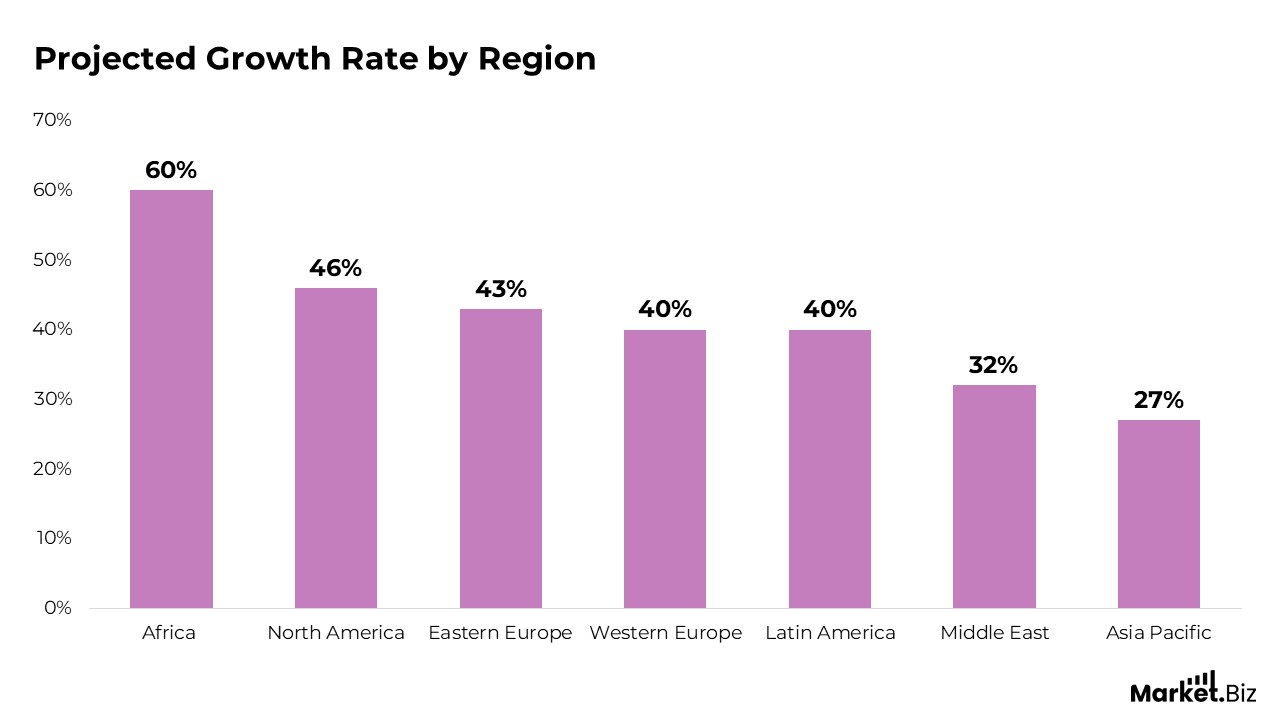
- North America holds the largest share of 42% of the total market; however, APAC grows faster at 35% a year due to mobile penetration.
- Now, it is being practiced by 80% of the Fortune 500 companies as compared to just 65% in 2020, thus discouraging acceleration in enterprise adaption.
- The major application for gamification has student learning, as gamified learning management systems have been shown to have a completion rate of about 50% better than traditional systems.
- Patient app compliance issues within healthcare gamification will spur 38% annual growth in this segment till 2027.
- In fact, according to the average case, retail gamification increases the rates of sales conversions by 22%. This is why 60% of all loyalty programs are embedded with gaming components.
- AI will make up 45% of the market by the close of 2026 in gamification, pushing personalization in real time.
- Expenditure meant for employee engagement would cover $12.4 billion as companies contest against quiet quitting.
- By increasing own adoption of immersive training, within all types of investments in VR gamification would multiply three-fold in 2025.
- In 2019, the gamification in finance notched up about a 300% increment; fintech applications have raced ahead in the digitization race.
- Gamification has proved significant for 65% of managers across the globe and greatly improved performance metrics of teams.
- Out of 28%, that is UK enterprises who have gamification into their business processes, while closely following it is Germany with 22%.
- As Latin American consumers acquire more and more smartphones, this regional market for gamification will grow about 41% a year through 2026.
(Source: Growthengineering, WP-Content)
Gamification Tools & Platforms
- Kahoot! attracts over a billion participating players every year. It heads the list of gamified quiz tools widely utilized by schools and businesses.
- More than 75 million active users visit Quizizz every month to provide a very customizable gamified assessment for schools and training.
- ClassDojo is the program used by more than 95% of all primary schools in America for gamifying classroom behaviour through the use of points and avatars.
- Duolingo, as a language app, keeps learners glued through streaks, XP, and leader boards and currently has more than 74 million active users.
- Miro is just primarily a whiteboard, but it uses gamification in the templates and voting for more than 60M users who virtually collaborate.
- Google Classroom is in place for those gamified tools like Flippity and Badge Maker, which award badges for progress by teachers.
- Quizlet is used by more than 60 million students each month and makes studying into games with its flashcards, Match, and Gravity modes.
- Global live audiences of over 200 million users captured by Mentimeter participate in interactive presentations through instant gamified polling and quizzes.
- Trello is another project management system where Power-Ups like “Card Aging” and reward systems for tasks facilitate gamification.
- With over 4 million users for whom improvements in many areas are through rewards and challenges, Habitica turns daily tasks into role-playing games.
- Socrative uses gamification for quizzes played in thousands of classrooms in over 180 countries to increase student participation.
- Edmodo is a gamified platform for badges and challenges among its more than 100 million users learning in communities.
- Slack is a platform that has gamification bots like HeyTaco! Thousands of teams enjoy using it to gamify peer recognition points to boost morale and affiliation.
Millennials & Gen Z’s Preference for Gamification
Millennials’ Preference
- Badges, points, and rewards-the elusive motivation for some 78% of millennials.
- For a 60% share of millennials working in an office, gamified training adds productivity.
- In the loyalty program that has elements of challenge as well as game mechanics, there is a 70% enrolment.
- Most are preferring game-based tools for learning such as Homage and Duolingo-an aggregate of 67%.
- More motivation goes to 59% when competing with peers and leader boards.
- 93% would prefer mobile platforms like Habitica and Quizizz.
- As Gamified ways of saving like Qapital, it has helped save for some millennials.
- 63% use health apps that employ goal-based gamification such as Nike Run Club.
- Millennials have shown an interest in gamification that has a purpose such as Charity Miles.
- 58% want their avatars to be customizable and their experience personalized along the app journey.
Gen Z’s Preference
- 90% of Gen Z play games regularly and set higher expectations from gamification.
- Signifying their preference for tools that are more interactive and visually stimulating, Gen Z prefers Quizlet Live and TikTok quizzes.
- Instant feedback tools such as Kahoot! are suiting Gen Z’s needs into speed.
- For mental wellness, Happify gamifies activities for self-care by the Gen Z.
- Gamified job simulations are provided by career platforms such as Forage.
- 65% of the audience is getting much more engaged with gamified creator content.
- Team play and social challenges are what keep Gen Z glued to their apps.
- Gamified AR apps lead to 22% purchases among this generation in apps such as Nike.
- Eco-gamification is in accordance with Gen Z by the sense that it taps in to their sustainability values.
- 78% of Gen Z expect gamified tools to sync smoothly across devices.
Gamification in Remote Work
- Gamification in remote work can increase employee engagement by 60%.
- Remote workers have reported feeling more connected with their teams 87% of the time by using gamified tools.
- When it comes to sales performance in remote teams, it can be improved by 30%, thanks to leader boards and real-time feedback.
- Peer recognition gamification boosts confidence and improves internal communication.
- Remote employees can see their time-to-productivity cut in half with the help of gamified on boarding.
- Gamified learning tools can allow up to a 90% retention of knowledge during remote training sessions.
- Quizzes and game apps energize the team meetings.
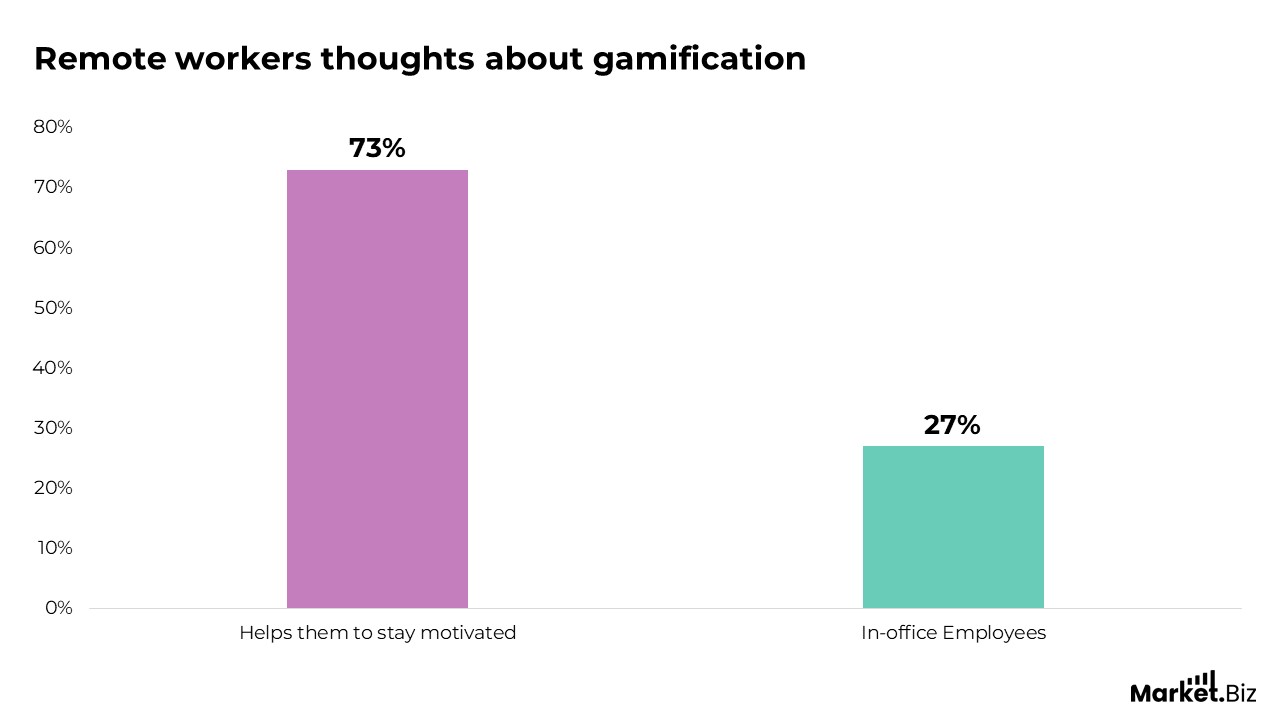
- 73% of remote workers feel that gamification helps them to stay motivated and connected.
- Task completion rates improve by up to 25% with gamified progress tracking and rewards.
- Gamified challenges can boost participation in wellness programs by 56%.
- Game-based performance rewards improve team collaboration by 24%.
- By combining daily quizzes and micro challenges, remote teams stay alive and alert.
- Gamification degrees keep virtual meeting fatigue at bay, with 68% claiming more engagement.
Workplace Gamification by Industry
- Gamification is a way that more than 70% global tech firms high use to engage employees and boost productivity by 40%.
- Gamified training platforms saw a 60% increase in the retention of knowledge amongst the healthcare employees.
- More than 85% of the retail companies which applied the gamified sales dashboard showed higher-than-normal increments of over 30% within the quarterly performance parameters.
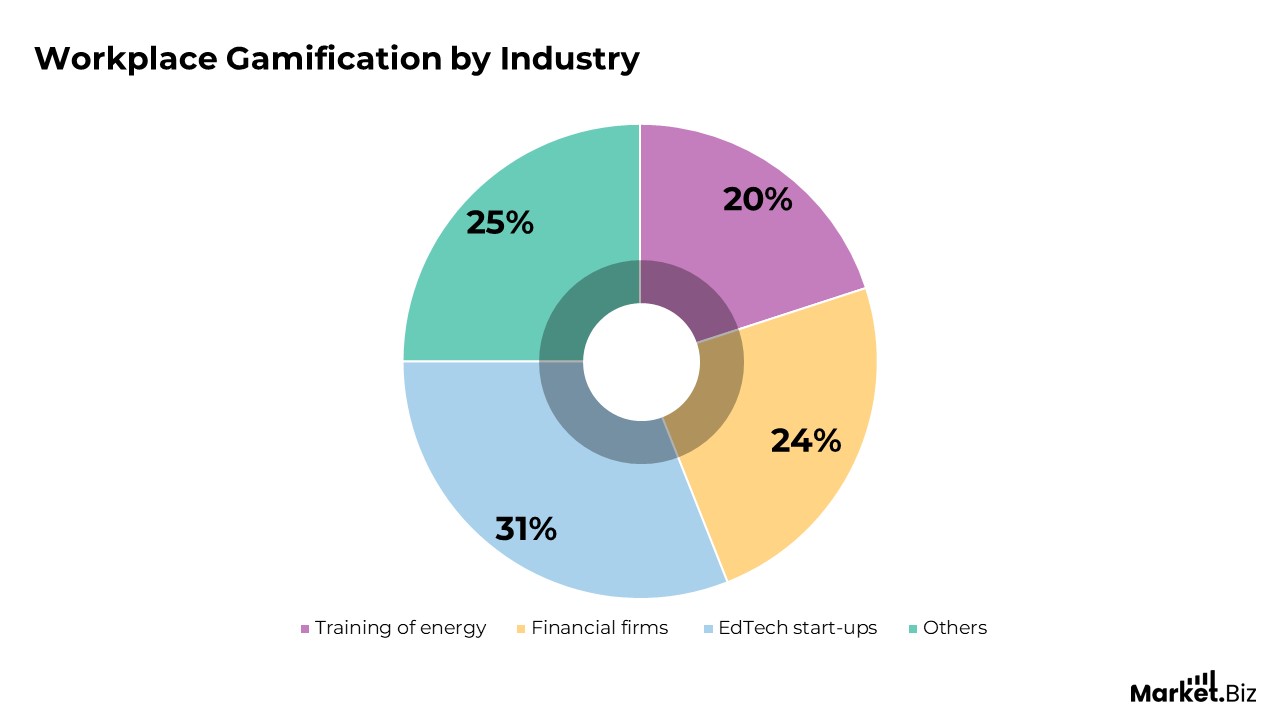
- Gamified training of compliance in financial firms reduced the confined breach of regulations by 24% through error reduction.
- 31% of EdTech start-ups used gamification techniques to increase LMS usage through students and instructors alike.
- The alternative uses gamification in manufacturing operations such as task-based challenges, resulting in an increase of efficiency of the overall operation by 20%.
- Using gamified leader boards in the BPOs led to an undesired scenario of 50% reduction in employee churn rates.
- Companies incorporate gamification for training rides optimization that allows delivery accuracy to increase by over 15%.
- 33% increased associate engagement for law firms using gamification case simulation and learning tools.
- Half as successful was agencies creating gamified goal-setting tools with campaign-delivery rates on time.
- Gamified citizen service training in the public institutions now reduces speed loss in performing tasks by 28%.
- Impacting in the training of energy and utilities, there was a reduction of more than 20% in workplace safety incidents in 2024.
ROI of Workplace Gamification
- Companies that uses gamification report on average 48% improvement in the employee work engagement that directly affects output and revenue per employee.
- Companies report a 22% increase in profitability when gamified efforts are linked to performance incentives and recognition systems.
- Sales agents using gamified CRMs achieved conversion rates that were up to 15-20% better during the first six months.
- The training costs of new hires can be reduced with as much as 35% with the help of on-boarding programs that are gamified and the overall time can also be decreased by 25%.
- Businesses with gamified learning management systems were able to improve knowledge retention from the traditional 5% to 45%.
- Gamification helped lessen absence by better morale, recognition, and teamwork by 18% with year-on-year impact.
- Companies which adopted gamified wellness programs decreased their health care per employee cost by 28%.
- Gamification in Call often led to a turn-around of almost 50% and reduced re-hiring costs to $3000 per agent on an annual basis.
- A new approach to customer service workflows, gamification, increased CSAT scores by 30%, resulting in improved loyalty and reduced churn.
- Companies using gamified task management systems reported a 26% increase in project completion rates.
- Gamification of standard operating procedure adherence had improved productivity in manufacturing by about 20%.
- Generally, the ROI of the gamification platforms averaged 5x within a span of 12 months as measurable improvements were seen in productivity, retention, and training efficiency.
AI & Gamification
- Gamified learning paths created by AI have been shown to increase engagement with learners by almost 60% for corporate training purposes.
- Predictive analytic in AI gamification helps in identifying high performance employees 30% more quickly than the conventional method of appraisal.
- More than 65% of currently gamified applications employ AI to dynamically modify the degree of difficulty and as a result, improve retention rates by 45%.
- Gamified AI chatbots increase user interaction time by 2.5 times as compared to non-gamified interfaces.
- Adaptive AI engines of gamified healthcare tools extended patient loyalty to the routines by 35%.
- AI-powered gamified assessments in recruitment help in reducing time in hiring by 40% and raised quality-of-hire metrics by 28%.
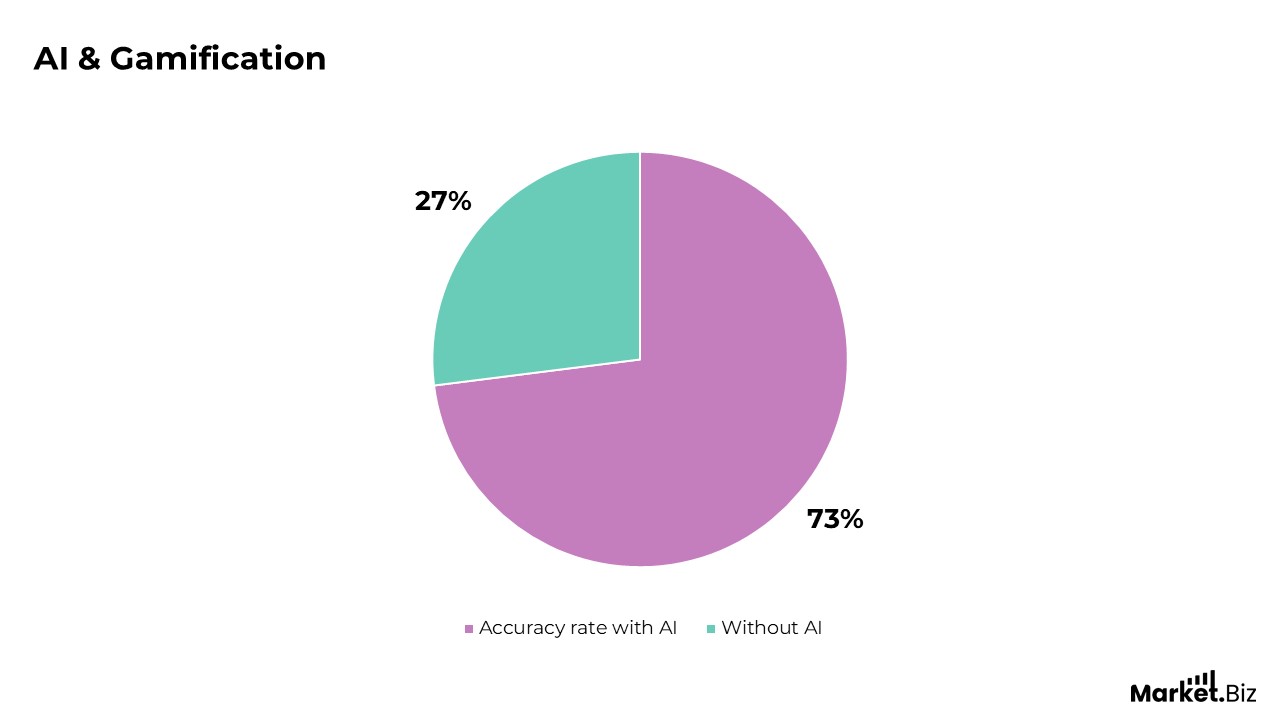
- AI can predict blend in gamified customer loyalty programs with an 73% accuracy rate, which is important for re-engagement campaigns that are targeted.
- AI algorithms analyse gamification data so that they can optimize workflows, resulting in 20% productivity improvement for agile teams.
- Real-time feedback and motivation systems with AI gamification in education increased test scores by 22%.
- Sentiment analysis in gamified employee feedback tools can sometimes predict withdrawal signals more than 3 weeks in advance.
- Retailers using AI in gamified mobile apps saw a 32% increase in daily active users and a 25% increase in average order value.
- EA gamified-environment apps in cybersecurity training reduced human error-related incidents by a whopping 38%.
- Deep learning models personalize in-game rewards and improve user satisfaction levels in the enterprise application by 50%.
Future of Gamification
- Driving factors for the increasing demand for user engagement are education, healthcare, and enterprise software; so, the gamification market is expected to grow rapidly in catchment operations. By the end of 2030, the market is expected to be nearly $96.8 billion at a phenomenal CAGR of 24.8%.
- Currently, 70% of the Global 2000 companies use gamified training modules to the effect of improving employee retention by about 60%. The L&D domain is changing with, in addition, an aspect of behavioural science for assessing performance-based incentive systems.
- Almost 90% of the student population gets engaged within gamified e-learning solutions- Duolingo and Kahoot are two leaders championing gamified learning-adoption. Adaptive learning technologies, consists of points systems and badges, result in an interactive form of education.
- Gamification applied to health solutions has increased treatment adherence among patients facing chronic illnesses by 66%. Rewarding features encourage good behaviours through streaks and social comparison.
- Companies that gamify their loyalty programs see levels of engagement increased by 47% and brand loyalty increased by 22%. Starbucks Rewards and Nike Run Club are examples of gamified ecosystems from which ROI can be derived.
- By 2026, AI-powered gamification will usher in hyper-personalized experiences where the game features would adapt in real-time after observing the user’s behaviour, creating the maximum user satisfaction and retention.
- Gamification exploits block chain verification and NFT technology to reward users digitally for proof of earning. This advancement will kick-start the next-generation decentralized engagement model and creator economy.
Conclusion
Today, gamification is seen as an important strategy rather than an outdated fad to engage various sectors like education, health, and business. It helps firms with retention training while motivating employees and ordinarily leads to better performance results concerning in-person or remote work settings.
Organizations have begun to incorporate game mechanics in on-boarding, sales, and learning processes to maximize efficiency and minimize employee turnover. Most employees tend to find gamified experiences motivating; there are shortcomings, though, in effective implementations.
The development of AI will take greater personalization into larger dimensions in gamified systems with real-time adjustment based on user behaviour. As digital transformation moves forward, it will be the framework for working and learning experiences.
FAQs
This is the process of applying game mechanics, such as points and badges, in order to leverage the levels of motivation, engagement, and performance against routine tasks and in training.
Definitely, however, interactive joining a fast track to learning and retention of new hires through goal-based progress.
Education, health care, technology, and retail are taking the forefront in utilizing gamification to accelerate learning, compliance, engagement, and sales.
With AI, a new dimension is providing personalized, real-time challenges and rewards according to user behaviour for better engagement and satisfaction.
Definitely-Millennials and Gen Z will take all means necessary to dispense with mobile gamified tools. Instant feedback, peer competition, and personalisation features are other things they want.