









Introduction
Workplace Training and Development Statistics: Workplace training and development have become critical drivers of organizational success, with businesses investing heavily in employee growth. In 2023, U.S. companies spent over $90 billion on training programs, reflecting a strong commitment to skill enhancement.
Nearly 70% of employees report that learning and development opportunities are a key factor in staying with their current employer. Furthermore, companies with robust training programs see a 24% higher profit margin. As the demand for new skills accelerates, data shows that 61% of employees believe continuous training is essential to keeping pace with industry changes, underscoring the need for ongoing investment in workplace development.
Editor’s Choice
- U.S. companies invested over $90 billion in training programs in 2023, highlighting the growing importance of employee development in organizational success.
- 68% of employees say training programs enhance their job satisfaction and engagement, underlining the direct impact of development opportunities on morale.
- 77% of organizations offer eLearning programs, marking a shift towards more flexible and scalable training methods for a global workforce.
- The global market for Training Management Systems (TMS) was valued at $5.6 billion in 2023 and is projected to grow at a 12% CAGR through 2030.
- 70% of employees report that learning and development opportunities significantly influence their decision to stay with their current employer, impacting employee retention.
- 30% higher retention rates are seen in companies that prioritize employee training, illustrating the value of investing in workforce development.
- 91% of employees state that training programs directly improve their performance and productivity, demonstrating the clear benefits of structured learning.
- 50% of companies reported a 25% improvement in training completion rates with the implementation of TMS, showing enhanced efficiency in training delivery.
- The use of AI-driven training platforms is on the rise, with the global market for AI in education expected to grow by 45% annually, offering personalized learning experiences.
- 80% of employees prefer mobile learning platforms, indicating a growing trend of on-the-go learning to accommodate diverse work environments.
- Companies with strong employee development programs see a 24% higher profit margin and 218% higher revenue per employee compared to those with minimal training initiatives.
- 85% of employees are more likely to stay with a company if they are satisfied with its training and development opportunities, showcasing the direct link between employee growth and retention.
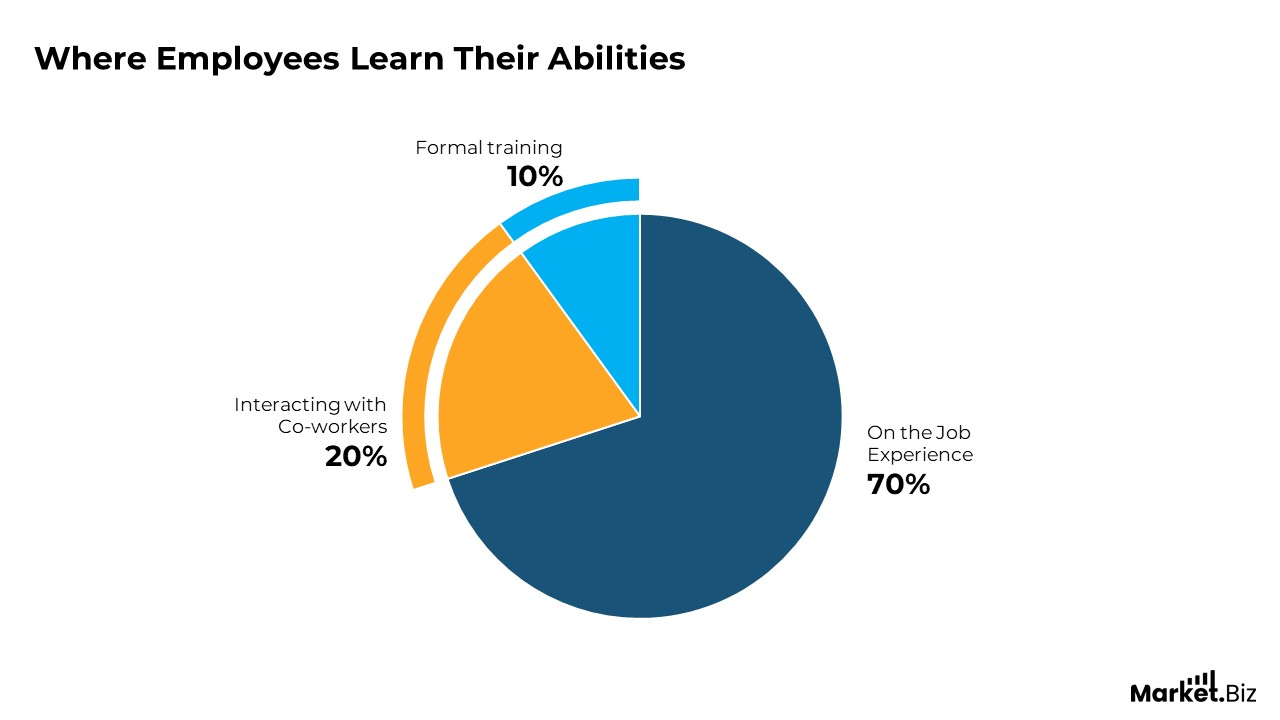
(Source: zippia, wp-content)
General Statistics
- In 2023, global spending on workplace training exceeded $370 billion, with the U.S. accounting for the largest portion of this expenditure.
- 68% of employees say training programs increase their job satisfaction and overall engagement.
- Companies have increased their training budgets by an average of 12% annually over the past five years, highlighting the growing importance of employee development.
- Approximately 77% of organizations offer eLearning programs, reflecting the shift toward flexible and scalable training methods.
- A 2023 survey found that 54% of organizations reported a significant skills gap in their workforce, emphasizing the need for continuous training.
- Around 60% of companies focus on leadership and managerial skills training to improve organizational performance and employee retention.
- Organizations that invest in employee training are 30% more likely to retain top talent than those that do not.
- On average, employees receive 12 hours of training per year, with an increasing focus on both technical and soft skills.
- 91% of employees claim that training programs improve their performance and productivity at work.
- Companies are increasingly investing in AI-driven training platforms, with the global market for AI in education expected to grow by 45% annually.
- About 45% of employees prefer using mobile devices for training, which supports on-the-go learning in diverse work environments.
- On average, companies spend about $1,300 per employee per year on training and development initiatives.
- Companies with strong training programs are 2.5 times more likely to introduce new products or services compared to those with minimal training investments.
- 85% of employees are more likely to stay with their company if they are satisfied with the training and development opportunities offered.
- As remote work continues to grow, 43% of companies now offer virtual training programs specifically tailored to remote and hybrid employees.
Training Management System Statistics
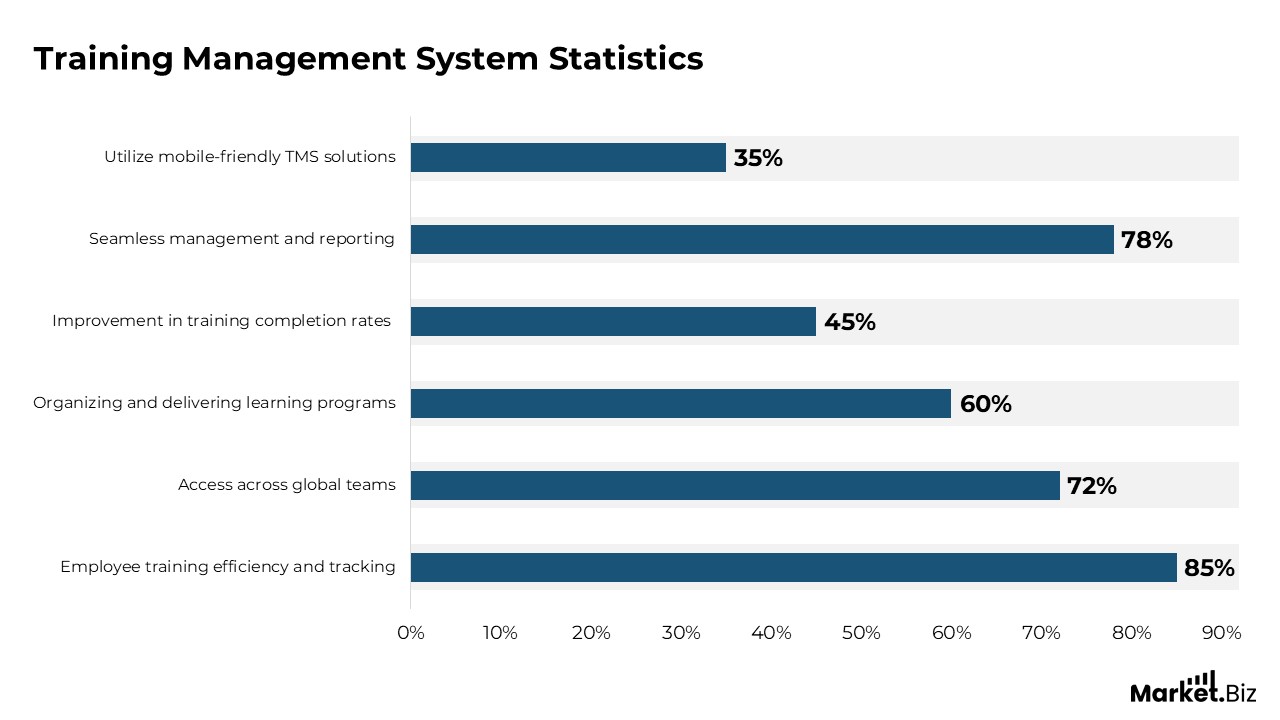
- The global market for Training Management Systems (TMS) was valued at $5.6 billion in 2023 and is expected to grow at a compound annual growth rate (CAGR) of 12% through 2030.
- 85% of organizations report that implementing a TMS significantly improves employee training efficiency and tracking.
- Around 72% of businesses use a cloud-based TMS, capitalizing on its scalability and ease of access across global teams.
- 60% of training managers cite ease of use as the primary benefit of adopting a TMS for organizing and delivering learning programs.
- 45% of companies with a TMS have reported a 25% improvement in training completion rates compared to traditional methods.
- 78% of organizations have integrated their TMS with other enterprise systems, such as HR software, for seamless management and reporting.
- 35% of enterprises utilize mobile-friendly TMS solutions, allowing employees to access training programs from anywhere, at any time.
- 50% of companies report that using a TMS has helped reduce overall training costs by up to 30% by streamlining administrative tasks.
- More than 60% of companies use TMS to track compliance and certifications, ensuring they meet industry-specific regulatory requirements.
- Companies with a well-implemented TMS are 2.5 times more likely to show improved employee performance and retention due to better skill development.
- 53% of training managers indicate that TMS platforms with robust reporting features have improved their ability to measure training effectiveness.
- The average company spends approximately $2,000 per user per year on training management software, reflecting the growing investment in this technology.
Employee T & D Statistics
- U.S. companies spent over $90 billion on employee training and development, demonstrating a growing investment in skill-building.
- 70% of employees report that learning and development opportunities influence their decision to stay with a company, highlighting the importance of retention strategies.
- 41% of employees believe that training programs are insufficient to meet their skill development needs, underlining the gap in available learning opportunities.
- 79% of employees state that they would be more engaged and productive at work if they had access to more training opportunities.
- Companies that invest in employee training see a 24% higher profit margin and 218% higher revenue per employee compared to those that do not.
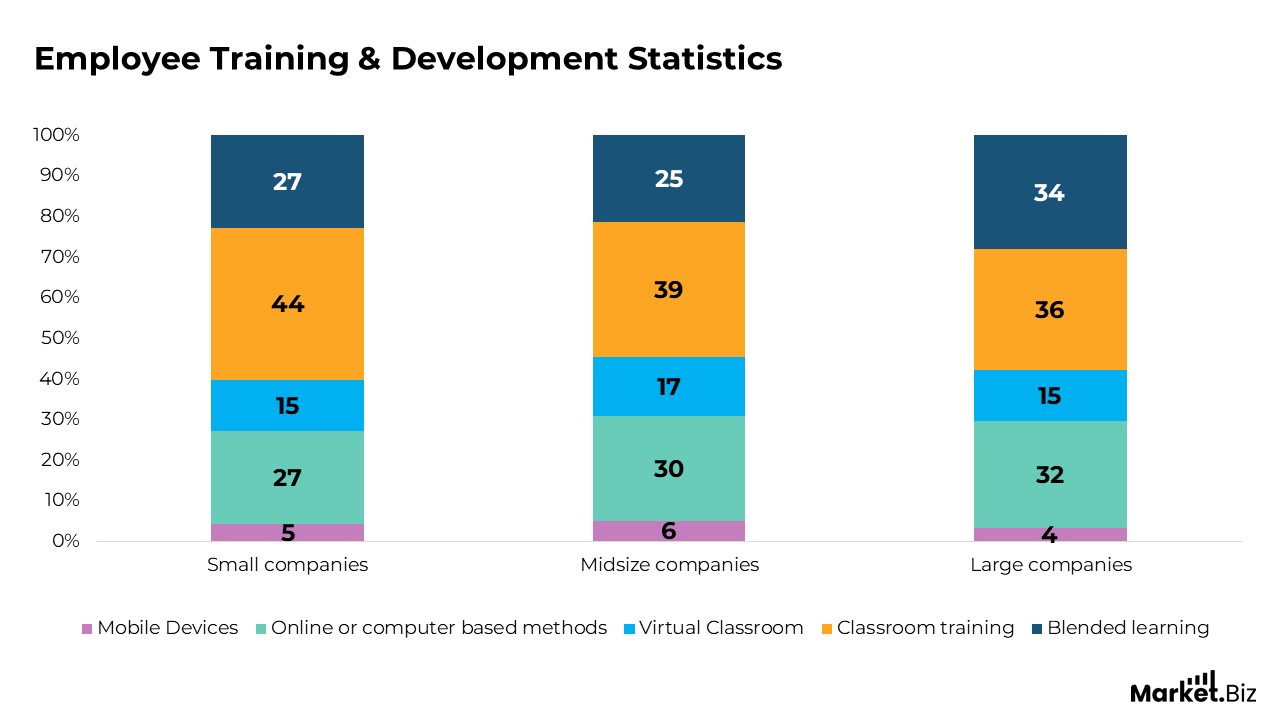
- On average, employees receive 12-20 hours of training per year, with organizations increasingly offering blended learning approaches combining in-person and digital formats.
- A study found that 45% of employees prefer online or digital learning formats, as they offer flexibility and can be accessed at any time.
- 63% of employees report that soft skills training, such as communication and leadership, is equally as valuable as technical skills training.
- Nearly 75% of companies offer leadership development programs, aiming to nurture future leaders and reduce high turnover rates in management positions.
- Companies with comprehensive training programs are 2.5 times more likely to see higher employee satisfaction and better overall performance.
- Over 50% of organizations say they are focused on upskilling their workforce in emerging technologies like AI, machine learning, and data analytics.
- 93% of employees agree that continuous learning is crucial for career growth, indicating a strong desire for ongoing development in the workplace.
(Source: Research)
Employee Interest in T&D
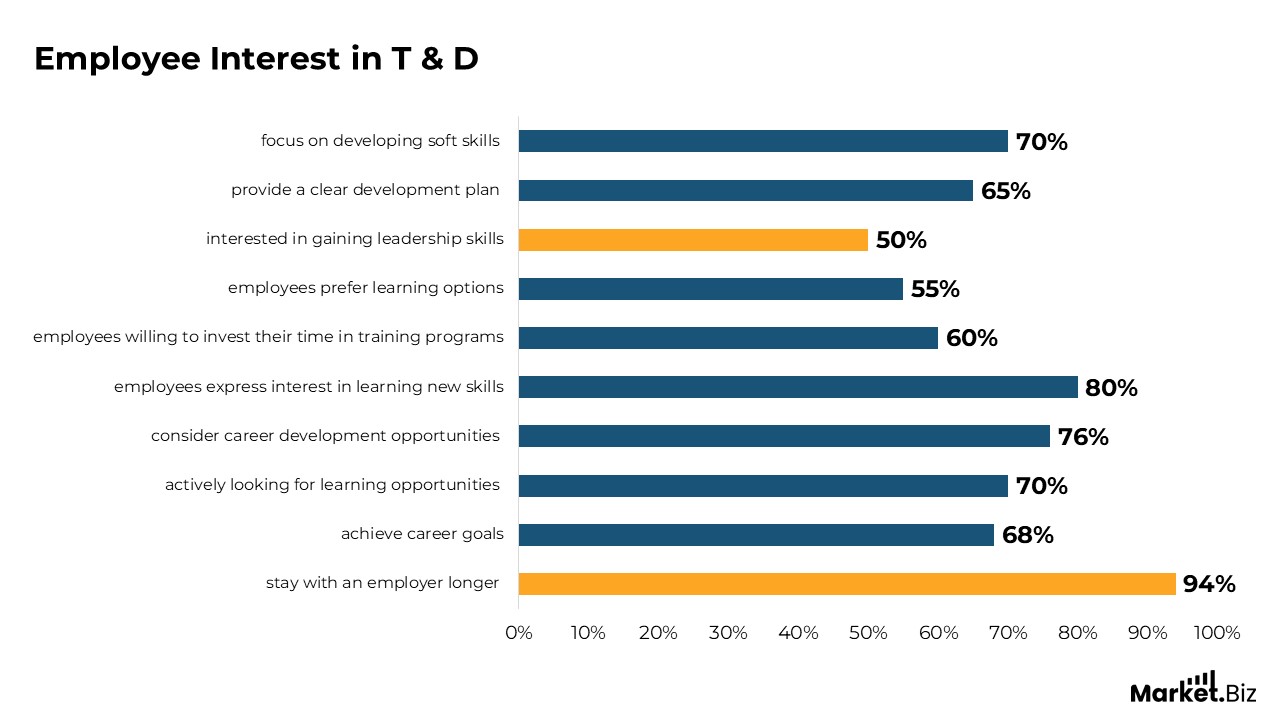
- 94% of employees say they would stay with an employer longer if they offered more opportunities for learning and development.
- 68% of employees believe that training and development programs help them achieve career goals, increasing their overall job satisfaction.
- According to a recent survey, 70% of employees report that they are actively looking for learning opportunities to enhance their skills and knowledge.
- 76% of millennials consider career development opportunities an essential factor when choosing a job, highlighting the importance of training for younger employees.
- 80% of employees express interest in learning new skills, with a strong preference for training that is directly applicable to their current roles.
- More than 60% of employees are willing to invest their own time in training programs, especially if it enhances their career prospects.
- 55% of employees prefer a blend of formal and informal learning options, with a preference for on-the-job training, online courses, and mentorship.
- Over 50% of employees are interested in gaining leadership skills, indicating a desire for advancement and career growth.
- 65% of employees expect employers to provide a clear development plan to help them progress in their careers.
- 70% of employees believe that organizations should focus on developing soft skills such as communication, problem-solving, and teamwork.
- More than 50% of employees say that the lack of training and development opportunities is one of the main reasons they leave their jobs.
- 85% of employees report feeling more motivated and engaged at work when they have access to continuous training and development programs.
T & D Impact on Retention
- 68% of employees say they are more likely to stay with an employer that offers continuous training and career development opportunities.
- Companies that invest in training have a 30% higher retention rate compared to those that don’t prioritize employee development.
- 56% of employees indicate that lack of development opportunities is a major reason they consider leaving a job.
- Organizations with strong training programs have 25% lower turnover rates, showing a direct link between employee development and retention.
- 80% of employees report feeling more loyal to companies that provide opportunities for skill advancement and career growth.
- Employees who receive adequate training are 3 times more likely to be satisfied with their jobs and remain with the company.
- 65% of employees would leave their current position for an organization that offers better professional development programs.
- Companies with employee development initiatives are 2.5 times more likely to retain their top talent than those with minimal training opportunities.
- 70% of employees believe that career growth opportunities through training would increase their likelihood of staying with their employer long-term.
- 50% of employees say that their employer’s commitment to training directly impacts their decision to stay with the company over other job offers.
- 72% of employees are more engaged and motivated to stay with an organization that invests in their career development through training.
- Firms with strong employee development programs see 40% higher employee retention compared to those without structured training.
- 88% of employees believe that learning and development opportunities are key to feeling valued at work, influencing retention rates.
- Organizations with clear training pathways for employees experience a 43% decrease in voluntary turnover, underscoring the power of development programs.
Employee Training Programs
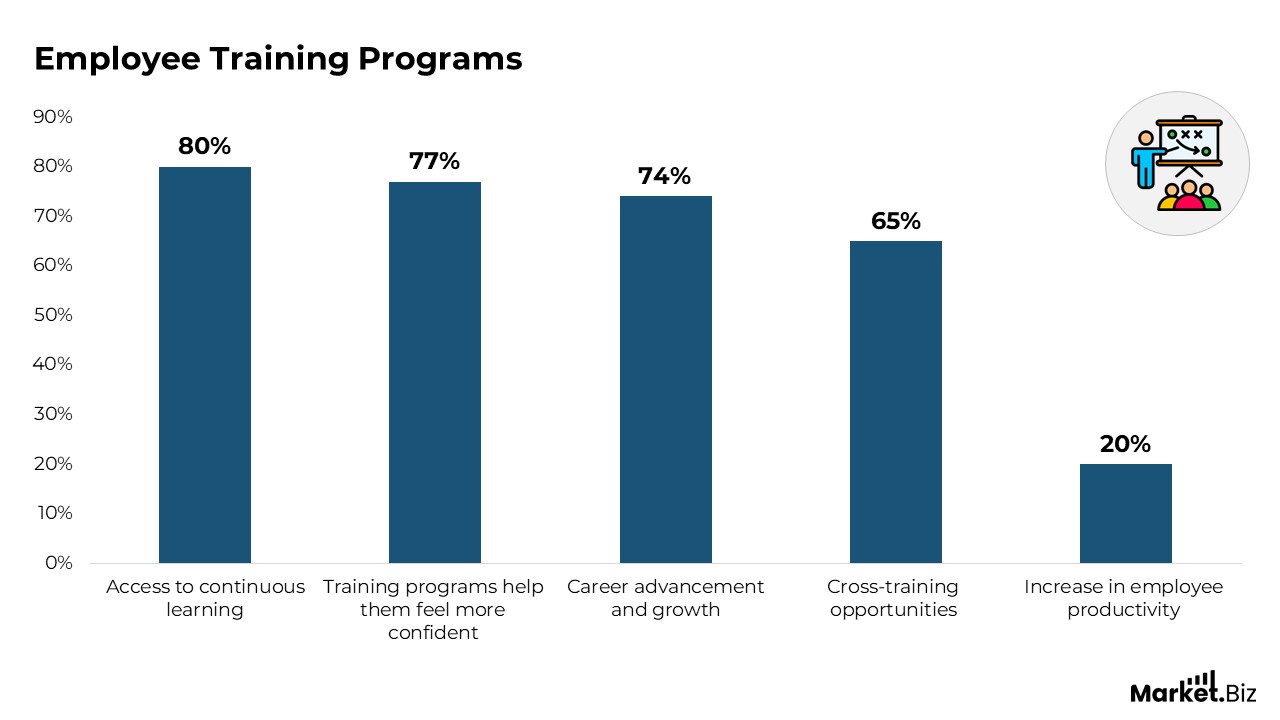
- 77% of employees report that training programs help them feel more confident in their roles and contribute to higher job satisfaction.
- Companies offering structured training programs experience a 20% increase in employee productivity compared to those with minimal training efforts.
- 74% of employees believe that their organization’s training programs significantly contribute to their career advancement and growth.
- 65% of organizations provide cross-training opportunities to employees, allowing them to develop skills beyond their primary role.
- 80% of employees prefer to have access to continuous learning, with many requesting more on-the-job training rather than formal classroom sessions.
- Employees who participate in training programs are 41% more likely to remain with their employer for over three years.
- In 2023, companies globally spent approximately $400 billion on employee training and development, reflecting its importance for competitiveness and innovation.
- 67% of employees express interest in personalized training programs that align with their individual career goals and aspirations.
- 58% of employees feel that a lack of sufficient training resources is a key reason for disengagement and lower retention rates.
- 72% of businesses with comprehensive employee training programs report higher rates of customer satisfaction, as employees are better equipped to meet client needs.
Training and Development Practices
- 87% of organizations report that employee development is a key factor in their business strategy, helping to improve performance and align workforce skills with company goals.
- 75% of employees prefer to work for companies that offer opportunities for skill development and continuous learning, increasing job satisfaction and loyalty.
- 65% of companies now use virtual classrooms and webinars as part of their training programs, making learning more accessible for remote and global teams.
- In 2023, companies spent an average of $1,500 per employee on training and development, reflecting a strong commitment to employee growth.
- 56% of employees believe that leadership development programs are crucial for improving company culture and employee engagement.
- 59% of organizations use eLearning platforms, enabling employees to access training content at their convenience and track their progress in real-time.
- 80% of employees say they would be more engaged if their company offered ongoing development programs that align with their career aspirations.
- 72% of businesses with formalized employee development programs report improved employee retention, as training helps staff feel valued and invested in.
- 49% of organizations offer mentoring programs as part of their training strategy, helping employees develop both technical and soft skills through personalized guidance.
- 66% of employers focus on soft skills training, such as communication, problem-solving, and teamwork, recognizing their impact on employee performance and collaboration.
- 45% of companies now offer career development plans for their employees, helping them see a clear path for advancement within the organization.
- 70% of employees who receive regular training opportunities report feeling more confident in their abilities, leading to higher productivity and job satisfaction.
Benefits of T&D
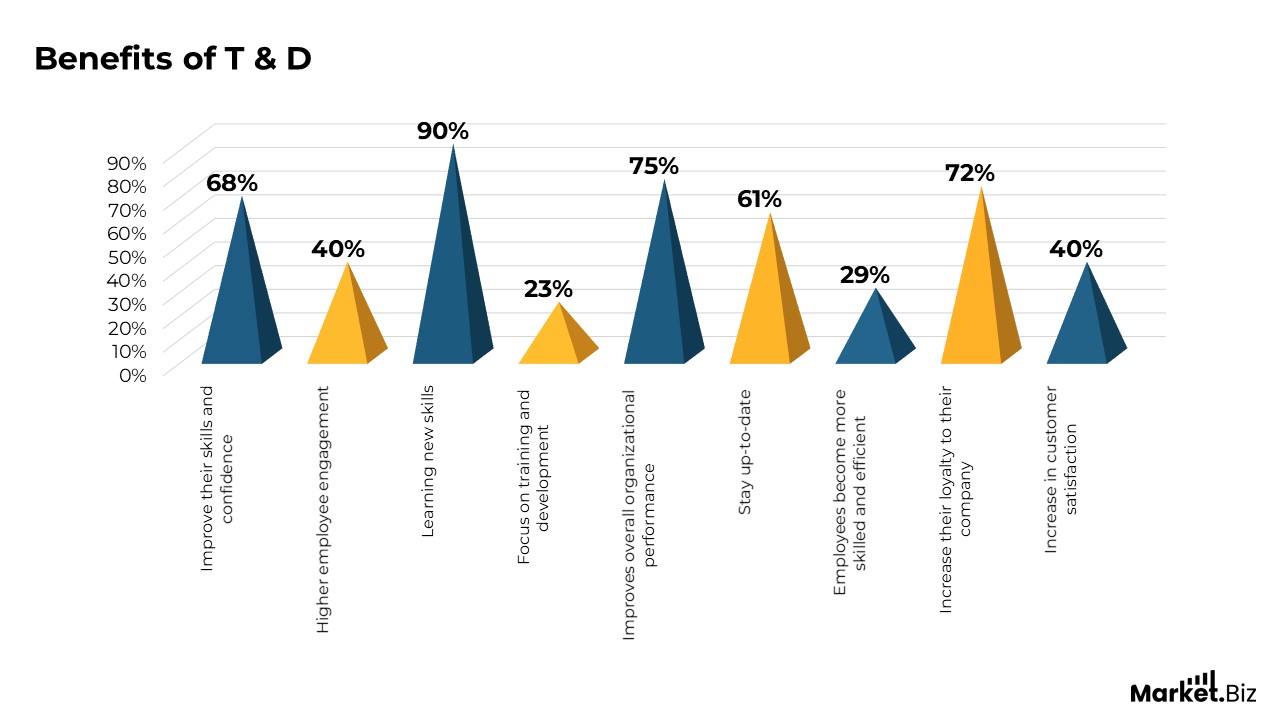
- 68% of employees say training programs help them improve their skills and confidence, which leads to better job performance.
- Companies with robust training programs experience 40% higher employee engagement, as employees feel valued and supported in their growth.
- 90% of employees agree that learning new skills through training enhances their work performance, making them more effective contributors.
- Organizations that focus on training and development have seen 23% lower turnover rates, as employees are more likely to stay when they see growth opportunities.
- 75% of companies report that investing in employee development improves overall organizational performance and helps meet business goals more effectively.
- 61% of employees say that training and development programs help them stay up-to-date with changing industry standards and technology.
- Offering development opportunities helps businesses realize 29% greater productivity, as employees become more skilled and efficient at their tasks.
- 72% of employees feel that training programs increase their loyalty to their company, reducing the likelihood of them seeking opportunities elsewhere.
- Companies with comprehensive training programs see a 40% increase in customer satisfaction, as well-trained employees deliver higher-quality service.
- 54% of employees believe that training programs are essential for their long-term career advancement, driving their engagement and performance.
- 82% of employers believe that employee training leads to more effective leadership, as leaders are better equipped with relevant skills and knowledge.
- 50% of employees say that having access to learning opportunities makes them more likely to recommend their company to others as a great place to work.
Employee Training Industry
- The global employee training industry is valued at $400 billion in 2023 and is expected to grow at a 9% annual growth rate through 2030.
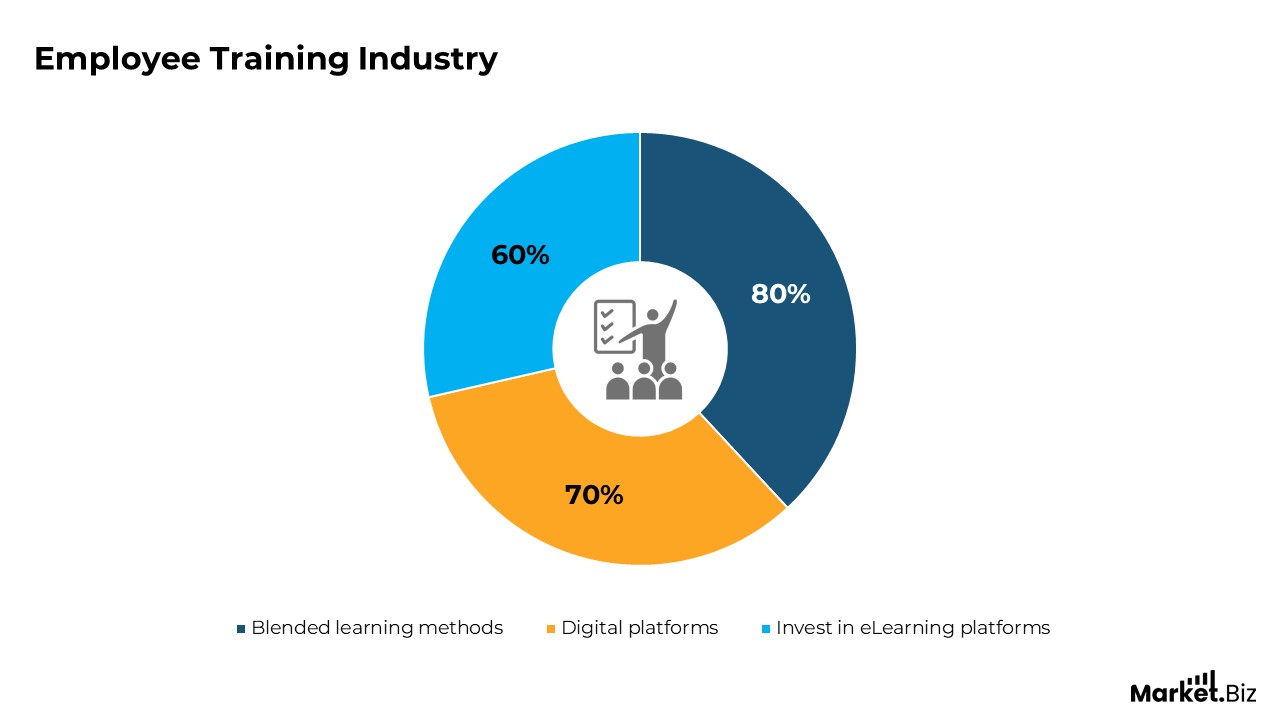
- 60% of companies now invest in eLearning platforms, reflecting the shift toward digital training solutions for greater flexibility and scalability.
- In 2023, U.S. companies alone spent $92.3 billion on employee training, making it one of the largest markets for workforce development globally.
- 80% of organizations report using blended learning methods, combining both in-person and online training to maximize reach and effectiveness.
- The corporate eLearning market is projected to reach $50 billion by 2026, driven by the increasing demand for accessible, online training programs.
- 70% of training content in the employee training industry is now delivered through digital platforms, allowing companies to scale training efforts more effectively.
- Approximately 40% of employees prefer mobile learning apps for training, emphasizing the growing demand for accessible, on-the-go learning solutions.
- 85% of companies plan to increase their budget for employee training programs in the next 3 years, highlighting the increasing importance of skill development.
- The global corporate training market for soft skills is projected to grow at a 6.3% CAGR through 2025, reflecting the demand for communication and leadership training.
- 95% of employees agree that training is critical to their professional development, influencing businesses to invest heavily in employee learning programs.
- Companies that implement comprehensive employee training programs report a 24% increase in profitability and a 218% higher revenue per employee.
- 55% of organizations currently use AI-based solutions in training programs, leveraging technology to deliver personalized, adaptive learning experiences.
Use of Technology in T&D
- 72% of organizations now use technology-driven training solutions, such as Learning Management Systems (LMS), to streamline content delivery and tracking.
- The global market for eLearning is projected to reach $457.8 billion by 2026, driven by increased demand for flexible, tech-enabled learning options.
- 80% of companies integrate mobile learning into their training programs, enabling employees to access training content on smartphones and tablets anytime, anywhere.
- 61% of organizations use virtual reality (VR) and augmented reality (AR) in training, providing immersive learning experiences for complex skills and environments.
- 50% of businesses use Artificial Intelligence (AI) and machine learning to deliver personalized, adaptive learning paths based on employee performance and preferences.
- Over 60% of companies use gamification in training programs to increase engagement, motivation, and knowledge retention by making learning more interactive.
- 70% of employees prefer to use online platforms for self-paced learning, showing the growing reliance on technology for autonomous skill development.
Moreover
- 64% of organizations use cloud-based training solutions, offering scalability, flexibility, and real-time updates across global teams.
- The use of video-based learning has increased by 46% over the past two years, as it is an effective tool for delivering concise, engaging, and easily digestible content.
- 50% of training content in organizations is now delivered digitally, allowing employees to access learning materials at their convenience and pace.
- 73% of employees report that using AI-enabled training tools has helped them improve their skills faster by providing tailored learning experiences.
- 56% of organizations plan to invest in VR and AR-based training within the next 2 years to enhance hands-on learning experiences, particularly in safety and technical fields.
- 89% of learning and development professionals believe that using technology in training programs improves the overall effectiveness of employee education.
- 82% of employees feel that online collaboration tools, such as webinars and virtual classrooms, have made remote training more efficient and accessible.
Conclusion
Training and development play a crucial role in boosting employee performance, satisfaction, and retention. Companies are increasingly investing in eLearning, AI-driven platforms, and mobile learning to enhance training effectiveness.
Organizations that prioritize training see higher profit margins and better retention rates, highlighting the value of employee growth. As the focus shifts to leadership, soft skills, and emerging technologies, continuous learning will remain a key driver of long-term success and competitiveness.
FAQ’s
In 2023, global spending on workplace training exceeded $370 billion, with the U.S. contributing the largest share, reflecting a significant commitment to workforce development and skill enhancement.
Companies investing in training programs experience 30% higher retention rates. Training and development opportunities are a key factor in employees’ decision to stay with their employer, with 70% of employees citing it as a critical retention factor.
Technology-driven training solutions, such as AI platforms and mobile learning, are becoming increasingly popular, with 72% of organizations using these tools to improve training delivery and employee engagement.
According to recent surveys, 91% of employees claim that training programs significantly improve their performance and productivity, demonstrating the direct impact of skill development on work effectiveness.
Organizations with comprehensive training programs report 24% higher profit margins and 218% higher revenue per employee, showcasing how investment in employee development directly correlates with improved financial performance.