








Introduction
Cyberbullying in the Workplace Statistics: Workplace cyberbullying has now become a huge problem for the youth and workplace professionals as well. 32.3% of employees reported that they were cyberbullied in the U.S. Workplace Bullying Institute Survey of 2024, which means 52.2 million employees are being bullied.
According to the survey, in 62% of the cases, the victims lost their jobs due to bullying, and in only 27% of the cases, the culprits were negatively penalized. In other words, we can also say that 75% of bullying incidents were with one perpetrator, and 55% of these bullies were in supervisory positions.
Given these statistics, it is clear that workplace cyberbullying is common, and there is a dire need to look at policies and support structures in every company.
Editor’s Choice
- 65% of bullies hold a higher position than their victims.
- 32.3% of employees reported that they were cyberbullied.
- Workplace cyberbullying increased by 57% between 2017 and 2022.
- 23.3% of employees reported having aggressive tones in work-related emails from co-workers.
- 15% of tech employees become workplace bullying victims.
- 38% of female lawyers said they had been bullied or harassed.
- 32% of teen girls have faced two or more types of online bullying, threats, or harassment.
- 70% of individuals aged 18-34 have experienced cyberbullying in the workplace.
- 50% of workplace cyberbullying incidents occur during online remote workers.
- 35% of Hispanic employees report being bullied.
What is Cyberbullying?
Cyberbullying is when people use digital technologies such as smartphones, social media, email, and messaging apps to intentionally and constantly harass, threaten, or embarrass others. For example, it can be seen as making false statements about someone, sharing private information without permission, sending threatening messages, or pretending to be someone else online.
Cyberbullying is different from normal bullying because a person can cyberbully another person at any time and from anywhere, being anonymous. In that case, the victims of cyberbullying found themselves in a much harder position, where neither could they escape from the situation nor identify the bully.
The harm caused by cyberbullying can lead to significant trauma, including anxiety, depression, and suicidal thoughts. ScienceDirect states that it is “intentional harm done by individuals or a group and repeated over time using modern digital technology”.
General Cyberbullying in the Workplace Statistics
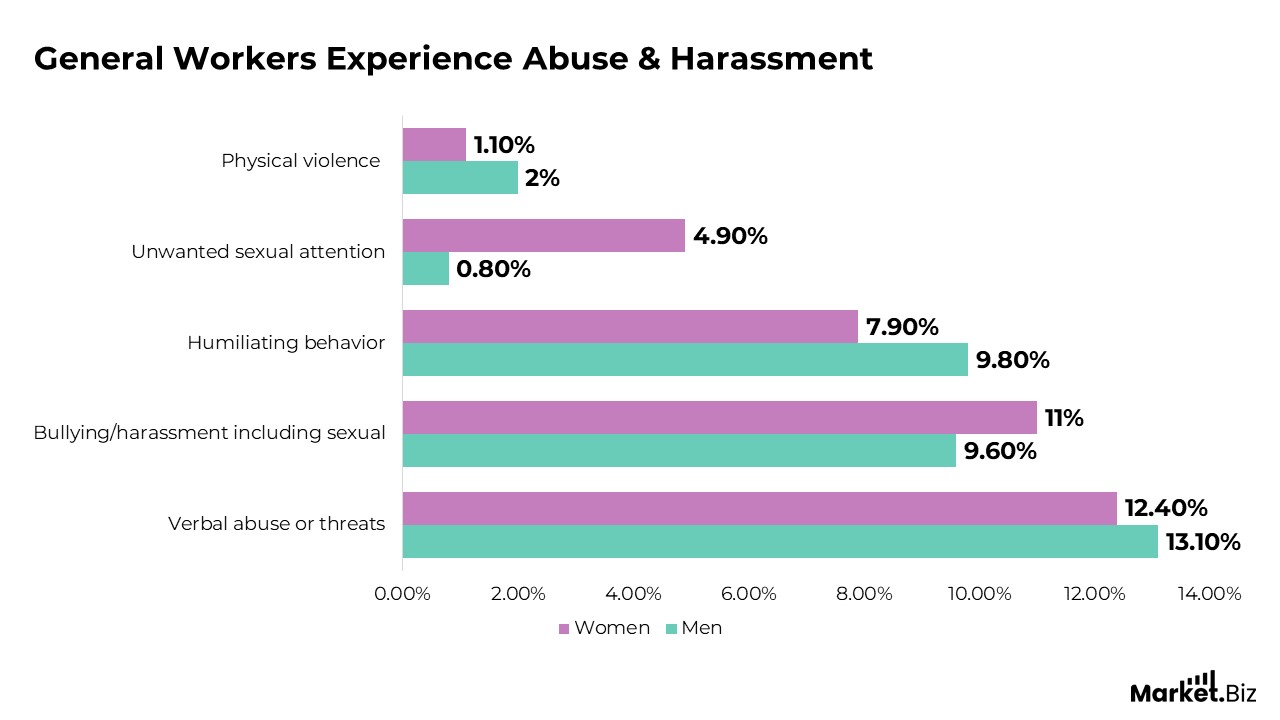
| Type of Abuse | Men | Women |
|---|---|---|
| Verbal abuse or threats (past month) | 13.1% | 12.4% |
| Bullying/harassment including sexual (past year) | 9.6% | 11.0% |
| Humiliating behavior (past month) | 9.8% | 7.9% |
| Unwanted sexual attention (past month) | 0.8% | 4.9% |
| Physical violence (past year) | 2.0% | 1.1% |
(Source: MyDisabilityJobs)
- The cases of workplace cyberbullying increased by 57% between 2017 and 2022.
- Almost 25% to 30% of the employees in the United States have witnessed workplace bullying.
- According to the stats, around 50% of workplace cyberbullying cases happen during online company meetings.
- 19% of employees have witnessed cyberbullying in their workplace.
- According to 49% of employees, workplace cyberbullying has a deep impact on their personal and professional lives.
- Almost 66% of employees reported that they are aware of workplace bullying.
- Research says 47% of individuals or bosses in supervisory roles are the ones who become workplace bullies.
- Where 65% of bullies hold a higher position than their victims.
- Cyberbullying in the workplace is widespread among different job sectors and countries.
- The cases of workplace cyberbullying have increased due to the growth of remote workers.
- Employees who have to go through cyberbullying often experience low job satisfaction and productivity.
- Companies that follow clear anti-bullying policies have lower cyberbullying cases.
- We can reduce workplace cyberbullying cases by implementing training programs on digital communication platforms.
- 58% of workplace cyberbullying victims try to find a job somewhere else.
- Cyberbullying has serious consequences on affected employees, such as insomnia and suicidal thoughts.
- Workplace cyberbullying also hurts team motivation and collaboration.
(Source: MyDisabilityJobs)
Types of Workplace Bullying
- Verbal Abuse
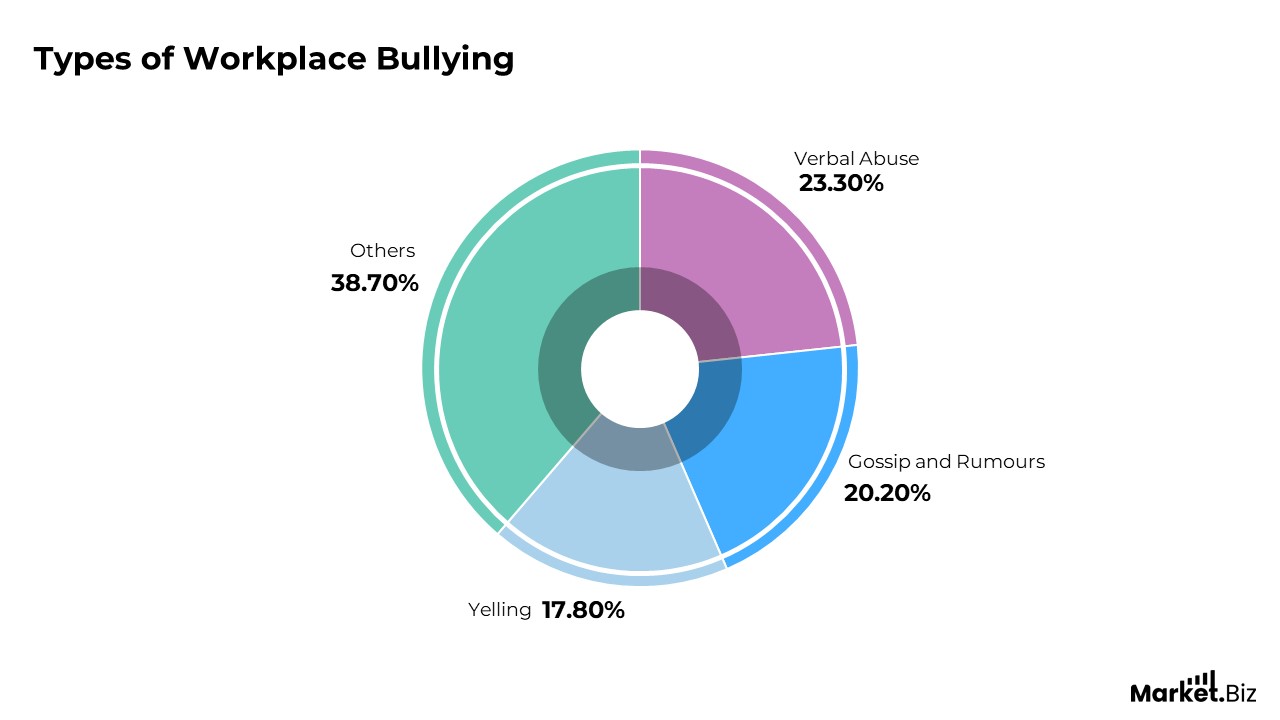
About 23.3% of employees reported having aggressive tones in work-related emails from co-workers, which is a common type of verbal workplace bullying.
- Gossip and Rumors
Around 20.2% of employees ruin their professional reputation with negative gossip from their co-workers.
- Yelling
17.8% of employees reported that their colleagues are yelling at them, which creates a toxic workplace.
- Excessive Criticism
This is the most common form of bullying or harassment in the workplace.
- Unrealistic Targets
Setting unrealistic goals or targets is a common workplace bullying that causes employee stress and anxiety.
- Constantly Changing Directions
Constantly changing specifications for a job or task is considered workplace bullying, which can cause mess, confusion, and frustration.
- Work Damage
Damaging work, which includes undermining work performance, goes hand in hand with harming an employee. It is also a common form of workplace bullying.
- Undermining Work Performance
Undermining someone’s work performance is a form of workplace bullying, but it can also cause serious morale and productivity issues with employees.
- Inappropriate Use of Power
Employees who are in a higher position at a company use these kinds of bullying methods and fill the working environment with toxicity.
- Isolate from Social Events
Isolating an employee from company social activities is considered workplace bullying.
- Cyberbullying
A common workplace bullying method that can be seen in almost every company. It usually includes online harassment and offensive activities.
- Public Humiliation
A cruel form of workplace bullying that can severely impact an employee’s self-esteem and confidence.
- Discrimination
Discrimination-based bullying, such as race or gender, is a serious issue in the modern workplace.
Cyberbullying by Industry
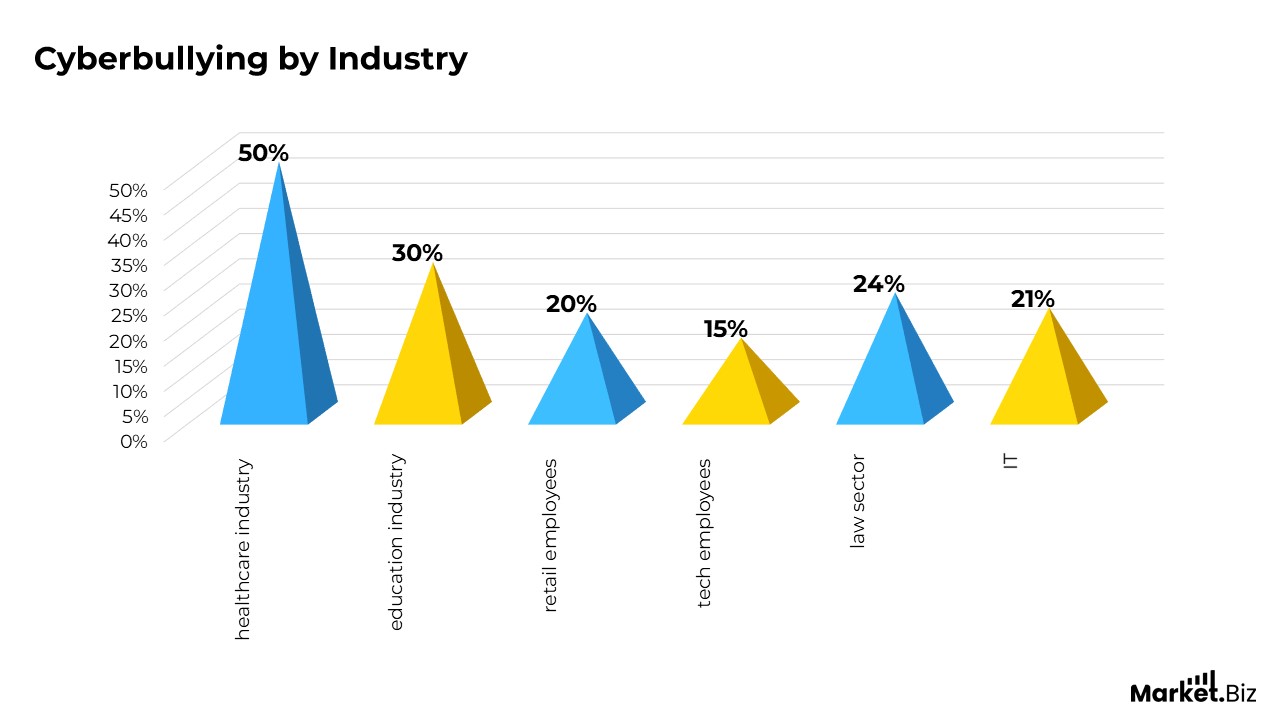
- The healthcare industry has 50% higher rates of workplace bullying than any other sector.
- In the education industry, 30% of employees say that they have been bullied in the workplace. Teachers and support staff reported that their colleagues, students, and their parents bully them.
- 20% of retail employees experience workplace bullying from their customers, where it is mainly verbal harassment, and sometimes it gets physical.
- Due to high stress and a competitive market, 15% of tech employees become workplace bullying victims.
- Constantly working in a stressful situation and challenging customer interactions led to hospitality employees reporting a 10% increase in workplace bullying.
- In the law sector, 24% of lawyers reported that they had been bullied in the workplace, where the number of women is even higher.
- Almost 38% of female lawyers said they had been bullied or harassed at some point at their workplace, as compared to 15% of male lawyers.
- If we talk about the racial aspect, around 35% of black lawyers reported being bullied in the workplace, and 34% of Hispanic lawyers reported the same.
- In IT, due to short deadlines and stressed managers, almost 21% of employees reported being bullied by their senior people.
- One of the key areas that a cyber-attacker targets is nurses. Nurses are often bullied and sometimes sexually harassed by their patients and even their family members.
- Customer service is one of the key areas where employees are bullied or harassed by their customers in the form of physical contact.
Cyberbullying Demographics
Teen Cyberbullying Demographics
- 54% of girls aged between 15-17 have faced at least one type of cyberbullying.
- 44% of boys aged between 15-17 have faced at least one type of cyberbullying.
- 32% of teen girls have faced two or more types of online bullying, threats, or harassment.
- Where only 24% of teen boys report the same.
- 53% of teens who are actively online on social media face more criticism and harassment, whereas the numbers go down to 40% who are less active.
- According to reports, white teens are more active when taking action against false rumours than black teens.
- 16% of teens whose family earns less than $30,000 a year reported being physically threatened online.
Adult Cyberbullying Demographics
- 70% of individuals aged 18-34 have experienced cyberbullying in the workplace.
- 74% of workers have felt cyberbullying at their offices.
- 63.3% of workplace cyberbullying victims are females.
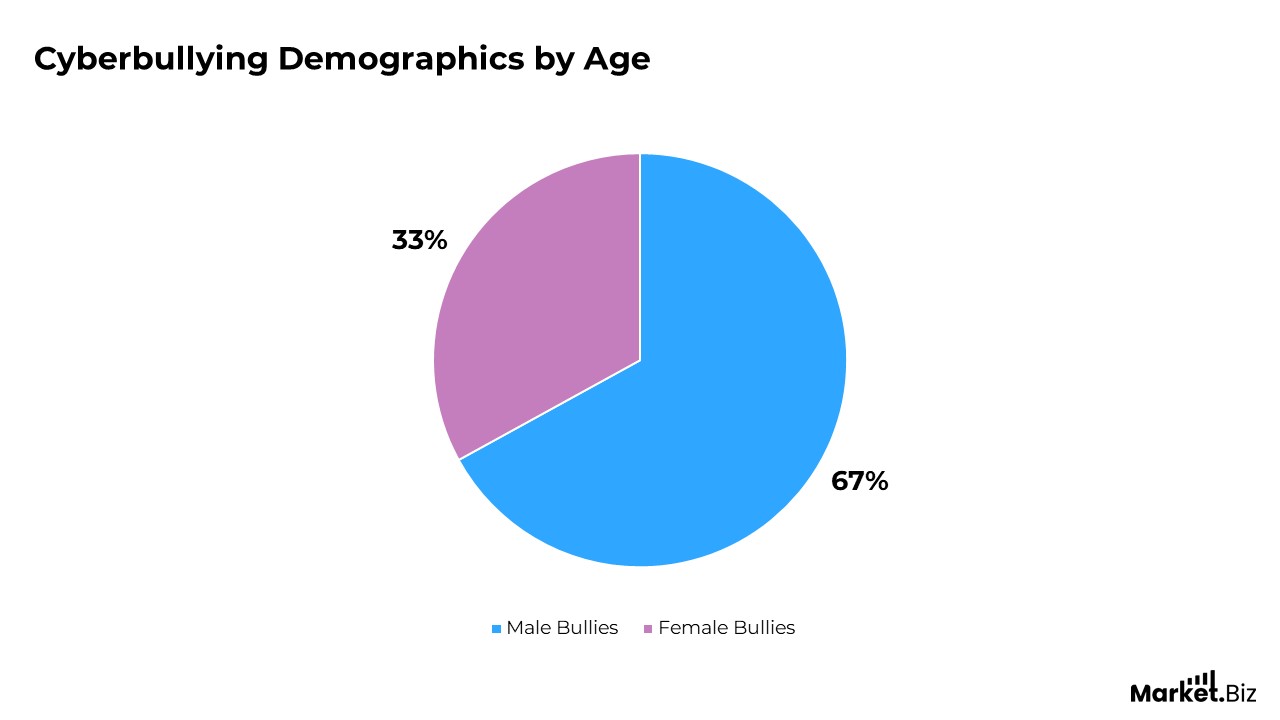
- 67% of office bullies are males, with the remaining 33% being females.
- 50% of workplace cyberbullying incidents occur during online meetings.
- 46% of employees have experienced cyberbullying through emails at work.
- 69% of workplace bullying targets experienced it as a result of being constantly monitored online.
- 31% of individuals who experienced workplace cyberbullying have changed jobs as a result.
- 45% of workplace cyberbullying victims reported symptoms of stress, anxiety, or depression.
- 24% of people who have been cyberbullied said the words used were discriminatory or hateful.
Cyberbullying Victims by Ethnicity
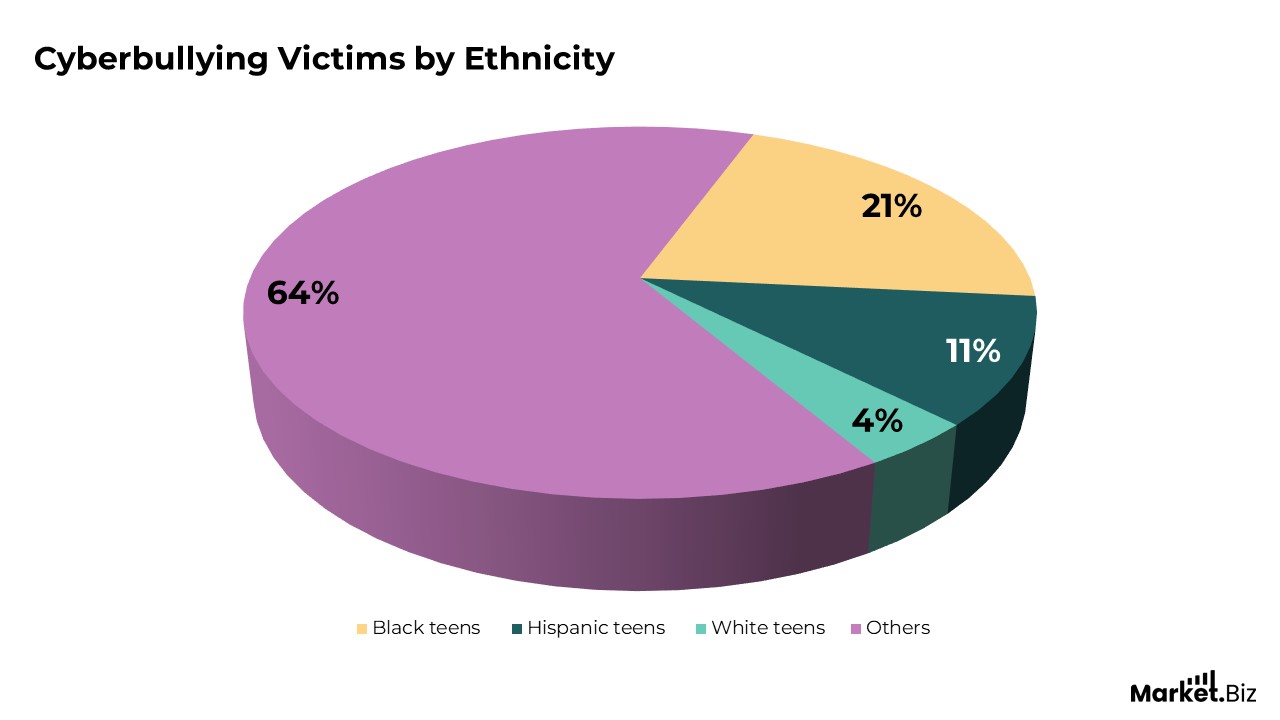
- Black teen in the United States report being more cyberbullied as compared to white or Hispanic teen, due to their race and ethnicity.
- In 2022, 21% of Black teens reported being targeted online because of their ethnicity, compared to 11% of Hispanic teens and 4% of white teens.
- 6.2% of multiracial youth admitted to bullying others online.
- According to the American Psychological Association, only 2.9% Asian American students reported the lowest rates of cyberbullying among ethnic groups.
- Among ethnic groups, Native American youth report the highest rates of cyberbullying.
Cyberbullying in Remote Work
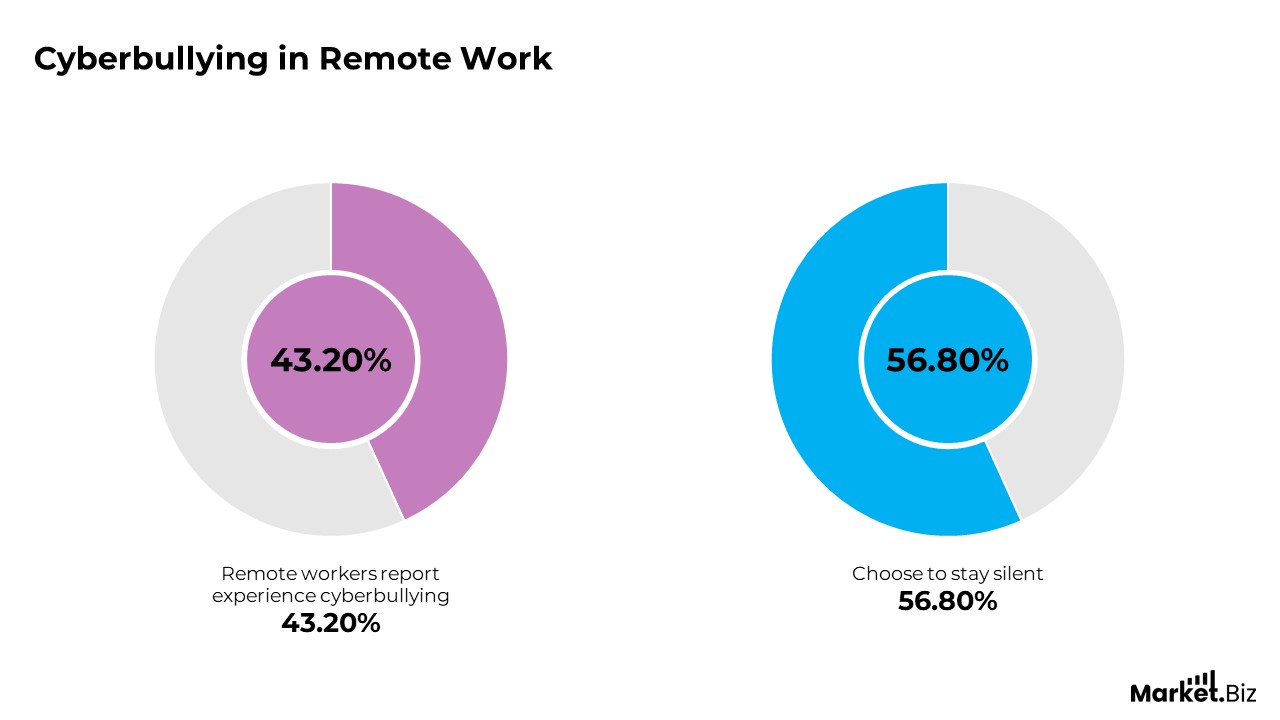
- 43.2% remote workers report experience with cyberbullying, which is an increasing concern for the virtual workplace overall.
- 61.5% of remote employees have either been bullied or have witnessed bullying behaviour, well above the national average of 49%.
- Half (50%) of all cyberbullying occurs in an online meeting, which demonstrates that meetings are a common place for harassment.
- 9% of workplace cyberbullying is against someone via email, which is important because this means writing is not always a safe environment.
- 67% of cyberbullies in the workplace are male, which might indicate gender bias in attackers.
- 6.3% of remote workers report that they bullied someone at work, which means 1 in 16 employees recognize their own behaviour.
- 33.9% of employees aged 25-31 identified with being cyberbullied, which is a significant portion of younger employees.
- 67% of bullied victims ultimately resign from their employment, meaning there is a severe impact and consequences from workplace harassment.
Moreover
- 23% of cyberbullying employees choose to leave their employment voluntarily, while 12% were fired, indicating a significant loss to both the victim and the company.
- Negative work environments are created with toxic behaviours characterised by hostile, offensive or insulting language, victimization, co-worker exclusion, and abuse.
- Employers who nurture a spiteful environment and disrespectful co-workers can engage in cyberbullying and become a virtual threat, even in a remote non-office environment.
- 35% of Hispanic employees report being bullied, which suggests a potential higher risk.
- Cyberbullying among workers in remote work settings encourages dysfunctional communications and disregard for other employees, starting with the leaders’ mistreatment of employees who may be engaged with their team.
- 65% of cyberbullying victims target other females, indicating intra-gender harassment.
- Companies recognize that there will be a more abusive environment with workers who are increasingly engaged in remote work. And will need to consider the early engagement in proactive means of action.
Consequences of Cyberbullying
- Cyberbullying can bring about a great deal of sadness and emotional distress for the victim.
- Many people who are bullied online suffer from anxiety and depression.
- The victim may begin to feel unworthy or develop self-esteem issues.
- Severe cyberbullying can lead to suicidal thoughts.
- Stress from being bullied online can also lead to sleep disturbances or insomnia and other physical health problems.
- Most students who are bullied online experience a challenge to their academic work.
- The victim may also isolate themselves from society.
- Victims of cyberbullying may also begin to lose trust in others.
- Some who are bullied online may act out aggressively as a result.
- For some victims of cyberbullying, substance abuse to relieve the pressure becomes a possibility.
- Those who inflict cyberbullying can get in trouble with the law by being fined.
- Cyberbullying can damage the image of both the victim and the bully.
- The people who are involved in bullying others may experience difficulty in finding employment for the rest of their lives.
- Families also may be stressed and in conflict when a loved one is bullied online.
- An underlying sense of safety within communities can be undermined when there is widespread cyberbullying.
Counter Steps for Cyberbullying
- If you are being harassed online or cyberbullied, immediately block and report the bullies so they can no longer contact you and alert any platform moderators of their behaviour.
- You may want to keep records of your evidence, such as screenshots or messages of some kind, in the event you would like to report the incident.
- Next, you may want to change your privacy settings so you can manage who can contact you and view your content online.
- If you have any doubt, do not respond because your response may trigger them to continue or escalate their bullying.
- It is also a good idea to reach out and talk to someone you trust about what is happening, such as a family member, a friend, or your counsellor.
- You could learn more about cyberbullying. The more you know, the more ready you will be to recognise when it is happening and how you can deal with it.
- If any of the bullying involves threats or stalker-type behaviour, then immediately report it to the authorities.
- And lastly, ensure that all your online accounts are protected by strong passwords, security settings, malware software, and improved security settings to decrease unauthorized access to your accounts.
- Do not ignore bullying! One of the best things you can do for somebody else who is being bullied is to stand up for them to show you care and, when possible, help them.
Conclusion
Cyberbullying in the workplace can be an issue that affects employee morale and well-being. Many employees are experiencing or witnessing some form of misconduct online, and the cases of cyberbullying in the workplace have continued to grow as the number of online meetings has increased.
It can create anxiety and depression in any employee who is bullied or who reports the bullying. But don’t worry, as long as you take control of your privacy and your online data, you’ll be just fine. Learn about cyberbullying and cybersecurity, and stay ahead of others.
FAQs
Around 31% of employees have experienced cyberbullying at their workplace, but most of them choose to stay silent as they fear higher authorities or embarrassment.
Remote workers, younger employees, and women are more likely to be targeted by bullies in the workplace.
Yes, about 47% of workplace cyberbullying comes from managers.