








Introduction
Employee Privacy Concerns Statistics: Employees are concerned about their privacy in the modern digital workplace. As the use of monitoring tools has grown, 60% of companies are now using monitoring tools and software to monitor the productivity and behaviour of their employees. 65% of employees are using monitoring software with the constant fear of how their data is being collected and used by their employers.
The fact that almost 43% of companies collect web activity data, and 30% of companies use biometric monitoring tools like facial recognition, fingerprint sensors, etc., has possible consequences on personal privacy. Yet, only 37% of HR leaders believe their company is fully compliant with privacy laws and regulations. Therefore, it shows the growing concerns between operational efficiency and an employee’s right to privacy.
Editor’s Choice
- 65% of employees are concerned about how their employers collect their personal data and what the data is used for.
- Only 37% of HR leaders believe their company complies with privacy laws.
- 29% of companies use biometric data like facial scans, fingerprint sensors.
- 58% of employees feel uncomfortable with AI analysing their behaviour.
- 70% of employers review social media during hiring and employment.
- Remote monitoring has grown by 78%, yet 59% of remote staff feel uncomfortable.
- 62% of BYOD firms have experienced data breaches.
- 61% of Gen Z demands digital privacy, where women show higher discomfort.
- 1 out of 4 employees consider quitting after a data breach.
- Only 28% of employees feel they truly consent to being monitored.
- AI surveillance use jumped to 64% since 2020, due to the demand for remote work.
General Employee Privacy Concerns Statistics
- Reports say 78% companies use monitoring tools to see the activities of their employees.
- 56% of employees are concerned about their data being used by their employers in the workplace.
- Back in January 2022, companies saw a huge 75% jump in the monitoring software market.
- By the year 2030, the employee monitoring market is estimated to grow by $6.9 billion.
- 1 out of 3 employees feels ashamed of using their office device for personal use and thinks it might be embarrassing if their employer finds out.
- 60% of companies actively monitor employees’ computer activity, including emails, browsing history, and other activities as well.
- 43% of companies track employee web activity as part of a routine productivity check-up.
- 29% of employers collect biometric data like fingerprints and facial scans to gain control over their employees’ data.
- Only 37% of HR professionals believe their company is fully compliant with employee data privacy laws.
- 45% of employees report increased workplace stress due to constant surveillance.
- 58% of employees are uncomfortable with AI systems analysing their work behaviour and performance.
- 30% of employees hesitate to report internal issues due to the fear of being digitally traced.
- 62% of companies with Bring Your Device (BYOD) policies have experienced data privacy breaches.
- 70% of employers review their employee social media activity during recruitment and sometimes post-hiring.
- 55% of employees are uncomfortable with GPS location tracking, especially after work hours.
- Only 28% of employees feel they give meaningful consent to workplace data monitoring policies.
- 59% of remote employees are worried about being monitored through webcams or screen-capture software.
- 61% of Gen Z employees expect employers to have clear digital privacy boundaries.
- 35% increase in lawsuits was recorded in states involving biometric data misuse with strict privacy laws.
(Source: Cisco)
Types of Employee Data Collected
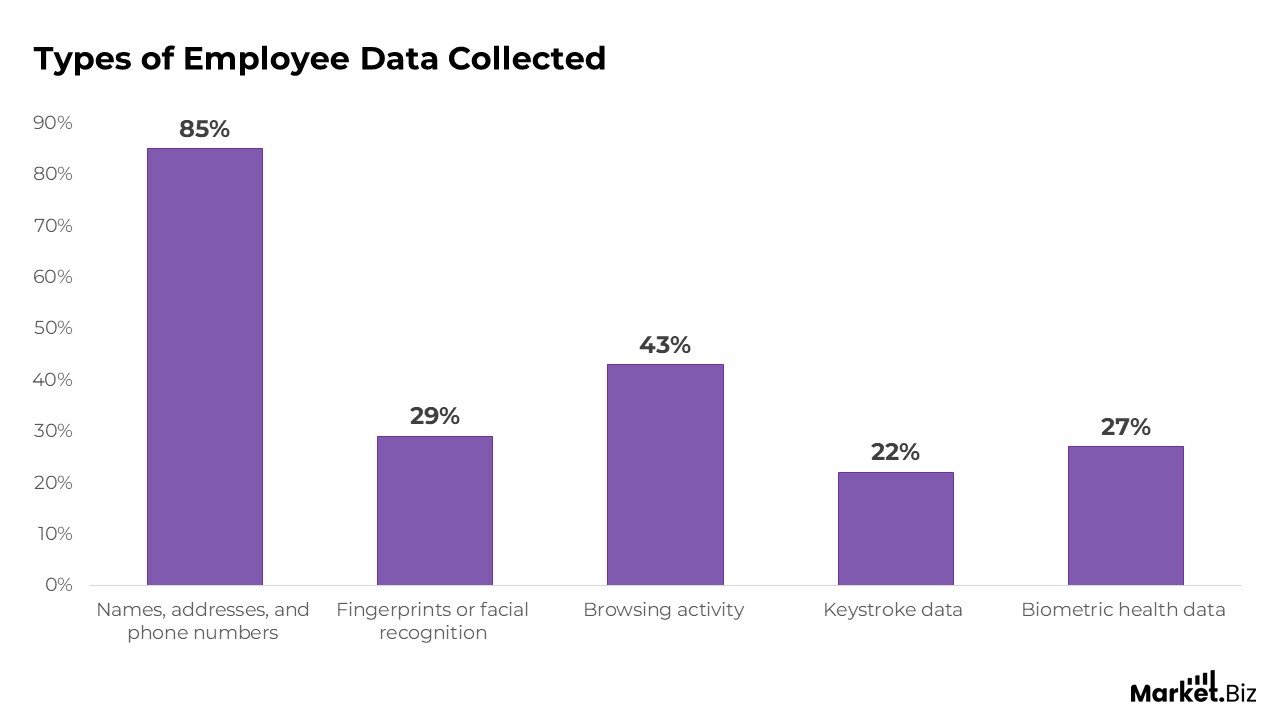
- 85% of companies collect basic employee details like names, addresses, and phone numbers for HR and payroll.
- 43% of employers monitor employee emails to ensure compliance with company policies and prevent misconduct.
- 29% of businesses use fingerprints or facial recognition for secure access and attendance tracking.
- 43% of employers track browsing activity to ensure that employees stay focused on work-related tasks.
- 22% of companies collect keystroke data to monitor productivity and activity on company devices.
- 34% of employers use GPS tracking for employees in fieldwork or delivery services for efficiency and accountability.
- 27% of organizations collect biometric health data through wellness programs to track employee well-being.
- 70% of employers review employees’ social media profiles during hiring or as part of ongoing evaluations.
- 58% of companies collect data on employee performance through reviews or AI-driven tools to assess productivity.
- 90% of businesses track employee work hours using digital clock-ins and attendance software.
- 62% of organizations monitor email sender/receiver data to detect misuse or ensure policy compliance.
- 40% of companies track how employees use company-issued devices to manage resources and security.
- 56% of employers collect data on employee expenses for reimbursement and to detect any discrepancies.
Workplace Monitoring Tools
- Employee monitoring software, including Teramind and ActivTrak, is used by 60% of businesses to track productivity, time usage, and internet activity.
- Keystroke logging tools are employed by 22% of companies to measure employee productivity and detect potential security risks. These tools record every key pressed on company devices.
- Screen monitoring tools are utilized by 48% of companies to track on-screen activity, ensuring employees remain focused on work-related tasks during office hours.
- Webcam surveillance is used by 29% of employers in remote work environments to monitor employee engagement and prevent distractions during virtual meetings.
- GPS tracking systems are implemented by 34% of businesses with field employees to monitor routes, improve efficiency, and ensure accountability during work hours.
- Time-tracking apps like Clockify or Hubstaff are used by 43% of remote companies to monitor employee work hours, ensuring accurate payroll and optimizing workflows.
- Email monitoring tools are utilized by 62% of organizations to ensure compliance with corporate policies and safeguard sensitive company data from leaks or misuse.
- Biometric authentication systems, used by 29% of employers, include fingerprint scanning and facial recognition to enhance security and track employee attendance.
- AI-based monitoring tools are adopted by 58% of companies to assess employee performance, providing insights through behavioural data and predictive analytics.
- Social media monitoring tools are employed by 70% of employers to track employees’ public online presence, ensuring alignment with company values and preventing reputational damage.
List of Some Popular Workplace Monitoring Tools
- Teramind
Employers use Teramind to track activity, productivity, and security, with features like screen recording, keystroke logging, and email monitoring.
- ActivTrak
ActivTrak provides insights into employee productivity, tracks applications used by employees, and it offers behavior analysis, so the work can be done actively.
- Hubstaff
Hubstaff is a time-tracking tool that offers you to take screenshots, monitor activity levels, GPS tracking, and project management features.
- Time Doctor
As the #1 Workforce Analytics App, Time Doctor offers you time tracking, screenshot capture, web and app usage monitoring, and provides detailed reports.
- Insightful
Previously known as Workpuls, this software provides employee productivity tracking, application and website usage analysis, and time-on-task reporting.
- Clockify
Whether you are an employer or an employee, if you just want to track how many hours you’ve worked, then Clockify is the best fit for you. It’s a simple time tracking tool that helps teams monitor hours worked, log activities, and track chargeable hours.
- RescueTime
RescueTime tracks time spent on websites and applications, provides productivity reports, and allows users to set goals for important work.
- Spytech
Spytech is a wide-ranging monitoring tool that is used for tracking emails, key activities, social media activity, and websites visited by employees.
Demographic Employee Privacy Concerns
Age-Based Privacy Concerns
- 61% of Gen Z employees expect clear privacy boundaries, especially regarding social media monitoring and personal device tracking.
- 54% of Millennials are more open to digital monitoring if there is transparency and data use justification.
- 47% of Gen X workers show discomfort with biometric data collection, particularly fingerprint and facial recognition systems.
- 45% of Baby Boomers express high concern over email and screen monitoring, often citing a lack of digital trust.
- Gen Z employees, aged 18–24, are 32% more likely to question AI monitoring than older generations.
- Millennials rank data transparency as a top workplace value, with 58% demanding access to what data is stored about them.
- Gen X tends to be more cautious, with 49% preferring opt-in consent for any form of location tracking.
- Boomers are 40% less likely to be aware of workplace surveillance tools but report higher discomfort once informed.
- Younger workers are more privacy-savvy, with 65% of Gen Z using personal security settings to limit employer access to devices.
Gender, Ethnicity & Role-Based Privacy Concerns
- Female employees report 17% higher discomfort with webcam surveillance compared to male colleagues.
- Minority employees, particularly Black and Hispanic workers, are 25% more likely to distrust employer use of AI monitoring tools.
- LGBTQ+ employees express a 29% higher concern over the misuse of personal data related to identity and communications.
- Non-management staff show greater concern (62%) about privacy invasions than those in leadership roles (41%).
- Technical employees are more likely (48%) to detect surveillance tools, leading to higher awareness and resistance.
- Frontline workers are often monitored physically or via GPS, with 53% saying they feel “constantly watched.”
- Remote female workers report 21% higher stress due to performance surveillance than their male counterparts.
- Ethnic minority staff are more likely to question the fairness of monitoring tools, especially when linked to evaluations.
- Customer-facing employees are under heavier surveillance, with 67% monitored via video, compared to 39% in backend roles.
Impact of Data Breaches on Employees
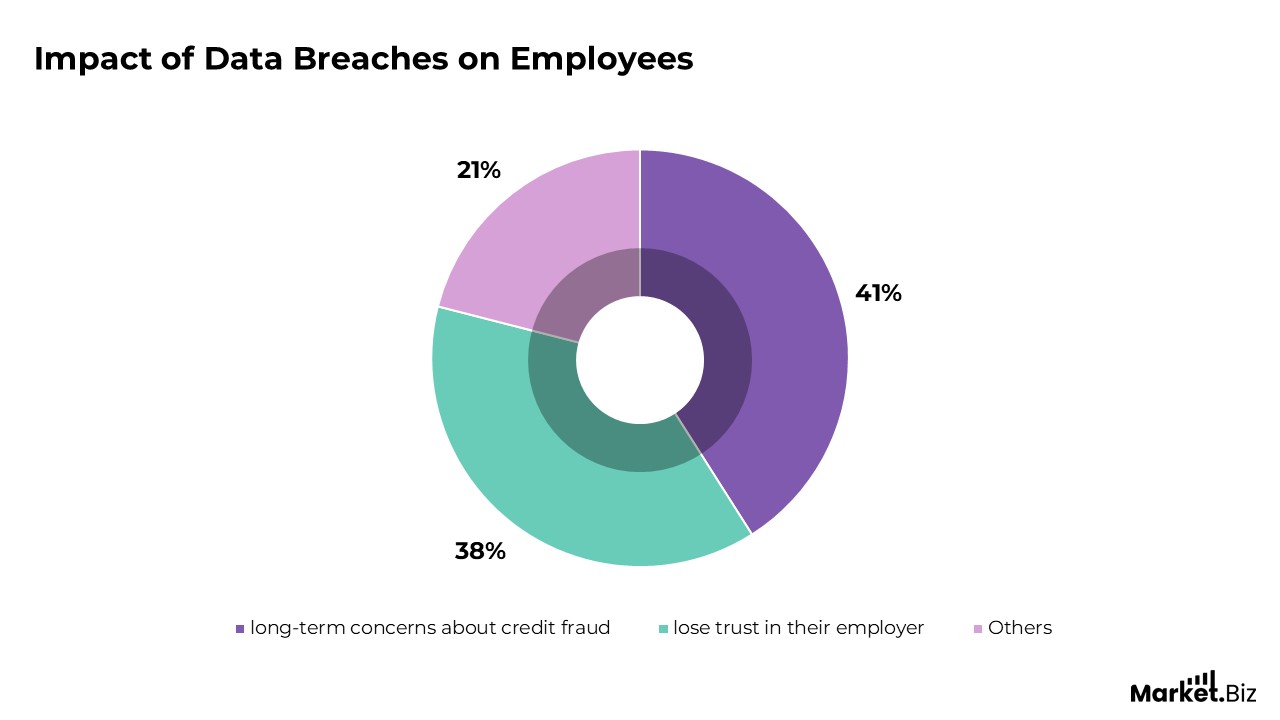
- 38% of employees lose trust in their employer after a data breach involving their personal information.
- Data breaches have caused 1 in 4 employees to consider leaving their jobs due to privacy concerns.
- 62% of workers report increased anxiety after learning their data was compromised in a corporate breach.
- $180 per record is the average cost of exposed employee data in breaches, impacting organizational reputation and finances.
- 43% of breached employees experience phishing or identity theft attempts within three months post-incident.
- 57% of employees believe their employer did not do enough to protect their sensitive information during a breach.
- Data breach response delays lead to 34% of affected employees filing formal HR complaints or seeking legal counsel.
- In the healthcare sector, breaches exposed personal data of over 100,000 employees across major institutions in 2023.
- 29% of employees impacted by breaches request restrictions on future data collection and monitoring practices.
- 47% of workers say breach incidents negatively affected morale and internal perceptions of company integrity.
- Post-breach, 66% of employees support stricter internal data governance and surveillance limits.
- 41% of victims of workplace-related data breaches report long-term concerns about credit fraud and financial safety.
Employee Monitoring in Remote Work
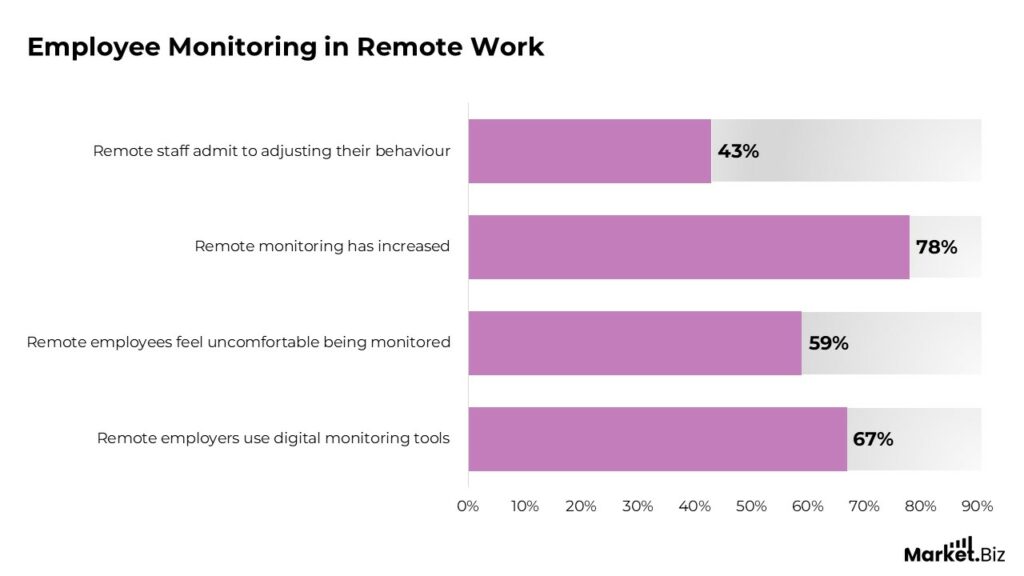
- 67% of remote employers use digital monitoring tools to track productivity, screen time, and online activity.
- 59% of remote employees feel uncomfortable being monitored via webcam or screen recording software.
- Remote monitoring has increased by 78% since 2020, driven by the shift to hybrid and fully remote work models.
- 45% of remote workers report that constant surveillance negatively affects their morale and mental well-being.
- 22% of companies use keystroke logging to measure employee engagement in remote work environments.
- 43% of remote staff admit to adjusting their behaviour due to awareness of being digitally observed.
- Only 28% of employees feel that monitoring in remote work is transparent and communicated by management.
- 34% of remote workers say monitoring practices reduce their trust in company leadership.
- AI-driven monitoring tools are used by 31% of remote teams to assess performance and detect workflow inefficiencies.
- 62% of companies monitor internet usage to ensure remote employees stay focused on work tasks.
- 29% of remote employees disable or avoid productivity apps when possible, citing privacy concerns.
- 70% of remote employees say they would prefer productivity measurement based on outcomes, not constant digital oversight.
Role of HR in Data Ethics
- 67% of HR leaders believe their departments should lead ethical oversight of employee data practices.
- Only 37% of HR teams feel confident in their current data privacy policies and regulatory compliance.
- HR plays a key role in creating transparent consent frameworks for employee monitoring and data collection.
- 58% of employees expect HR to act as a data protection advocate within the organization.
- 49% of companies lack a dedicated HR-led data ethics policy for handling sensitive employee information.
- HR is responsible for ensuring informed consent during the onboarding process regarding data use and surveillance.
- 31% of HR departments now offer training on data ethics to employees and management teams.
- Post-breach analysis shows 44% of HR teams are involved in damage control and employee communication.
- HR leaders are key in evaluating third-party software for compliance with internal privacy standards.
- 26% of employees have filed complaints with HR regarding unclear or invasive monitoring practices.
- Ethical HR policies on data retention and deletion timelines are present in only 41% of mid-sized firms.
- HR analytics tools, while useful, raise ethical questions about profiling, flagged by 35% of HR professionals.
- Cross-functional ethics committees, including HR, are growing, with 23% of large enterprises formalizing these roles in 2024.
AI on Employee Privacy
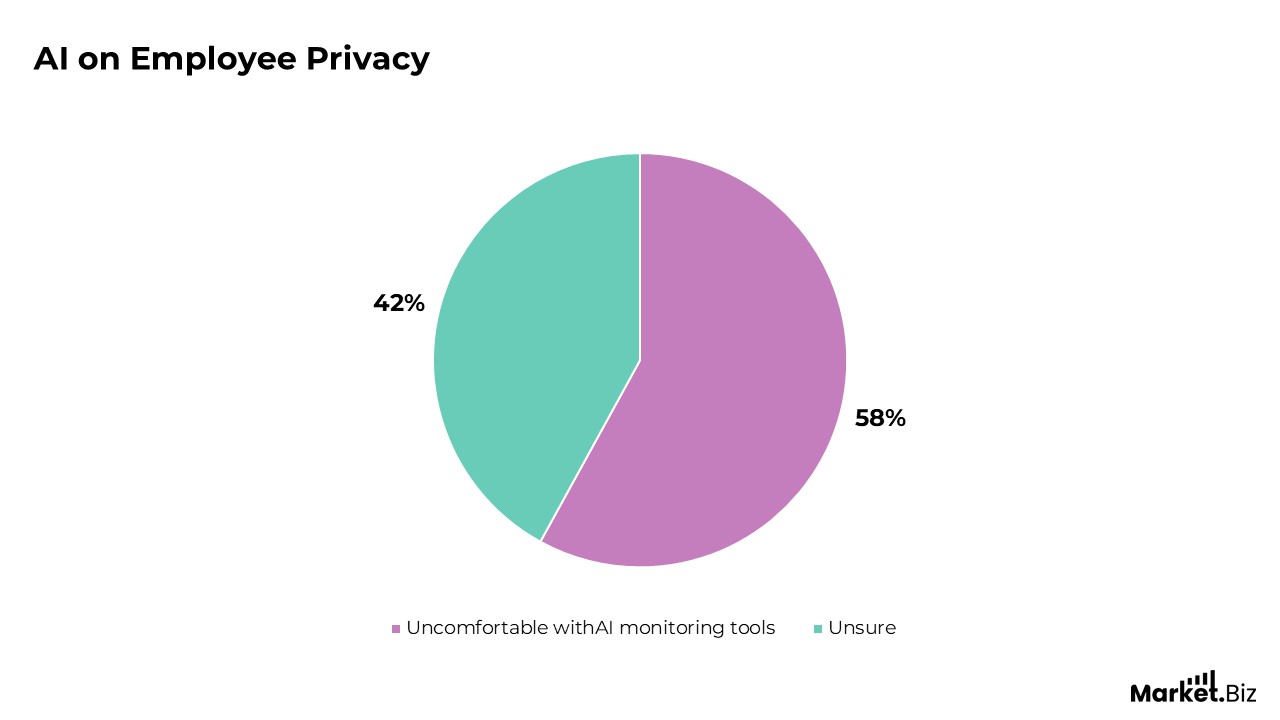
- 58% of employees feel uncomfortable with the idea of AI tools monitoring their every action.
- AI-powered workforce assessment tools are used by 31% of companies to assess performance and often with a lack of transparency for workers.
- 47% of employees is now concerned that AI may collect context incorrectly leading to inaccurate performance evaluation.
- Only 35% of employees feel like their company explains how AI technologies will collect and use their personal data.
- About 42% of HR professionals are unsure about using AI for hiring and behavioural profiling.
- 21% of employees have changed their work behaviors due to fear of penalties from AI-driven productivity scoring tools.
- Bias by algorithms is a serious concern in AI technologies. 39% of employees from minority groups do not believe that AI evaluators are fair.
- Only 28% of companies have ethical review protocols in place for employees using AI technologies.
- Due to the remote work demands digital workplace surveillance has grown by 64% since 2020.
Recent Developments in Privacy Concerns
- According to the recent data reports, in 2024, the global market of average data breach cost was grew by $4.88M, a clear 10% increase from 2023.
- In 2024, 94 countries had faced over more than 10,000 global data breach incidents.
- In 2024, Apple introduced Private Cloud Compute, so they can extend iPhone level AI privacy into the cloud, they ensured that the user’s data they used is only to fulfil requests.
- In late 2024, European regulators fined TikTok $600M for transferring data to China illegally, saying they violated strict EU data privacy regulations.
- The EU’s new AI Act prohibits AI that scrapes facial images from the web/CCTV.
- 75% of consumers worldwide would eventually refuse to buy from businesses they do not trust when it comes to protecting their personal data.
- In August 2024, a group of hackers hacked US National Public Data and revealed some of the most controversial and sensitive information with records for around 2.9 billion individuals.
- In early 2025, 144 countries have passed general privacy laws, that covers around 6.64 billion people or we can say 82% of the world population.
Conclusion
The use of digital surveillance can interfere with employees’ privacy issues under the modern working culture. Technology such as AI, biometrics, and remote tracking develops at a much faster pace than most companies decent safeguards. As privacy concerns may vary largely depending on the age, gender, political orientation, etc., but it can be seen in the younger and minority employees that they are being more and more considered to show higher sensitivity levels.
When incidents like personal data breach happens, it brings trust issues, lower morale and increased turnover intentions. In order to build a healthy and responsible digital workplace, companies must take responsibilities like transparency, ethics, and a focus on employee-centric data practices.
FAQs
Employees are mostly concerned about how employers collect and use their personal data. Many of them are worried about surveillance practices such as email monitoring, biometric data collection, and AI performance assessments.
Around 60% of companies use monitoring software to track employee productivity, behavior, and web activity, but only a small number of employees has full information about this software.
Data breaches lead to major trust issues, with many employees reporting increased anxiety and a higher possibility of looking for new employment due to privacy concerns.
Remote employees are mostly concerned about surveillance tools. Many feel uncomfortable being monitored through webcams, screen recording software, or keystroke logging systems.