








Introduction
Online Interview Statistics: Online interviews have become a game-changer for hiring, with 86% of companies now using virtual interviews to find the right talent. Following the COVID-19 pandemic, 55% of employers increased their use of video conferencing tools for interviews, and many have continued this trend. Candidates love the convenience, with 80% saying they prefer virtual interviews.
Not only do online interviews save time and money, but they also open up access to a global talent pool. With technology advancing, tools like artificial intelligence (AI) and machine learning are starting to play a bigger role in making the hiring process even smoother and more efficient.
Editor’s Choice
- Online interviews are now used by 86% of companies, a trend that began during the pandemic and is expected to continue long-term.
- 80% of candidates prefer online interviews because they offer greater flexibility and convenience, cutting down on time and travel costs.
- Online interviews expand candidate selection, with 92% of recruiters agreeing that they help provide access to a more diverse talent pool.
- 55% of recruiters find it harder to assess non-verbal cues, like body language, in online interviews compared to face-to-face meetings.
- 67% of hiring managers believe that online interviews enable faster decision-making by making it easier to share recordings instantly.
- 50% of companies now use AI-powered platforms to streamline candidate screening and reduce time-to-hire.
- Technical issues such as poor internet connectivity affect 62% of candidates during online interviews.
- 30% of candidates from low-income backgrounds face challenges in participating in online interviews due to unreliable internet access.
- With the rise of remote work, 78% of global companies predict a focus on assessing remote work skills like time management in future online interviews.
- 64% of job seekers prefer using mobile-optimized platforms for interviews, prompting companies to adopt mobile-friendly solutions by 2026.
General Online Interview Statistics
- Video interviews are used by 60% of recruiters, or six out of ten, to streamline the hiring process.
- When hiring new employees, nearly 70% of employers look through social media profiles.
- The majority of employers (85%) have discovered that job applicants have lied on their applications or resumes.
- It’s like taking a 200-question test during a 5-minute live video interview.
- Employers who use online interviews for hiring save 2.7 times as much money.
- According to 2024 online interview statistics, 22% of employers use online interviews to connect with remote candidates, and nearly half (47%) use them to hire more quickly.
- It takes 20 to 40 days for job offers to be made following an online interview, and 5 to 8 weeks for rejections.
- In 2024, almost 60% of hiring managers and recruiters will use video tools to streamline the hiring process.
- Online recruiting firms claim that job postings with videos receive eight times as much attention and responses.
- Meanwhile, 74% of U.S. recruiters find that online interviews facilitate the screening and selection of candidates.
- Video interviews, according to more than 91% of job seekers, improve their perception of employers.
- After just one interview, job seekers have a 36.89% chance of receiving an offer.
- Videos in job postings increase engagement by 800%, according to online recruiting firms.
- Live video interviews are a much faster option for interviews in 2024 because they are six times faster than phone interviews.
Rise in Popularity of Online Interviews
- 86% of companies globally now use online interviews, a shift accelerated by the pandemic, but continuing as the norm post-crisis.
- Companies have reported saving up to 50% in recruitment costs by switching to virtual interviews due to reduced travel and logistical expenses.
- With online interviews, businesses can access a global talent pool, overcoming geographic limitations in recruitment.
- 80% of candidates prefer online interviews for their flexibility, allowing them to participate from any location with an internet connection.
- 20% of companies now use AI-powered interview platforms, which streamline the process by screening candidates and even conducting preliminary interviews.
- Online interviews allow hiring managers to conduct multiple interviews in a day, reducing the time-to-hire by 30-40%.
- The rise of online interviews was significantly influenced by COVID-19, with 55% of companies reporting an increase in virtual hiring practices during the pandemic.
- The virtual format helps enhance candidate experience, with 70% of job seekers saying they appreciate the convenience and efficiency of online interview setups.
| Number of Jobs Applying | 0 Interviews | 1 or 2 Interviews | 3 to 7 Interviews | Eight or more Interviews |
|---|---|---|---|---|
| 1–10 | 38.3% | 47.3% | 12.6% | 1.8% |
| 11–20 | 26.7% | 35.1% | 32.0% | 6.2% |
| 21–80 | 19.2% | 32.7% | 33.4% | 14.7% |
| 81 or more | 14.8% | 19.9% | 35.4% | 29.9% |
Advantages of Online Interview
- Online interviews save up to 60% of time spent compared to traditional in-person interviews by eliminating travel and reducing scheduling conflicts.
- 92% of recruiters report that online interviews offer a broader selection of candidates, providing access to a more diverse talent pool without geographical constraints.
- Virtual interviews make it possible for 75% of companies to conduct panel interviews with multiple team members located in different places, reducing scheduling and logistical challenges.
- 85% of hiring managers say that the ability to share interview recordings and notes instantly with team members leads to faster, more collaborative decision-making.
- Online interview platforms offer security features like encryption and password protection, helping 70% of employers feel more secure about confidential candidate information.
- Virtual interviews can be recorded, allowing interviewers to review them later. 67% of hiring managers say they use recorded interviews to ensure more accurate evaluations and minimize bias.
- Candidates are 30% less likely to feel stressed during online interviews compared to in-person ones, as the virtual format offers a more relaxed environment.
- 63% of employers claim that online interviews have expanded their ability to interview candidates from various time zones, improving global talent acquisition.
Disadvantages of Online Interview
- 38% of candidates report facing technical difficulties, such as poor internet connection or malfunctioning video/audio, which can disrupt the interview process.
- 67% of hiring managers feel that online interviews make it harder to build a personal connection with candidates compared to in-person interactions.
- With online interviews, 55% of recruiters say they miss important non-verbal cues like body language and facial expressions, which can be critical for evaluating a candidate’s personality.
- Virtual interviews can contribute to “Zoom fatigue”, with 62% of candidates reporting feeling exhausted after prolonged video interview sessions.
- 45% of job seekers say they’ve experienced bias during online interviews due to the interviewer’s reliance on video quality or the technology platform used.
- 30% of candidates in rural or underserved areas lack reliable internet access, potentially limiting their ability to participate in online interviews.
- 27% of companies express concerns about the security of virtual interview platforms, worrying about data breaches or hacking during the interview process.
- 59% of employers say they unintentionally prioritize candidates with strong technical setups (like high-quality webcams) over those with more relevant skills but fewer resources.
- In online interviews, 44% of candidates admit they are distracted by their surroundings, such as family members or pets, which can affect their performance.
Online Interview Demographic
By Age Group
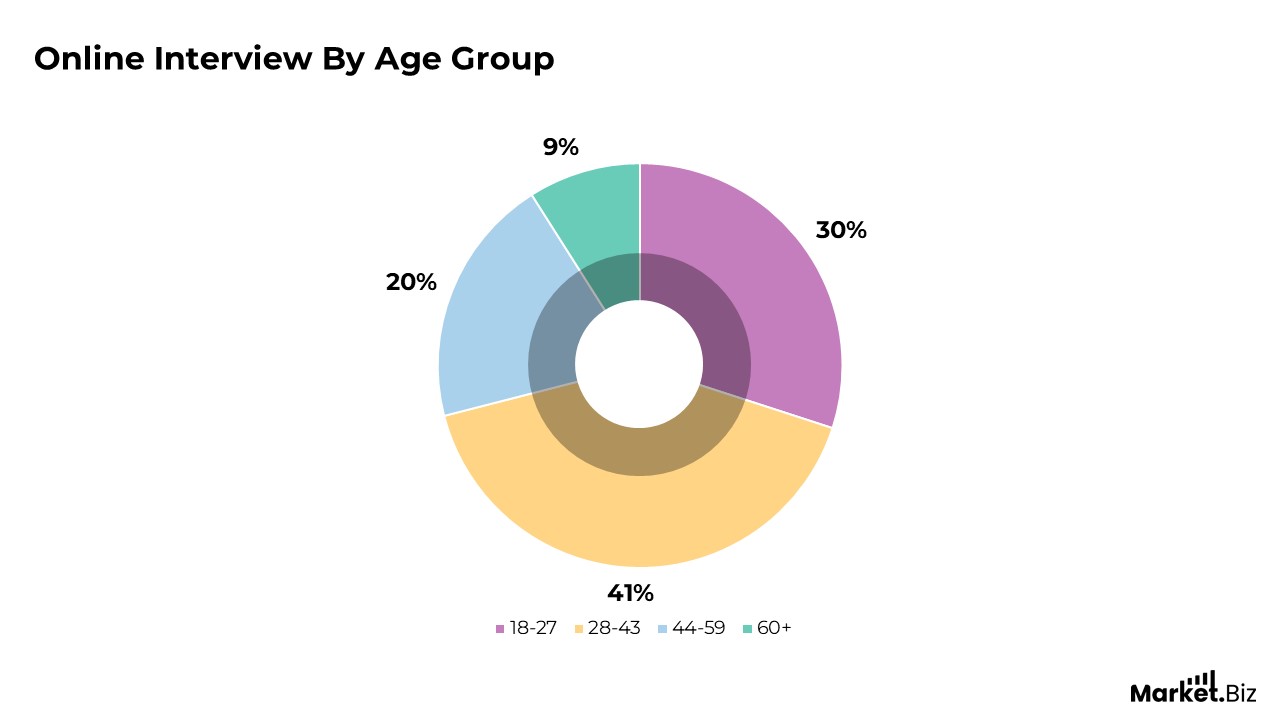
- According to the 2024 Online Interview Statistics report, 41% of candidates who participate in online interviews are Millennials (Ages 28–43).
- Depending on the industry, at least 30% of online interviewees are from Generation Z (ages 18 to 27).
- Approximately 20% of respondents to online interviews are members of Generation X (ages 44–59).
- About 9% of online interviewees are Baby Boomers (60 years of age and older), suggesting a slow transition to digital interview platforms.
- 70% of candidates aged 18-24 find online interviews less stressful compared to in-person ones, as they are more familiar with video conferencing platforms.
- 56% of candidates aged 25-40 value the flexibility of online interviews, citing the ability to schedule at convenient times as one of the main reasons for their preference.
- Older job seekers (ages 55+) represent a growing segment, with 42% of this age group now engaging in online interviews, reflecting an increase in digital adoption in this demographic.
- 50% of job seekers aged 18-24 reported higher confidence levels in their performance during online interviews due to their digital fluency and comfort with technology.
By Gender
- Women are more likely to prefer online interviews, with 58% citing the flexibility and convenience as key factors in their decision.
- Men make up 52% of online interviewees and tend to have higher confidence in navigating technical aspects, with 64% indicating they experience fewer issues with virtual platforms.
- 60% of women appreciate the work-life balance that online interviews offer, allowing them to manage family and work commitments more effectively.
- 68% of men find online interviews less stressful than in-person interviews, as they appreciate the more relaxed environment it provides.
- Women, 45% of whom have stated that online interviews allow them to present themselves more confidently, experience fewer distractions compared to traditional face-to-face formats.
- 33% of women aged 25-40 report being more comfortable with virtual interviews compared to older age groups, largely due to their higher comfort with technology.
- 53% of men say online interviews provide better access to job opportunities, particularly for remote or flexible roles, which align with their career preferences.
- 62% of women in the tech industry prefer online interviews, as they can be more accommodating to their schedules and fit better with work-life integration.
- Men aged 18-34 are particularly drawn to online interviews, with 80% viewing them as an opportunity to engage with global employers, finding the format more accessible and time-saving.
Video Interview Statistics
- Despite the reopening of offices, the majority of hiring managers (81%) continue to use virtual interviews.
- For interviews, whether or not the position is remote, about 60% of recruiters frequently use video calls.
- Statistics on online interviews also reveal that 50% of job seekers would rather do video interviews than face-to-face meetings.
- The hiring process is accelerated by the six-fold speed increase of video interviews over phone calls.
- A significant number of applicants (7 out of 10) have lost out on employment opportunities due to technical issues during video interviews.
- Almost three out of four recruiters (74%) believe that screening and interviewing candidates is made easier by video interviews.
Video Conferencing Software
(Source: Coolest-Gadgets, WP-Content)
- About 66% of people used video conferencing software in 2024.
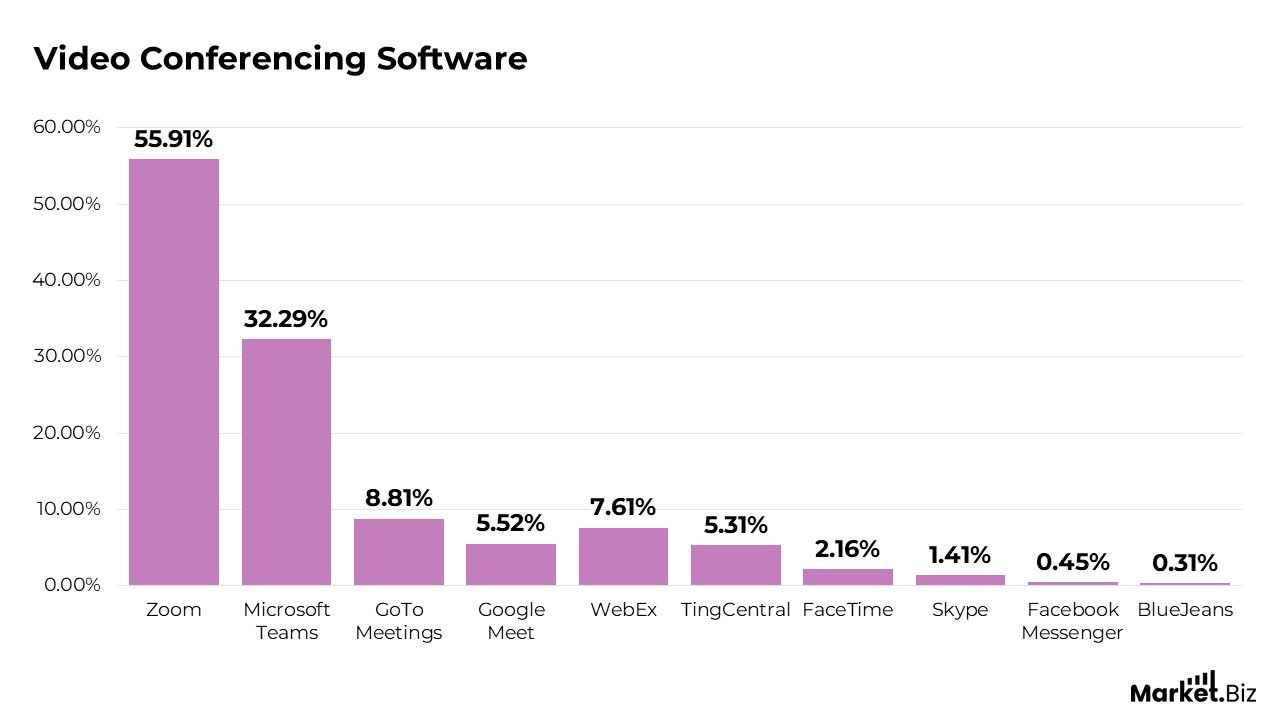
- Zoom held approximately 55.91% of the market, making it the most popular.
- In the meantime, Microsoft Teams (32.29%), GoToMeeting (8.81%), WebEx (7.61%), Google Meet (5.52%), RingCentral (5.31%), FaceTime (2.16%), Skype (1.41%), Facebook Messenger (0.75%), and Bluejeans (0.31%) have the largest market shares for video conferencing software worldwide.
Online Interview Statistics by Country
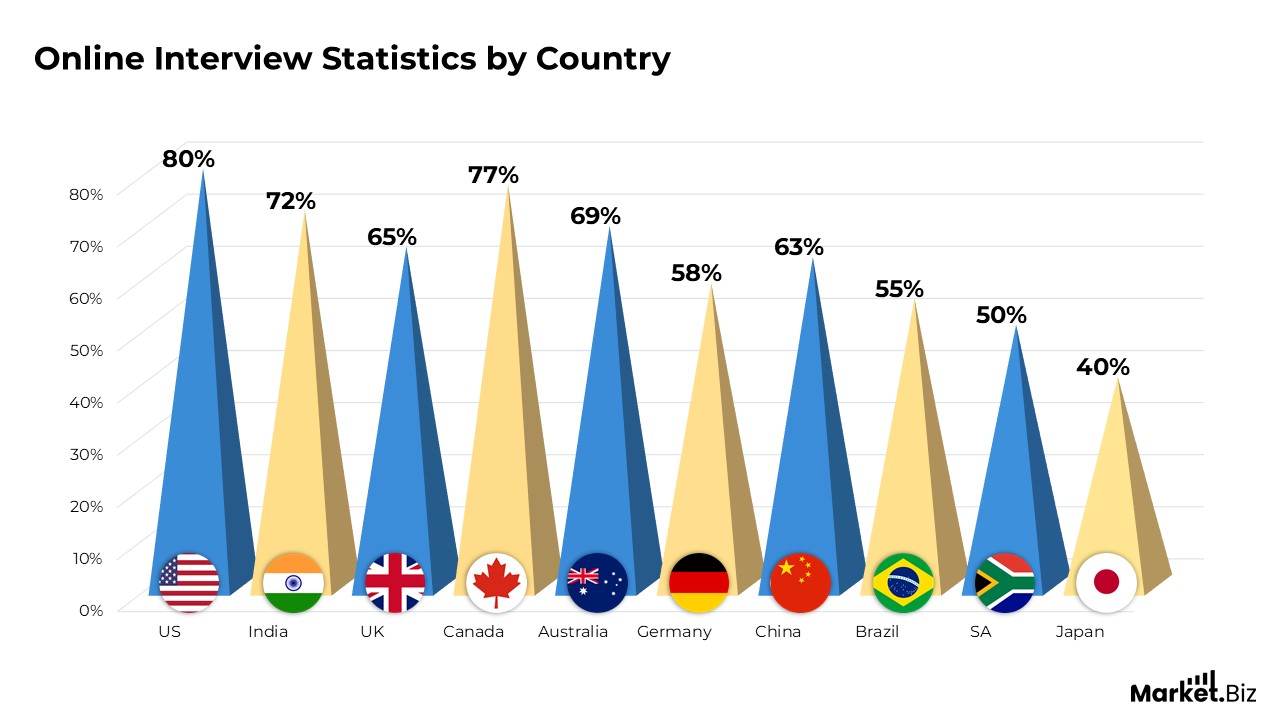
- In the United States, 80% of companies now use online interviews, with the pandemic accelerating the shift to virtual hiring processes.
- India has seen a surge in virtual interviews, with 72% of recruiters adopting online interviews due to the growth of the tech sector and remote work opportunities.
- United Kingdom employers have integrated virtual hiring into their recruitment strategies, with 65% of businesses conducting at least one round of interviews online.
- In Canada, 77% of job seekers prefer online interviews due to convenience, with many employers opting for virtual formats to attract a wider range of talent.
- Australia has witnessed a growing trend in online interviews, with 69% of companies reporting increased usage of video interviewing platforms since 2020.
- Germany is embracing online recruitment, with 58% of employers utilizing virtual interviews, especially in tech and finance industries where remote work is common.
- In China, 63% of companies have adopted online interviews, mainly due to the rapid expansion of digital infrastructure and high internet penetration rates.
- Brazil has also seen significant growth in online interviews, with 55% of employers now conducting interviews remotely, reflecting the global shift toward digital solutions.
- South Africa has seen 50% of companies move to online interviews in recent years, largely driven by the need to adapt to the pandemic and attract international talent.
- Japan remains more cautious with online interviews, with only 40% of companies fully adopting virtual hiring, but the trend is growing as digital solutions become more widely accepted.
Online Recruitment Market Statistics
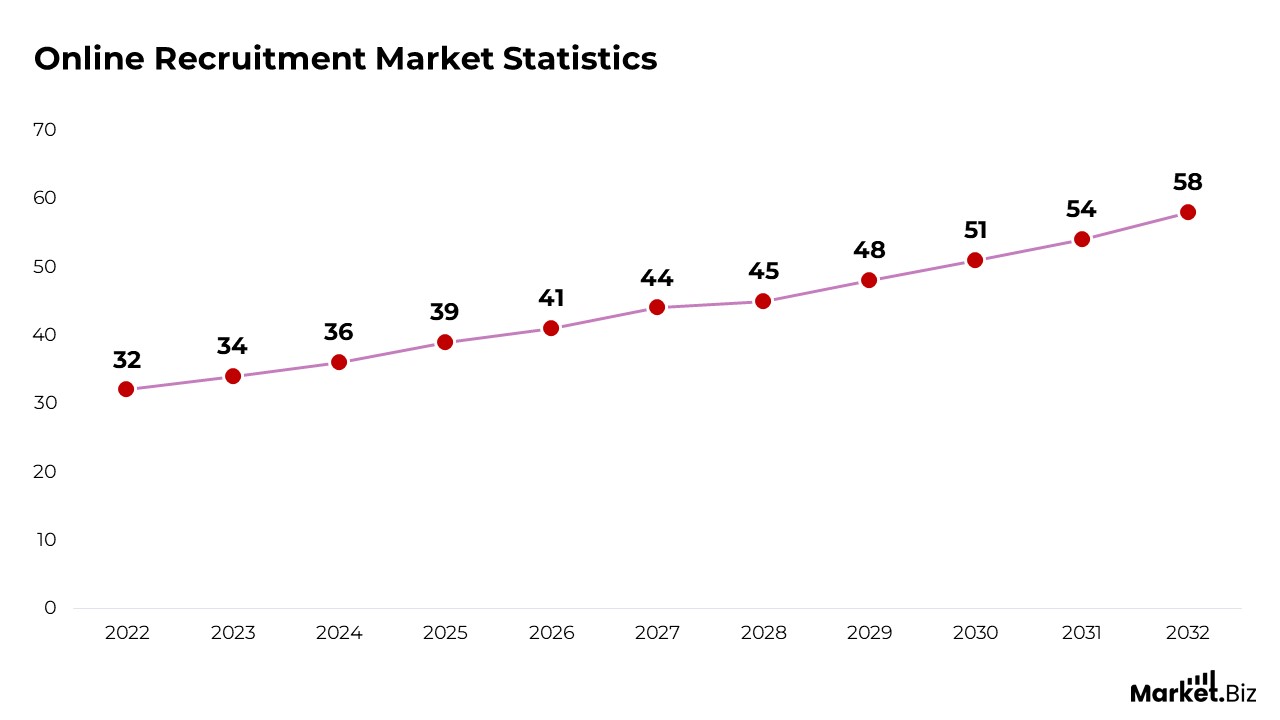
(Source: Coolest-Gadgets, WP-Content)
- With an average annual growth rate of 6.4%, the global online recruitment market has expanded gradually over the past ten years. From USD 32 billion in 2022 to USD 34 billion in 2023 and USD 36 billion in 2024, revenue grew.
- It increased to USD 39 billion in 2025 and USD 41 billion by 2026.
- There was a discernible increase in 2027, as revenue reached USD 44 billion.
- In 2028, 2029, and 2030, the growth reached USD 45 billion, USD 48 billion, and USD 51 billion, respectively.
- Revenues increased to USD 54 billion by 2031 and USD 58 billion in 2032.
AI in Online Interviews
- 42% of companies are now using AI-powered interview platforms to screen candidates, helping to streamline the hiring process by filtering out unqualified applicants early.
- AI interview tools can analyse 50+ facial expressions and vocal tones during interviews, providing insights into a candidate’s emotional state and potential fit for the role.
- 34% of recruiter’s report that AI-driven video interviews help reduce bias, offering a more objective and data-driven evaluation of candidates.
- In a survey, 61% of job seekers expressed concerns over AI in interviews, citing worries about fairness and accuracy in the system’s decision-making processes.
- AI tools help companies save time by automating the initial stages of interviews. 68% of HR professionals say they can complete interviews faster due to AI automation.
- AI-driven platforms are able to assess cognitive ability, analyzing candidates’ responses in real-time and providing insights into their problem-solving and decision-making skills.
- 35% of hiring managers report using AI to rank candidates based on specific traits such as communication skills, technical knowledge, and cultural fit.
- 50% of companies using AI-powered interviews claim it has significantly improved the quality of their hires, citing better candidate matches and quicker recruitment cycles.
Challenges of Online Interviews
- During online interviews, about 62% of candidates encounter technical difficulties like slow internet, trouble with sound, or broken software.
- Approximately 45% of interviewers make unfair judgments about candidates based on their attire, video quality, or background.
- Compared to in-person interviews, over half of the candidates (55%) find it more difficult to connect and communicate effectively during online interviews.
- Since the majority of candidates (68%) prefer in-person or hybrid interviews, conducting all of the interviews online may not be as enjoyable for them.
- According to statistics on online interviews, almost half of recruiters (48%) require assistance in evaluating soft skills like leadership and teamwork.
- Approximately 30% of applicants are concerned about the security of their data when participating in online interviews.
- It is anticipated that 38% of businesses will use AI for initial interviews in 2024, which may raise questions regarding fairness.
- Online interviews have made scheduling easier, but according to 42% of candidates, they result in more rounds and longer, more difficult processes.
- Approximately 35% of applicants from low-income families feel left out because they require more robust internet connections or better equipment.
Online Interview Trends for the Future
- 75% of companies are expected to integrate AI and machine learning into online interview processes by 2026 to automate candidate screening and improve accuracy in evaluations.
- Virtual reality (VR) is predicted to play a larger role in online interviews, with 50% of recruiters planning to incorporate VR for immersive candidate assessments in 2025.
- Video interview platforms will become more interactive, with 58% of employers using real-time coding tests and problem-solving exercises during virtual interviews in 2024.
- 84% of job seekers believe that online interviews will continue to dominate recruitment post-pandemic, with more companies embracing remote and hybrid working models.
- By 2027, 65% of companies are likely to adopt AI-powered video assessments that can analyse not only verbal responses but also body language and facial expressions.
- Interactive assessments, such as virtual job simulations, are projected to become more common, with 60% of hiring managers planning to use them to evaluate candidate skills in real-time.
- AI-driven catboats will increasingly handle initial interview rounds, with 48% of recruiters anticipating their use to automate basic questions and pre-screening.
- 75% of recruiters expect the future of online interviews to rely heavily on data-driven decision-making, using insights from candidate responses and behaviour to predict job performance.
- With the rise of remote hiring, 78% of global companies predict that online interviews will focus more on assessing remote work skills, including time management and communication.
- Security features in online interview platforms will continue to evolve, with 52% of companies investing in encryption and identity verification tools to ensure secure and confidential hiring processes.
- Increased use of mobile-friendly platforms is forecasted, with 64% of job seekers saying they prefer using smartphones for interviews, pushing companies to adopt mobile-optimized interview solutions by 2026.
Conclusion
Online interviews have become a dominant force in the hiring process, with 86% of companies adopting virtual formats, a trend amplified by the pandemic. The convenience of online interviews is evident, with 80% of candidates preferring the flexibility they offer. However, challenges like 62% of candidates experiencing technical difficulties and 55% of recruiters struggling to assess non-verbal cues remain.
Despite this, 75% of companies are embracing AI and machine learning to streamline hiring further, indicating a strong future for digital recruitment. As the online interview landscape continues to evolve, businesses will increasingly rely on technology to enhance efficiency and inclusivity.
FAQ’s
In 2024, 86% of companies worldwide are using online interviews, with 60% of recruiters using video conferencing tools to streamline the hiring process, reflecting the shift toward virtual recruitment.
Around 80% of candidates prefer online interviews due to their flexibility and convenience, allowing them to participate from any location with an internet connection.
Online interviews help companies save up to 2.7 times more money compared to traditional in-person interviews by eliminating travel costs and logistical expenses.
42% of companies are using AI-powered platforms to screen candidates and automate initial interview stages, helping improve hiring efficiency and reduce bias in evaluations.
While online interviews offer flexibility, 38% of candidates report technical difficulties, such as poor internet connections or malfunctioning video/audio, which can disrupt the interview process.